-
Helping hands
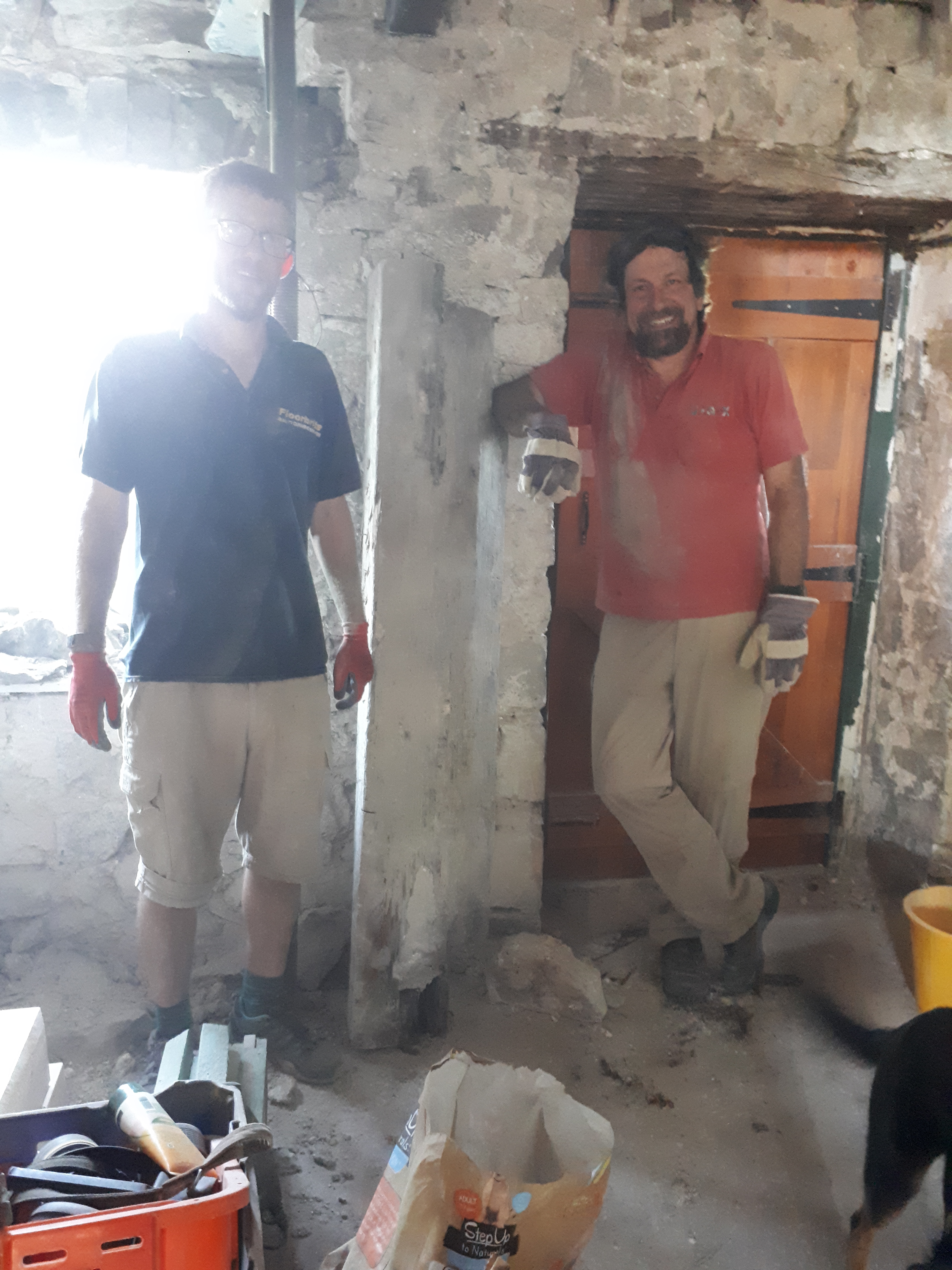
I don’t know how we got so lucky to have so many friends and family come lend a hand, but it’s certainly much appreciated. This weekend was the turn of my old school friends Sarah and Michael, who travelled over specially from Sheffield to work in appalling conditions for no pay. Lucky them.

The weekend started unusually early (given that we live a 45min drive away), with a 8am delivery of slates from Manchester. After several disappointing local purchases, we got a recommendation for a place that was a little more pricey, but guaranteed good quality reclaimed slates. With 400 delivered it should hopefully be the last slates we need to buy.
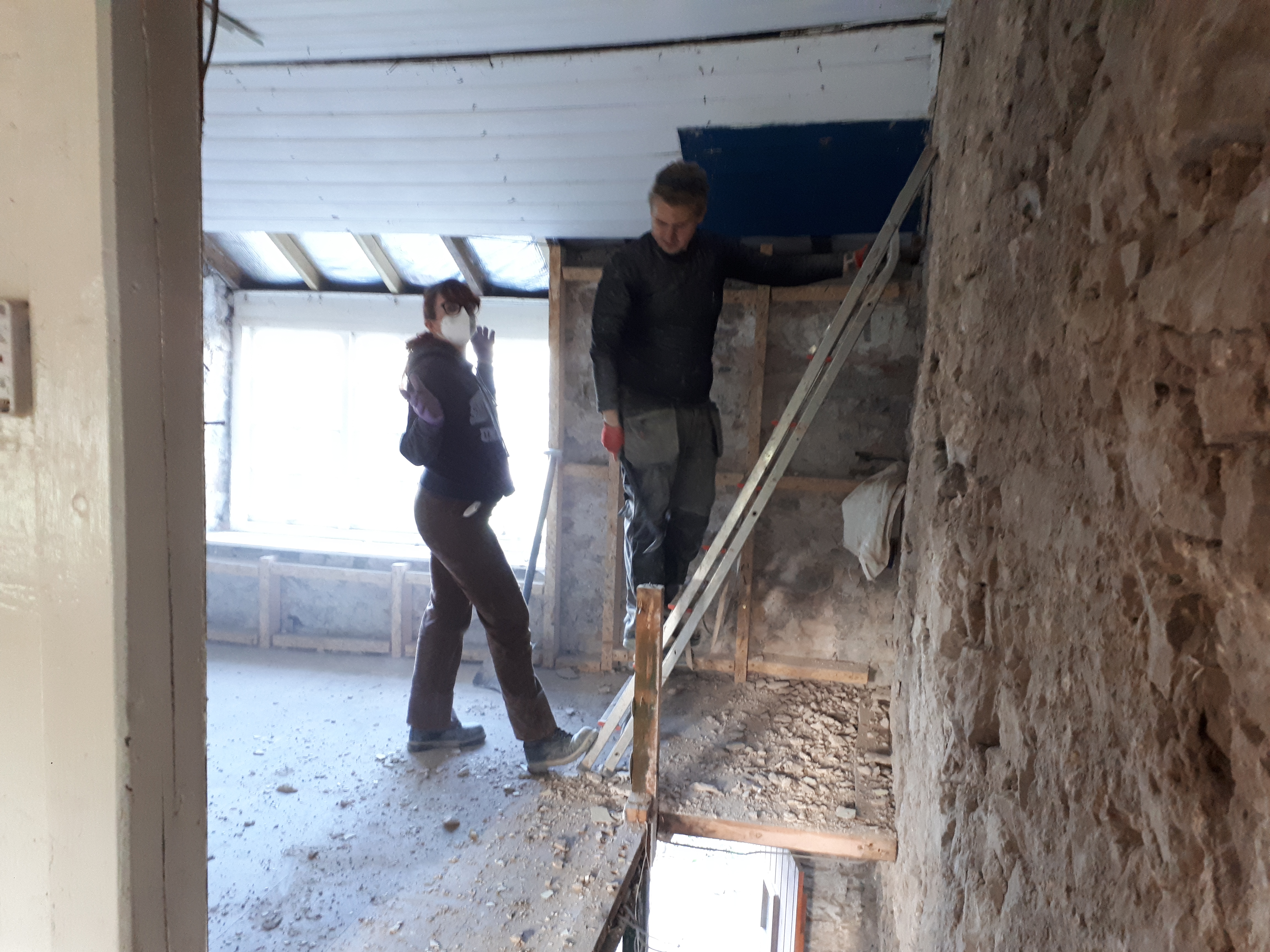
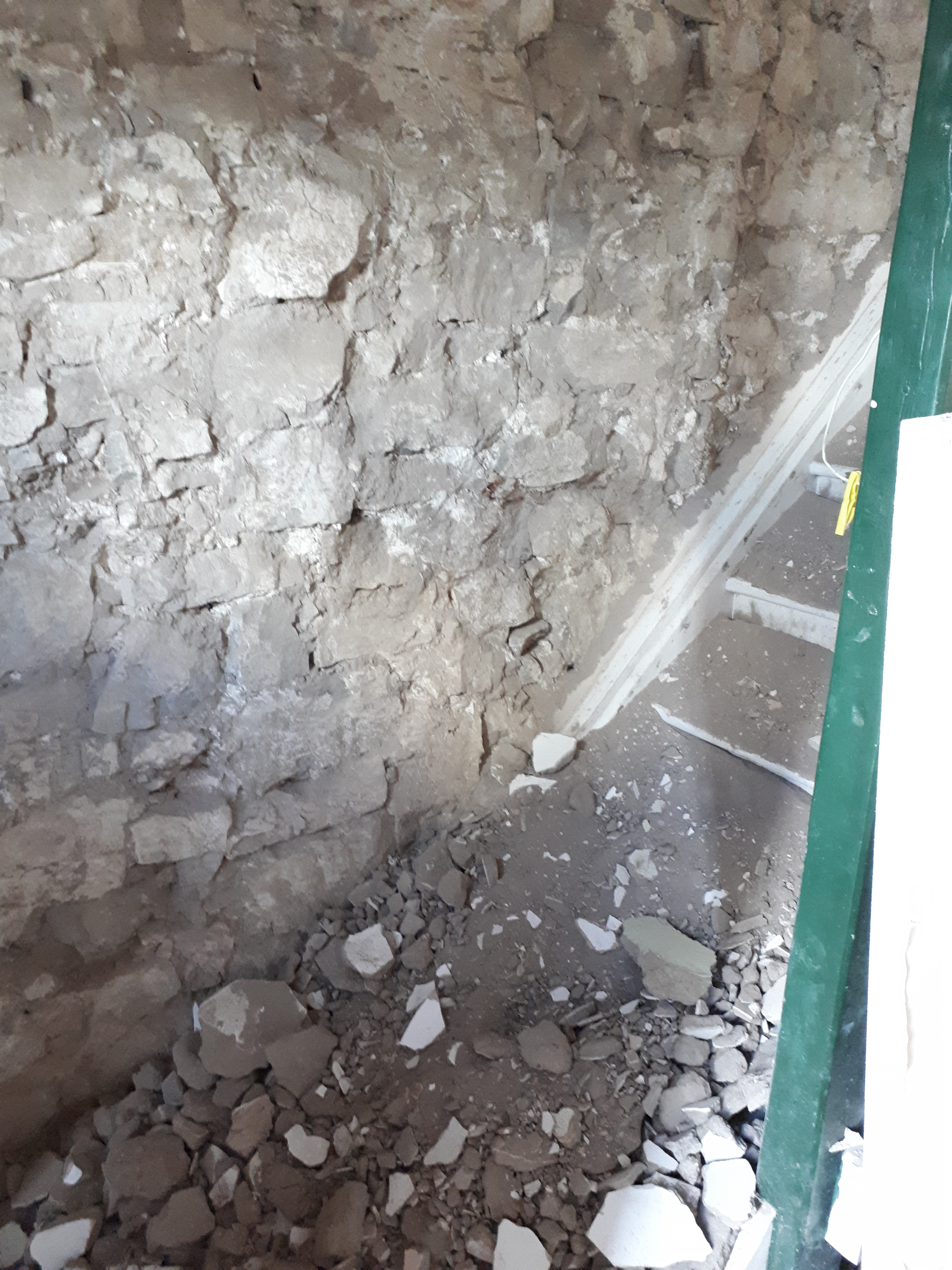
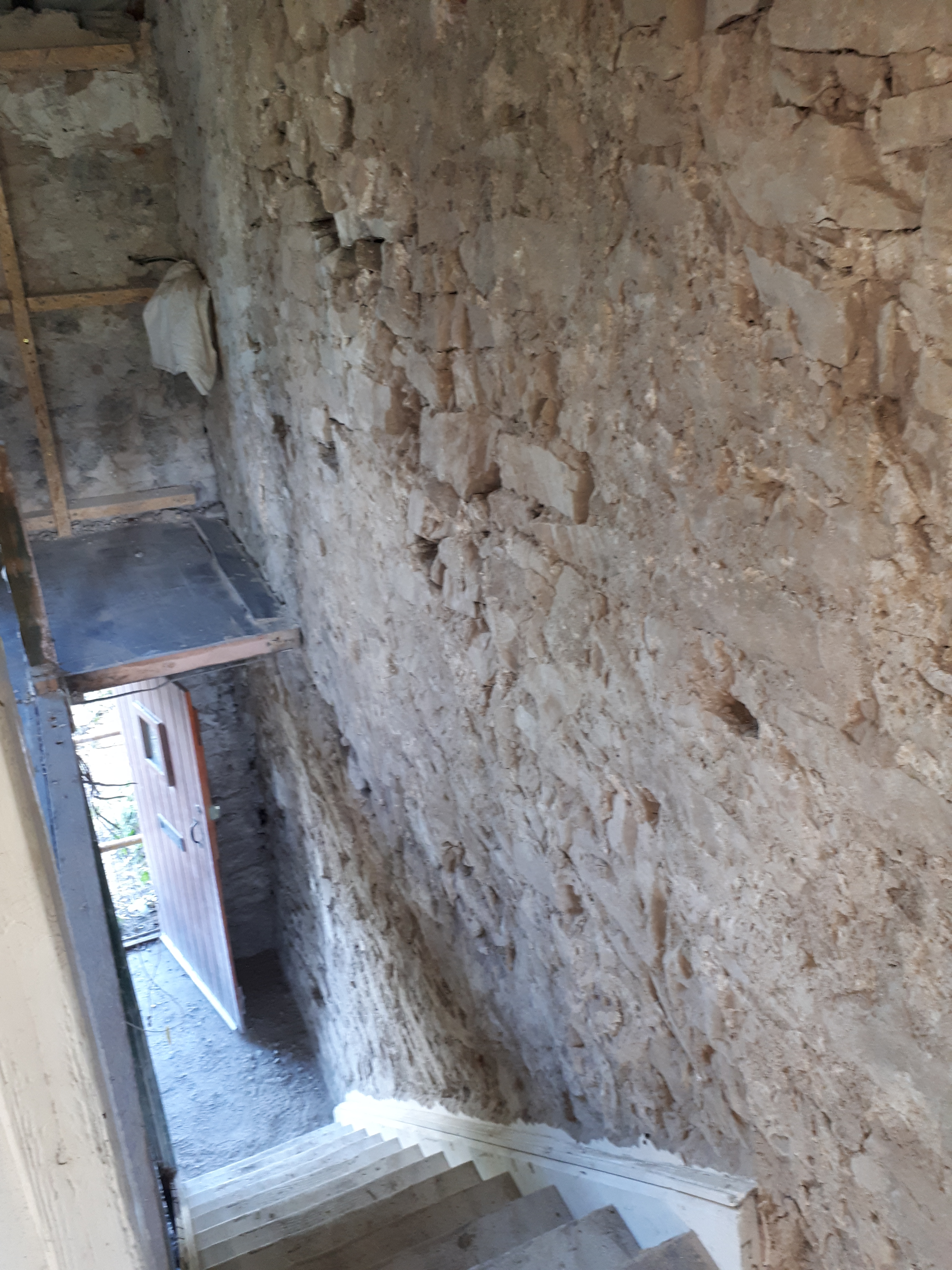
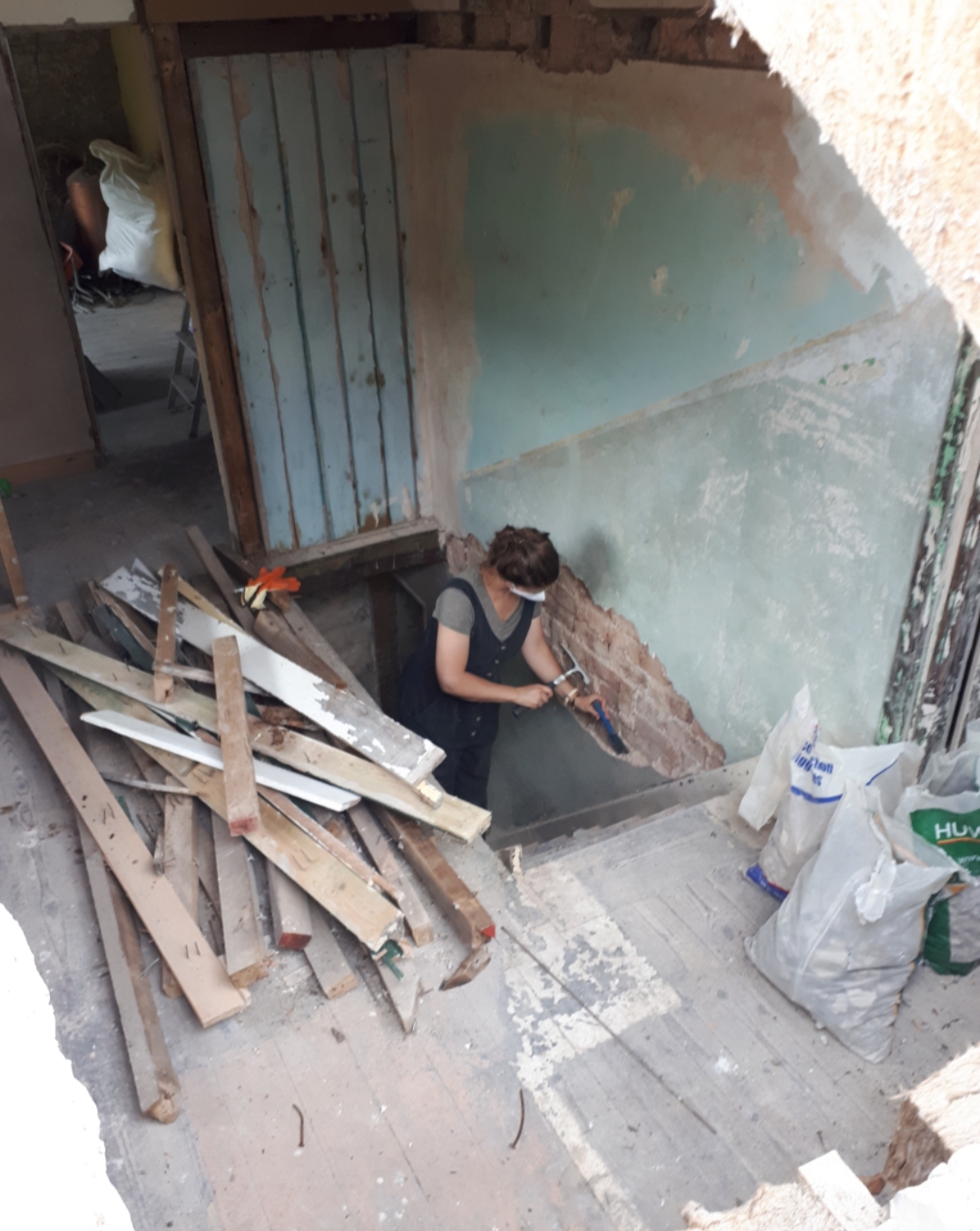
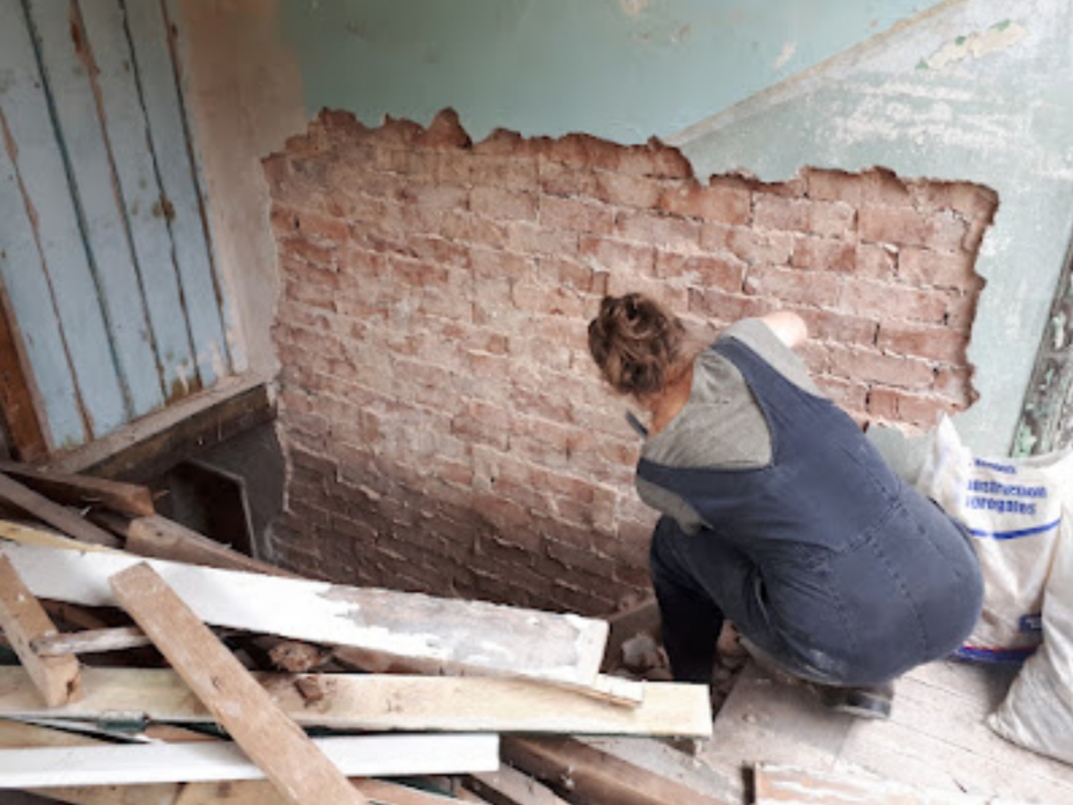
Keen to keep her feet on the ground (who can blame her), Sarah got started in the house, removing the plaster from beside the main stairs. Most of this was super crumbly, making it a relatively quick job. Michael helped to reach the higher sections, and also cleared out the rubble to the skip.

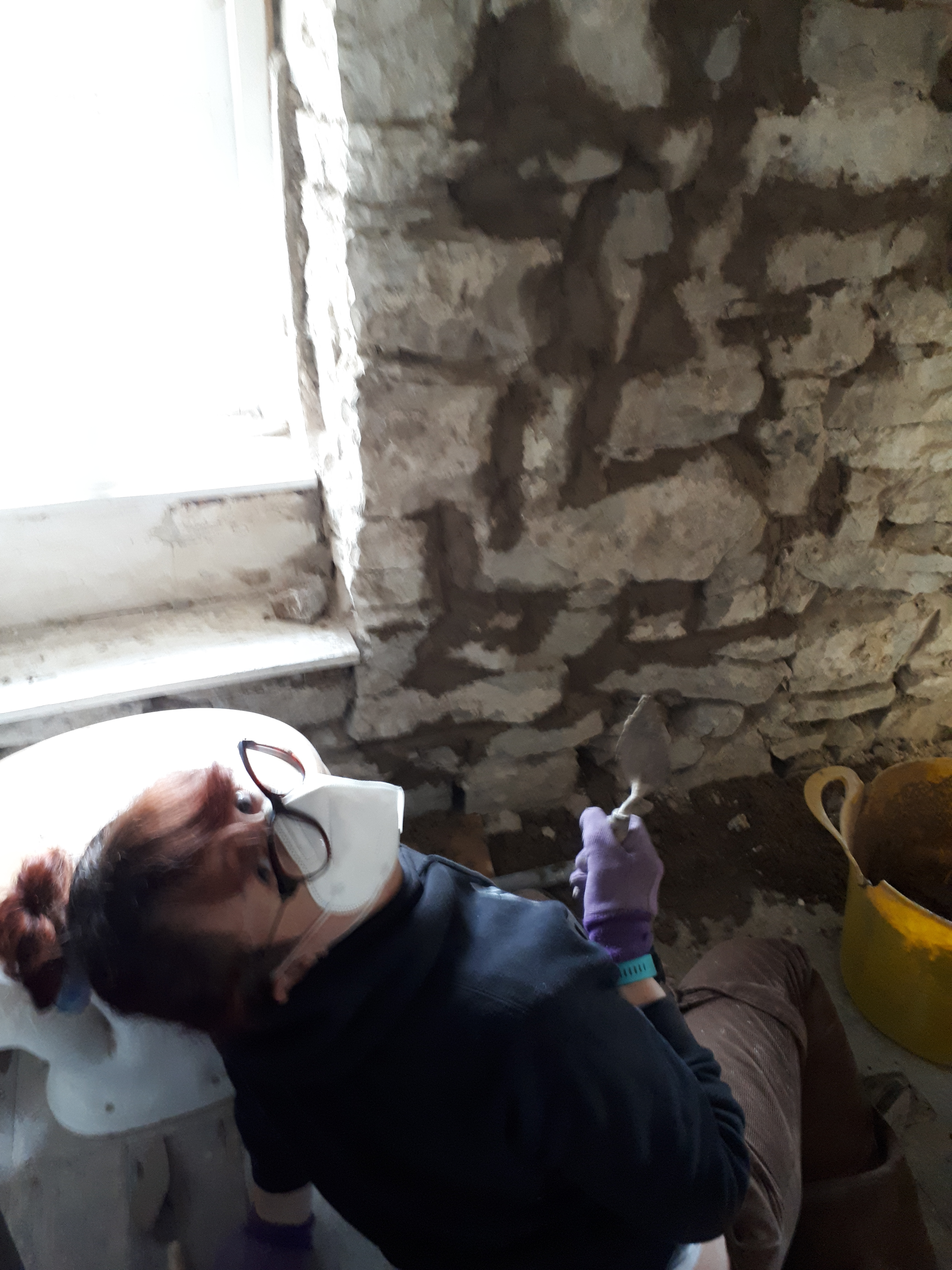
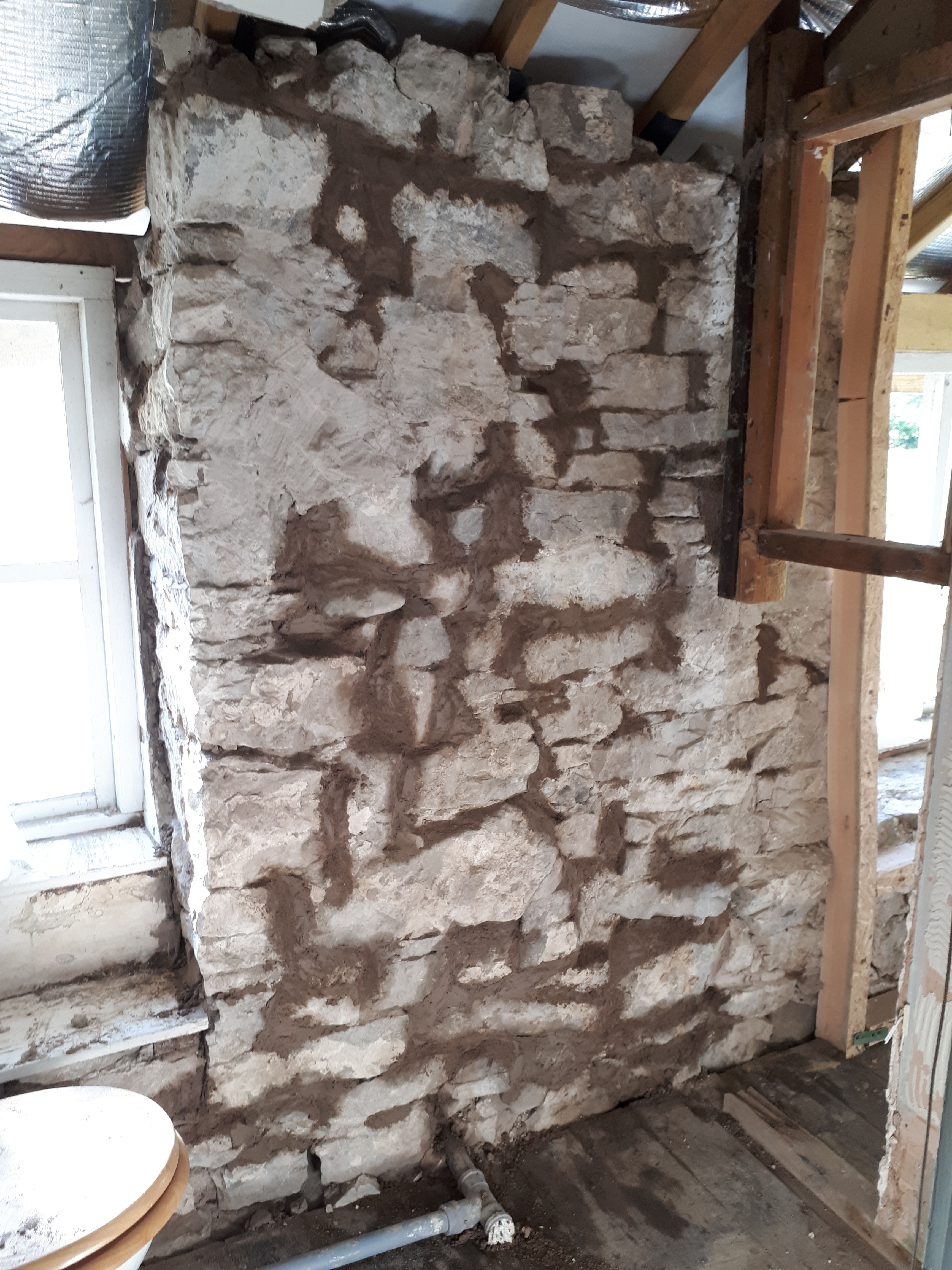
Next Sarah set to repointing the bathroom wall, which had been left till last as it’s a small and fiddly space (sorry Sarah). As a room that had probably suffered from damp, the mortar was particularly poor here, meaning it was good to see it finally refreshed.
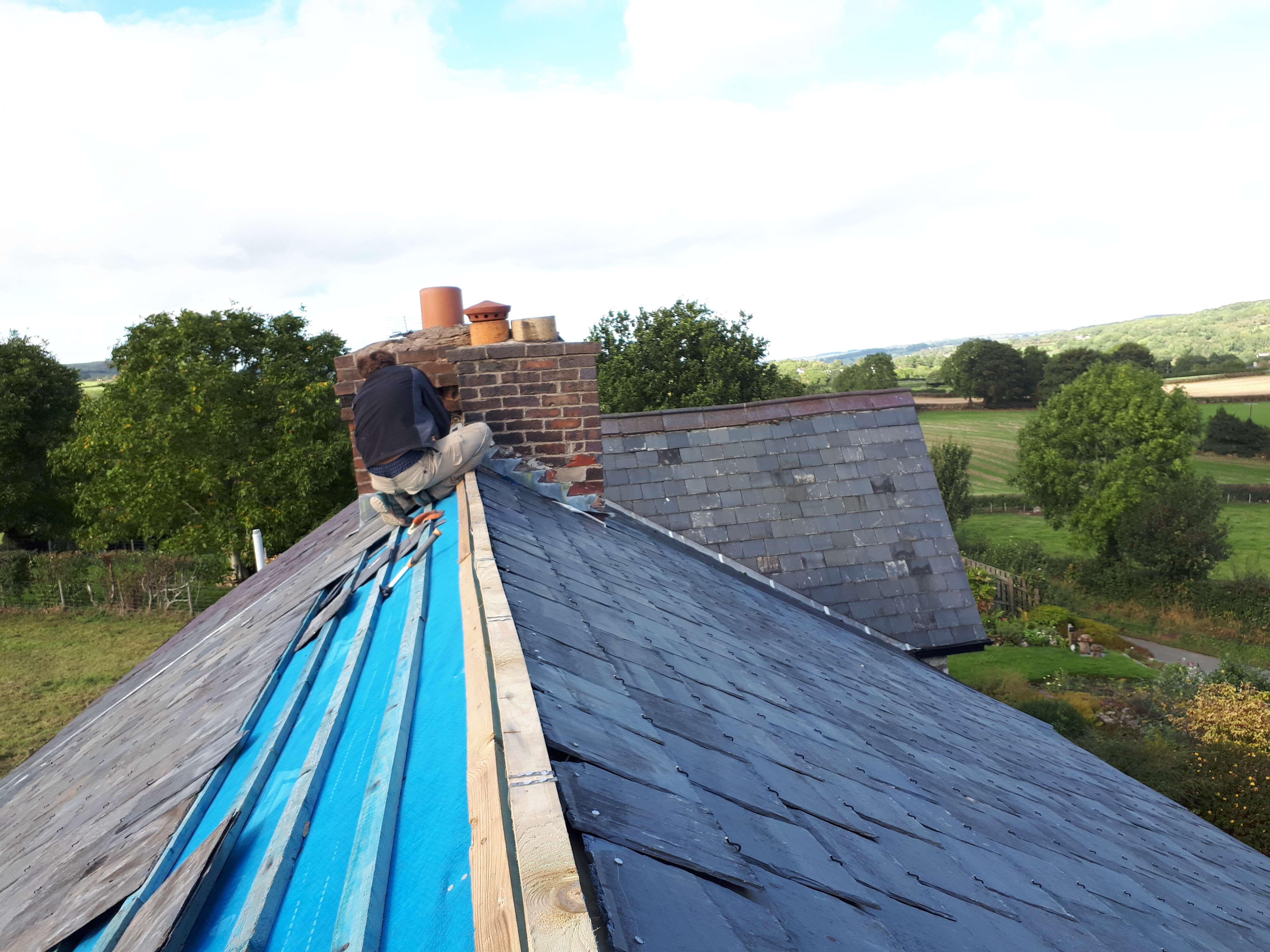
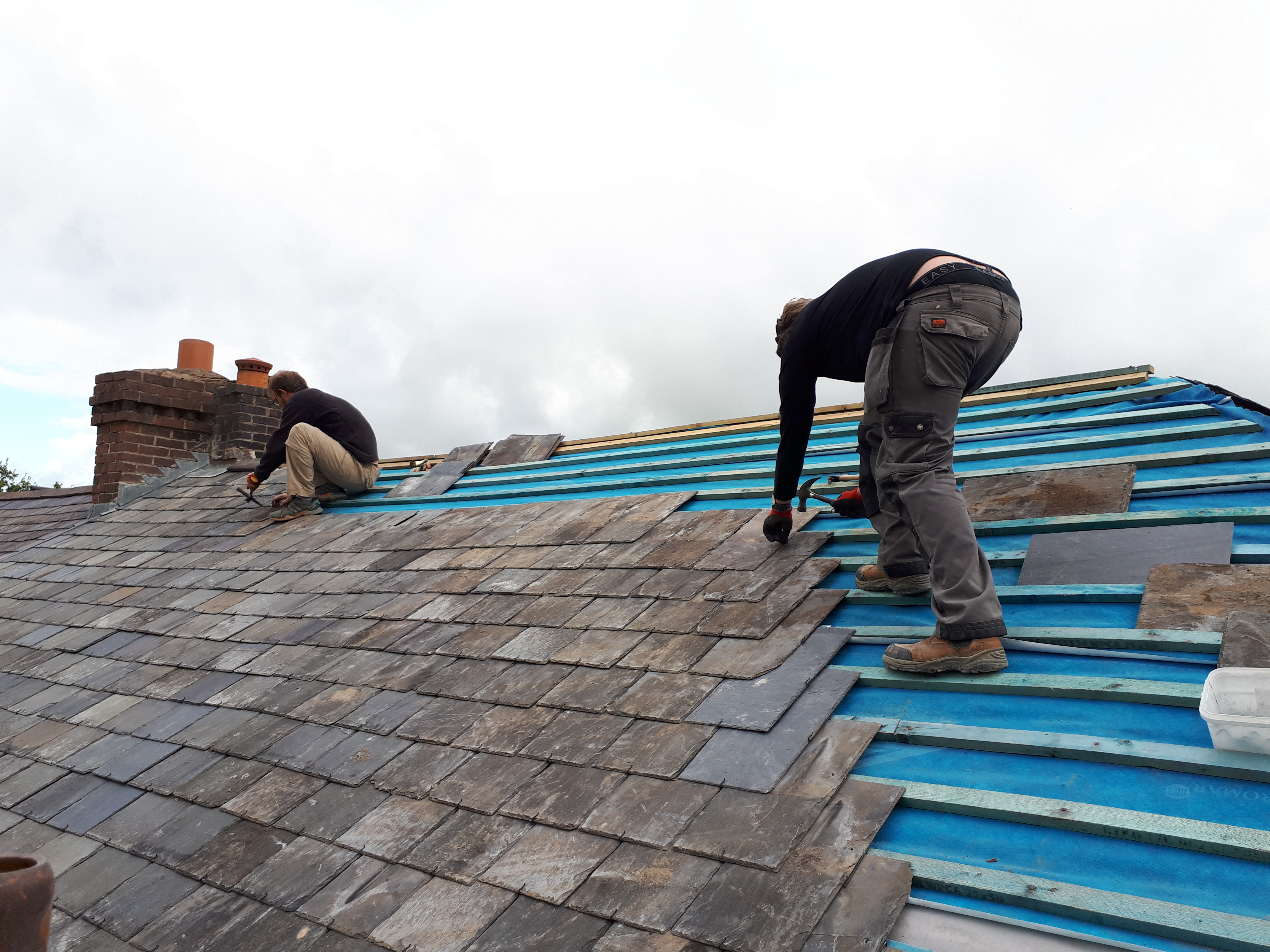
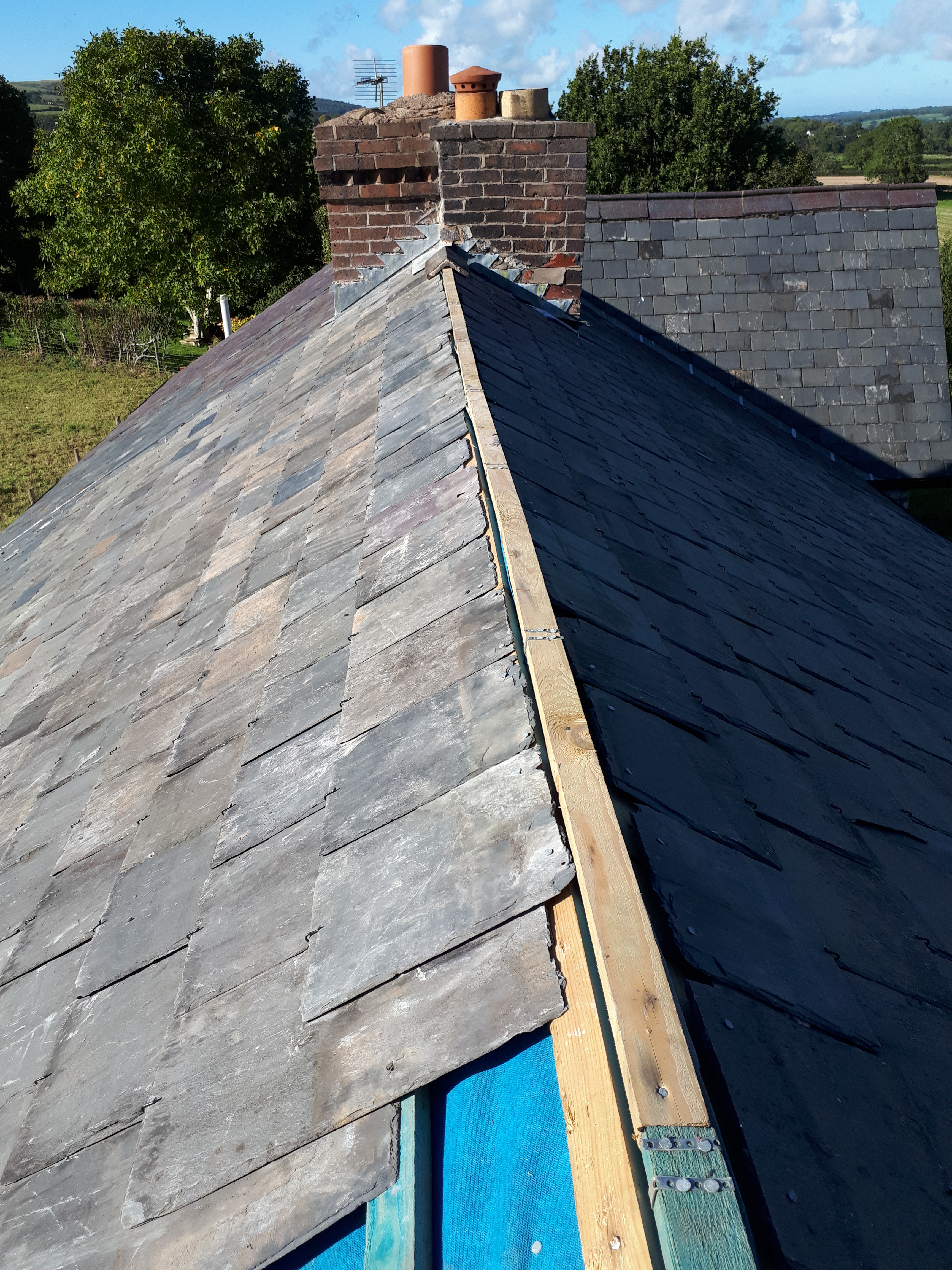
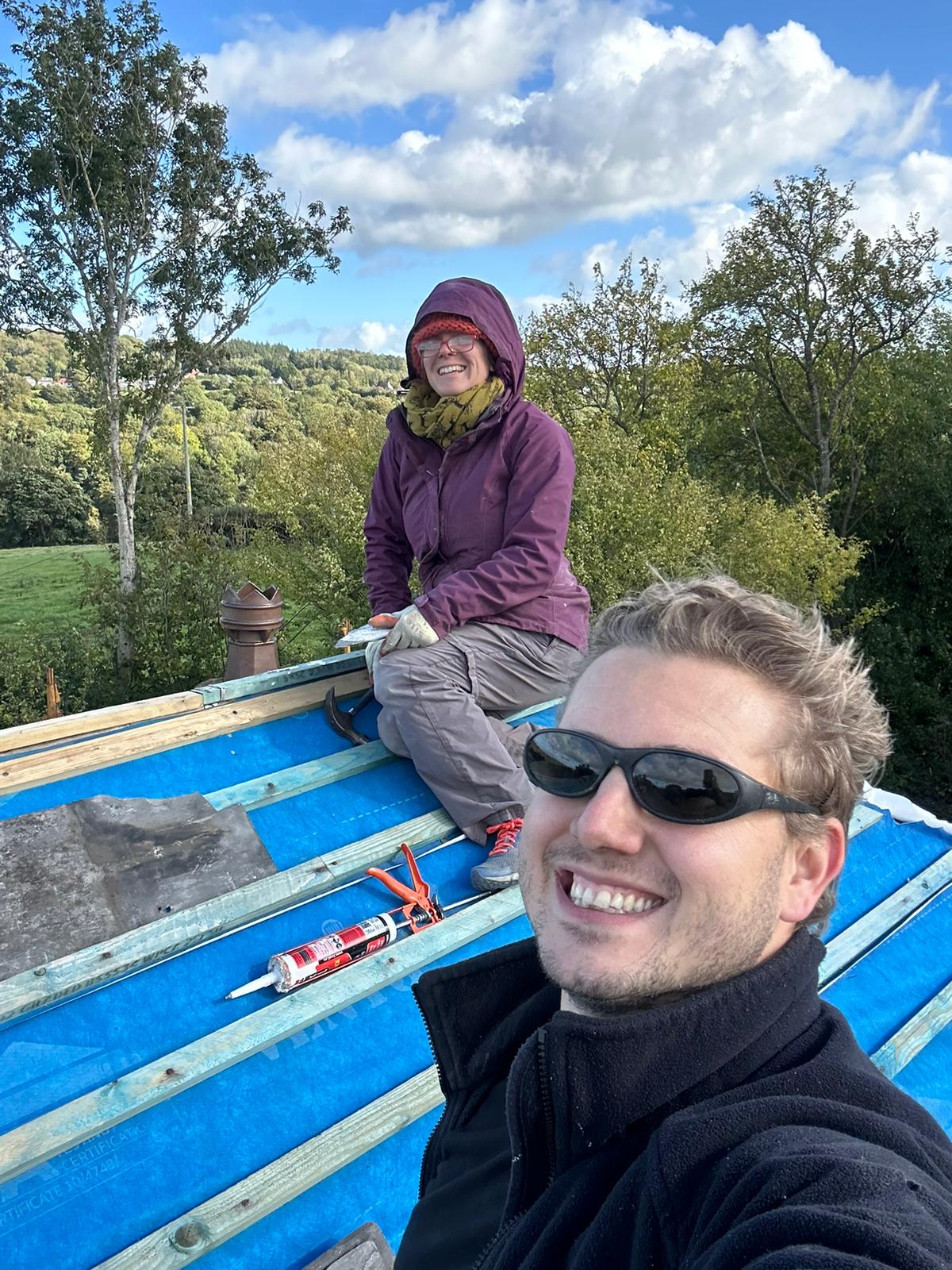

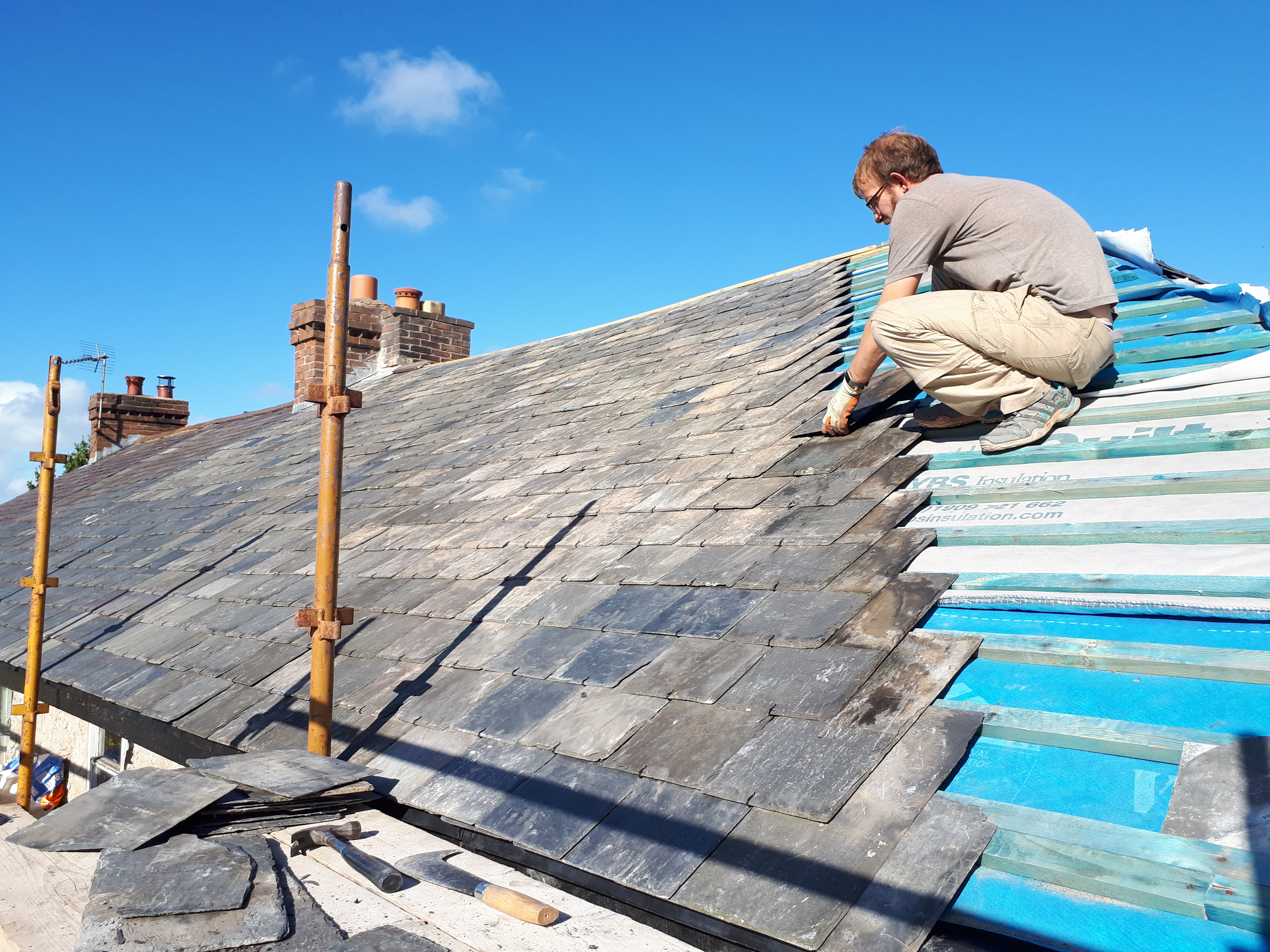
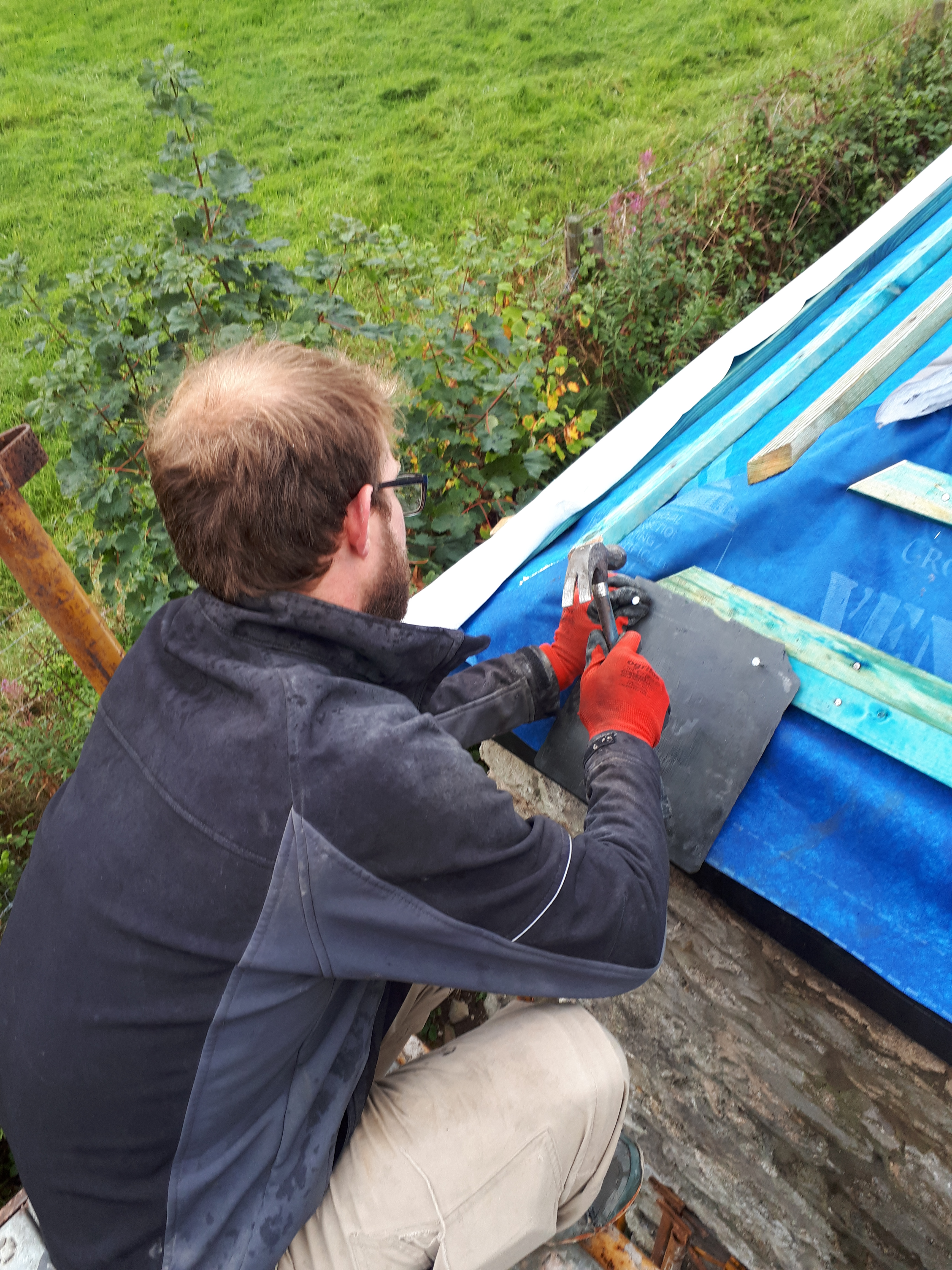
While Sarah worked hard inside the house, the rest of us returned to the roof. I spent much of my time on the awkward last few rows on the front of the house, which required lots of back and forth cutting slates to size and then nailing or gluing them in place. Chris spent much of the first day trying to get the flashing around the chimney sorted, a frustrating job, while Michael continued adding more slates to the middle of the roof. By the next day we were all working to get more slates on the back roof.
By the end of the day only a small gap remained, but we will probably need to borrow the cat ladder once more to get this final edge safely finished. With possibly only 150 slates left to put on, we’re getting very close to a waterproof house.
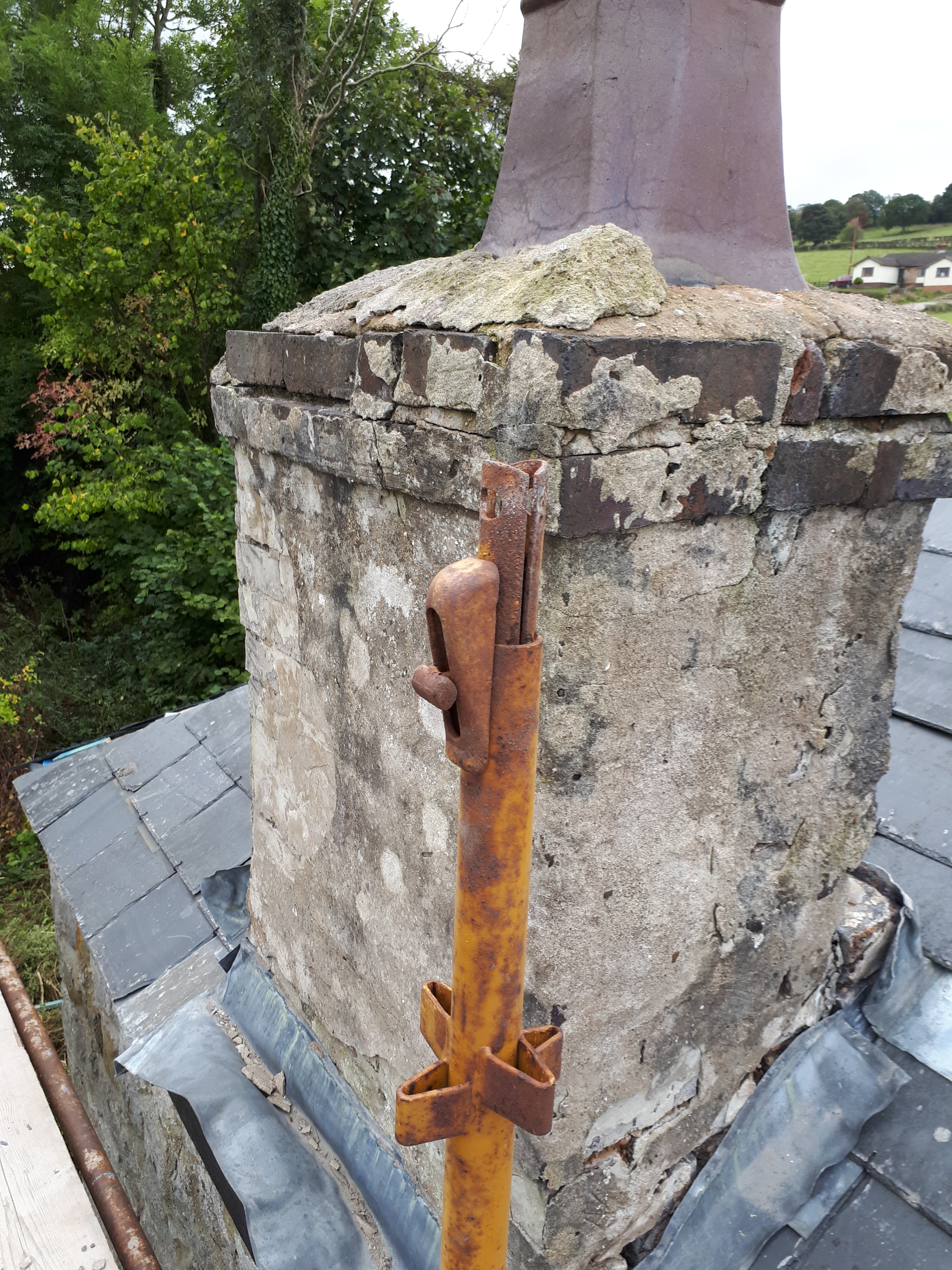
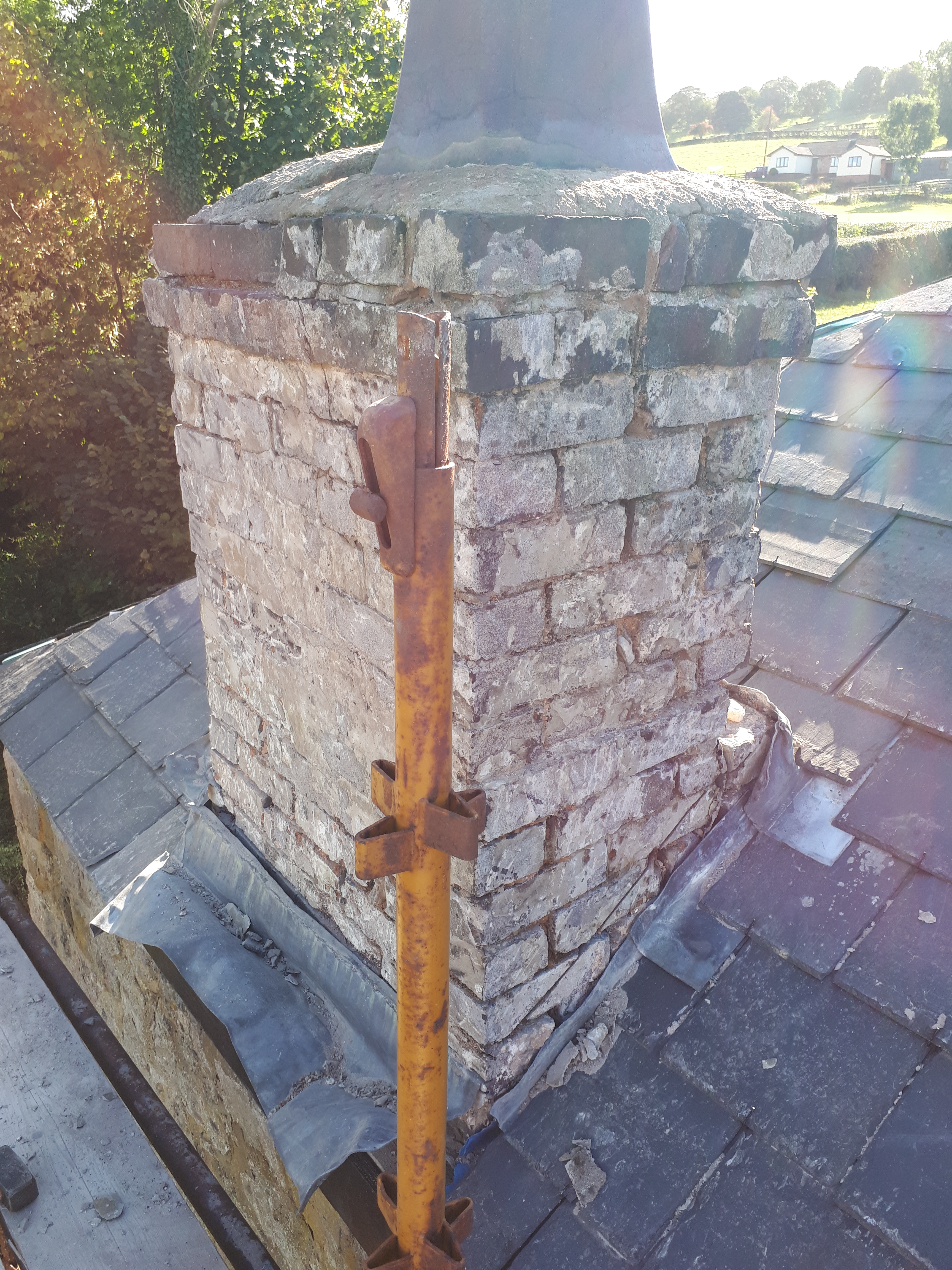
With roof space getting tight, I migrated back to the front of the house, to remove the loose render on the chimney stack. The bricks underneath weren’t as crumbly as we expected, so we can probably just repoint and leave the bricks exposed, which should prevent the damp from building up.
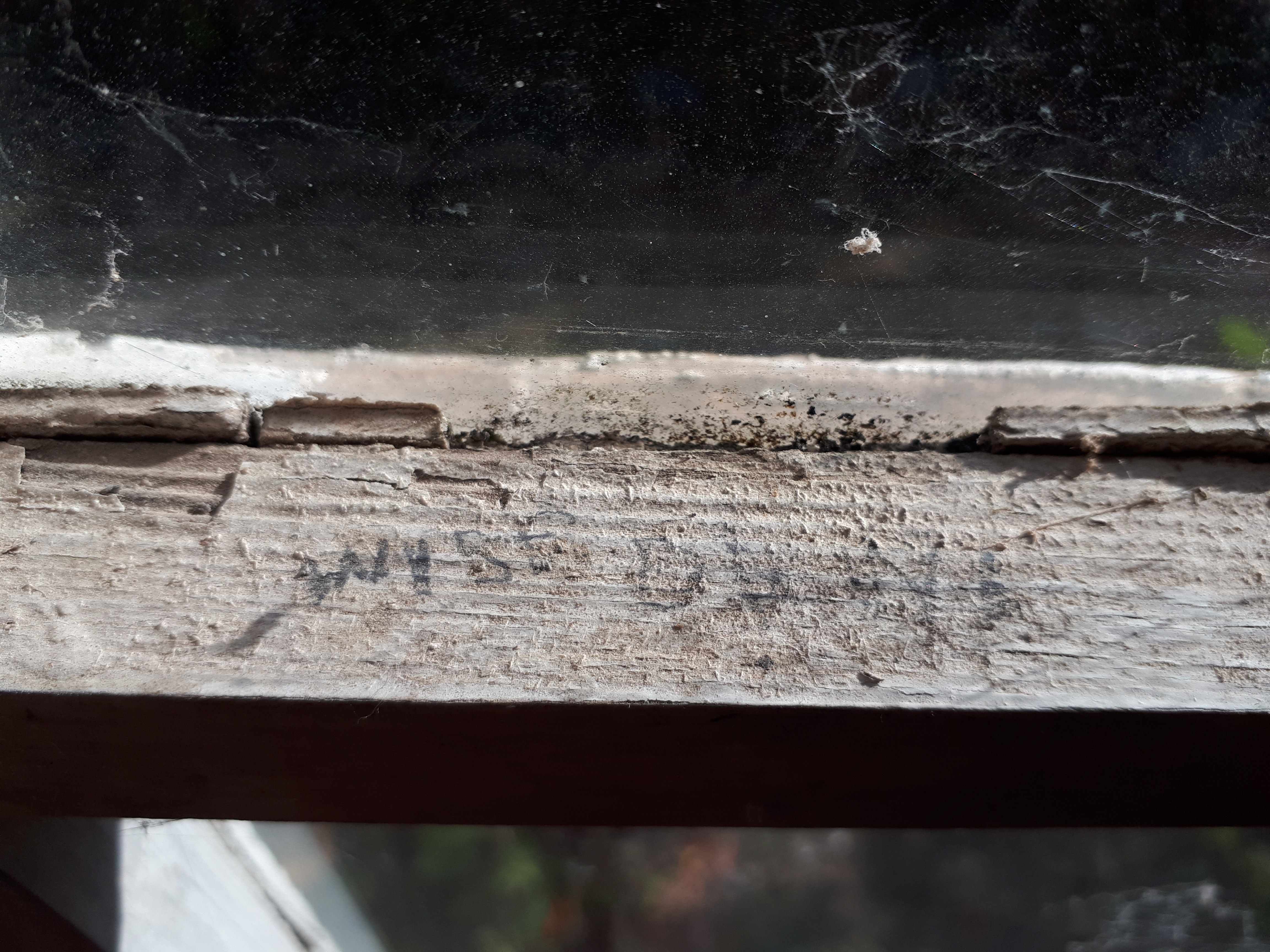
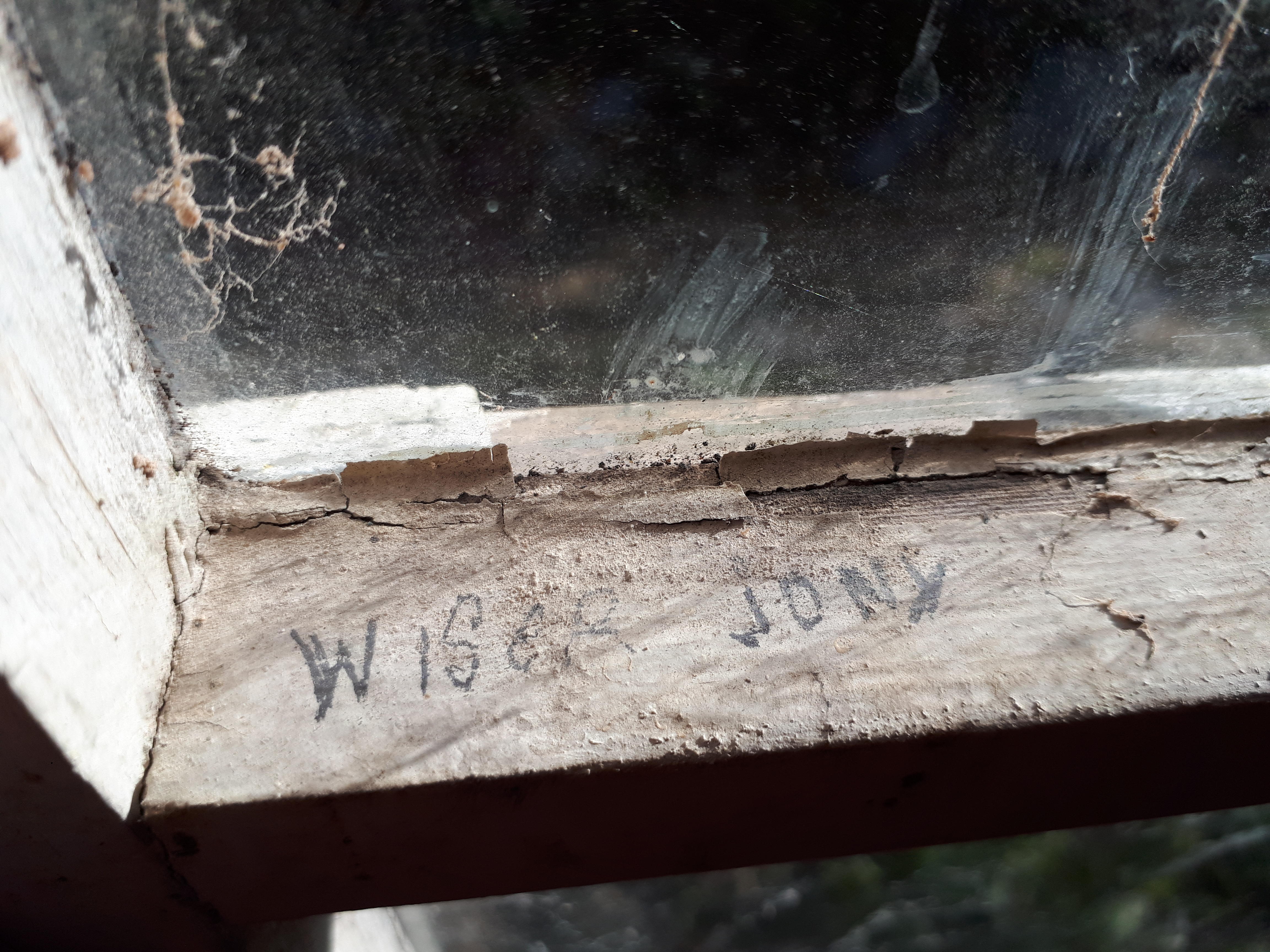
Despite a large number of fiddly and slow jobs, we seemed to get a lot done this weekend, which is the magic of having extra pairs of helping hands. When closing the large terrace doors I noticed some old writing on the wood. It looks to me like the pair of scribblings say ‘wise Dave’, and ‘wiser Jon’. I guess it might be time to replace the names, but there might have to be a contest to decide who gets the be the wiser of the houses new wise guys…
A big thank you to Sarah and Michael for their hard work and enthusiasm.
-
The roof
With the structure of the roof repaired, we were now ready to begin rebuilding what we had so laboriously taken apart. So, booking another week off work, we set about a 9-day marathon of roofing. With the slates cleaned and sorted into three piles, depending on their condition, we started our work on the hip of the roof, the smallest section, but also the most complex due to the amount of edge compared to area.
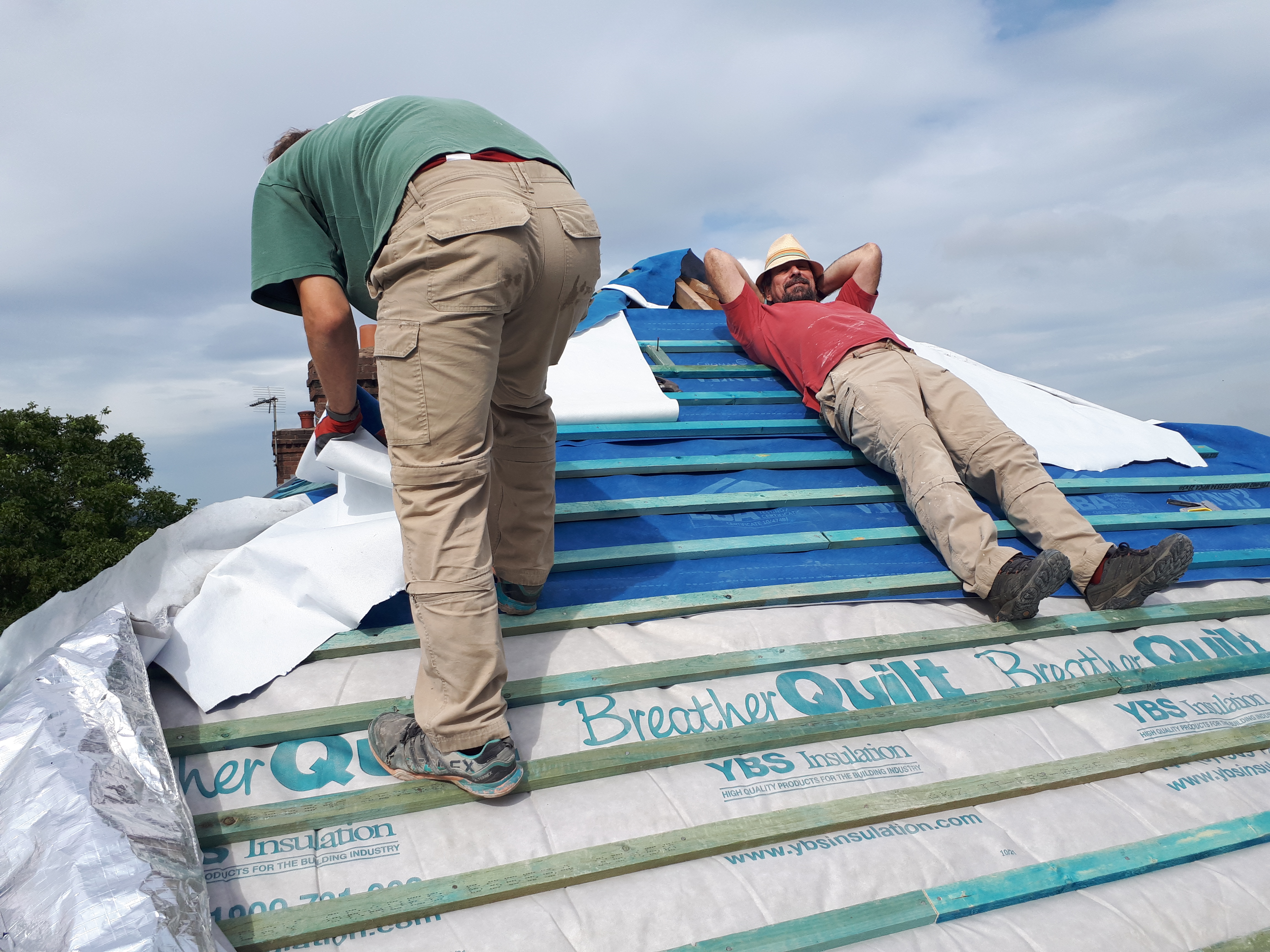
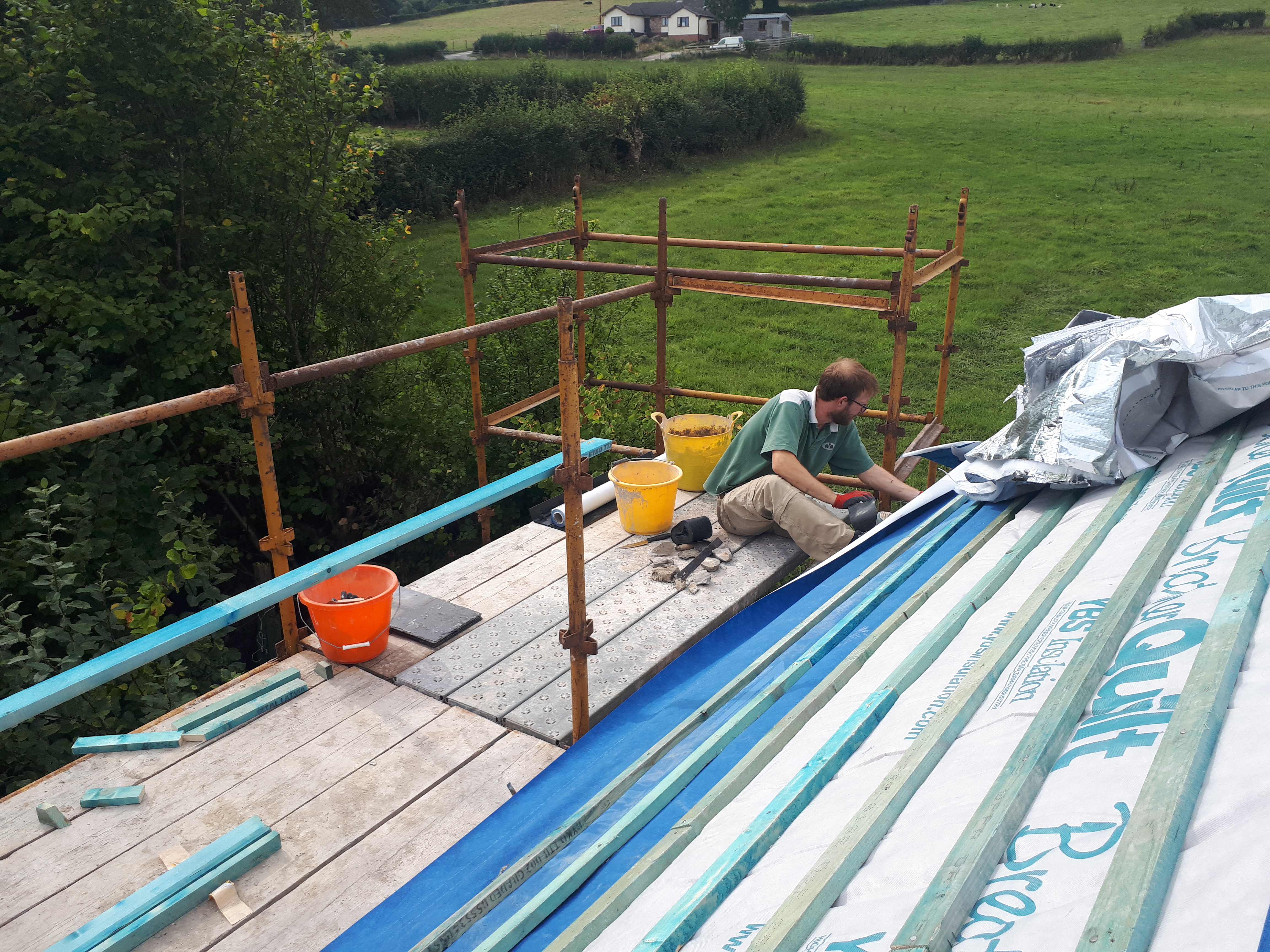
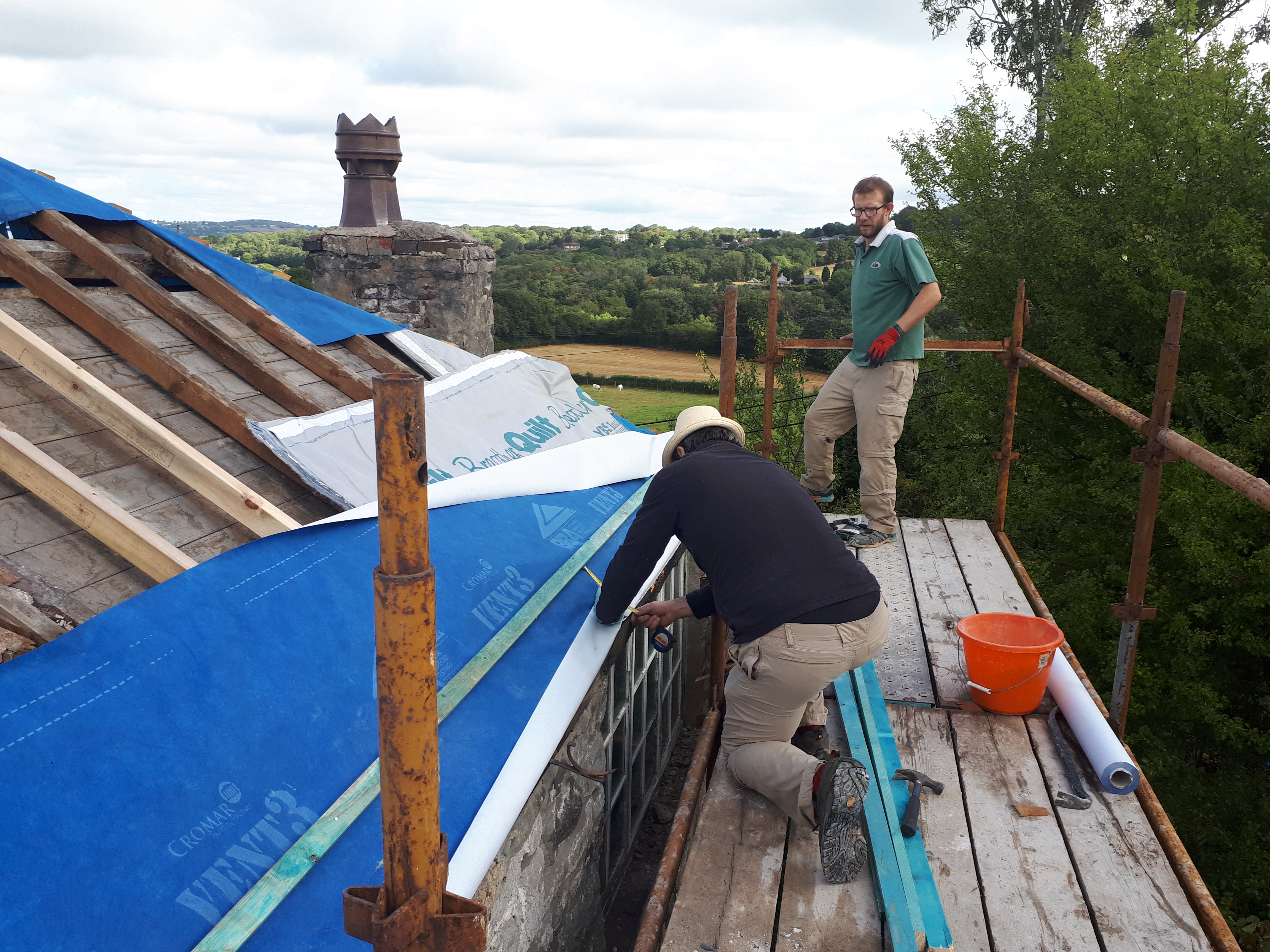
We were lucky enough to have a good deal of help on our week off, with my dad travelling up to lend a hand, and my mum and brother joining towards the end of the week. Our first job was to finish the last bit of membrane and batoning, now that the purlins were safely within the roof.
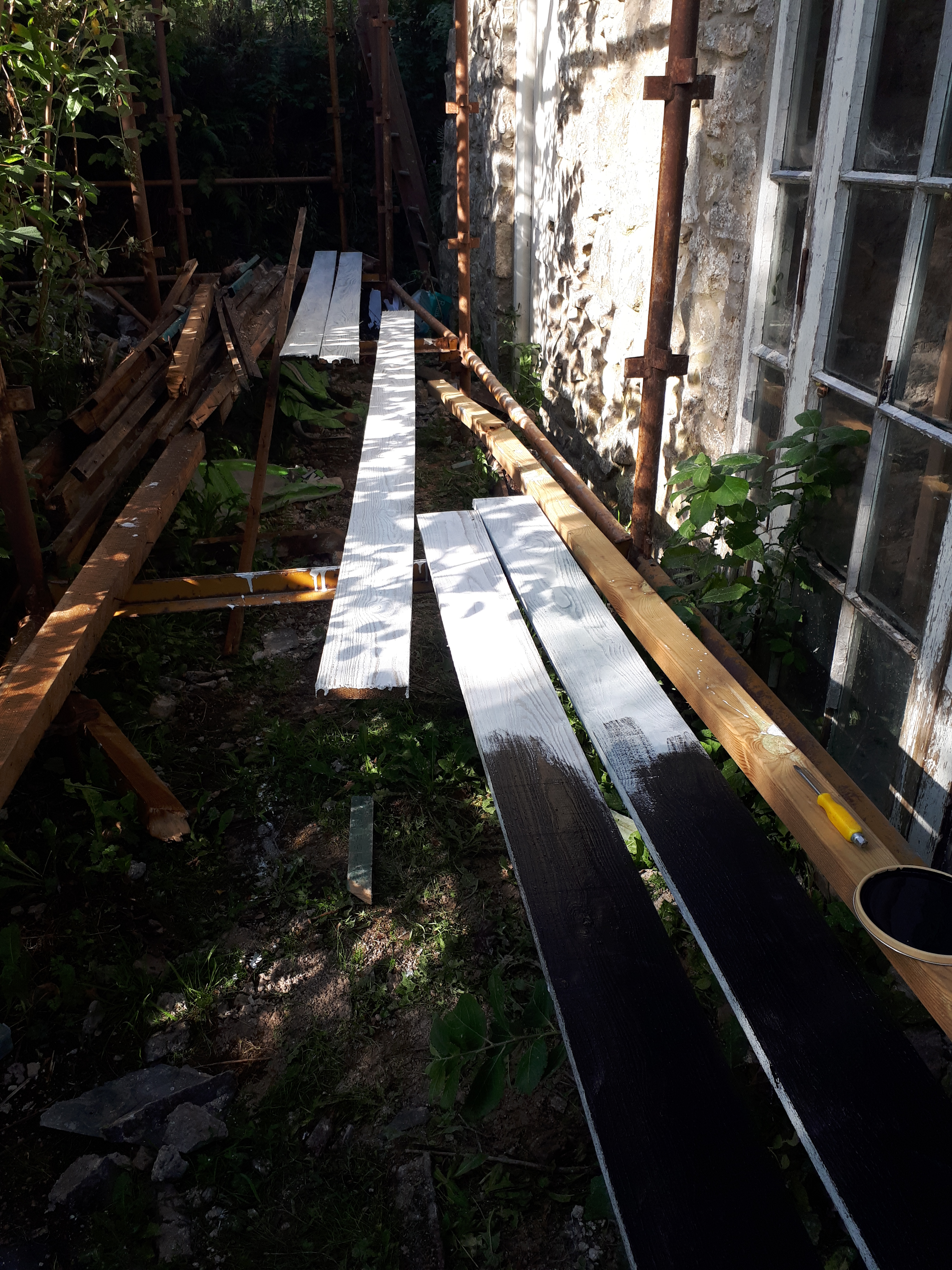
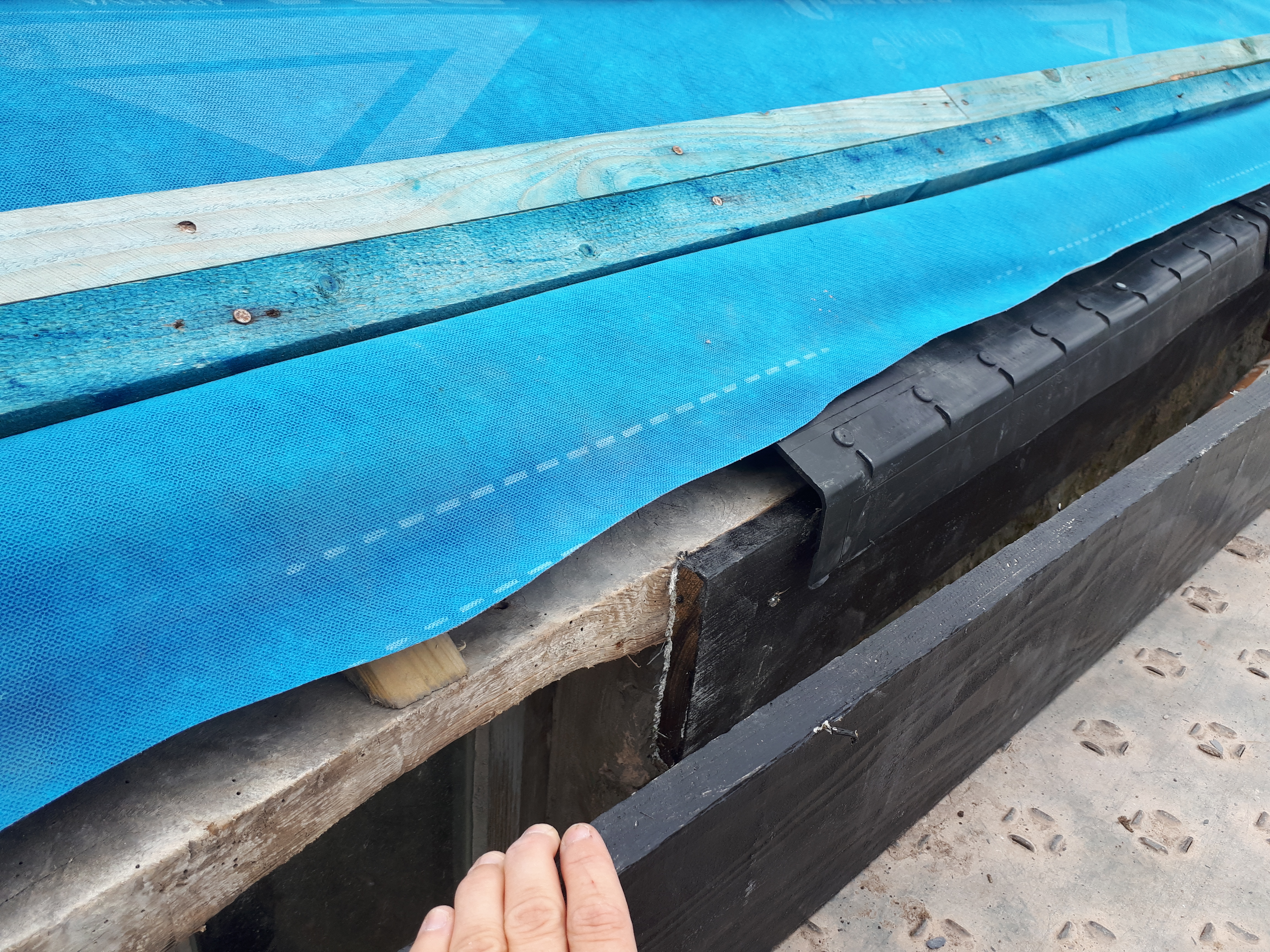
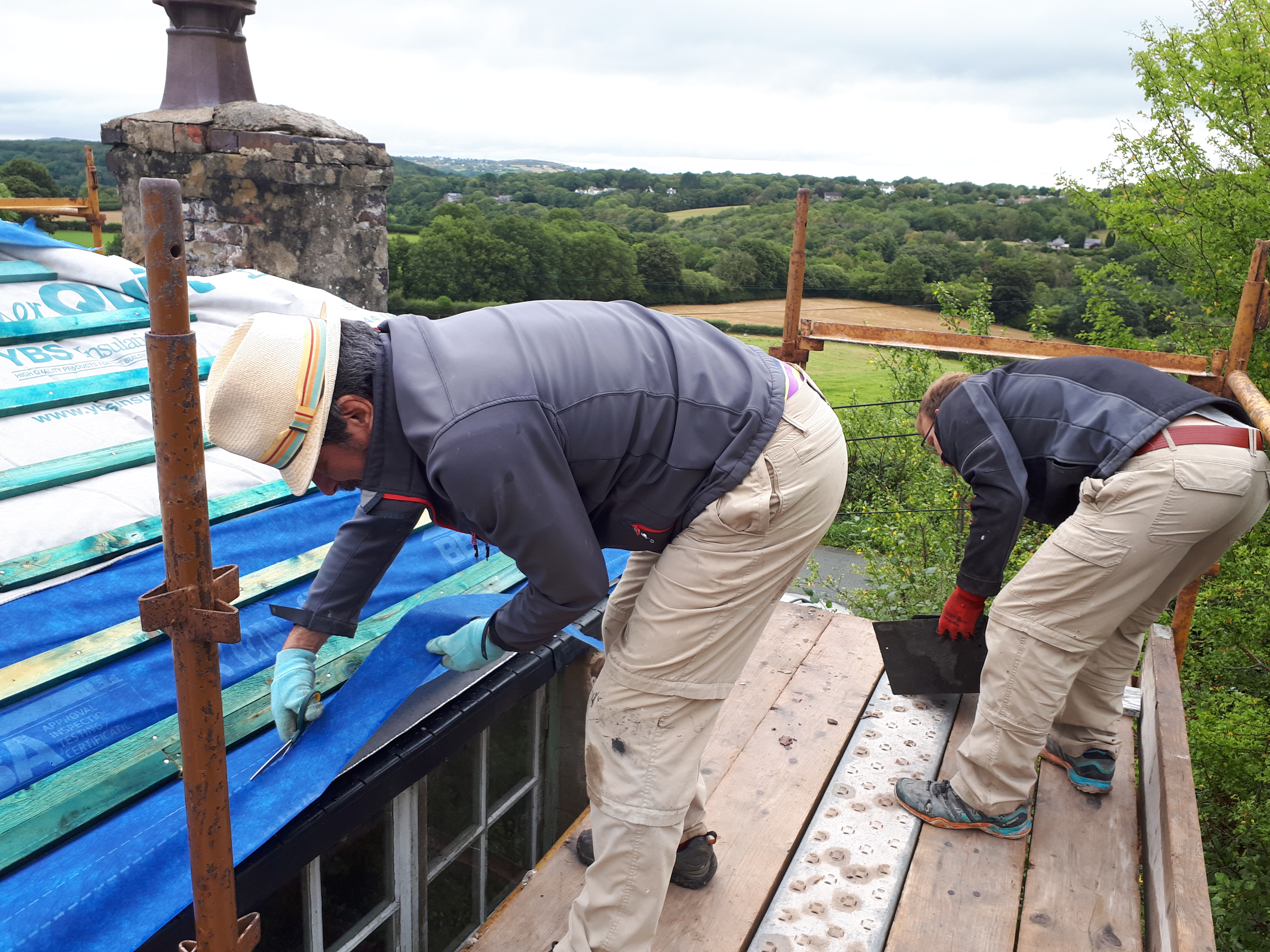
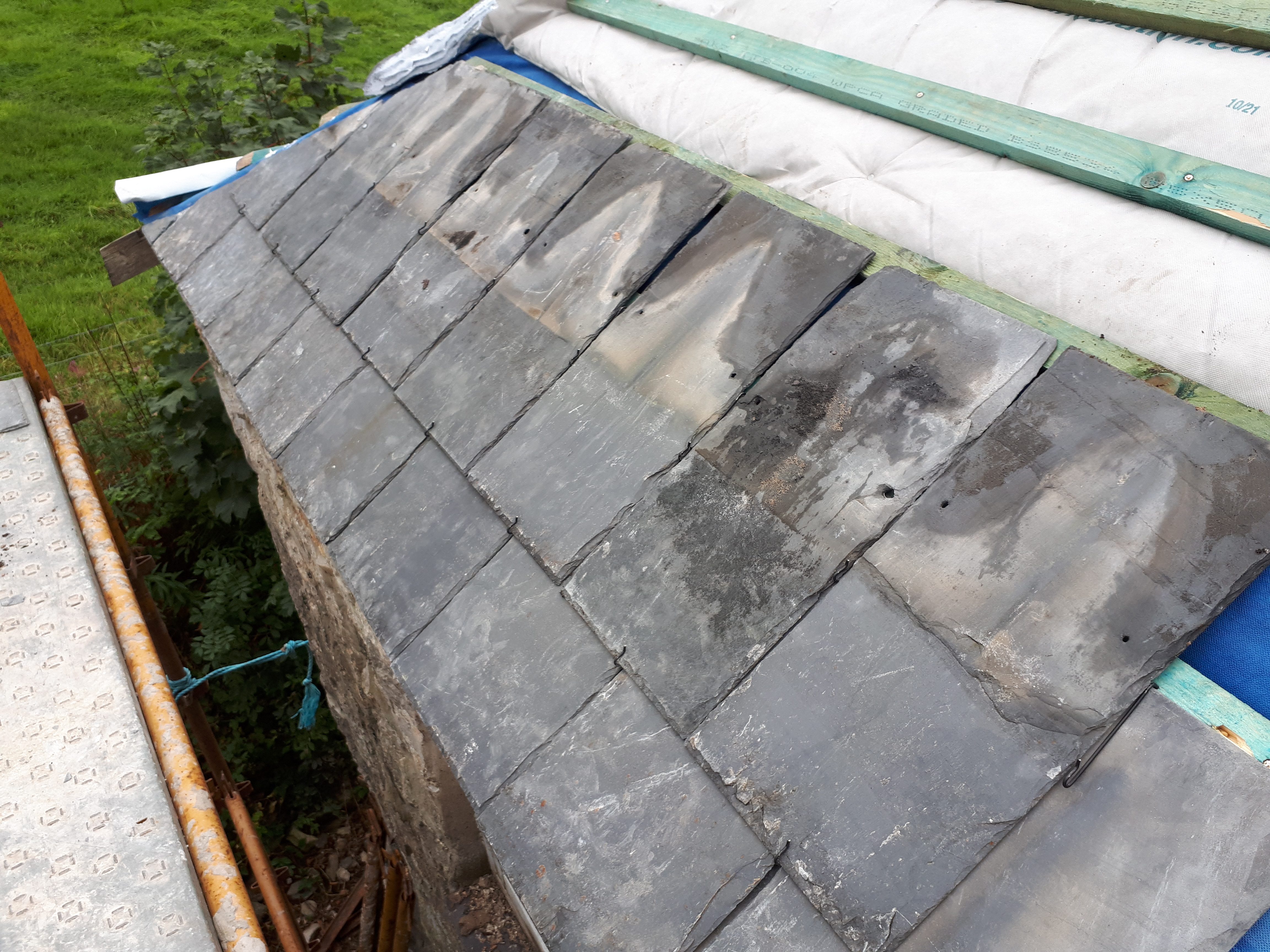
Once the batons were in place, adding the first slates had to wait till we had repaired the stonework beneath the edge of the roof, some of which was crumbling away, and painted and installed the fascia boards. We had opted for wooden fascias, which needed painting with a white undercoat and a black gloss. The fascia boards were then screwed directly onto the wooden beams, beneath the roof. Over the top of this then went a felt tray, a piece of plastic, which covers and protects the wall from water running off the slates into the guttering.
Finally, all that in place, the first slate went on. We had opted to use hooks when putting our slate back on. These hooks are nailed in beside each slate, and would then hold the slate above in place from it’s base. The advantage of hooks is that individual slates can easily be removed when they need replacing. It also means that we could reuse more of the broken slates, as we didn’t have to get nails through them. As long as any broken sections were covered by the slate above, they would be watertight.
In the interest of additional safety, however, the first two slates on the edge needed to be fixed in place with nails, as did any that were on edges elsewhere. The first slate put on is a half slate, which overlaps the edge enough to allow any water to run off into the guttering. Over the top of this, a full slate is nailed. We did have some half slates from those we had removed previously, but many of our half slates had broken, meaning we had to cut more from broken whole slates. For cutting slates we used the edge of a section of scaffolding, and the back of a billhook. Placing the slate on the edge of the scaffolding, along the line we wanted to break, we carefully hit along that line with the back of the billhook. This was time-consuming and slightly back-breaking work, which often ended in a broken slates that could no longer be used, but it was necessary to make the best use of the slates we had.
The same technique had to be used to break slates for the edges of the roof, where the slope meant we had to break each slate individually to get the right shape to fill the gap. It was this that made the first side slow work, as there were relatively high amounts of slates that needed shaping.
Halfway through our second-day rain set in. While working high up on scaffolding in the rain isn’t entirely comfortable, it was incredibly rewarding to watch the rain pearl off the slate and run down from one to the other, until eventually, it dropped away into the void where the guttering would one day sit.
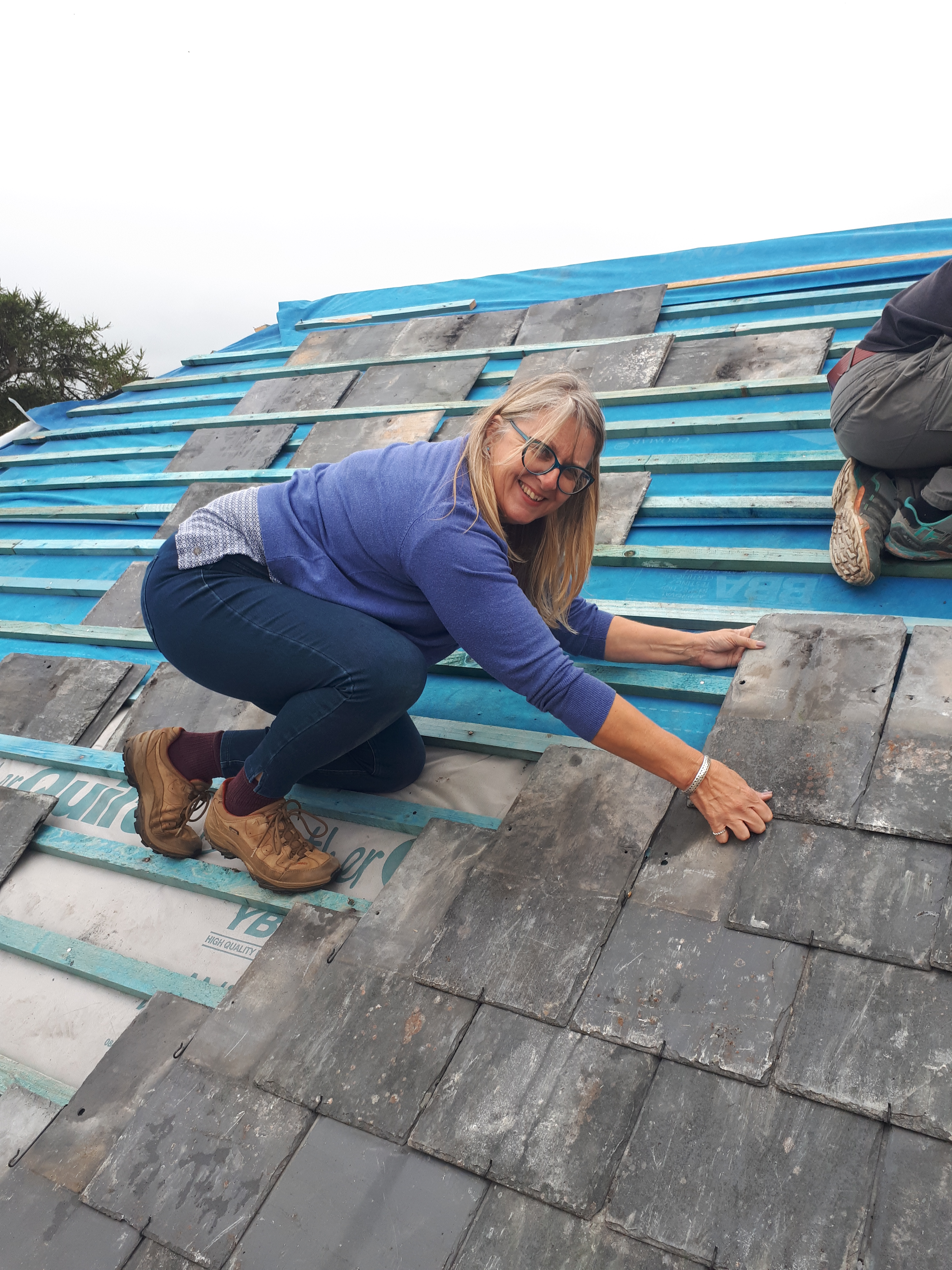
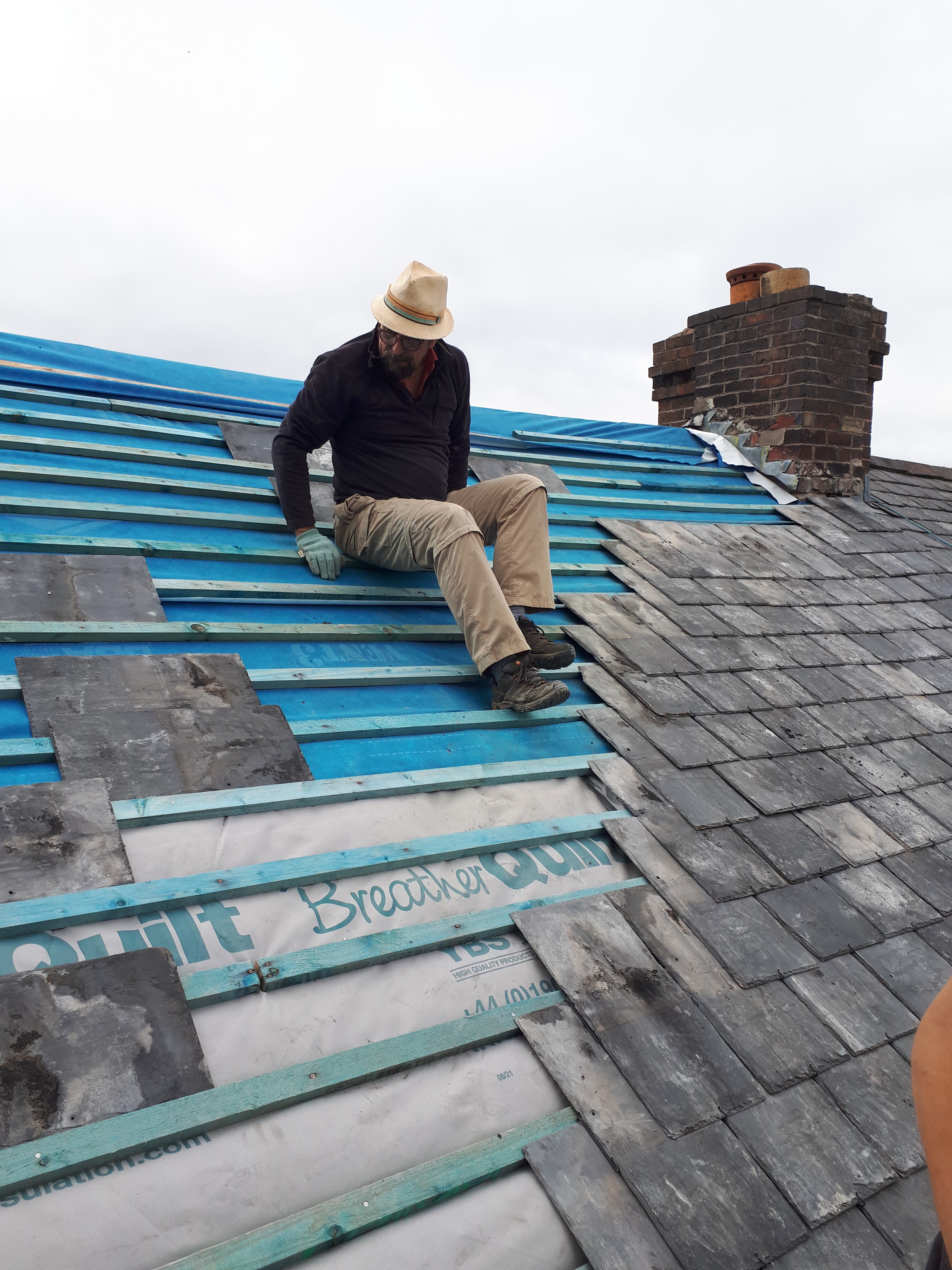
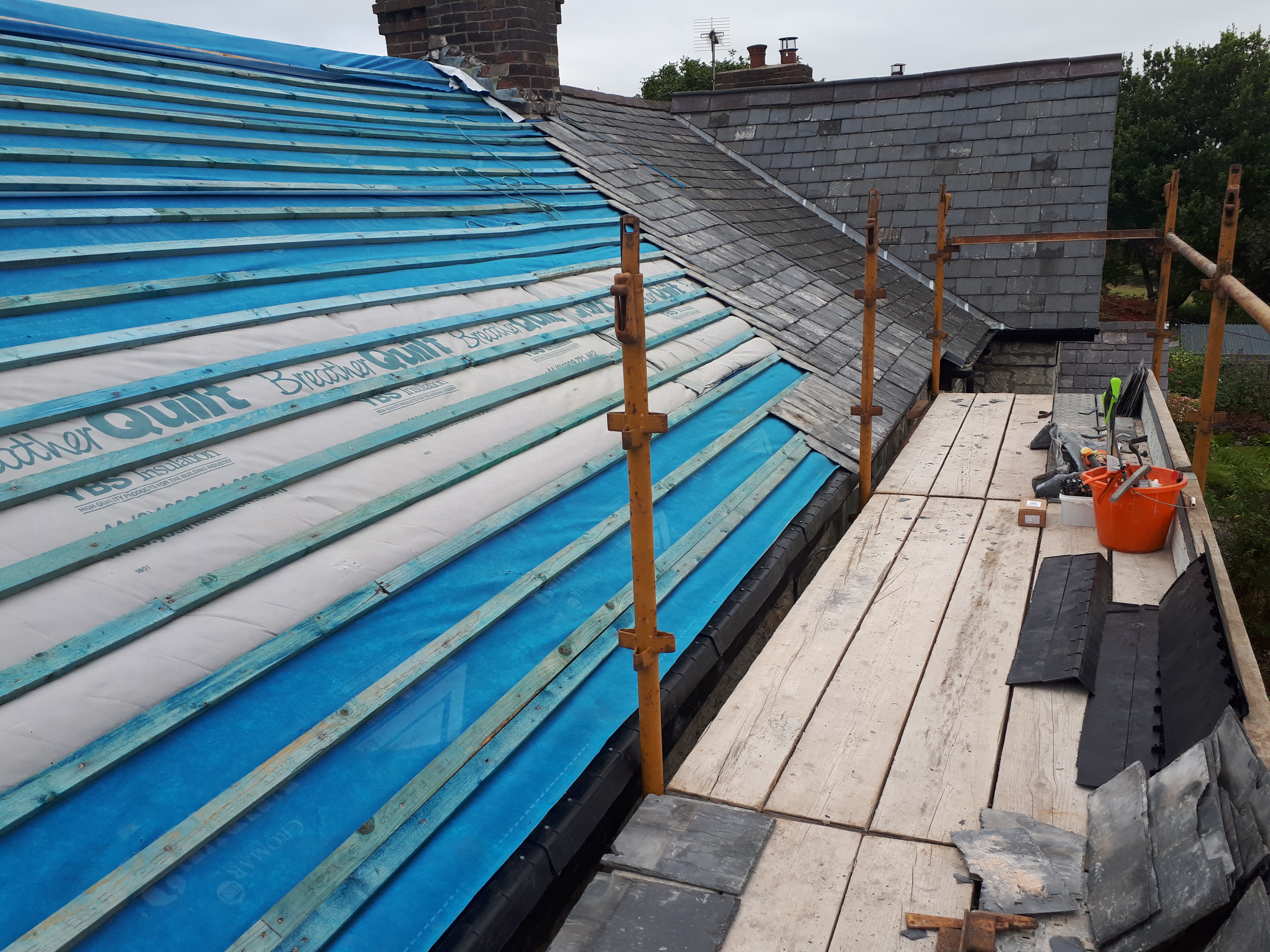

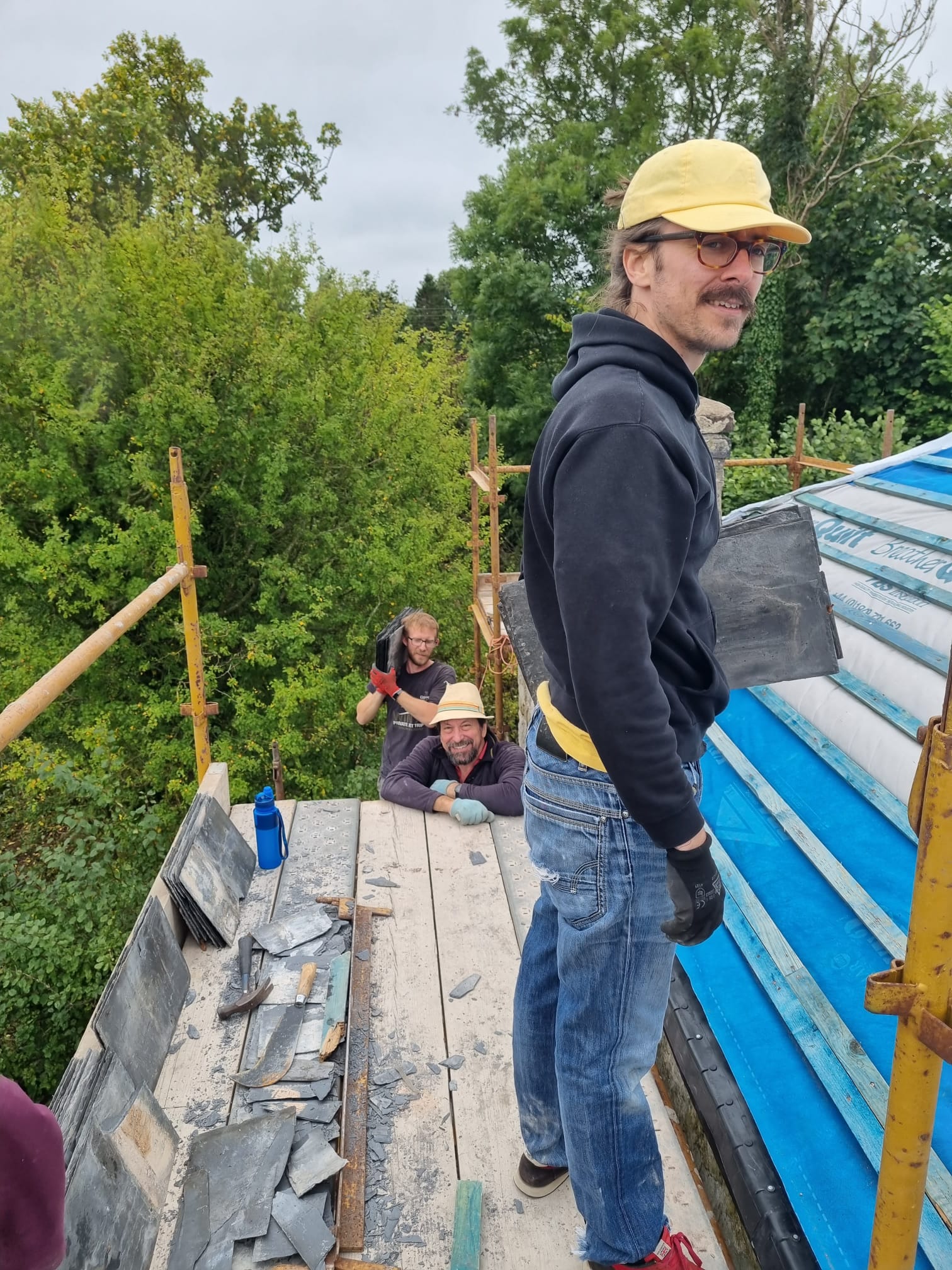
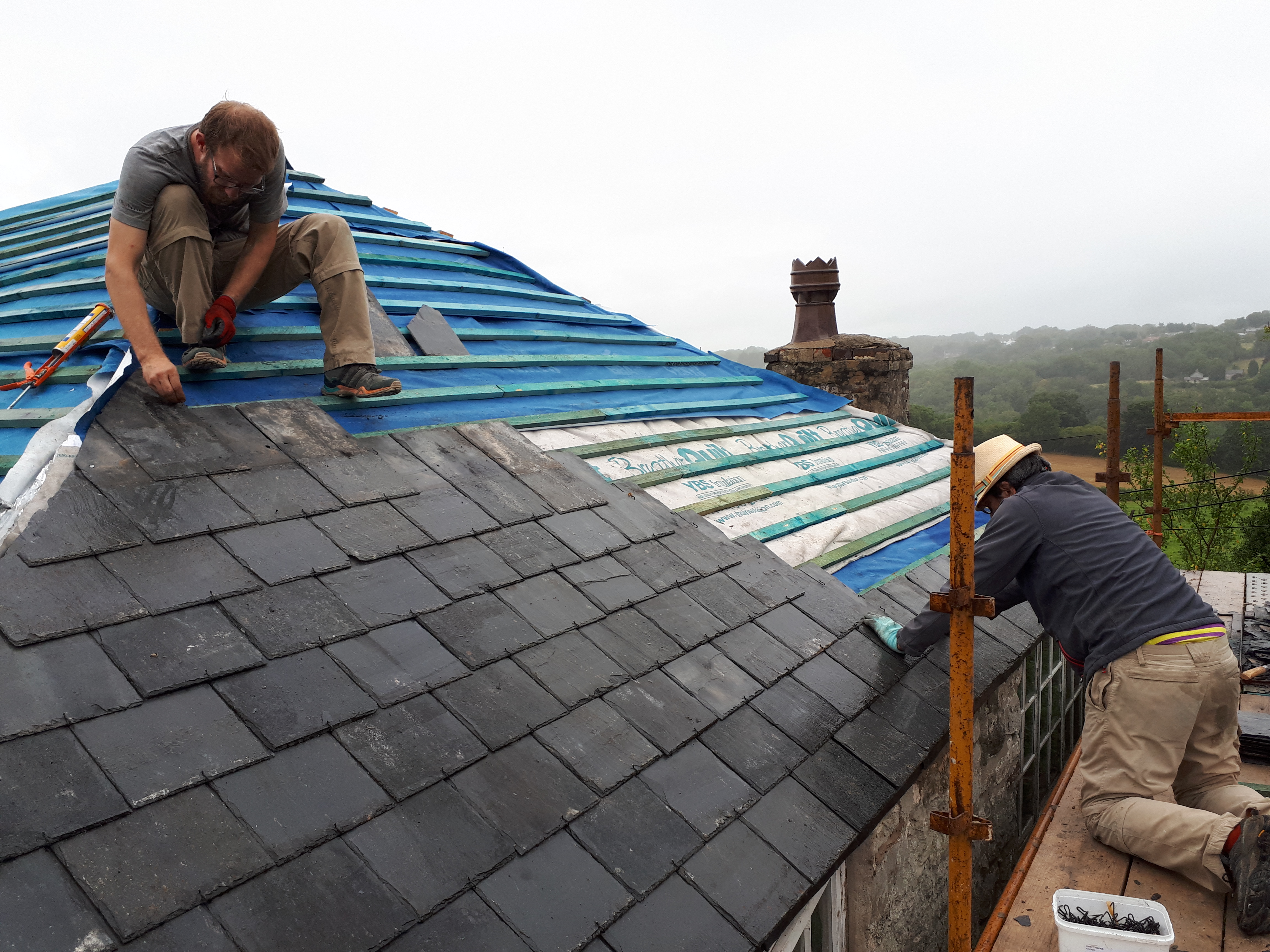
It was part way through the second side, at the front of the house, that the cavalry arrived. By now we felt like roofing experts, with each new section simply being a repeat of the last. The front of the house had the additional benefit of having large sections where no cutting was required. We utilised the extra energy to carry slates up from below, and place them on the roof, ready to go on, significantly speeding things up.
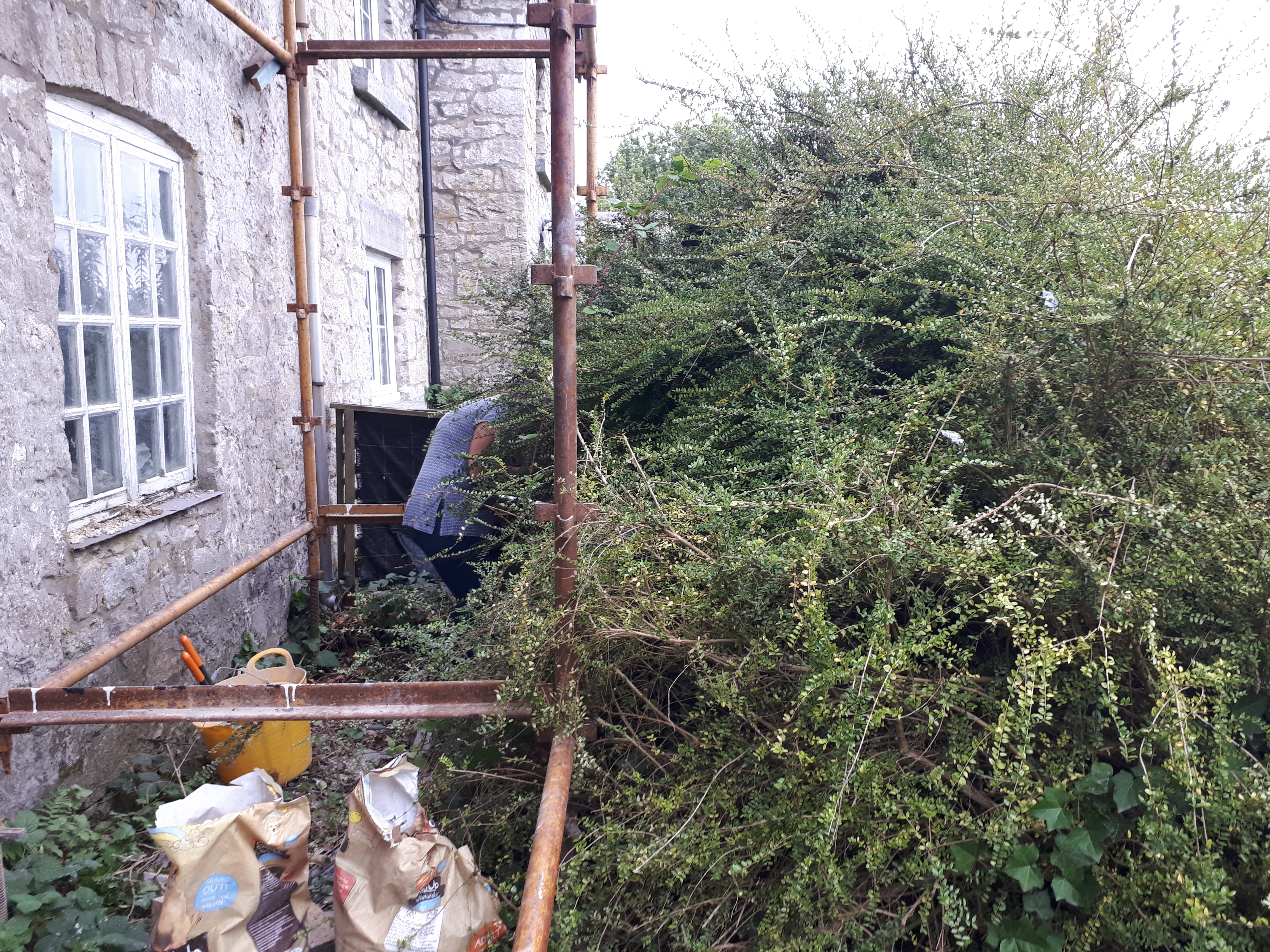
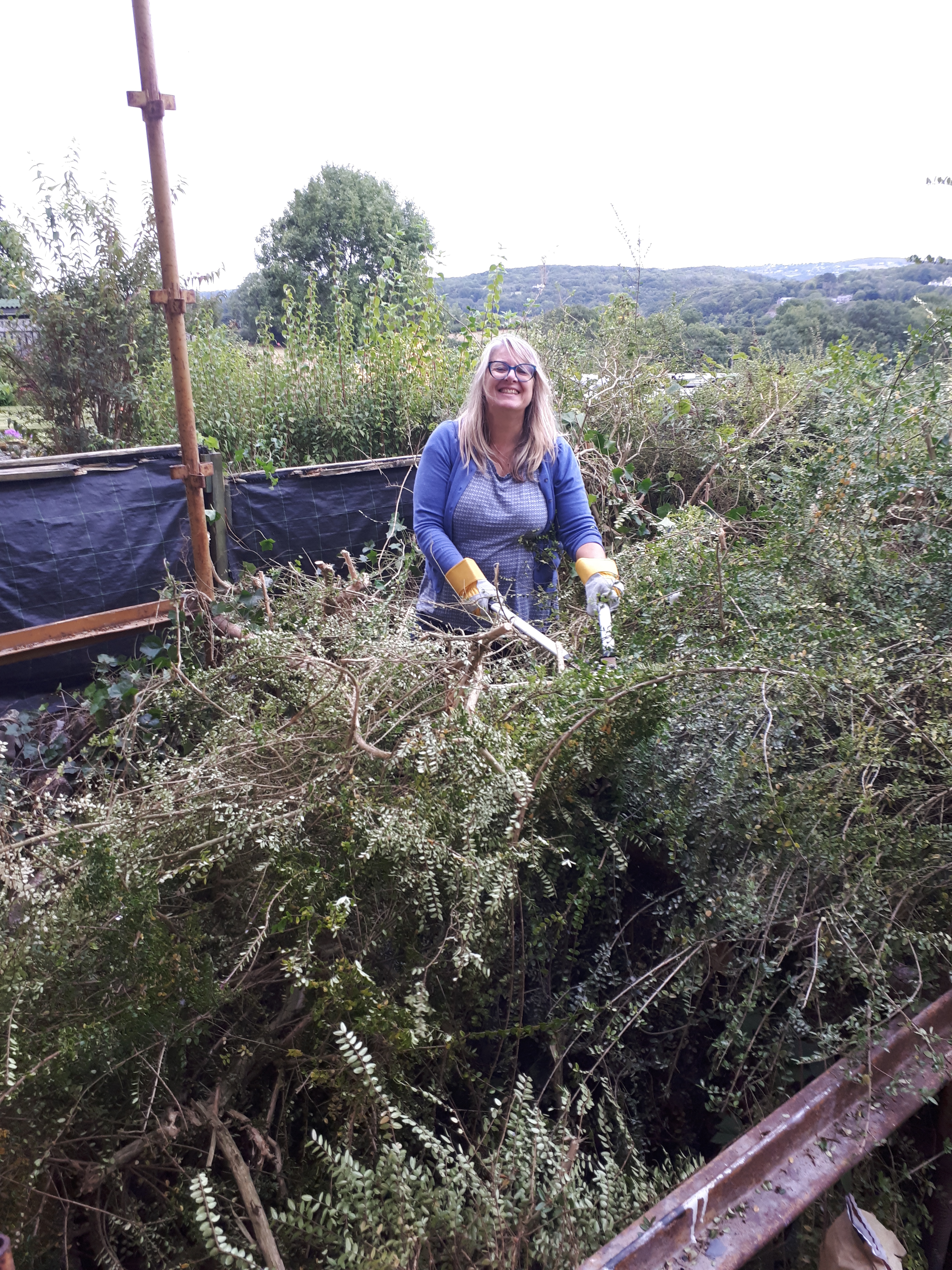
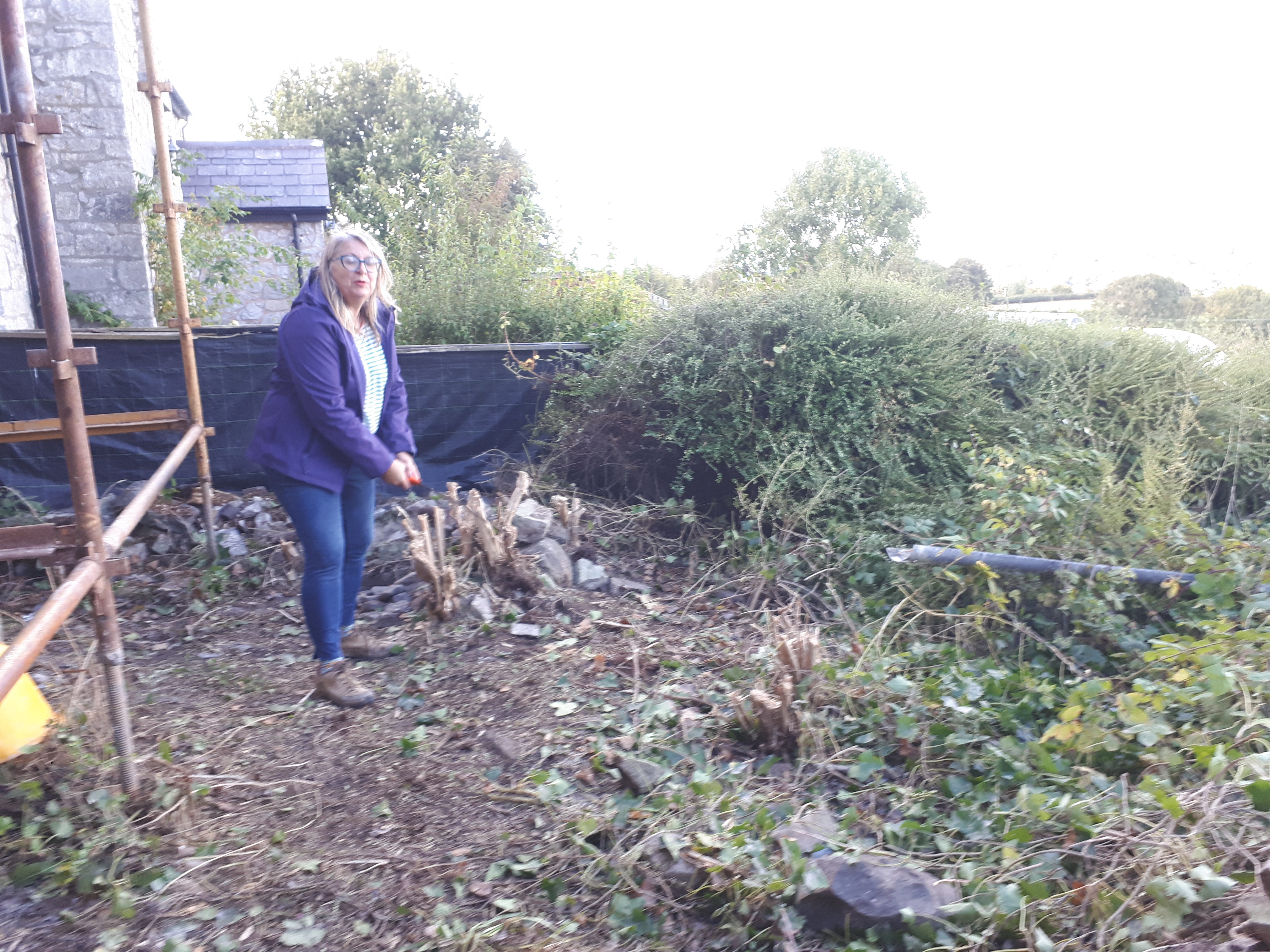
While myself, Chris, my brother Tom and my dad, carried on the work on the roof, my mum set to work on a very large and overgrown box that was blocking out the light from the lounge window. Once, this box was apparently part of a manicured hedge, but having been left to grow wild, it had become rather a beast. The dense and tangled bush didn’t give up easy, and it took mum several days to get right through and clear away enough that, for the first time since we brought the house, we could see a view from our lounge window.
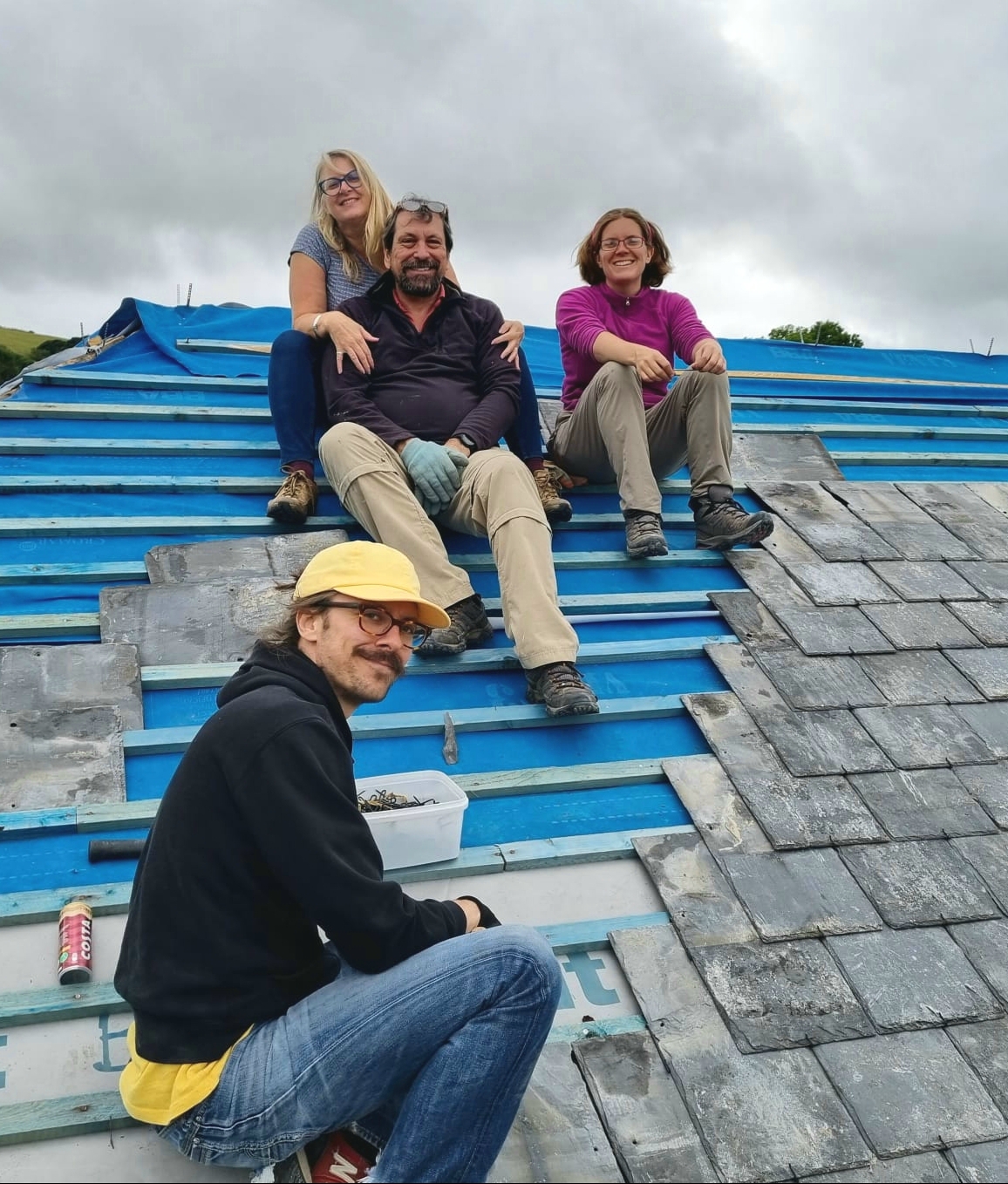
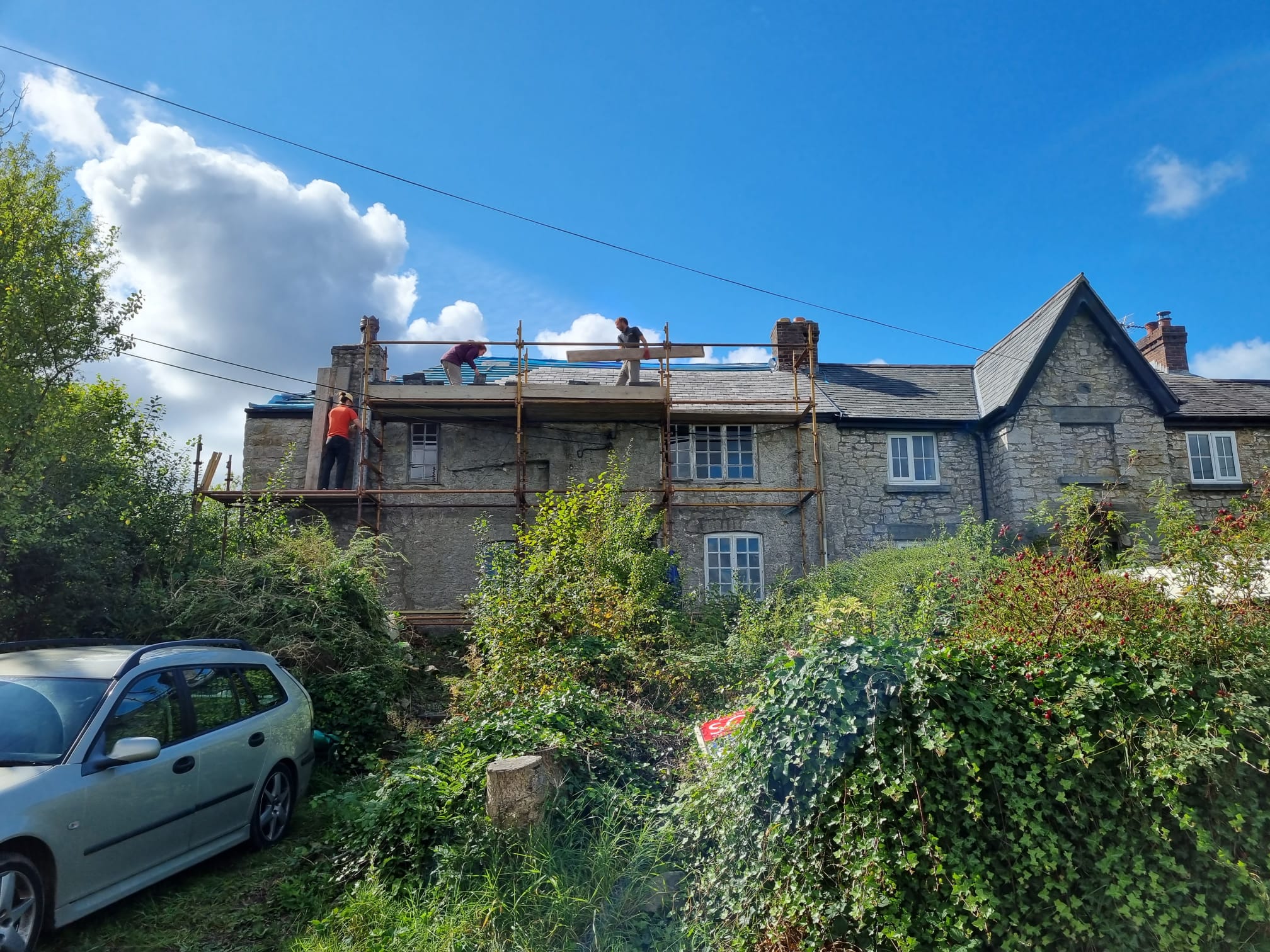
Up on the roof life continued, one slate at a time. Having finished around half the front we began to start preparations on the back, Chris being concerned that we shouldn’t overload one side with slates while the other way bare. In order to set up enough scaffolding at the back we had to take down and move the scaffolding at the side of the house, as well as some at the front.
To rid us of yet another load of rubble, garden waste and broken slate, we ordered another skip. With this ready to be filled my mum and brother set about trying to tidy up the inside of the house as best they could, once more full of rubble and dust.

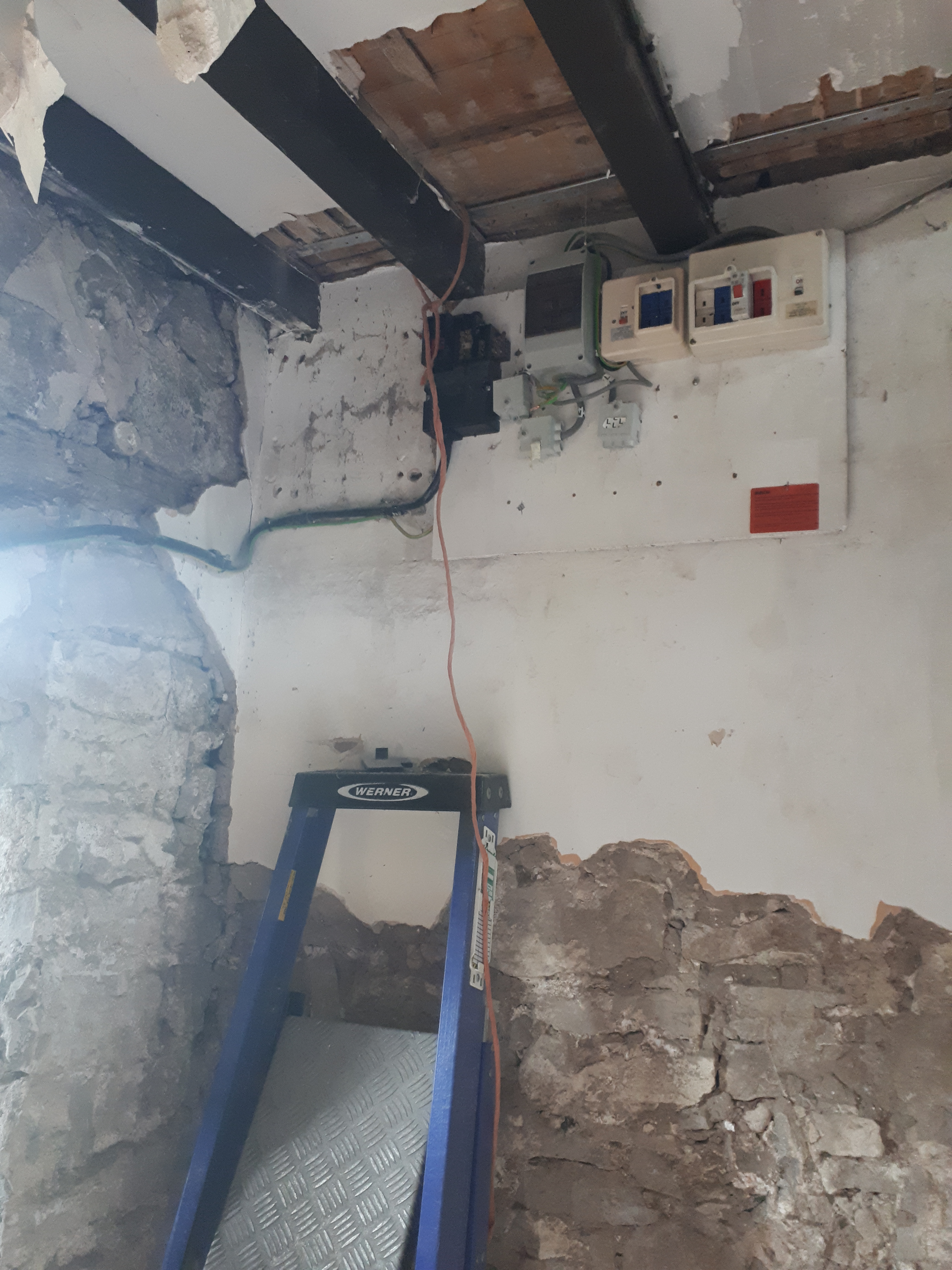
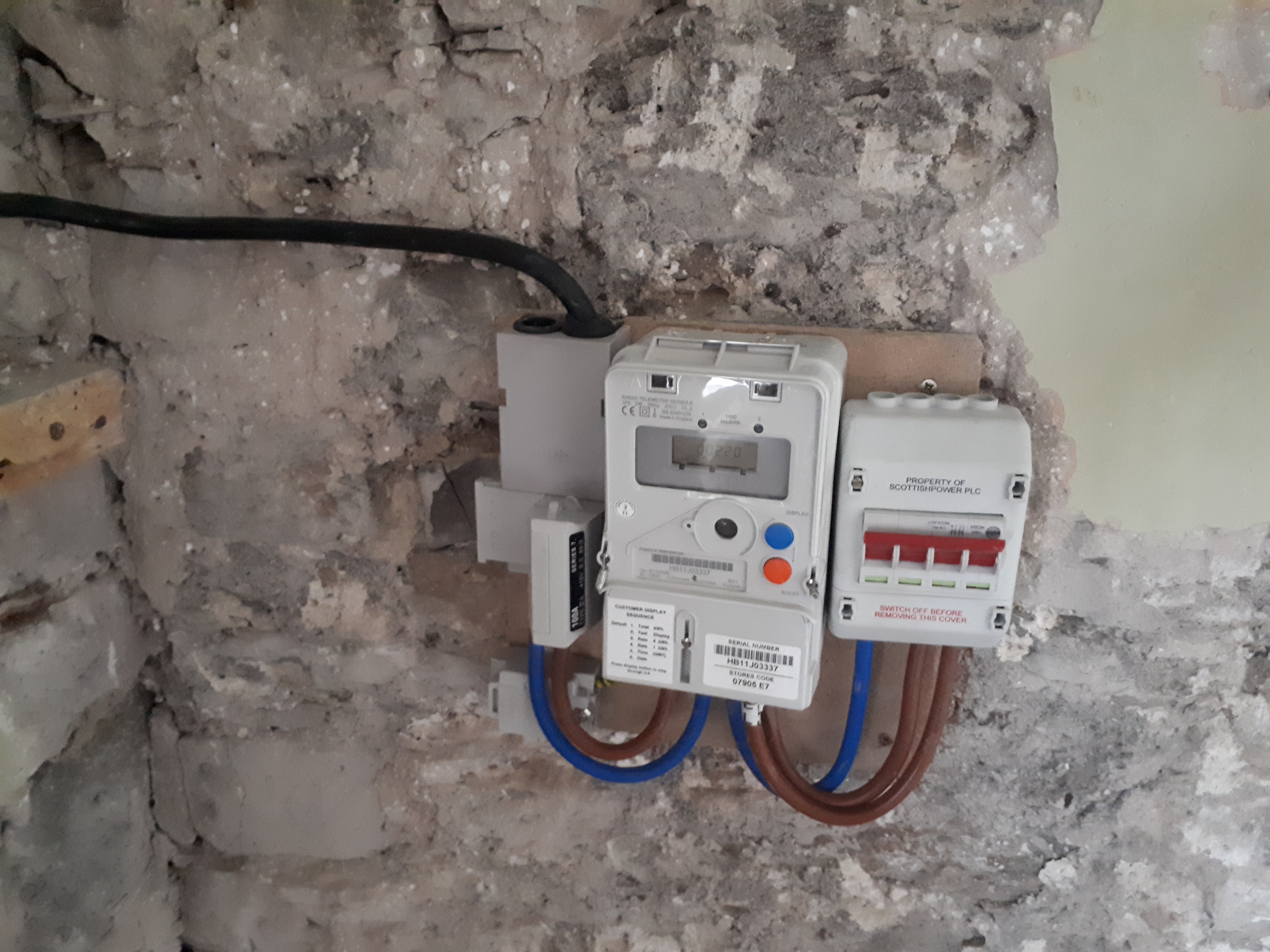
While all this was happening we had a visit from ScottishPower. When we moved in we had gotten in contact with ScottishPower as the mains electricity cable was brought in to the house through the door frame. While this used to be standard practice, today it is considered unsafe, and we had been told electricity companies will move this for free. Having been in touch with ScottishPower three times, being told the first few times they would not do it and we should pay a private electrician (for which we were quoted around £1K), finally our third attempt reached someone who better understood the companies obligations. Already working within the area, the engineers decided to drop in to redirect the cable through our walls. In order to tidy things up Chris also requested that the unit be moved upstairs, where it would be hidden at the back of a future built-in wardrobe, something they were happy to do.
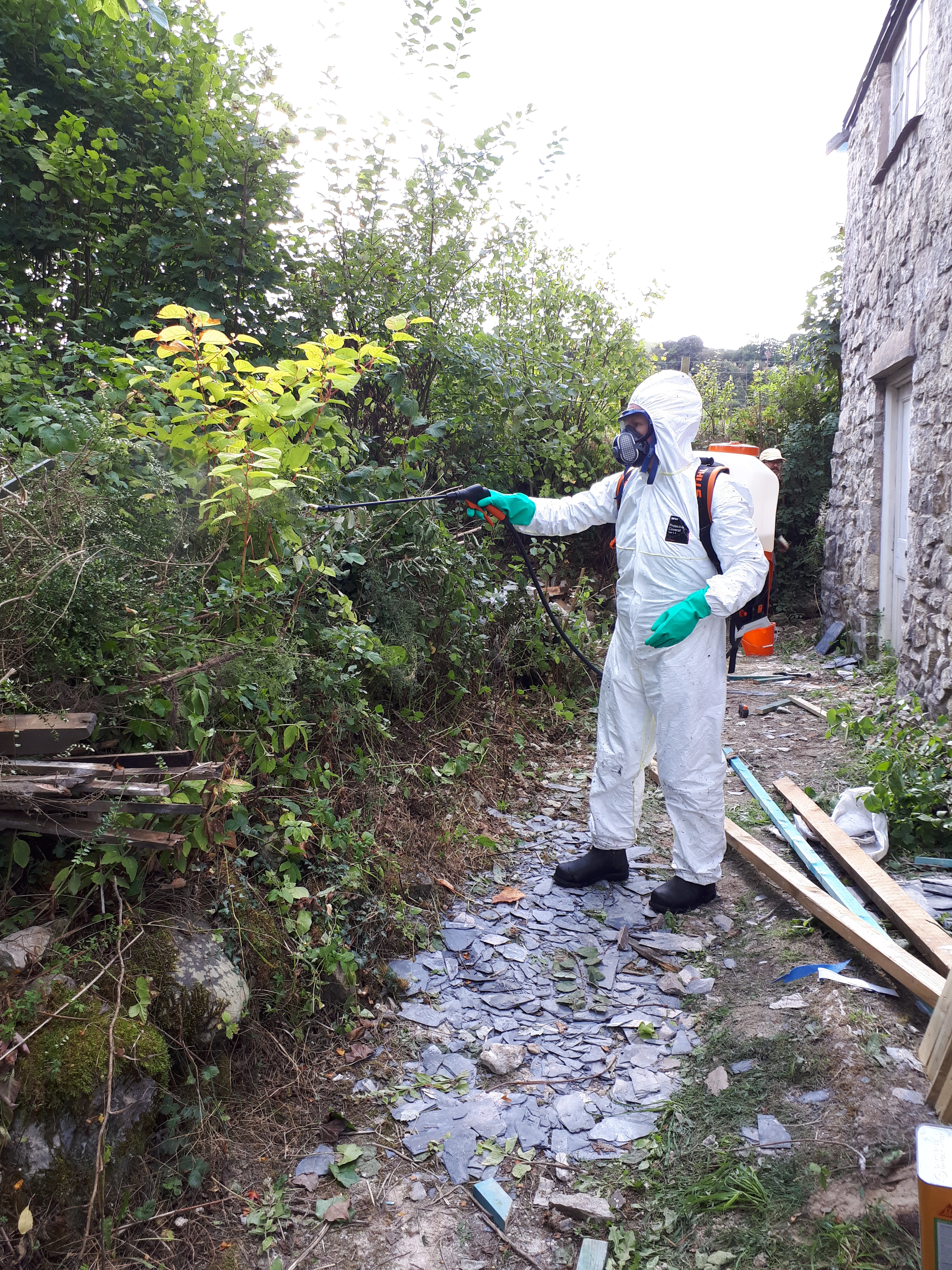
Another handy visit came from the North Wales Wildlife Trust. Having previously worked with this local conservation charity, we were aware they had a project to tackle invasive species in our area. Getting in contact, we asked if they would come and treat the Japanese knotweed in our garden, which they agreed to do. While both myself and Chris have the licenses to treat this invasive plant, we didn’t have the equipment, and didn’t think it made sense to buy a whole bottle of herbicide when we only needed to treat five small plants. As a thank you, we donated some money to the charity, who will return next year for a second treatment.

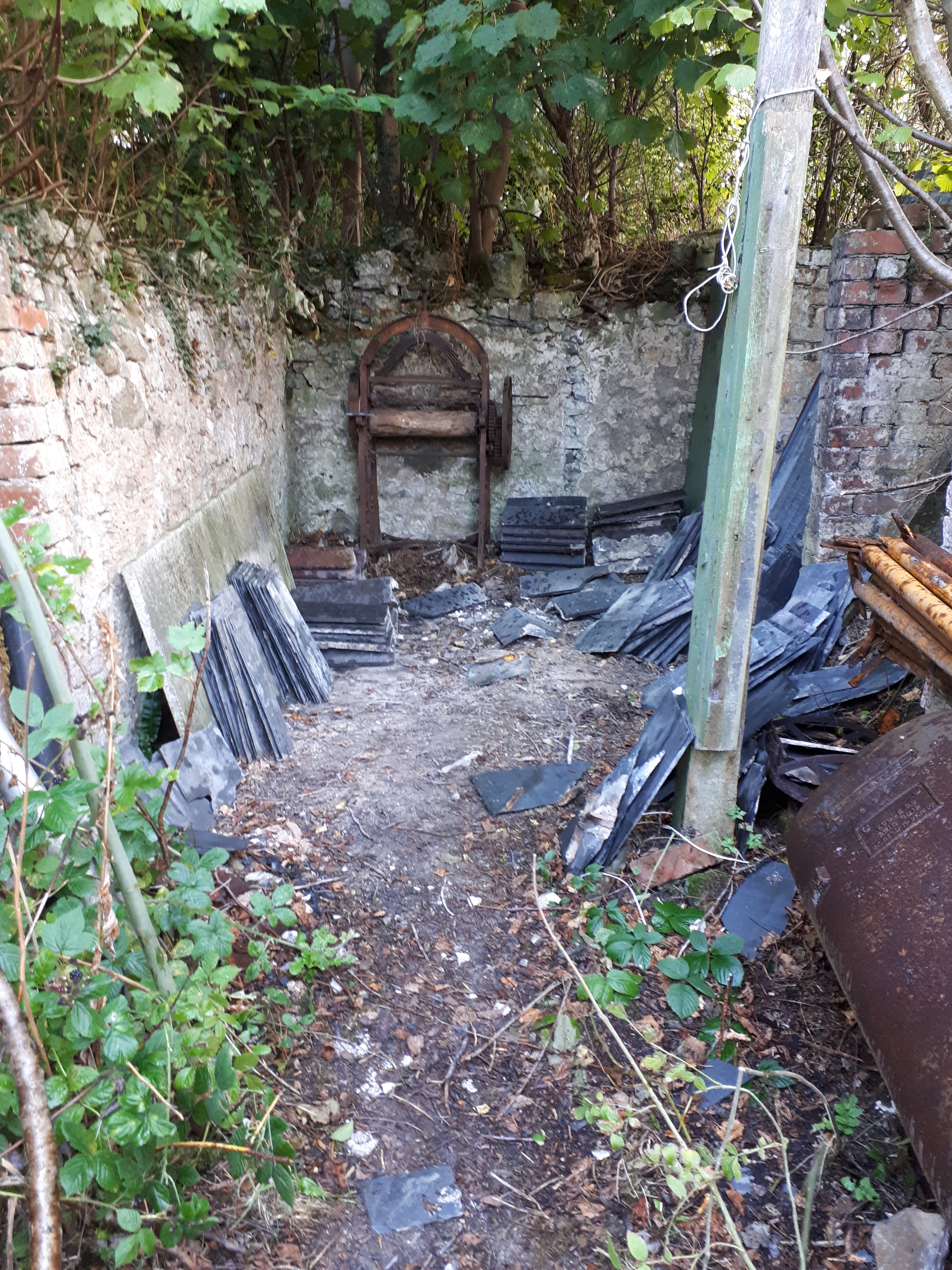
With mum and Tom gone, myself, dad and Chris continued with the roof. Although tricky corners and odd angles around chimneys, made some sections more difficult than others, it was pretty much more of the same. By the end of the week we had two sides completely done (aside from a few slate down one edge) and the back half covered. However, sadly we had run out of slates. This was to be expected given the number that had broken when removing them, and the many more we had broken when putting them back on. Having collected 200 more off a home renovator on marketplace, we quickly realised we would probably need another 400 to finished.
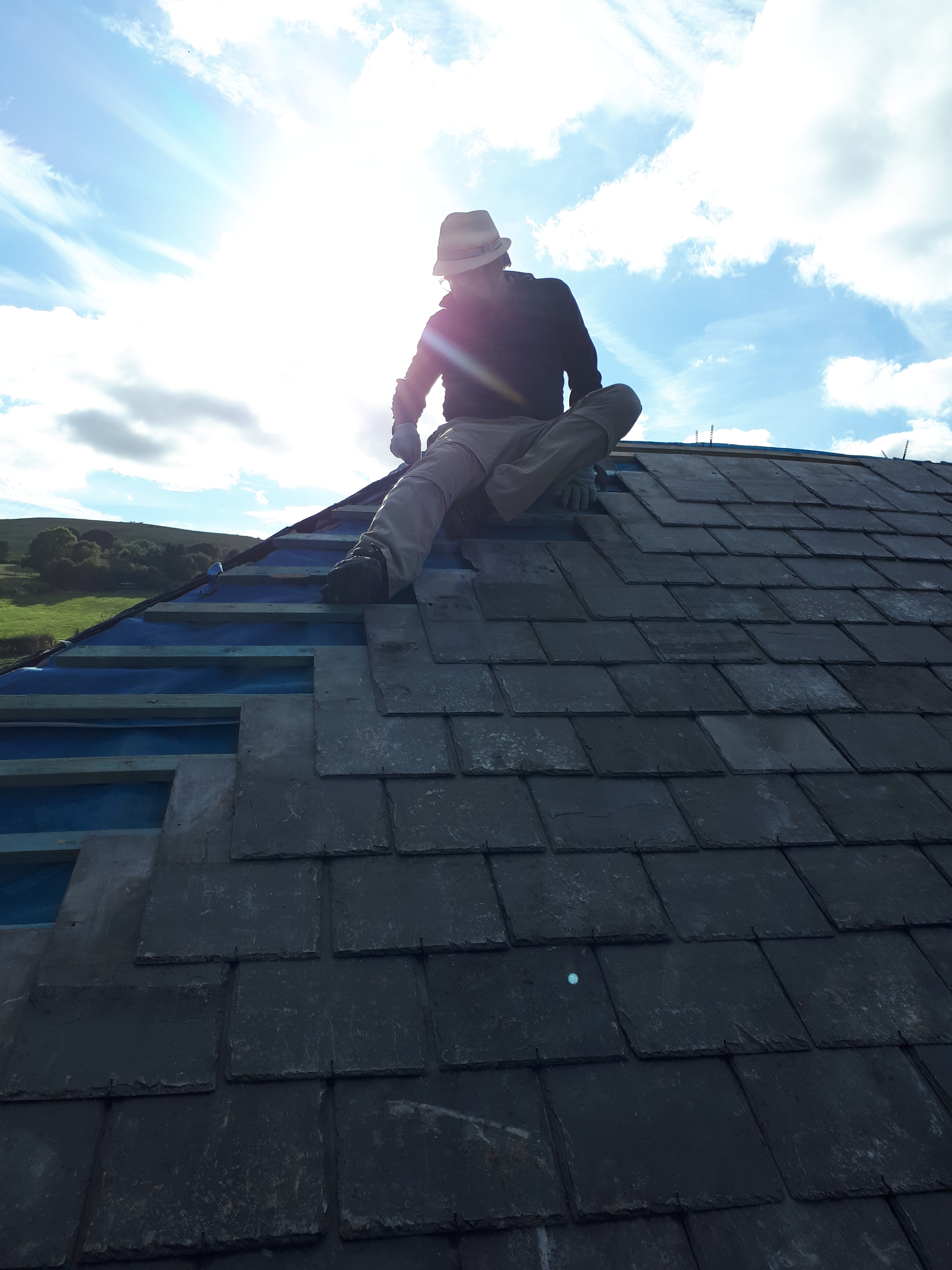
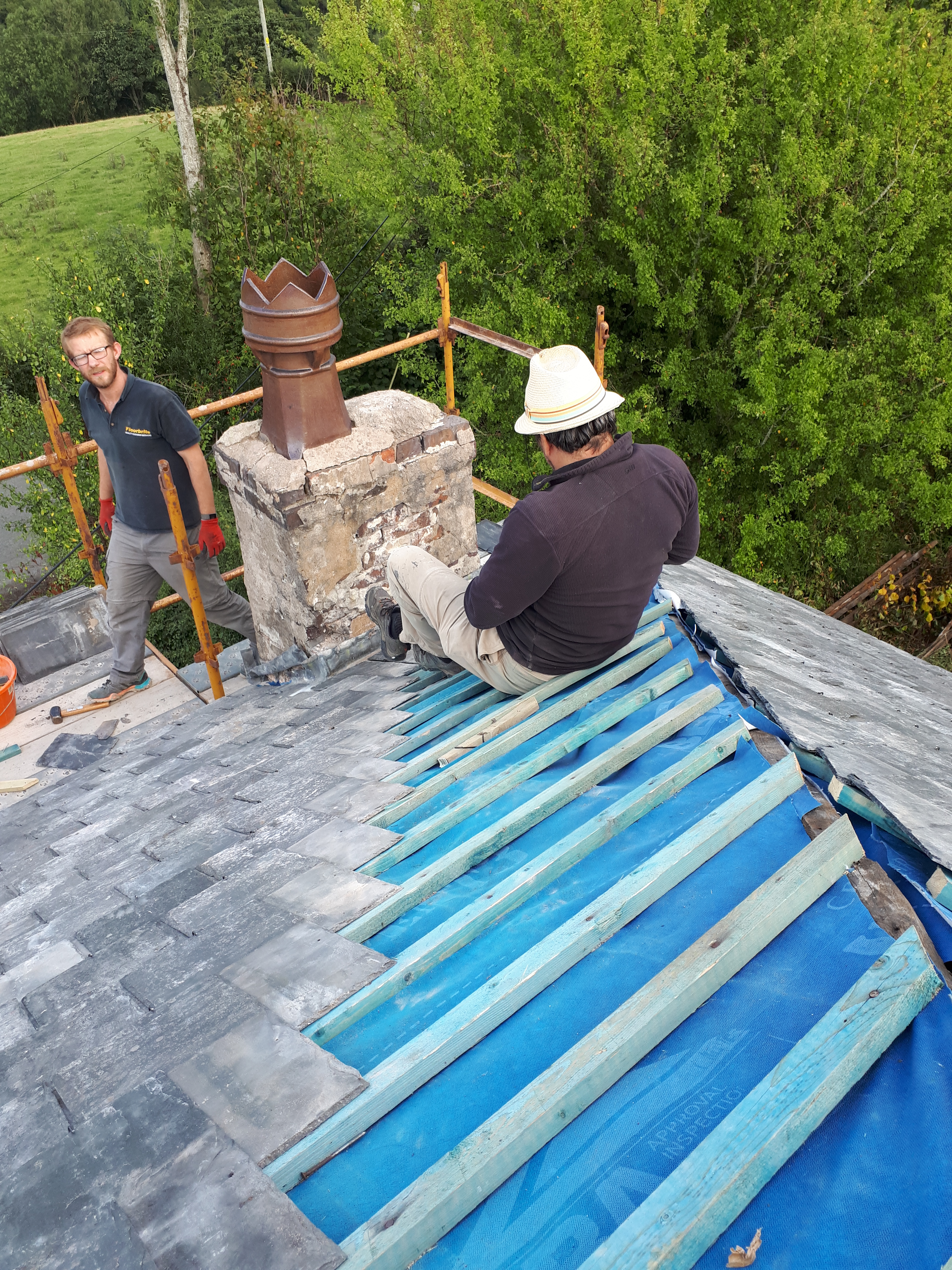
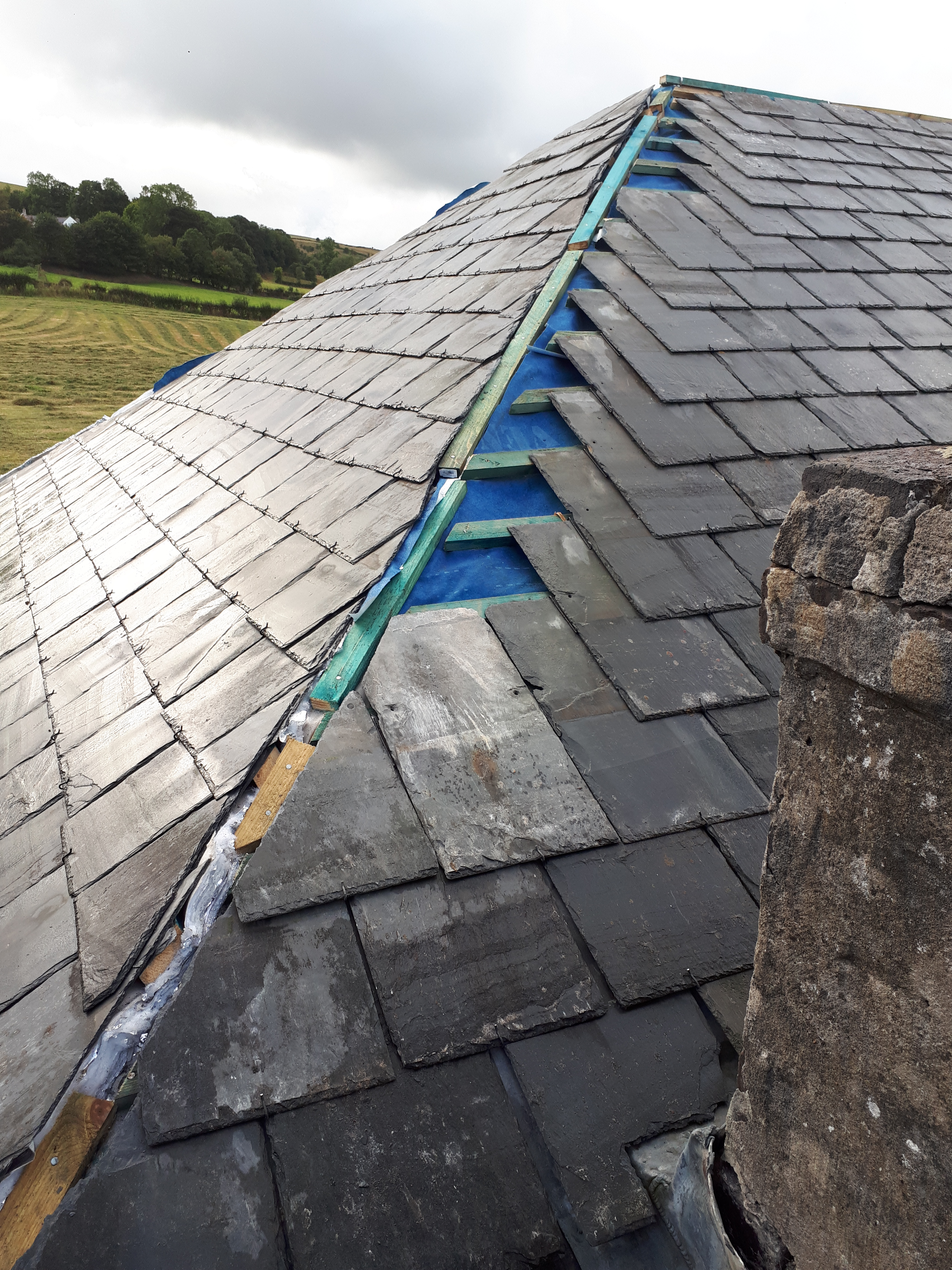
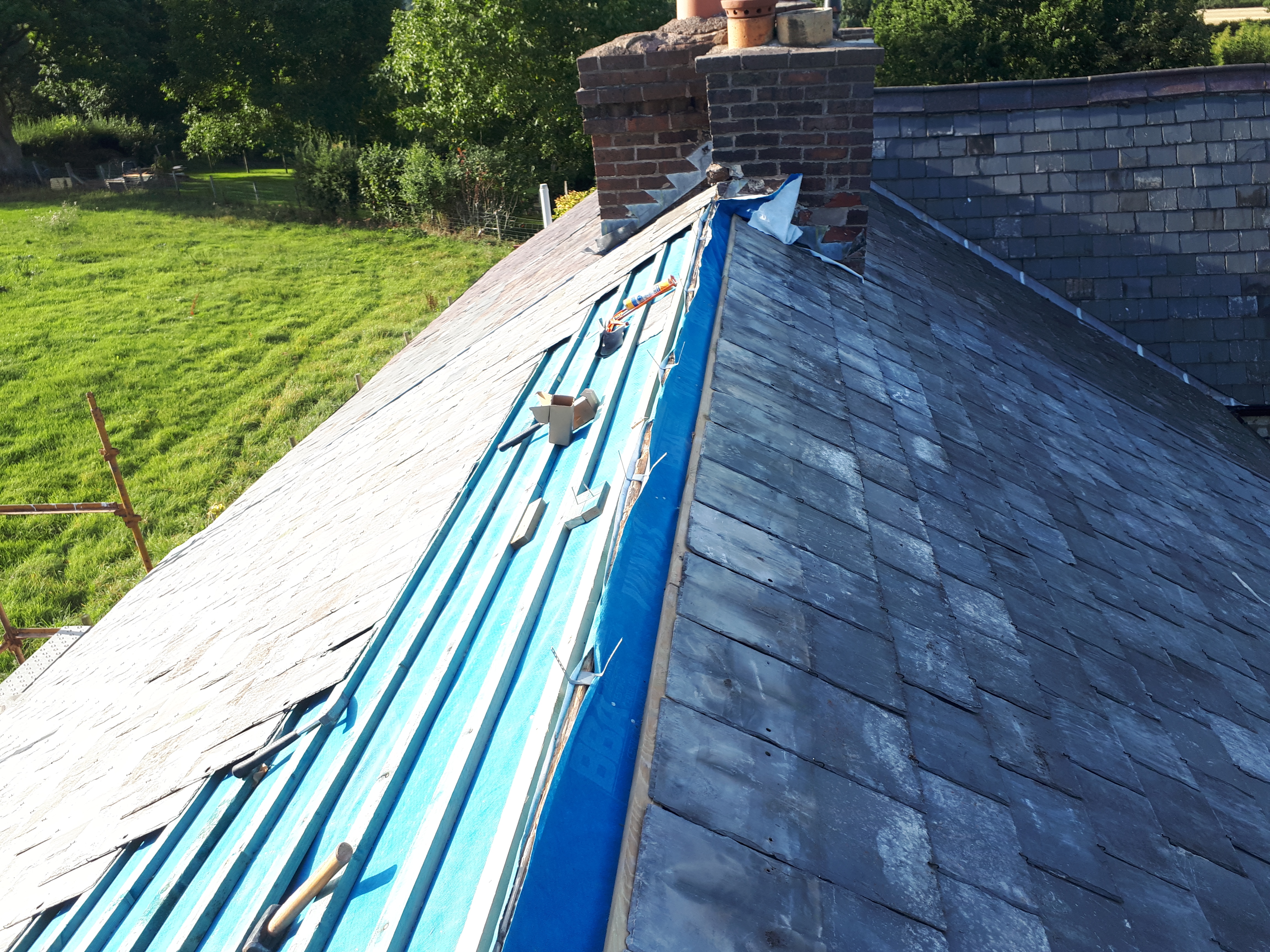
So now, with our 9 days done, we are a great deal closer to having a roof, and a much straighter roof at that, but we, unfortunately, aren’t finished yet. Our next job will be to find someone locally selling second-hand slates, the same size and colour as our roof, and then on our next weekend, it’s back to roofing. But it’s certainly true we never would have managed all we did this week without the kind help of my family, so a big thank you to my mum and dad and my brother Tom.
-
A heavy weight…
Asking for help is something most of us are disinclined to do. This is largely because we, incorrectly, view the inability to carry on alone as a weakness. Yet, there are plenty of tasks that are simply easier, and lighter, when shared. Such as renovating a house.
We were lucky to have many extra pairs of hands over these last few tasks, helping both with larger and smaller jobs. My best friend Becky stopped in for several days on her way to Scotland, and offered help with work. Over her weekend stay this included finally clearing the ivy off the outside of the house, a task that had been right at the start of our planner but we still hadn’t gotten round to, taking more plaster off the internal walls, and sorting more slates into piles ready to return to the roof.
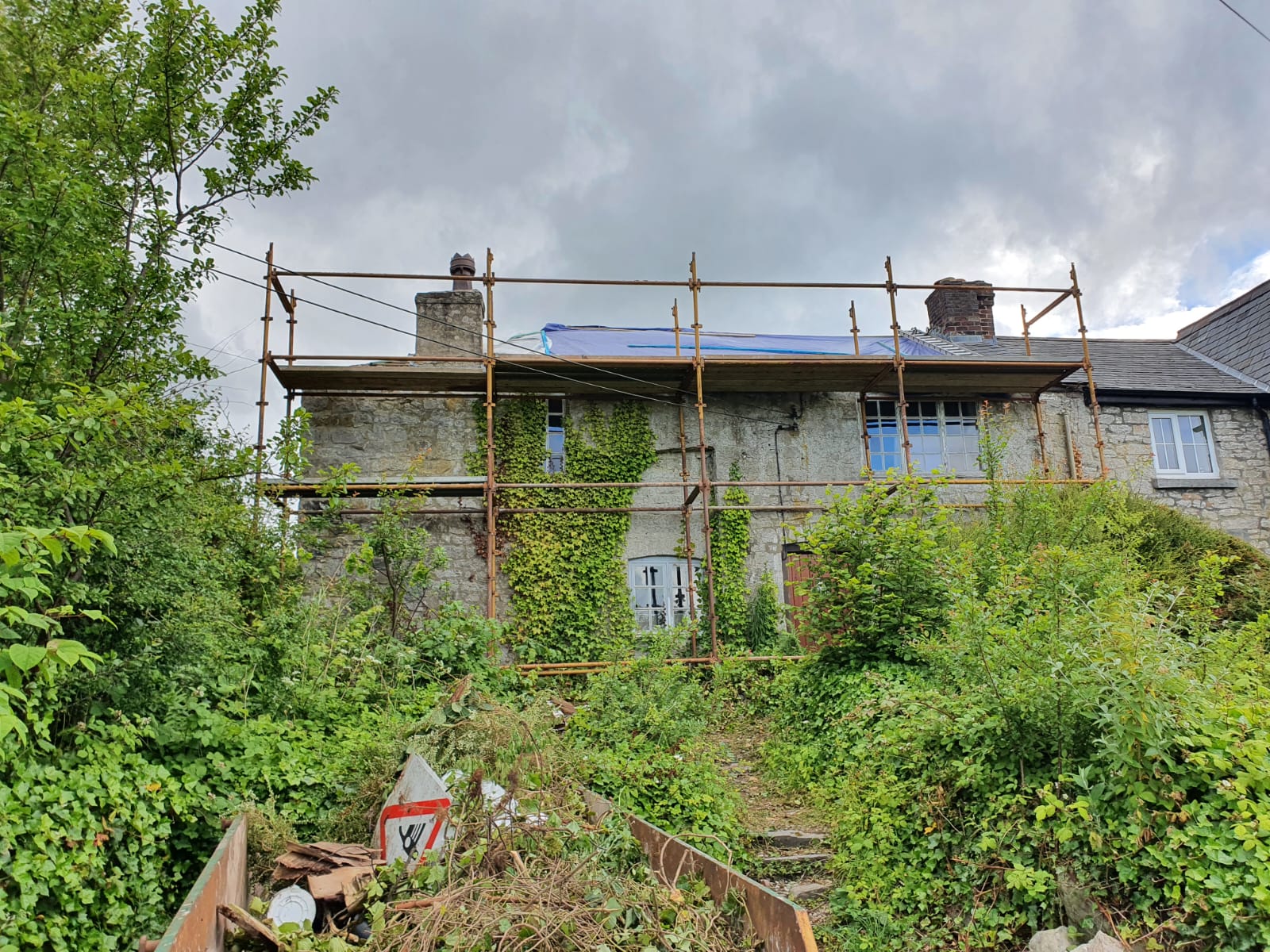
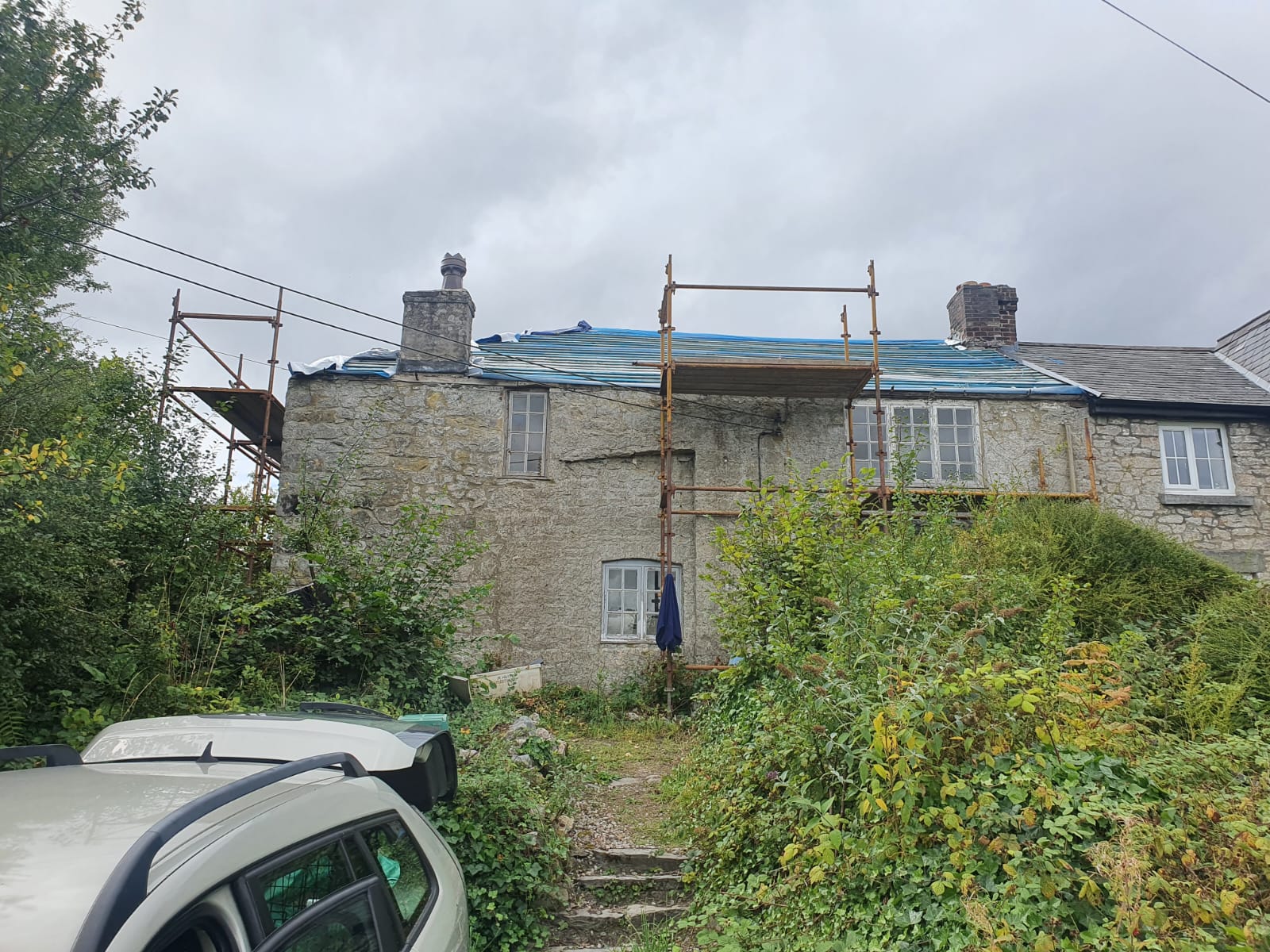
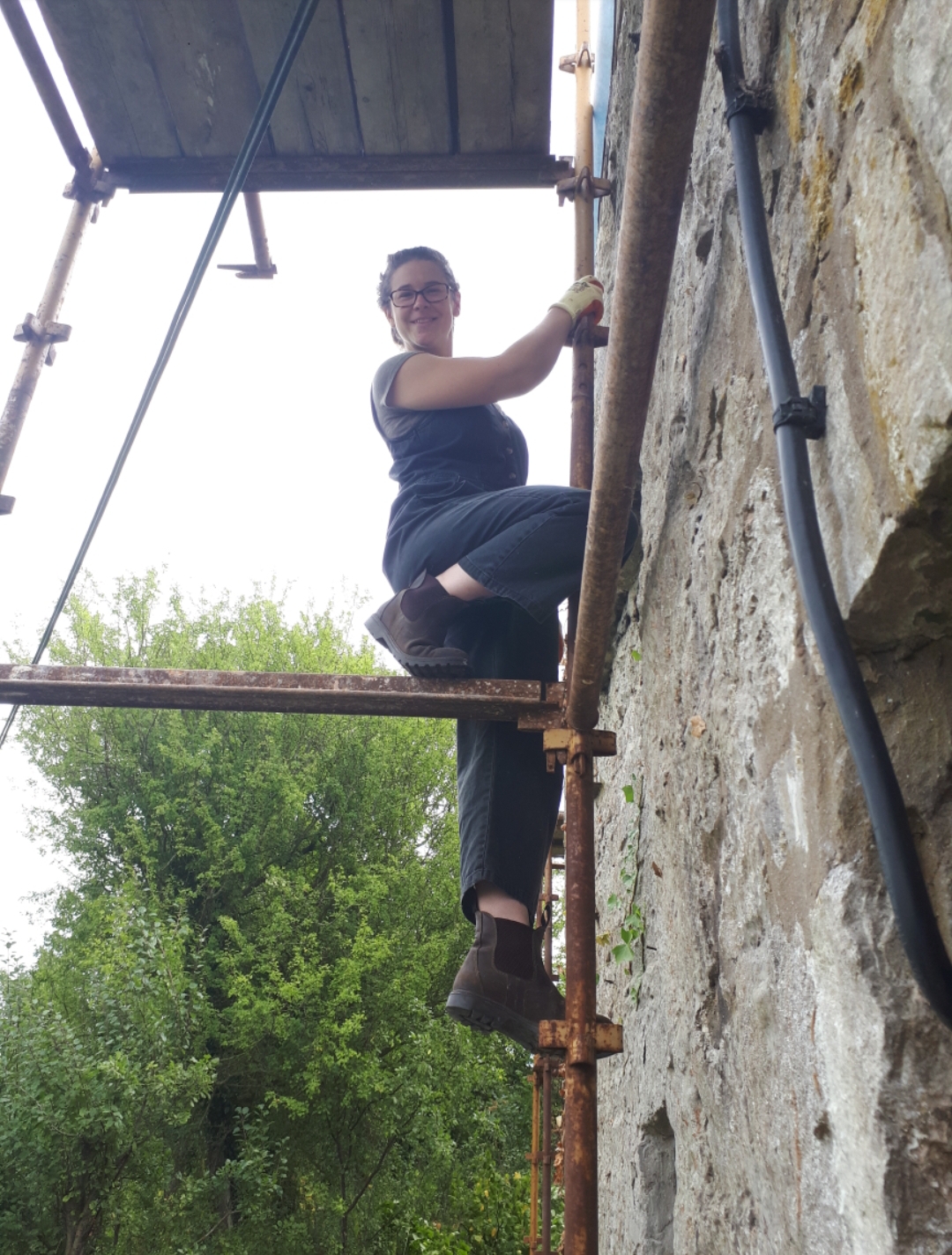
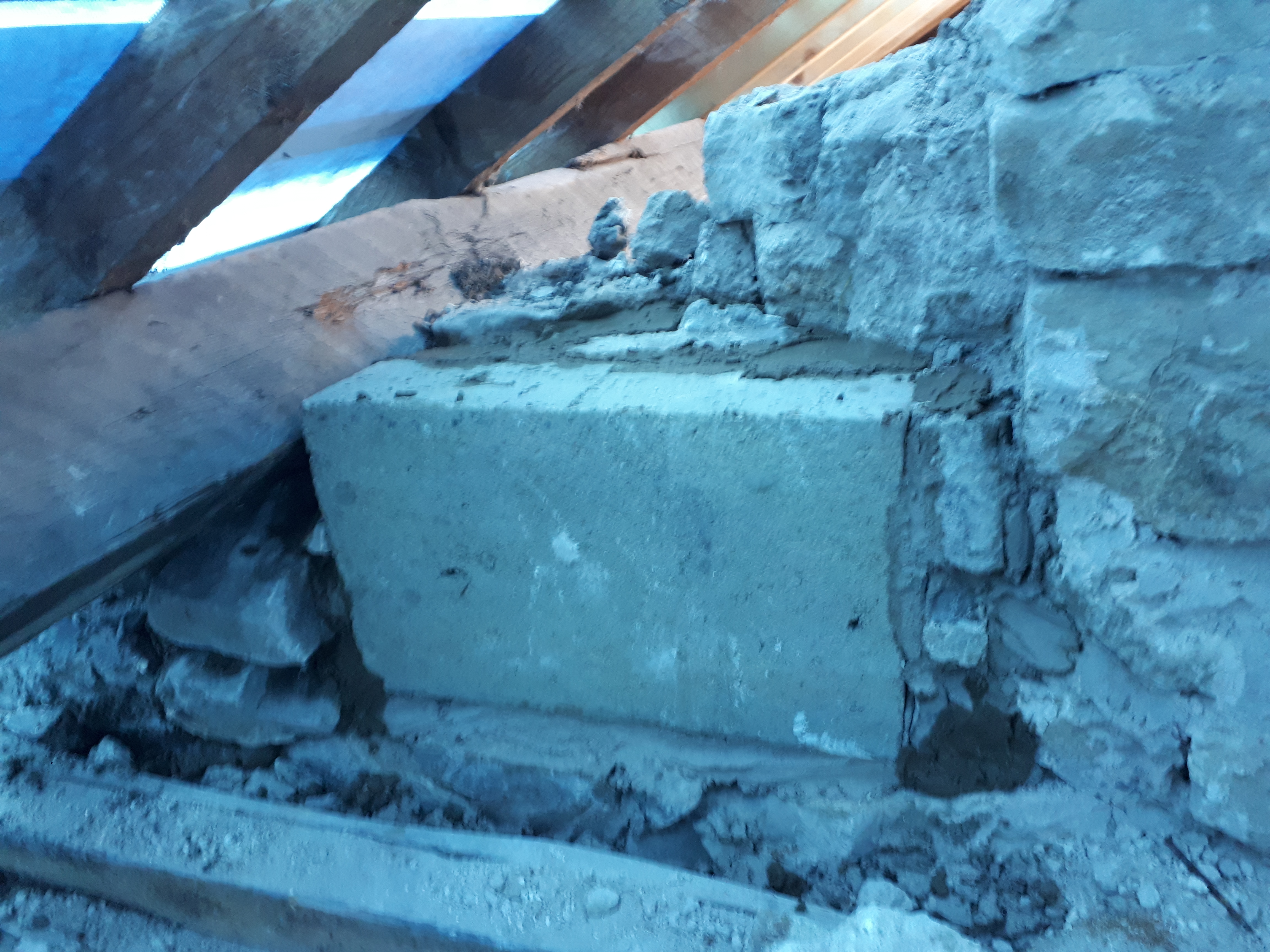
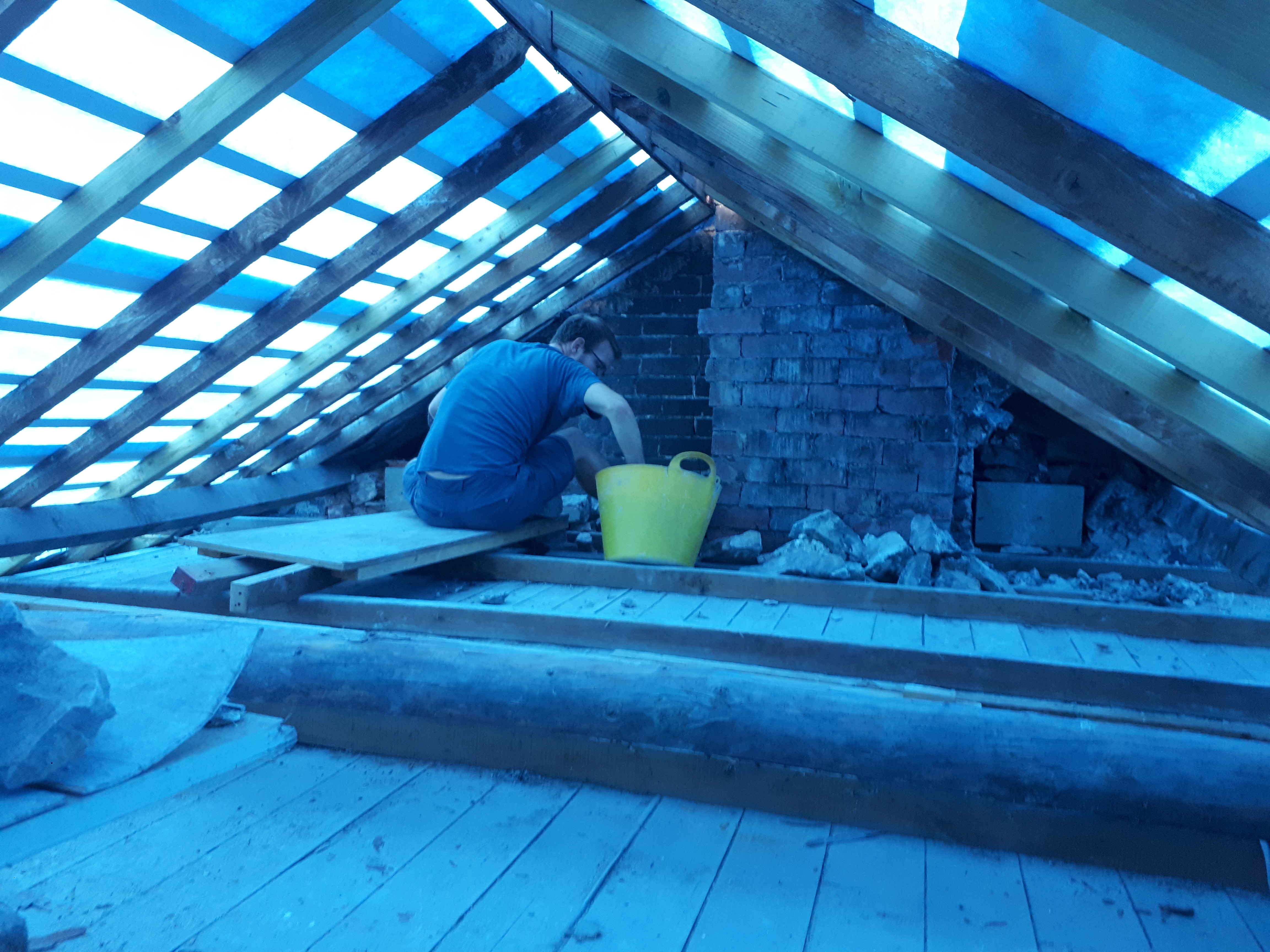
For myself and Chris, our work focused on getting the house ready to receive the new steel purlins. This included several evenings filling in the stonework around the padstones, and moving a section of scaffolding.
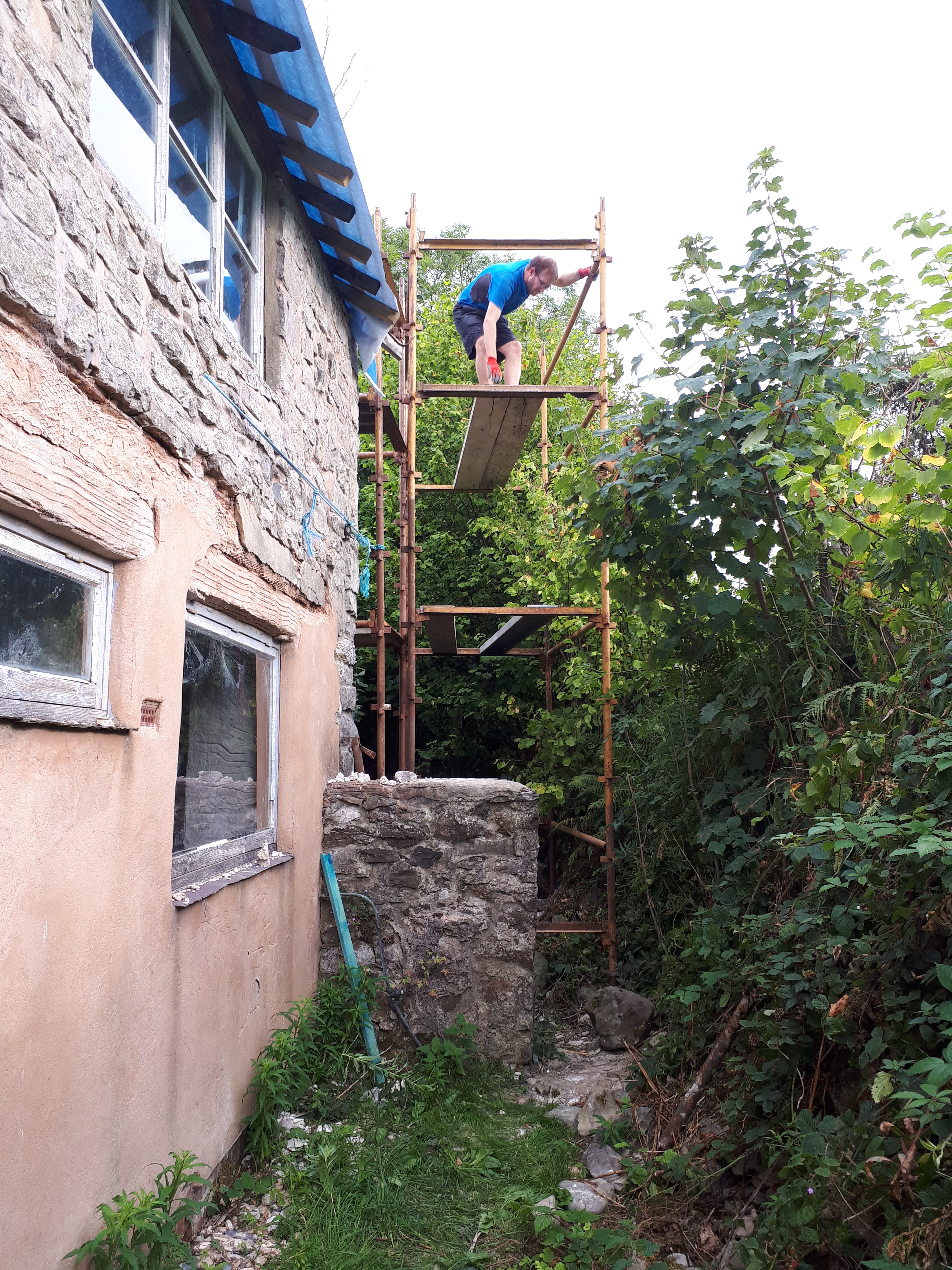
How to go about installing the purlins was something we had discussed and debated several times. The weight of each steel is 150kg, significant enough that we doubted we could lift them between the two of us, let alone bring them up to the top of the scaffolding and into the roof.
It was pure luck that our neighbour introduced himself to us as a farmer and roofer. After hearing he had a machine that could possibly help lift our purlins into place we asked him if he would be willing to let us rent it. Unfortunately, it turned out this machinery was on loan and shortly heading back to its owners. However, he kindly offered to lift our purlin up onto the scaffolding with his tractor, at no cost.
With this generous offer of help, and the extra muscle of Chris’s brother Rich, we felt we might actually have a chance of completing the work without death or disaster.
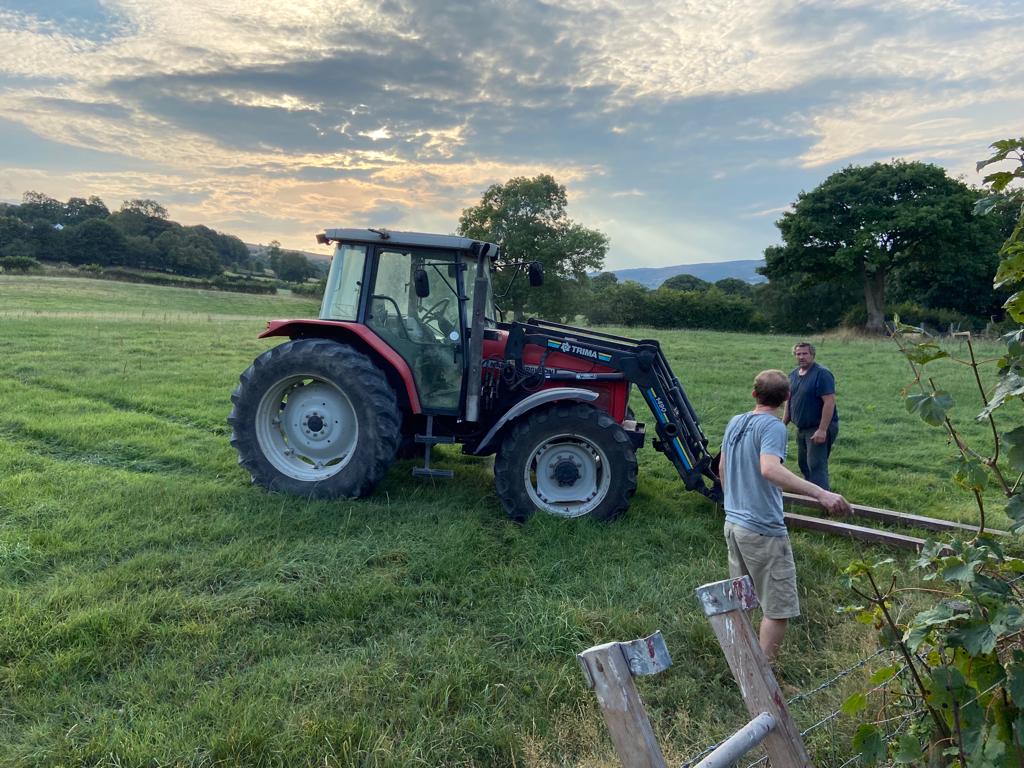
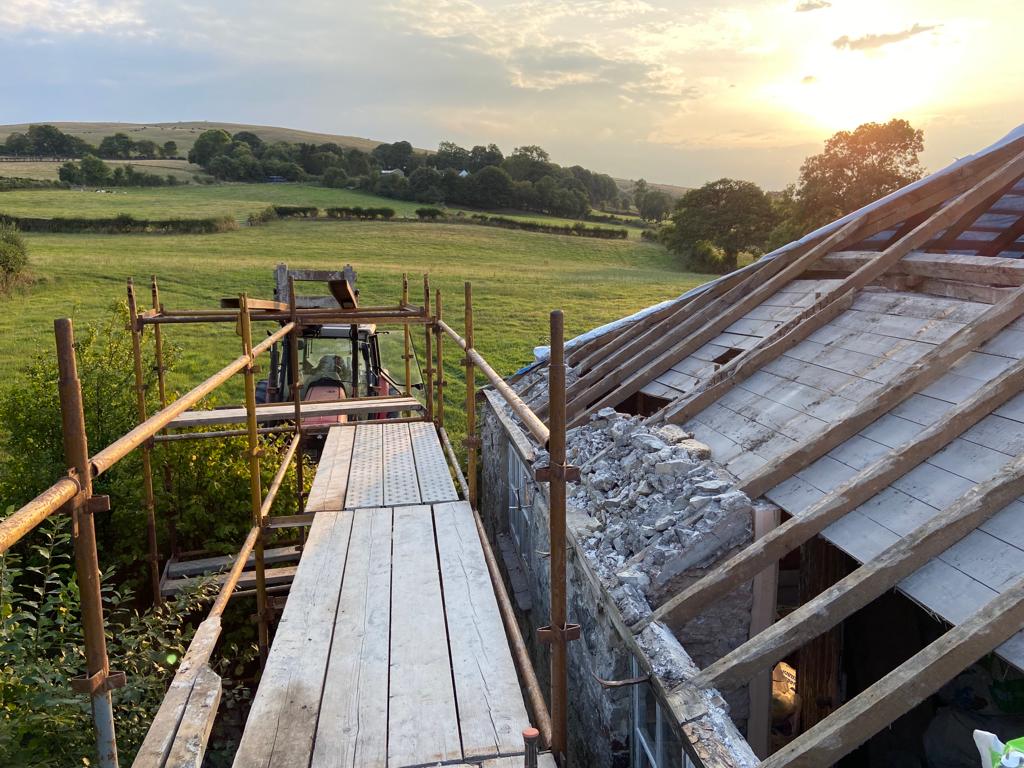
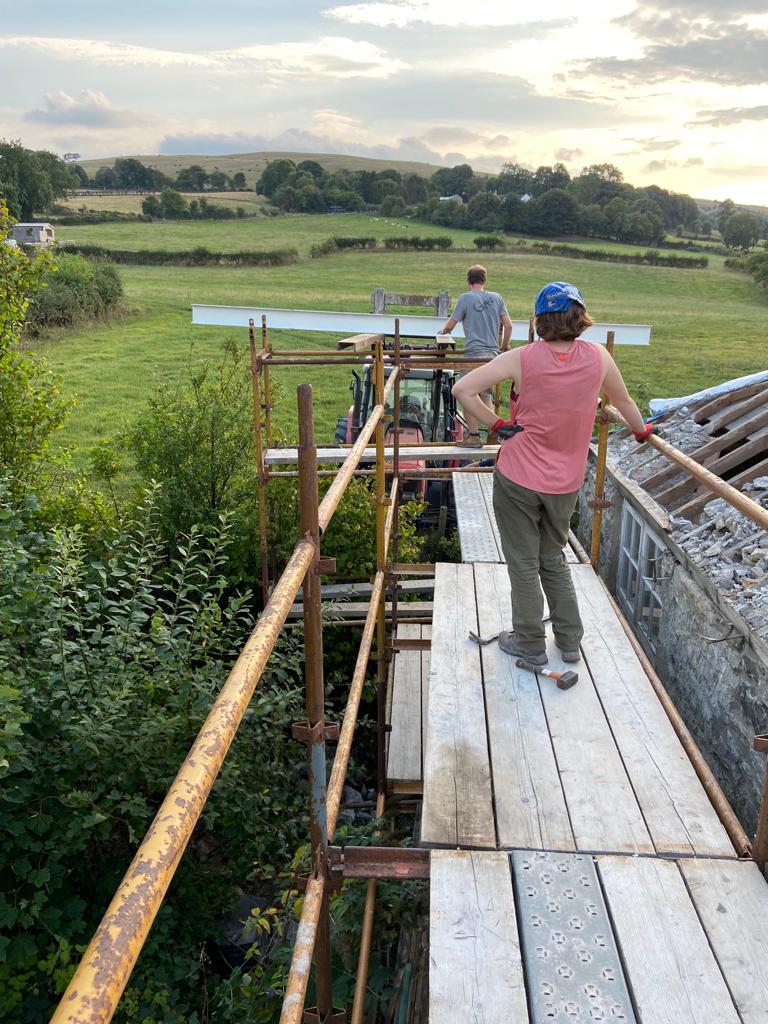
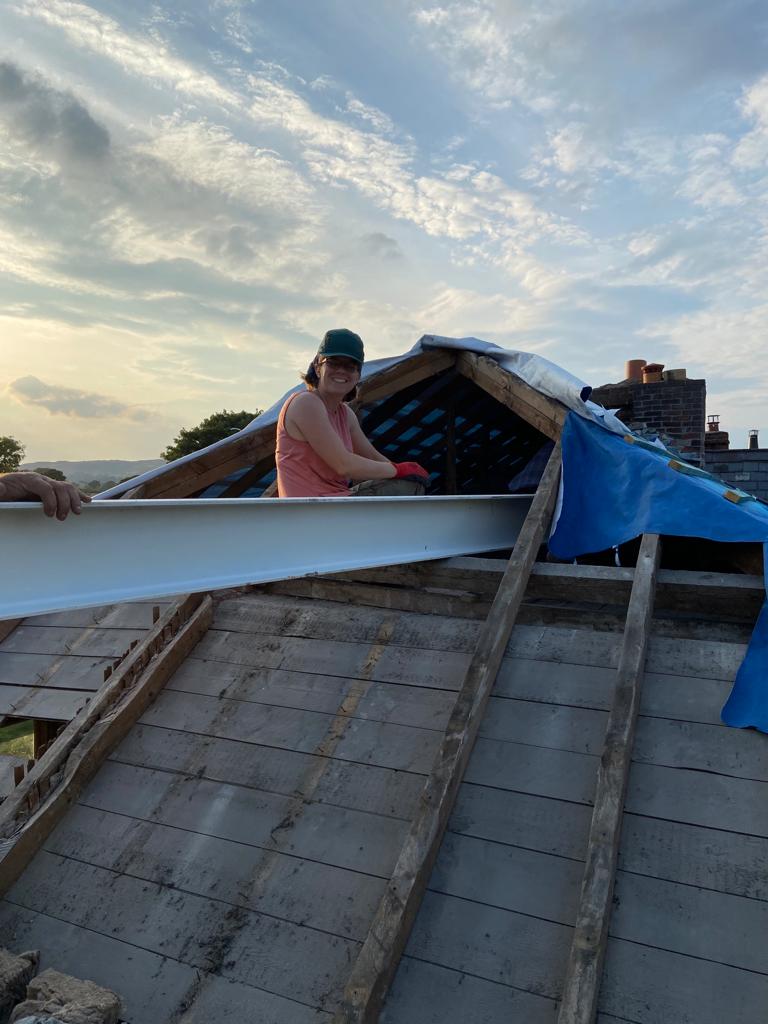
The evening came when everything was ready and in place to begin. Watching the large steel purlin being lifted up on the forks of the tractor it was surprising how light and delicate they looked. Placing them up onto the specially erected scaffolding was the relatively easy part of the job. I must admit, of the four people heaving the purlin into place, I was definitely the least useful… but I still wasn’t useless. Many hands make light work.
Our first task was to post the purlin through the opening into the loft. Next we had to thread it passed the central wall into the second loft space. This required a fair bit of chisling and manuvering to achieve. Finally we had to get it sitting across the two opposite padstones. Moving it into place within the loft wasn’t without its difficulties. With four people squashed into a space where you couldn’t stand up, and can only place your feet on certain beams without falling through the ceiling, while trying to muster the strength to heave a heavy beam about the place, was certainly no easy feat.
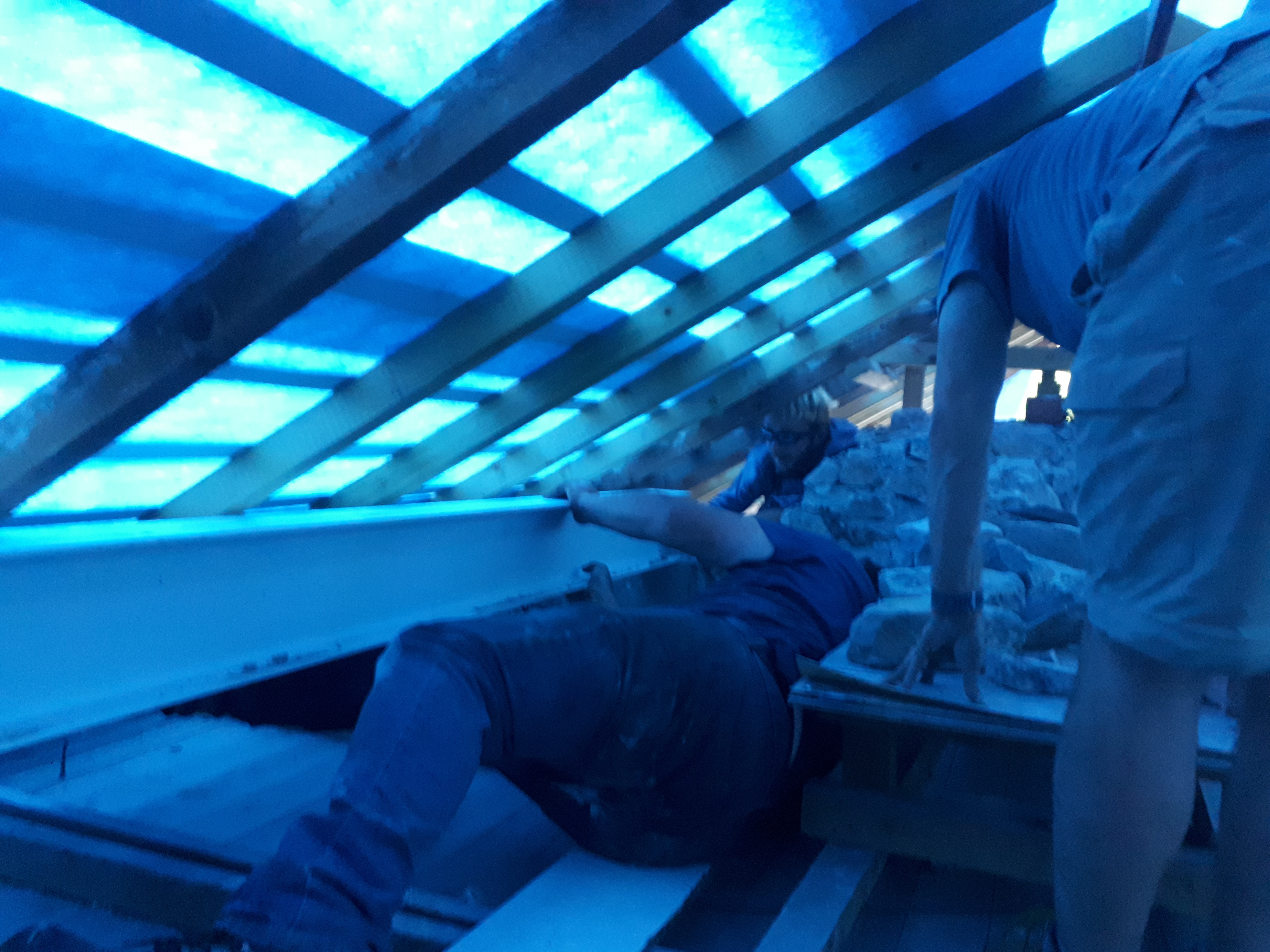
Finally, we managed to get the beam securely resting, only to have to head out and do the whole thing all over again. It was a relief when both were done. This certainly was the most difficult and technical aspect of our whole renovation project. There’s simply no way we could have done it without the extra help, and particularly not without the kindness of our neighbour.
Once in place more work was needed to raise up the rafters that had sunken down without the support of the old purlins. For Chris, this meant at hot and taxing day wedging rafters with pieces of wood, while slowly shimmying the purlins into place. Once everything was better aligned Chris cut bird mouths (notches out of the wood) into the rafters to allow them to sit on the purlin itself.
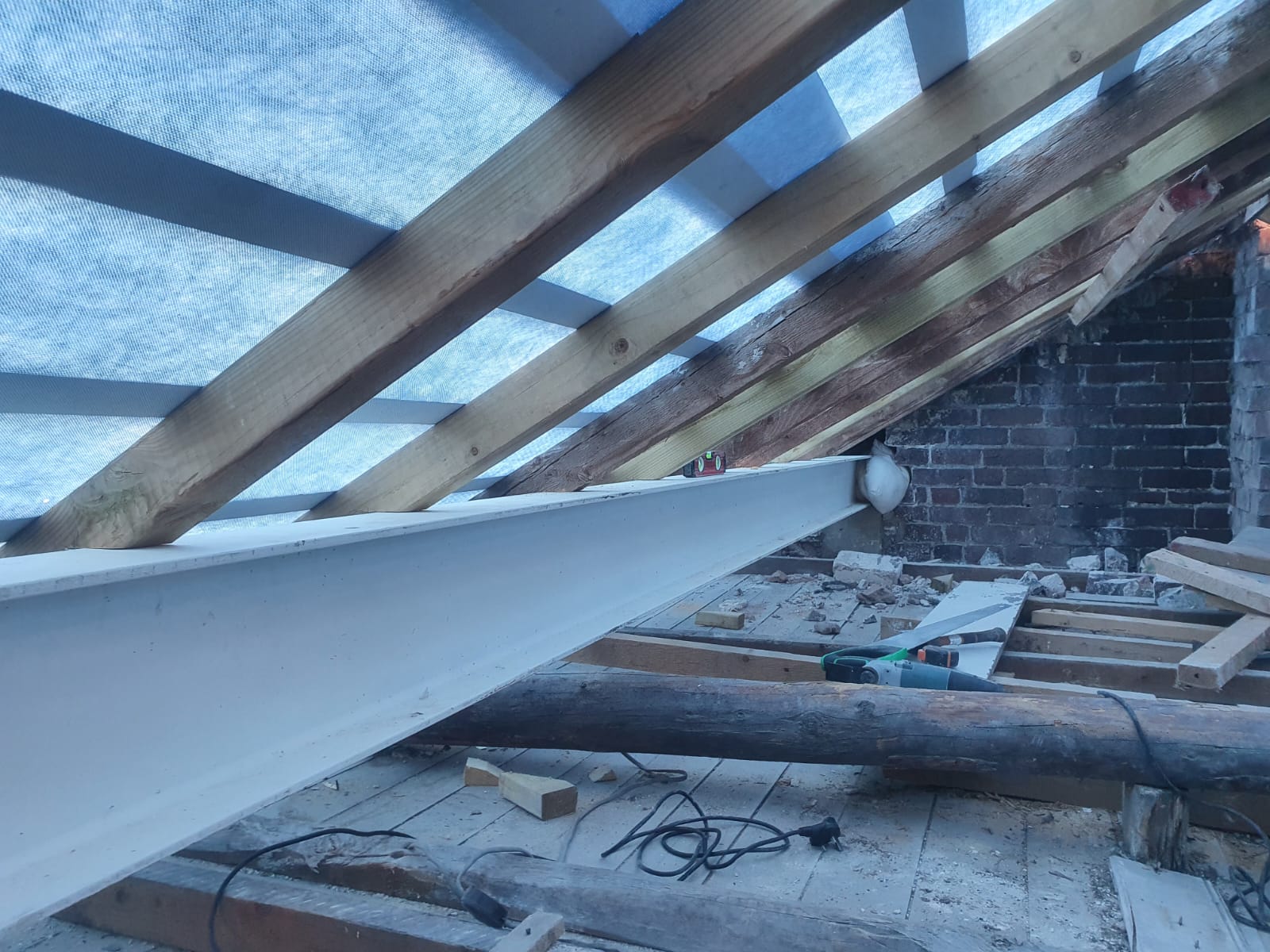
Though there is a long way to go with the roof, having completed this aspect of the work we have finally got to the heart of the problem, reinforcing the rafters with a new and stable resting point. With this done we can finally build back a better, stronger roof. Hopefully one that will last us a long way in to the future.

Many thanks to the expedition photographer, Becky. -
Padstones
What is a padstone I hear you cry. Well I recently learnt that they are large, surprisingly heavy, blocks of concrete that prevent massive hunks of steel from dropping through your ceiling. So pretty important, all in all.
The two purlins in need of replacement in our roof are opposite each other on the side of the house that adjoins our neighbour. Luckily the two purlins on the other part of the house are in good condition. Rather than bringing more wood into the attic, our structural engineer suggested we opt for steel beams instead. This is largely due to the fact that the wood required would be too big and heavy to be manageable by hand.
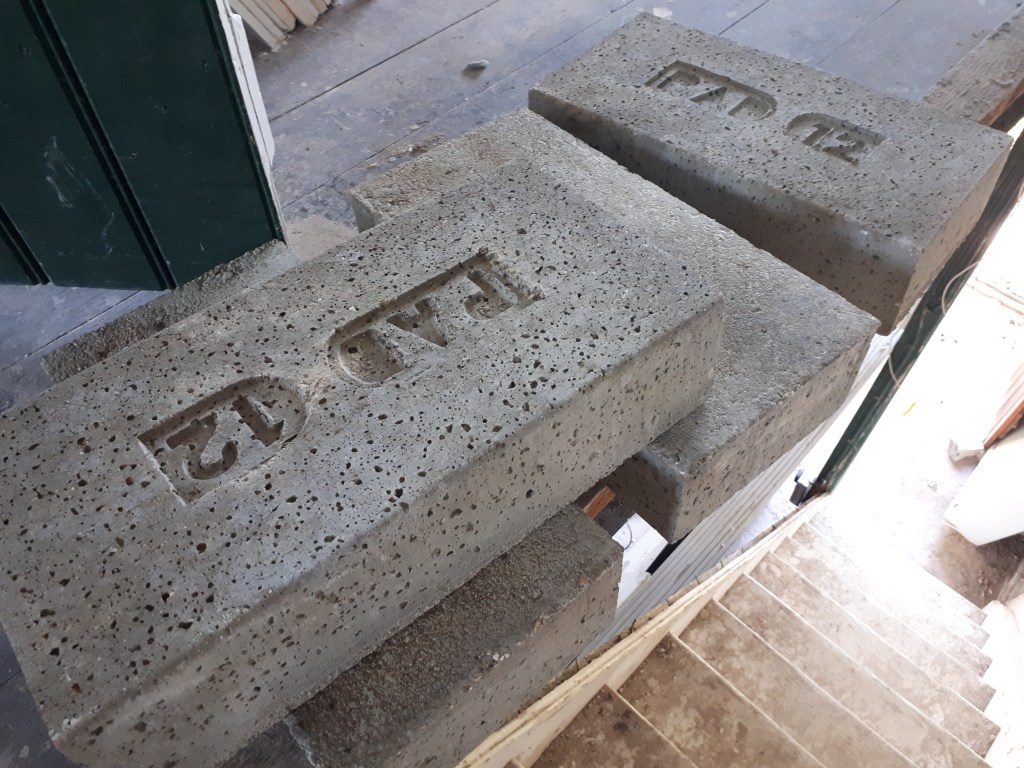
Once in place the beams will sit supported at either end on two walls, our boundary wall and what was once the boundary wall between our two, now combined, houses. Rather than sit the purlins directly on the walls our structural engineer recommended padstones of a particular size. These will help to spread the load of the heavy steel beams, and add structural integrity.
Normally it’s me who has unrealistic expectations of how long a job will take, but when Chris told me he thought installing the padstones would only take a few hours, I suspected he’d fallen for the dream of the ‘quick job’.
In an ideal world we would have installed the padstones when the rafters were being replaced. This would have given us much more space to work. However, because the structural engineer came down with covid we sadly didn’t have the designs in time to make this a reality. So instead, on one of the most sweltering days of the summer, we climbed up in to the cramped and suana-like attic to work bent double and soaked in sweat.
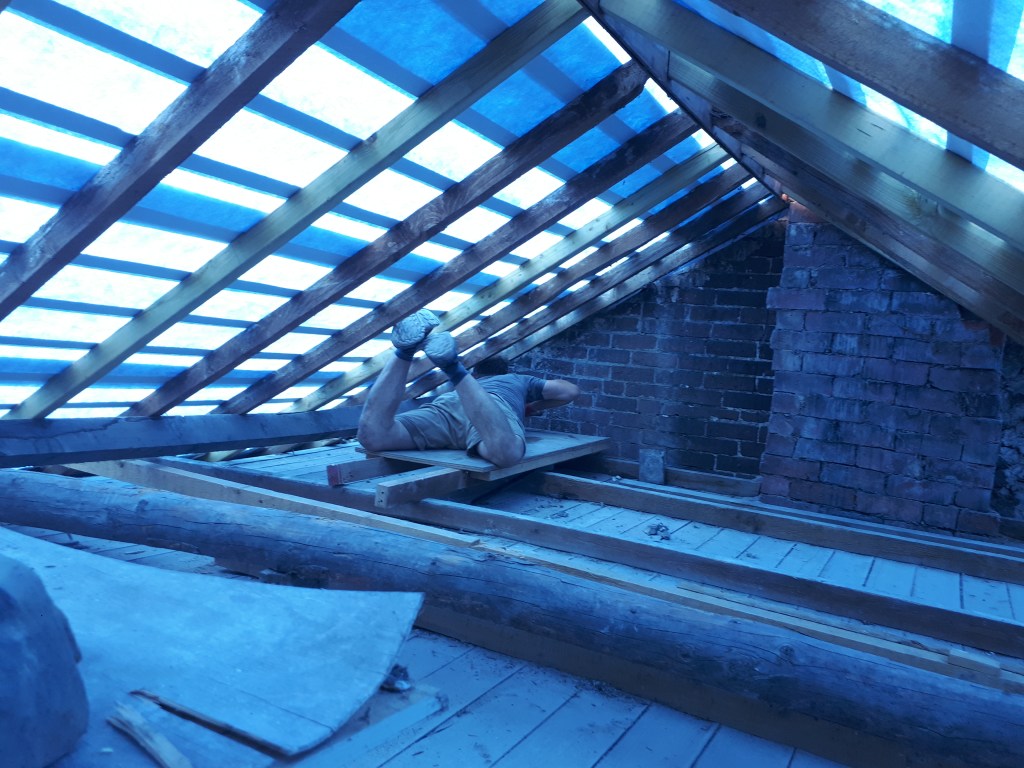
We had four padstones to install, one for each end of the two purlins. In order to get them in, we needed remove enough stone that the padstones could fit in with space for the purlins to fit below the rafters. We also had the option to cut the padstones down in length, as long as we didn’t cut them smaller than the minimum size.
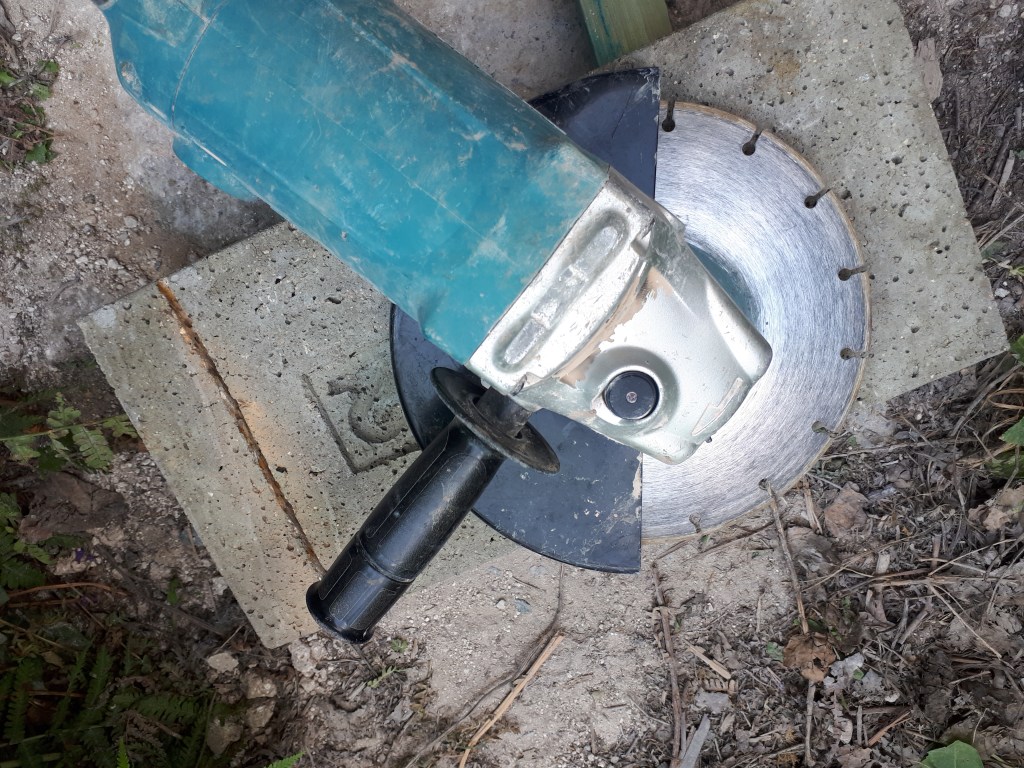
While breaking out and removing the rocks and bricks from three of the sections was hot and awkward work, with little room to swing a hammer, the fourth hole was by far the hardest to create. Not only was the mortar rock-hard, unlike the slightly crumbly mortar elsewhere, we also very quickly found ourselves in our neighbour’s house…
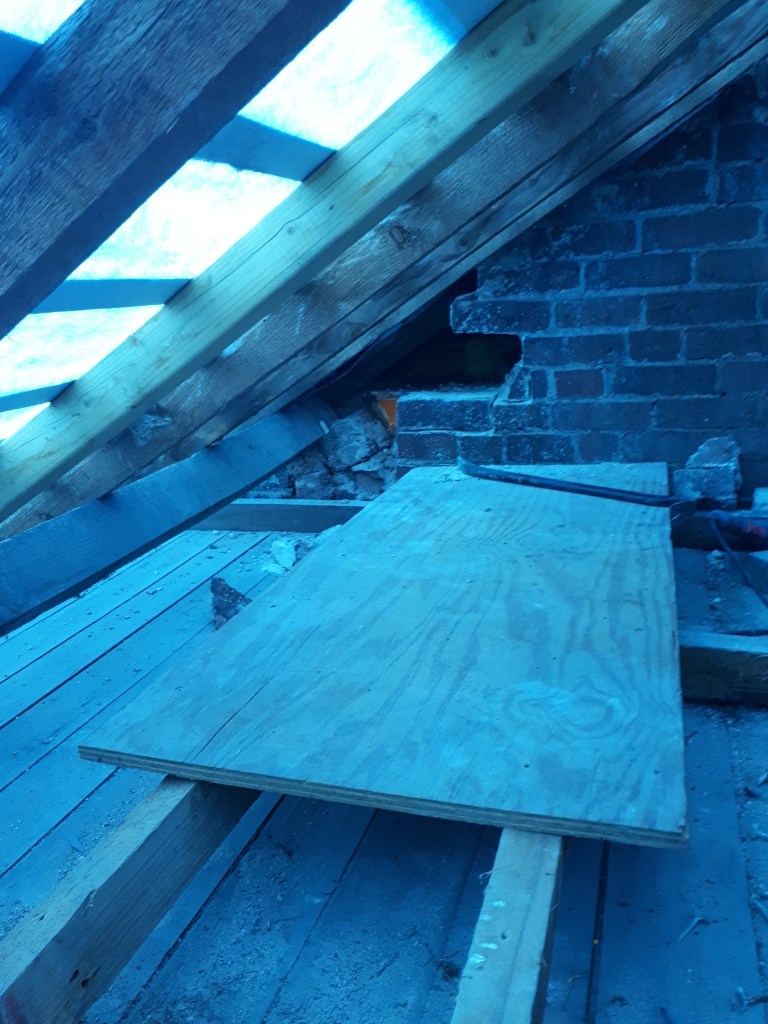
Roughly down the centre of our adjoining wall is a brick chimney. To the right of this is a stone wall, the same thick limestone walling that makes up the rest of the house, with two constructed faces, with a rubble centre. However, on the left of the chimney we have a brick wall. This wall, we were hoping, would also have two layers of brick, one of which we could remove to put our purlin in. Unfortunately this was not the case, and our first brick came out bearing the jolly yellow of our neighbour’s upstairs hall wall.
Luckily for us, Helen, who lives next door, has herself had experience of home renovation and restoration, and she was quick to reassure us that it wasn’t a big problem, and could easily be resolved after the purlins were in place. So, with her blessing, we continued to make a bigger hole in her upstairs landing, ready for the fourth padstone to be put in place.
Once the holes were ready we had to get the padstones bedded down on a layer of mortar and make sure they were both flat and opposite their partner. In order to better line them up we used a laser leveller, which looks like something from Mission Impossible.
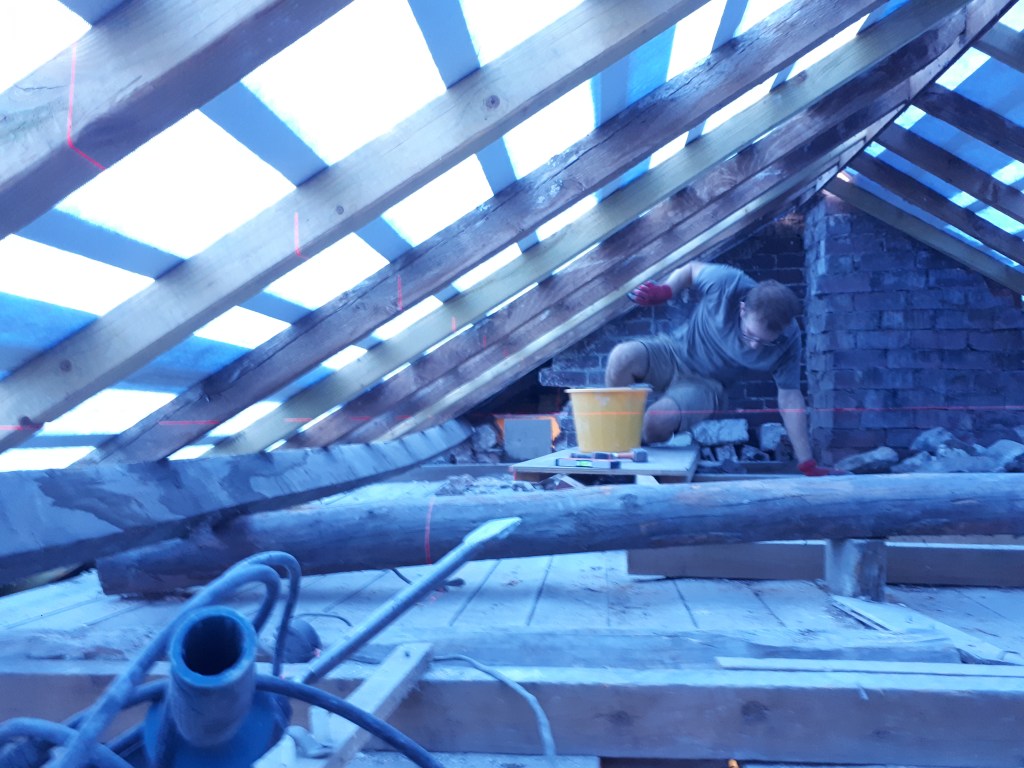
Around two stone lighter after our intensive hot yoga session, we finally had all four padstones in. Once set we will need to build back the walls around the padstones, to better secure them in place. Then we’ll be ready to get our 5 meter lengths of steel in place. Exciting? Or terrifying….
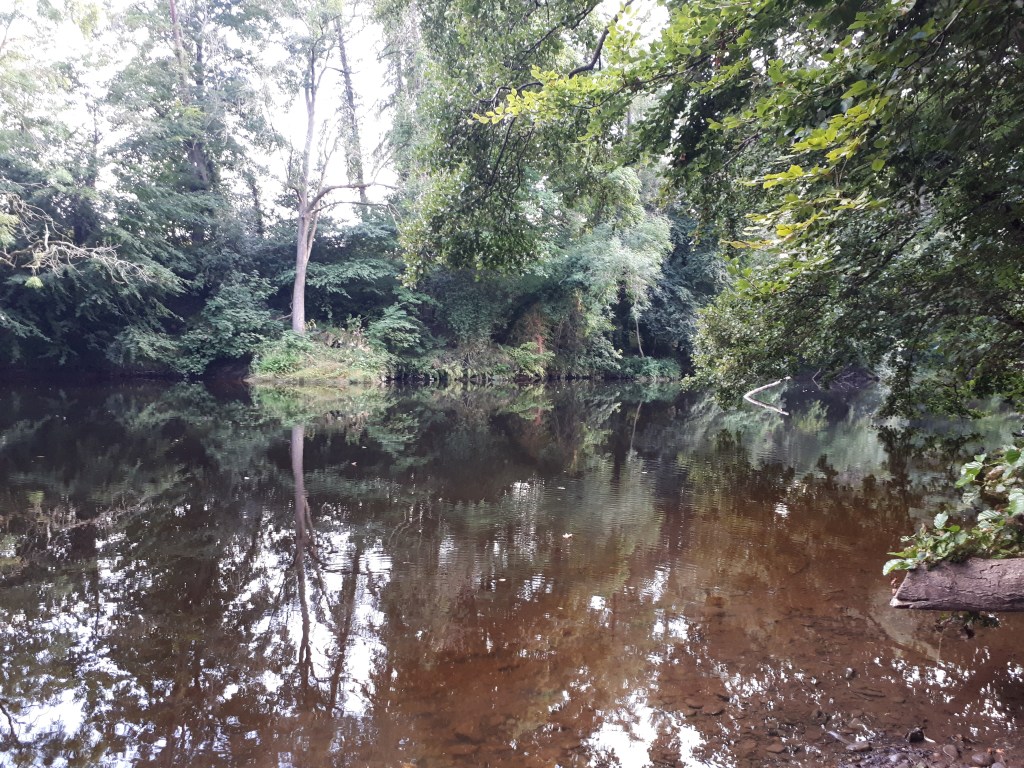
After our hot and dusty evening we headed out for a swim in our favourite spot on our local river, something we’ll miss once we’ve moved. Still, hopefully there will be other new and exciting places surrounding our new home once we move. Once, that is, the house is finished…
-
Dad to the rescue
After covid had scuppered his previous attempt to lend a DIY hand, my dad finally made it up for a weekend of roofing. This, after visiting one of my siblings to take the grandkids to a dinosaur park, and before taking another out for a fancy birthday meal. But who wants dinosaurs and cake when you can be scrabbling around on a roof removing rusty nails?

After an extremely frustrating evening for me and Chris, trying, and failing, to install a bonding gutter on the join between ours and the neighbour’s roof, we were looking forward to a more productive weekend.

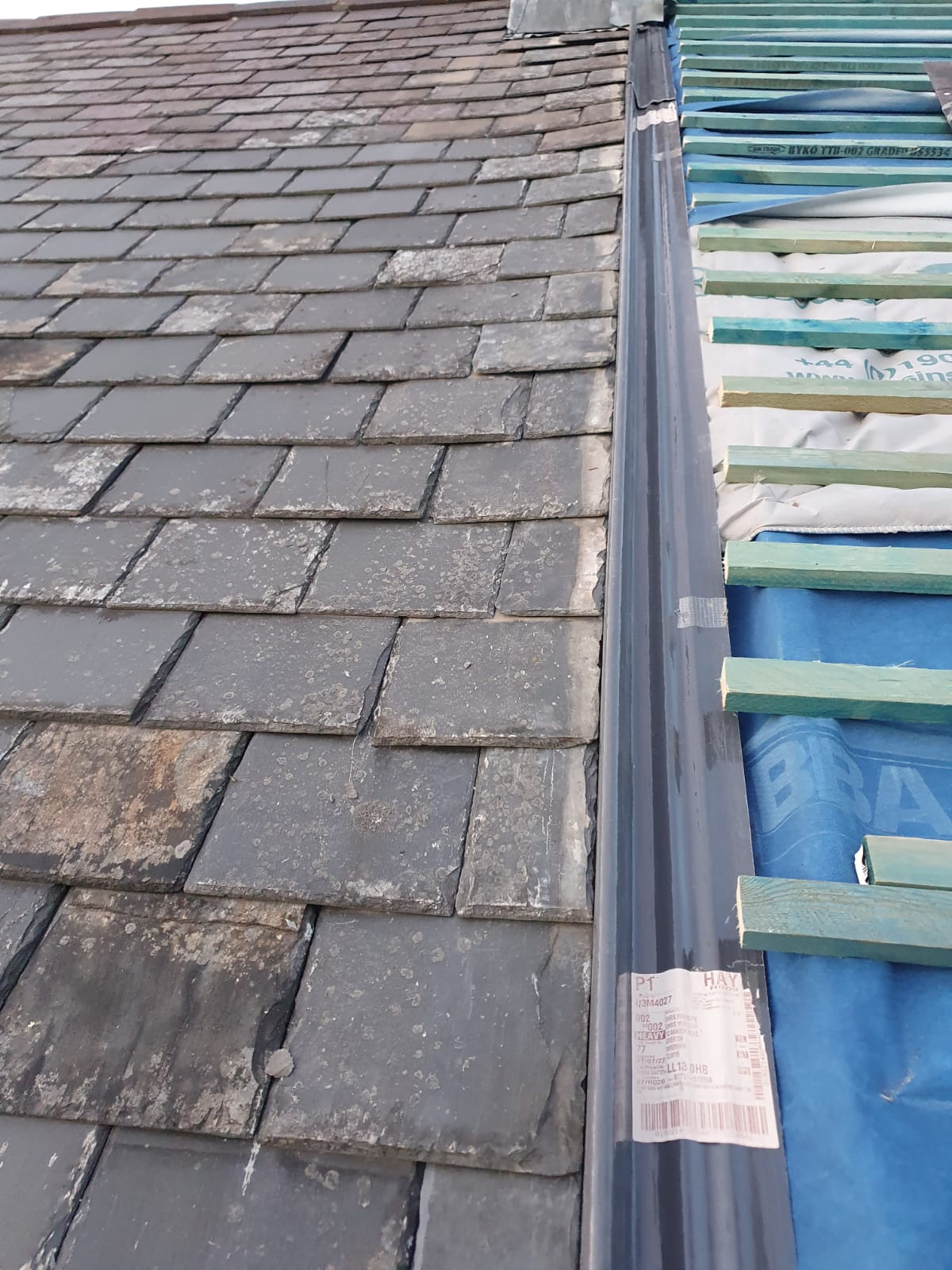
While Chris concentrated on removing and trimming tiles to more successfully install the bonding gutter, me and dad went about taking apart most of the scaffolding at the back of the building and moving it to the side, the one remaining piece of roof in need of stripping.
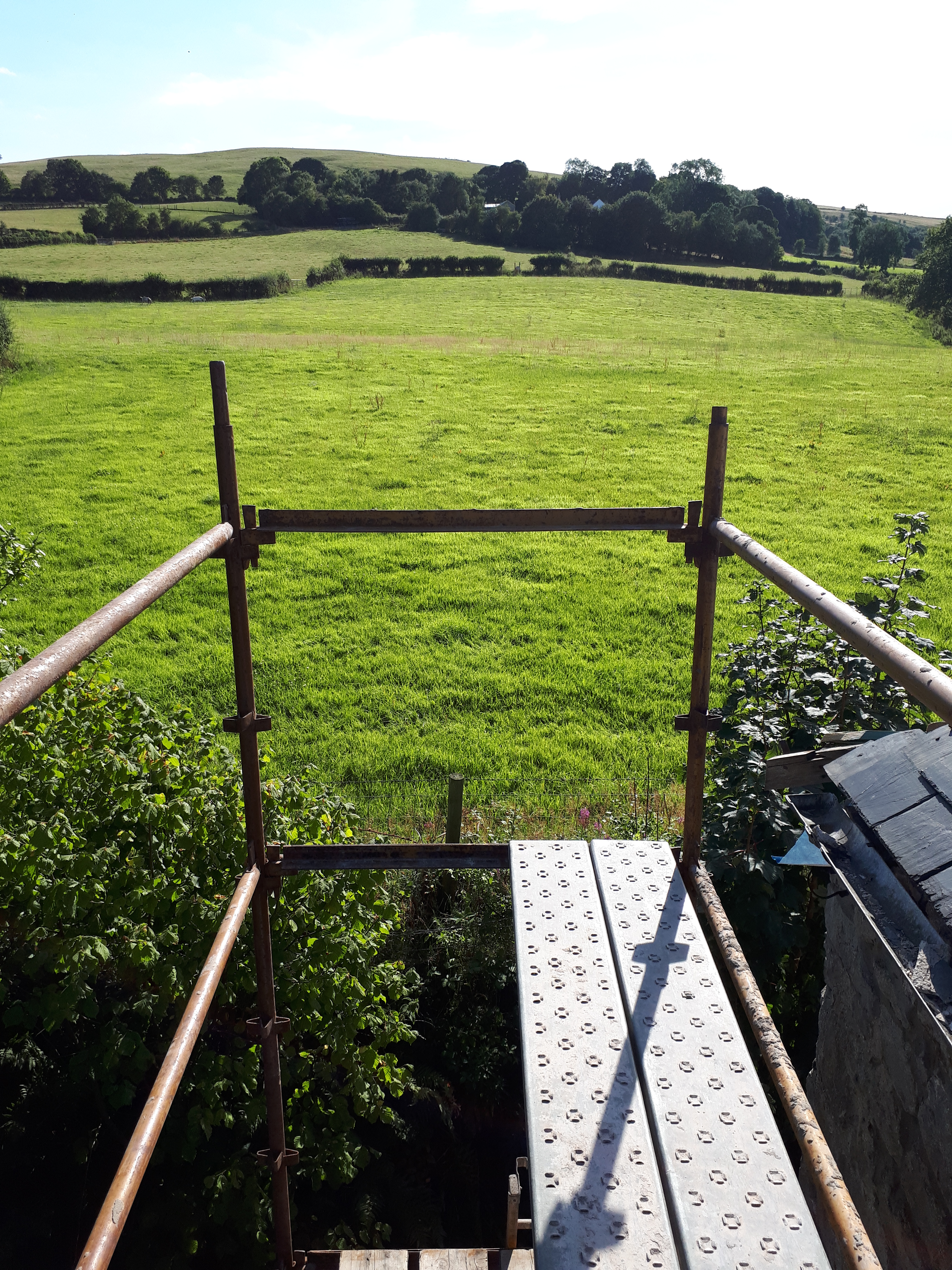

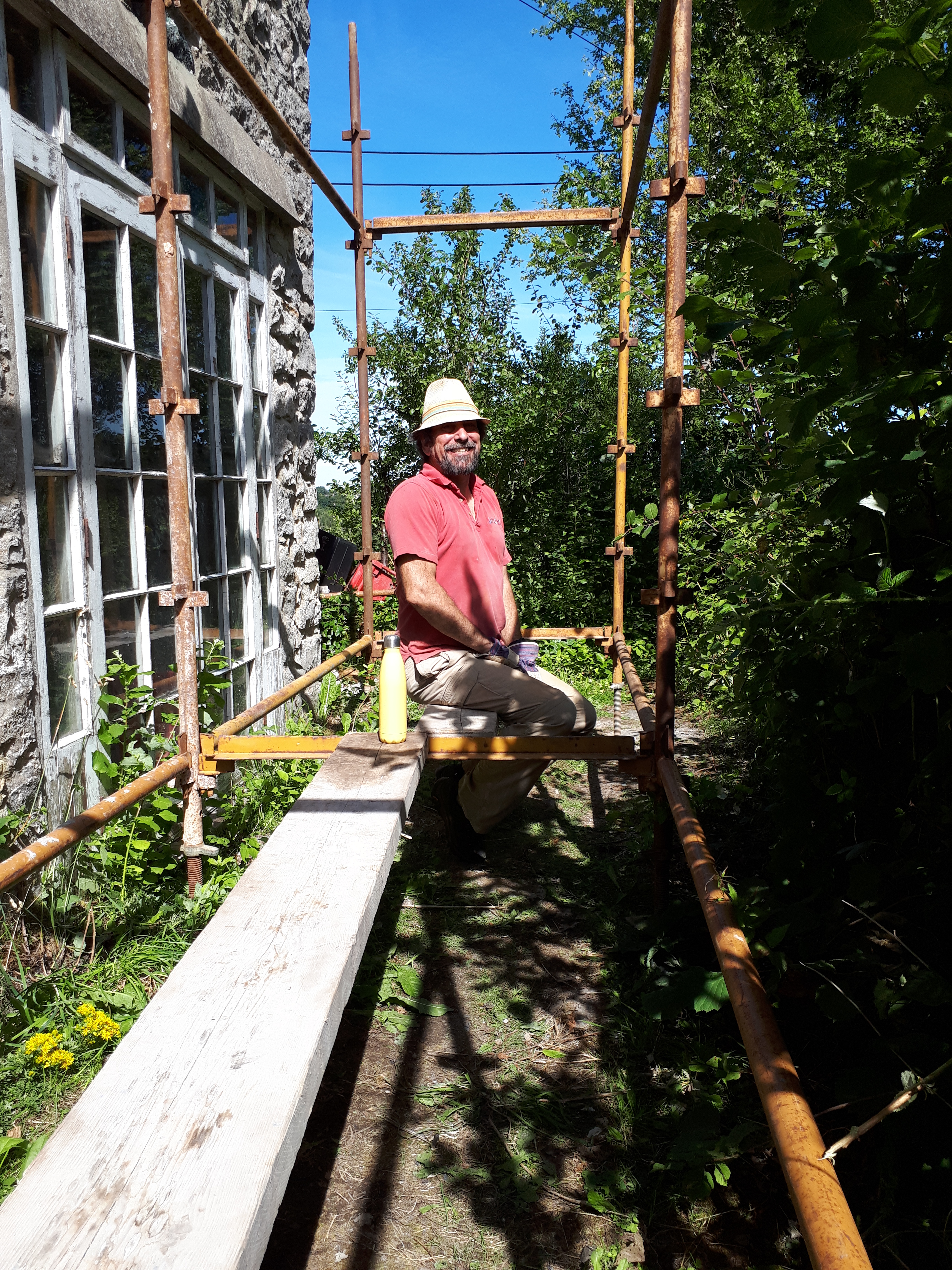
While moving scaffolding may sound simple enough, I can assure you it’s surpringly tough and exhausting work. As well as the physical strain of heaving heavy boards and metal bars up and down, there’s the mental gymnastics, as you try to work out the best order in which to disentangle the structure. If at any point you get ahead of yourself, and miss a few steps, it’s easy to end up with scaffold boards stranded three levels up with no neighbouring structure to help you get them down. For example…
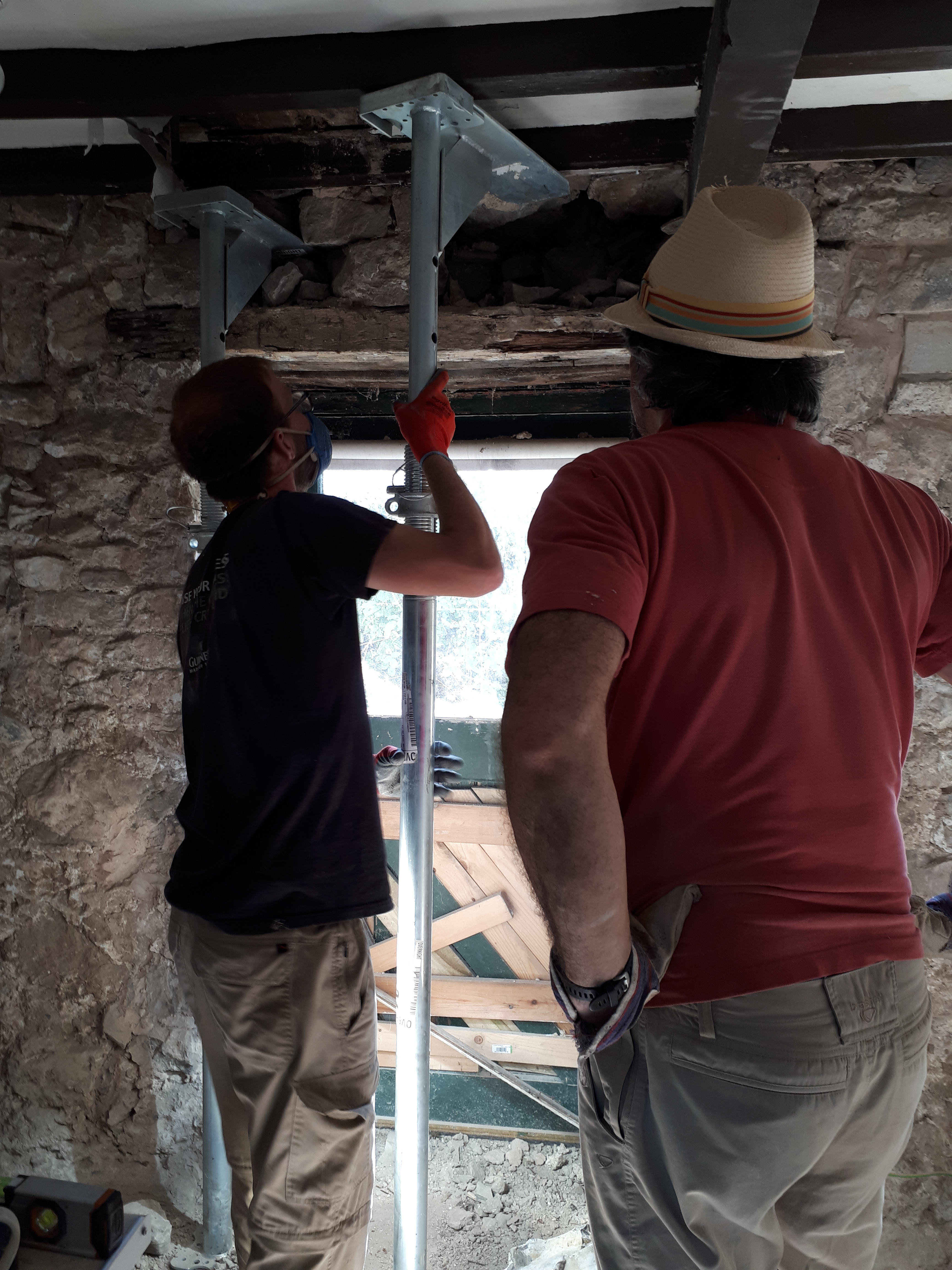
Having taken down and rebuilt the scaffolding, as well as sorted and cleaned the remaining slates, there was just time for Chris to ready a new lintel, taking out the two rotted pieces of wood, both seeming to have had some previous agricultural use.
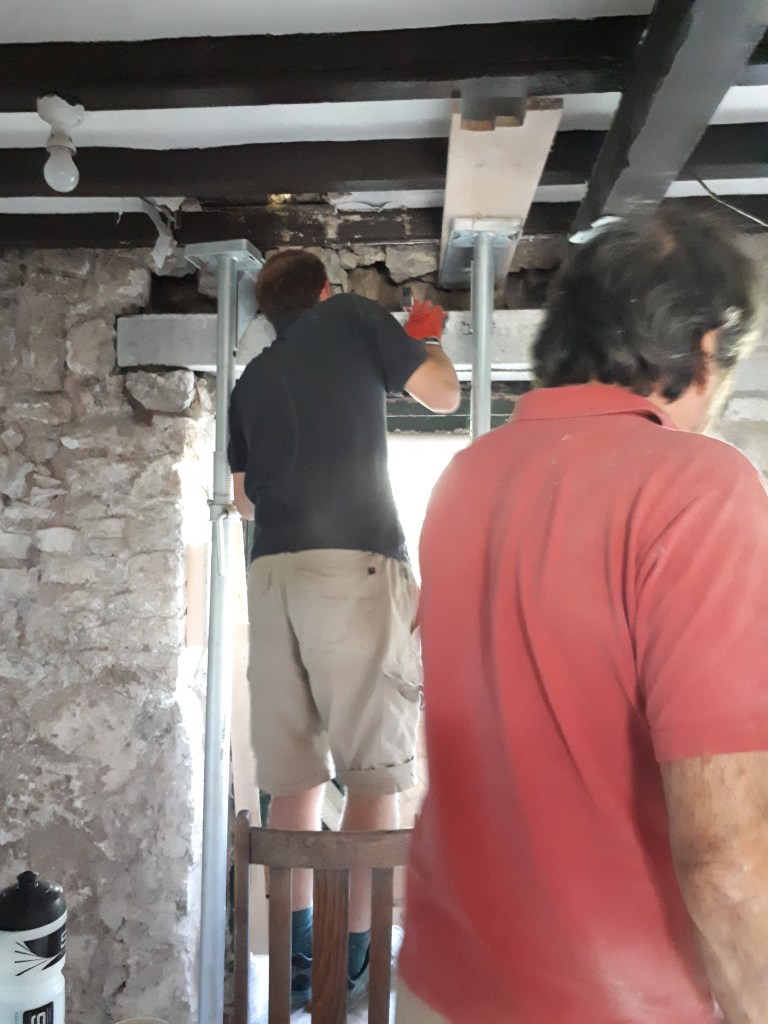
We returned to the lintel day 2, to make use of our additional manpower to lift the two heavy concrete lintels into place. While we had managed just about with the two of us on the window lintels, those needed above the doorway were slightly longer and therefore a touch heavier. A third person made things infinitely easier.
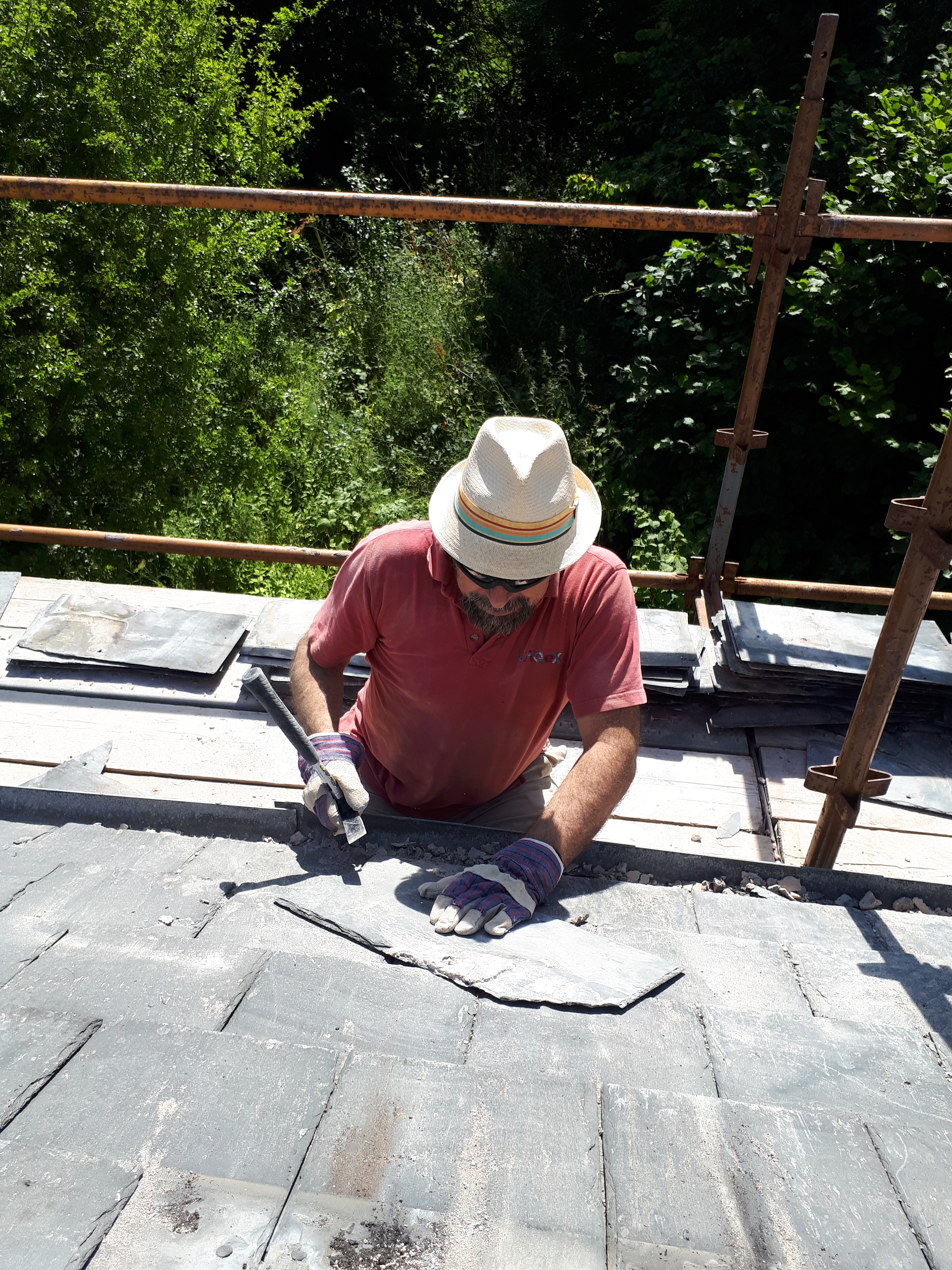
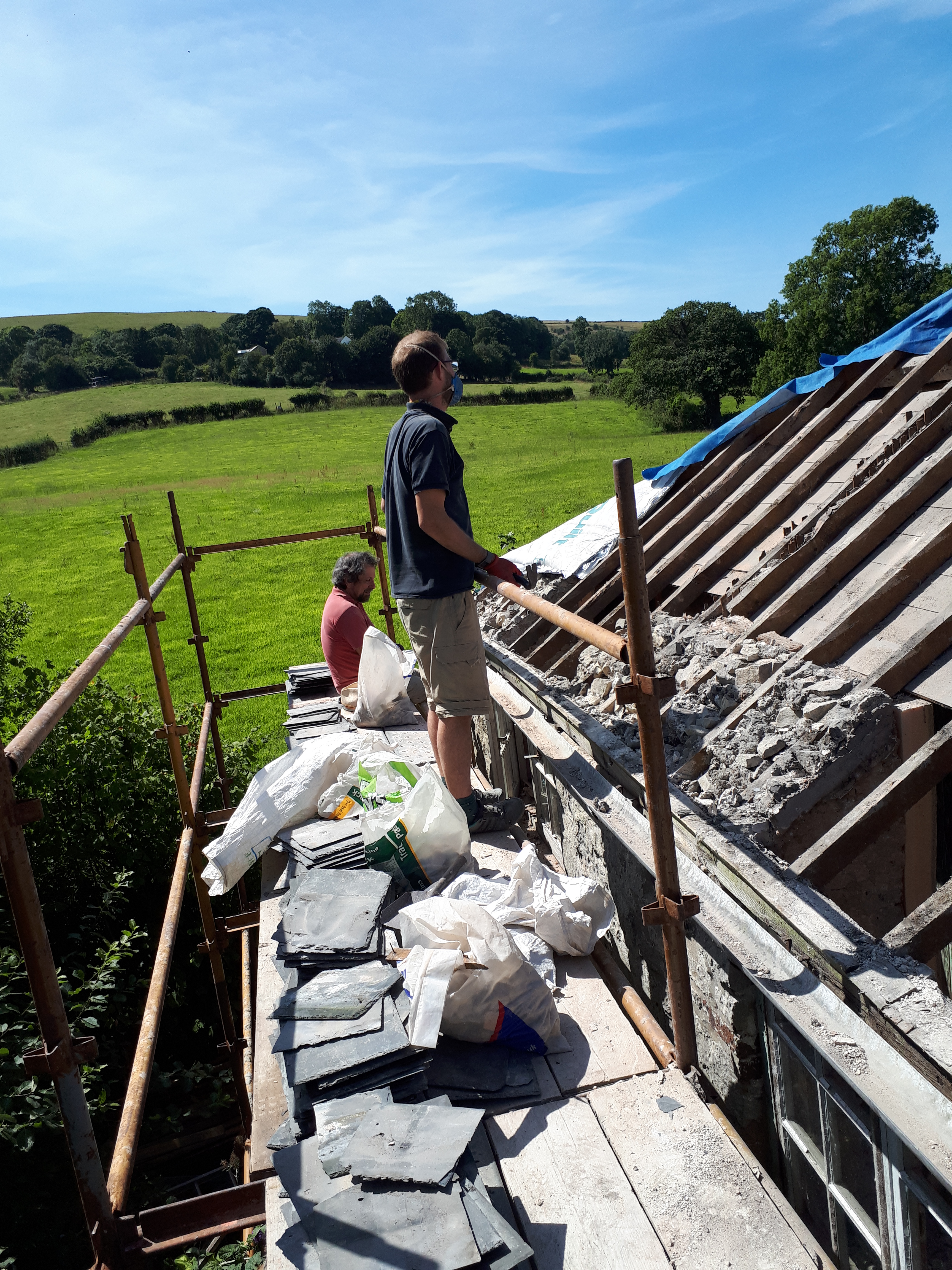
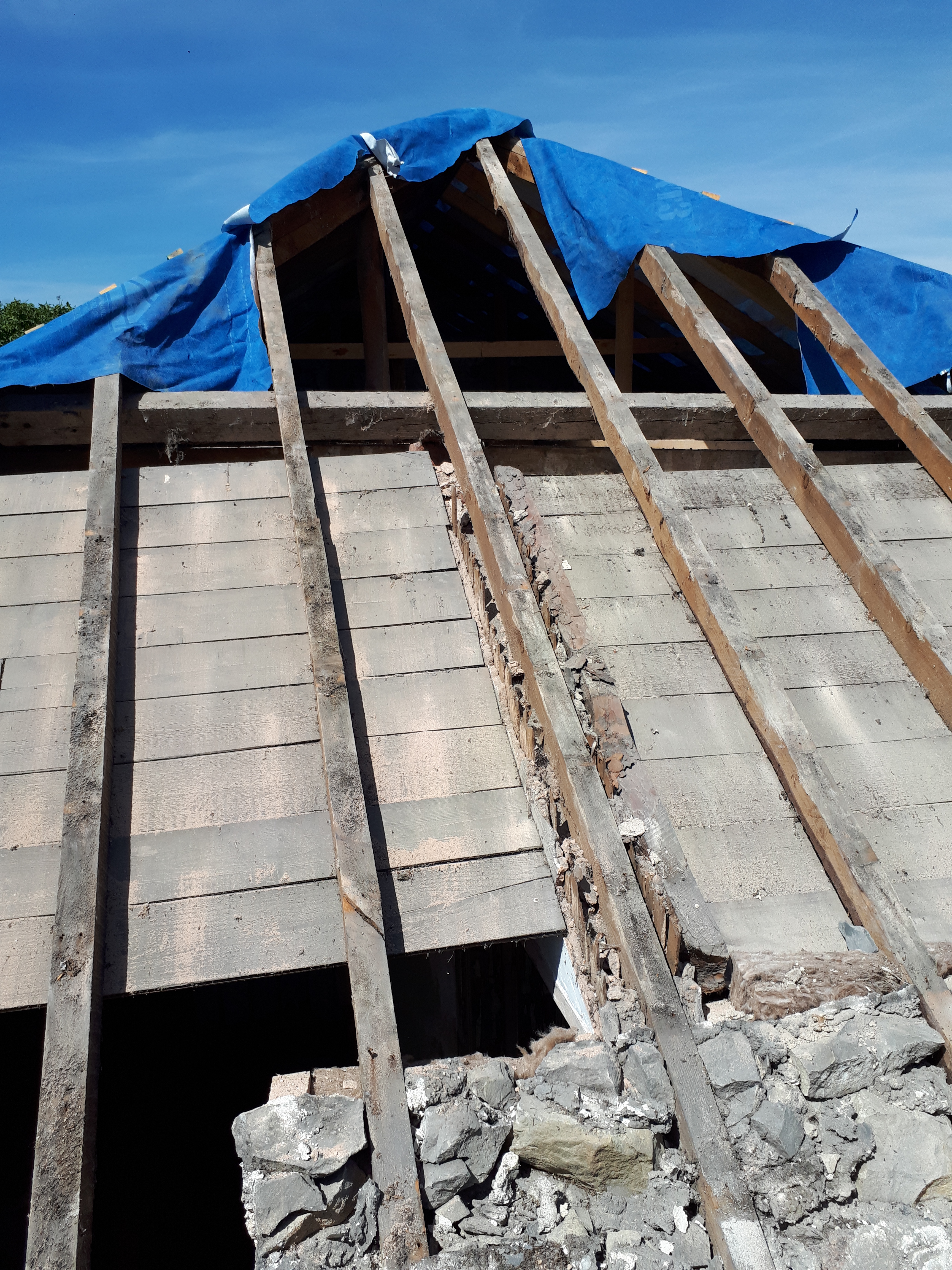
Leaving Chris to prep the next lintel, myself and dad headed for our newly erected scaffolding in order to strip the last patch of slates, clear off the batons, and bag up any rubble that remained after the process.
Once exposed, we could see that only three rafters need replacing on this side of the roof, a bit of a relief after having had to replace so many on the other sides. Now that all the tiles are off, the next job will be to install the new purlins, something our neighbour, a farmer and roofer, has offered to lend a hand with. Having a expert along for this task will be a big help, seeing as it’s probably going to be the most technically challenging aspect of the whole renovation.
Finally, the roof ready for its new purlins, and the new door lintels left to set before the stones above can be replaced, we helped Chris remove an impressively large piece of wood from above the lounge window. Having pulled this monster out we realised it probably would have survived another 100 years as a window lintel. Still, with concrete lintels ready to take its place, we’ll reuse this mammoth, and probably ancient, piece of wood as something else. My vote is for a bench, but we’ll have to wait and see.
-
More roofing
It is a truth universally acknowledged that roofing takes absolutely ages. At least it does when you are two amateurs working weekends and evenings.
The good news , however, is that the rain has held off. This long dry period that has left us all sunburnt and exhausted, and killed off half the plants in the garden, has also meant our house didn’t flood while the roof was open.
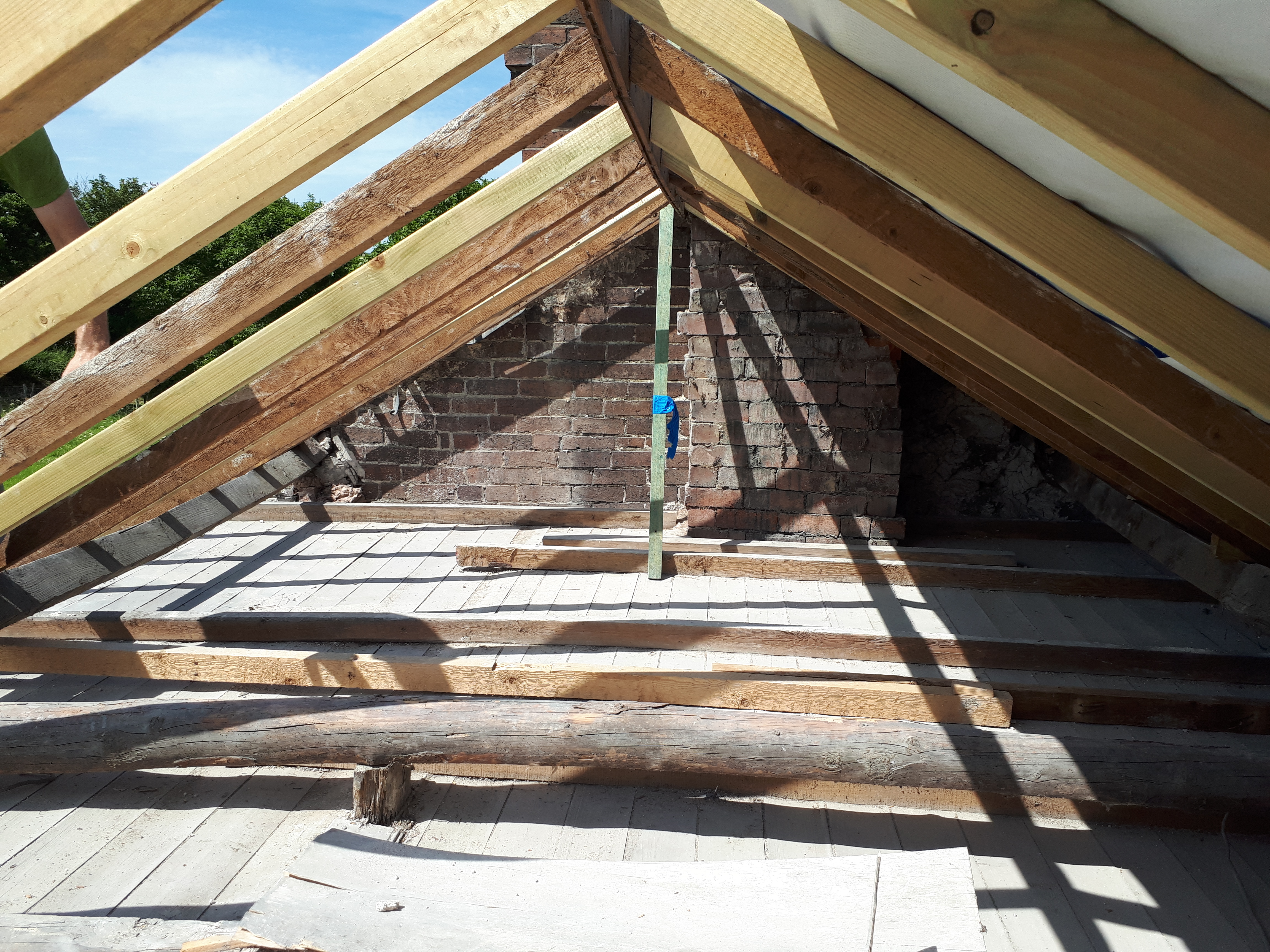
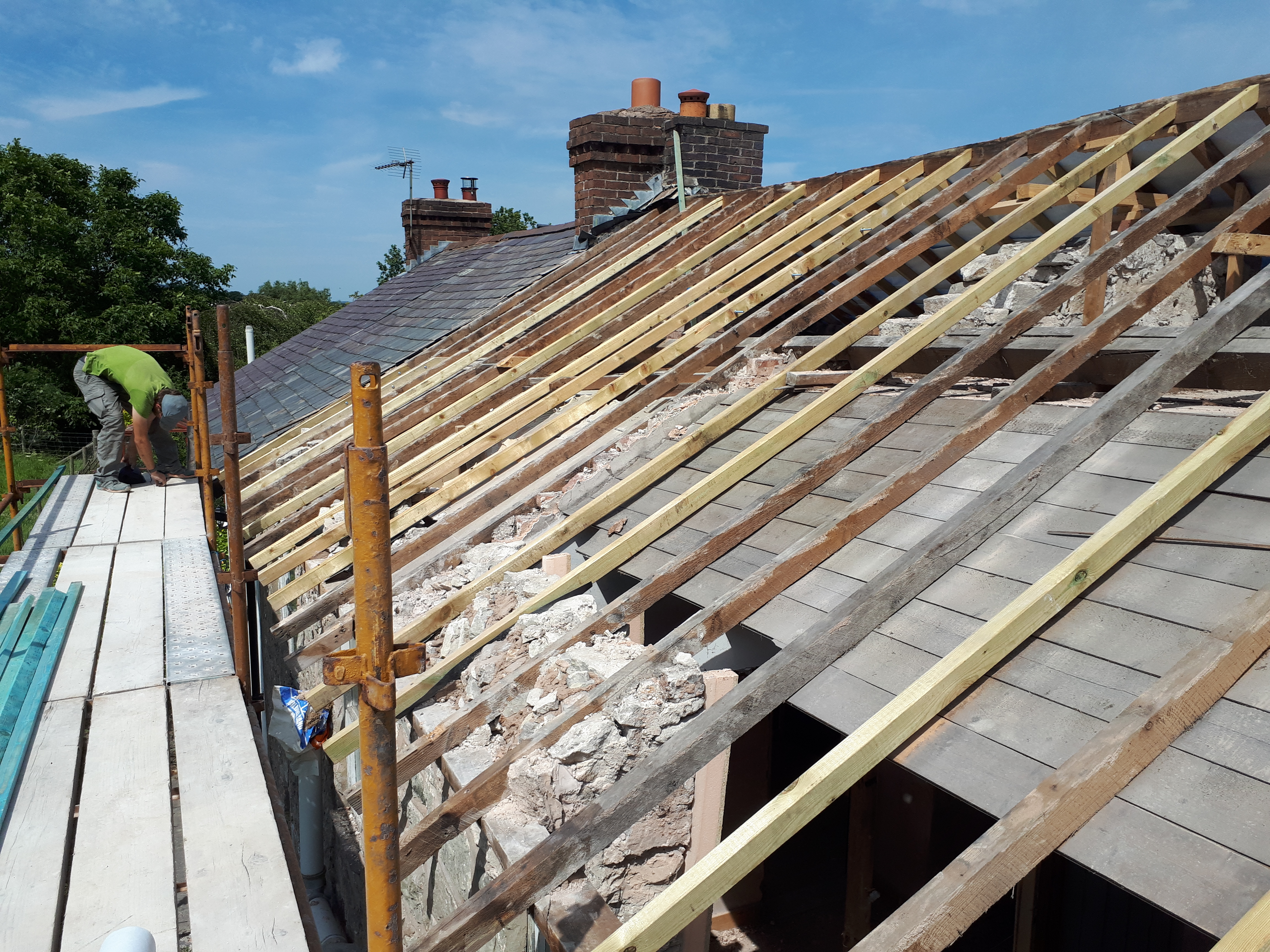
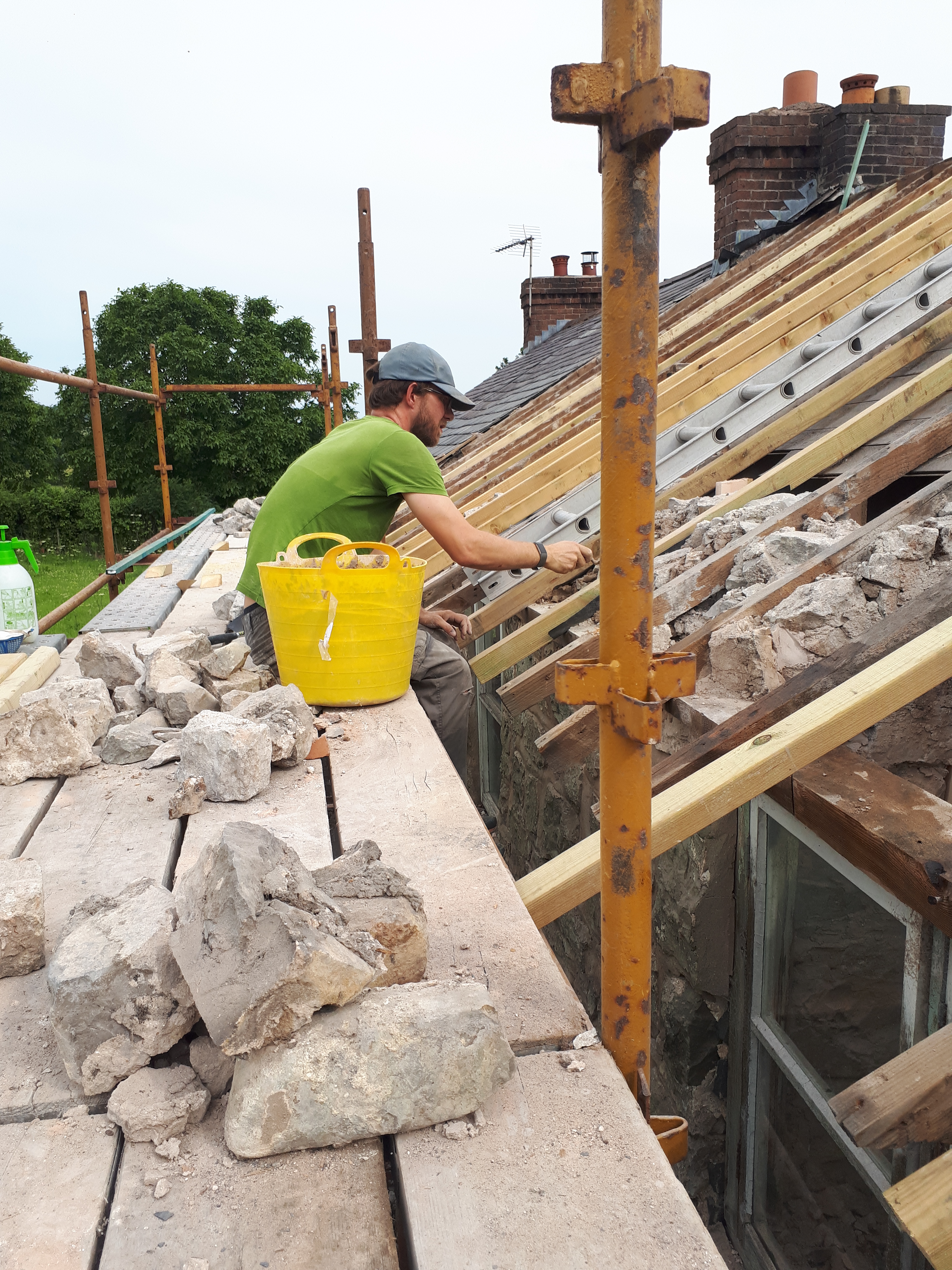
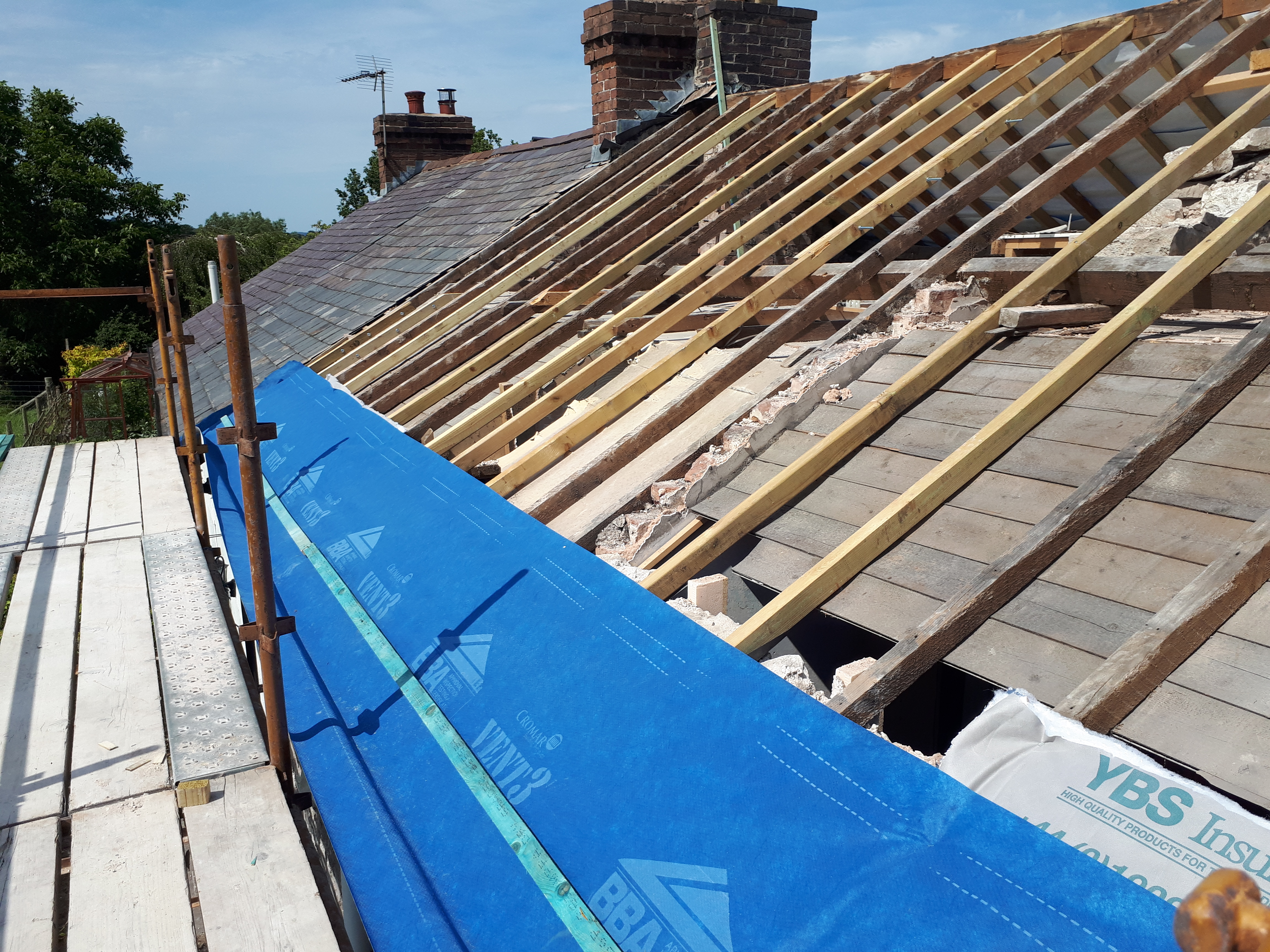
Finishing off the second side of the roof was very much the same as the first, except with no extra pairs of hands and much less free time. Overall, the second side needed slightly less work, with fewer rotten rafters, and less stonework in need of repair.
One added complication was that the roof overhangs the wall more on this side of the house as, as Chris says, this is the way the weather comes. In practicality this meant a good foot and a half gap between the edge of the scaffold and the start of the wall, which I was constantly worried about falling through. We also had to put one of our scaffold legs on the top of an old garden wall, that was just in the wrong place. Technically ok but also kind of scary to look at.

Chris’s fancy camera work. Due to impending weather we also decided to put half as many batons on the second side, so as to get the membrane on quicker. We’ll be filling in the other batons when our new order to nails finally arrives. Much cheaper via the internet, but also much slower.
Another complication of the roof overhanging the wall was working out where to locate the first baton. We think we got there in the end… but we simply won’t know till we start putting in the slates.
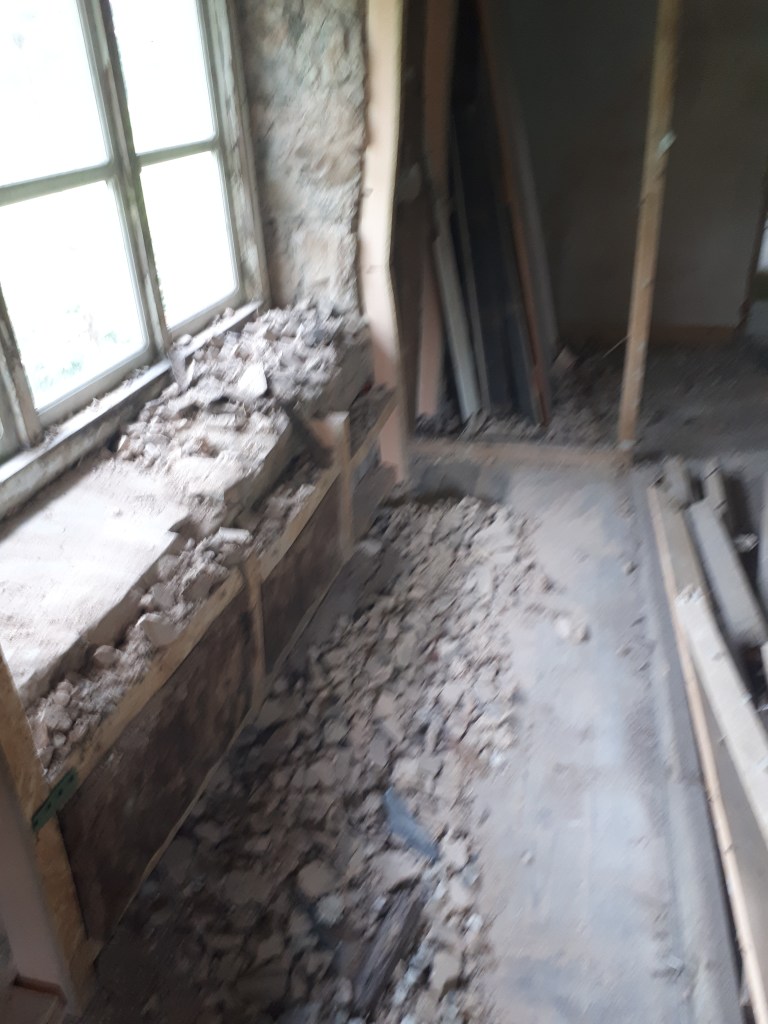
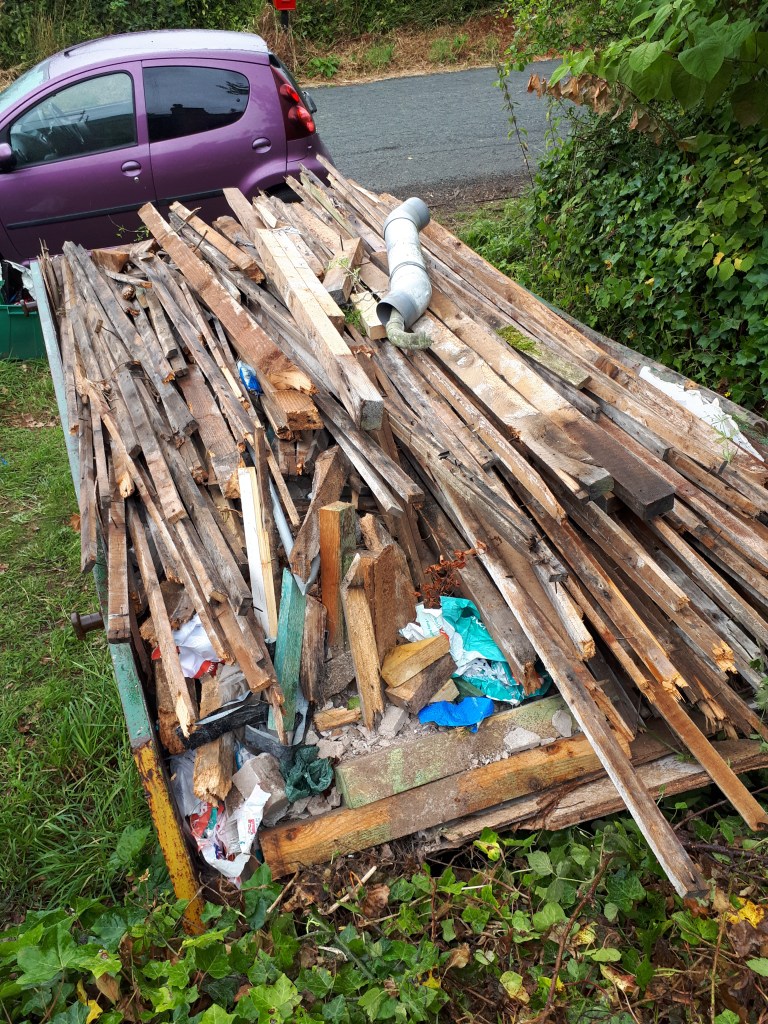
The final roof section to work on will be the hip, however to start this we need our new purlin to have arrived, so for now we are getting on with other jobs, such as cleaning out all the rubbish that fell into the house from the roof, and filling our second skip with all the rotten wood and debris we removed from the roof.
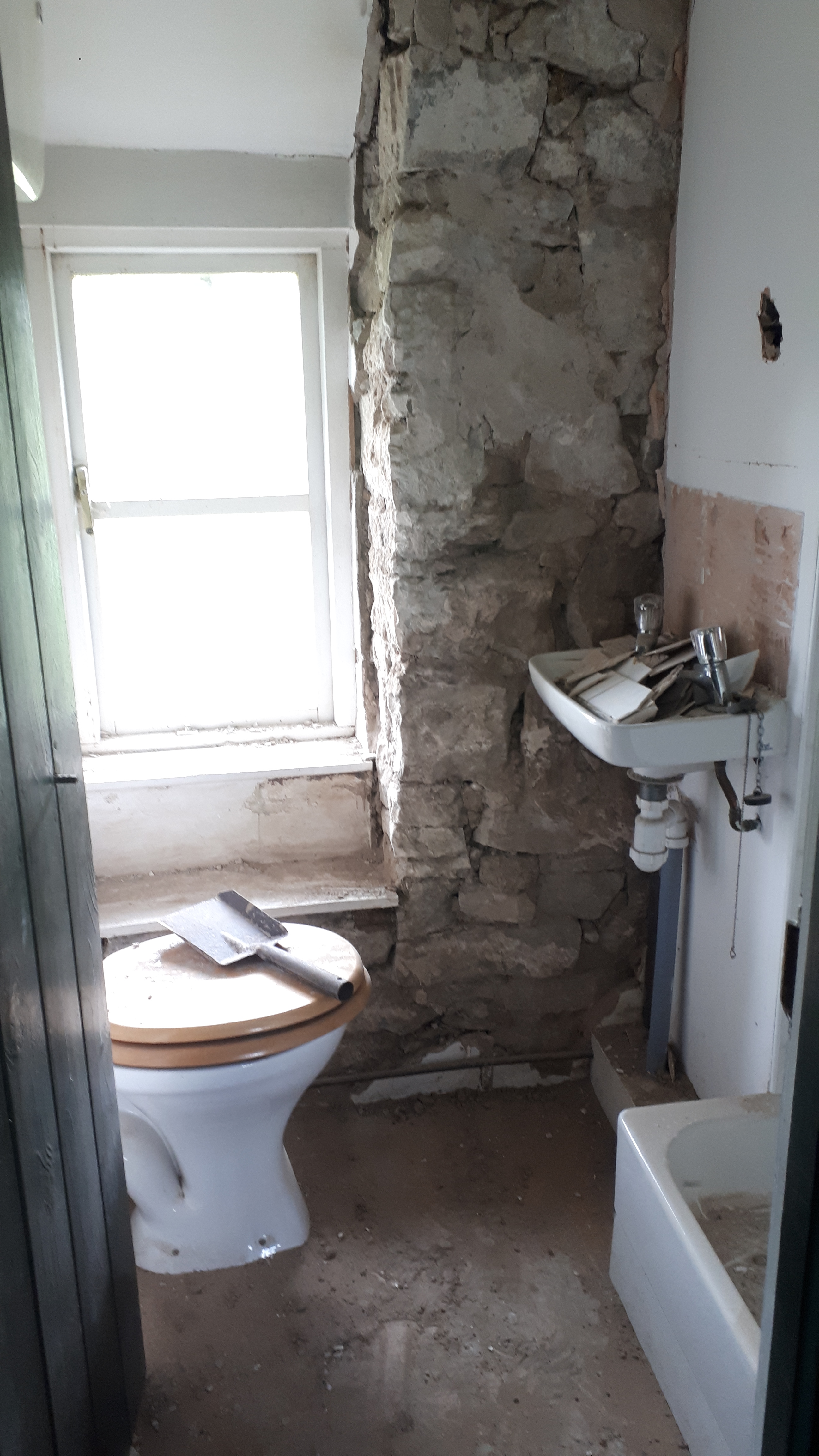
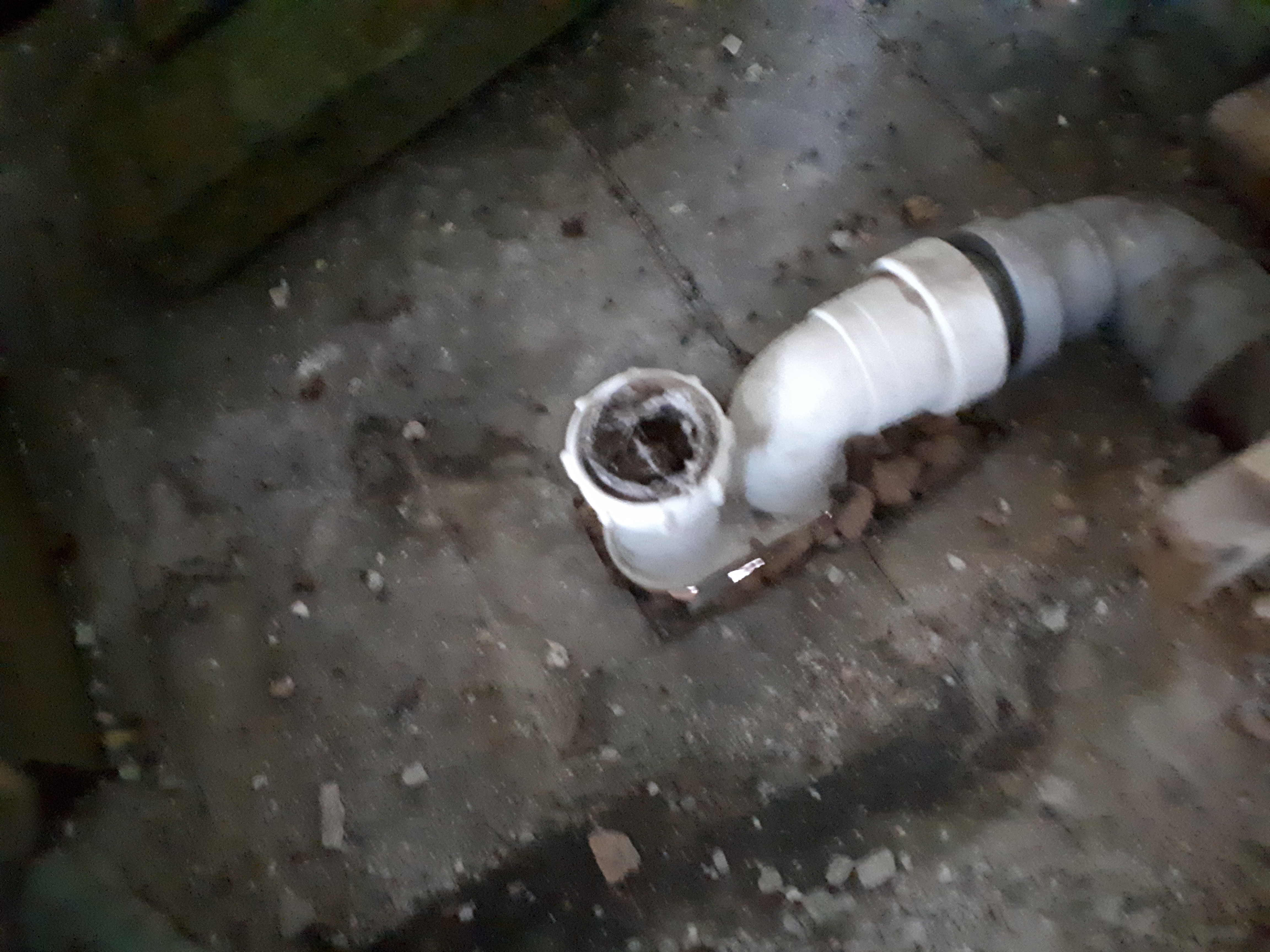
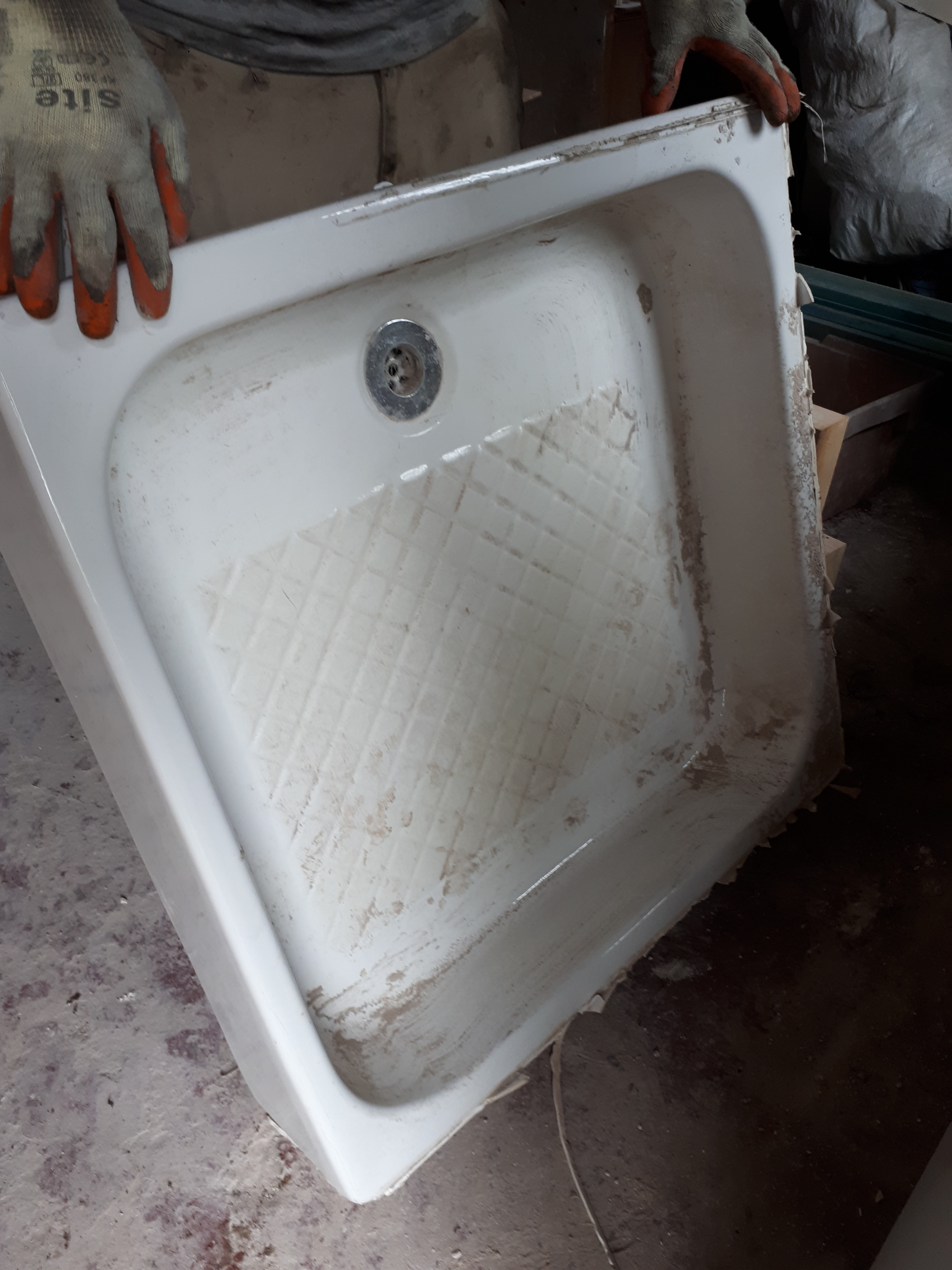
The funniest bit of past DIY we’ve found is a pipe that pops out in the ceiling of our kitchen. Finally removing the shower tray in the bathroom we can see whoever installed it had to cut a hole through the ceiling as the pipe was put in too low.
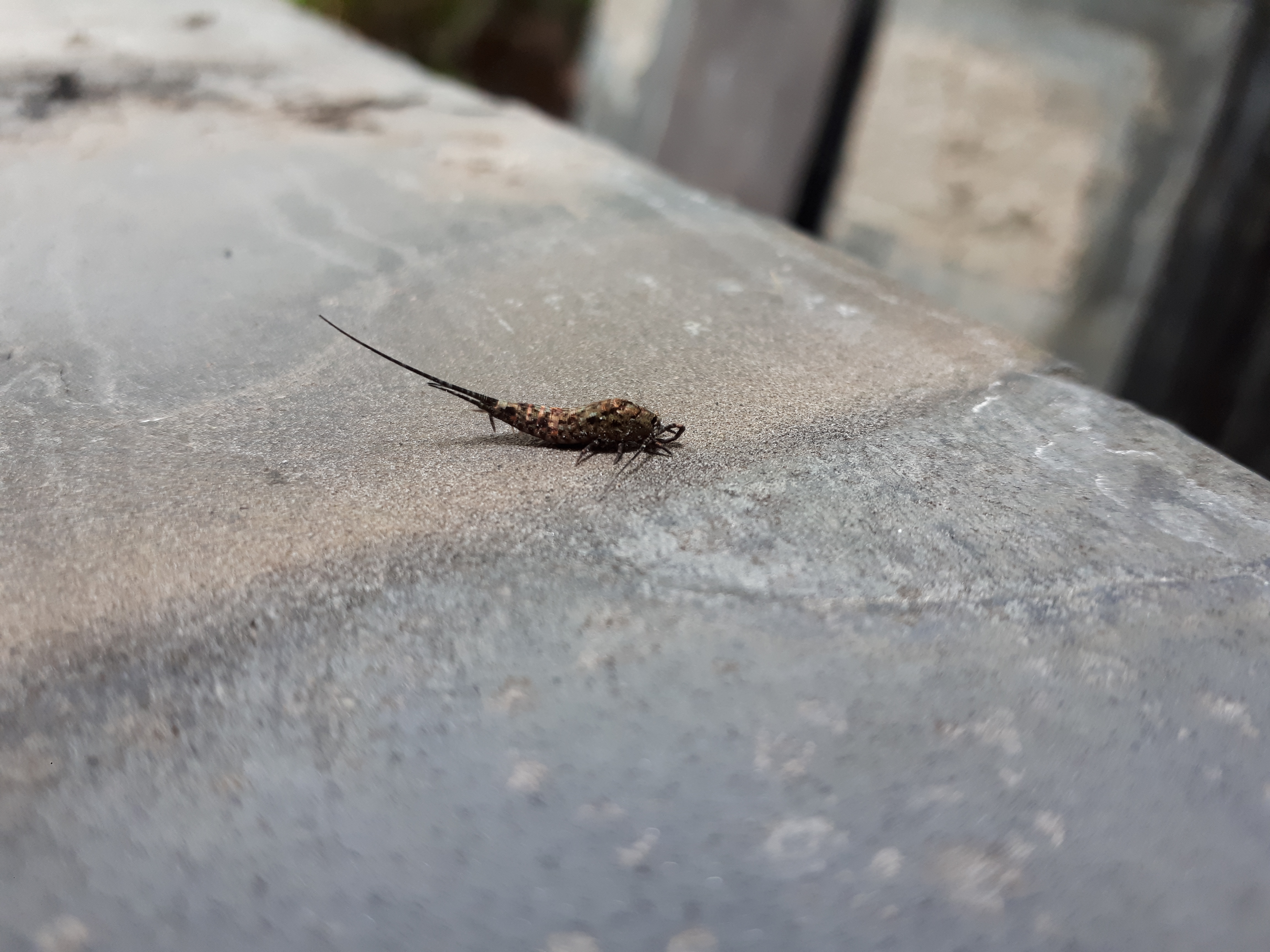
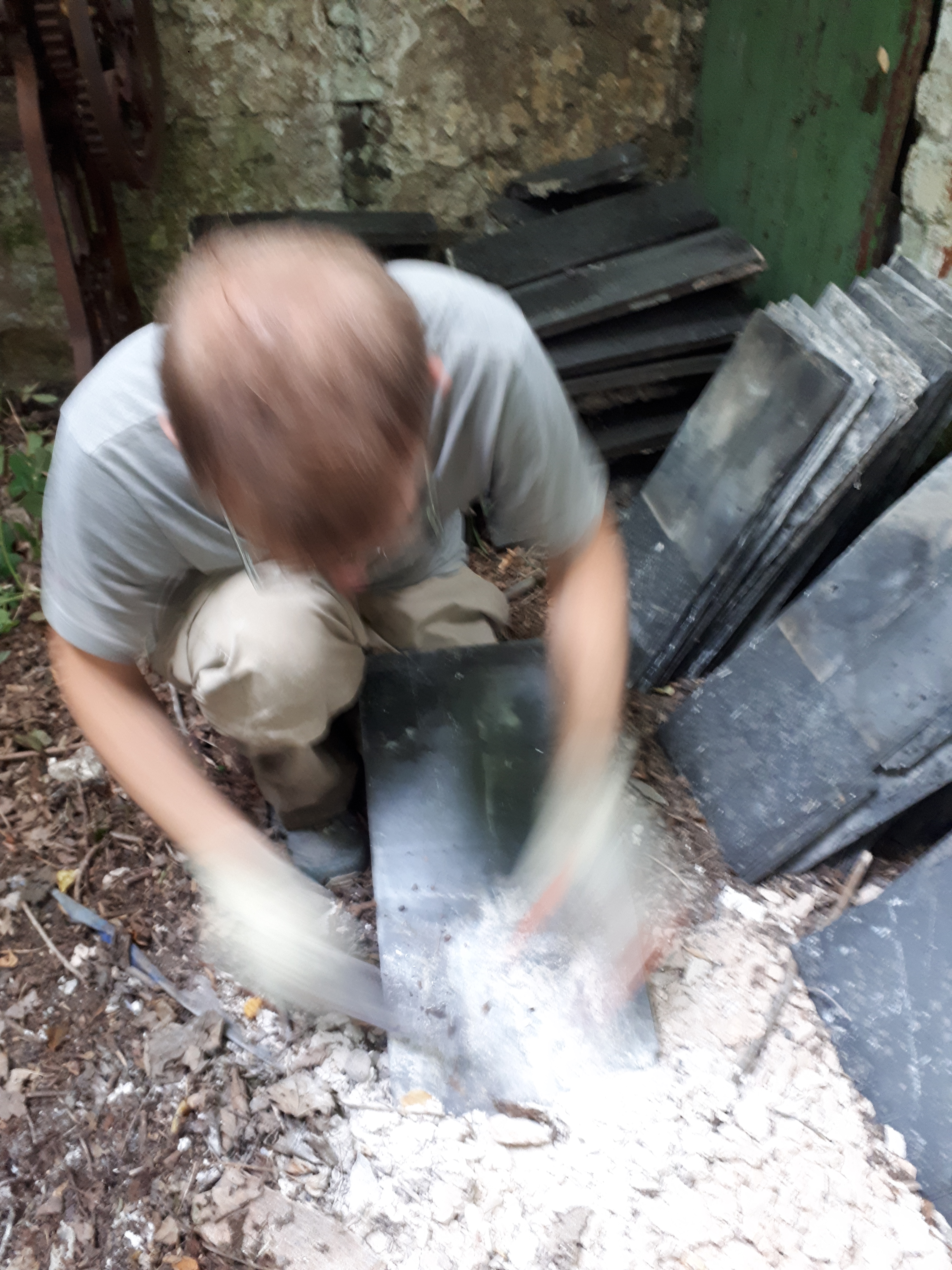
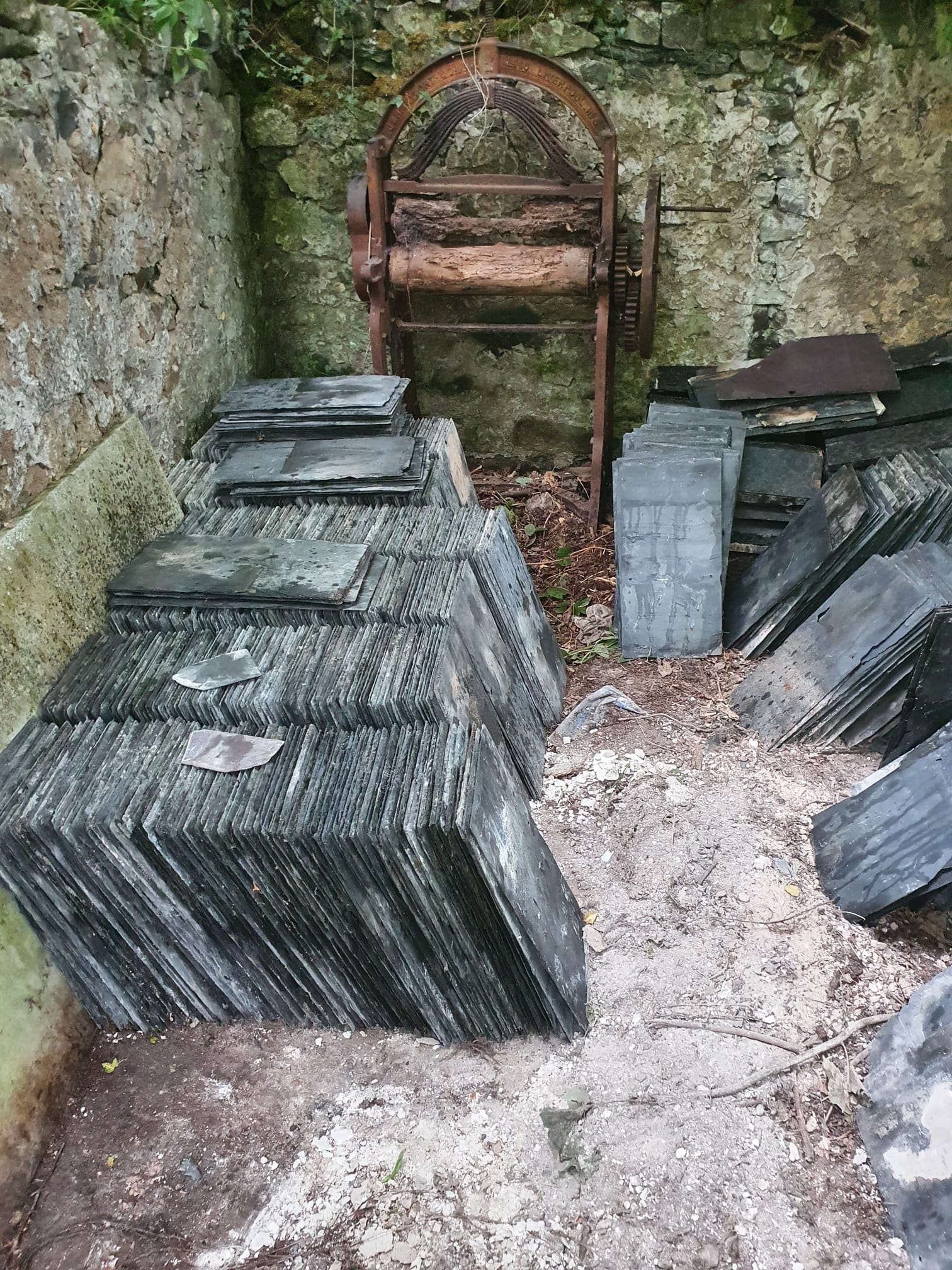
A job that we were worried would take forever, but has been surprisingly quick, is sorting the slates. Each slate needs to be cleaned of old mortar, and graded as, in good condition, in ok condition and in poor condition. Slates graded as perfect can be used on the edges of the roof where we will use nails. Those in poorer condition can be used on the rest of the roof, where we will use wire hooks. And the worst condition slates may be cut and used in places we need half tiles. This sorting process will also tell us how many new slates we need to buy, meaning each broken slate has a price tag. While sorting the slates we also encountered all the insects that had made themselves at home in our temporary bug hotel.
Next weekend we have a few days off to go chase butterflies as an early birthday present for me. To make up for the days off though it’ll be busy evenings instead. After all, as the summer is slowly finishing, conditions for DIY will only get worse. The clock is always ticking on our renovation project.
-
Roof week
It’s roof week! During our initial estimates of how much work the house might require, Chris felt replacing the roof might well be an unavoidable job. Yet, it wasn’t until we had had a better poke around and gotten the advice of a structural engineer that we knew that the slight dip in the roof was due to a cracked purlin (the wooden beams that hold up the rafters). With this news, the optional roofing job became a necessity.
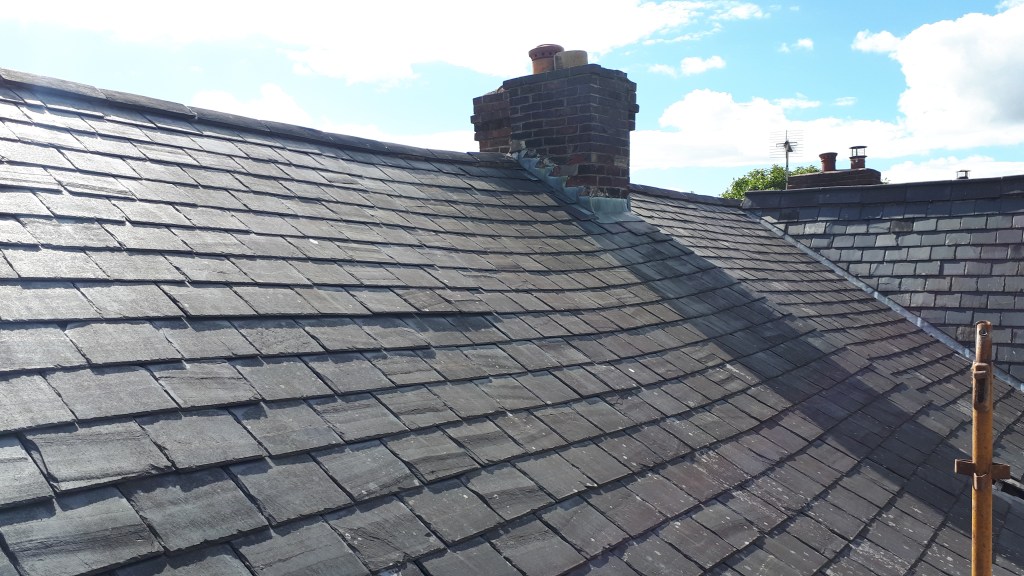
Replacing a purlin isn’t an easy job, meaning striping the entire roof, in order to remove the weight pressing down on it. Having poked around in the loft, Chris also felt we needed to replace a fair few of the rafters while we were there. All this added to one big job. So, we booked a week off work, hoping we could at a good chunk of the work done in our nine-day break.
Yet, after weeks of planning, it has to be said, our roof week did not start well. Various family members and friends had offered a helping hand throughout the week, much appreciated on such a big job, to the point where we were expecting five people some days. However, as the first day loomed we had two down with covid, and two taken away by other commitments. And, as if to continue the theme, the structural engineer we hired to tell us the size of purlin required also got covid….
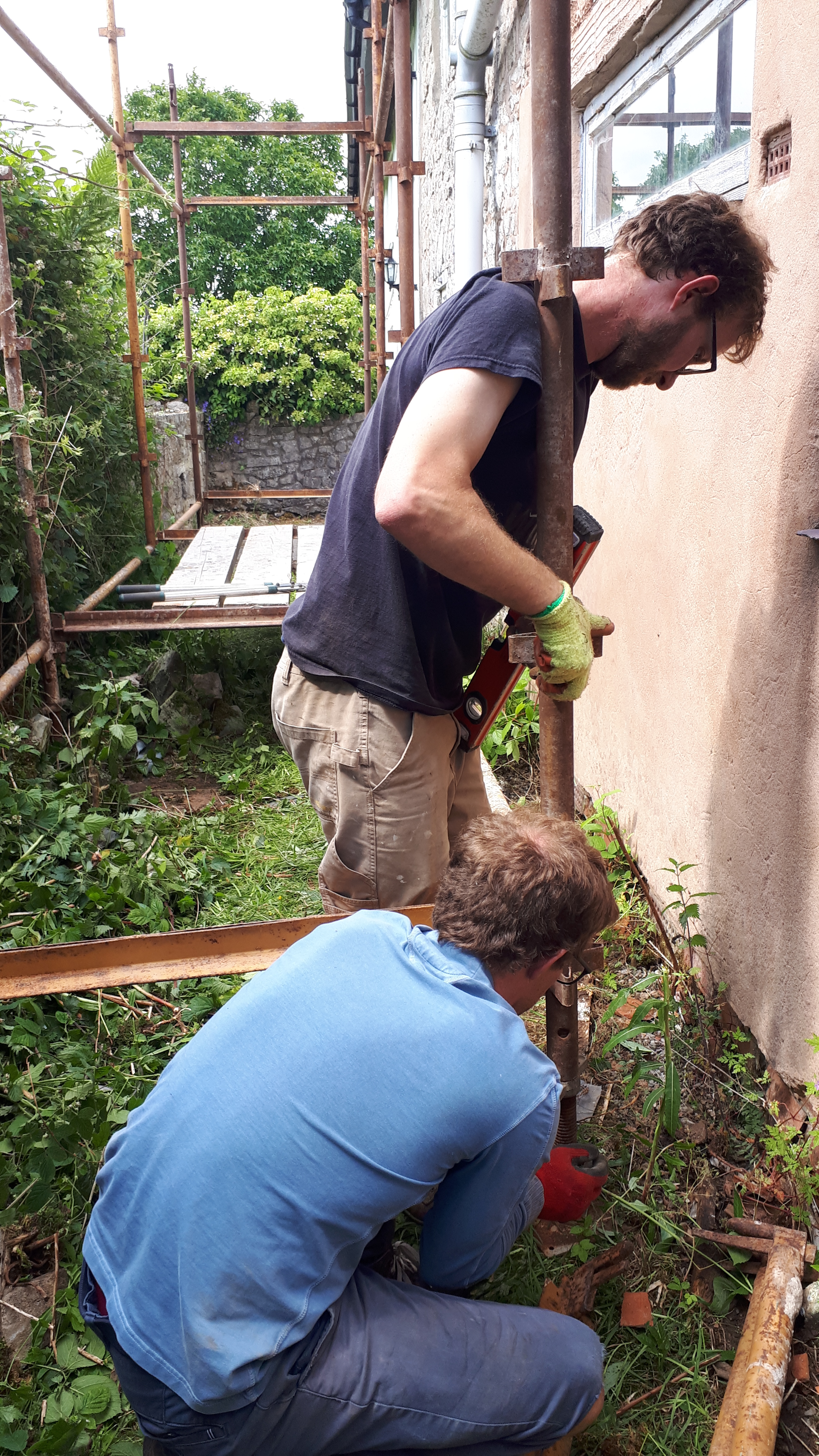
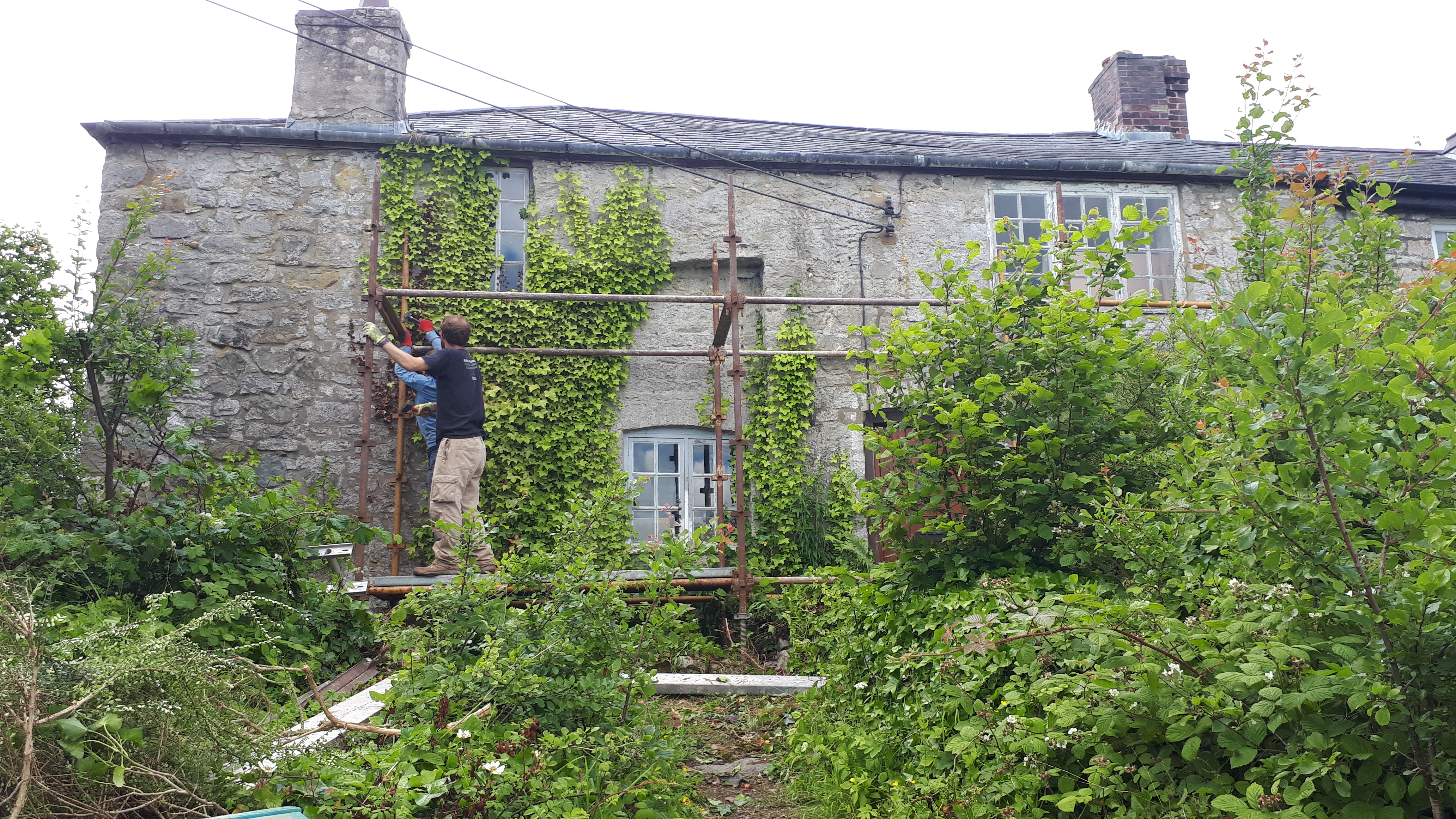
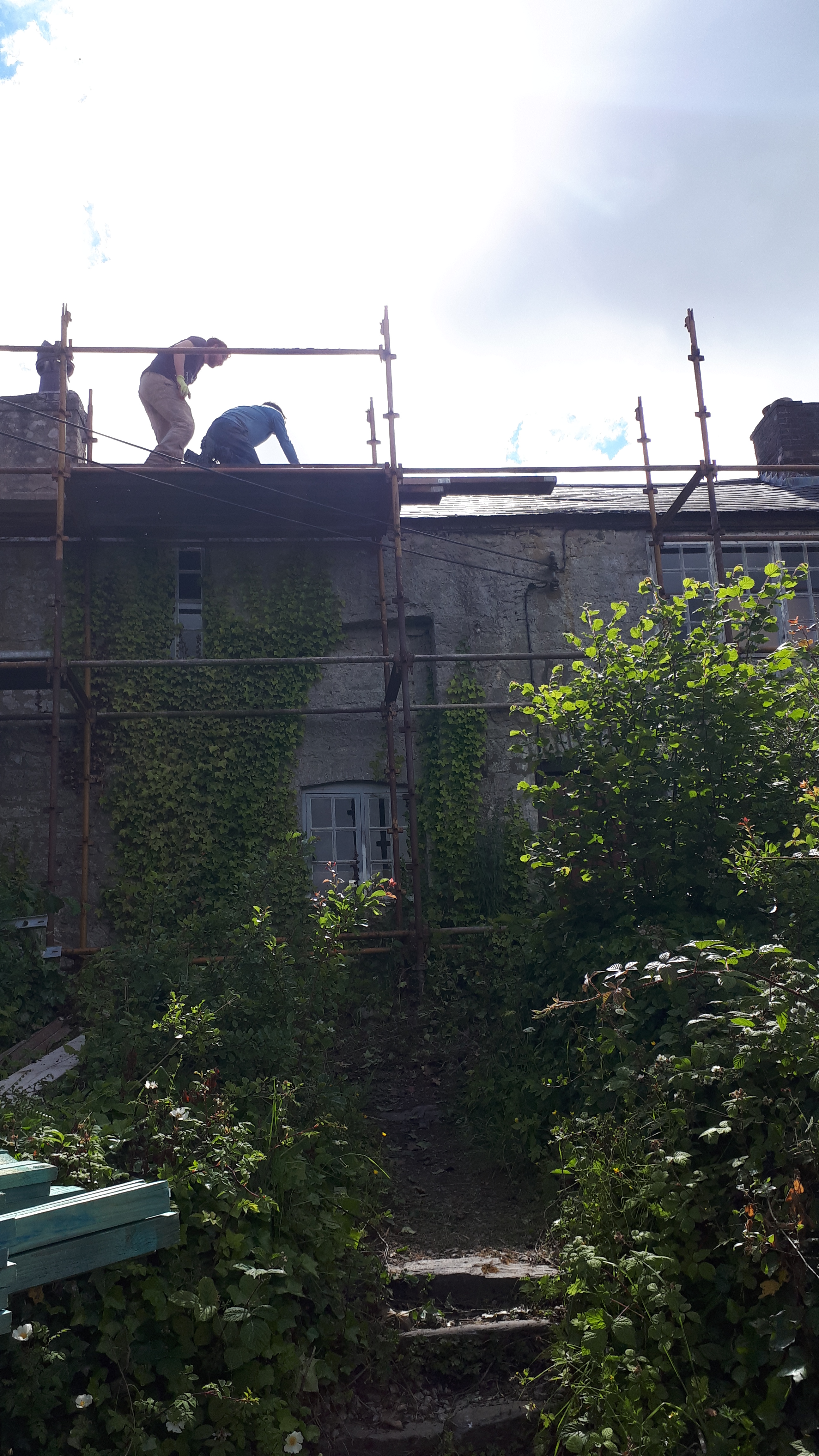
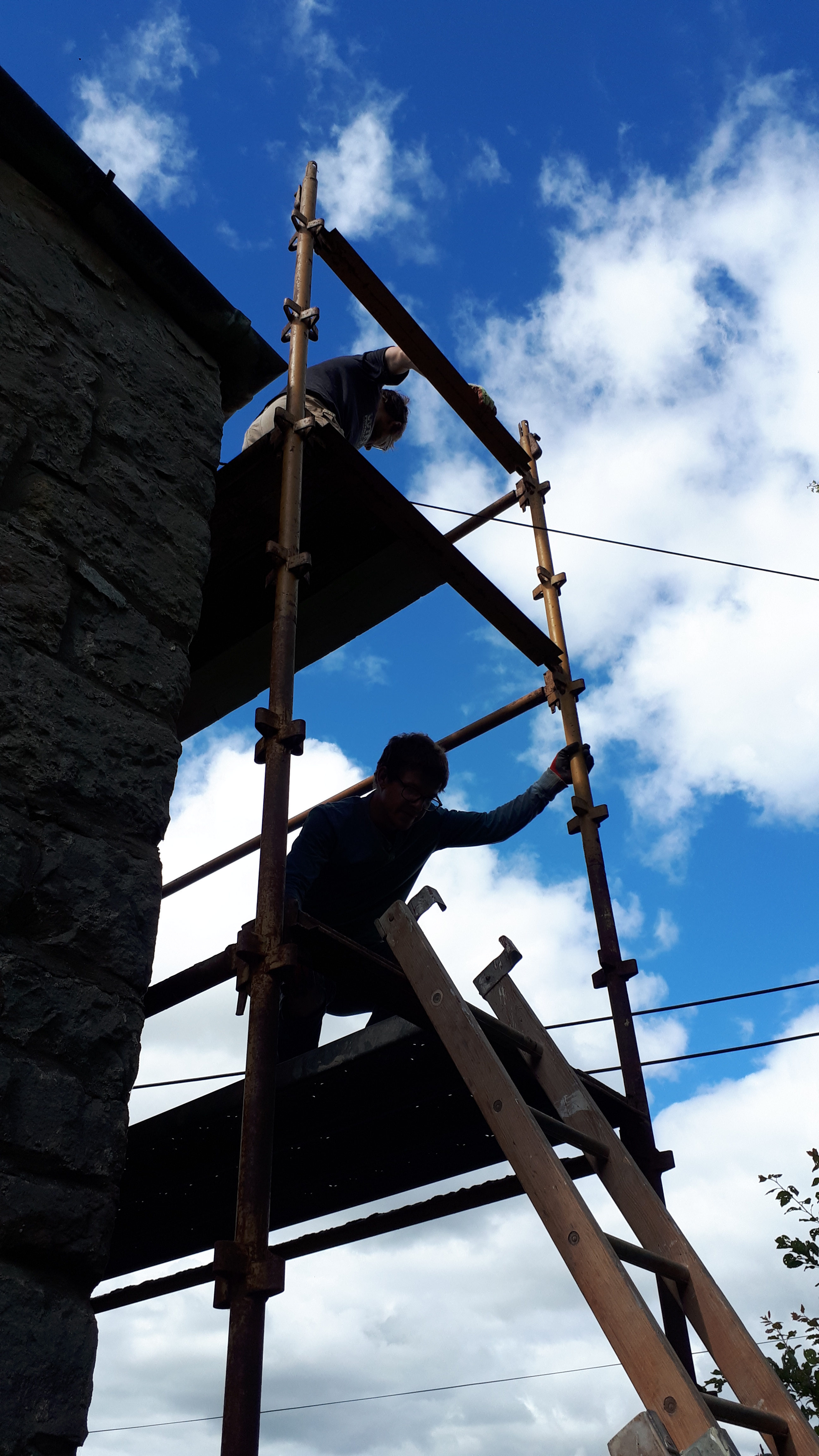
Still, with a much-reduced workforce, we soldiered on. Chris’s brother Phil was able to join us for the first two days, which got us off to a good start.
Our first day was entirely taken up with assembling the scaffolding, a job that needs at least three people in order to prevent tumbling ironwork and sore heads. We have just enough to cover all of the front and two-thirds of the back, while tackling the side (hip) will mean completely dismantling one set and reassembling it in its new location. However, as we can’t start the hip until we have the new purlin, and we can’t order the purlin without the engineer’s spec… and the engineer has covid… this job will have to wait anyway.
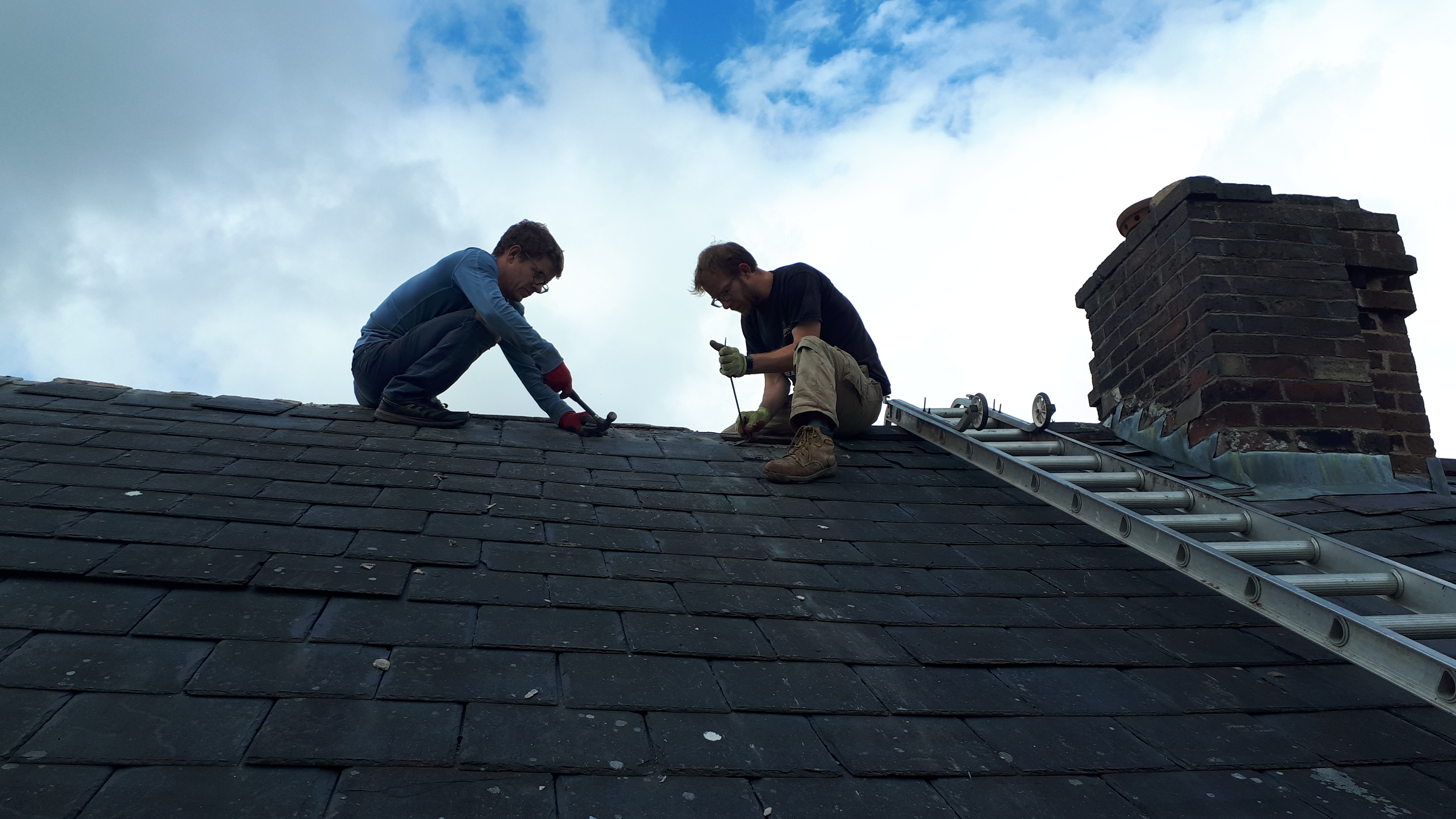
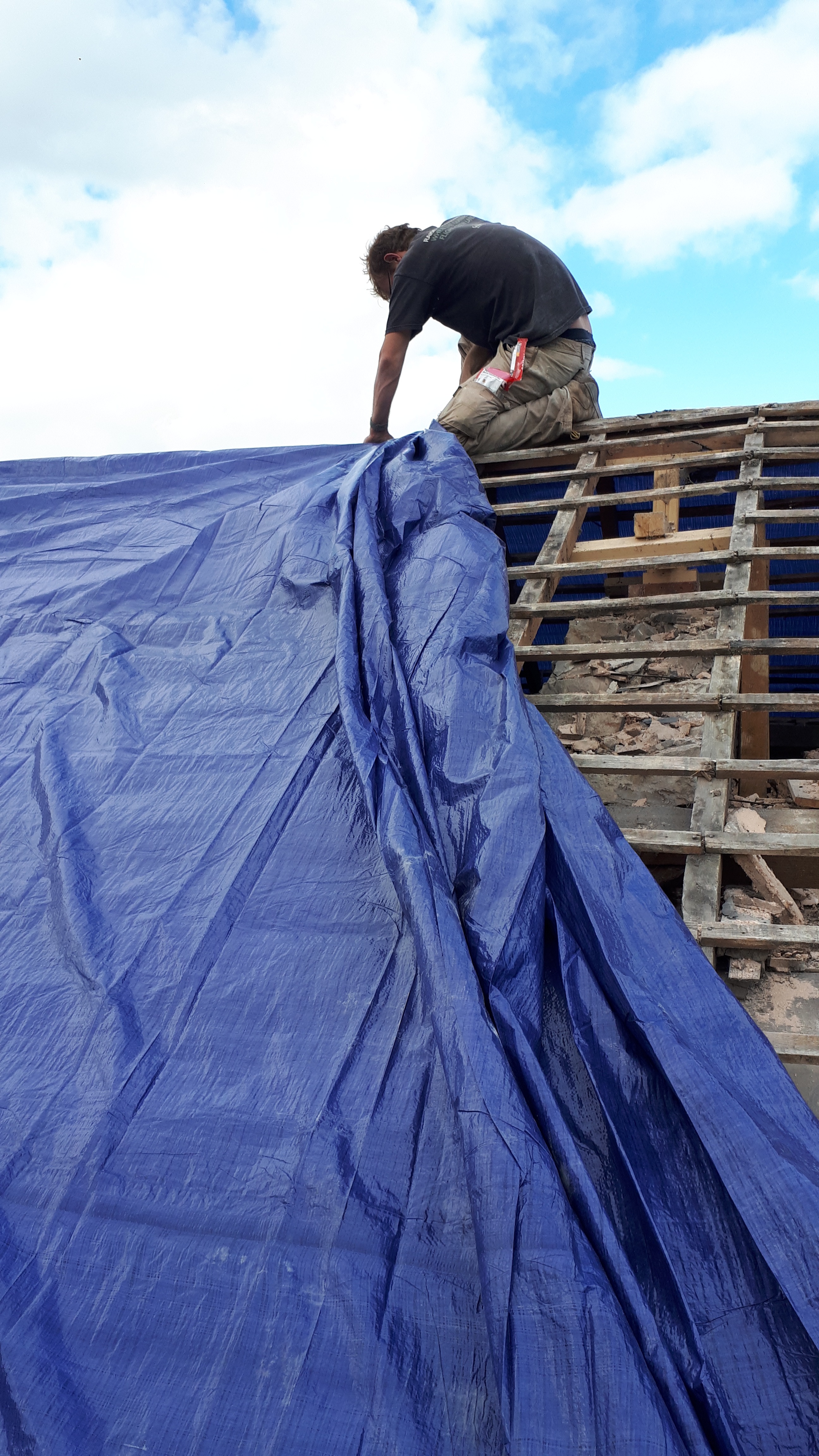
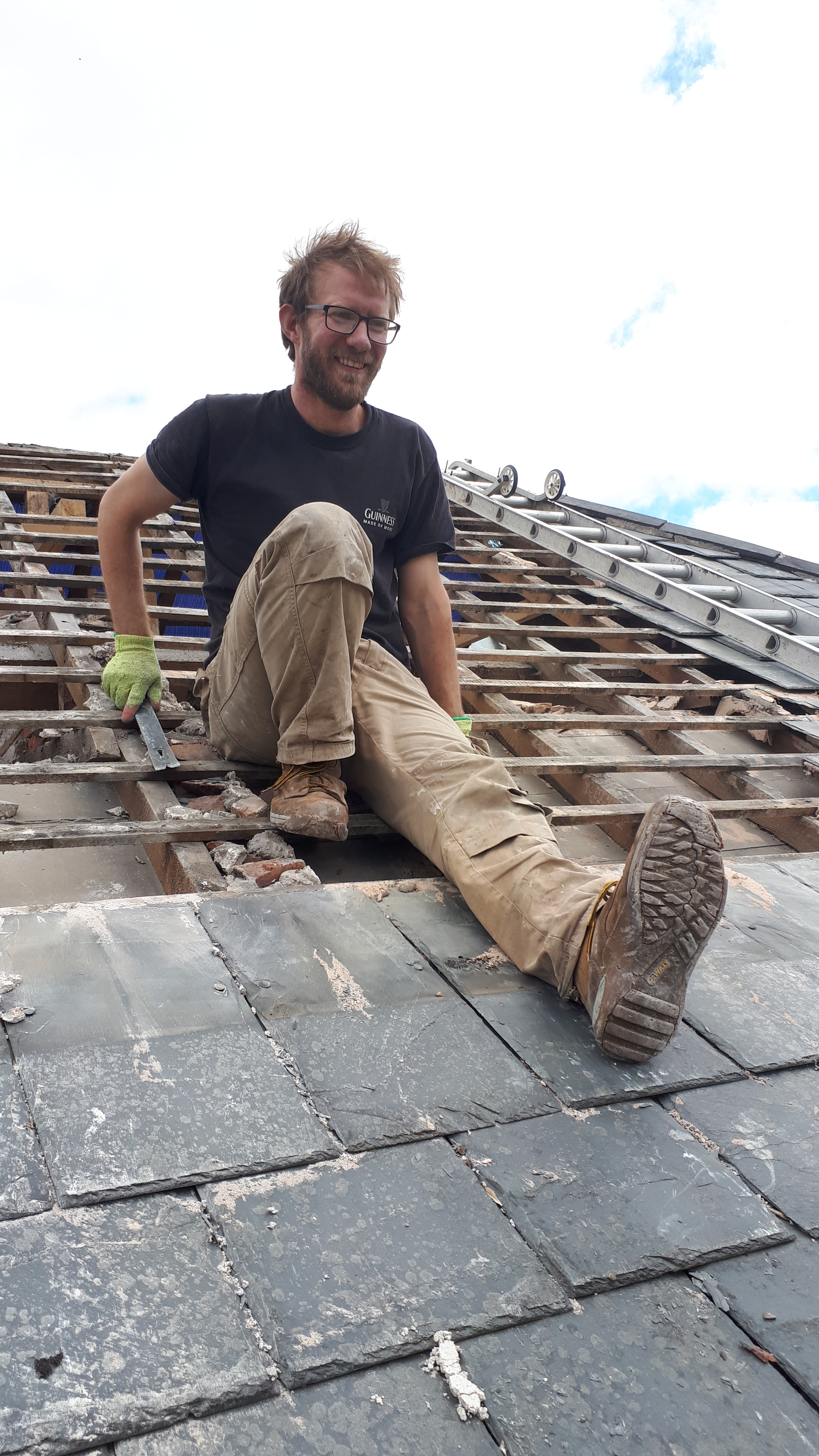
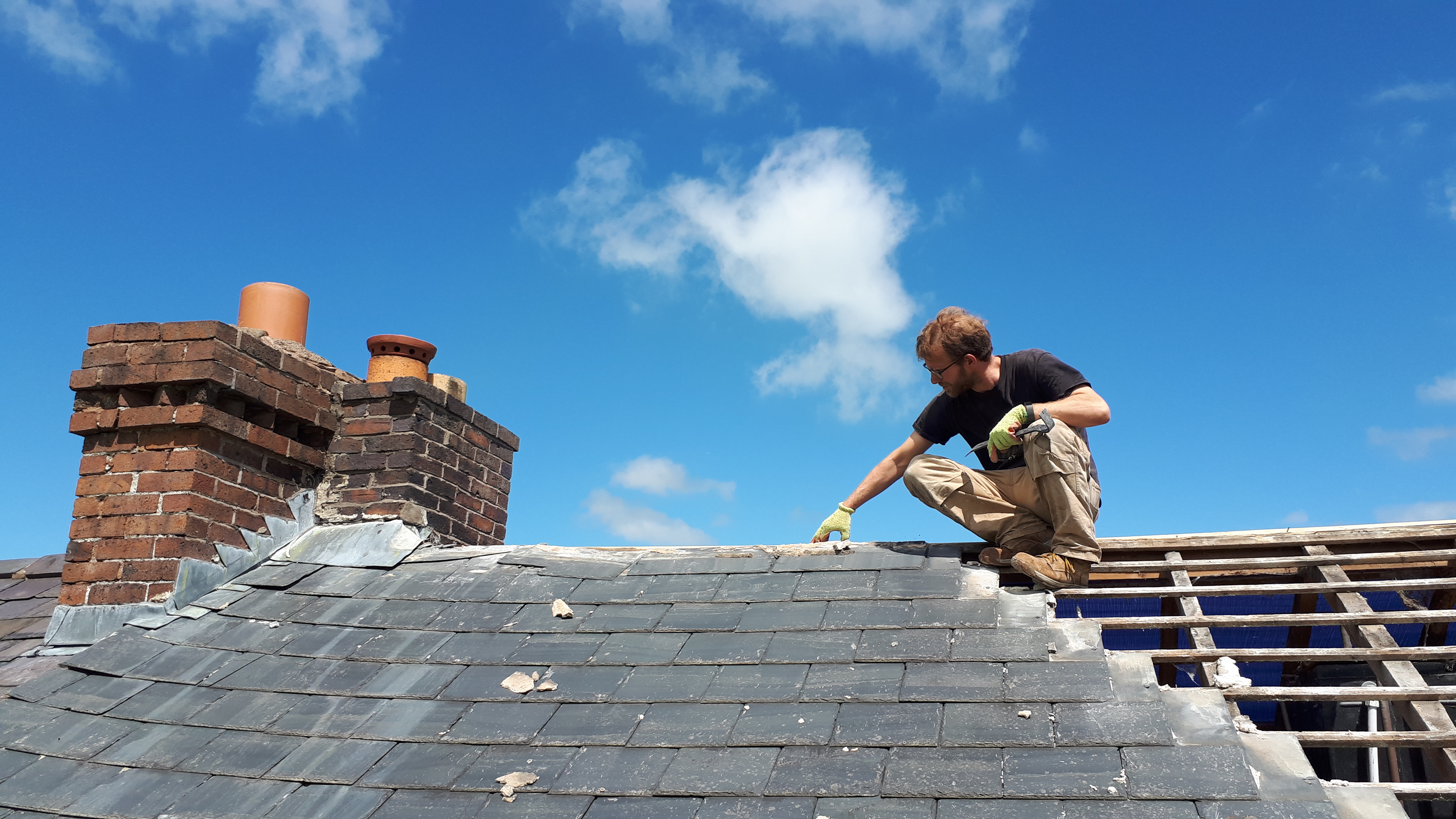
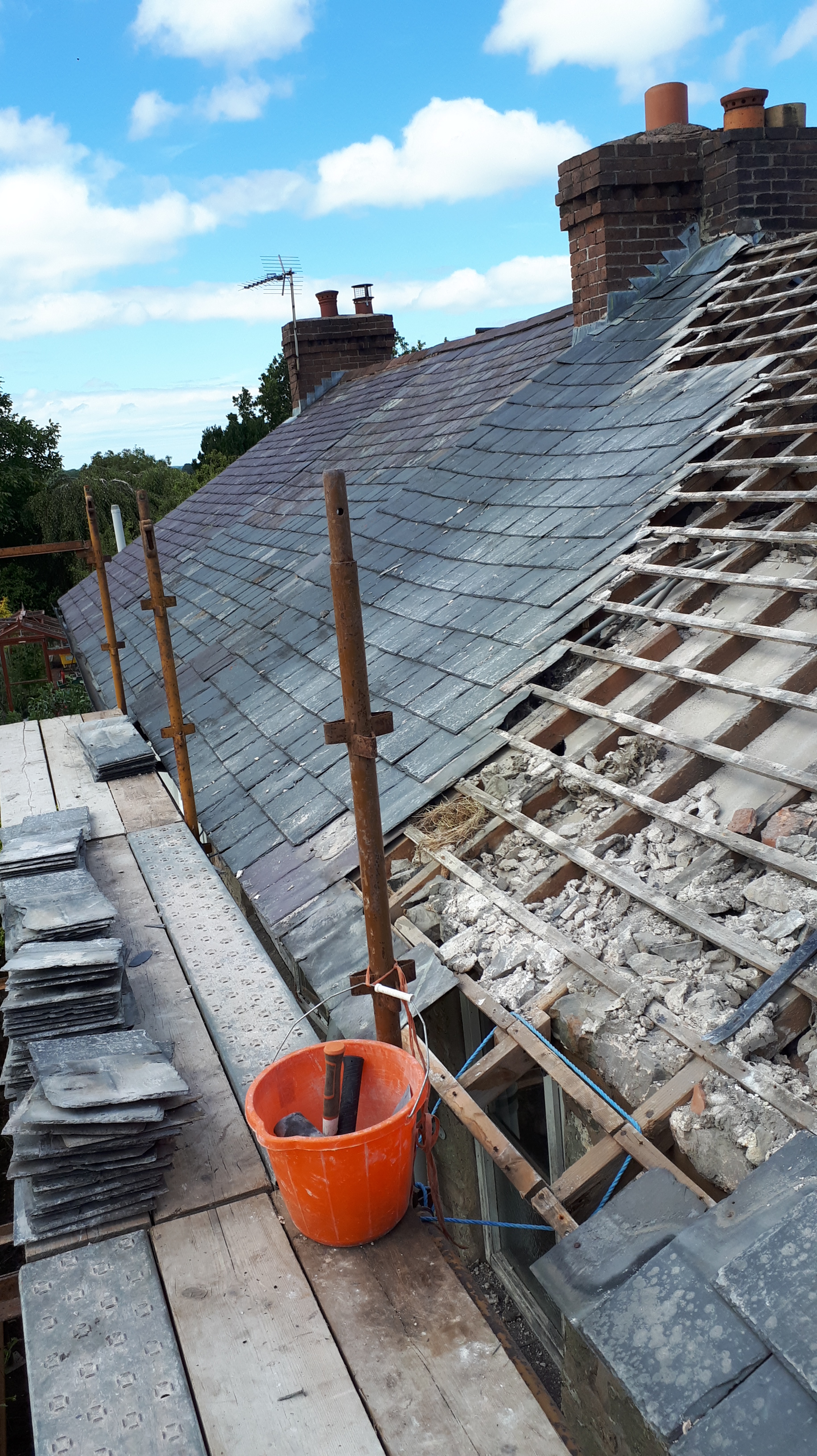
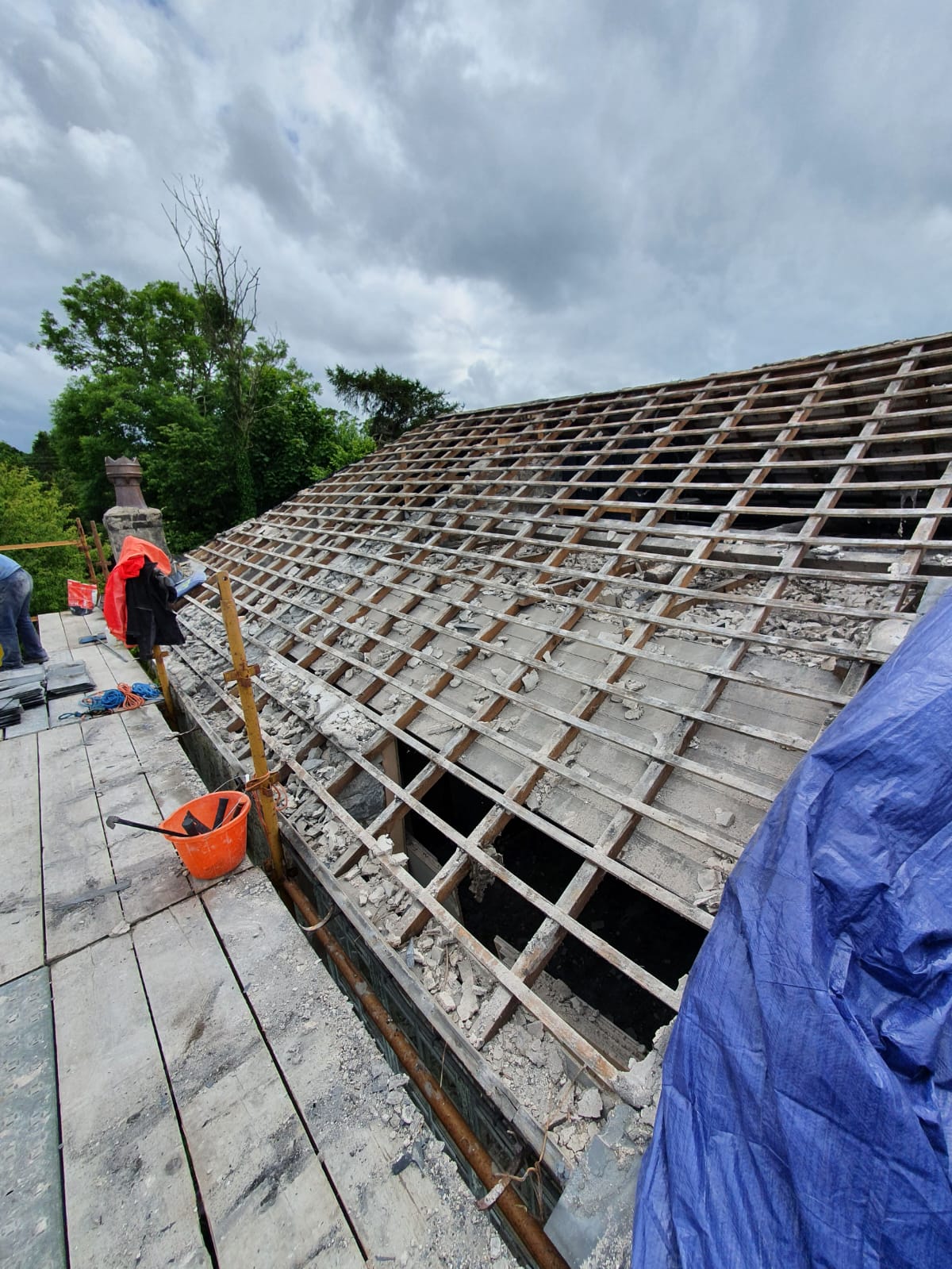
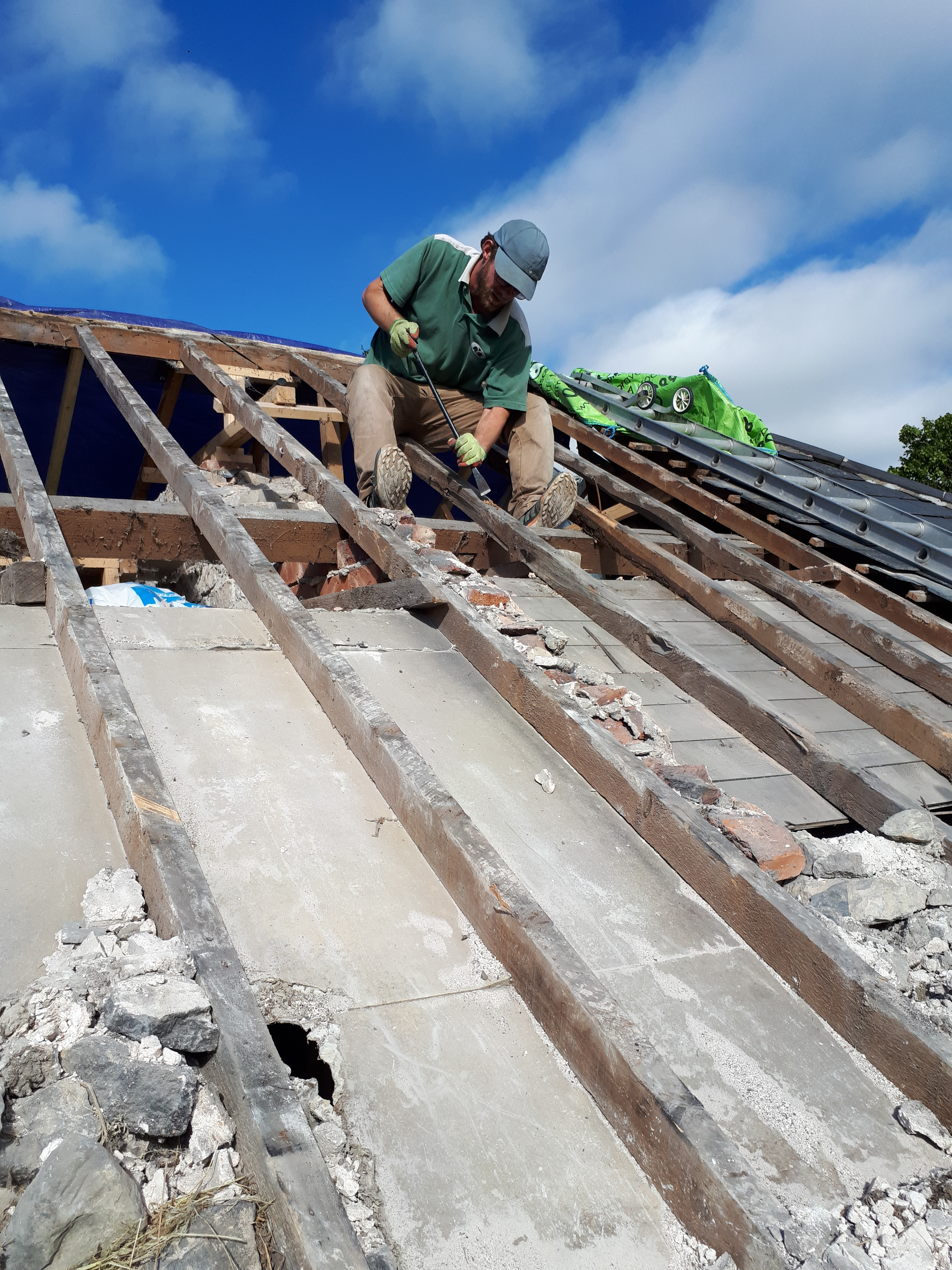
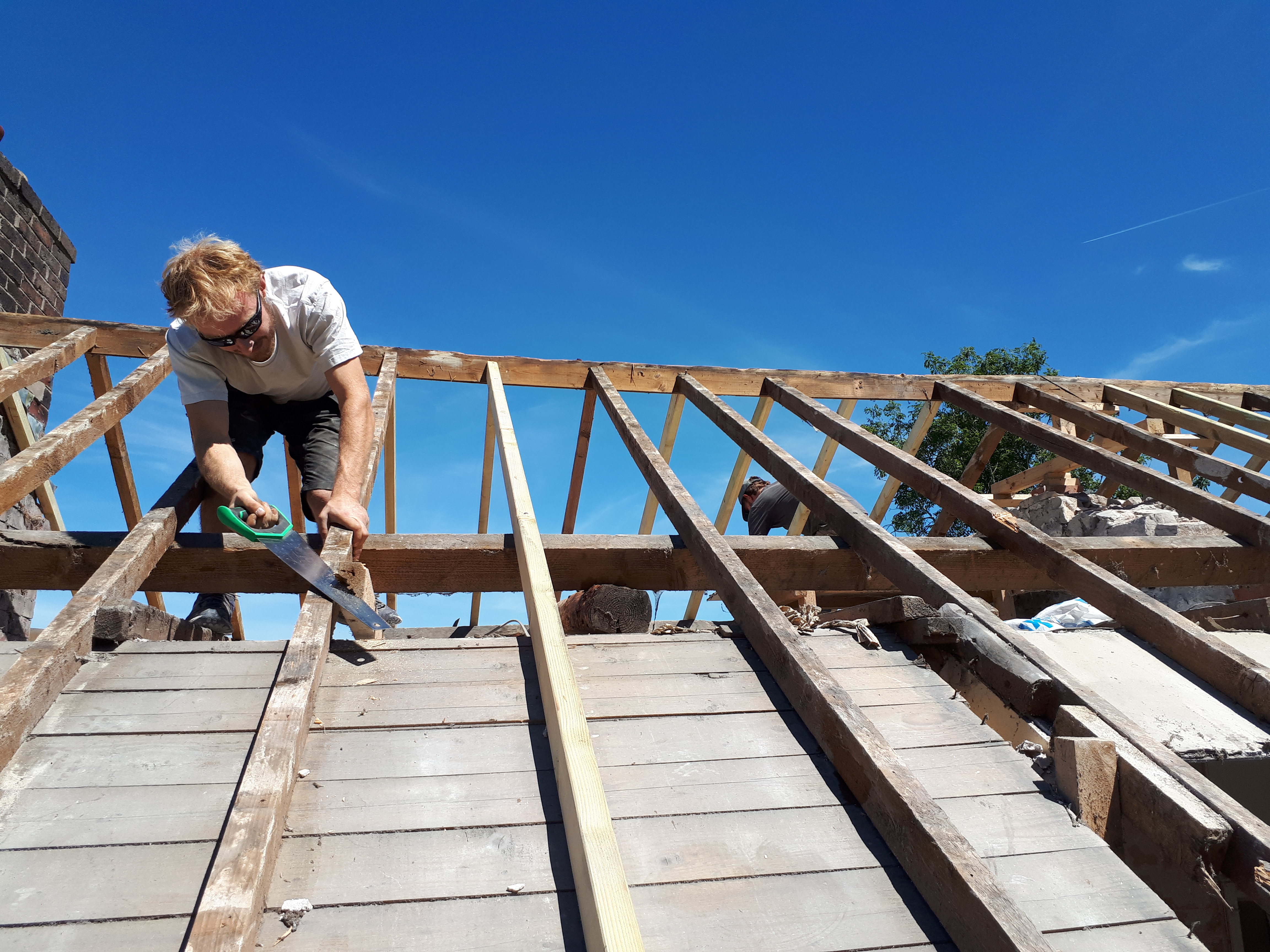
It took two whole days to remove the slates from the front and back of the roof, in between showers of rain and removing and reinstalling the tarpaulins. For one day we had the extra help provided by Phil, and on the other we just had ourselves for the labour. While removing them wasn’t too labour-intensive, just awkward and uncomfortable, carrying stack after stake down to ground level was exhausting. With around 1,000 in all, thick heavy Welsh slates, Chris’s Fitbit claimed we climbed 61 staircases in one day.
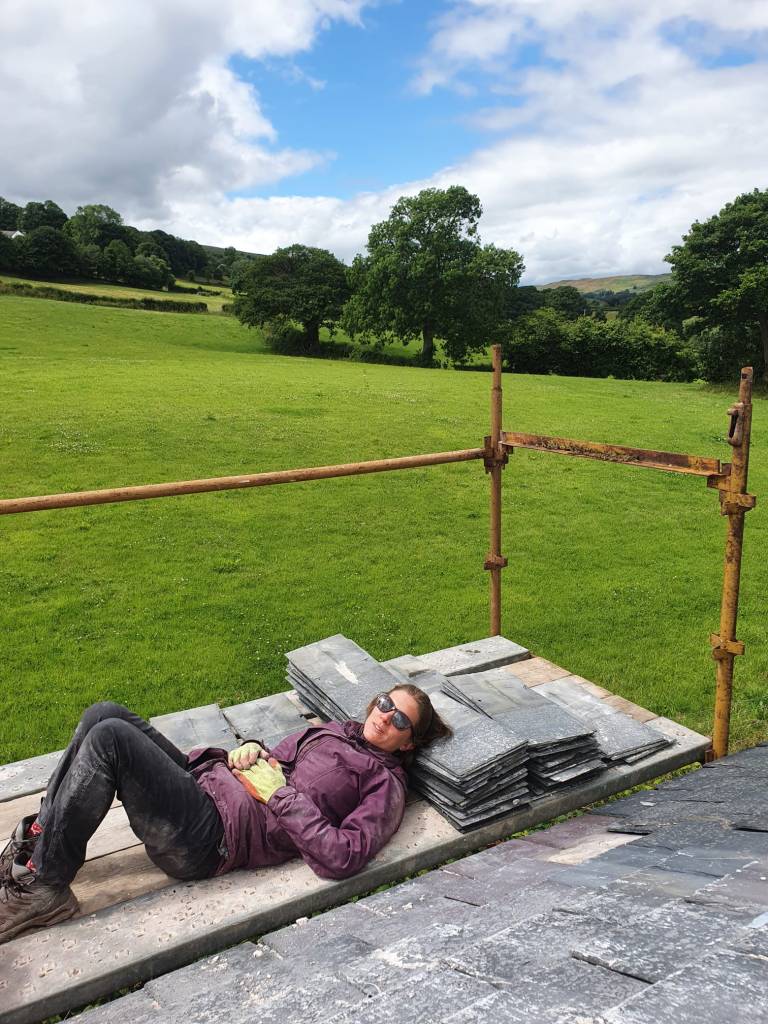
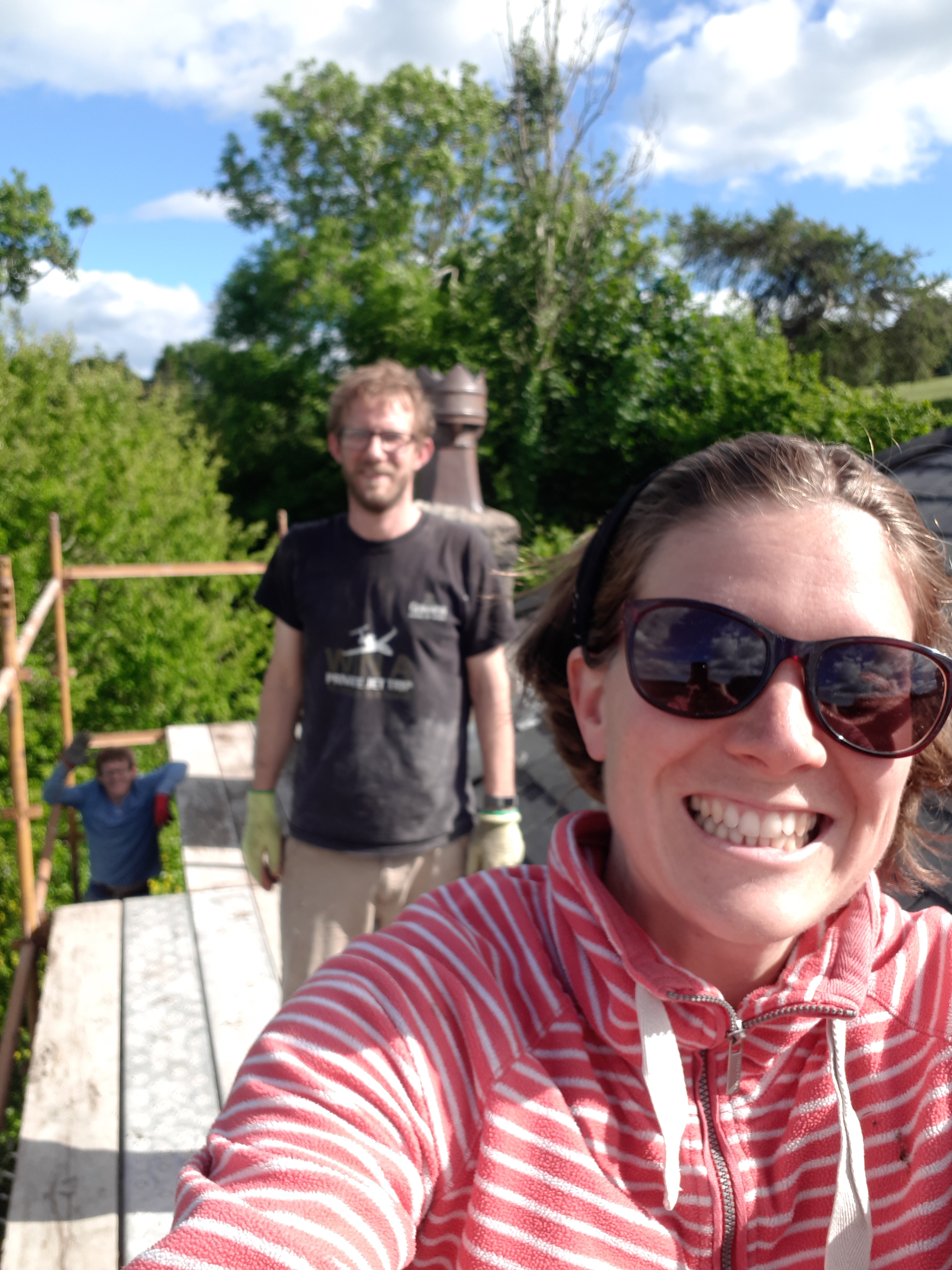
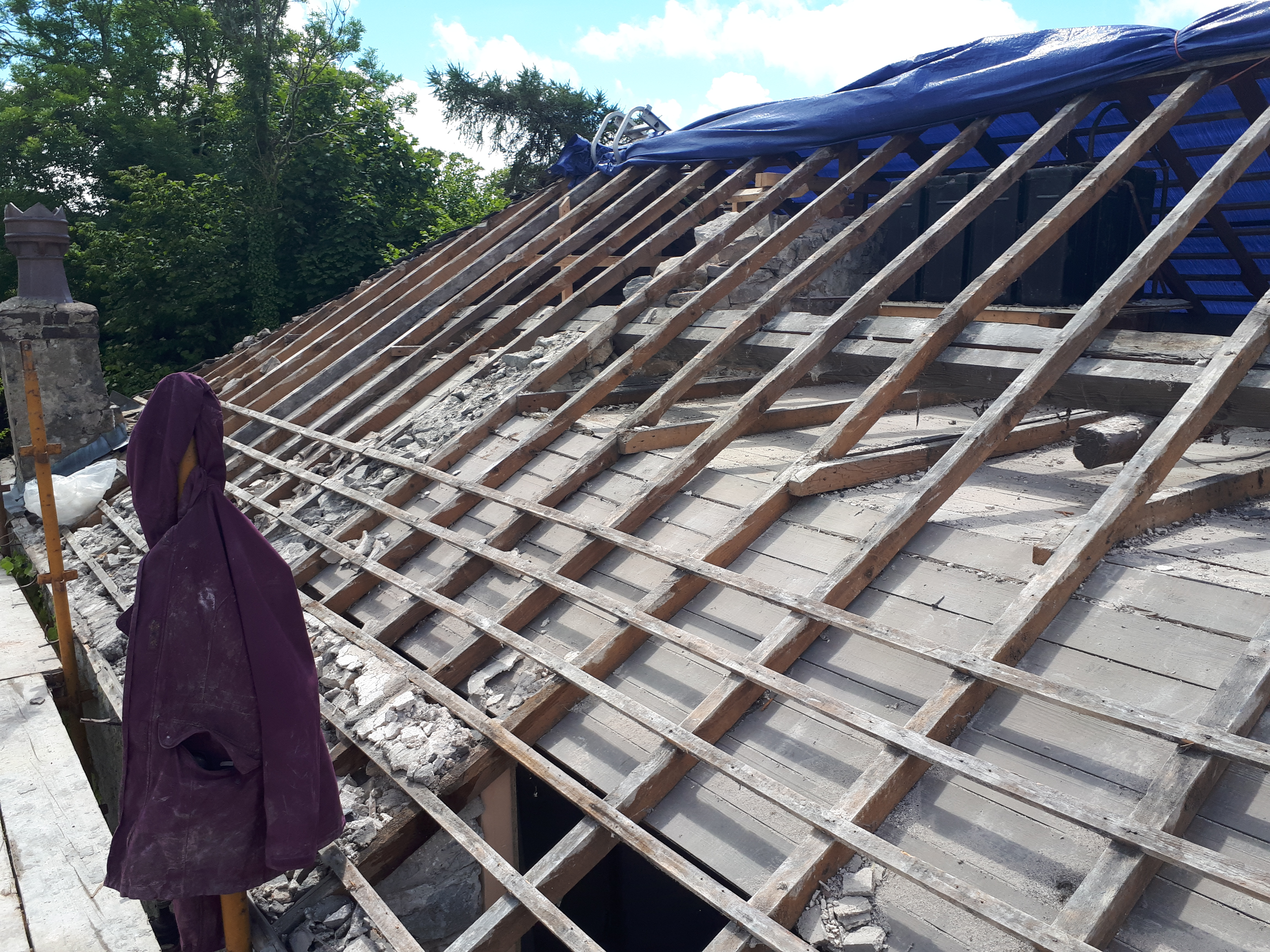
I complained to Chris that there weren’t any picture of me, so no one would believe I did any of the work. So, this is the photo he took… Slates finally down, we could move on to pulling off the old batons. While not all of them were in a poor state, removing them without breakages was nearly impossible. As we cleared out the old wood, as well as bag after bag of rubble created by the disassembly of the roof, we discovered signs of past residents, from old bird’s nests to stores of hazelnuts and ash keys, stashed away by mice.
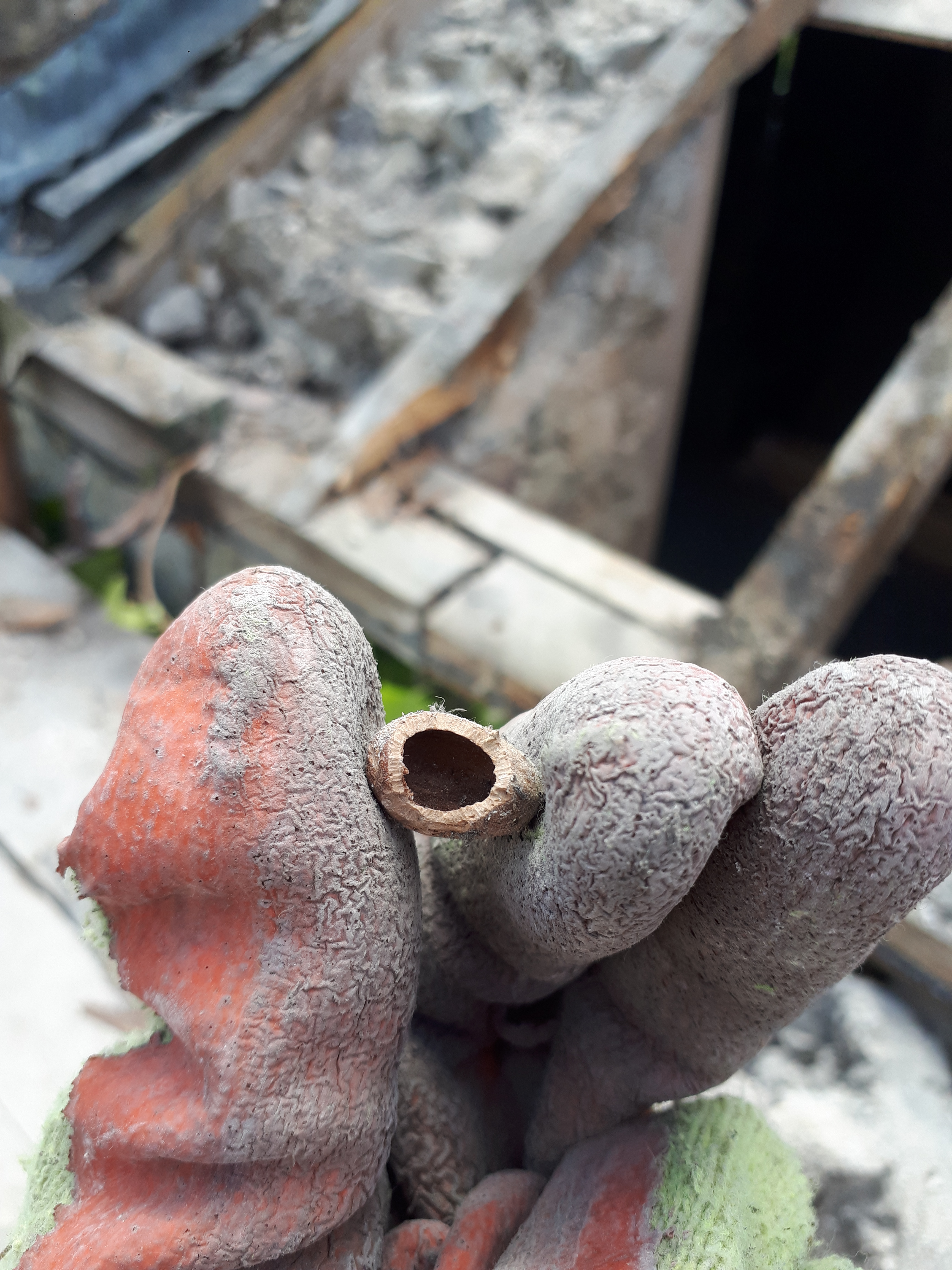
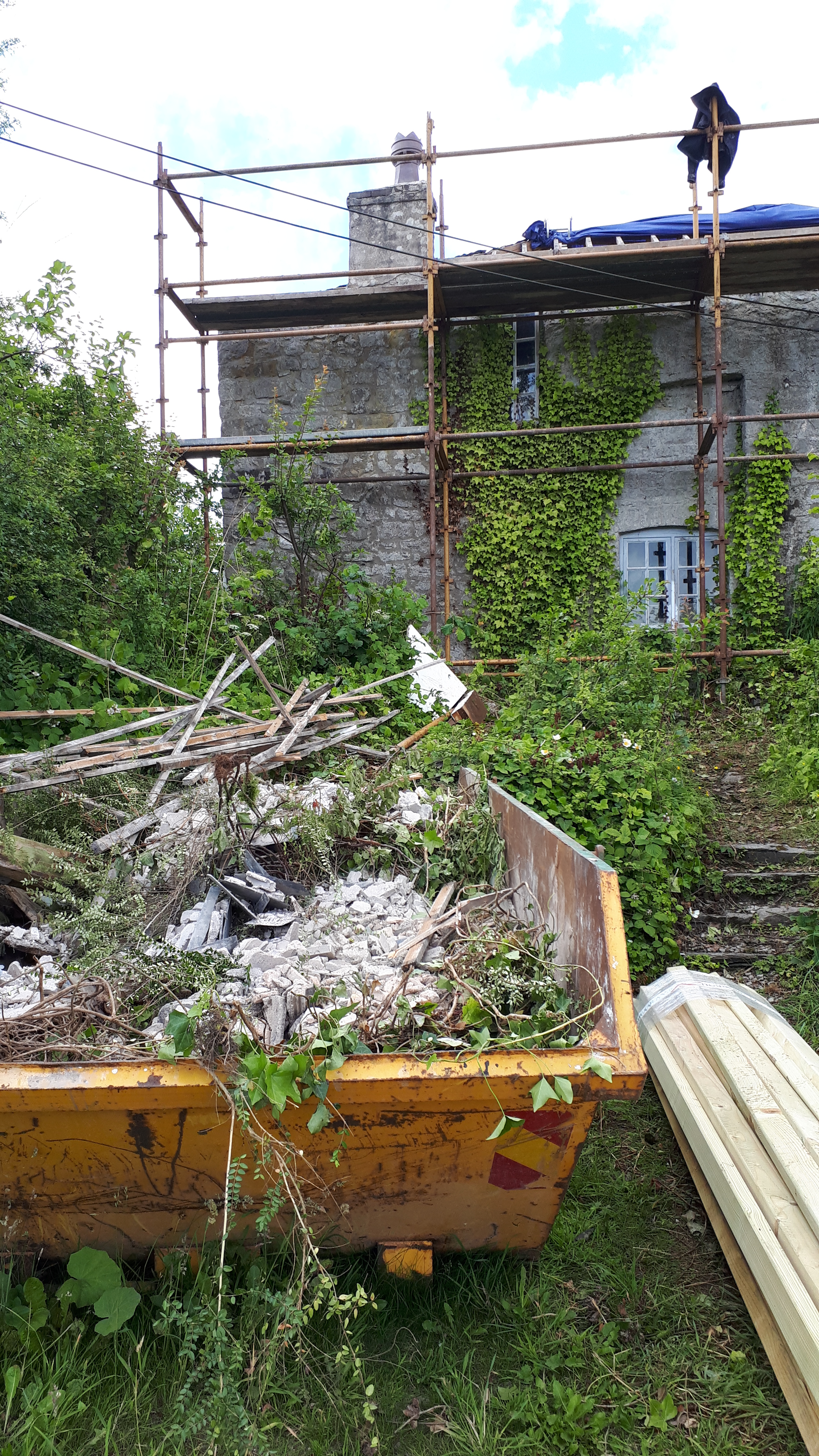
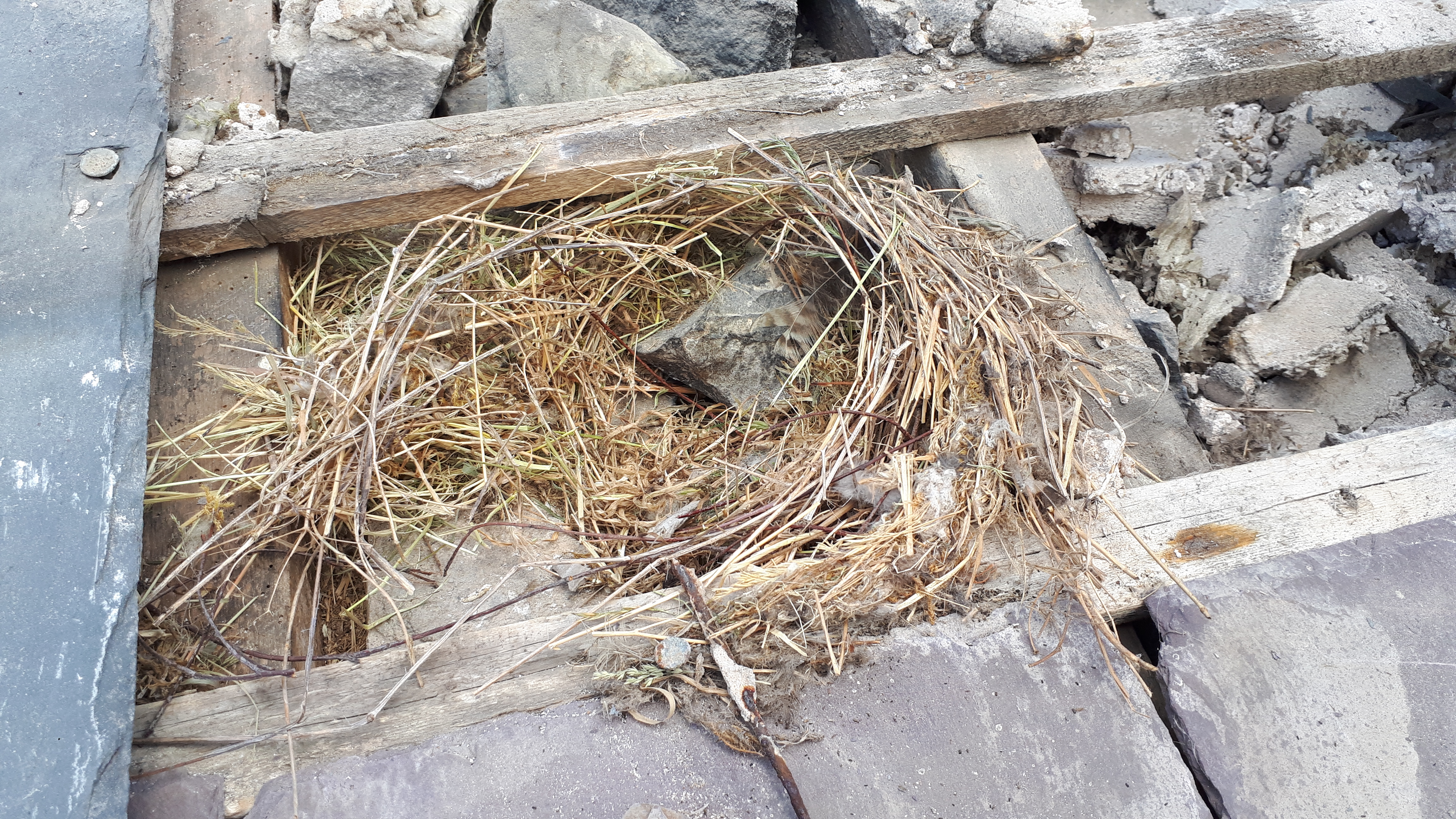
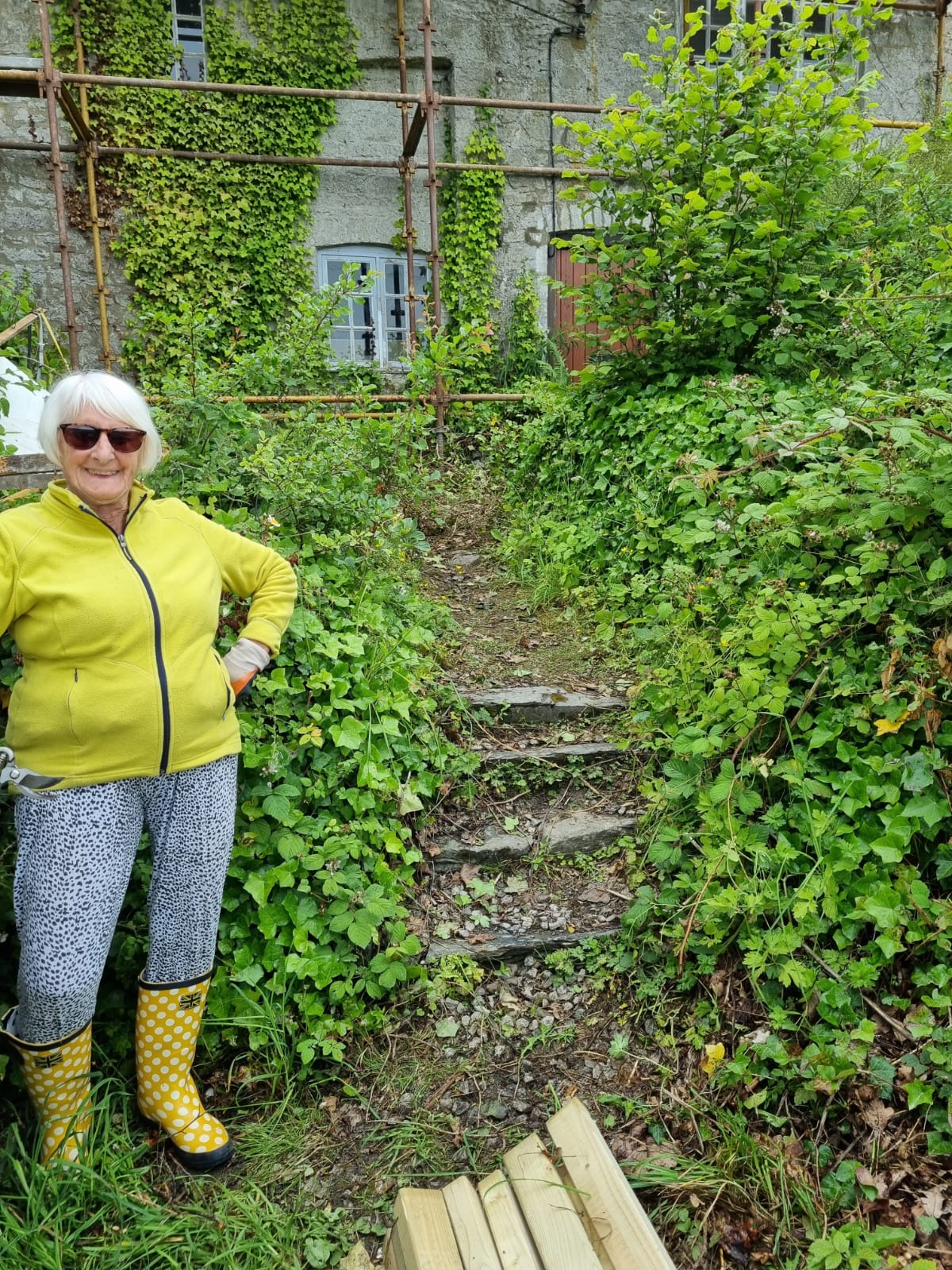
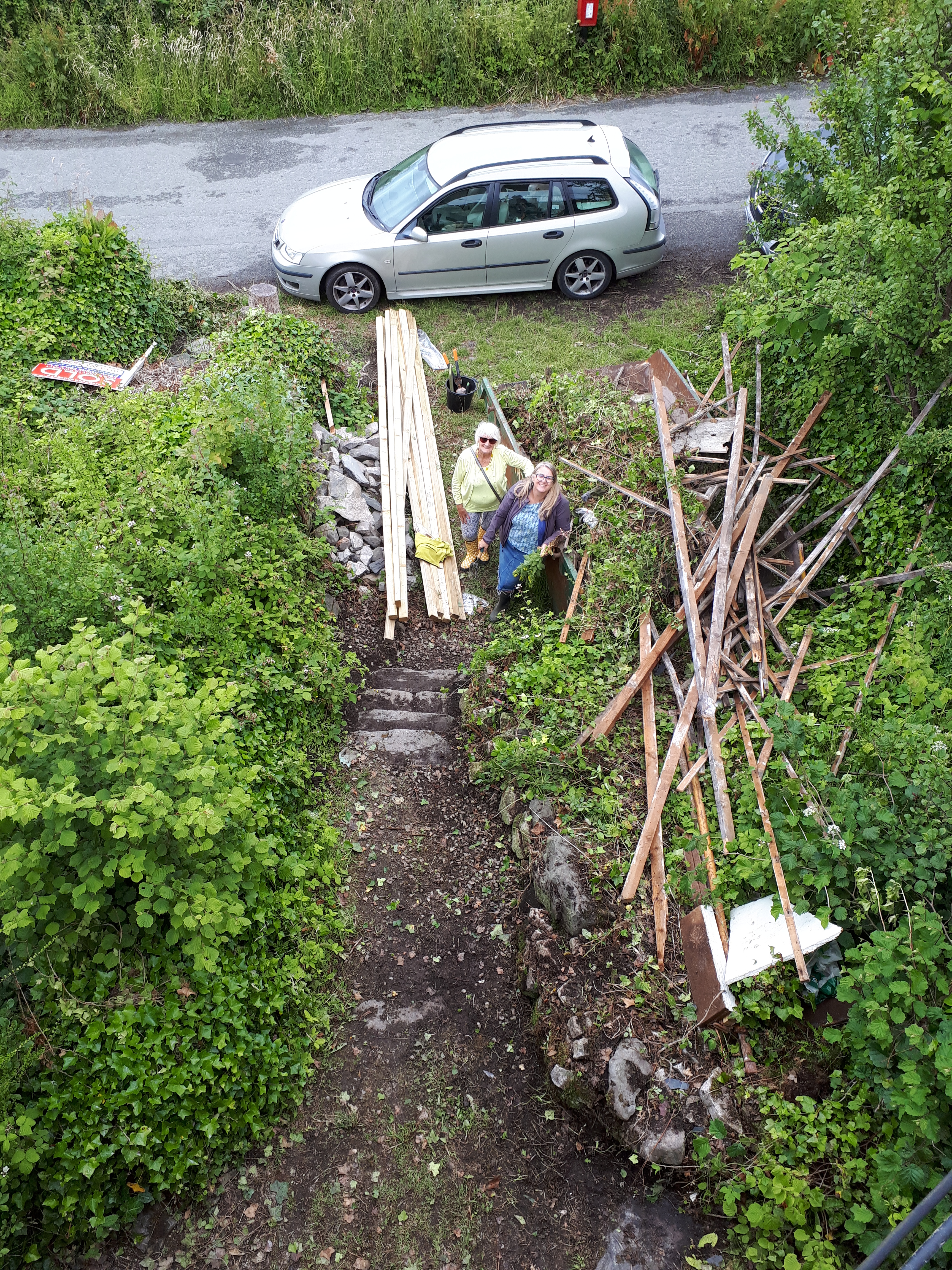
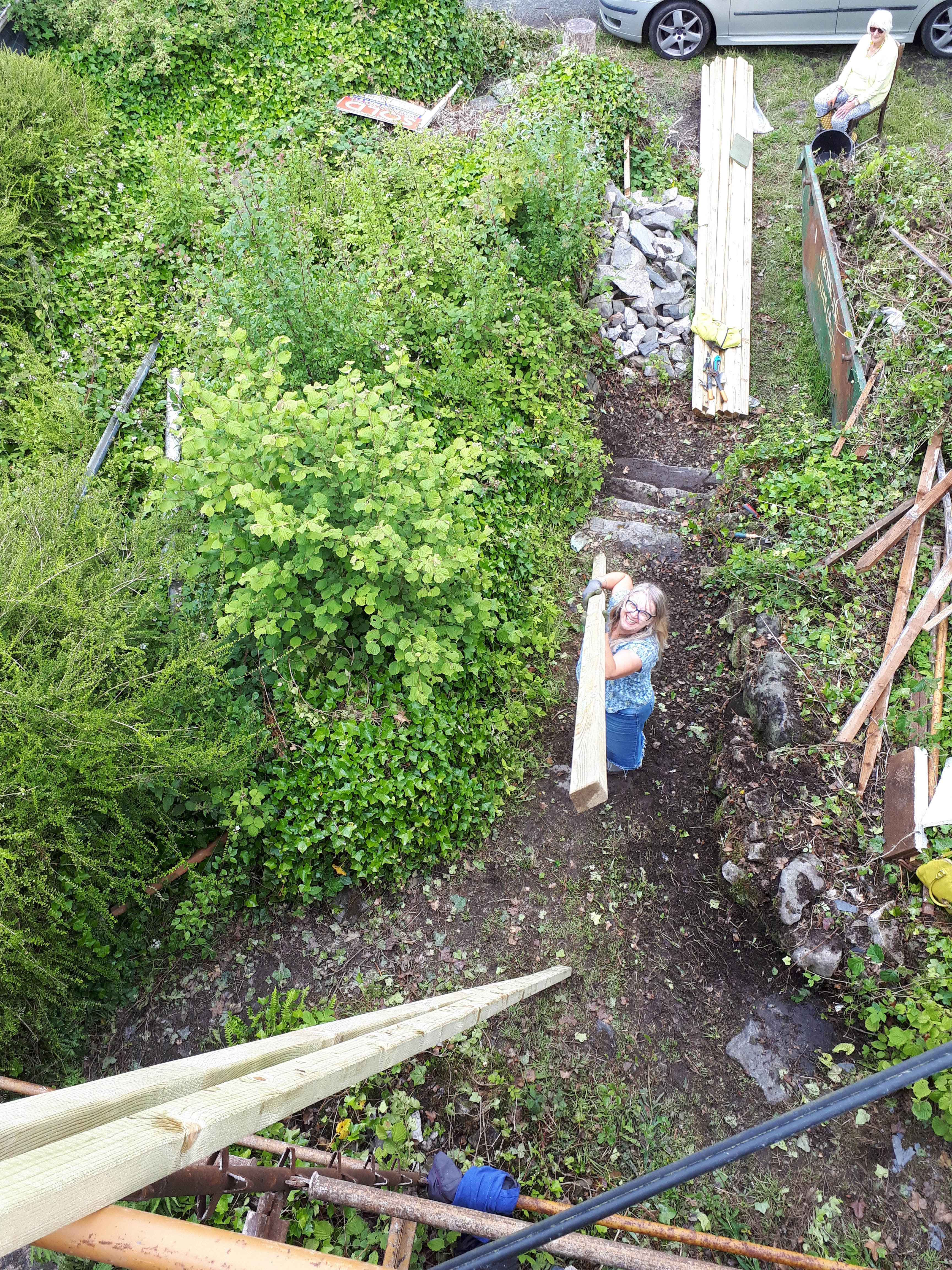
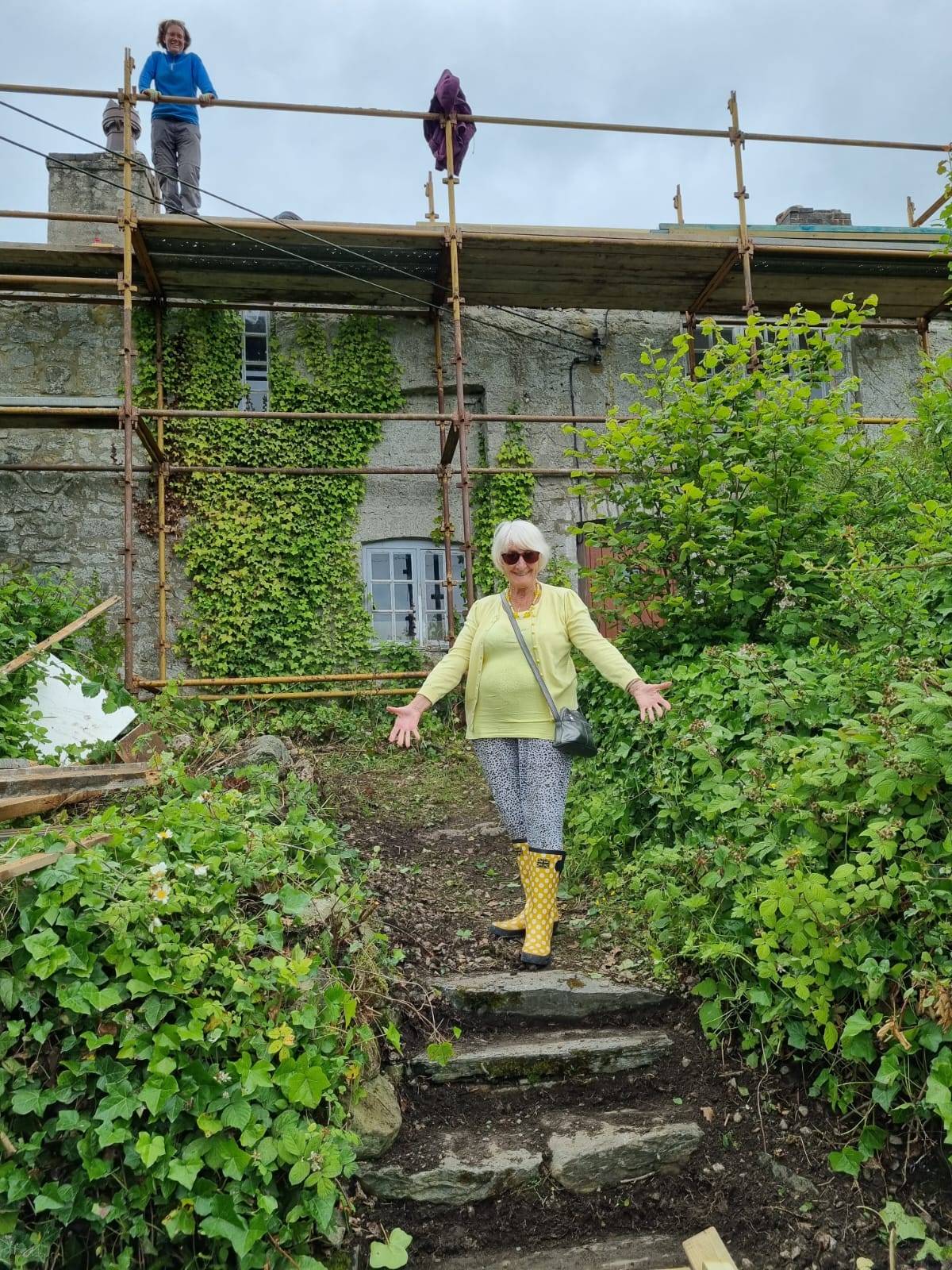
By Wednesday, our activities began to attract a whole new kind of wildlife. My mum and nan had made the pilgrimage to visit our new house. While helping tear apart the roof wasn’t quite their speed, they set to work uncovering the path and steps at the front of the house.
Although they were both impressed by the beauty of the location, and the character of the building, it was also clear they were slightly shocked and horrified at how much work the house required. I guess that means that no matter how bad my photos and writing make the house appear, just remember that in person it’s much, much worse.
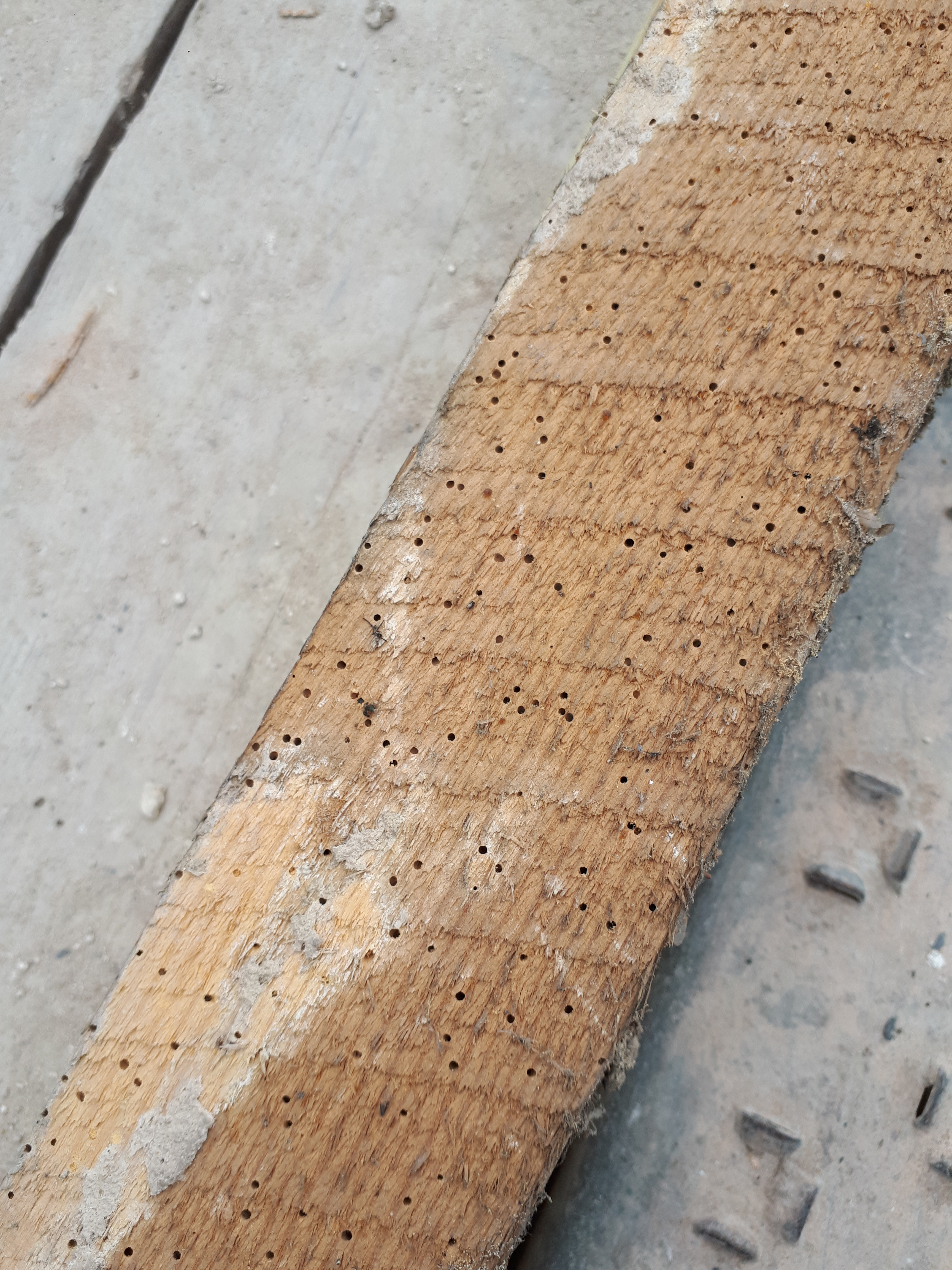
With the batons off, the next stop was to replace any rotten rafters. Between dry rot and the copious holes of tiny boring woodworms, there were few that survived the cull. While the rafters were fairly easy compared to the heavy lifting of the slates, one challenge was removing the 6 to 8 inch nails, holding everything in place. Out too went the old water tank, no longer needed, and much easier to remove via the open roof than through the tiny loft hatch.

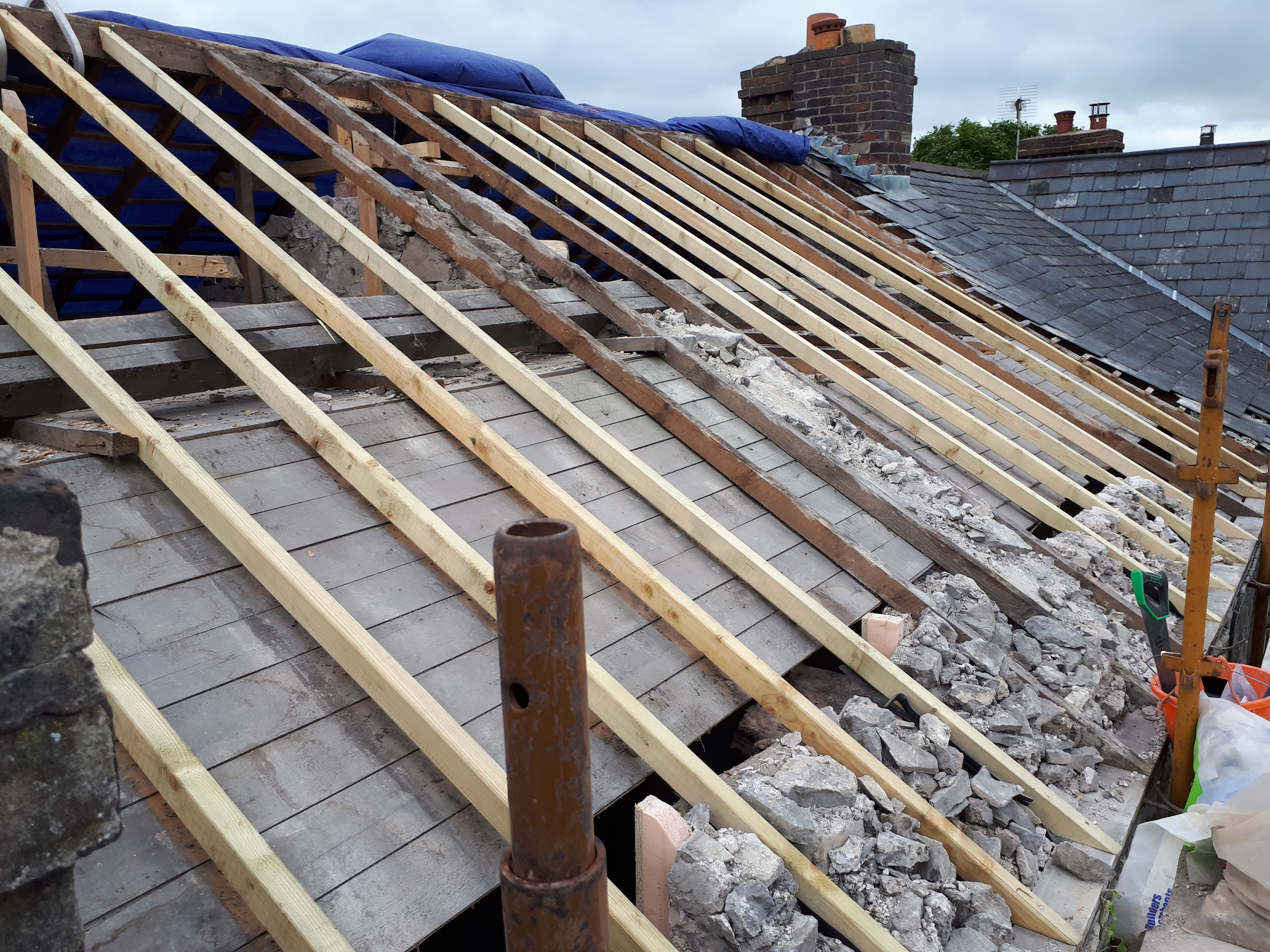
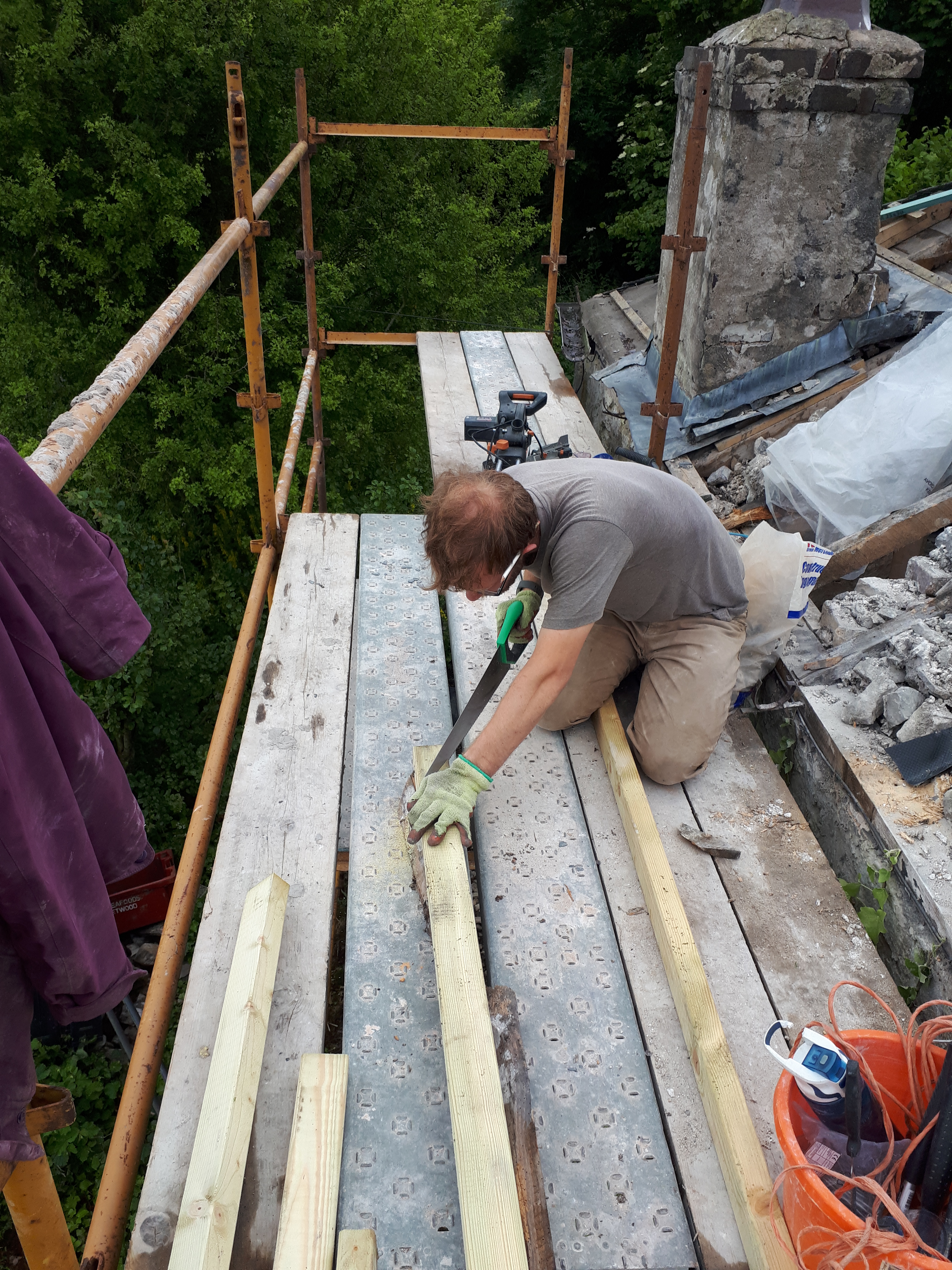
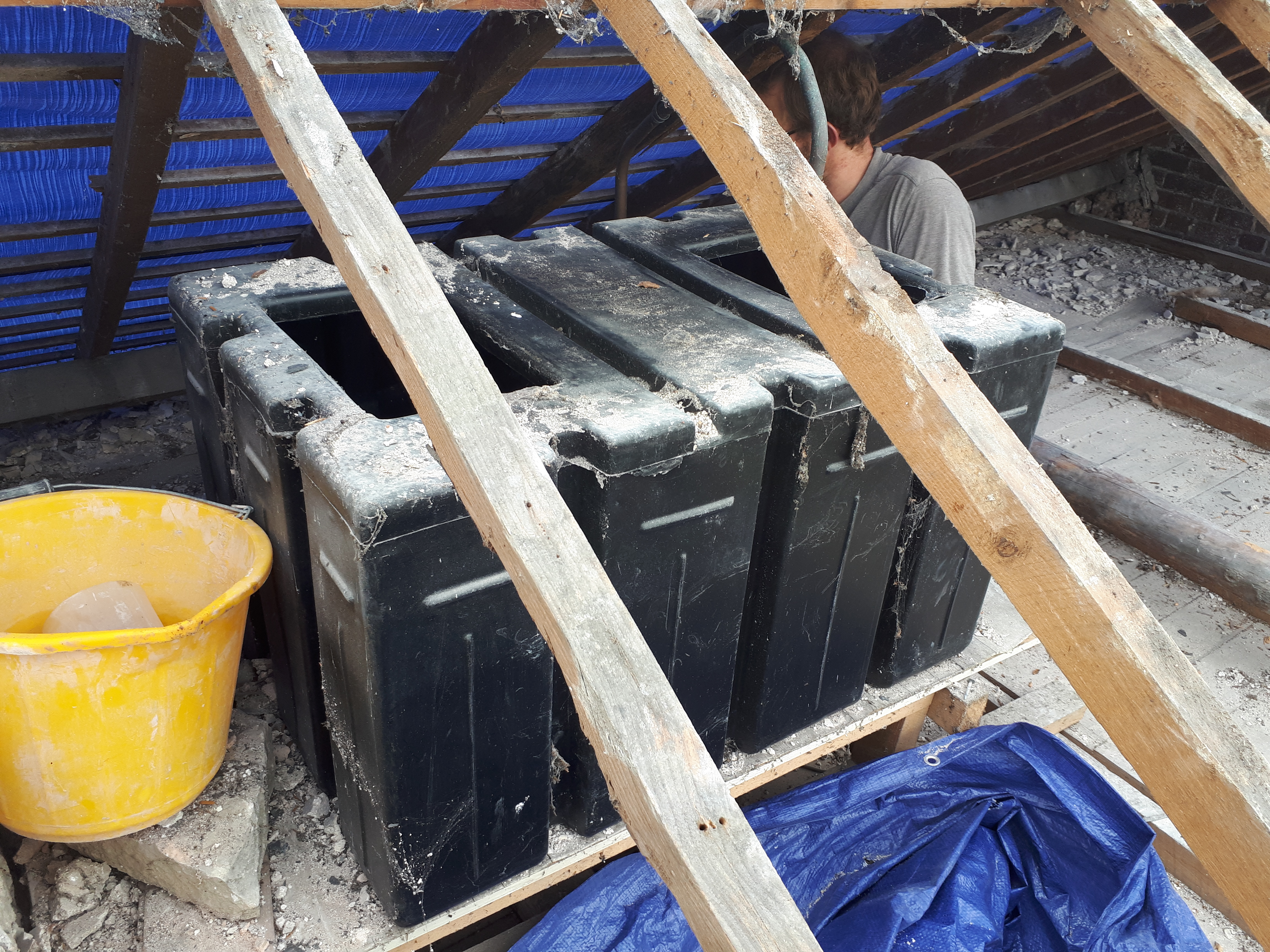
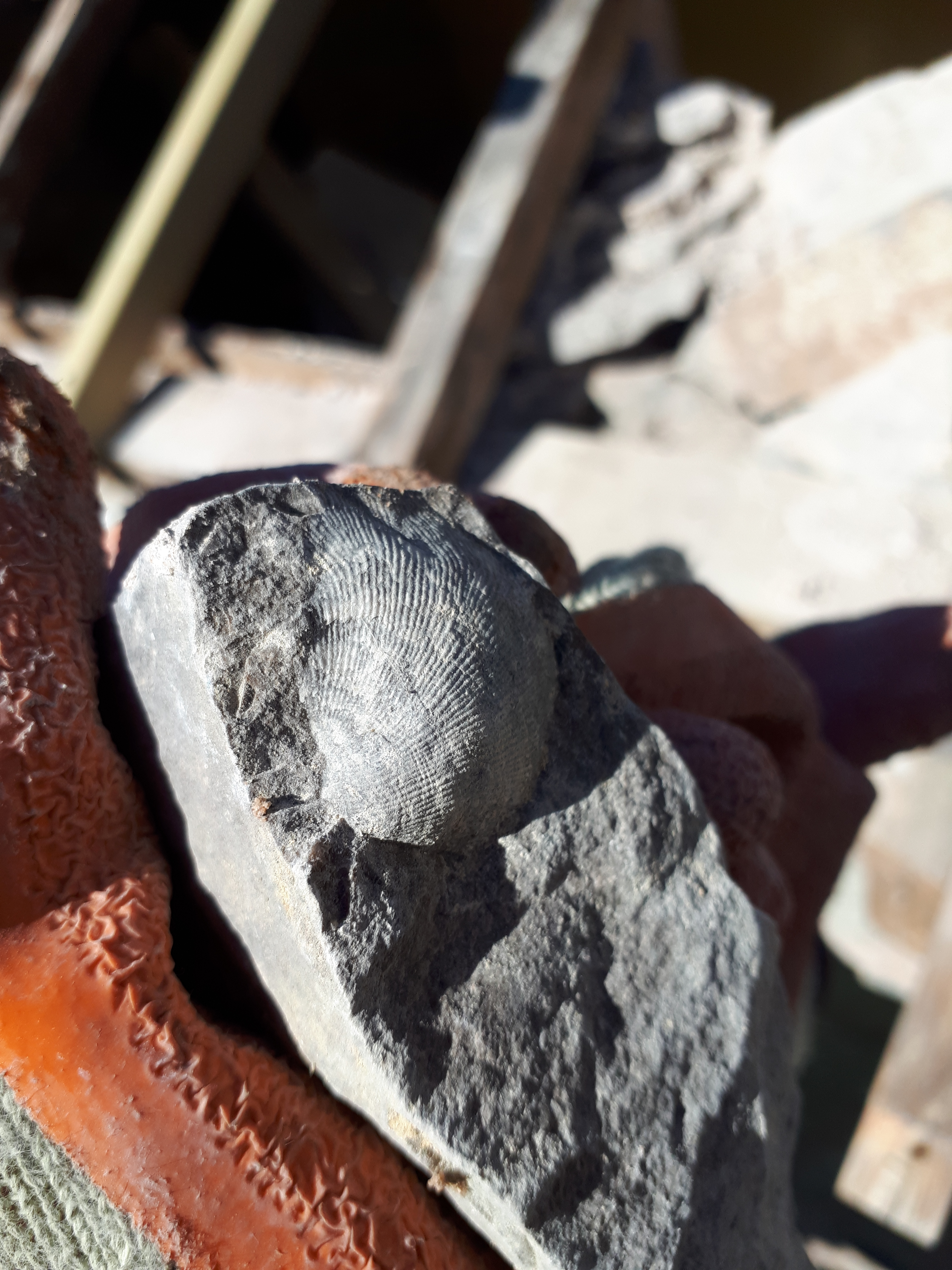
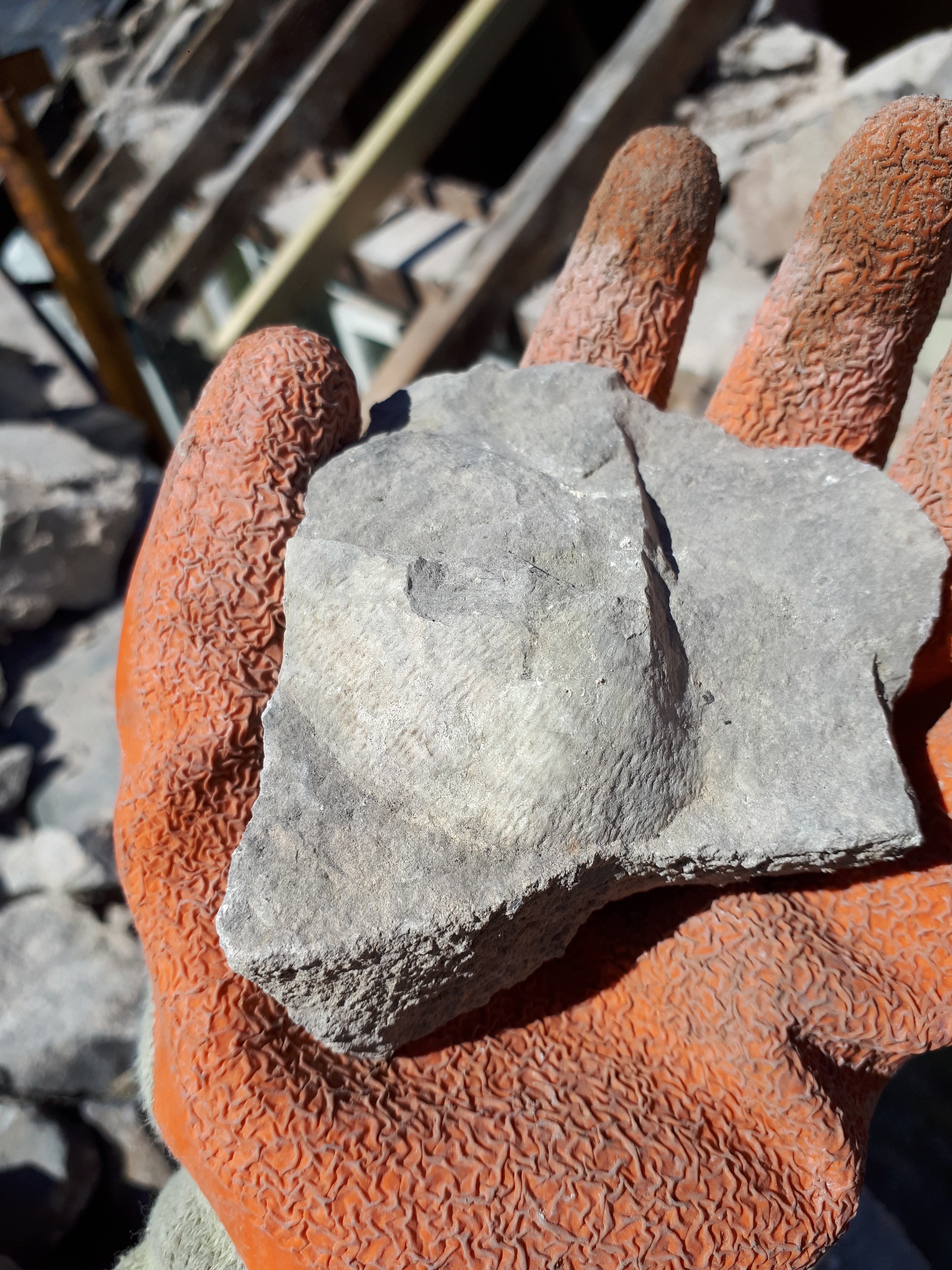
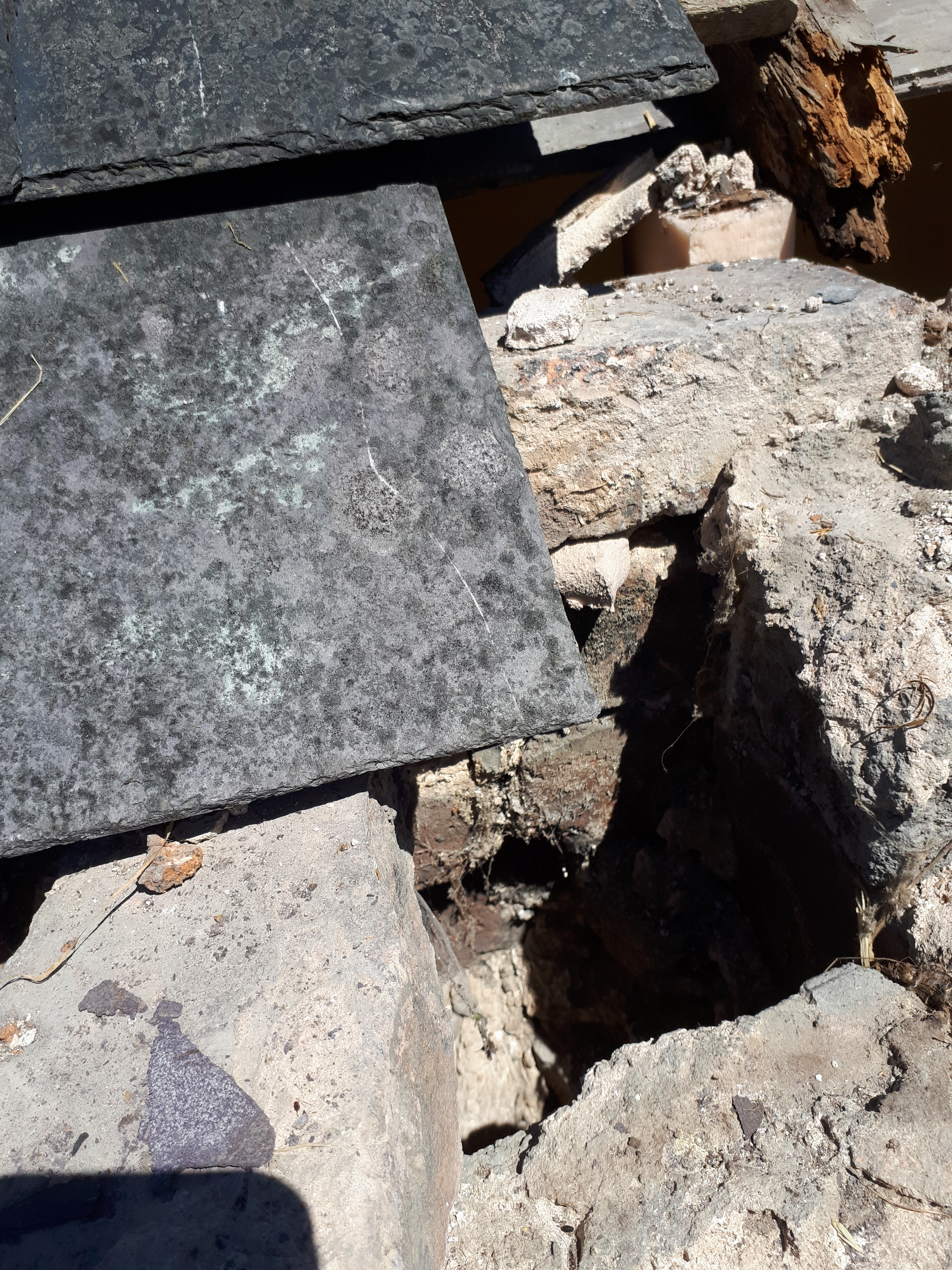
An unexpected, and time-consuming job, was rebuilding the tops of the walls, which seemed to have fallen apart at some point in the past. I quite enjoy rebuilding stone masonry, being rather like a 3D jigsaw. Because much of the stone is limestone, there were also plenty of fossils to discover.
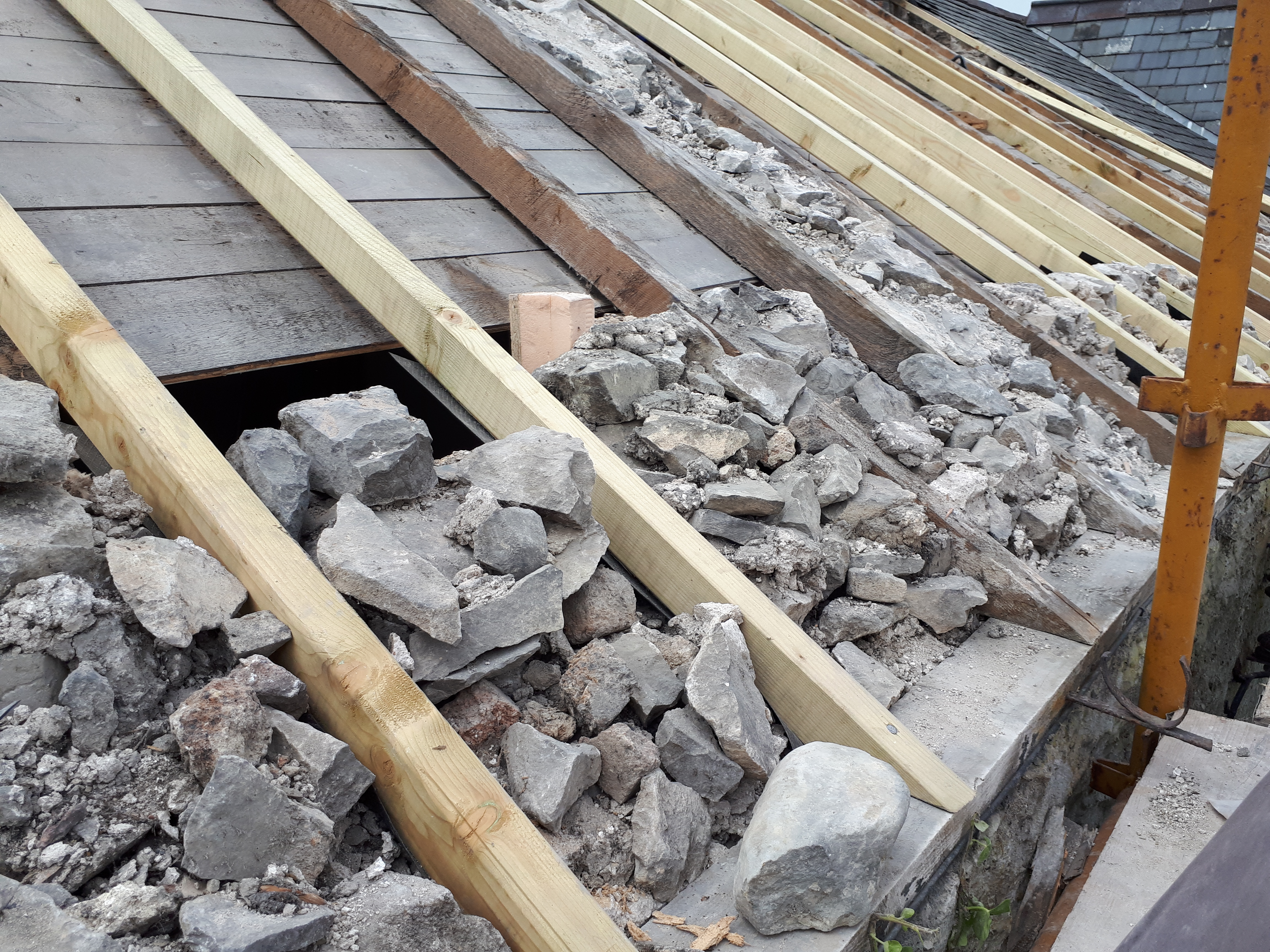
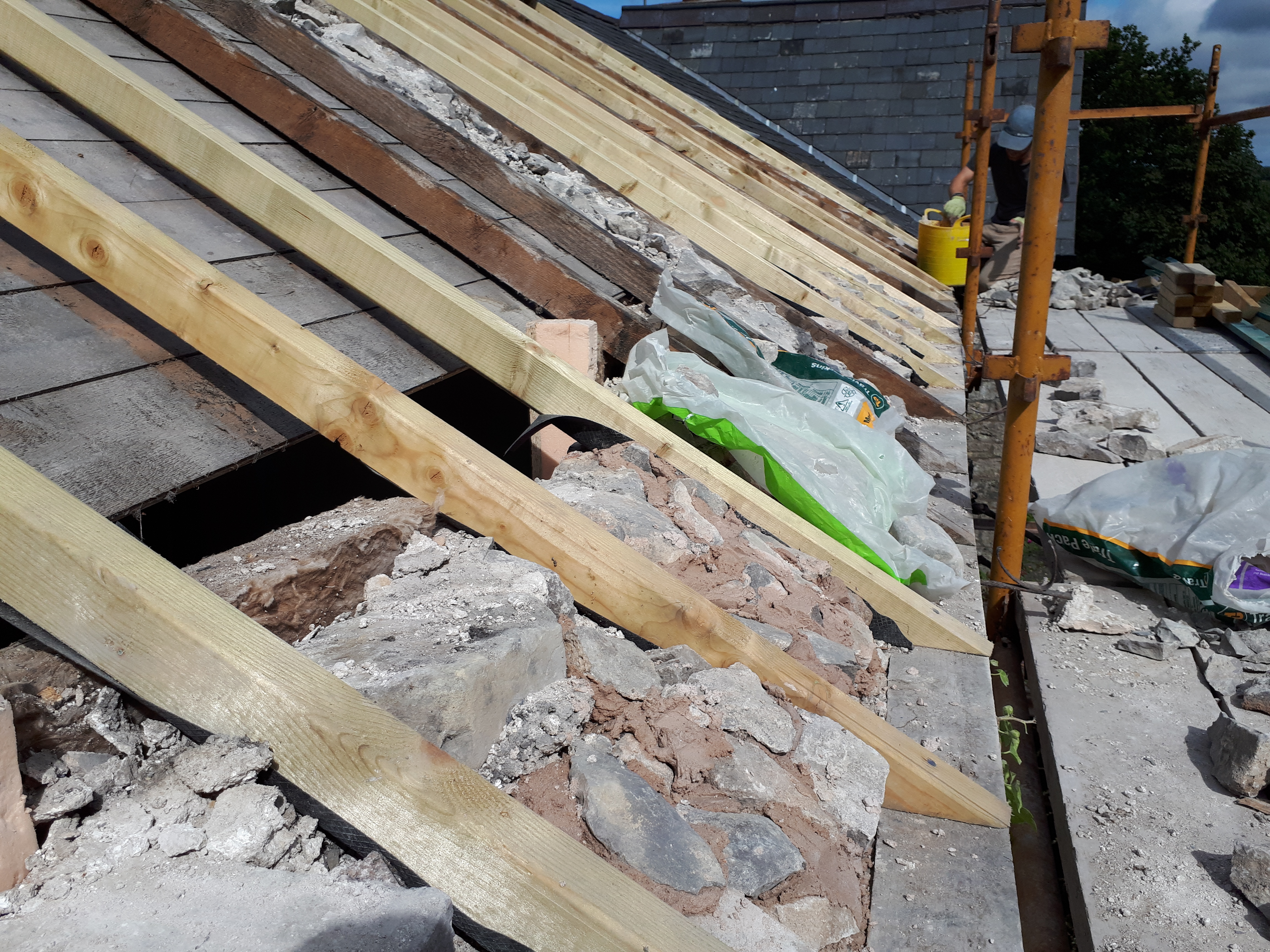
Another interesting find was an old chimney. This we think connects to a small hole in the corner of the kitchen, where we are told these houses had large copper boilers.

The hardest day for both of us was the Friday, when it seemed most likely one of us might accidentally wander off the scaffolding. In my head, as each day we got up already exhausted, and hauled ourselves to the building site, our future home, I compared the work to running a marathon. During my one and only marathon I felt so tired halfway through that it seemed like every step was a fight against gravity. Yet, during the race, you know the only way to end the pain is to keep on to the end. The same is true in the renovation. While we may be dog-tired and covered in bruises, the only way to end it is to keep going. So we did.
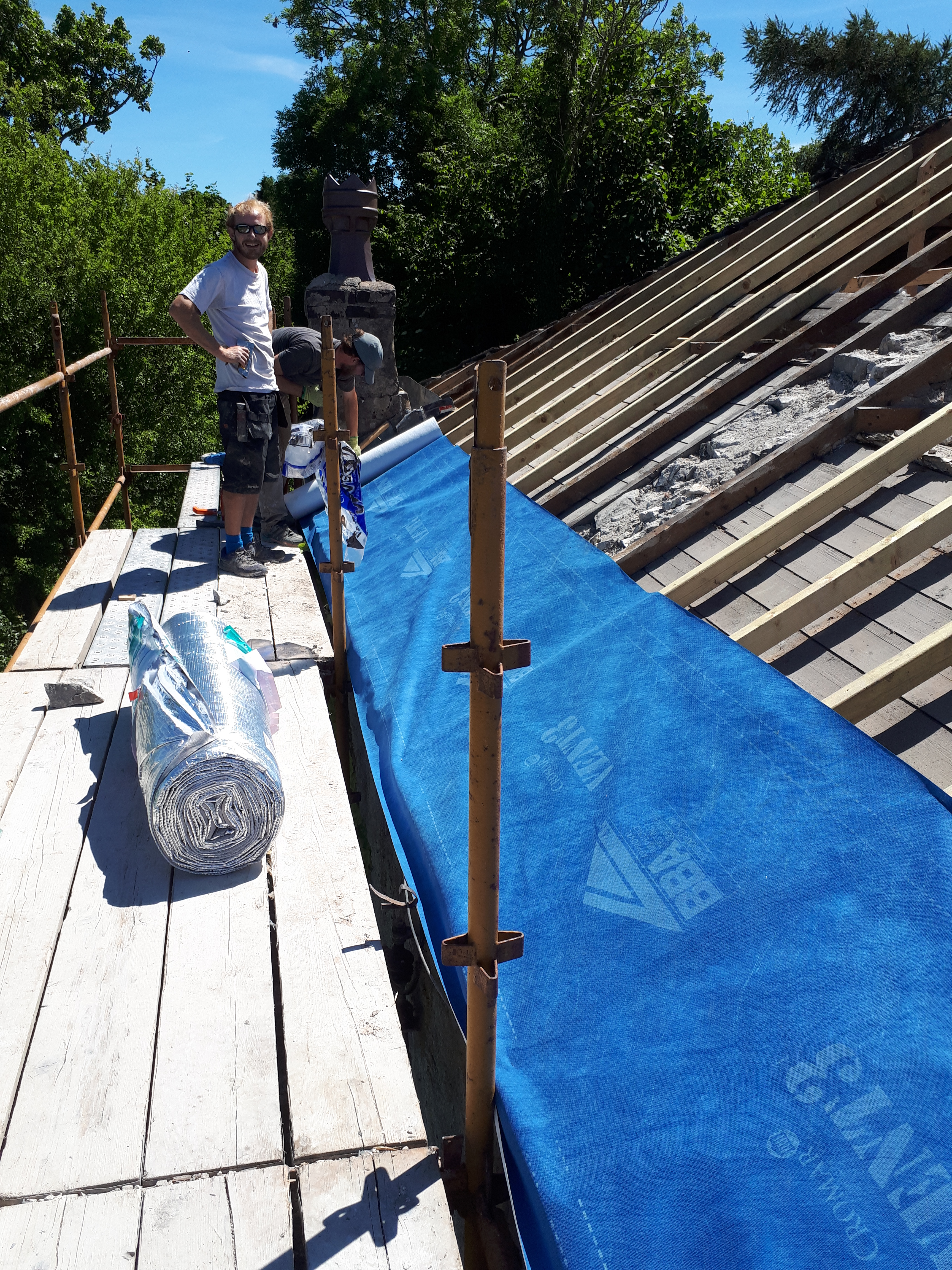
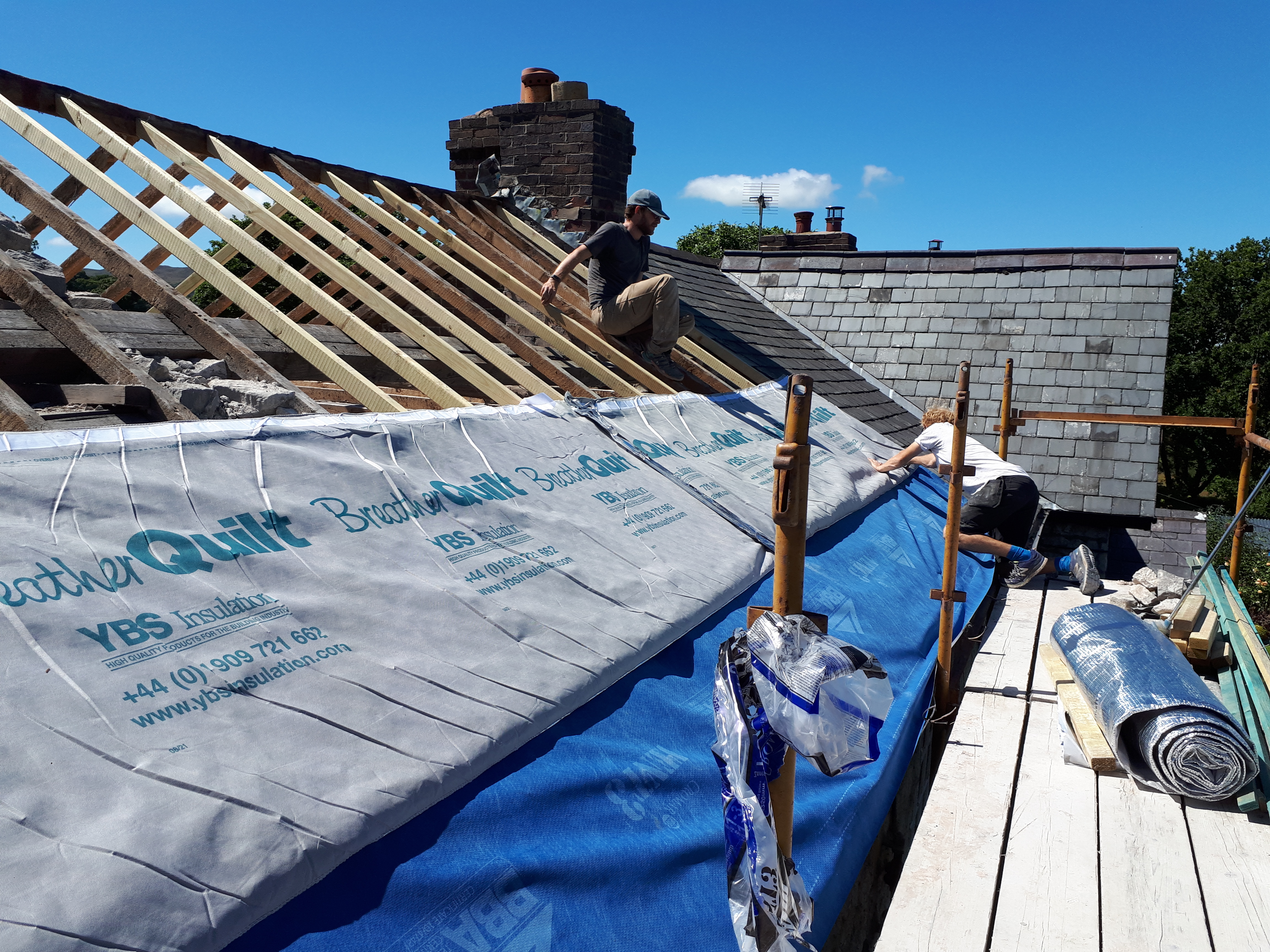
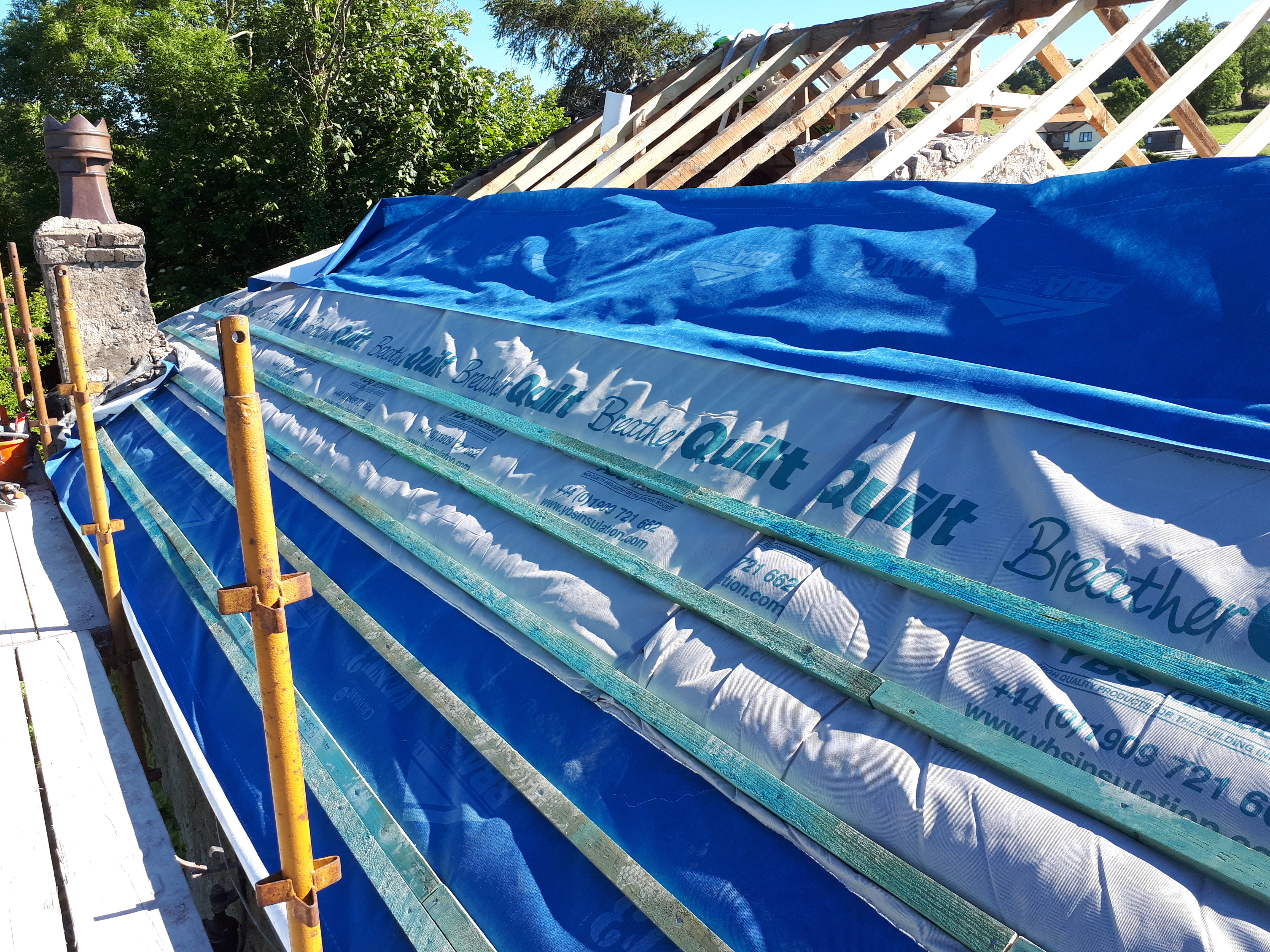
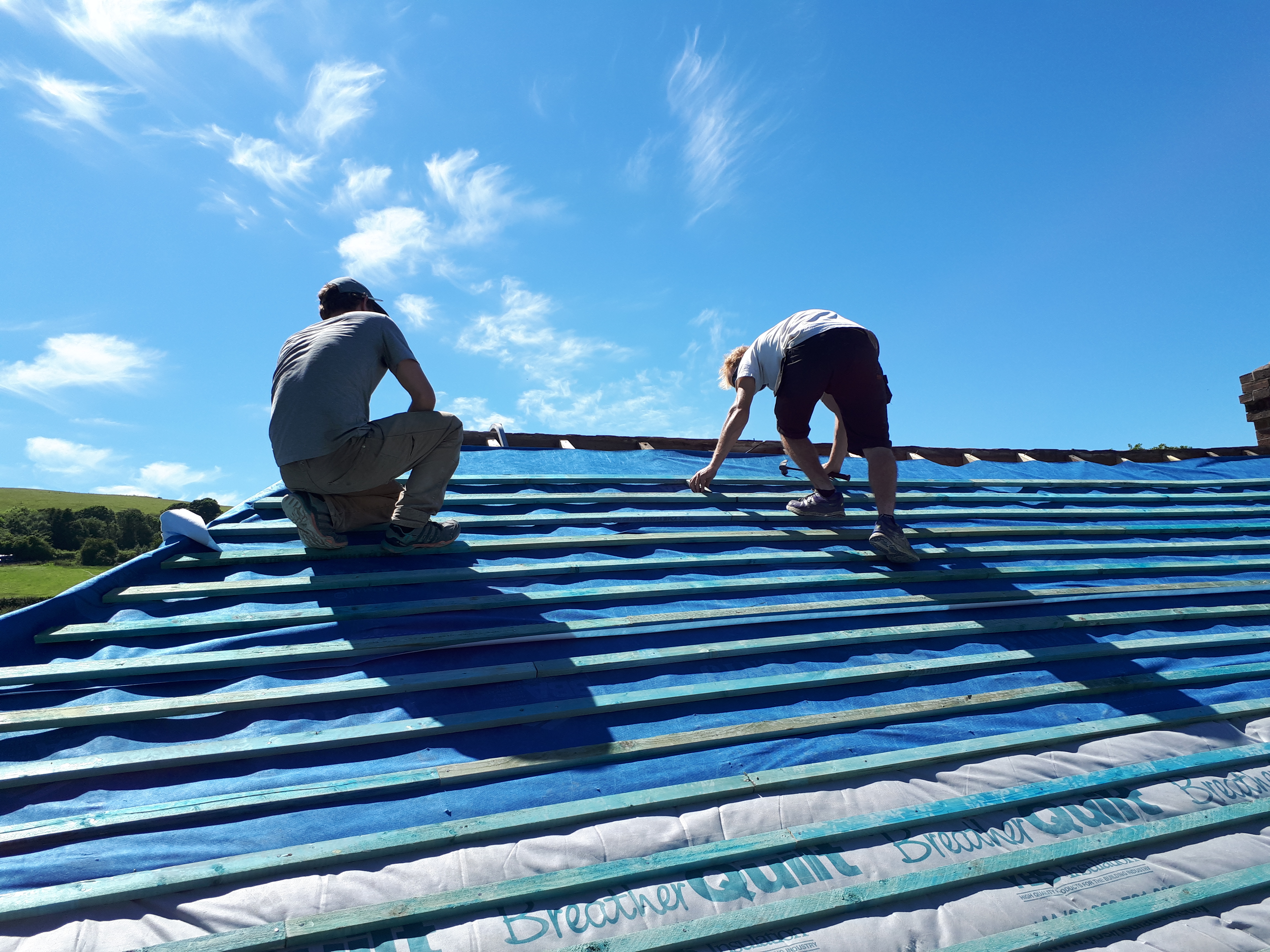
Reinforcements came at the weekend in the form of Chris’s other brother, Rich, finally over his bout of covid. More wall repairs, treating the old timber with woodworm treatment and wood hardened, finally paved the way to getting new batons on with a breathable membrane and line of insulation for the eves underneath.
We have spent a long time thinking about how we would welcome wildlife into our house. There are no signs of bats using the roof, though there are plenty of old wasp, bird and mouse nests. Having consulted an ecologist friend, we decided the best option was to attach boxes to the outside of the house. Once the roof is complete, we hope to have lines of bat and bird boxes open for visitors, without the risk of bats becoming entangle in the membrane within the roof space itself.
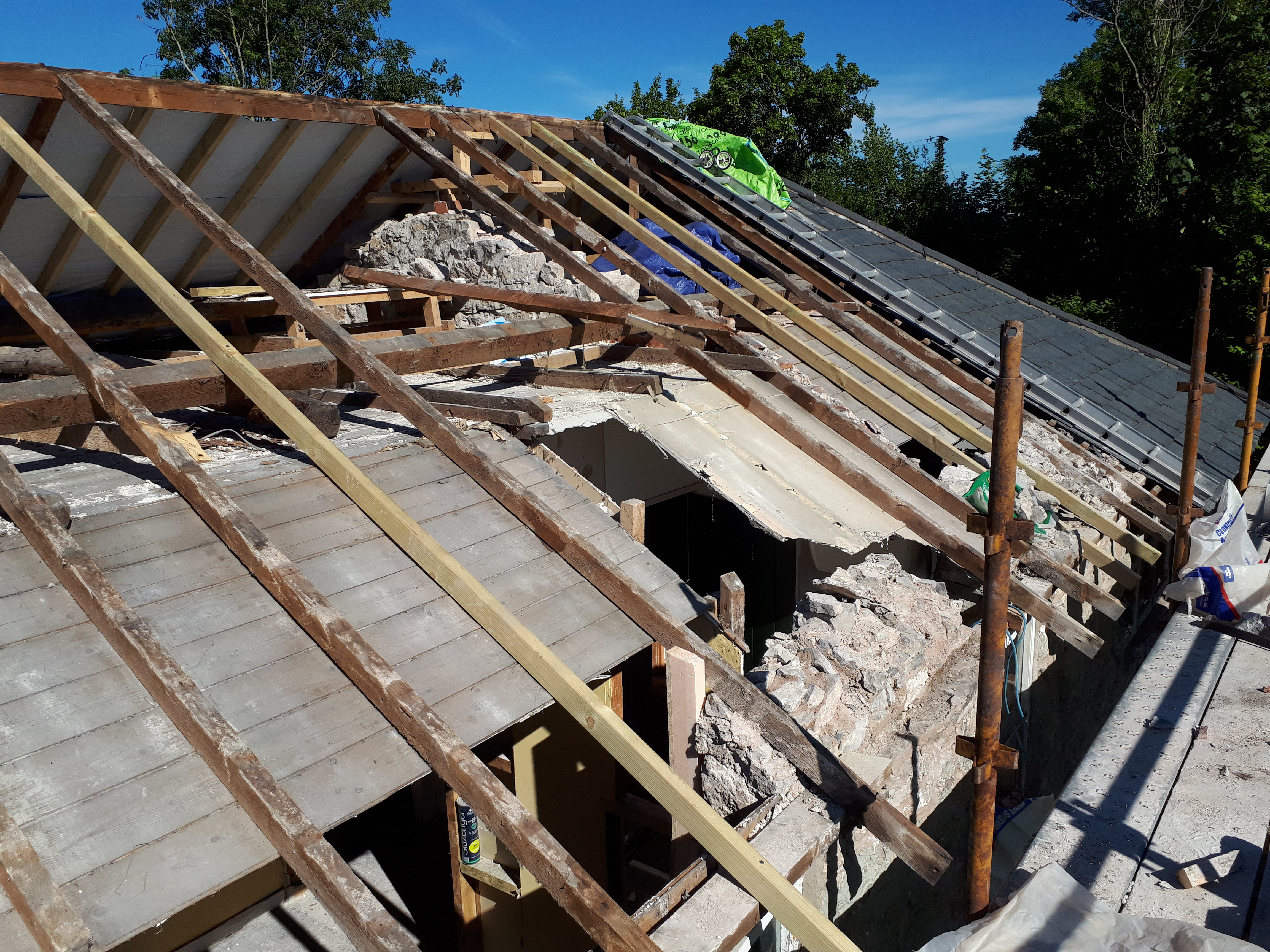
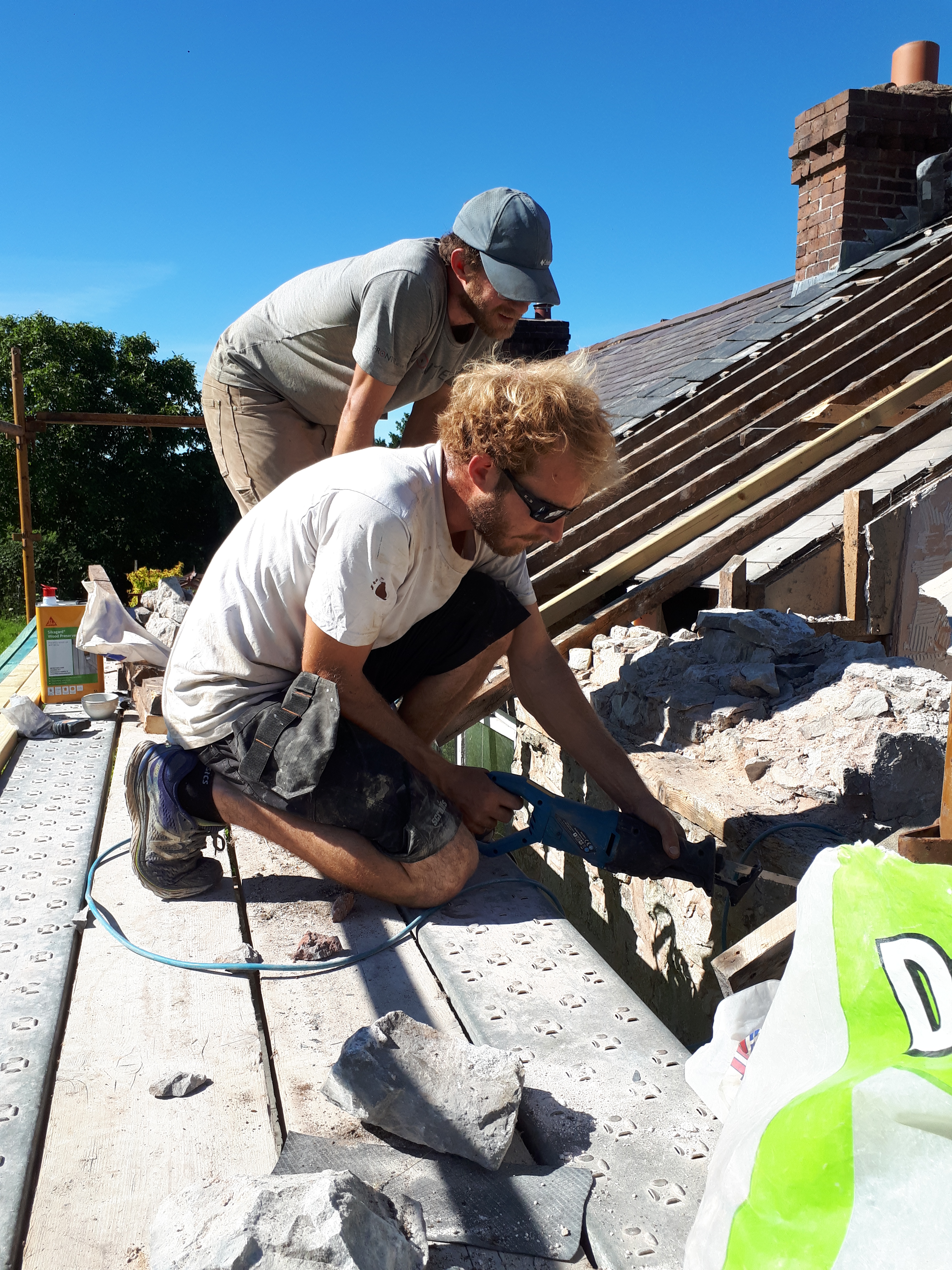
As well as the unexpected extra work of wall repair, we soon realised the wall plate (a piece of wood at the top of the walls that the rafters sit on) at the back of the house was completely rotten. This meant sourcing and sizing a piece of wood, delaying the replacement of the rafters at the back, which in turn delayed the application of the membrane and the batons.
So with our roofing holiday at an end, we have one side of the building still open to the elements, however, a few late evenings and a weekend’s grafting should get it to the same place as the front of the house. Then there’s just the hip to tackle, the purlin to replace, and 1,000 slates to carry back up the rickety scaffolding and reattach to the roof……
As Chris’s brother pointed out ‘I can see why they normally bring it a whole team to do a roof’. Because apparently two enthusiastic amateurs, and a host of helpful family, just can’t replace a whole roof in a week. Shame, but at least there’s a heatwave coming, so at least the mess inside the house won’t become a sloppy mess in the meantime.

-
Red bull gives you… insulation
There comes a point in every DIY project where you seem to have a hundred half-finished jobs, but nothing that actually seems to be moving you forwards. We’re very much in this zone, seeming to flit from one thing to another. At some point all the half finished jobs will reach a satisfying crescendo, but we’re not there yet.
This week, the contractors, paid for by the grant, started installing the batons for the insulation. Seeing how many have gone in, needing to be screwed directly into the wall we’re very glad someone else is helping out with it.
Mostly, we arrive to find the contractors gone, with a little more work completed, our mysterious helpers appearing and disappearing like the shoemakers elves. Yet sometimes they do leave behind mysterious signs…
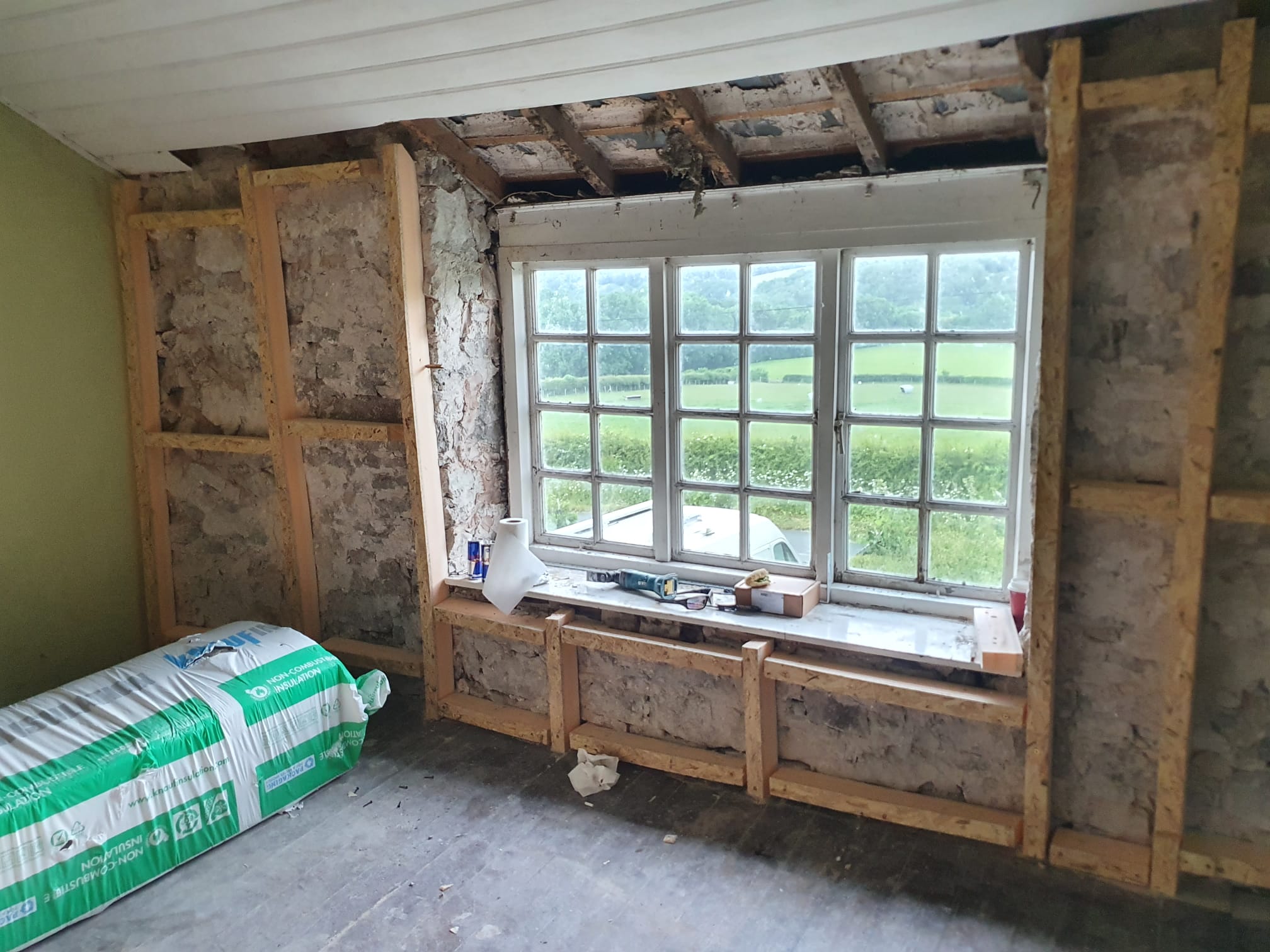
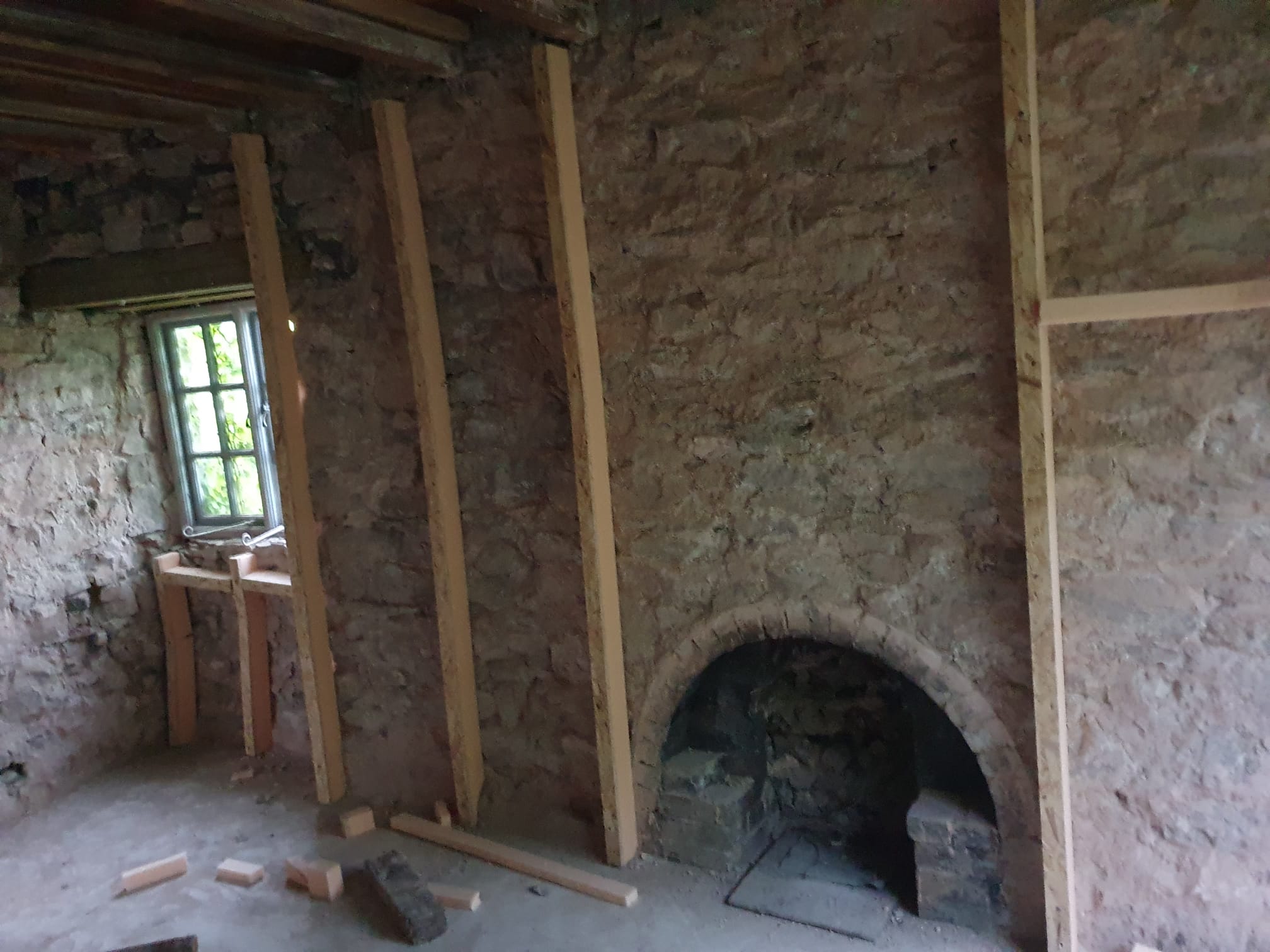
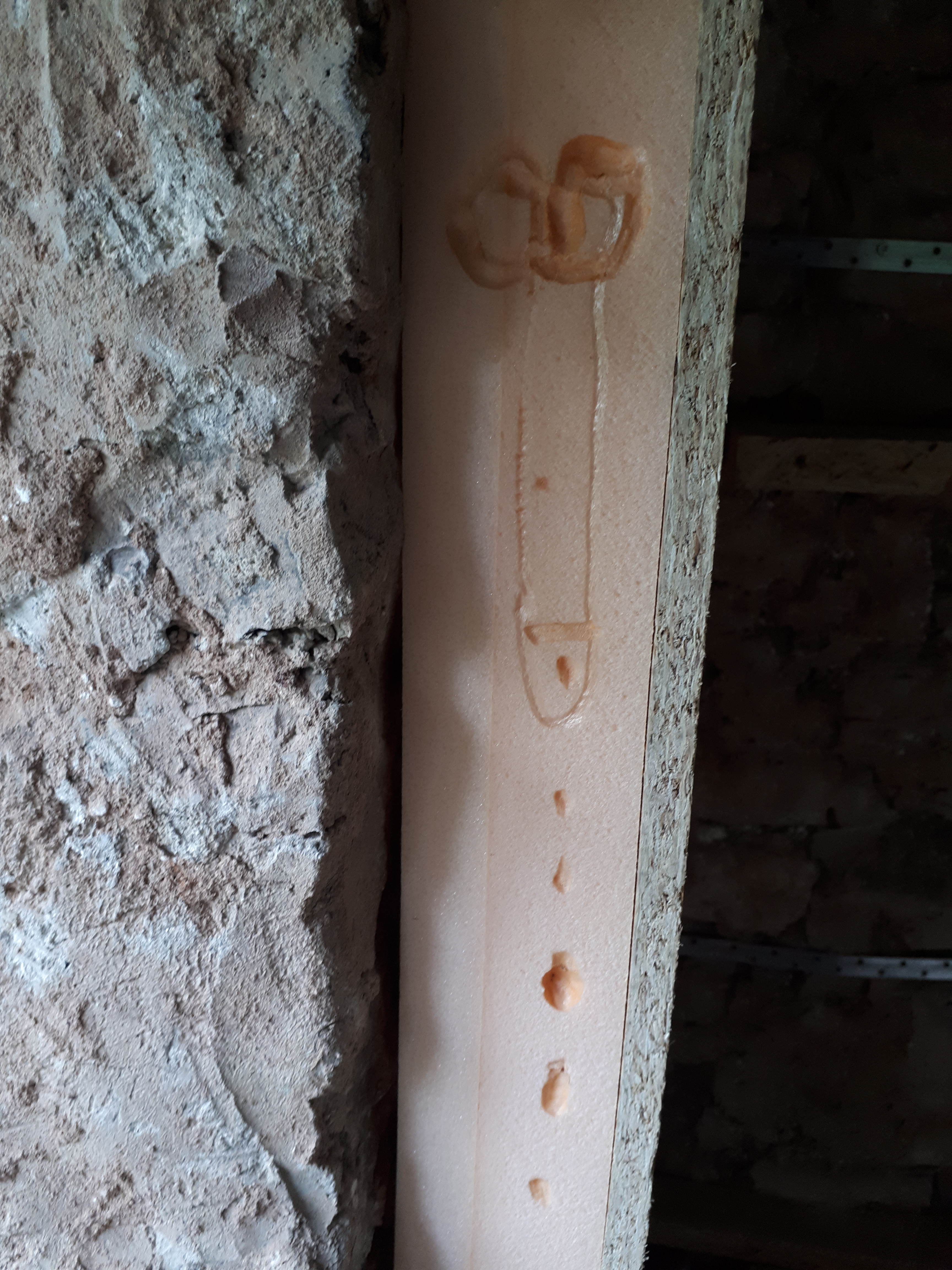
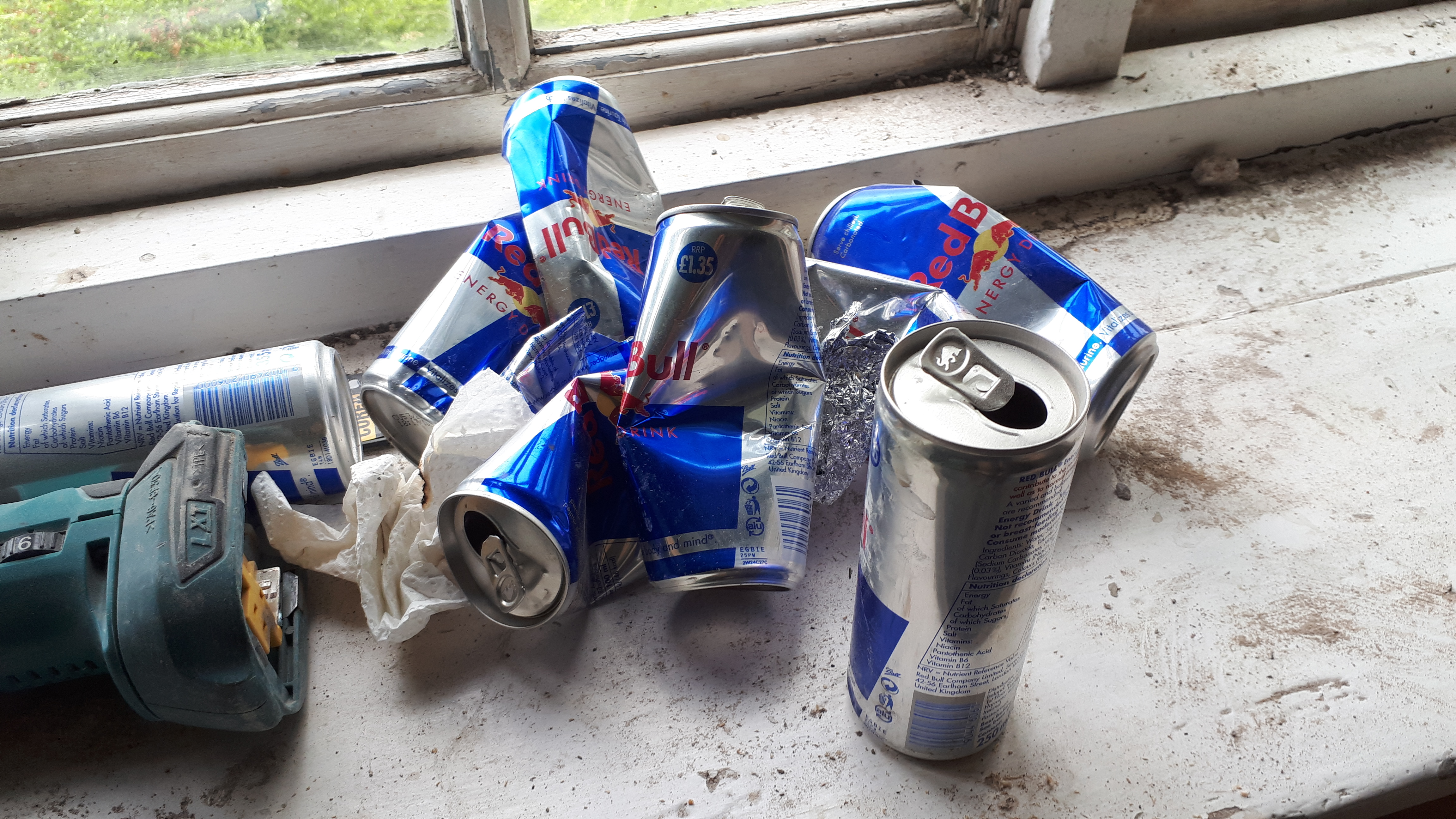
As well as apparently gifting us our first wall art, our contractors have a clear preference for one particular brand of energy drink. Maybe that’s what we’re missing to help us through our DIY slumps.
Although we very much enjoy watching other people work for a change, we’ve also been getting on with many of the half-started jobs around the house. From more grouting to yet more braces, it’s been a bitty few evenings and weekend.
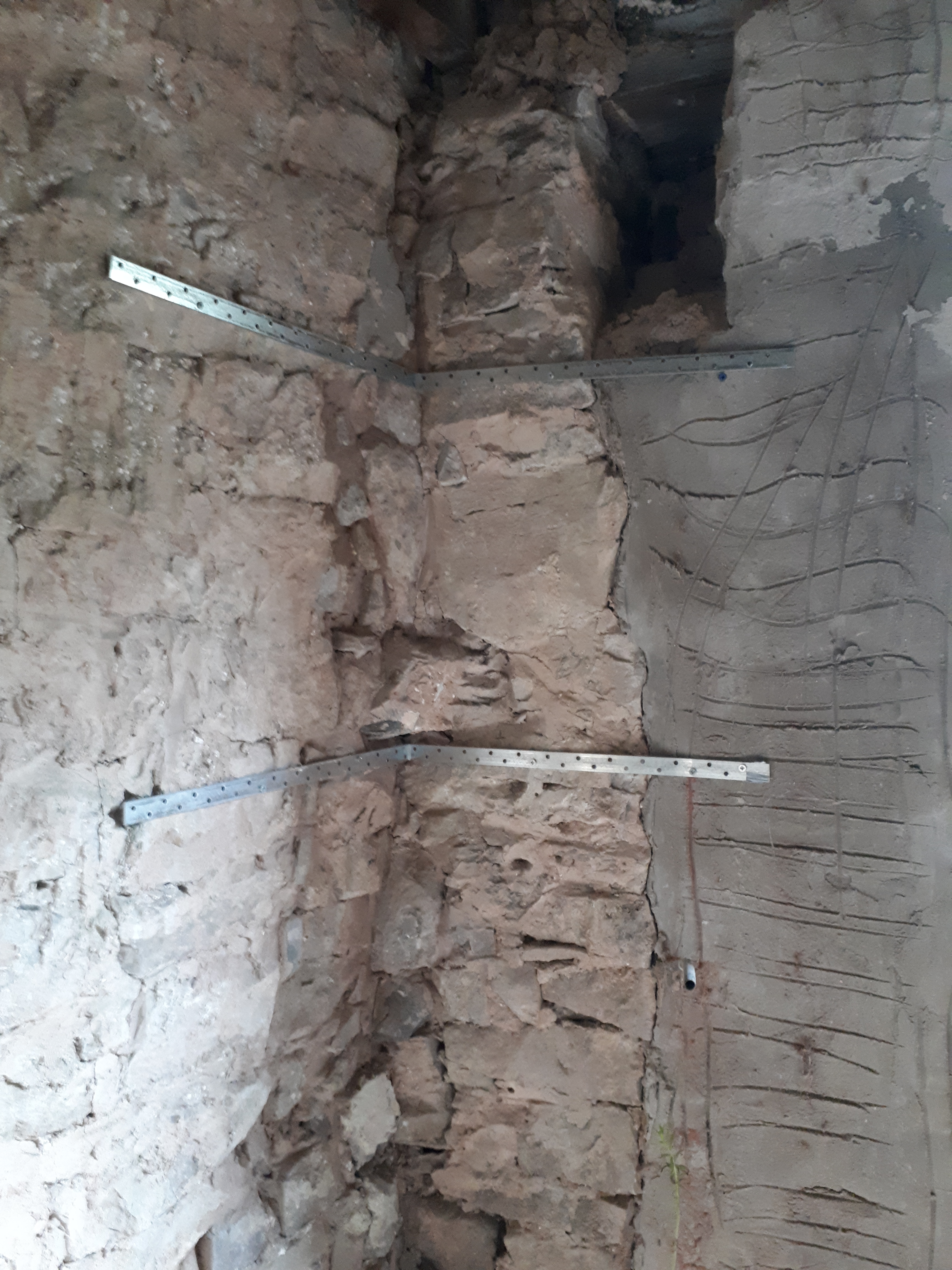
The one big job we’ve managed to get on to is replacing the old rotten wooden joists with the dining room and kitchen. To remove the joists we had the choice of taking up the floorboards and replacing the beams from above, or cutting them out to remove them from below. We are keen to save our wooden floorboards and weren’t sure they would survive the upheaval. So instead, we decided on the more difficult route.
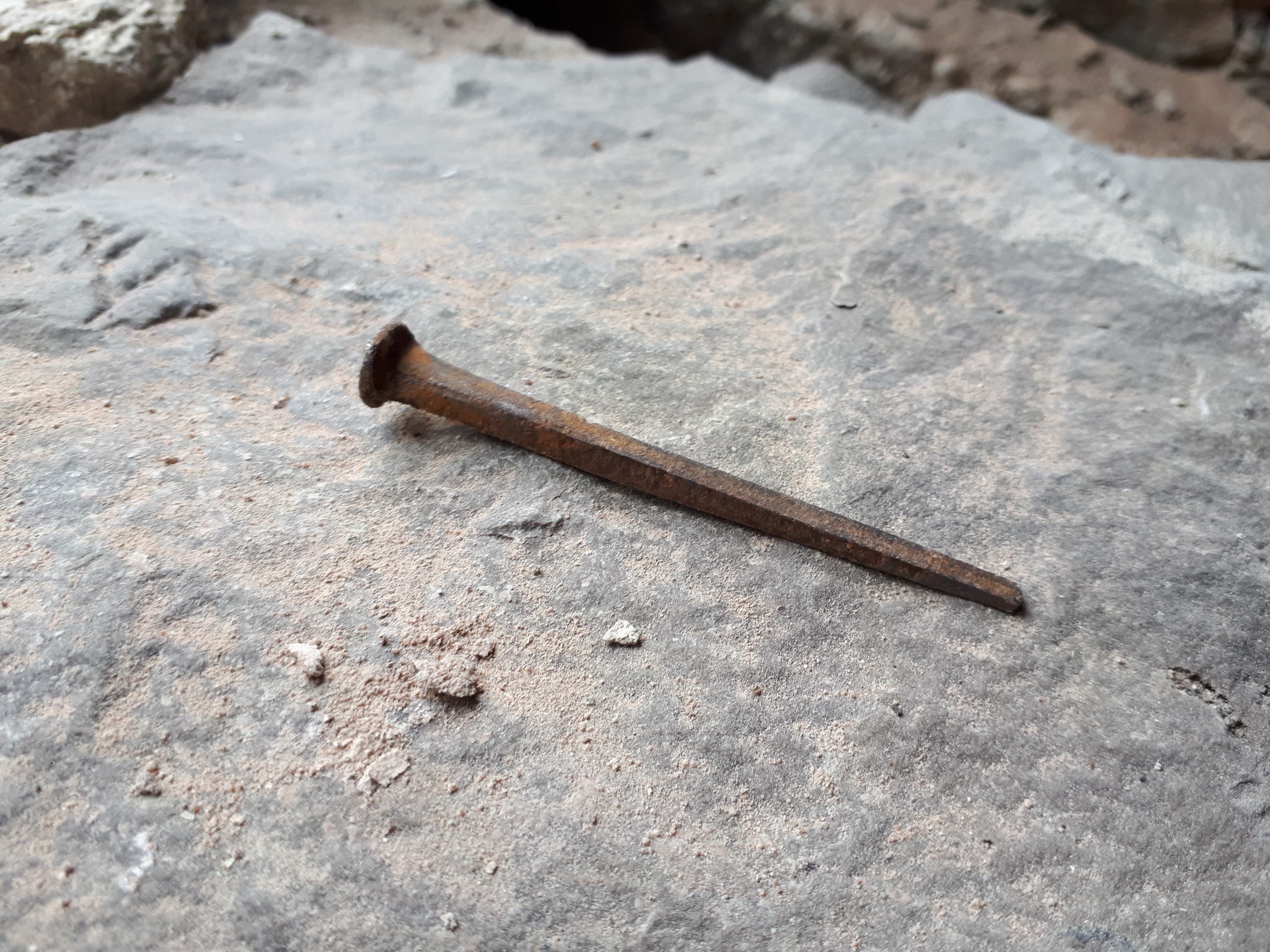
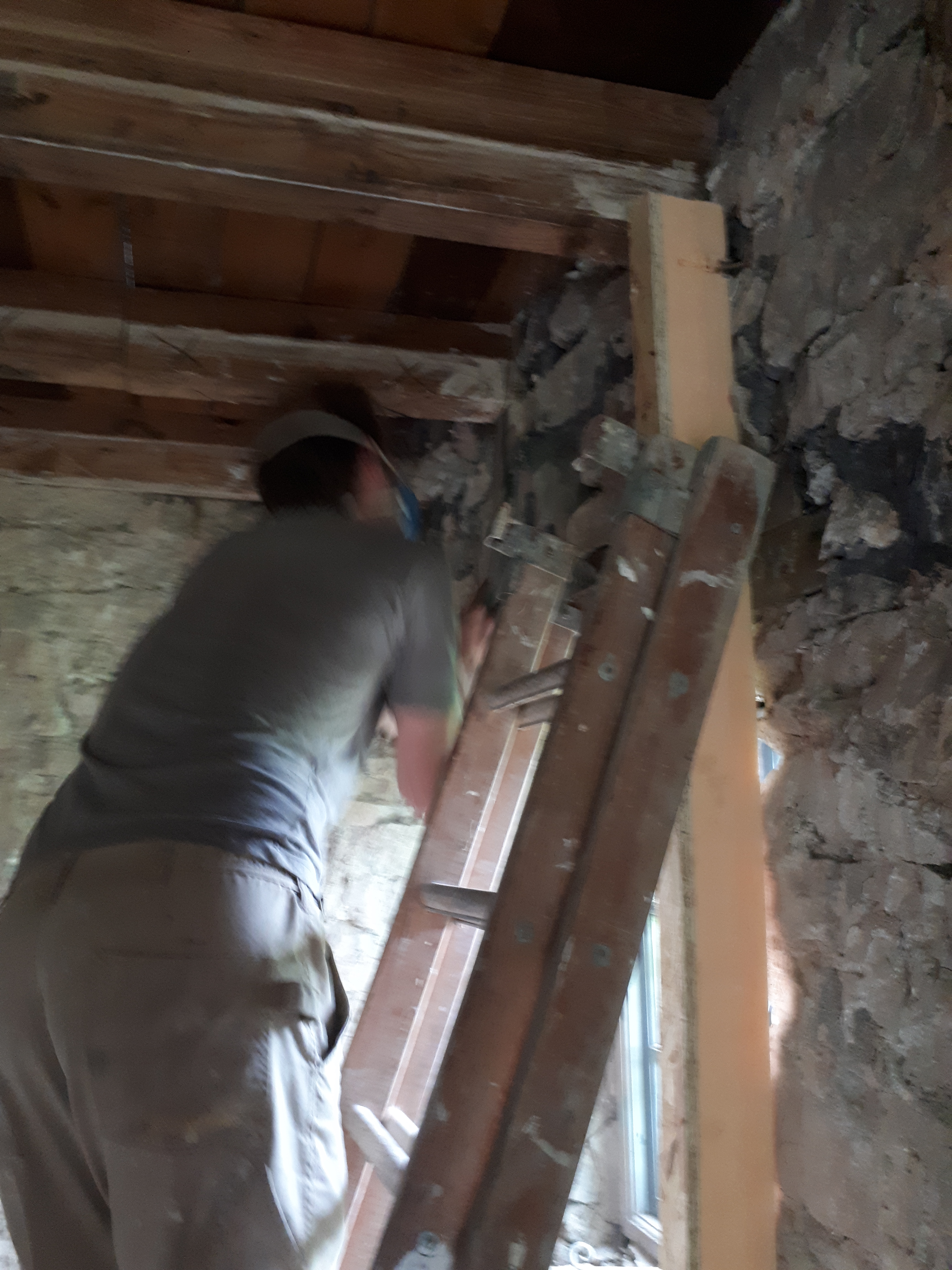
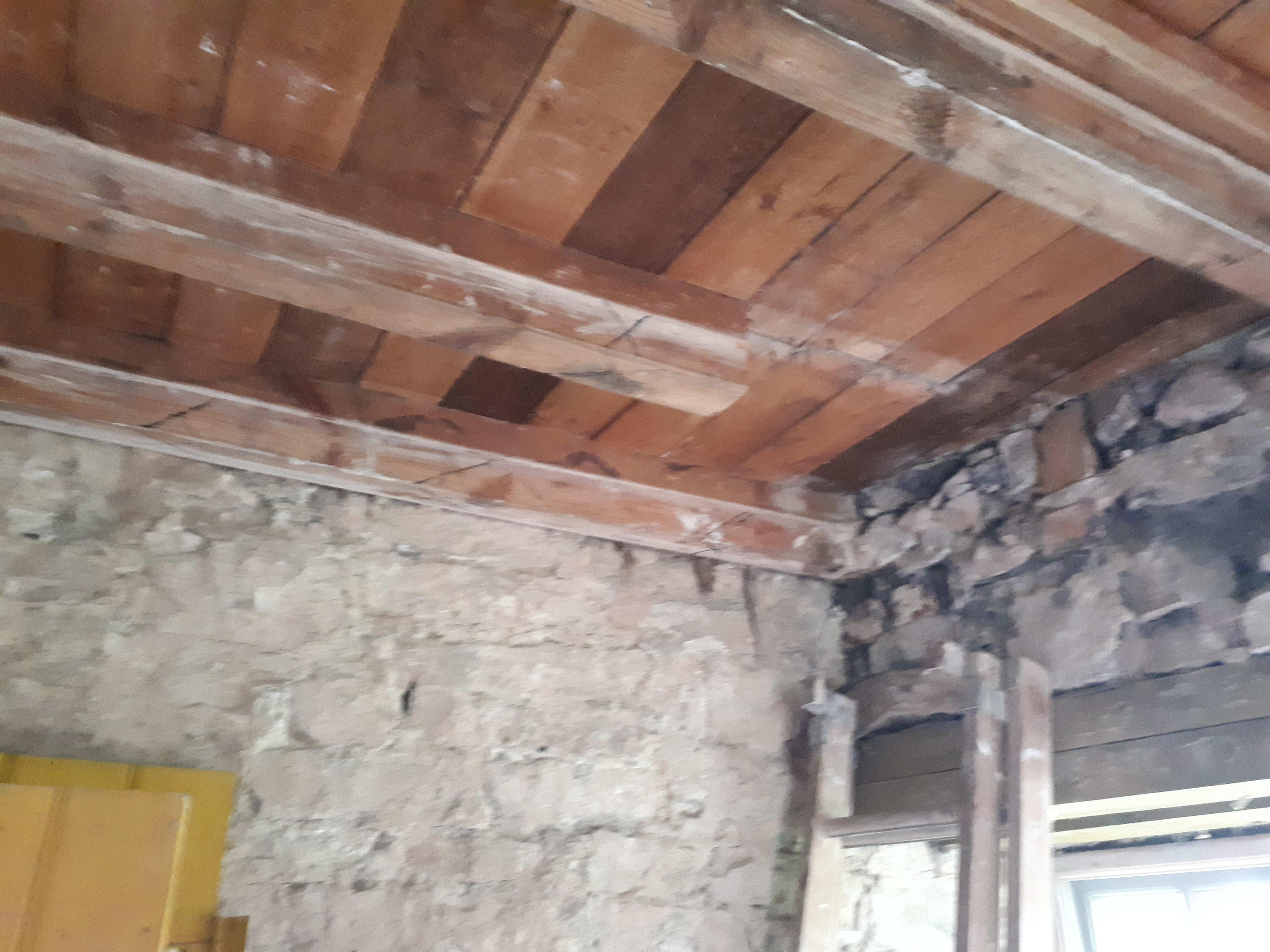
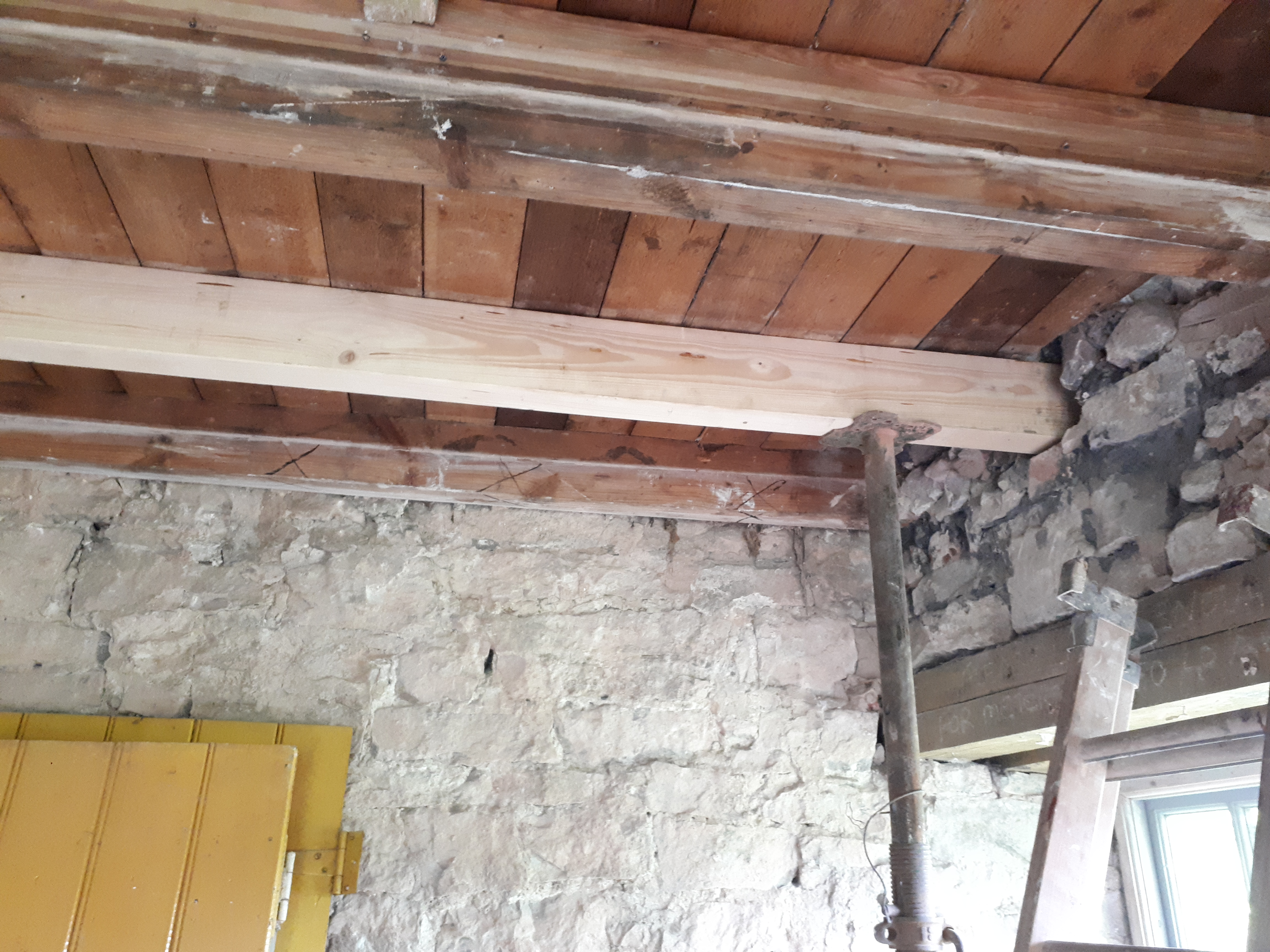
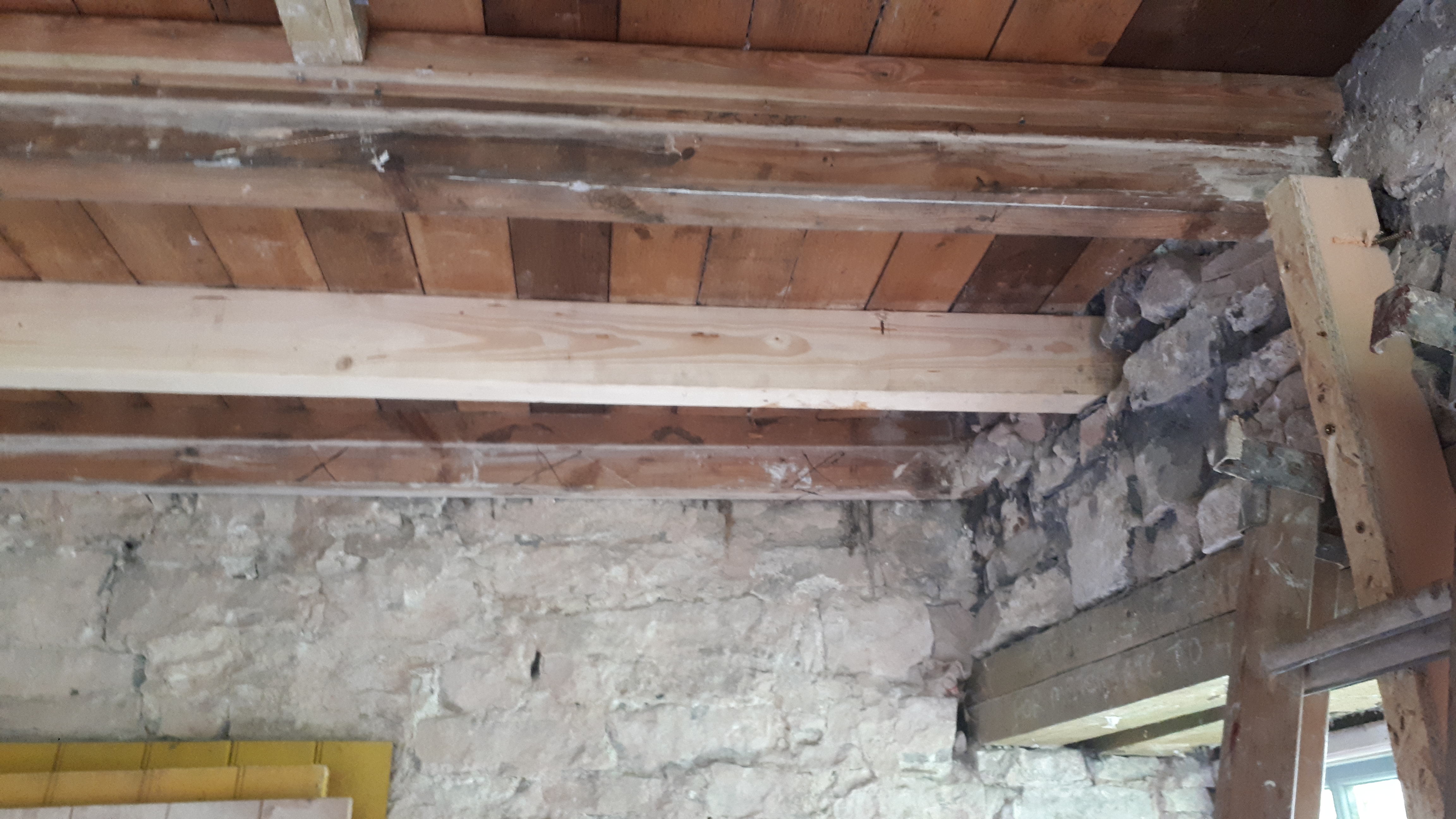
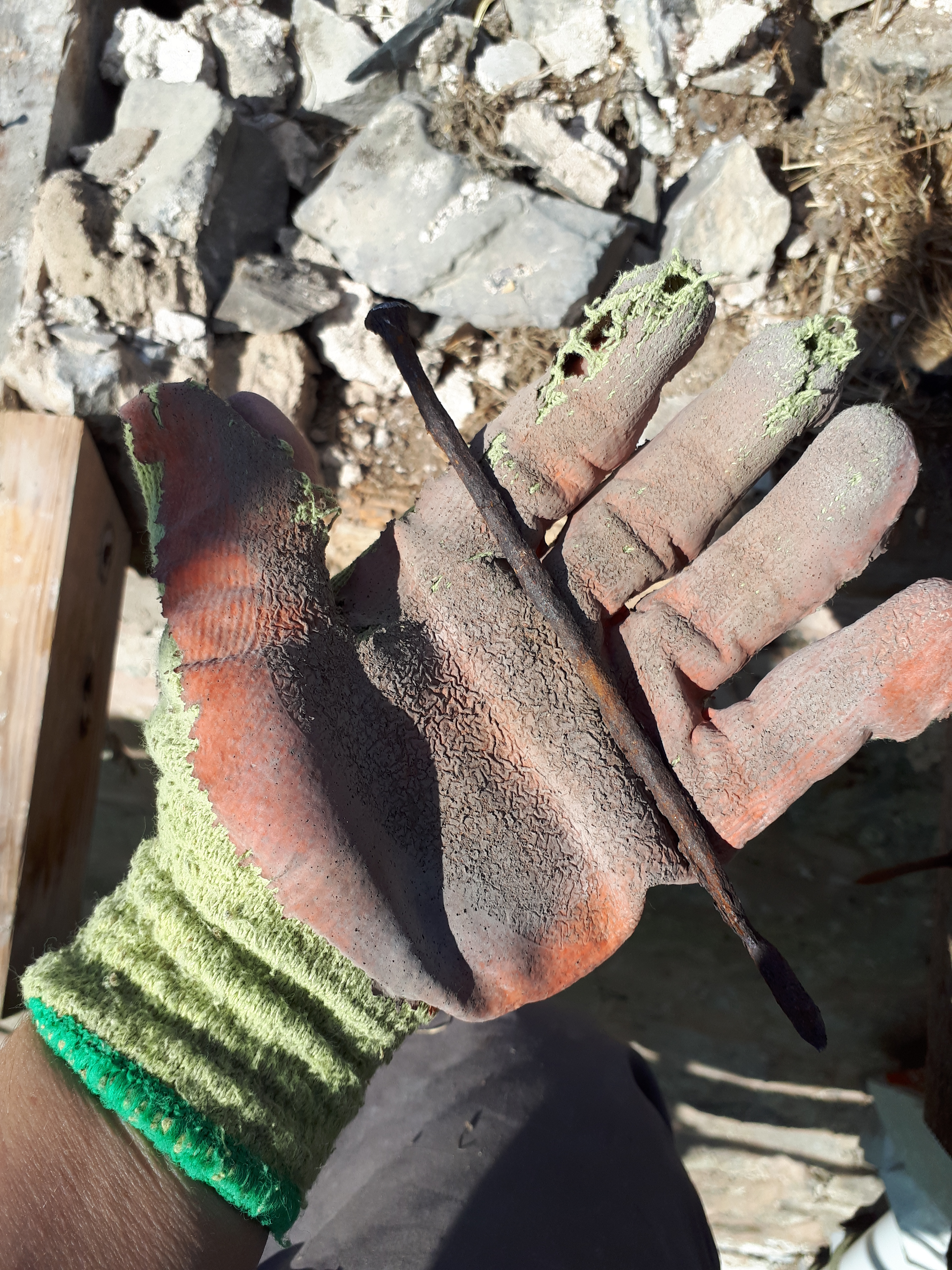
Around half the beams need replacing, either because of rot or wood worm. Removal meant sawing through the beam at either end and prising the beam off the nails holding it to the floorboards above. These old square cut nails then had to be hammered up back through the floorboards to be pulled out.
The two remaining ends were removed from the walls, a delicate processes involving serious abuse with a crowbar. All this had seemed exhausting enough for one day, but we didn’t want to leave a series of floorboards trapdoors for the contractors to find. So then it came down to measuring, cutting and treating the new joist, before manhandling it in to place. Amazingly, we were able to reuse the old nails we had pulled out of the original beam, as they had survived our mishandling amazingly well.
All this done we congratulated ourselves on our first beam successfully replaced, carefully avoiding a sideways glance at the seven more to go. Maybe it really is time to stock up on red bull?
-
Finishing at the start
When people say not to look a gift horse in the mouth, I guess they mean that things that seem free always come with a catch. Probably about right.
When we were going through the motions of buying the house Chris went back one day to take some measurements. The estate agent, who was there to open up, offered him a letter that had come through the door. It was a leaflet outlining a grant homeowners in Wales could apply for to make their houses greener and more energy-efficient. Chris thanked her but said he’d already checked out the grant and it only applied to people on benefits. What we didn’t know, and what the estate agent then told him, was that the grant had now been opened up to wider applicants.
Since this lucky discovery the grant officer has been out to visit our house and let us know we are indeed eligible. The reason for our eligibility is amazingly how poor our house currently is for energy efficiency, generously granted an impressive G rating.
But there are of course a few wobbly teeth in the handsome’s steeds gob. Firstly, some of the methods the funders would need to use are different from those we would have chosen ourselves, such as putting in a waterproof insulation rather than allowing a breathable material to be used. But the main issue is that this round of funding comes to a close at the end of June.
Having inspected our already partially deconstructed home, the funders offered to pay for the insulation and plastering of all our external walls. Having weighed he pros and cons, the cons being it wasn’t the type of insulation we had originally decided on, the pros being a massive cost and time saving, we decided to accept their offer. Yet, what this means is we need to have the external walls ready for insulation and plaster much sooner than we expected. This means getting all the repointing, installation of new lintels and electrics done ASAP.
Hm…
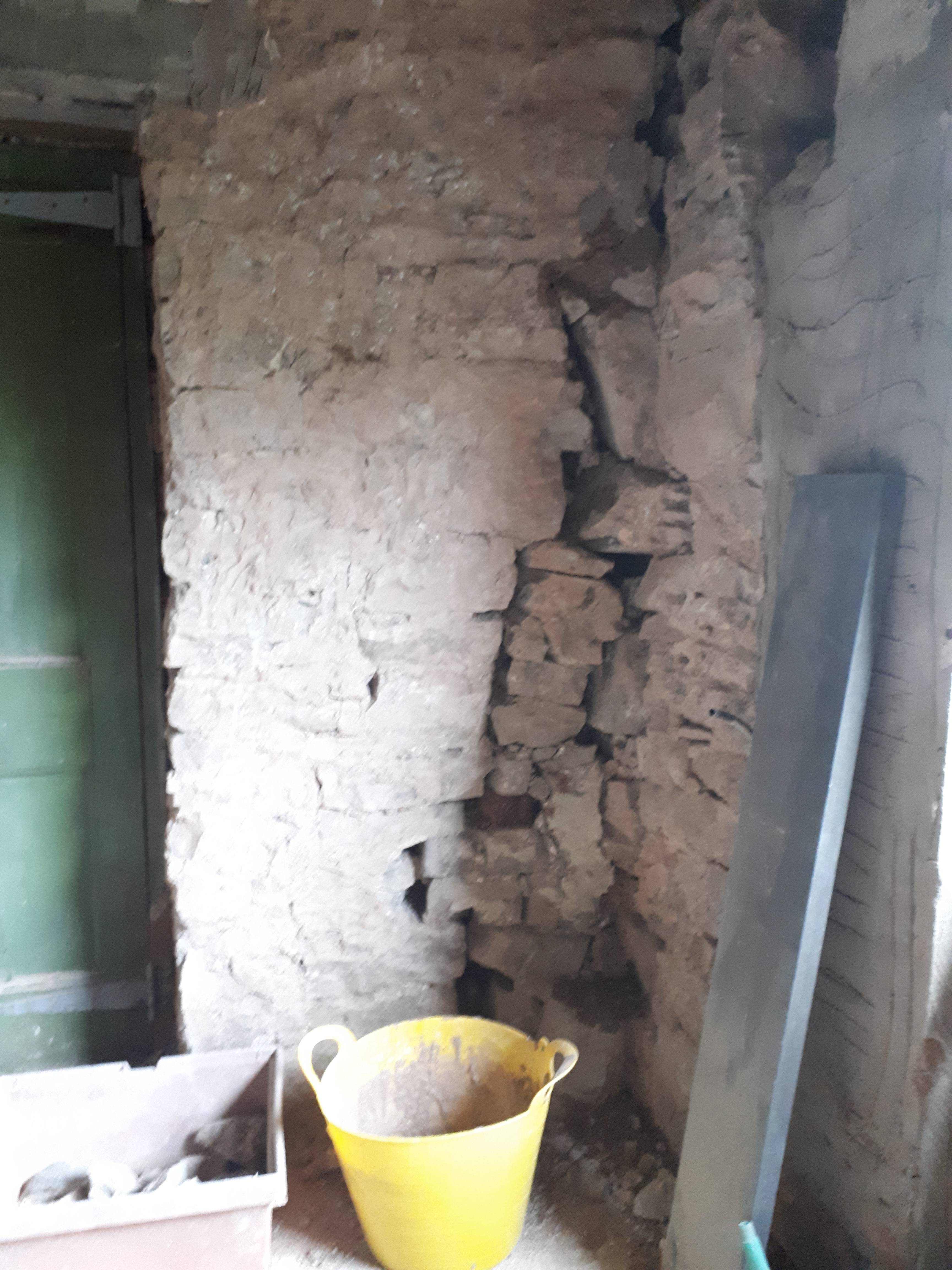
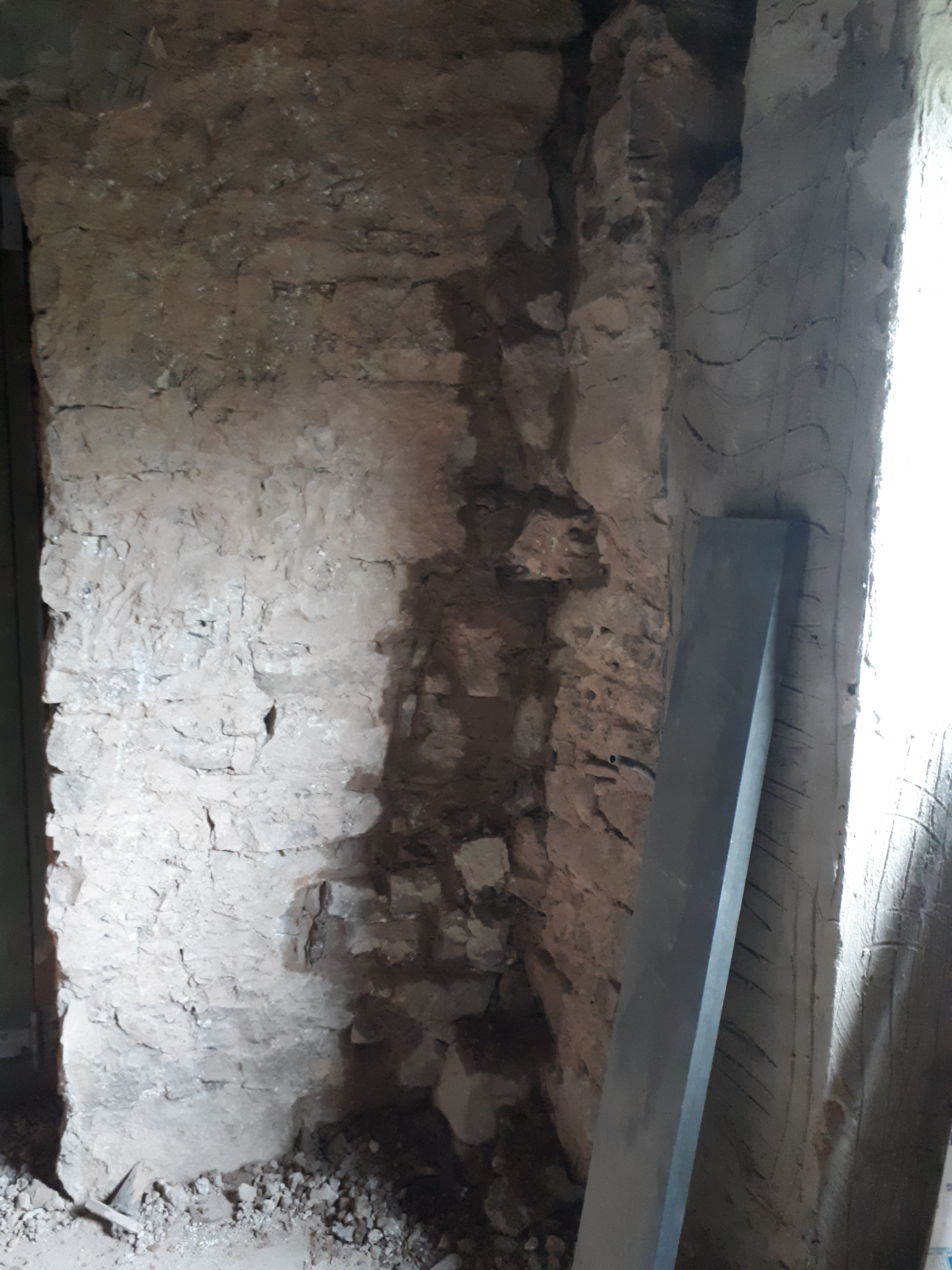
Some good news is that our visit from a structural engineer went well, with her stating that only one of the big cracks in the walls was a concern. Having repacked and repointed this huge gap in the corner of the room, we will need to buy and attach another metal strap to stop any movement.
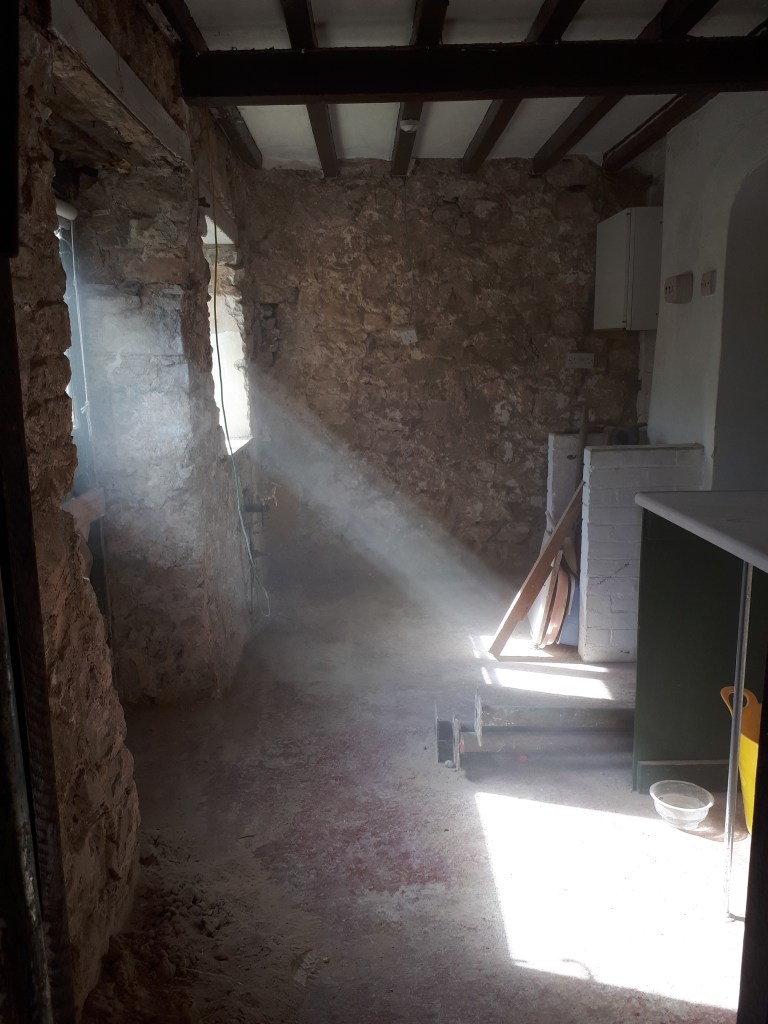
Billowing dust post tidying up. With our deadline looming, the funder arriving on Monday to start installing batons to hold the insulation, this weekend has been devoted entirely to repointing. Even with two of us working on this one task, progress was amazingly slow, yet somehow we finished enough to let in the workmen on Monday.
It will be amazingly exciting to see all the external walls plastered again, but it’s important we don’t get lulled into a false sense of security. After all we still have two load bearing walls to take down and a roof to replace. Still every step is taking us closer to the day we move in.

The view we’re working towards. -
Slowing down
Anyone who has ever done any DIY will know there are periods when everything just seems to slow down. You’ll be flying along feeling like you’ve hit your stride, when suddenly it’s as though someone has placed the hourglass on its side and everything stops.
This is how our second long weekend has felt. While plaster removal, and carting wheelbarrow loads of rubbish into a skip was tiring, it was at least fairly quick to make headway.
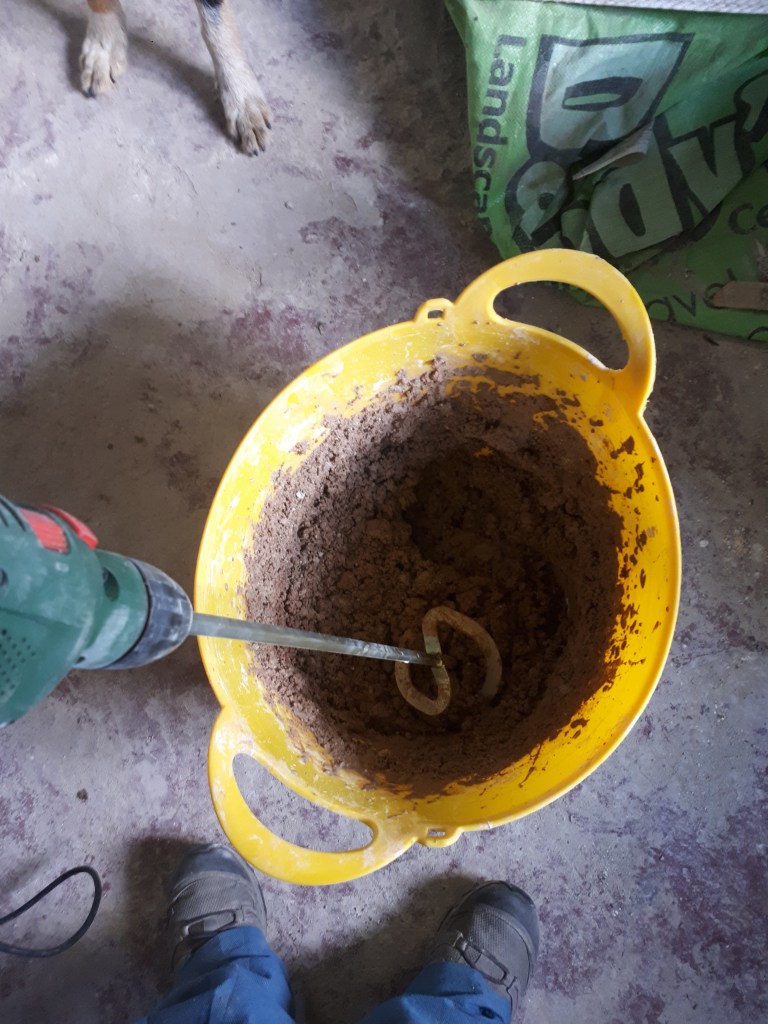
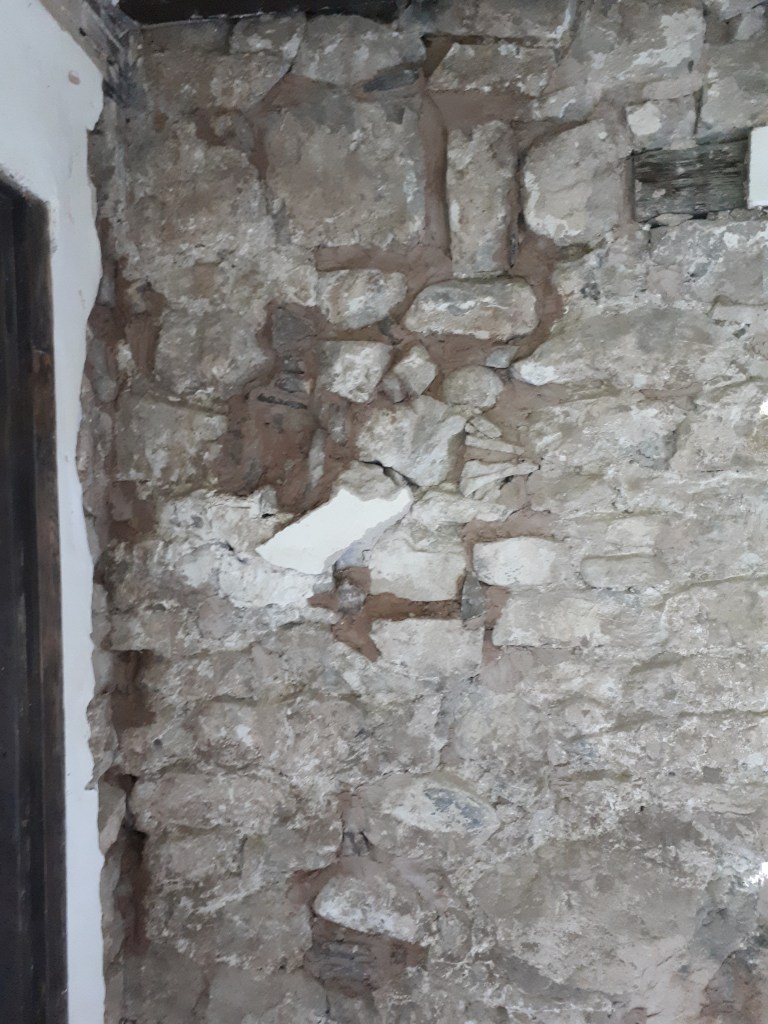
This weekend I set to work repointing walls, while Chris dug test pits in the garden to work out where our drainage issues stem from.
The majority of the mortar on the walls is still in good condition, with only the odd holes needing filling here in there. However, in some areas large cracks had formed, due to the walls having moved out. These cracks need to be cleared of loose stones, and filled with new stones of the right size. This work, while satisfying, is amazingly slow. At one point I noted I had been working on one meter of wall for two hours. Most of the hold up is finding stones of the right size, like trying to get the right jigsaw piece when someone has emptied several jigaws into one box.

For Chris the game outside was far more hide and seek than puzzle solving. In the garden several pipes take water from guttering, water flowing from surrounding fields and also from an old well, under the garden and to a soak away under the road.
Currently, blockages in the pipes cause flooding issues. Most of the water seems to run to the neighbours property, and she showed us where last year’s flood water had entered her kitchen and damaged the wooden floor. So, while the weather is good now, sorting out the drainage is still a priority.
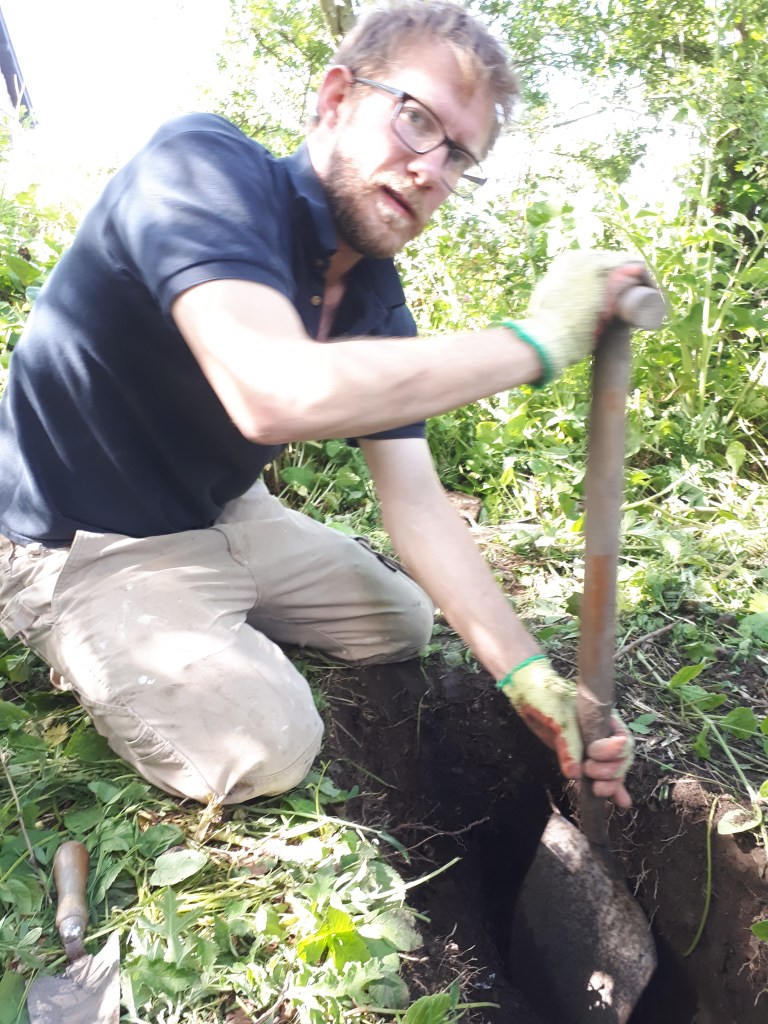
Chris, surprised by the site photographer. Finding a buried pipe shouldn’t be too difficult when you know the inflow and the rough outflow. Yet, Chris’s many test pits left us more confused than before, with no pipe in test pit B despite the pipe in pits A and C heading directly towards this point. At the end of an exhausting few days of digging it was decided the rental on a mini digger really isn’t that much after all.

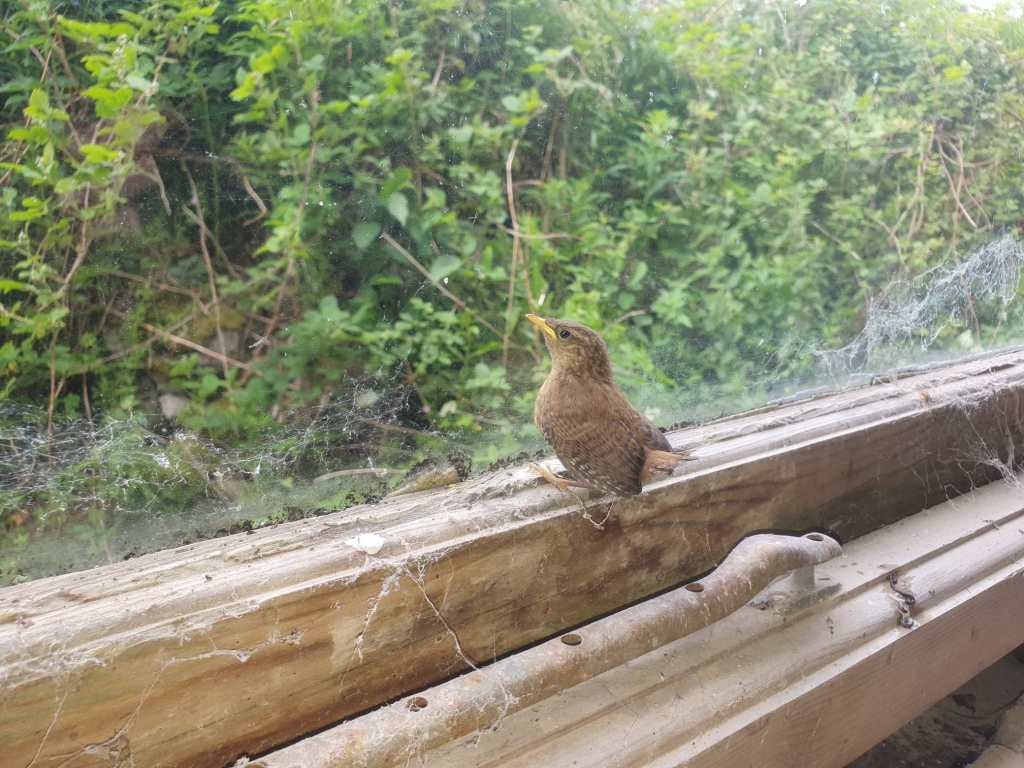
The finds from Chris’s archaeological dig. One thing that wasn’t moving slowly this weekend, however, was out little winged guests. Our wrens fledged, with four little fluffy balls fluttering around the house with speedy inexperienced wings. We spent quite some time catching them throughout the weekend as they disappear upstairs or into the eaves, but they seem happy and healthy none the less.
-
Subscribe
Subscribed
Already have a WordPress.com account? Log in now.
 Ruined