-
A (mostly) Family Affair
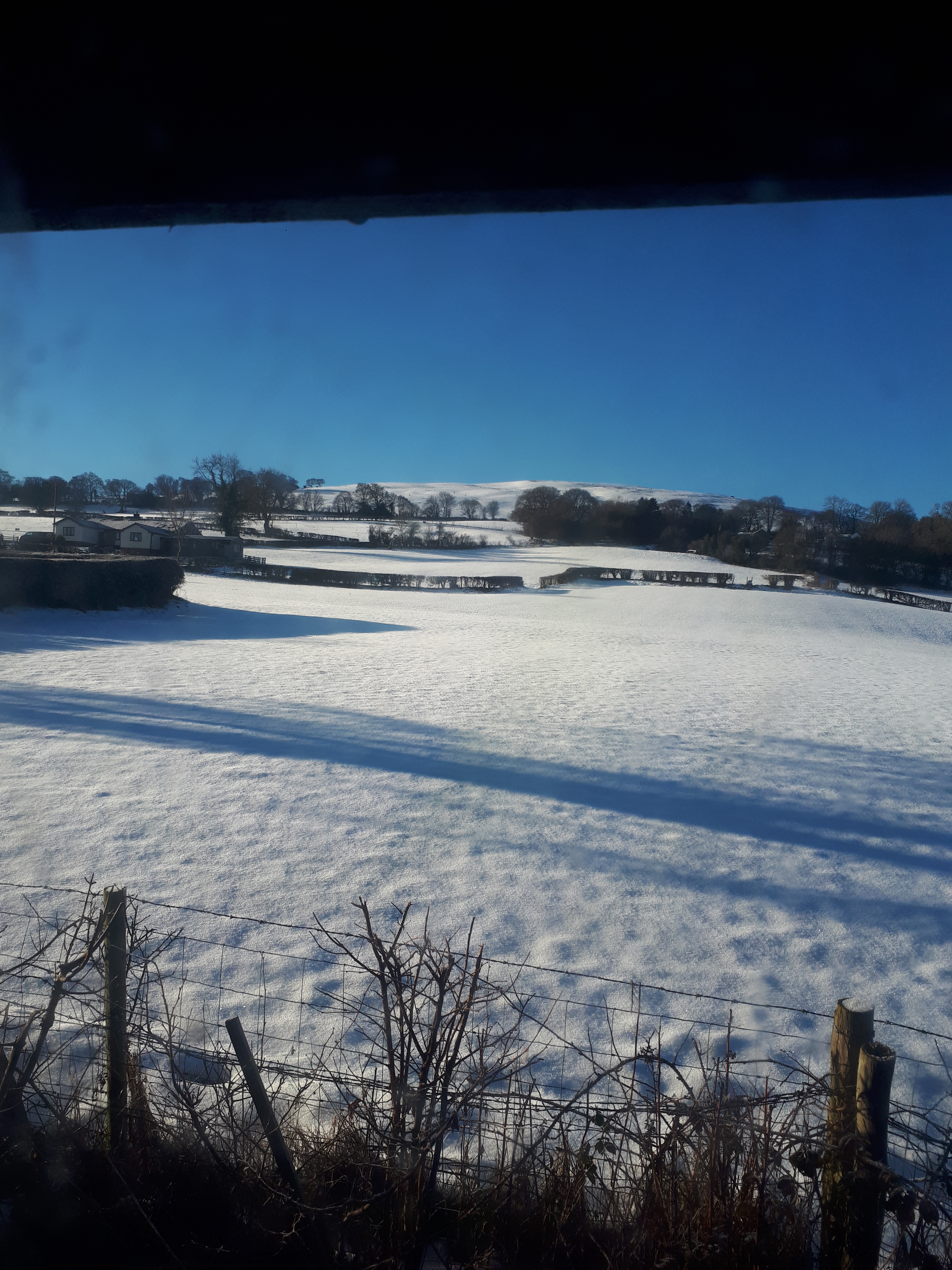
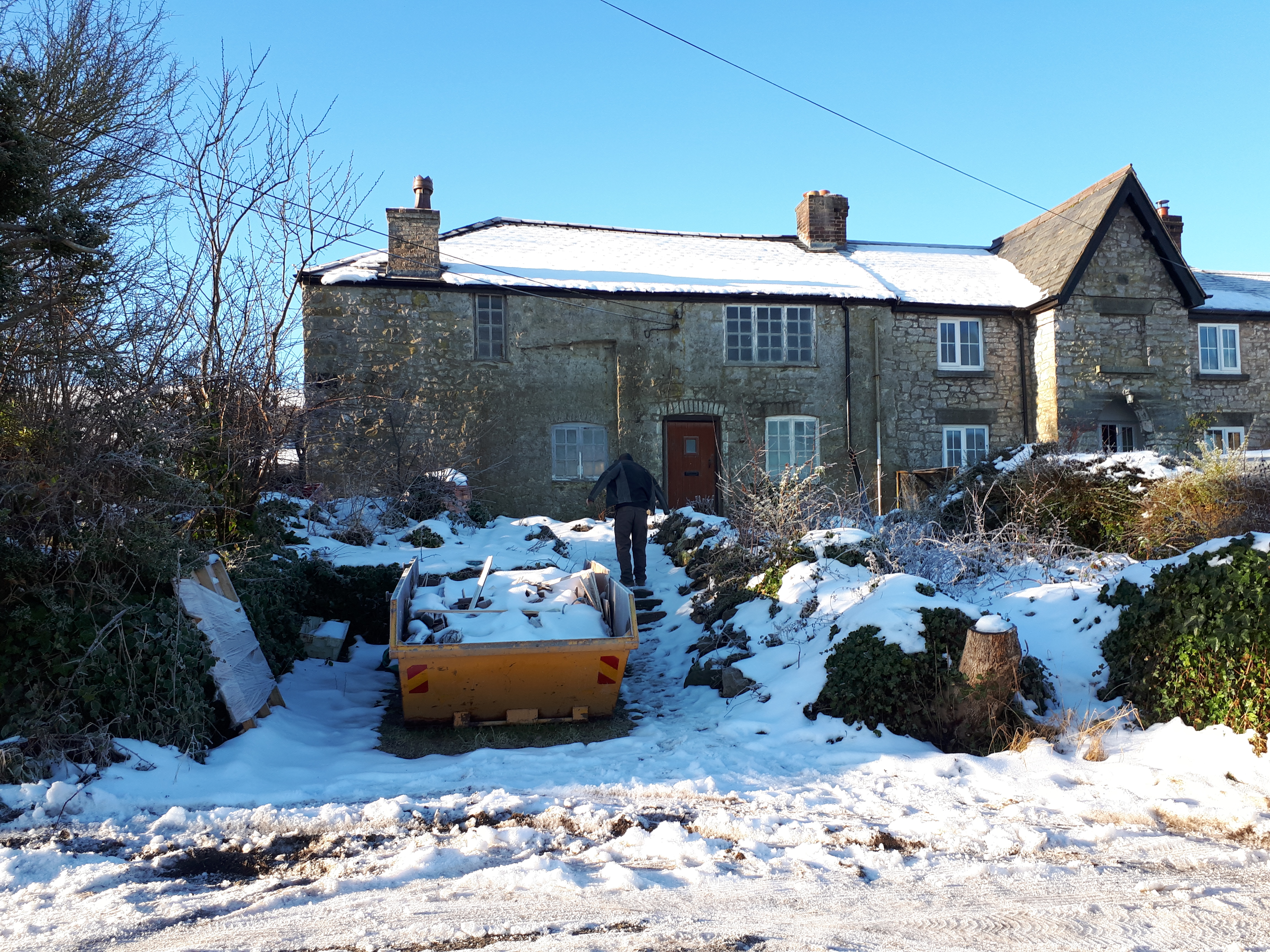
There is certainly something magical about crisp, clean snow. Returning to the house this weekend we found a winter wonderland awaiting us, with sparkling ice crystals covering even the most mundane of objects, such as our suddenly very bling skip.
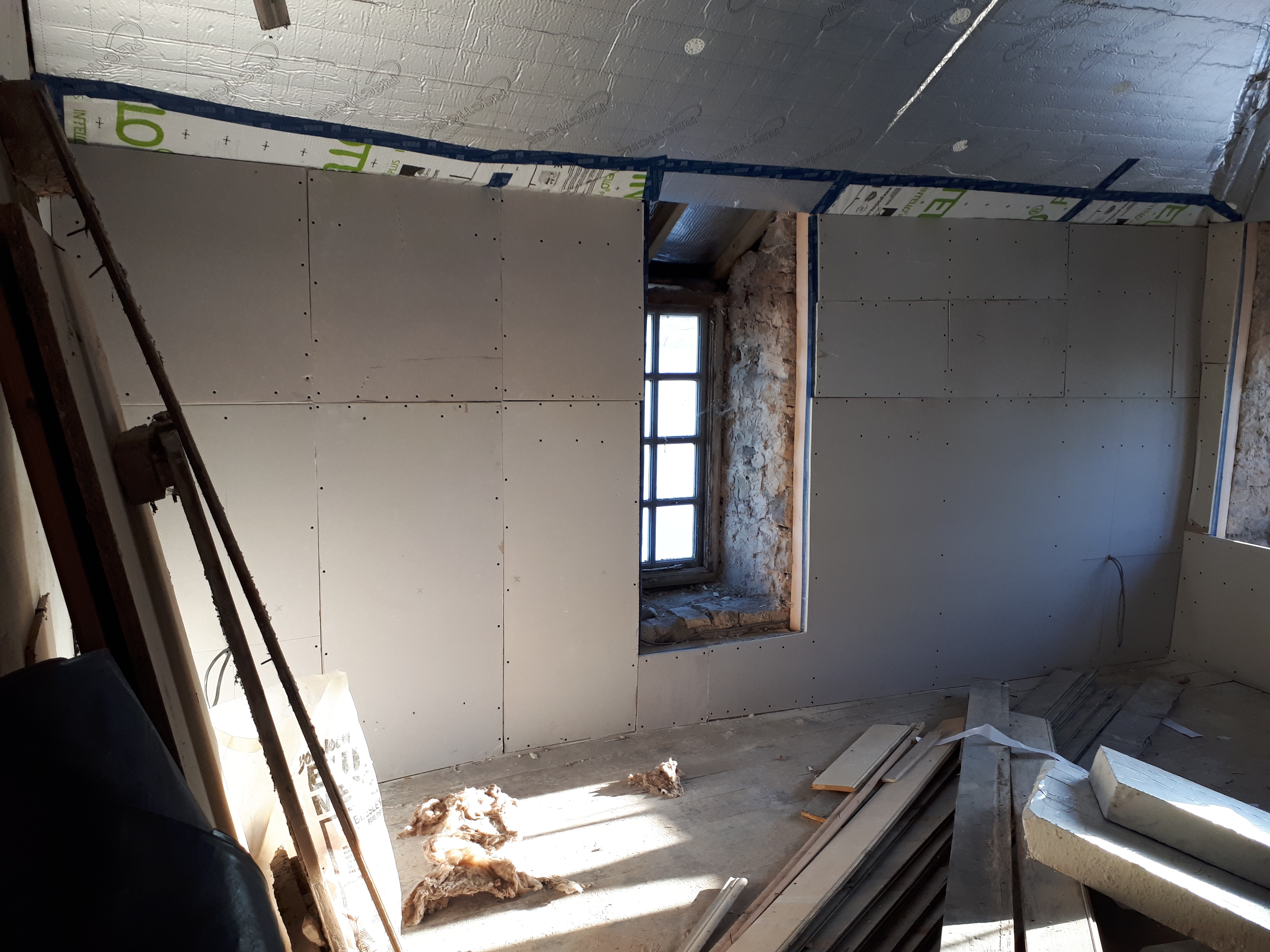
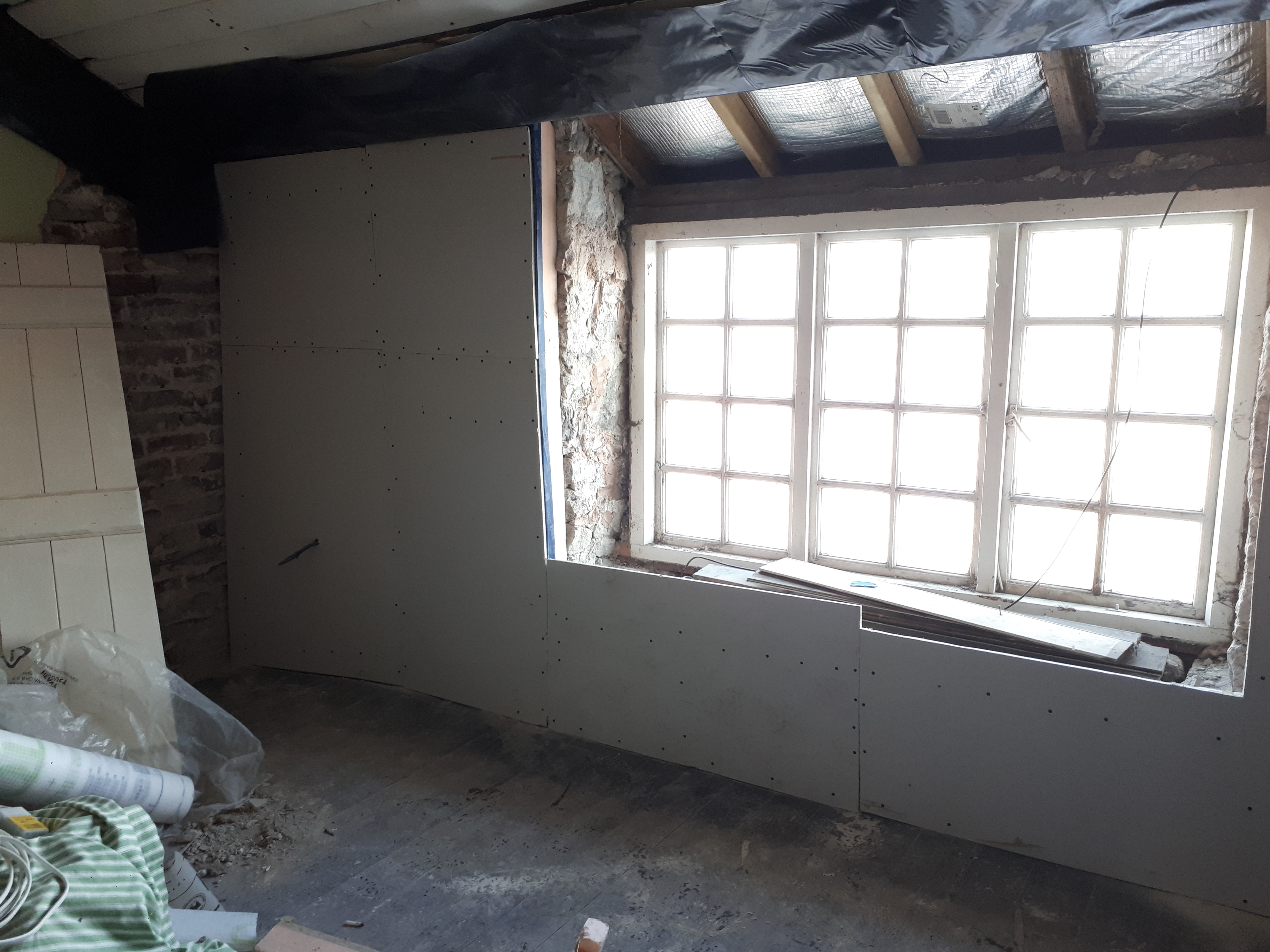
The magic had even infused the inside of the house, with friendly sprites having cracked on with insulating and boarding several rooms without us having to lift a finger. Bliss.
We were particularly relieved to observe the impressive curves the contractors have managed to leave in the walls, cutting the boards small to help contour the surfaces. Of course some places will be smoother than before but there’s still plenty of character remaining.
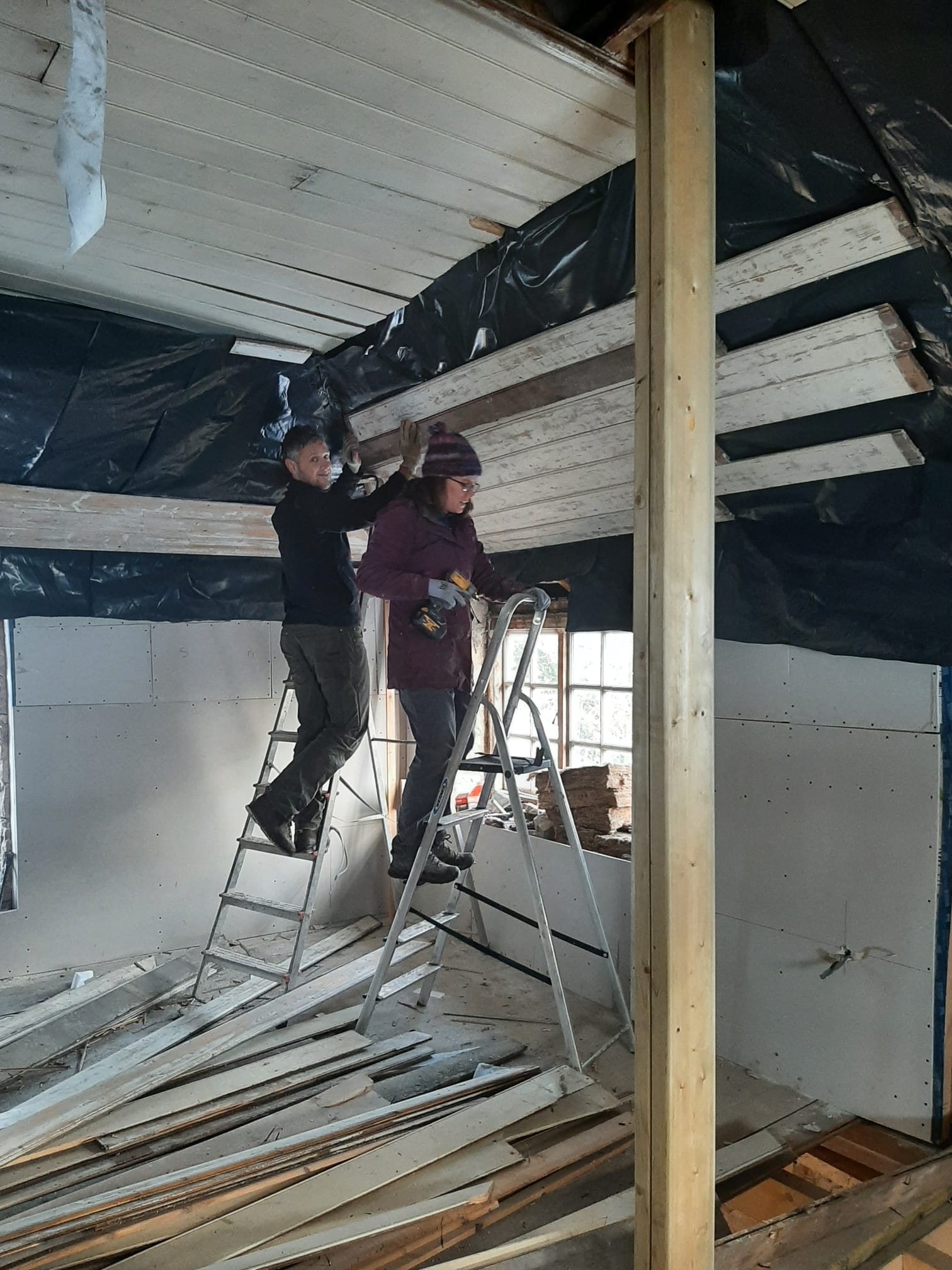
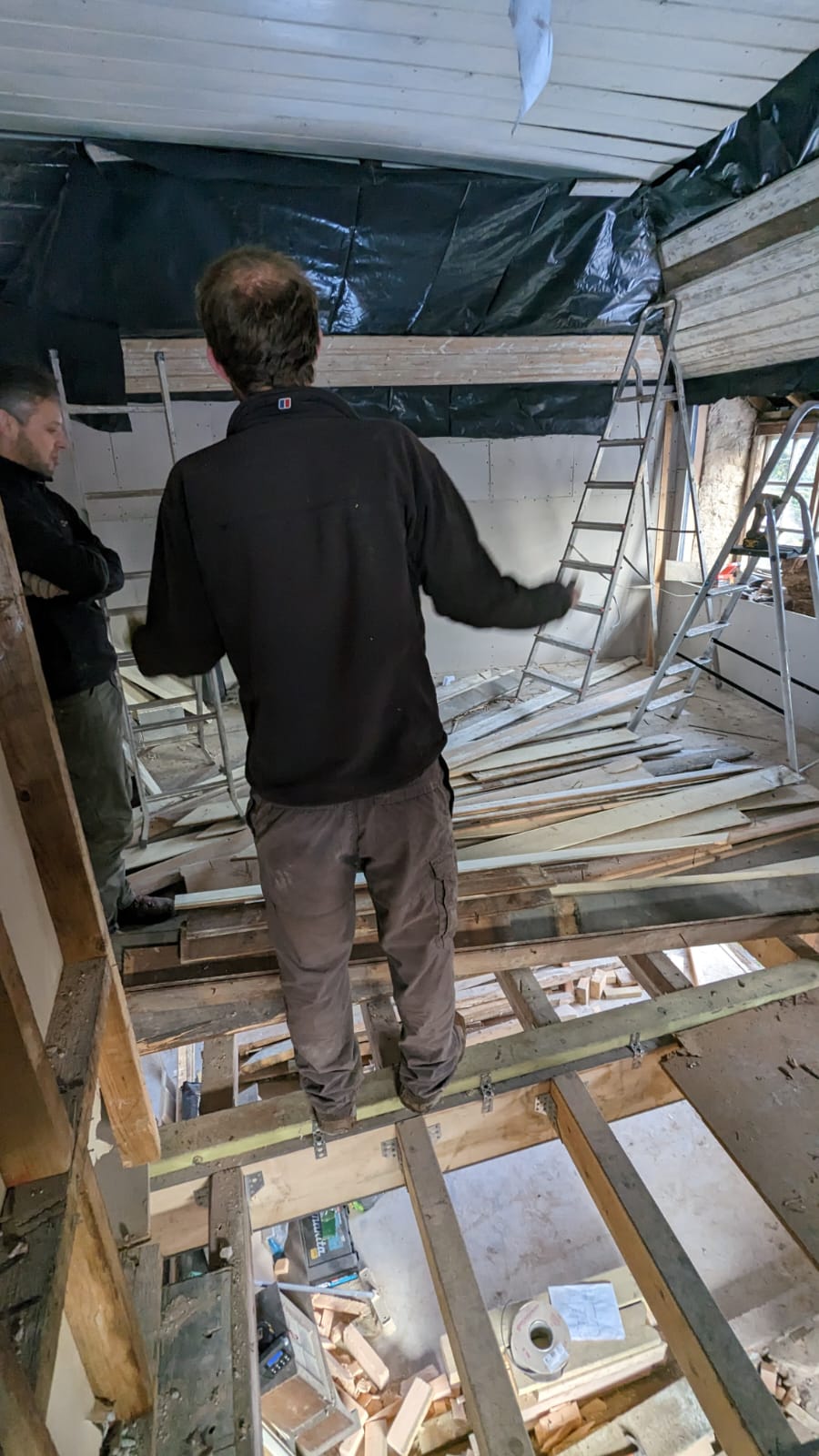
Amazingly, the contractors weren’t our only extra pairs of hands this weekend, with Chris’s friend Jay returning to lend a hand once more. Unfortunately for him he got paired with me, working out the giant jigsaw that was the ceiling, while Chris cracked on with the remaining electrics.
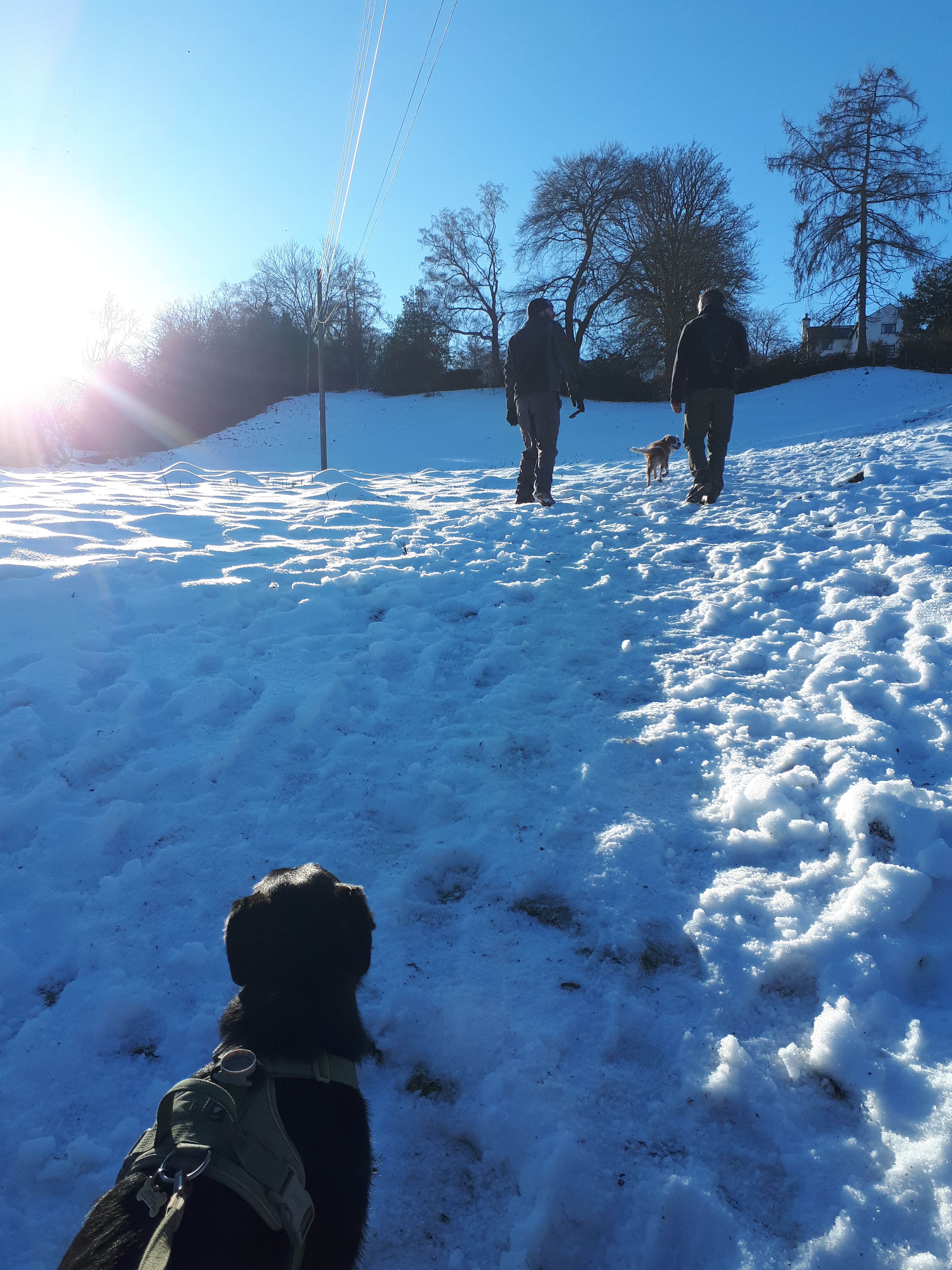

There was some reward for all this hard work, with there being no more perfect day for a lunch time dog walk.
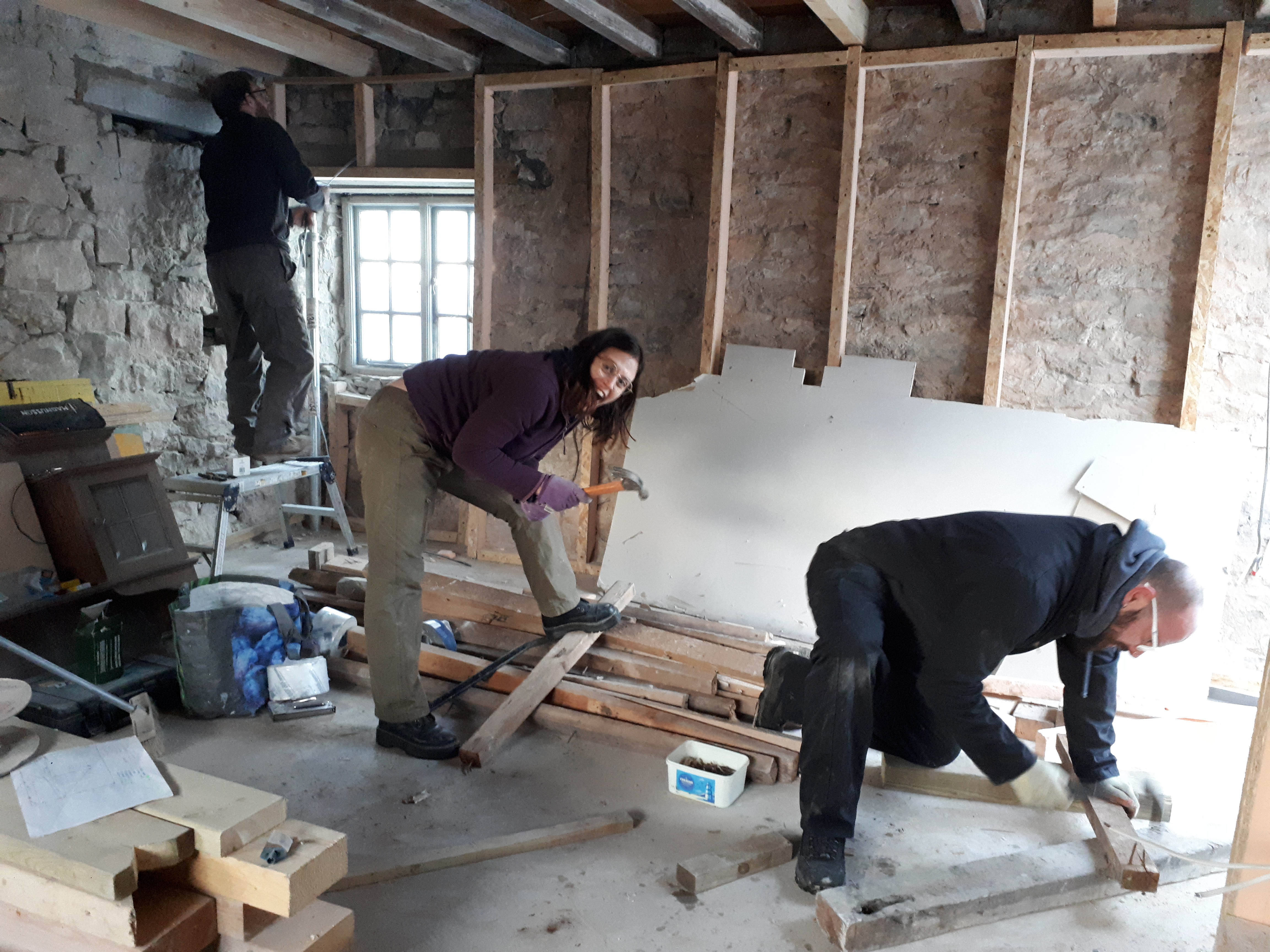
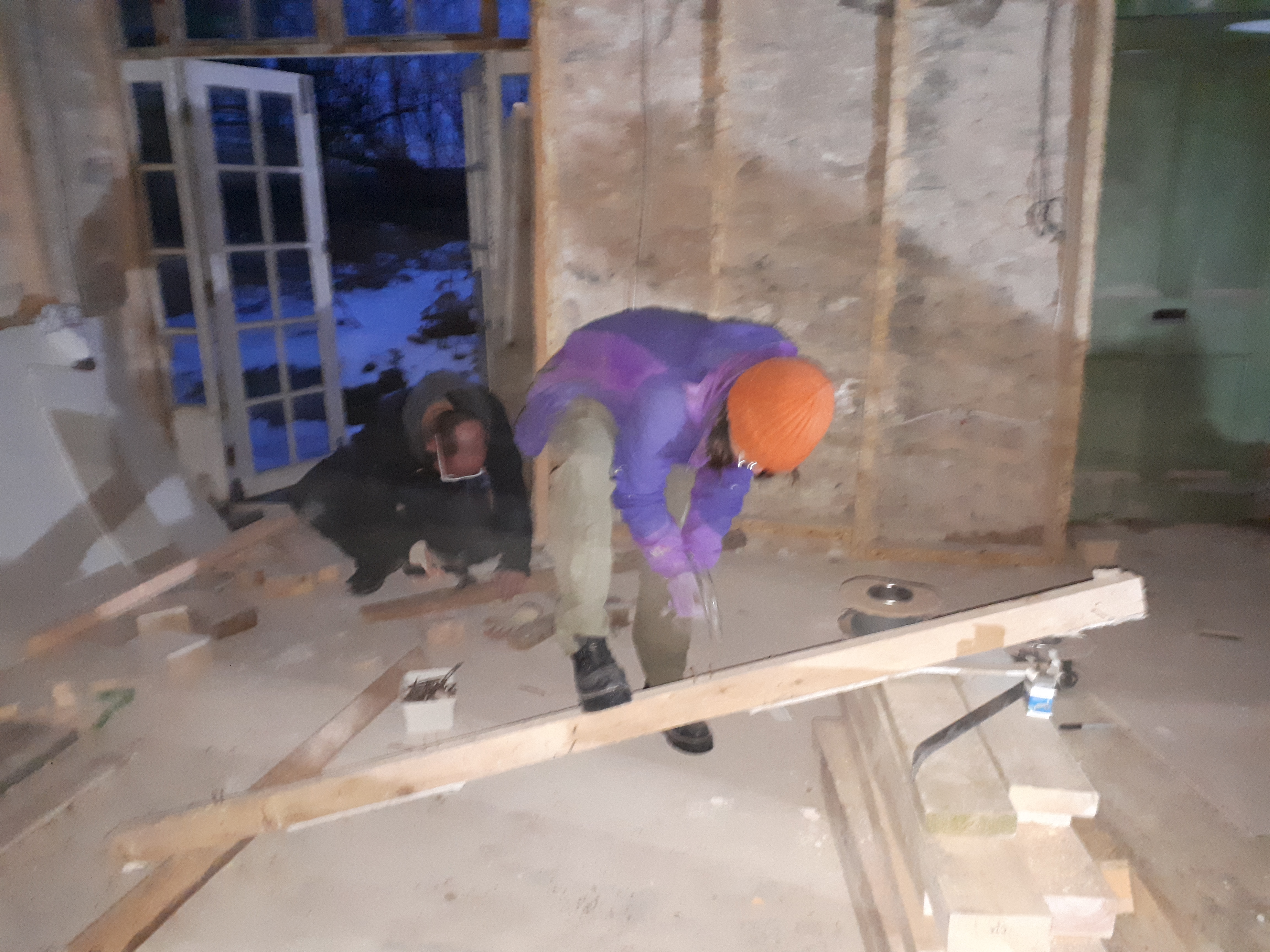
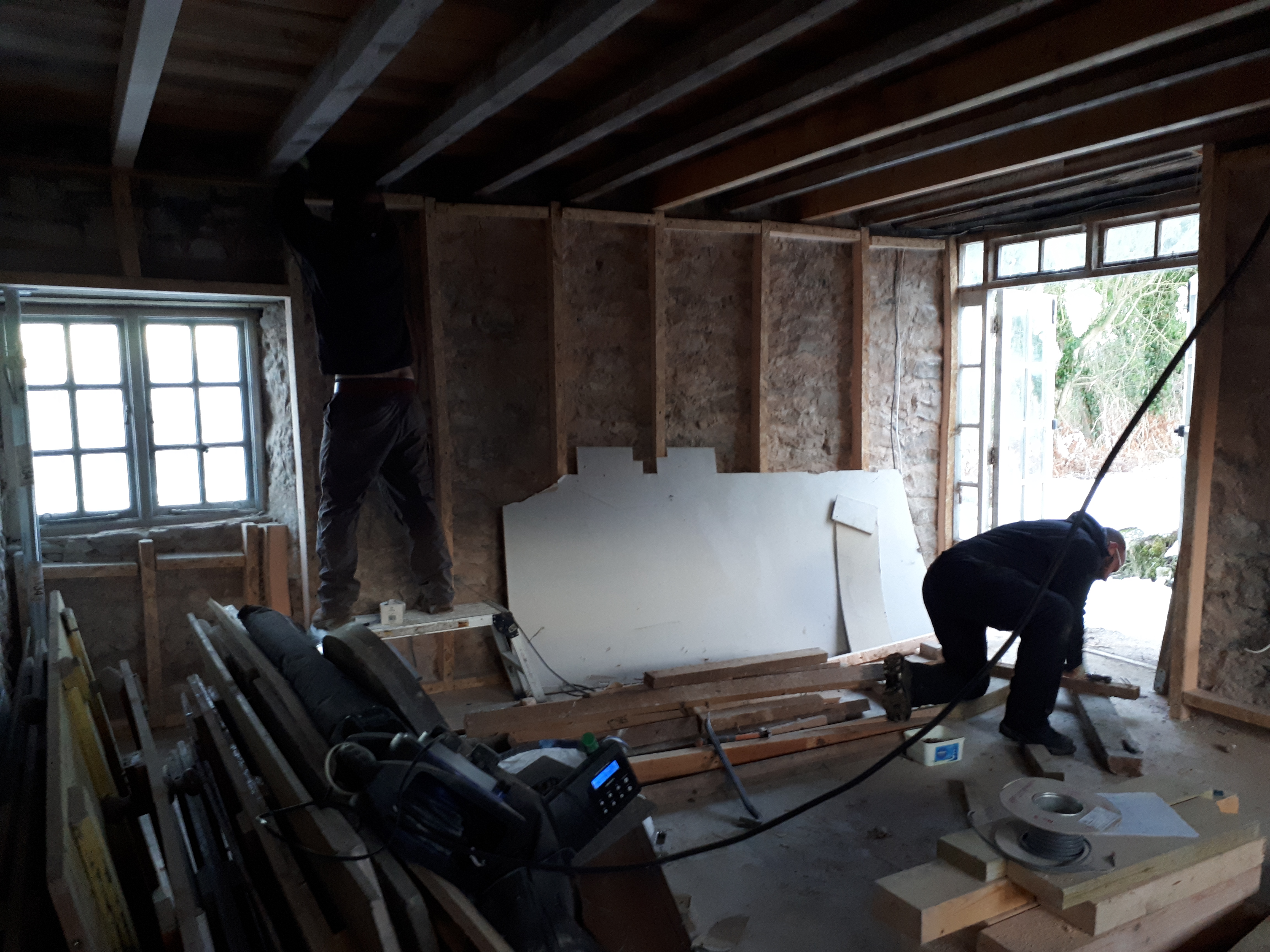
Towards the end of the day the cavalry arrived, with my brother Luke and my sister Anna appearing to lend a hand. They got to work denailing the remaining woodpile, ready to be reused in and around the house. Though adding some work in the short -term, such thrifty recycling is saving us a small fortune in buying new wood.
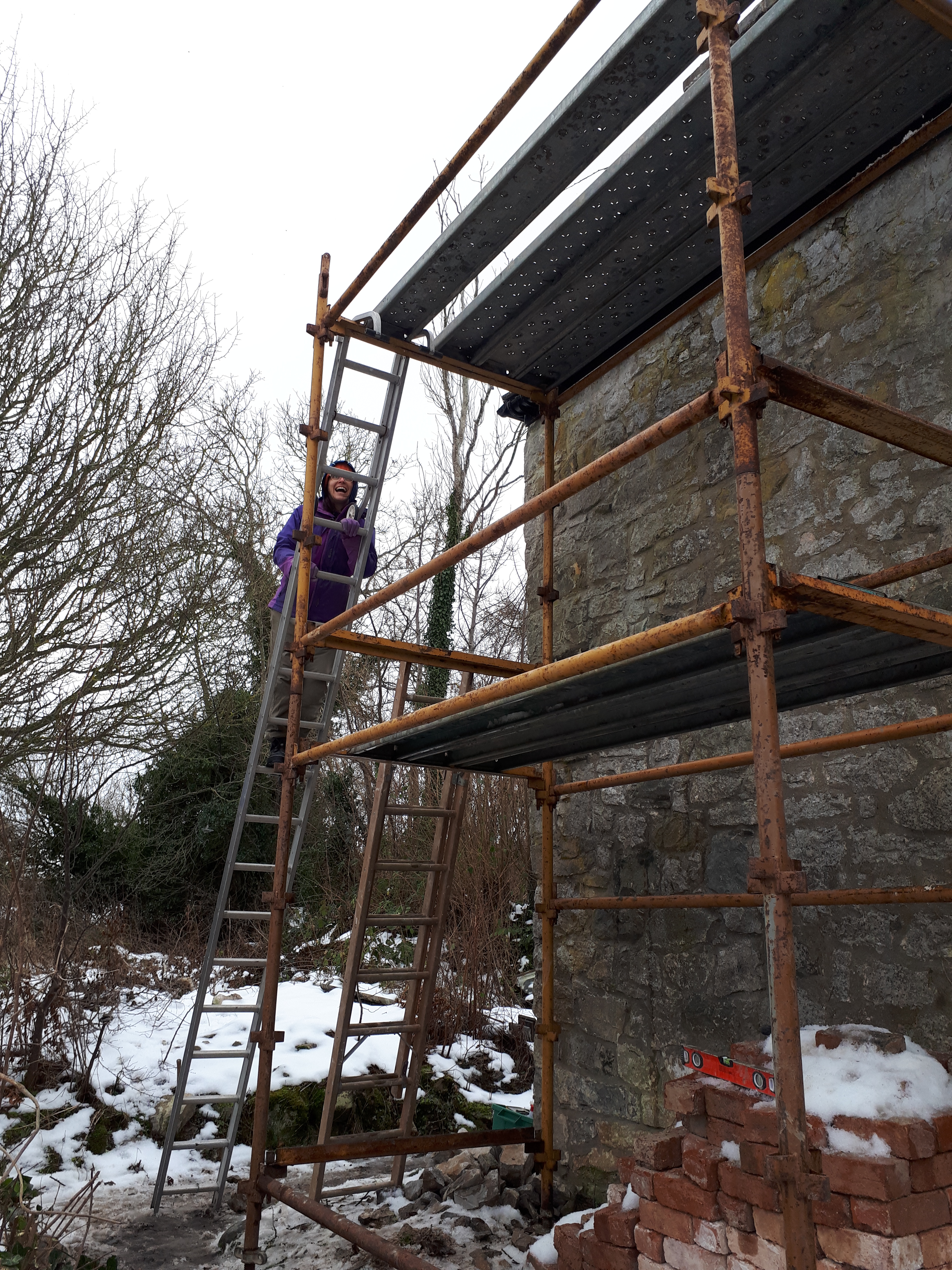

On the Sunday, Luke and Anna were dragged back for more work, while Jay was let off for good behaviour. Having celebrated the dismantling of the scaffolding a few weeks before, Chris and Luke were forced to rebuild a tower in order to inspect the chimney. A slight damp wall below has made us aware that the lead around the chimney still has a slight leak.
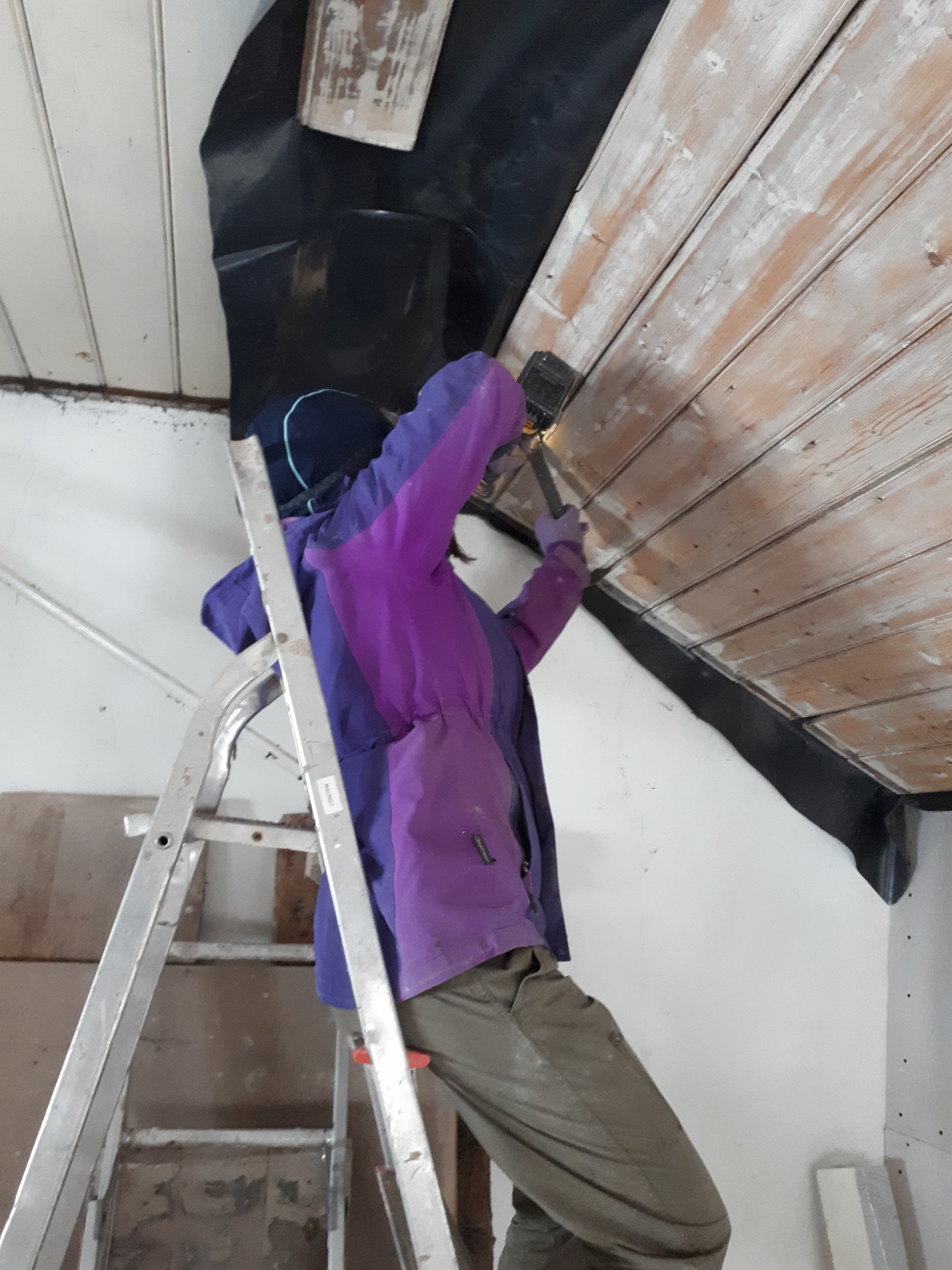
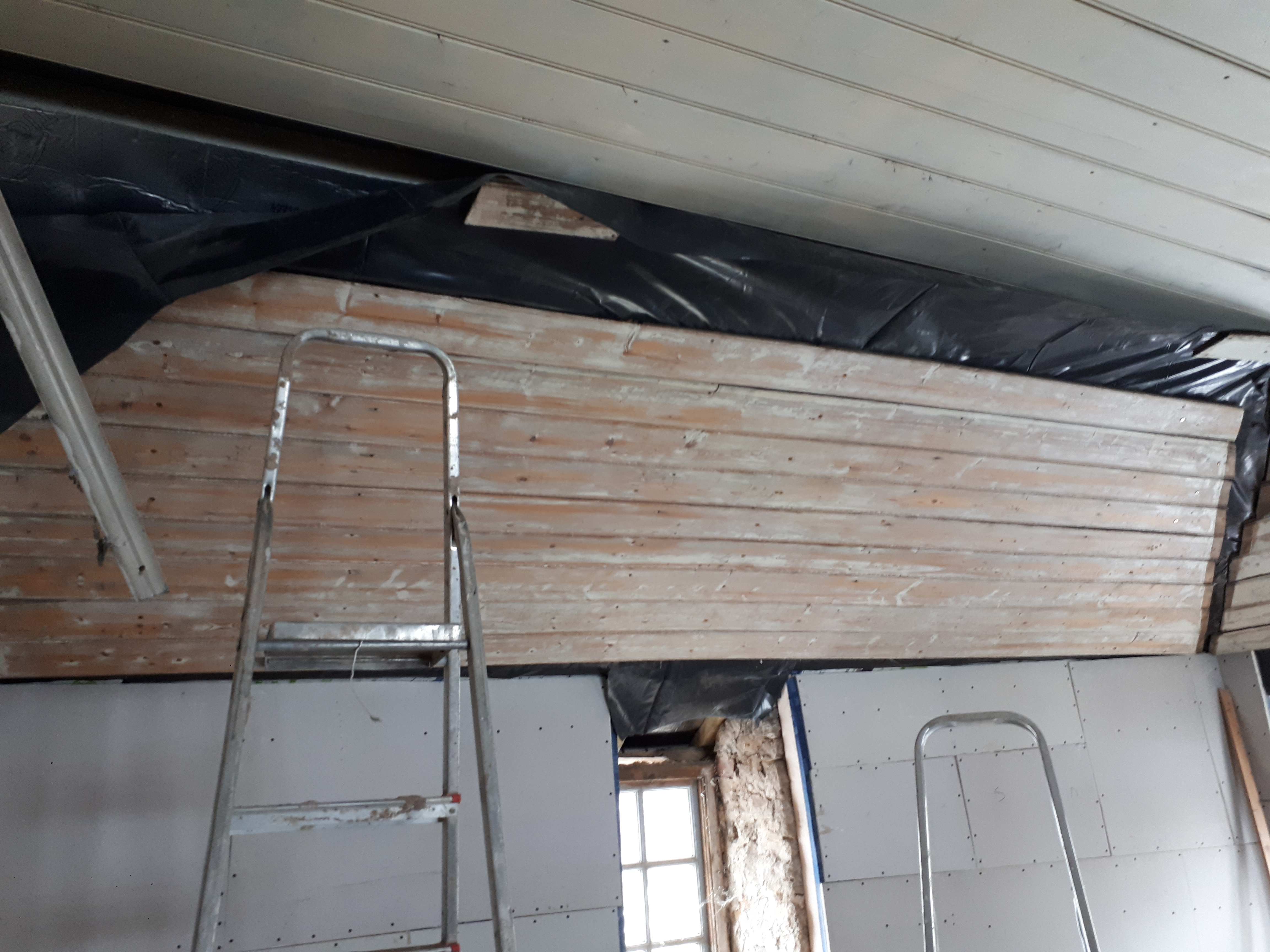
Myself and Anna meanwhile cracked on with the ceiling. Somehow we came aground on several attempts, unable to find the rafters below with our screws. Nothing a bit of filler can’t fix though.
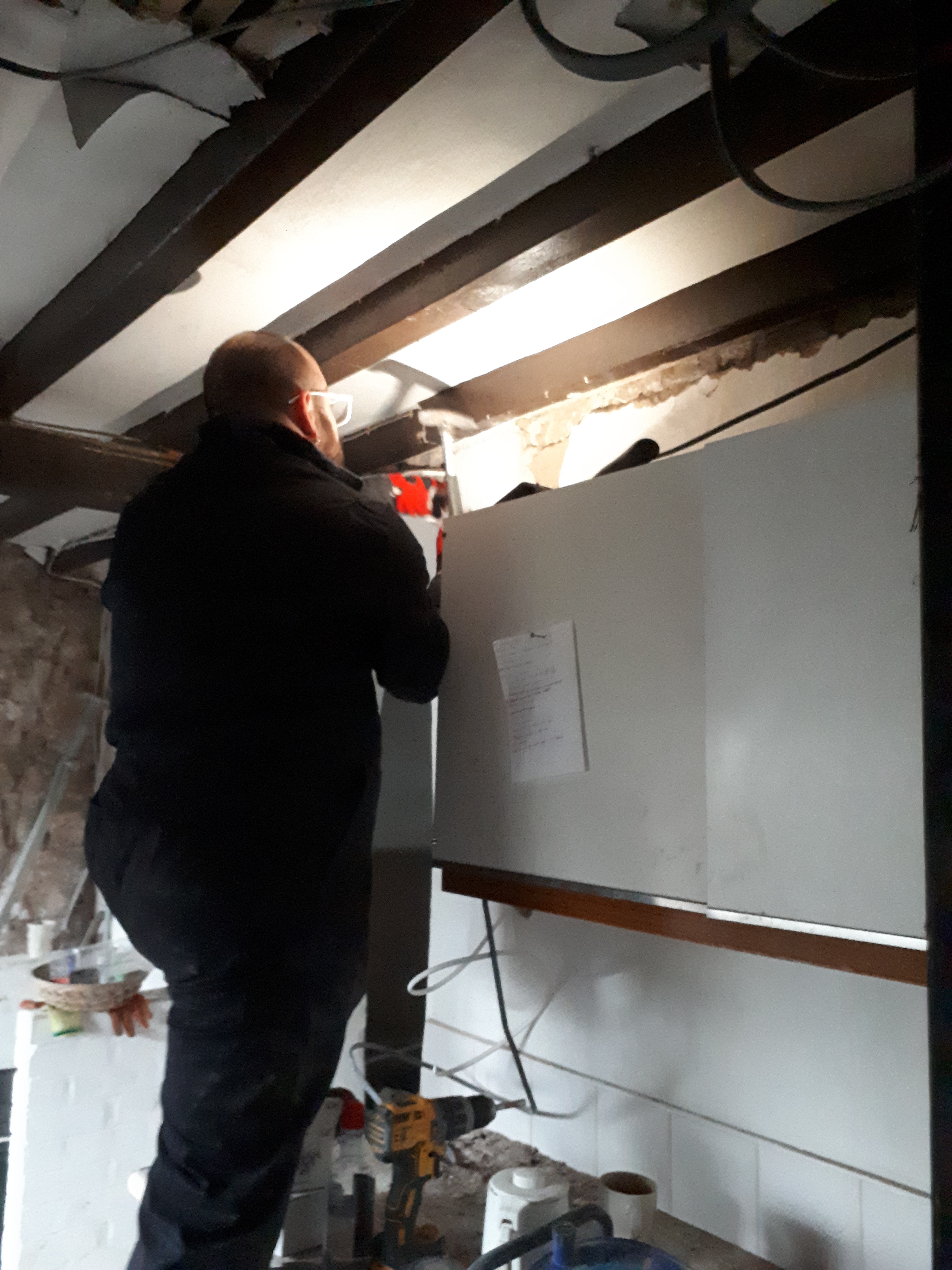
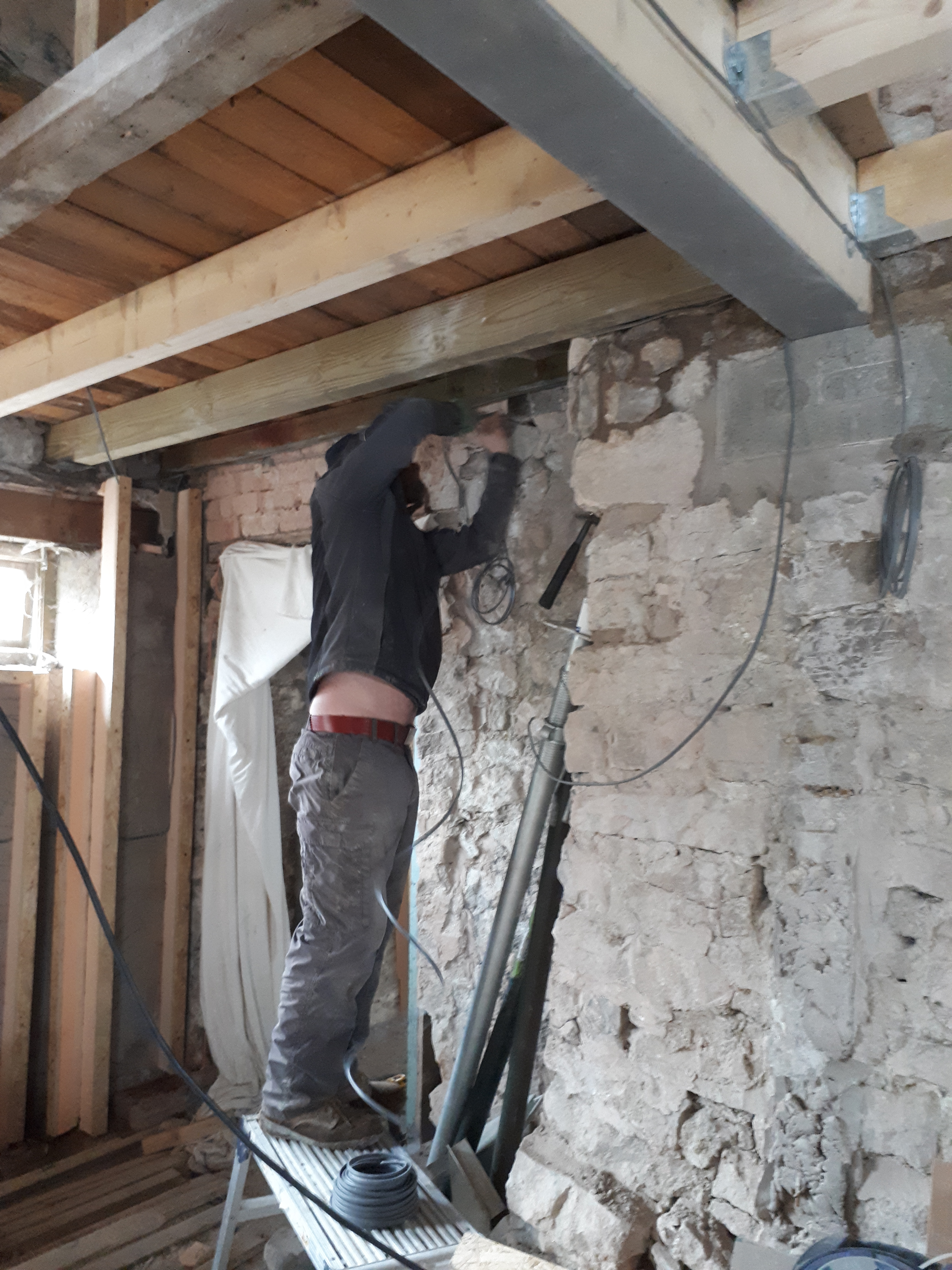
With the chimney inspected Luke and Chris went back to electrics, laying the complex lighting cables across the house.
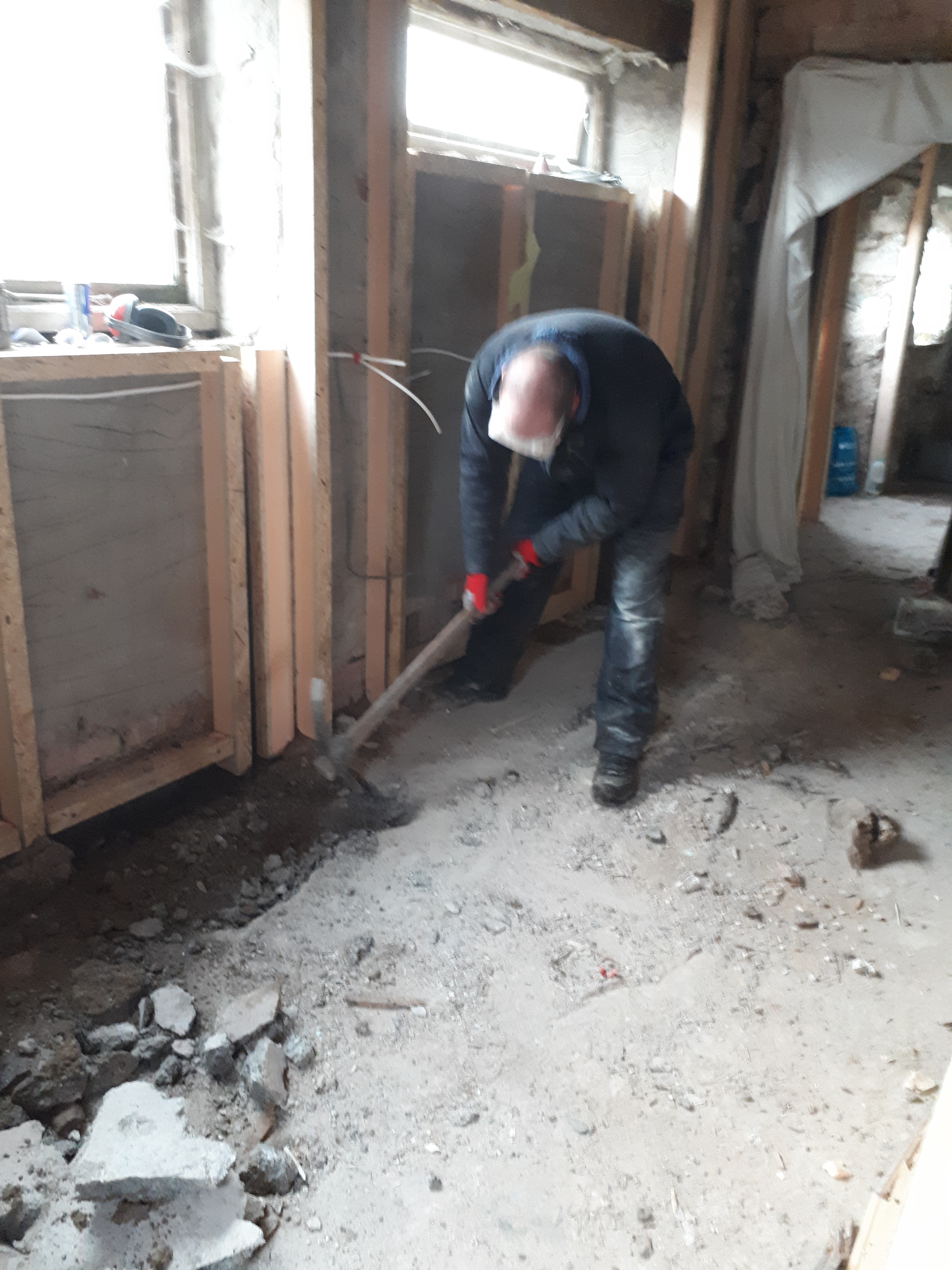
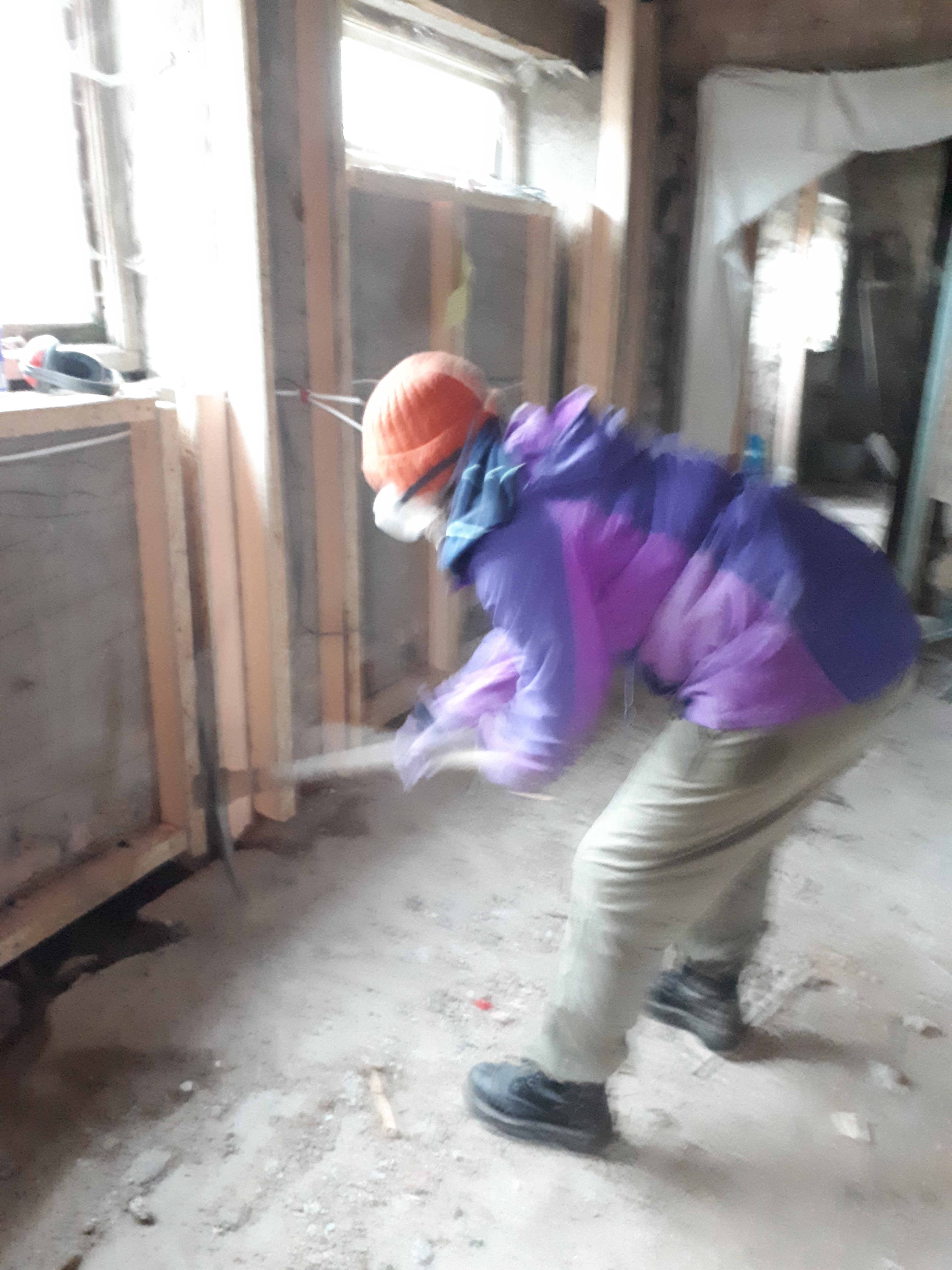
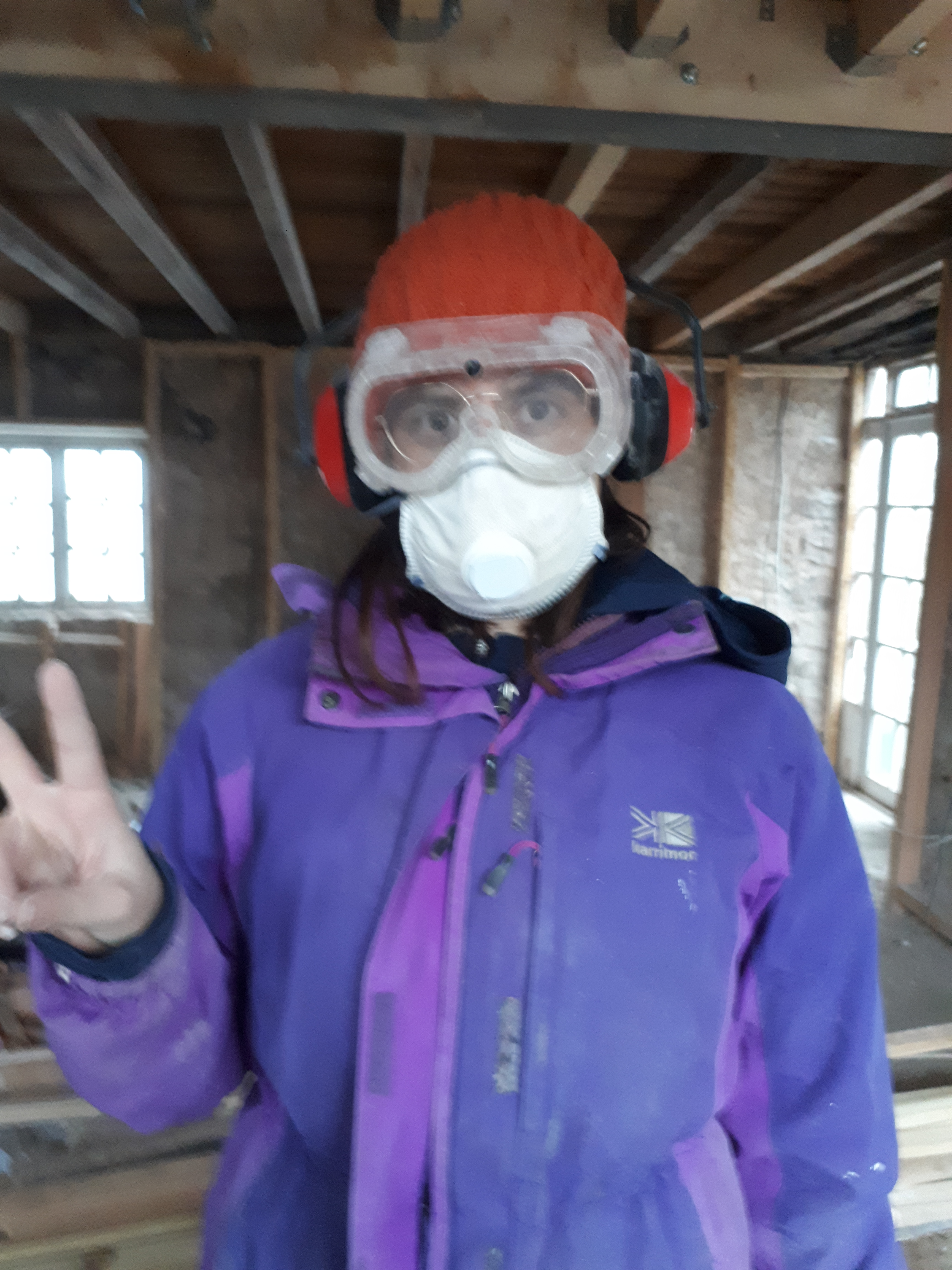
Wanting a change of pace we then attempted to break up the concrete floor in the kitchen/diner. While we did make some progress with the pickaxe, Luke particularly having an impressive swing, it was decided a more heavy-duty machine might save some aching bones on another occasion.
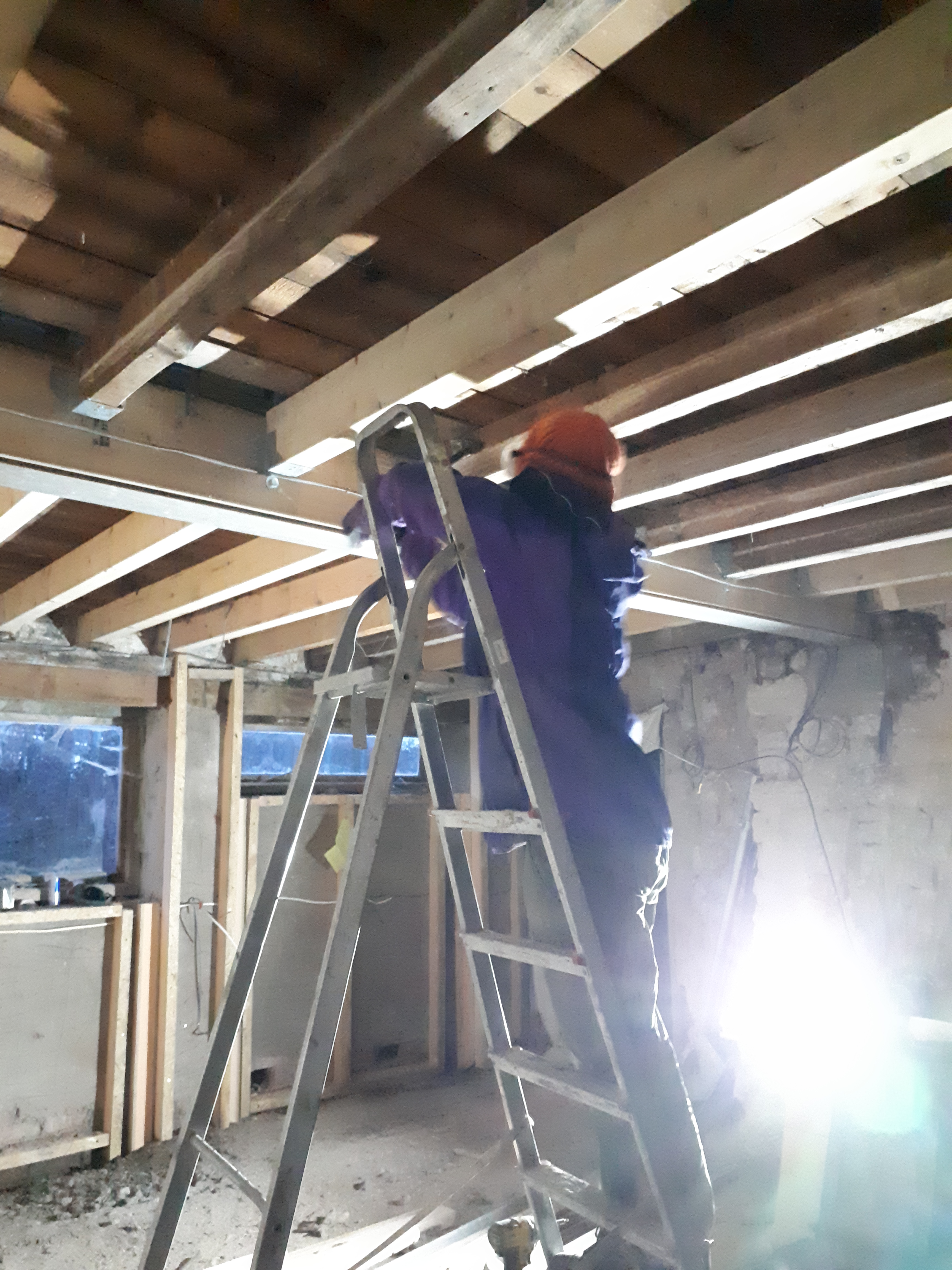
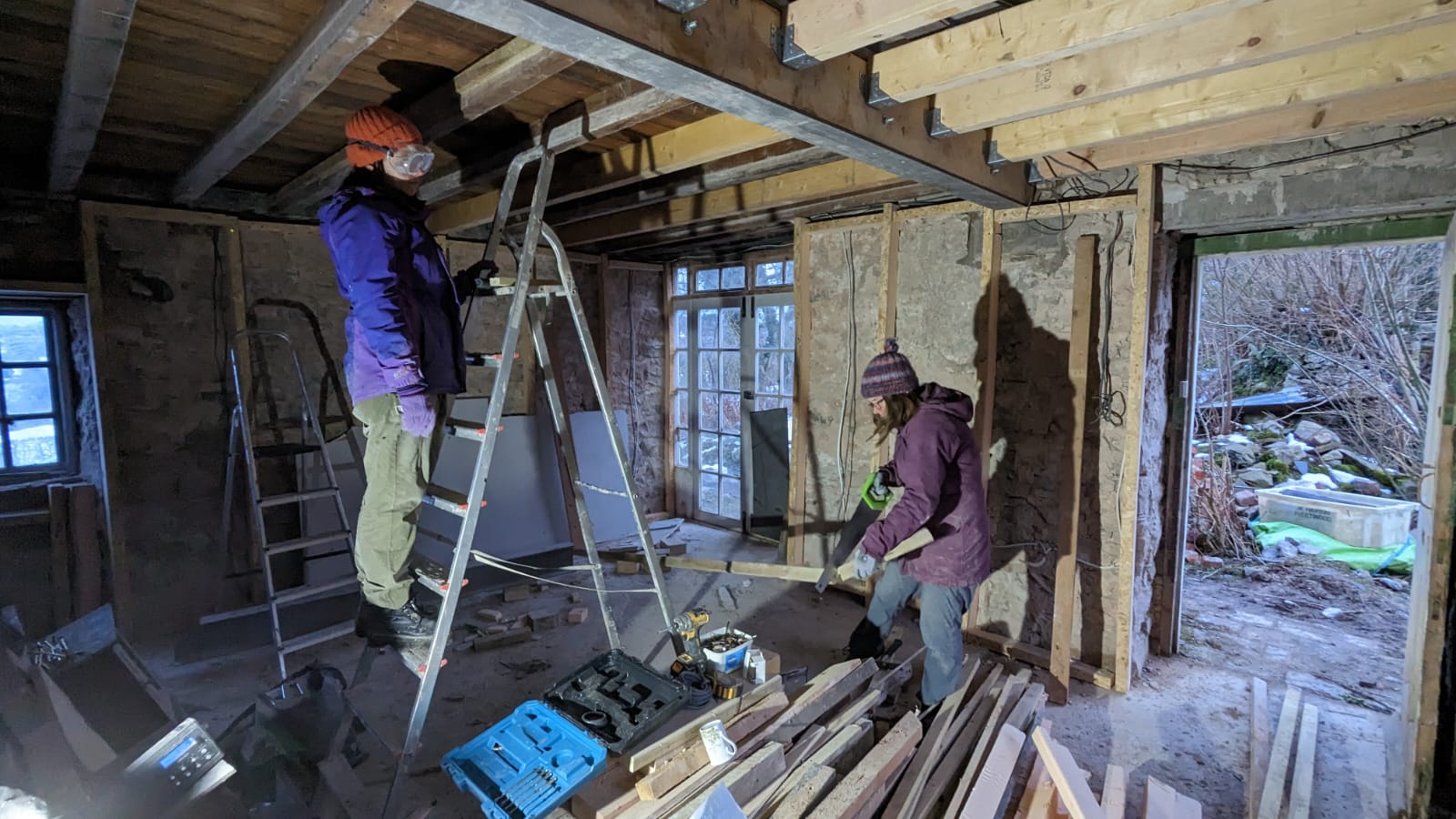
Finally, myself and Anna began to put up the batons on the beams in the kitchen/diner, ready for the new ceiling to go in.
Phew – it’s amazing what a few volunteers and a couple of paid contractors can do to move a project along. With our next weekend assigned to sorting out our current house ready to go on the market, we should see even more magical transformations next time we return. It feels almost lazy. But I can live with that.
-
Tidying up
After our mammoth DIY holiday at Christmas, going back to weekends feels very slow. Still little by little things are coming along.
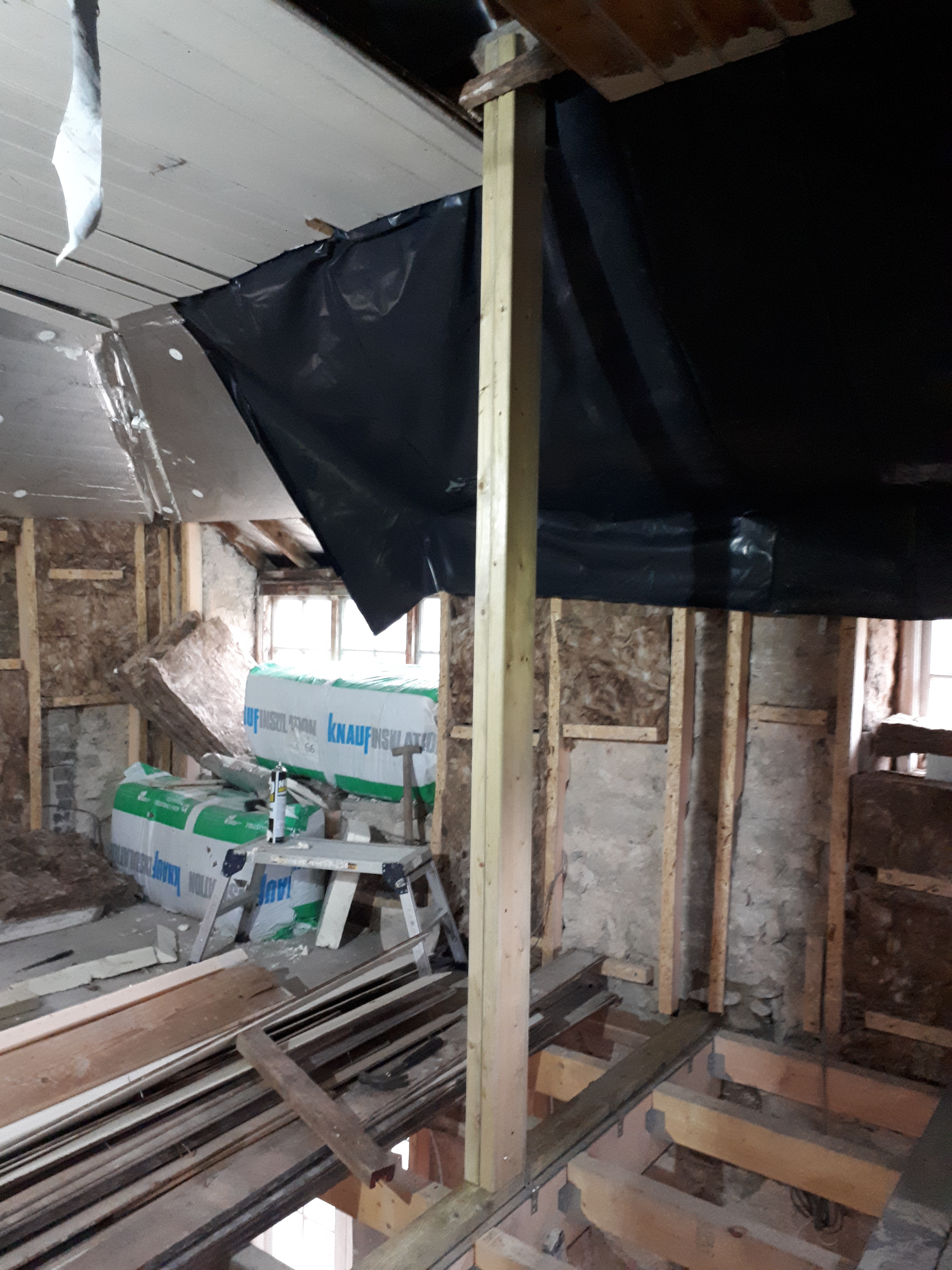
The main reason our structural engineer recommended we kept the brick wall in the center of the two upstairs bedroom, was because she thought the end roof purlin might be resting on it. While it hadn’t moved since the wall has come down Chris spent an evening installing a support to be on the safe side. As the steel didn’t have holes to attach wood to he made brackets to attach a plank of wood to the side of the structure below. This will allow us to attach a stud wall later.
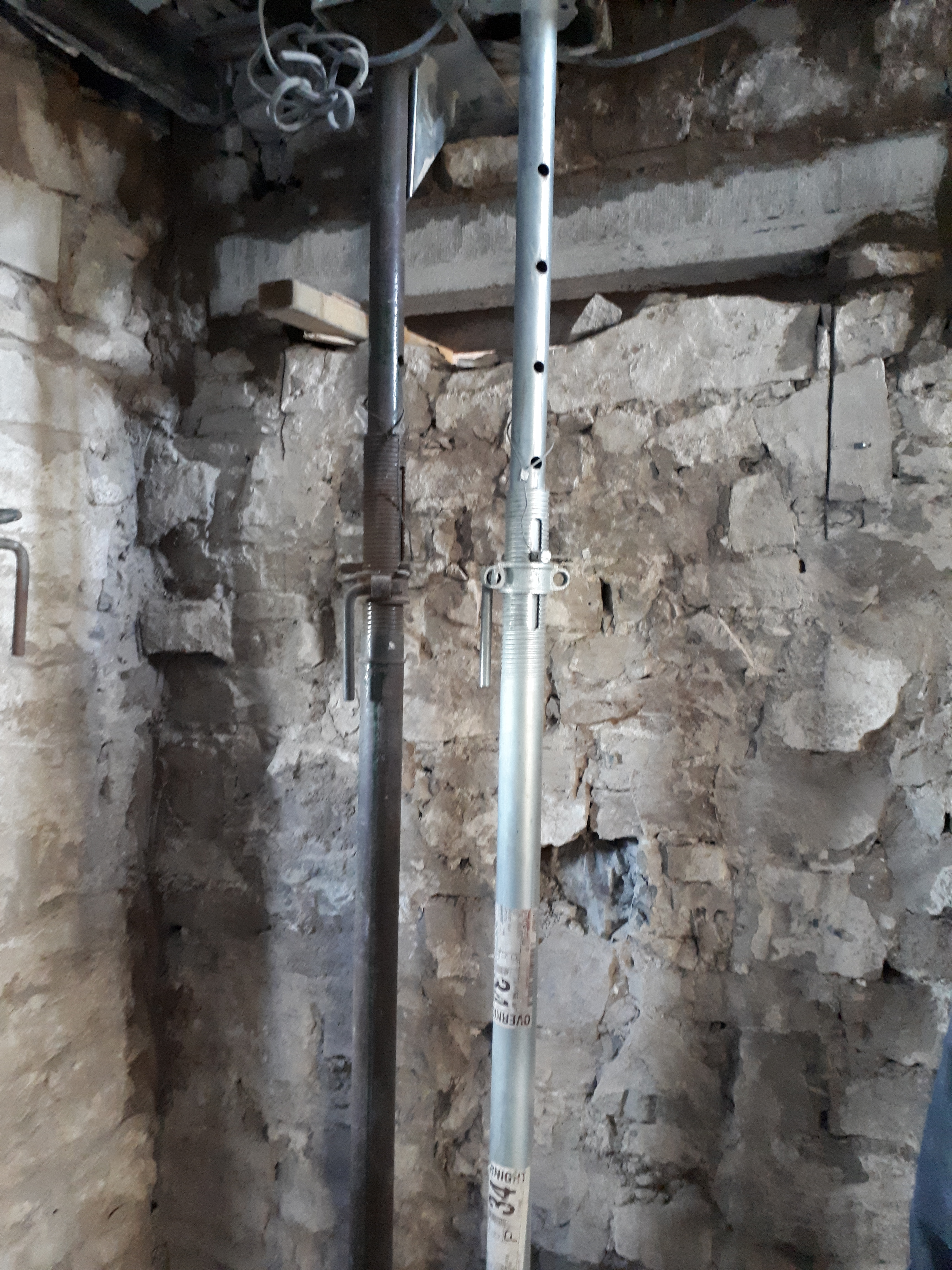
Having started on one side of the doorway from the kitchen/diner to the lounge, and waited for the mortar to harden, Chris now installed the second lintel on the other side. Once this lintel has set we will be ready to cut out the doorway below.
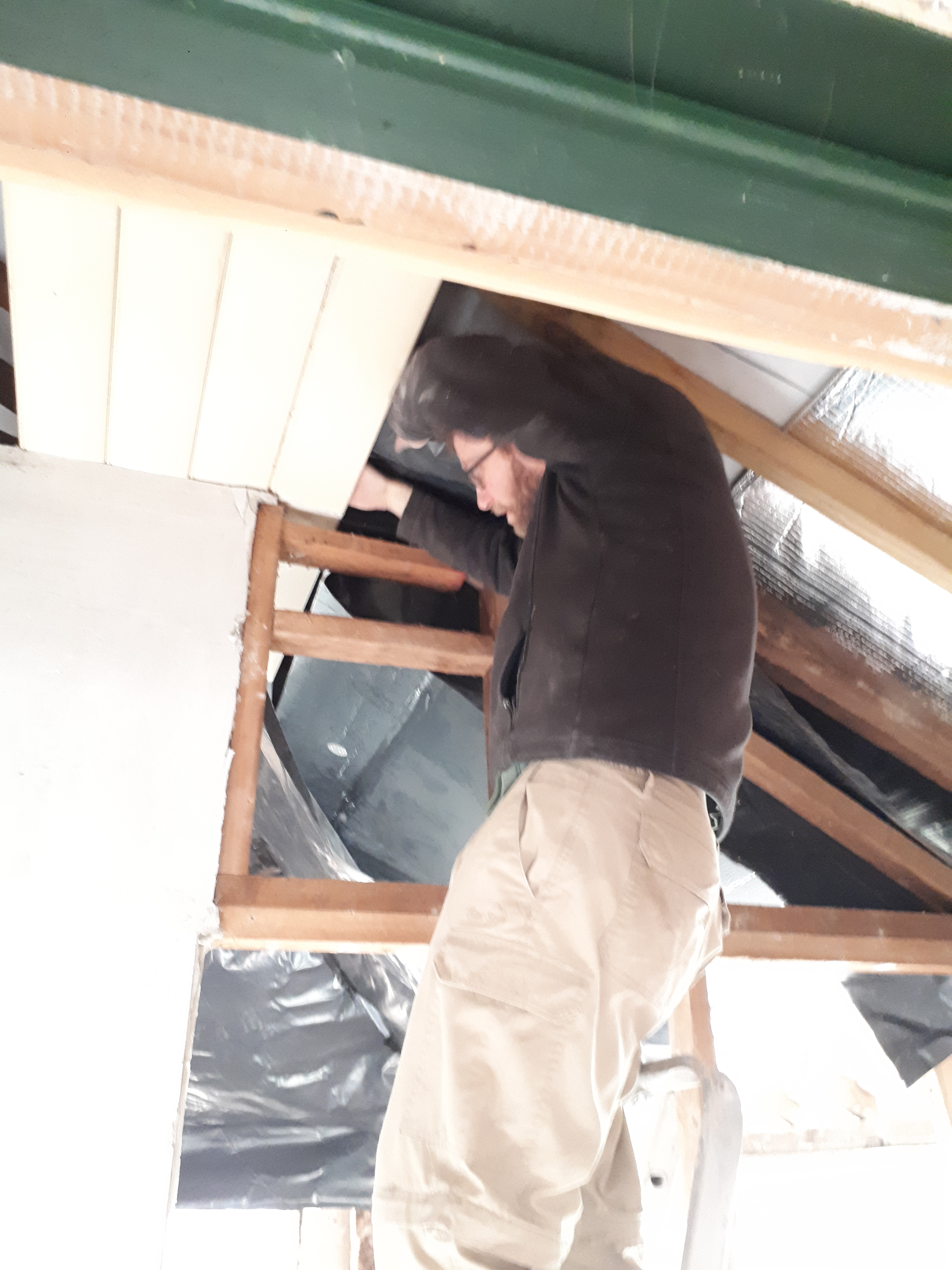
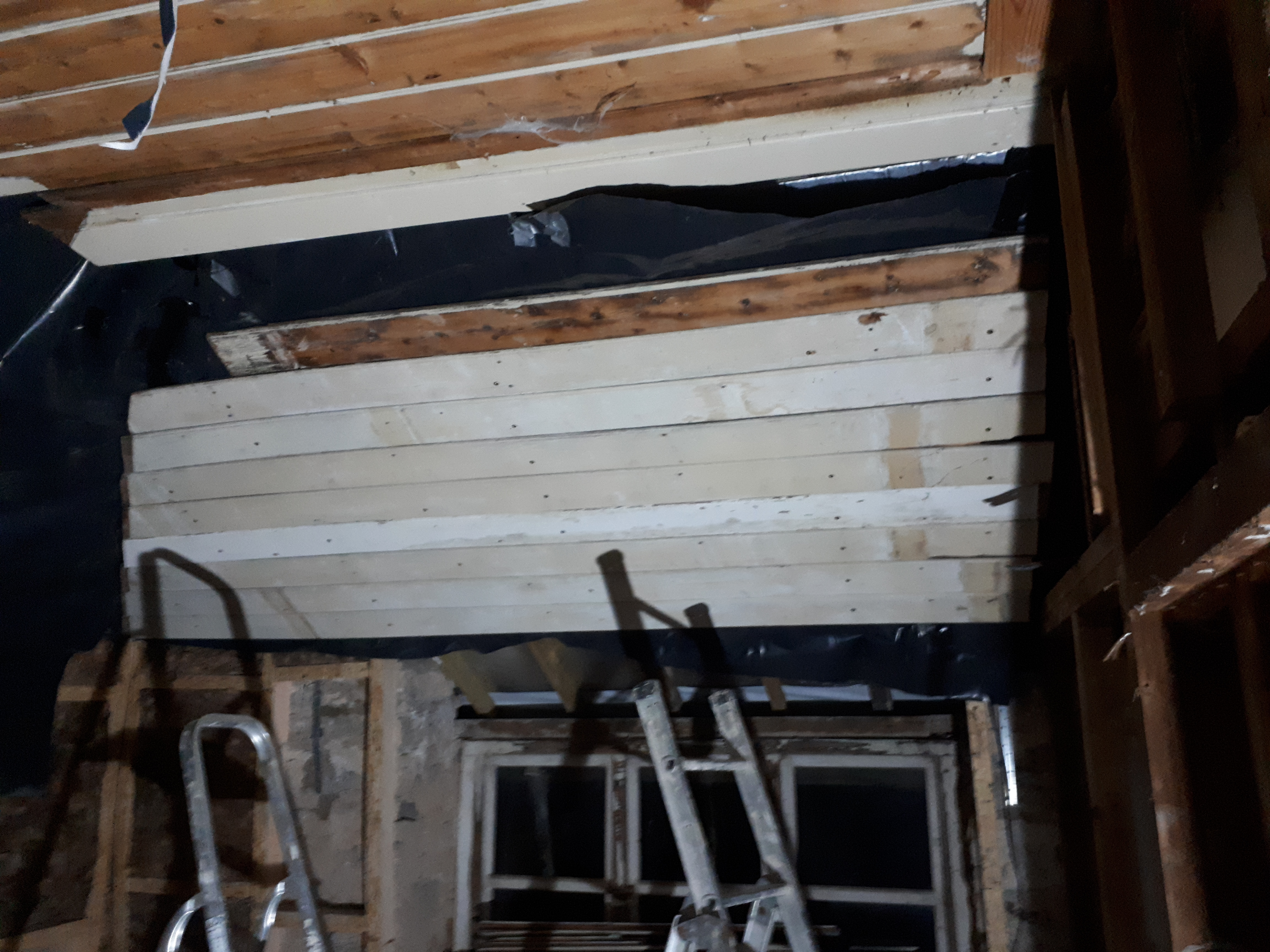
We continued covering the ceiling with the old boards, though the missing floorboards in the middle of the floor meant we couldn’t get all the way to the top as we couldn’t position ladders far enough back.
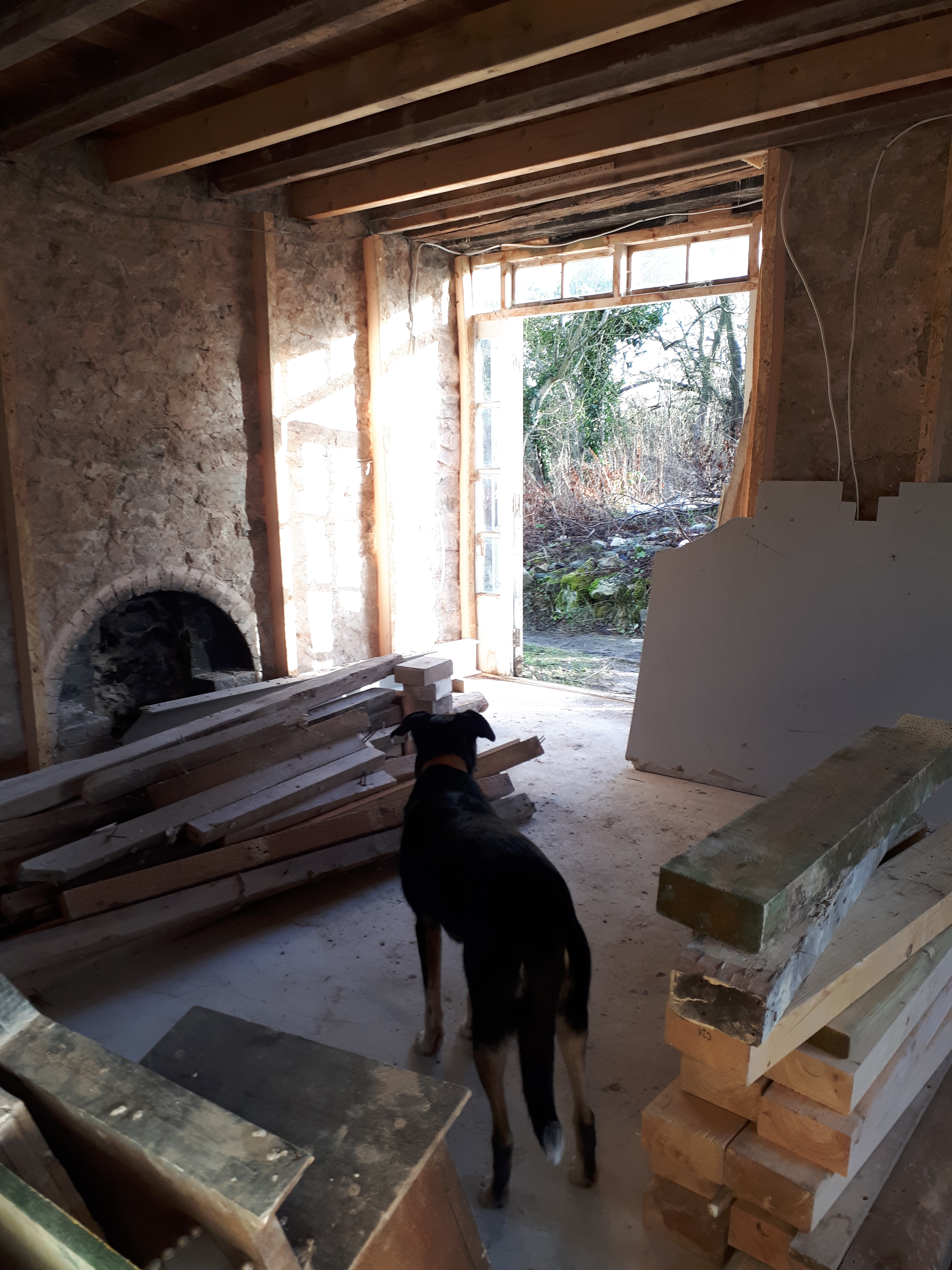
Finally, we spent most of a day tidying up. This included brushing up mortar and plaster from the floor, sorting wood, adding more waste to the skip, and finding and sorting all our tools. We also moved all items away from external walls. This is all in preparation of our grant provided insulation team, who are returning next week to continue insulating, boarding and plastering our external walls. Exciting times!
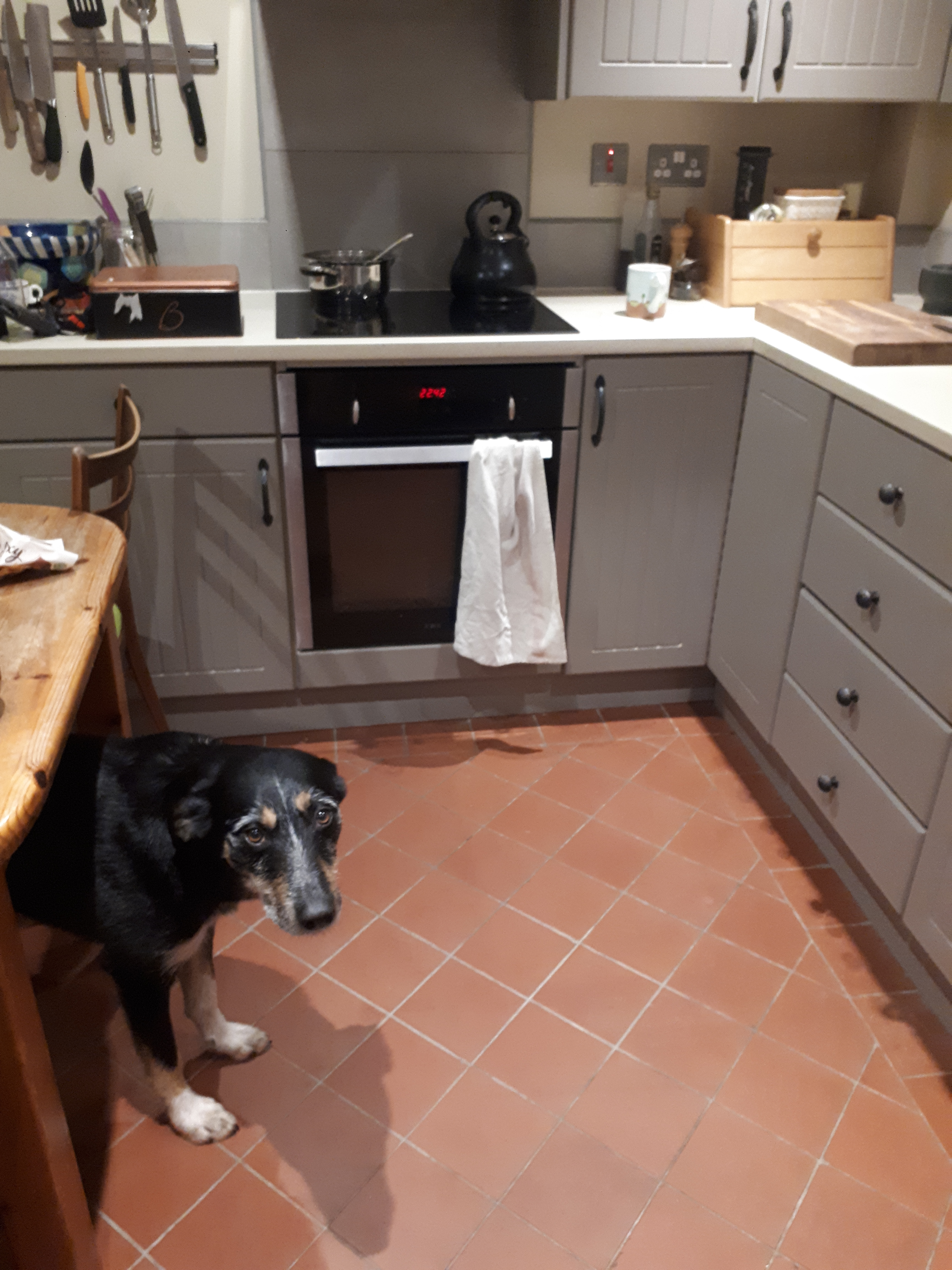
Now the structural work is nearly done we are getting into more detailed considerations about the lay out. At home Chris rearranged our kitchen to demonstrate how wide the gap between our island and our kitchen units will be. I’m still mulling it over, as a narrow kitchen is the worst feature to have in a house. Might need to spend some time pretend cooking in our new space to decide.
-
It’s Christmas?
So far, in our renovation journey, we have only been able to take two weeks off, the rest being weekends and bank holidays. Those two weeks were both devoted to the roof. Now, with the new holiday year dawning, we were finally able to take another week off for inside work. That along with our Christmas holidays, meant we had nearly two full weeks to get on with some big jobs.
We started our time off with a job that had previously frustrated us; the insulation. Luckily the curse seemed to have been lifted, and we managed to get all the boards up on the various eaves in a day.
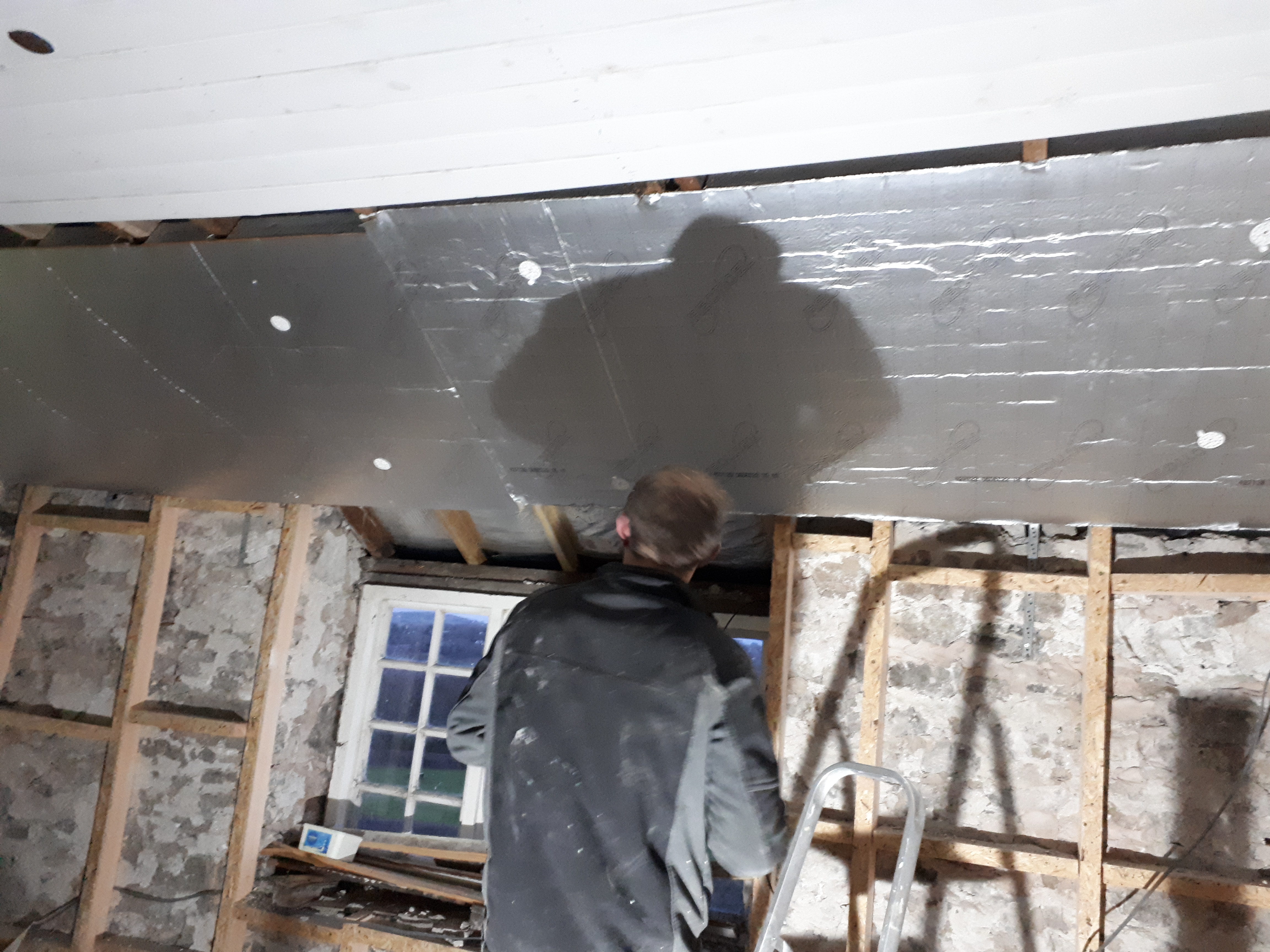
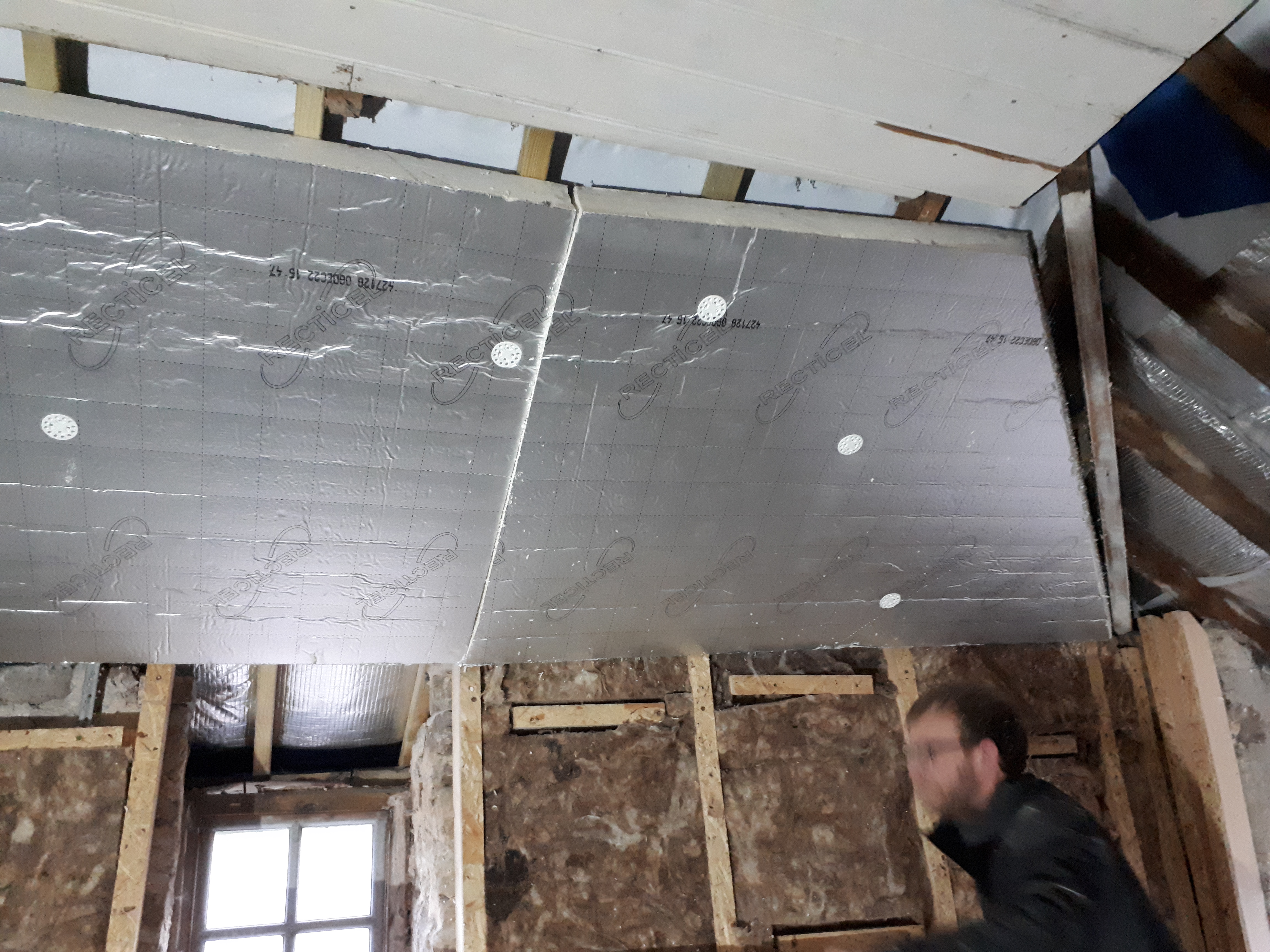
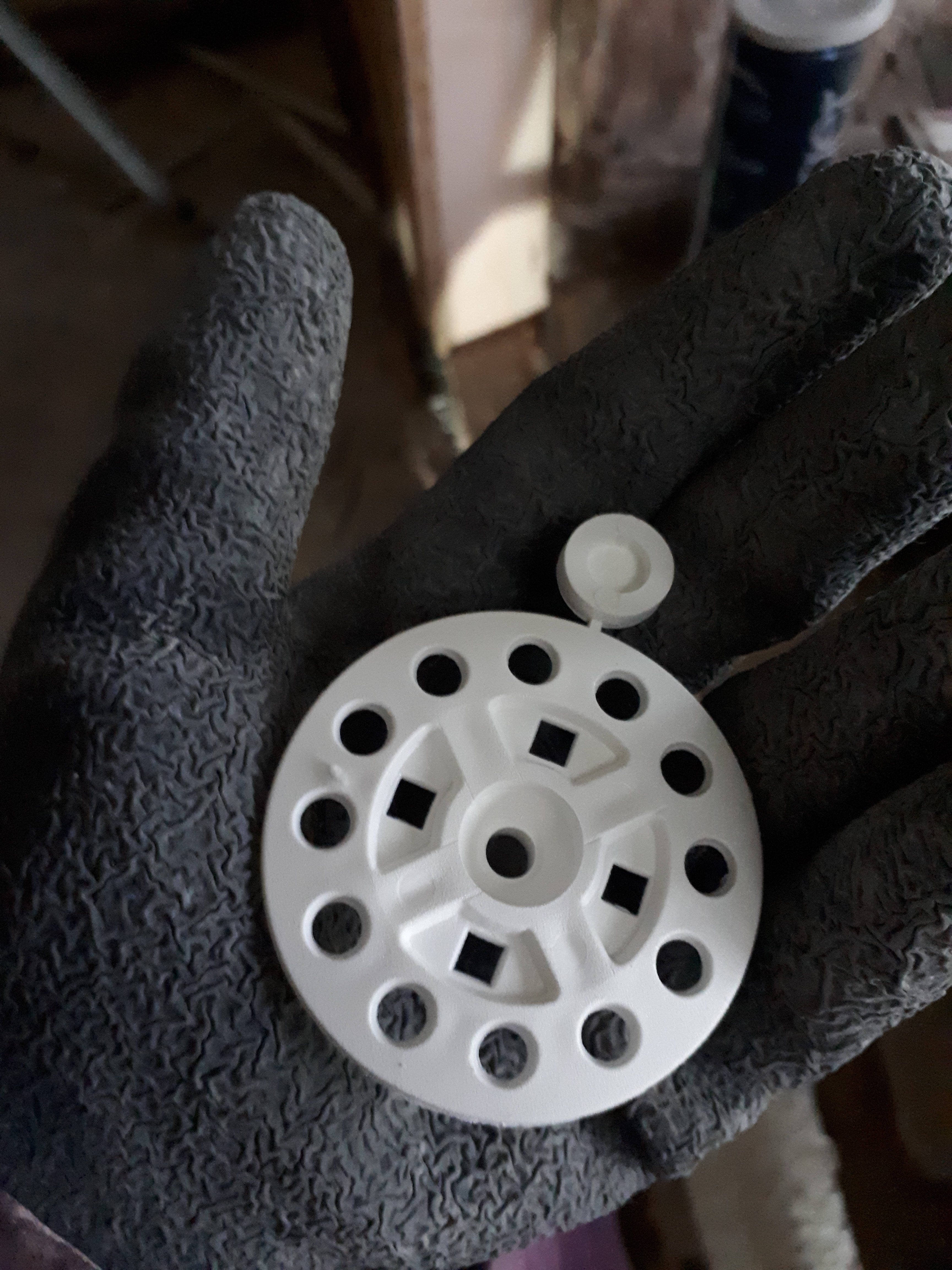
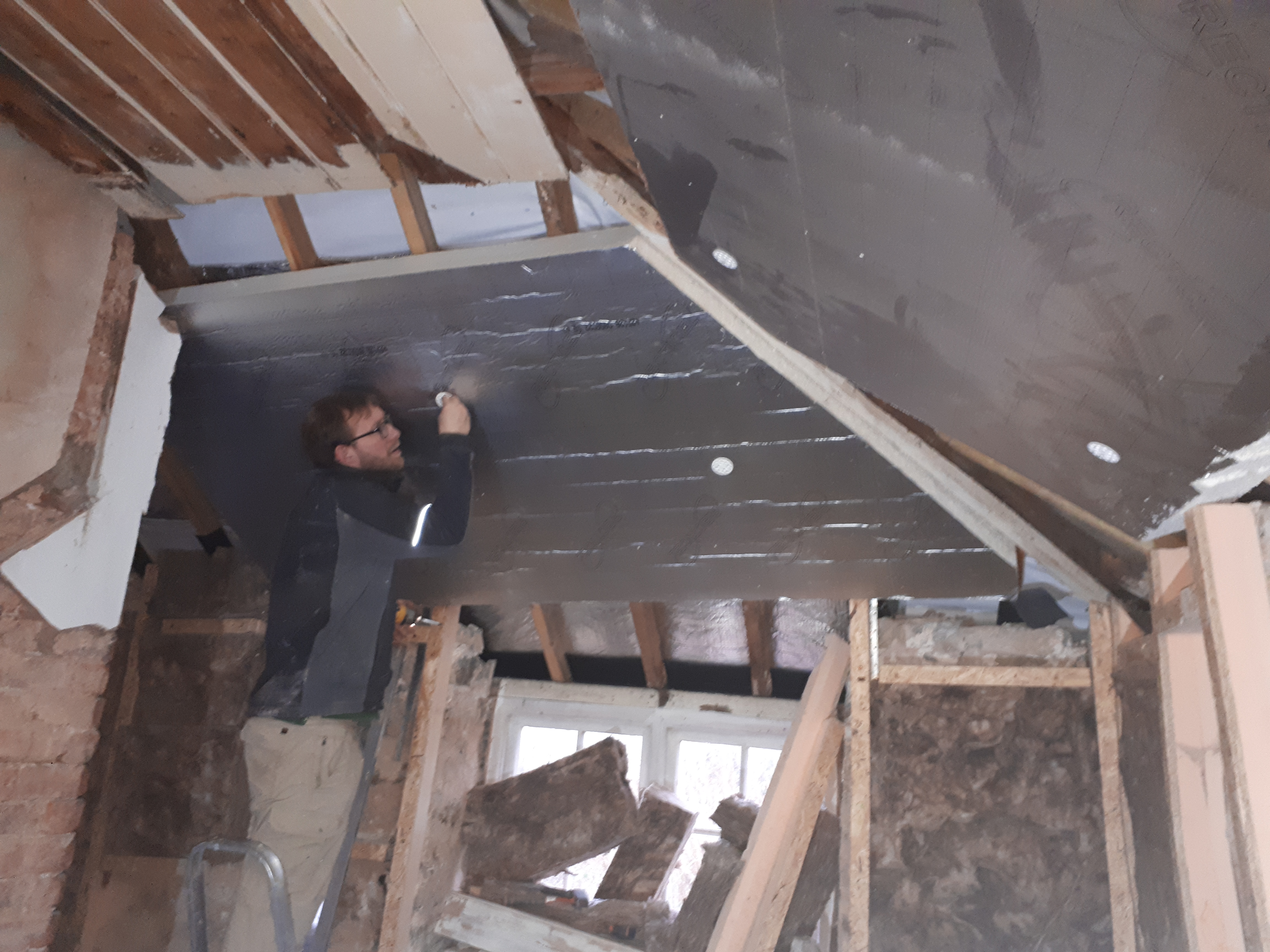
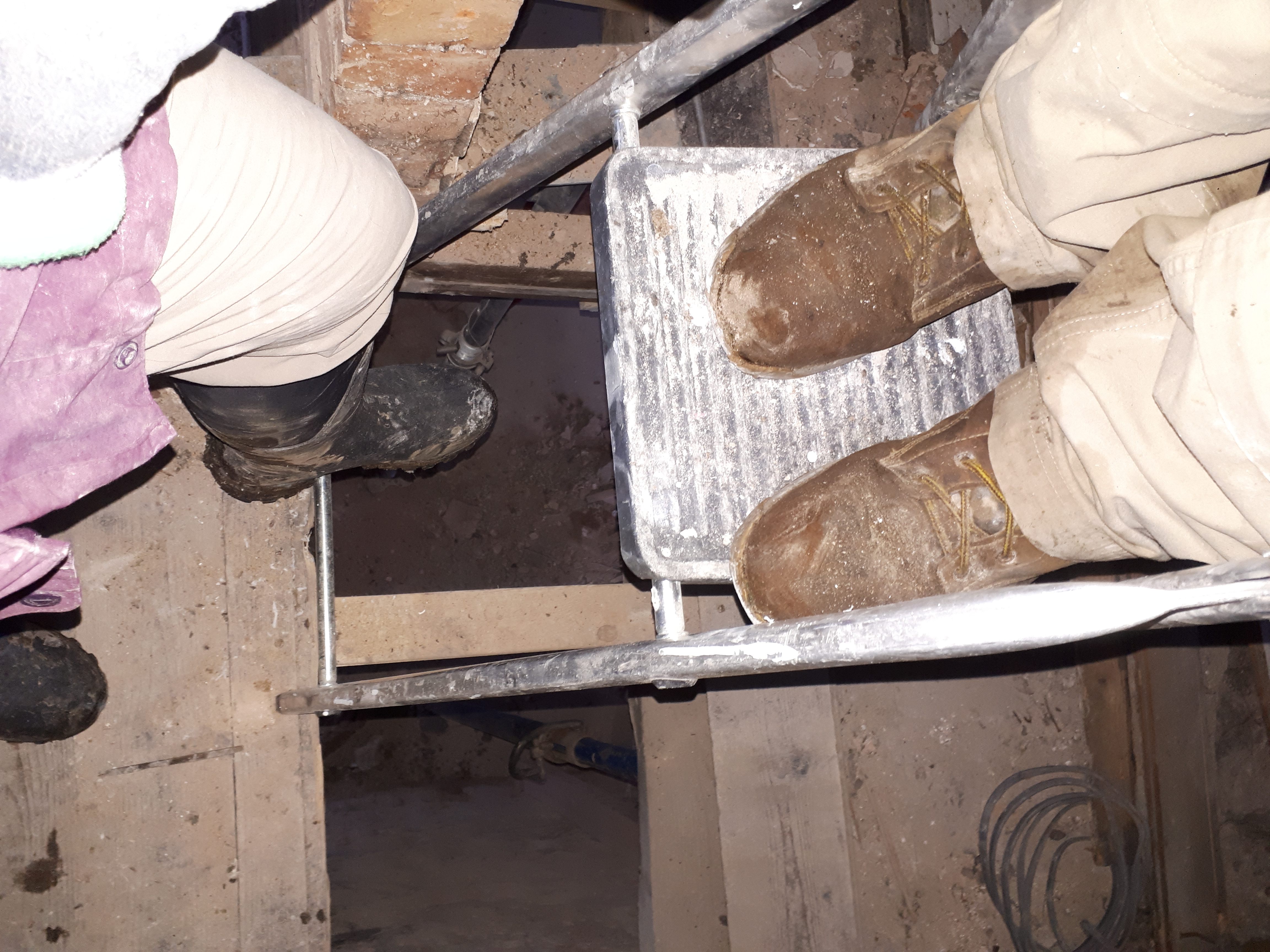
The only slight worry was Chris’s insistence that his ladder positioning, over a gap in the boards, was perfectly safe.
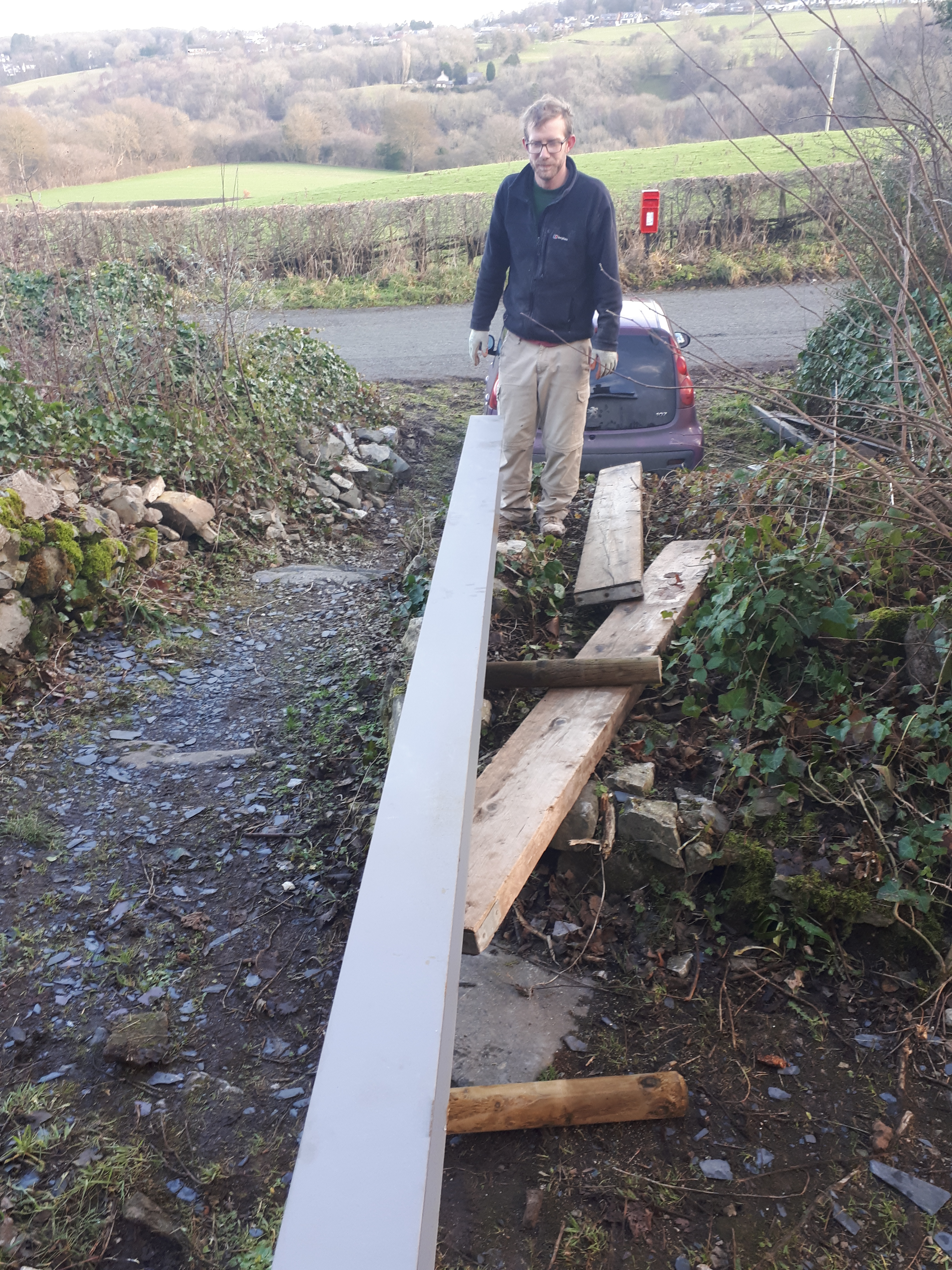
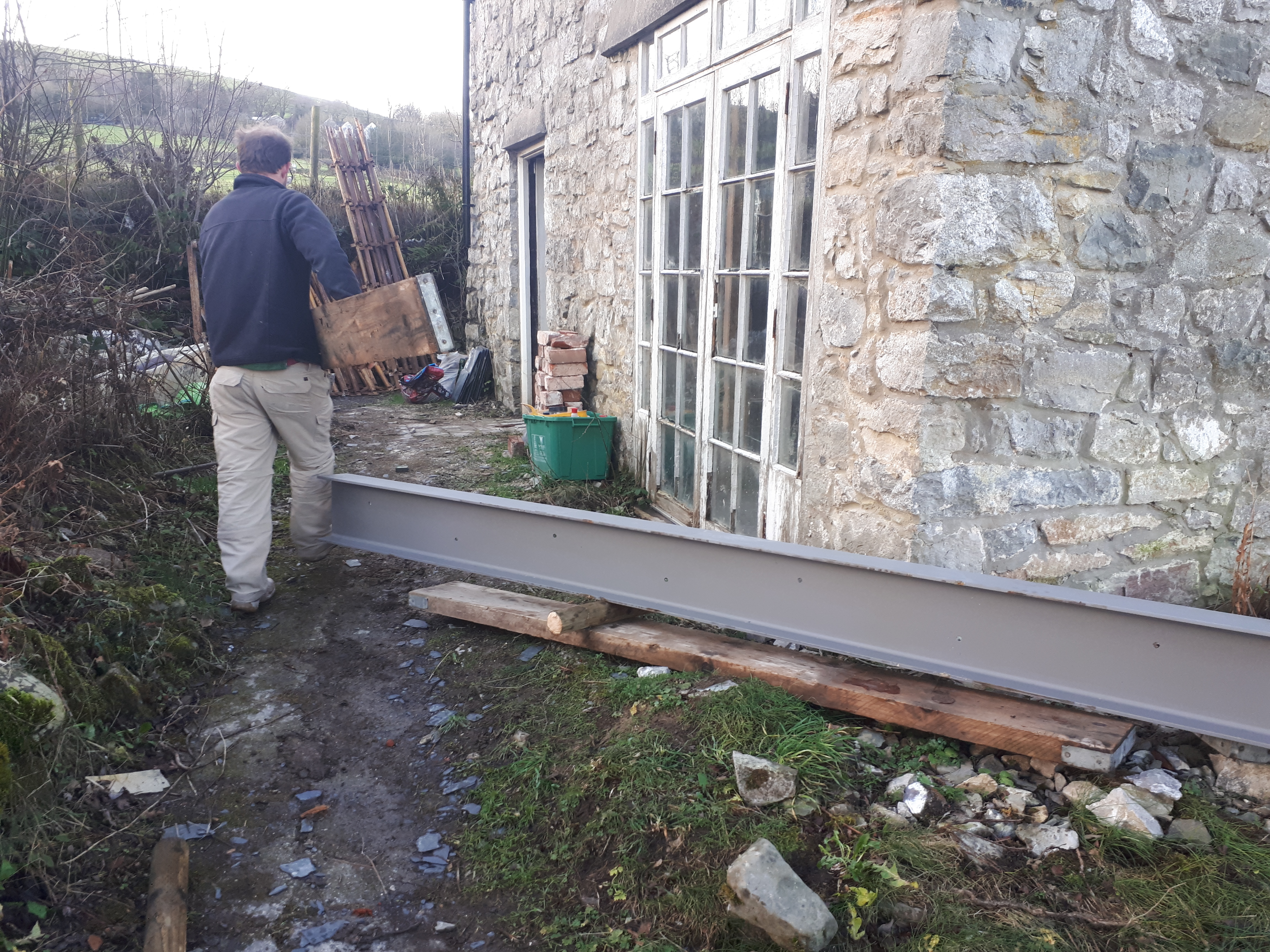
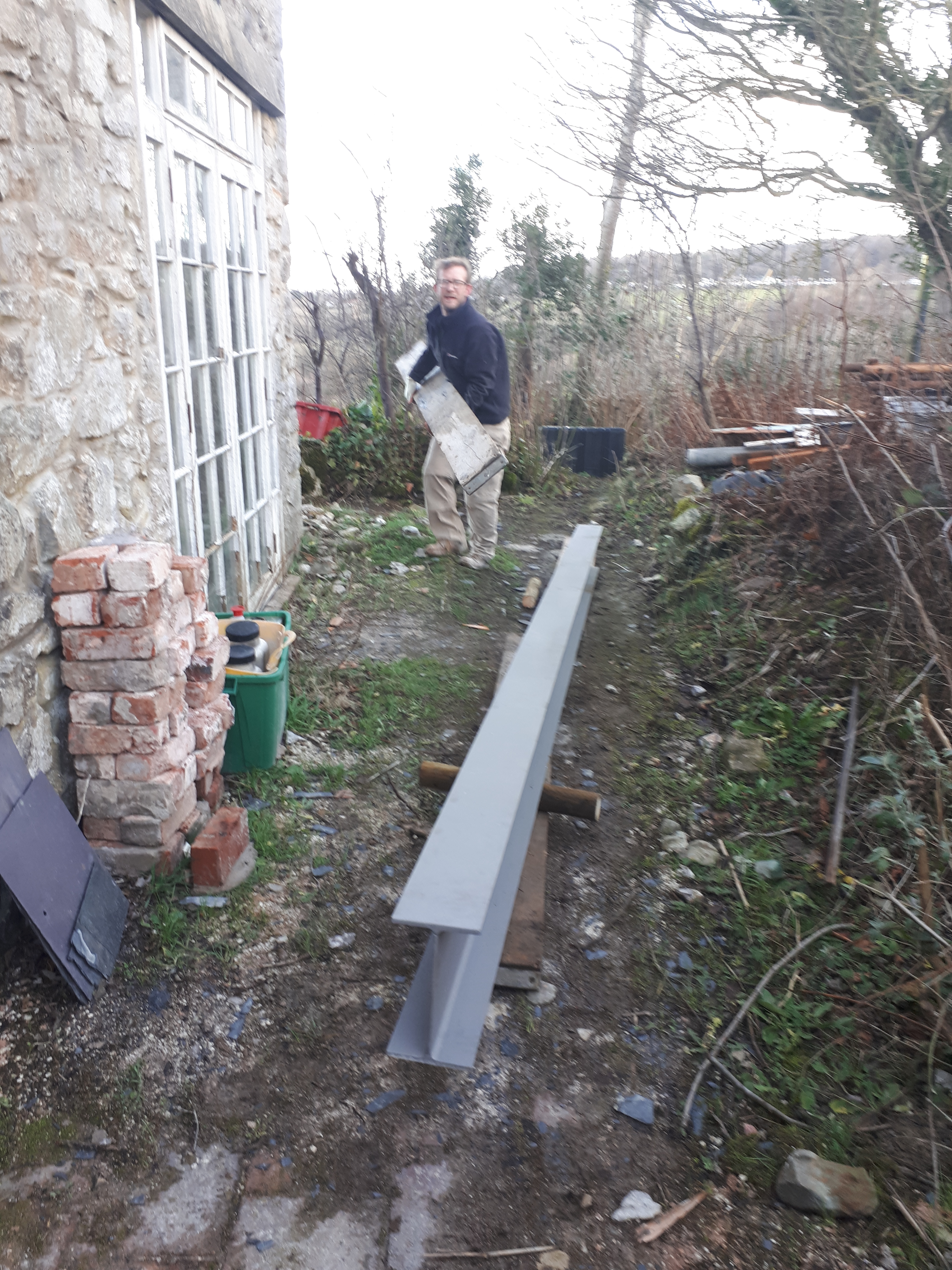
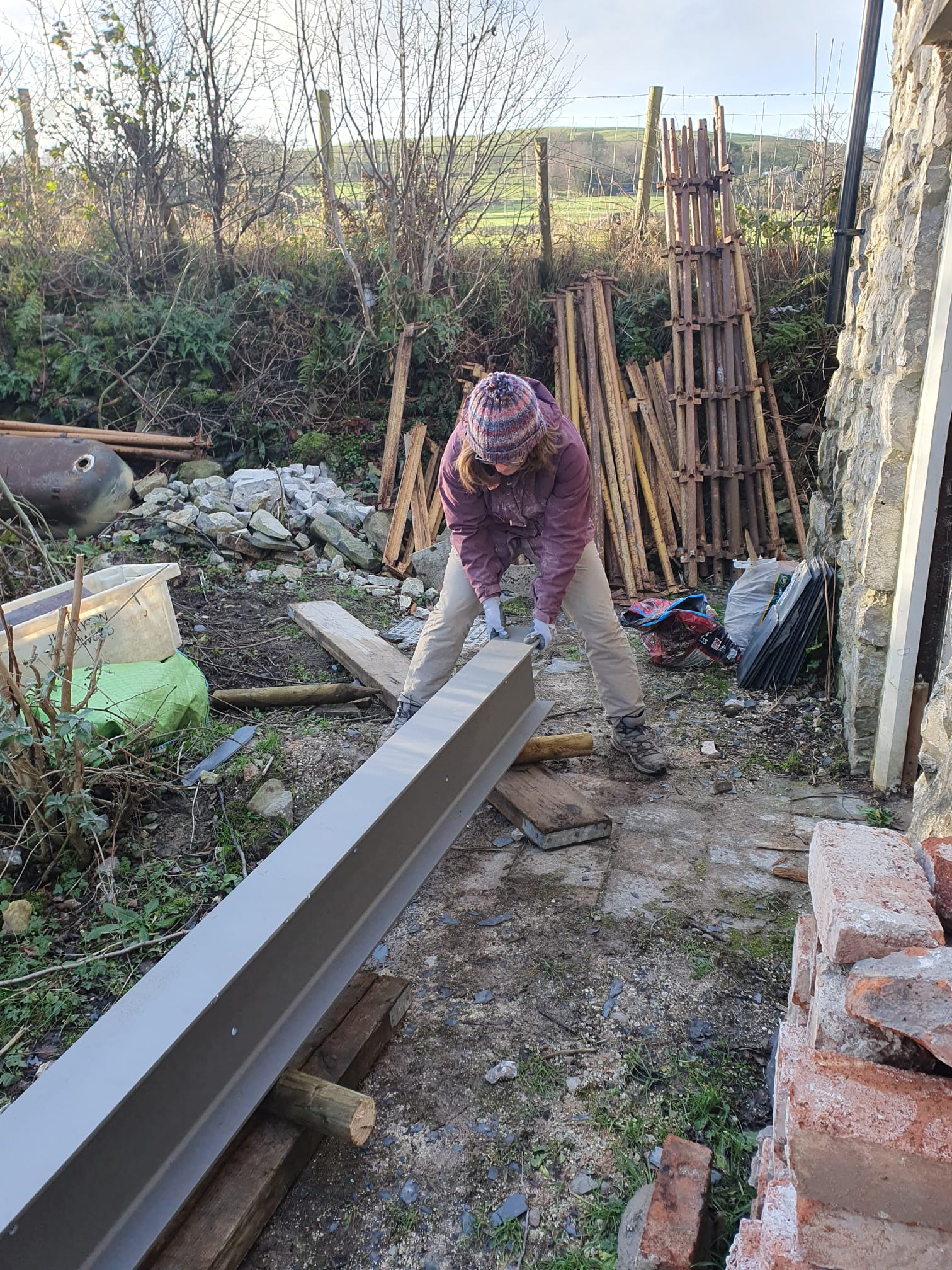
The large steel, that had been delivered a few weeks earlier, needed to be moved into the house in order to fit in the timbers that would slot into either side. We used fence posts to roll and swivel the heavy beam, as we weren’t able to lift it between us.
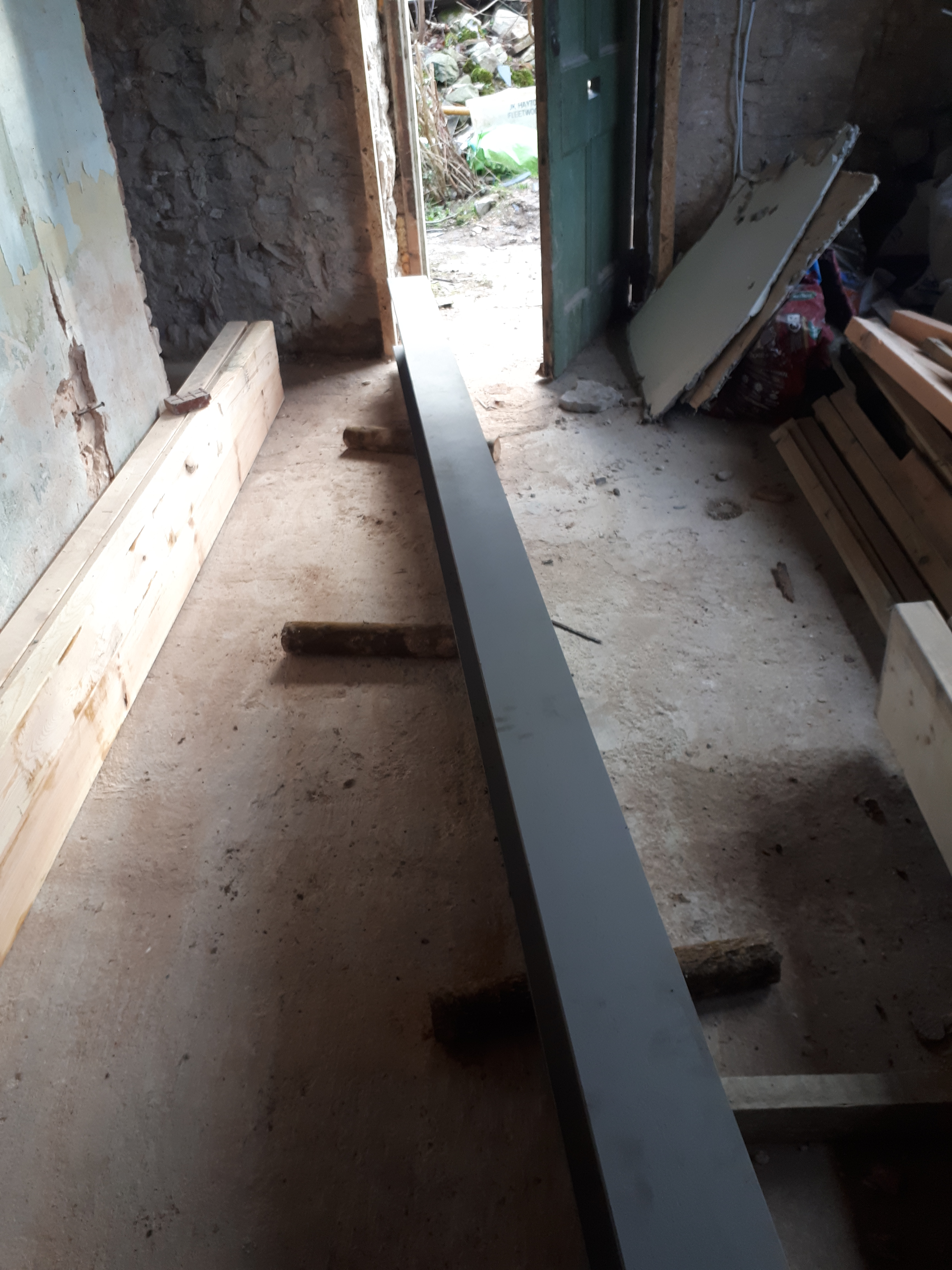
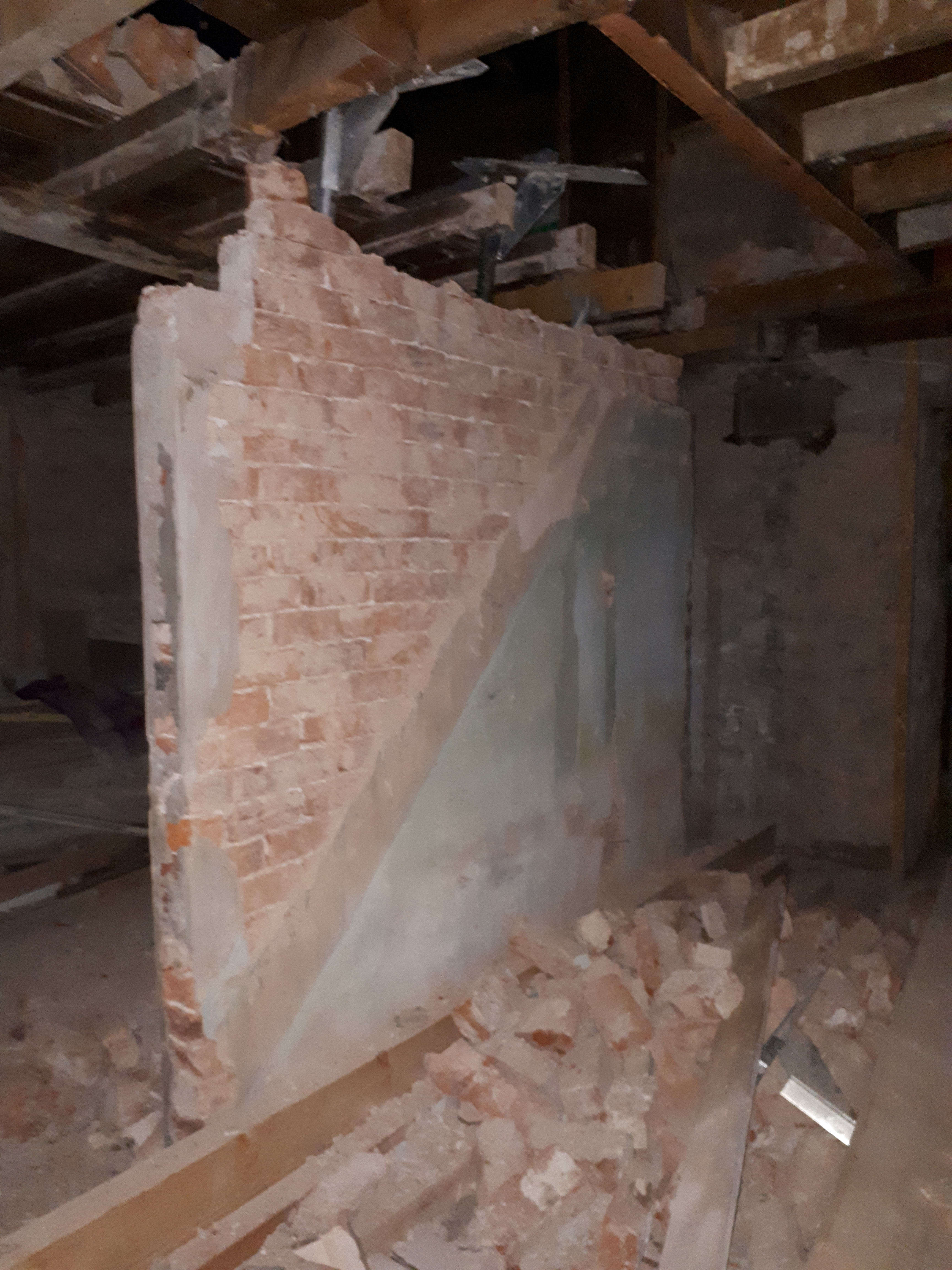
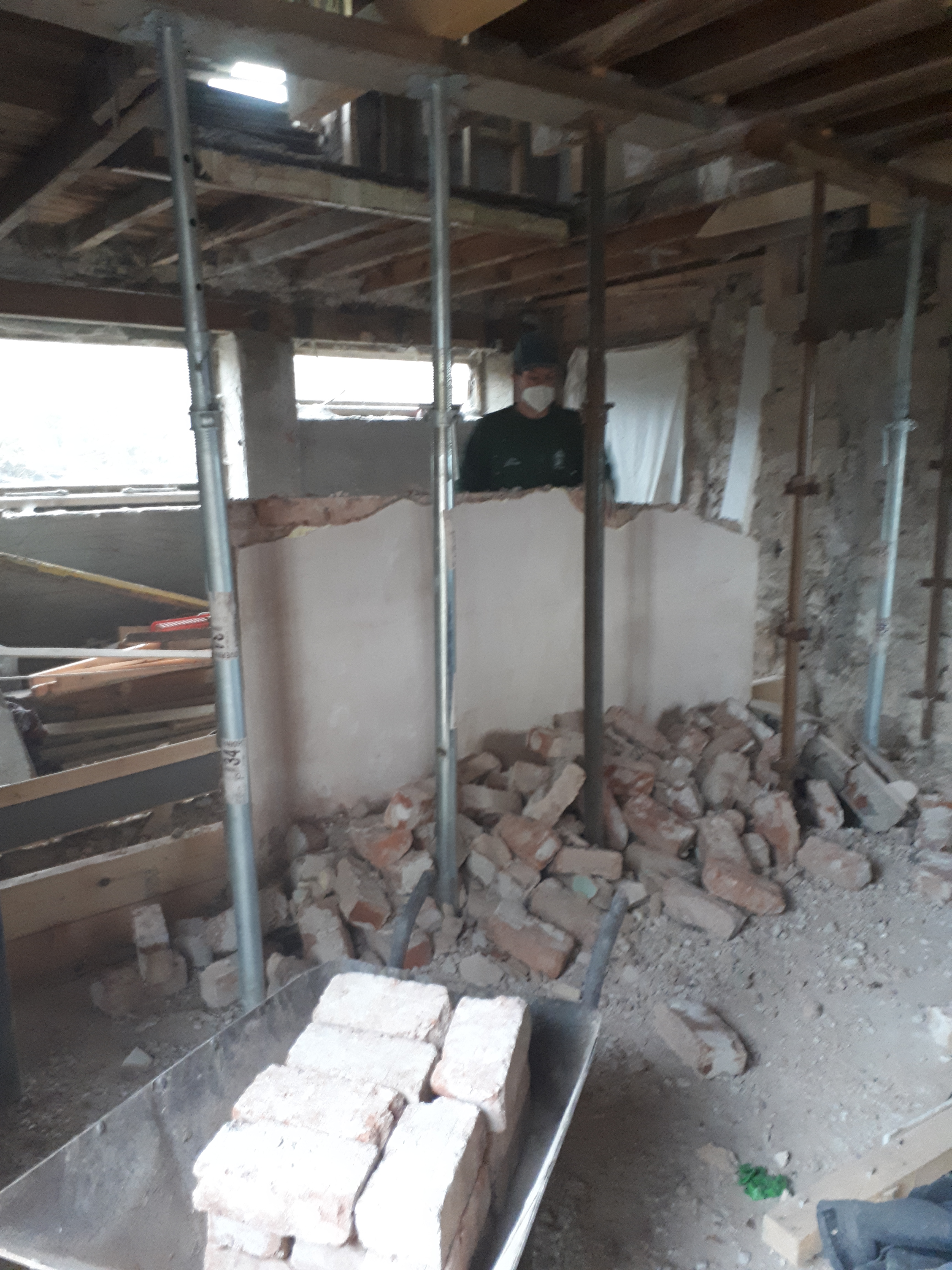
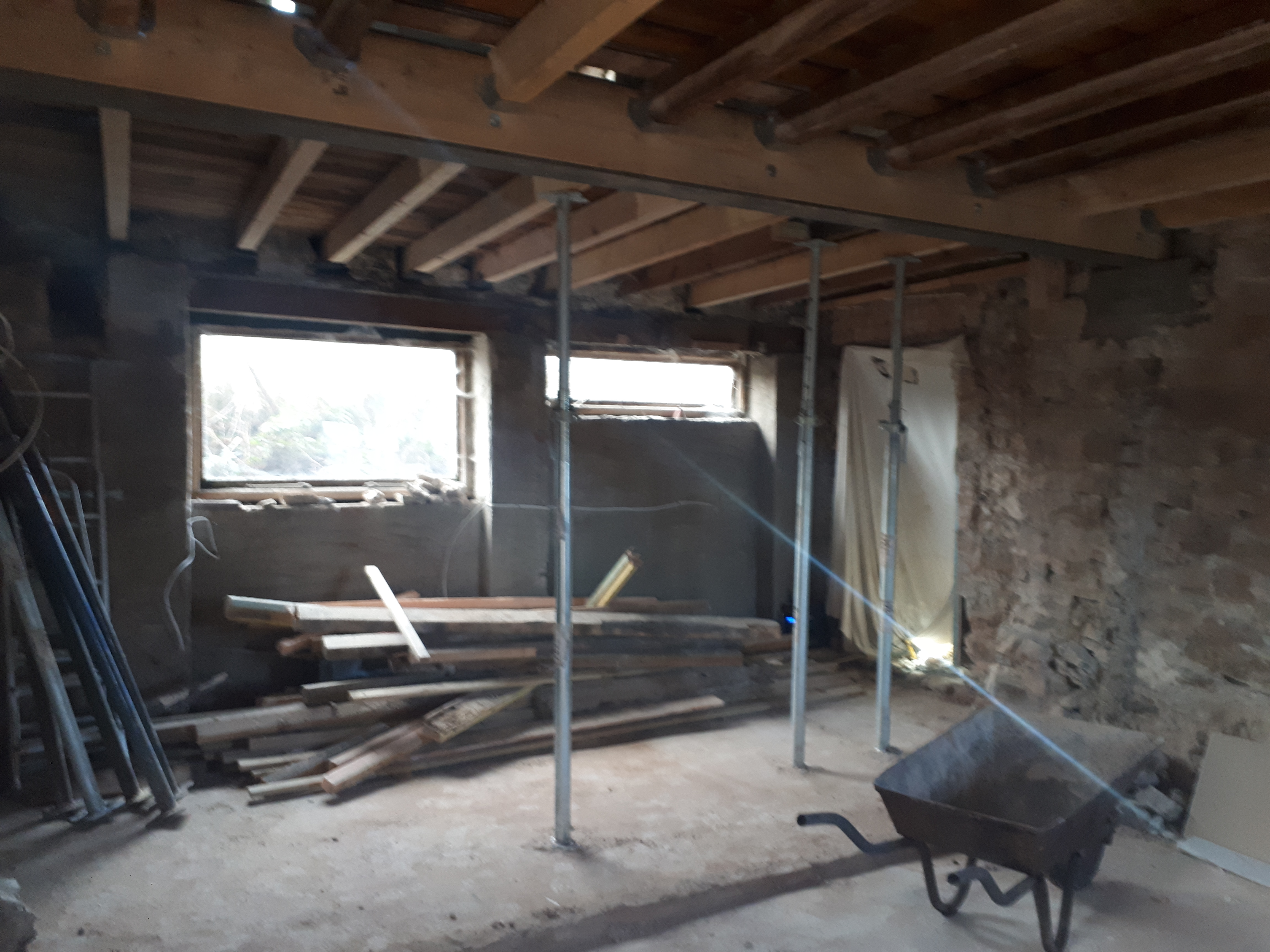
Our next big job was to remove the brick wall that divided the kitchen and dining areas. In order to do this, we had removed bricks and installed acro props and strongboys, to hold up the brick wall on the first floor, while we installed the steel to support it.
While Chris busied himself trimming down the large timbers to fit in the side of the steel, I began taking out the bricks below the acro props. I took the first brick out gingerly, worried more would instantly fall from above. Yet the wall remained strong. With each brick I removed I felt more and more confident the plan was going to work. Yet… as I made to remove the last brick I looked up to notice a bulge in the wall. The wall was faltering, unable to support itself.
Chris climbed into the attic and began passing down bricks, in an attempt to deconstruct the wall safely. However, with every brick he removed the wall became more unstable. Eventually we decided to tie a rope around one of the acro props and step outside the house, pulling it out from under the wall at a safe distance. A big crash and a cloud of dust followed.
Chris had been worried about the potential damage from the falling bricks, but luckily most had fallen through the gap where the stairs had been. Amazingly the whole disaster smashed one floorboards and put a few dents in our timbers, but not much more.
With the top part of the wall collapsed, we thought some of the lower wall, which had to be dismantled, might have come down too. But no such luck. We took apart the wall and piled the bricks outside, cleaning them ready for resale. Unfortunately, the fallen wall will now mean putting in a new stud wall on the first floor, however I was quite glad the brick wall fell when it did as it was clearly too unstable to not pose a risk during the rest of our works.
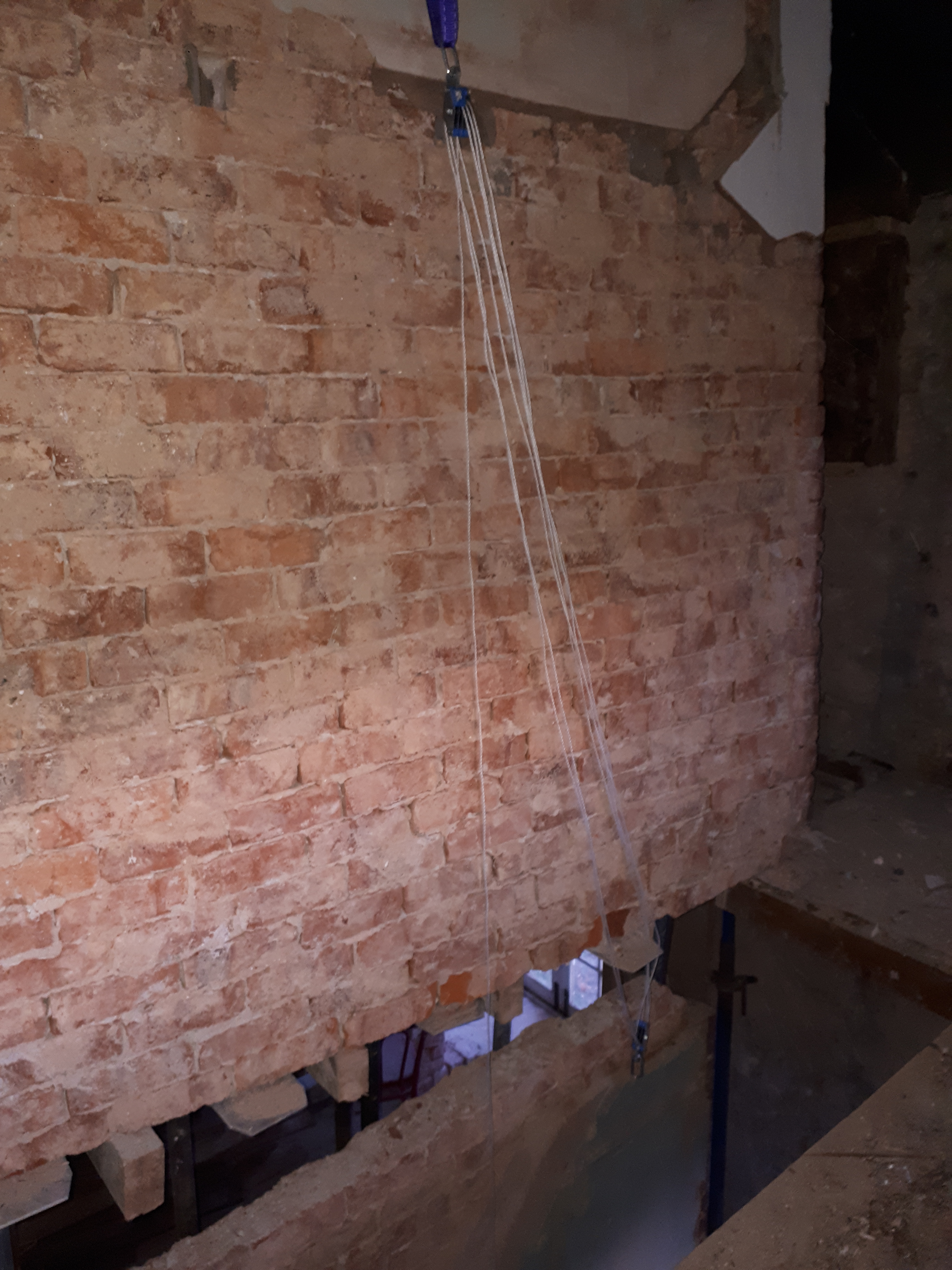
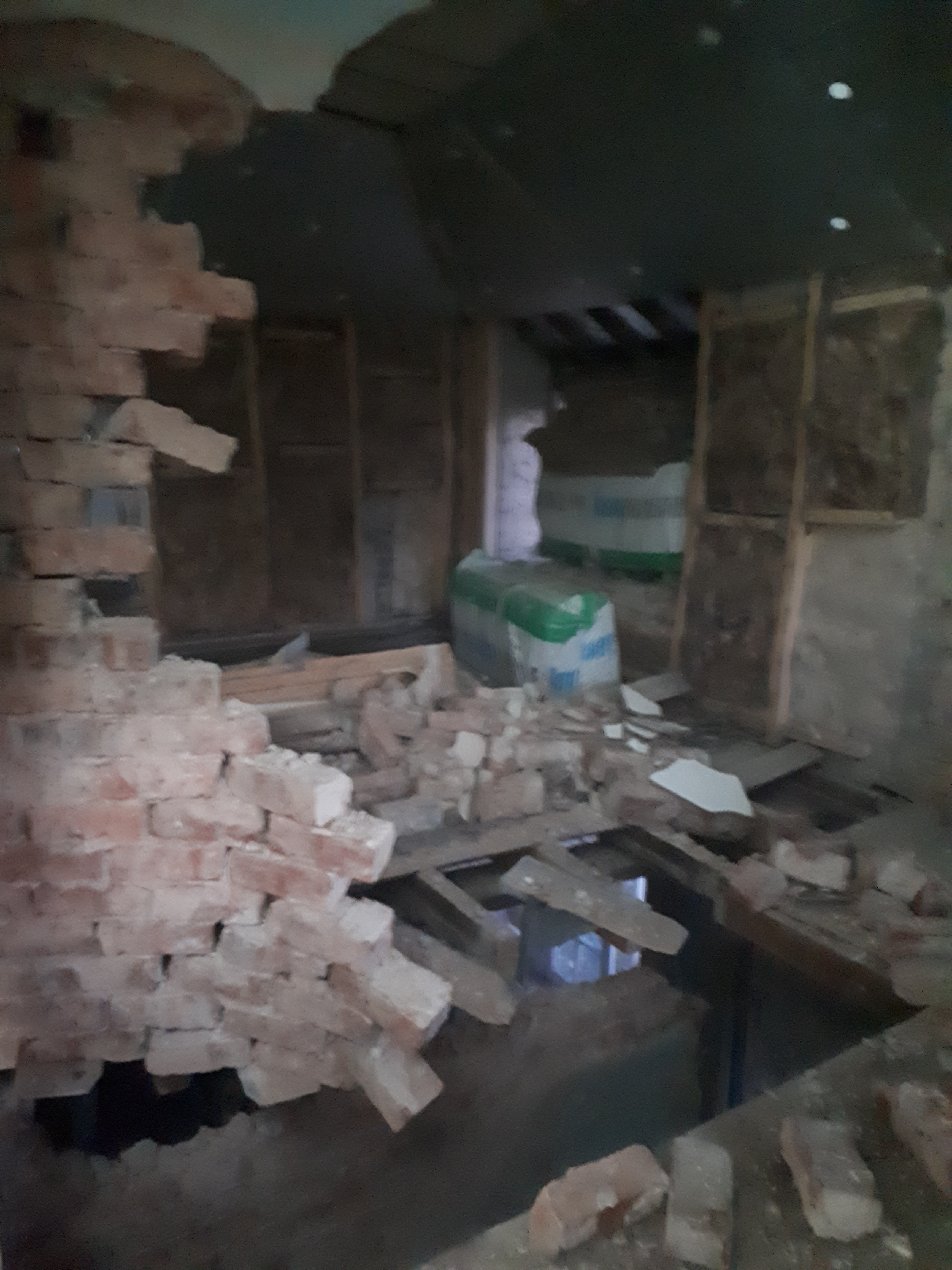
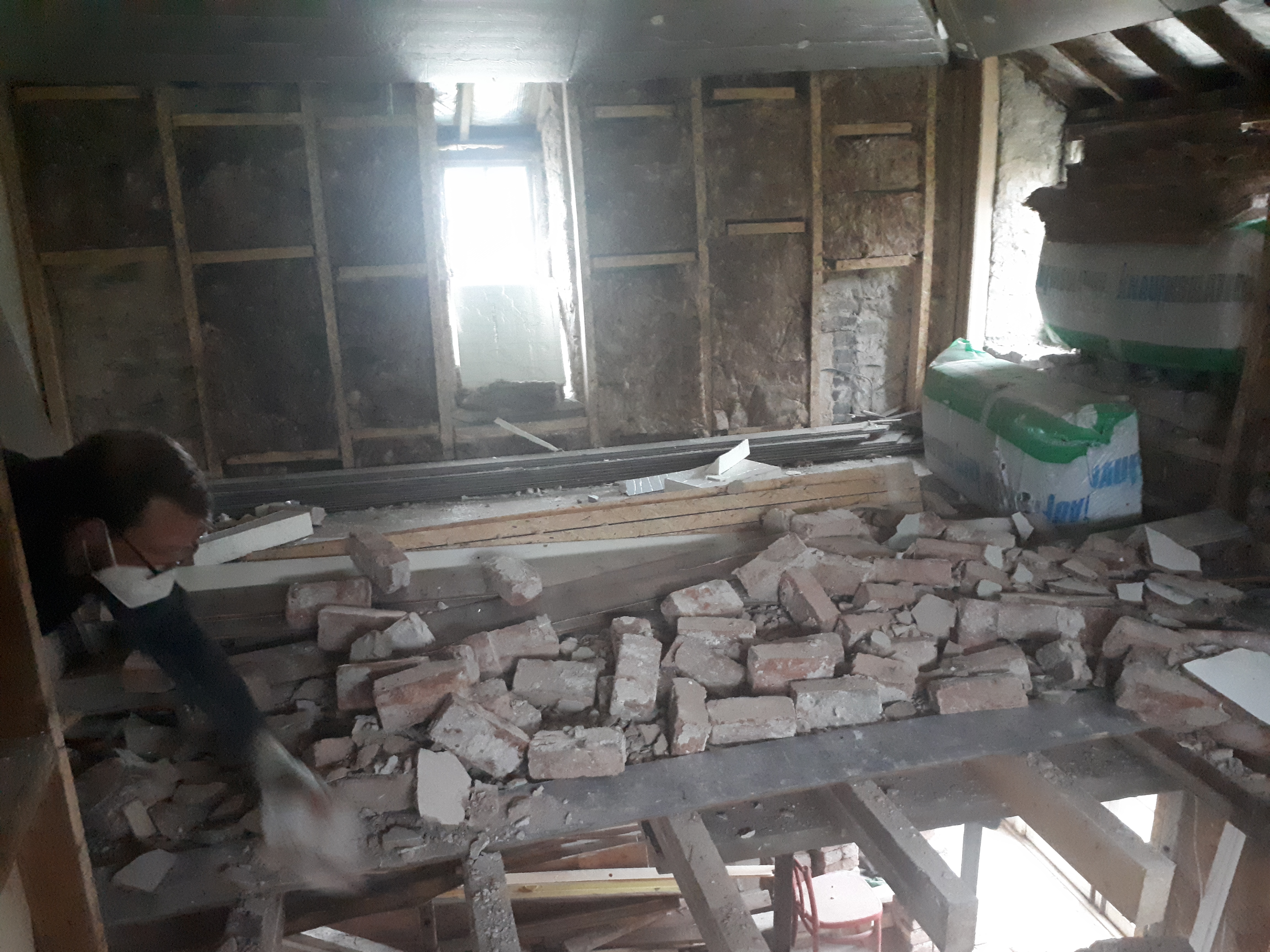
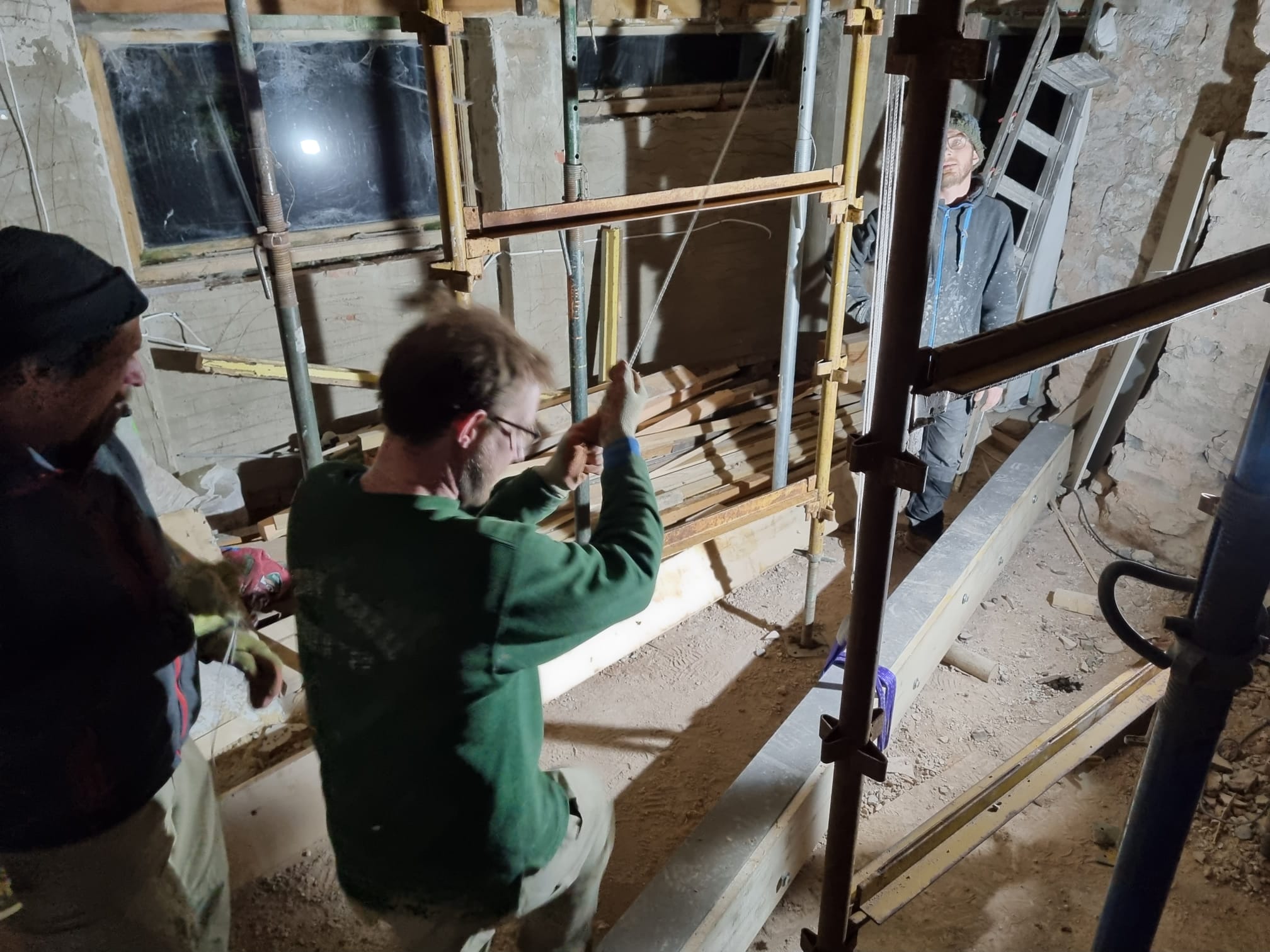
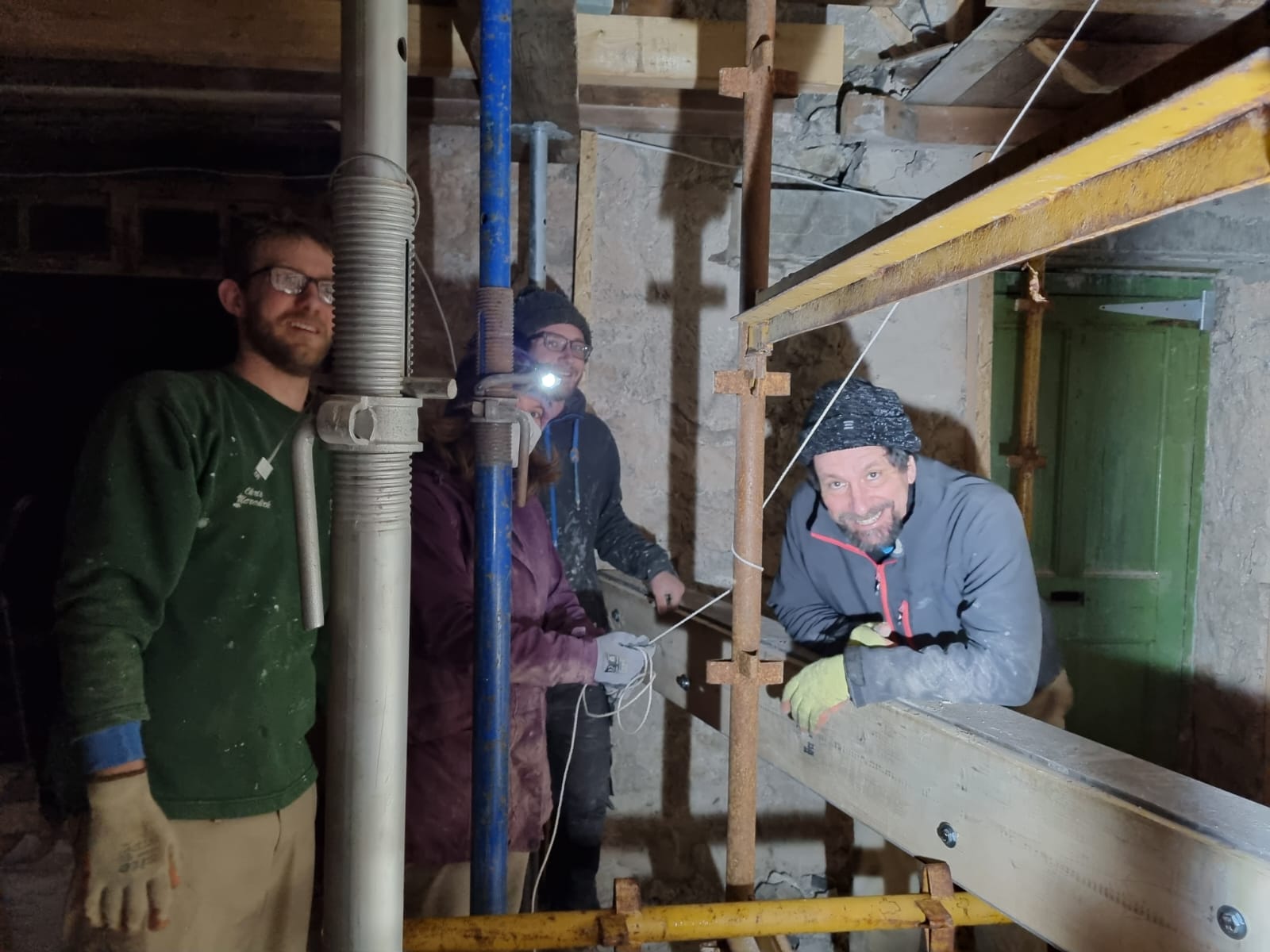
Raising the steel was without a doubt the most nerve-wracking part of our restoration works so far. It involved constructing a scaffold tower inside the house and setting up a pulley system. The pulley was designed for 180 kilos, with the steel being 160 plus the addition of the timbers. However, made of a thin white string, no thicker than a shoelace, it in not way looked up to the job. Not only this but the pulley wasn’t designed to hold the weight of the item once you had pulled it up, relying entirely on human input to stop the steel from crashing to the ground.
We were lucky to have several extra pairs of hands for the job, with Chris’s brother Rich, and my mum and dad, kindly coming to lend a bit of elbow-grease. Although the pulley did a great job, we simply couldn’t have lifted it without some brute force at the same time. We lifted it a bit at a time, building up the scaffolding underneath it for it to rest on.
The main difficulty was the length of the steel, being necessarily longer that the room was wide. We managed to get one end into the opening on one wall, but struggled to lift the other end into place, the steel becoming wedged against the wall. We had to deepen the hole and shave away at the stones on the walls. Eventually, after much heaving and hoing, the steel slotted into place, to everyone’s relief.

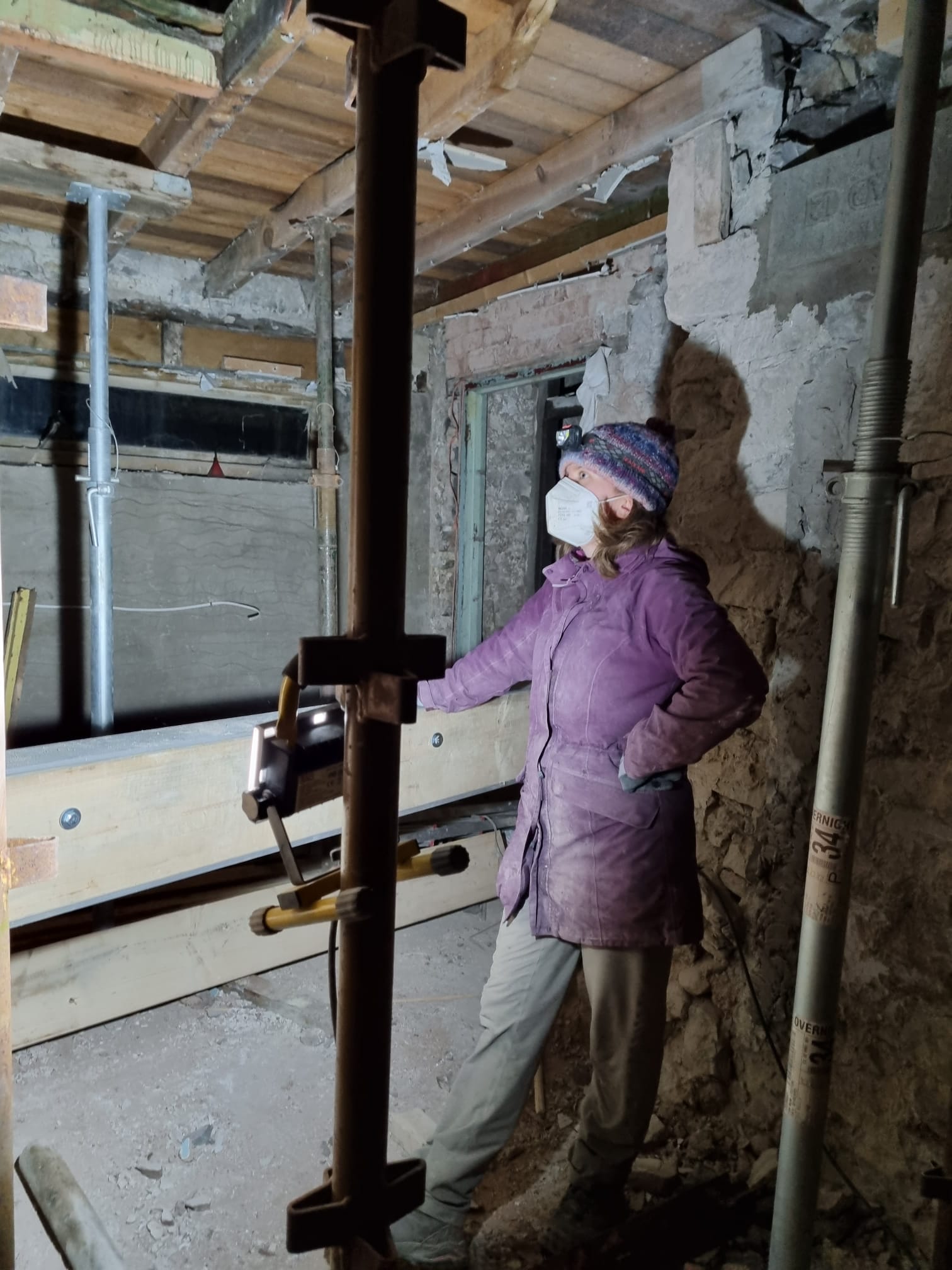


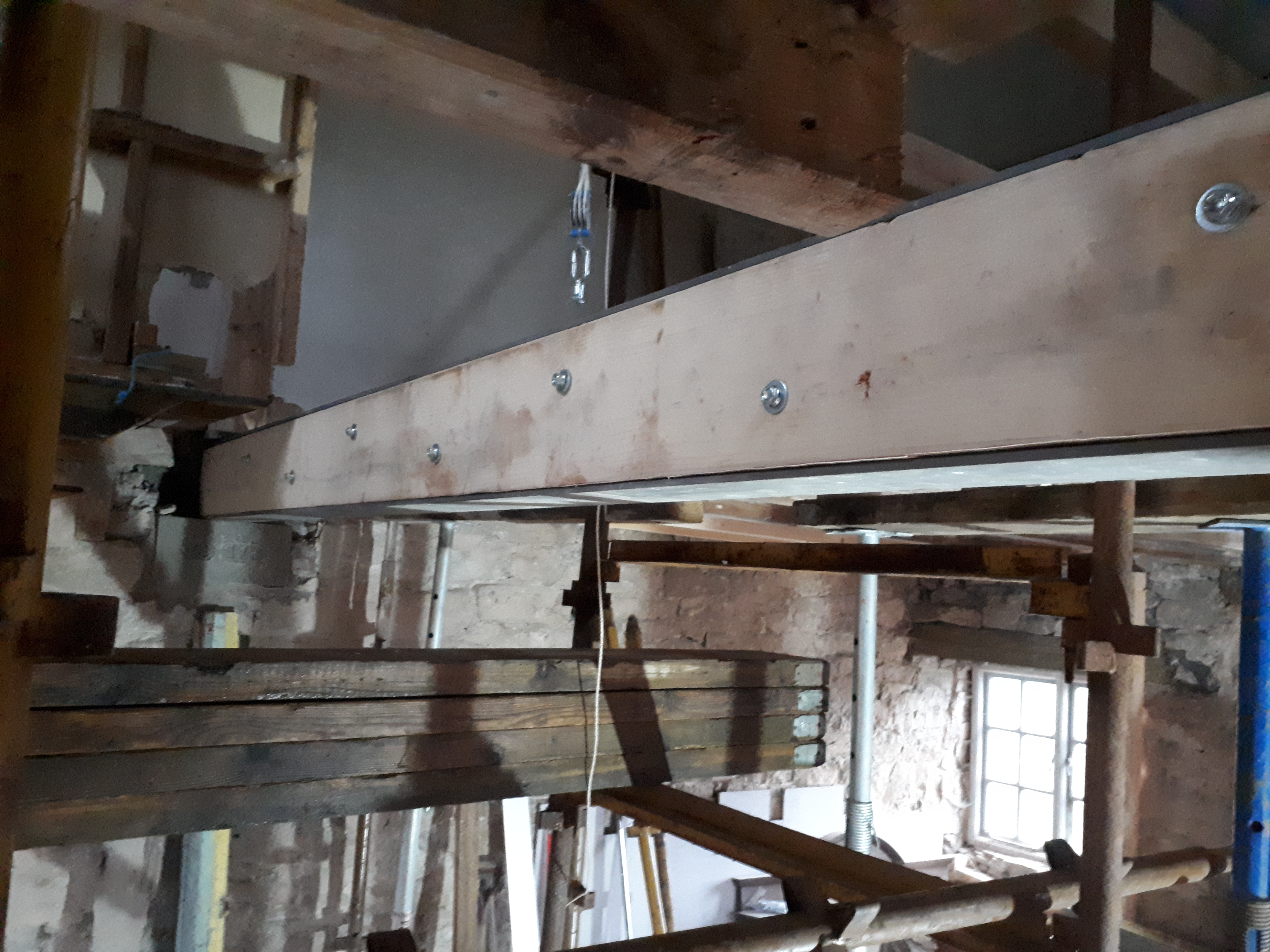
With the steel in place it was time to attach the beams. The beams on one side of the room had carefully been cut to the right size to butt up to the steel, and only needed brackets attaching to secure them in place. On the other side of the room we had the opening where there staircase once was. The other beams had been cut to allow the steel through. We therefore needed to remove and replace all the beams.

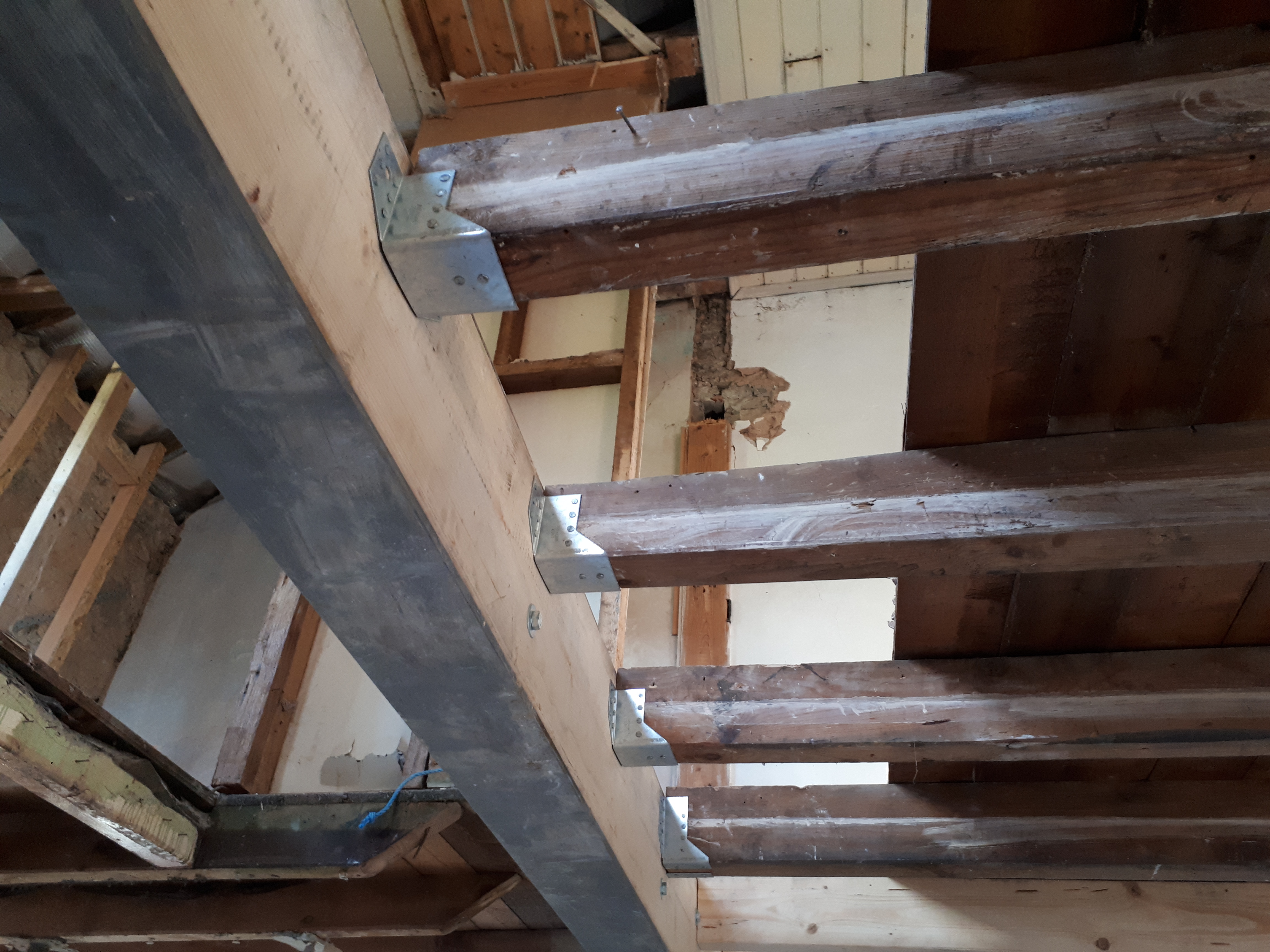
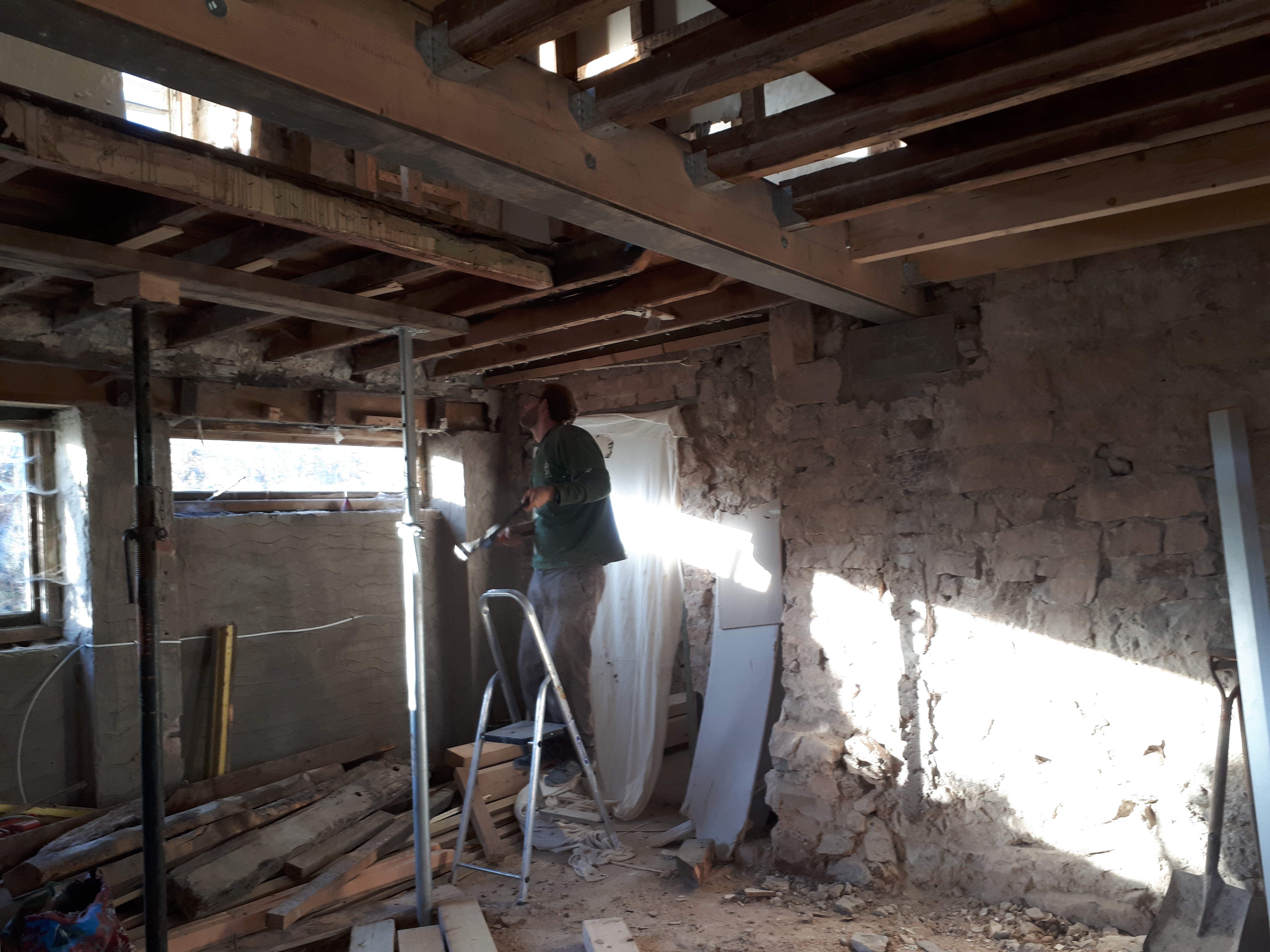
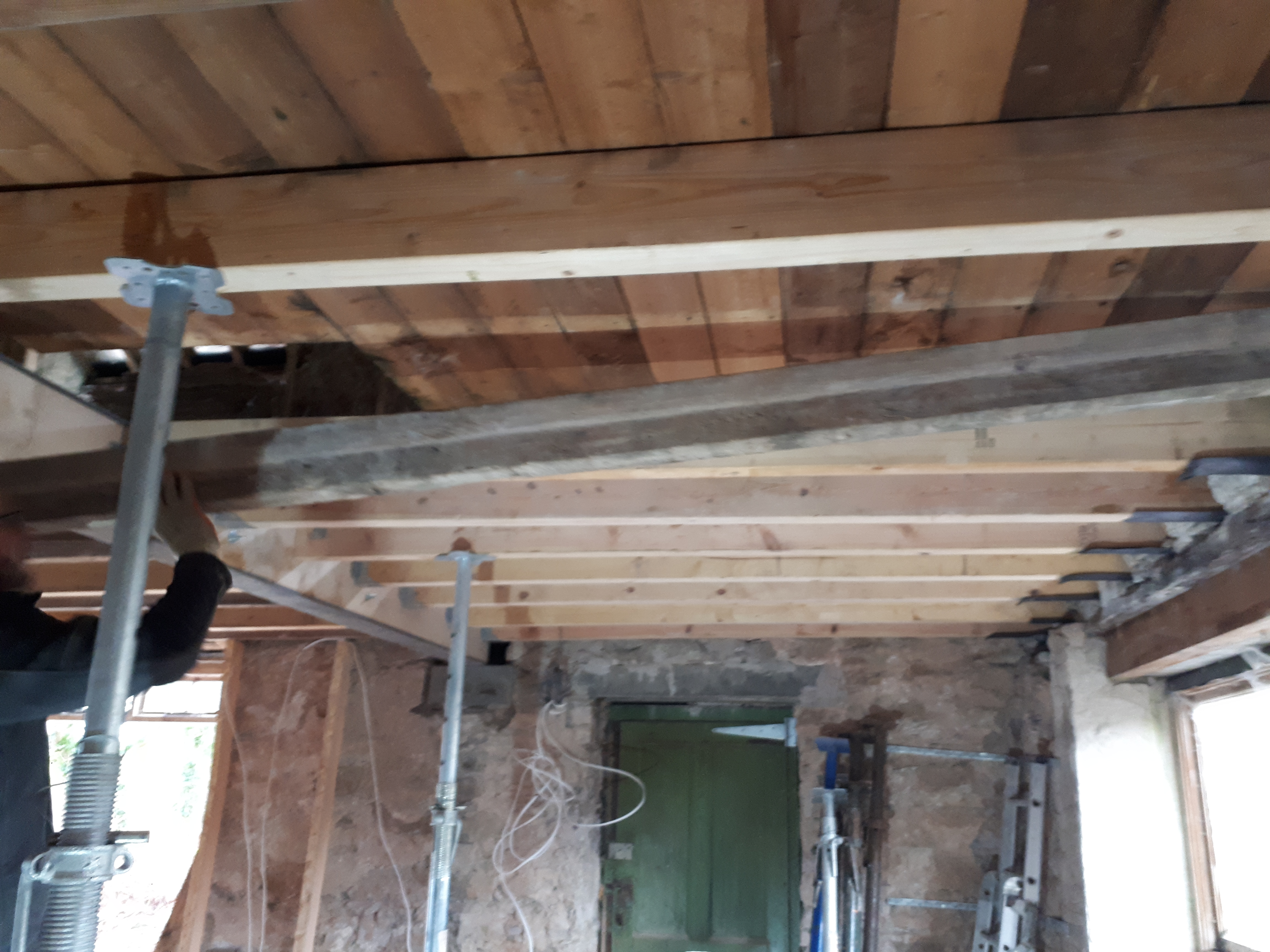
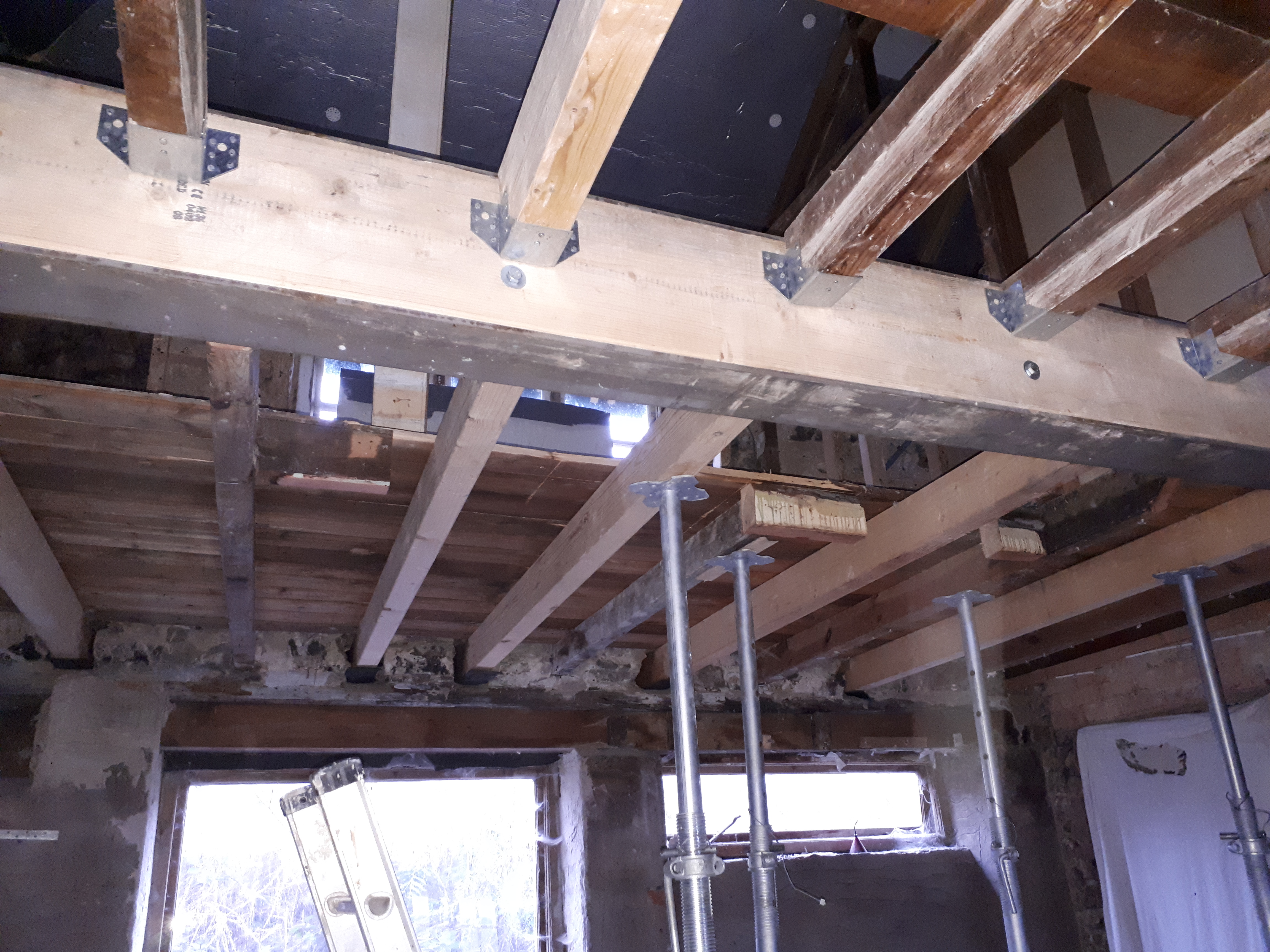
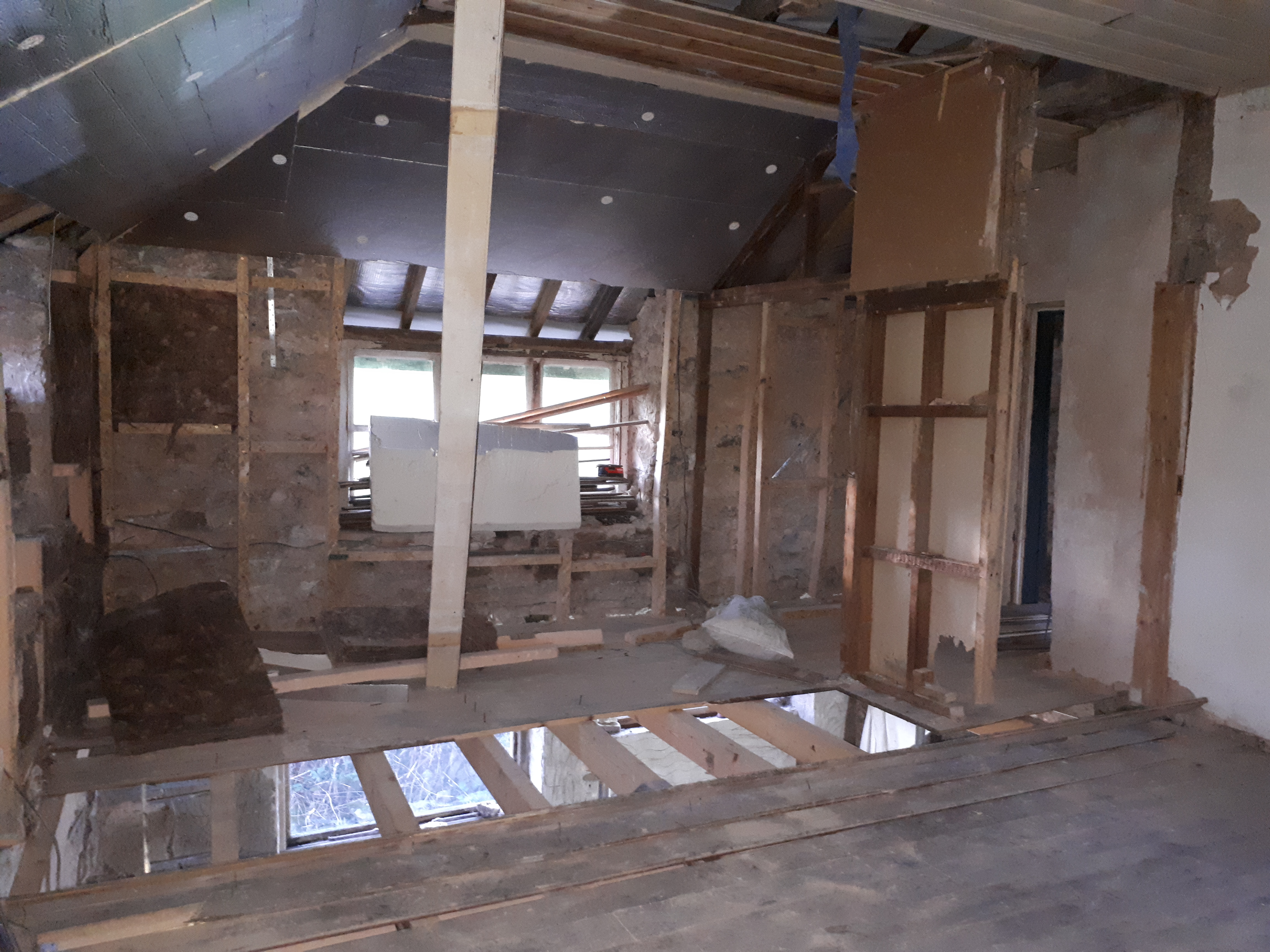
With all this done we had a somewhat more open plan space than originally intended, but still a big step forward and the last big structural job completed.
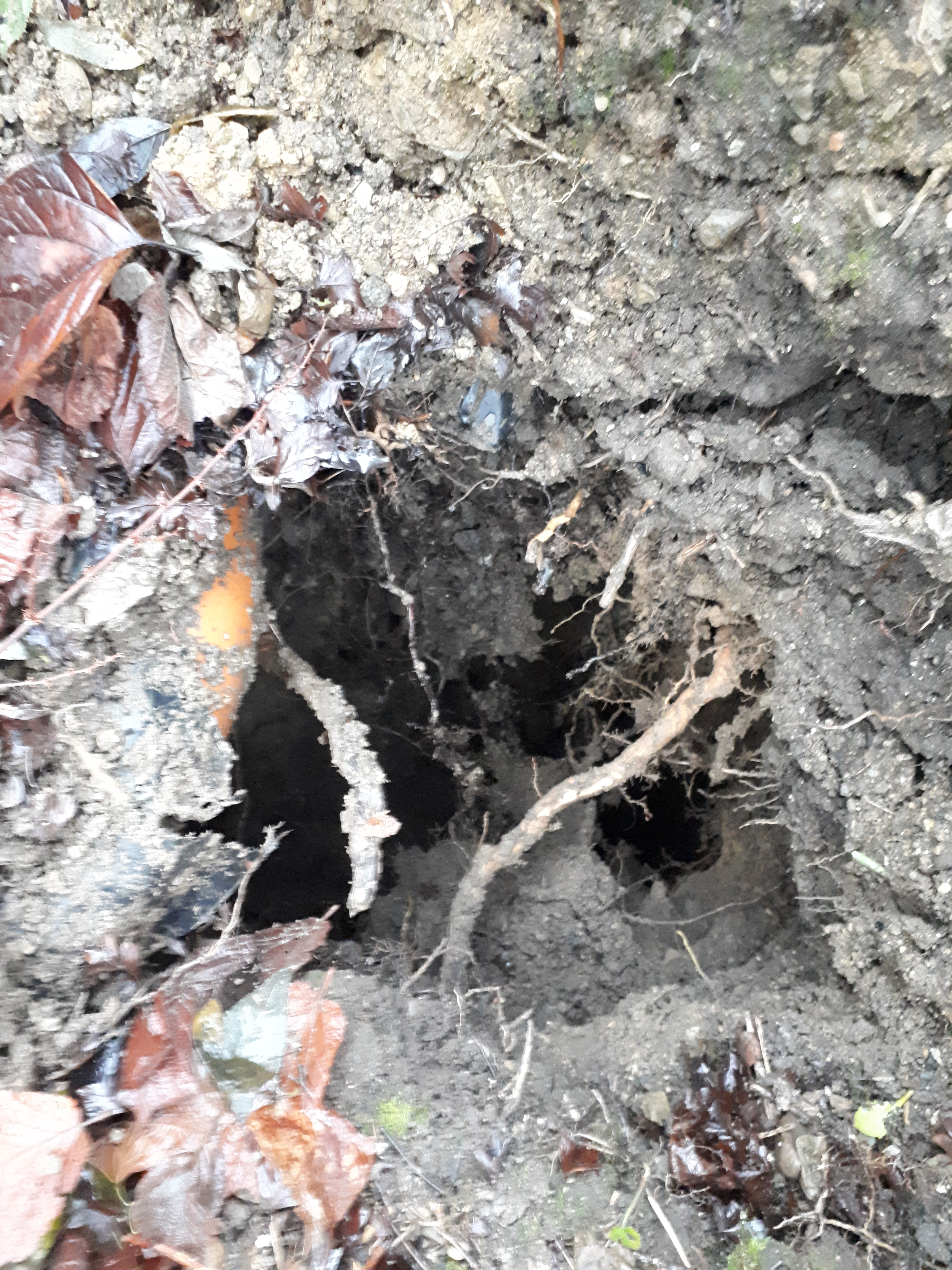
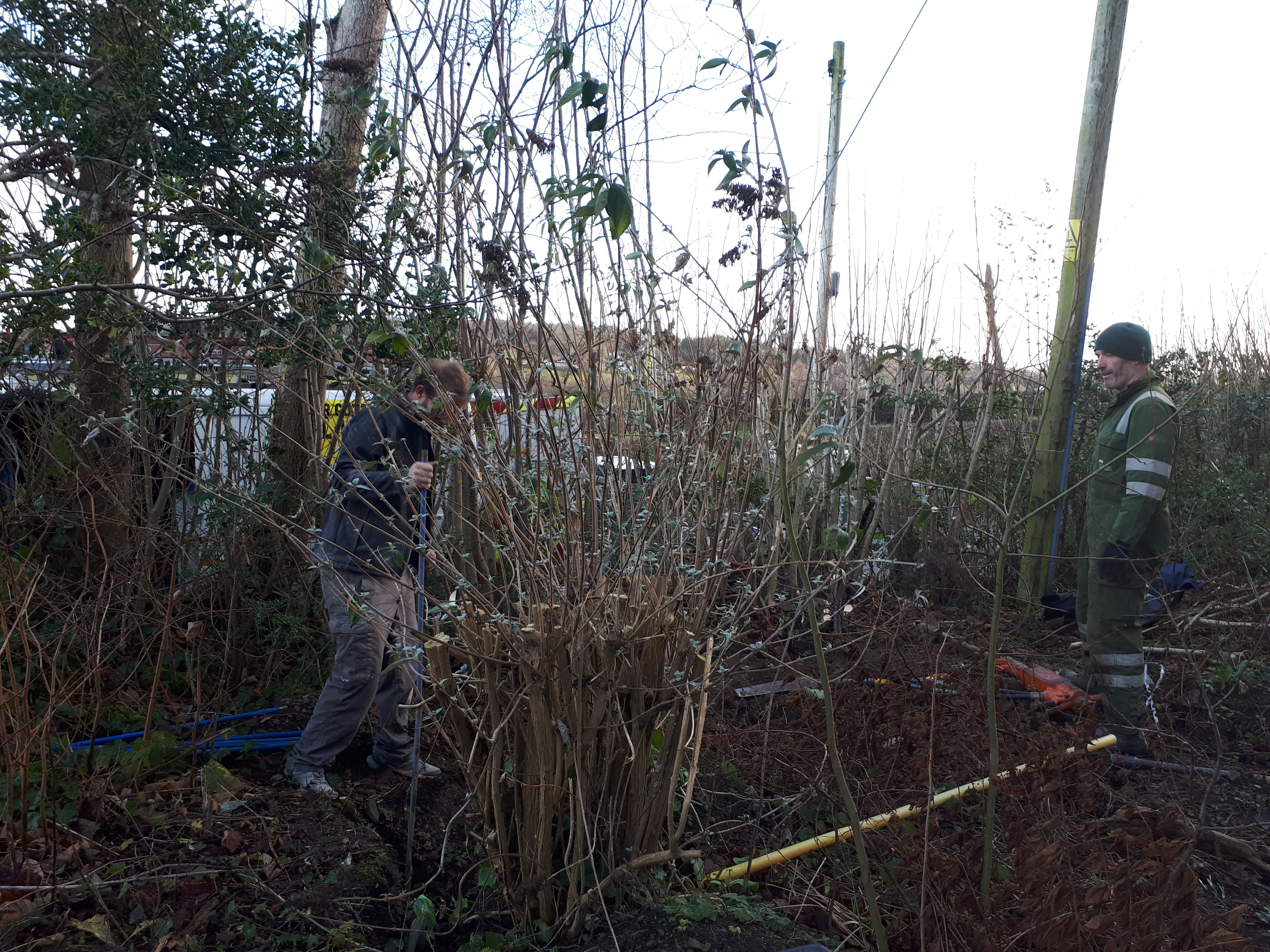
During one of the days where I had been working on something inside on my own, Chris began digging around in the garden to try and work out the drainage. There was a strange area within the garden, close to a telegraph pole, where the ground seemed to bounce beneath our feet. Having spent a bit of time digging in this spot, while looking for the outflow of our drainage, Chris was amazed to see a hole open up beneath him. Sticking a rod down to assess the depth, he found it went down some 2m. The bouncing ground was where the tree roots were suspended over empty space.
As the hole was so close to the telegraph pole we called Scottish power to assess the situation. They agreed they would need to move the cable supporting the pole. Having dug a hole to see if the ground would be suitable, they found the hole went further than expected. Eventually, they managed to find a suitable spot, and we now know of a massive hole at the bottom of our garden. It is likely to have been caused by our broken drainage, washing away the soil beneath our trees. Due to the lack of soil the Scottish power team decided an ash tree next to the power line was too unstable to leave standing. As our plan is eventually to lay the hedge beside the road, we requested the ash tree be coppiced so we could lay any new growth into the hedge.
While a big hole in your garden is by no means ideal, we’re hoping we might be able to repurpose it into a soakaway. Currently it seems that any drainage from our house most likely ends up on the road. However, with no road drainage close this isn’t ideal in winter, potentially creating icy patches. A soakaway might be the best solution. First, however, we need to get through to the local council, as some of the sink hole appears to have encroached on the edge of the road…

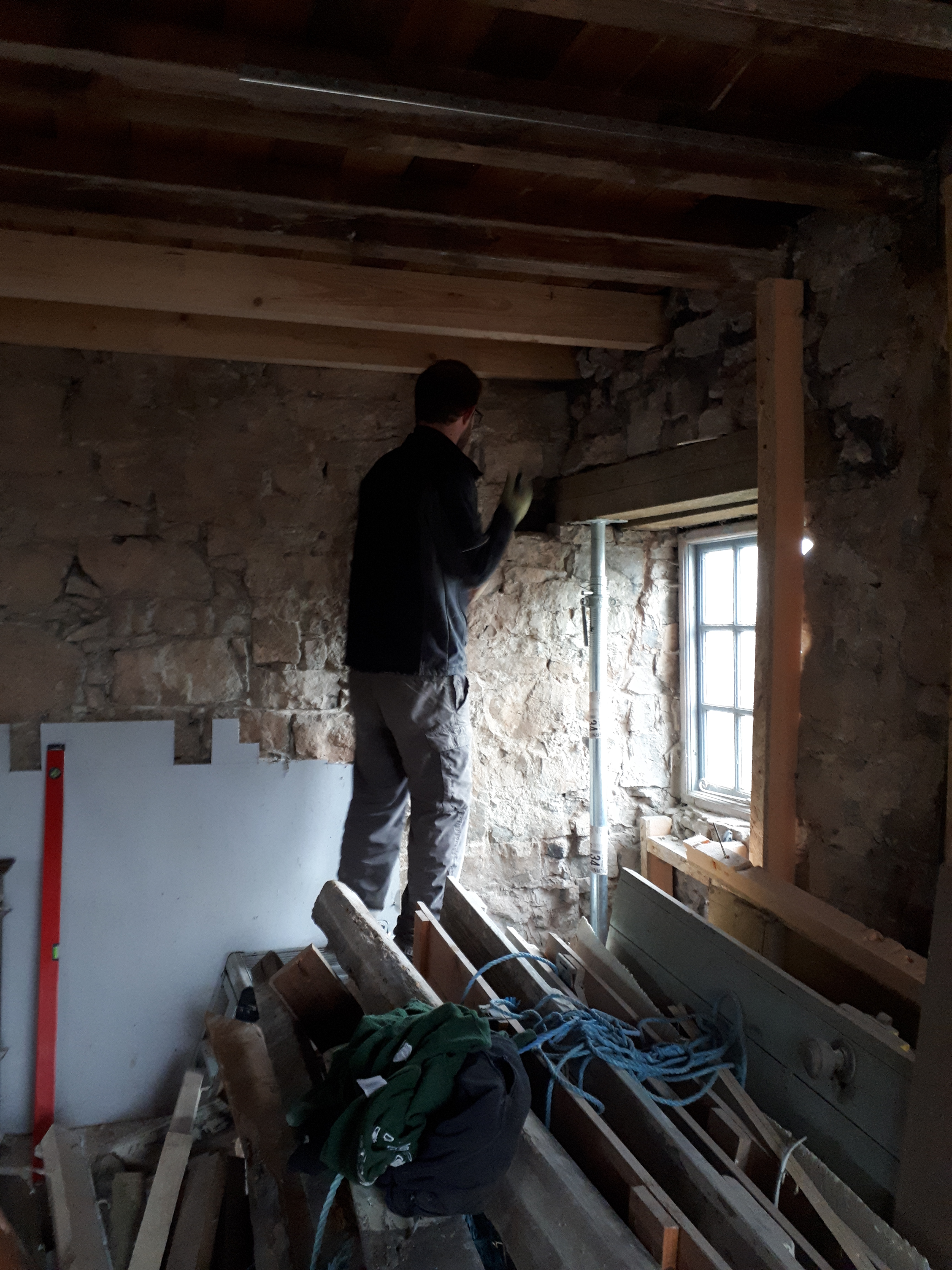
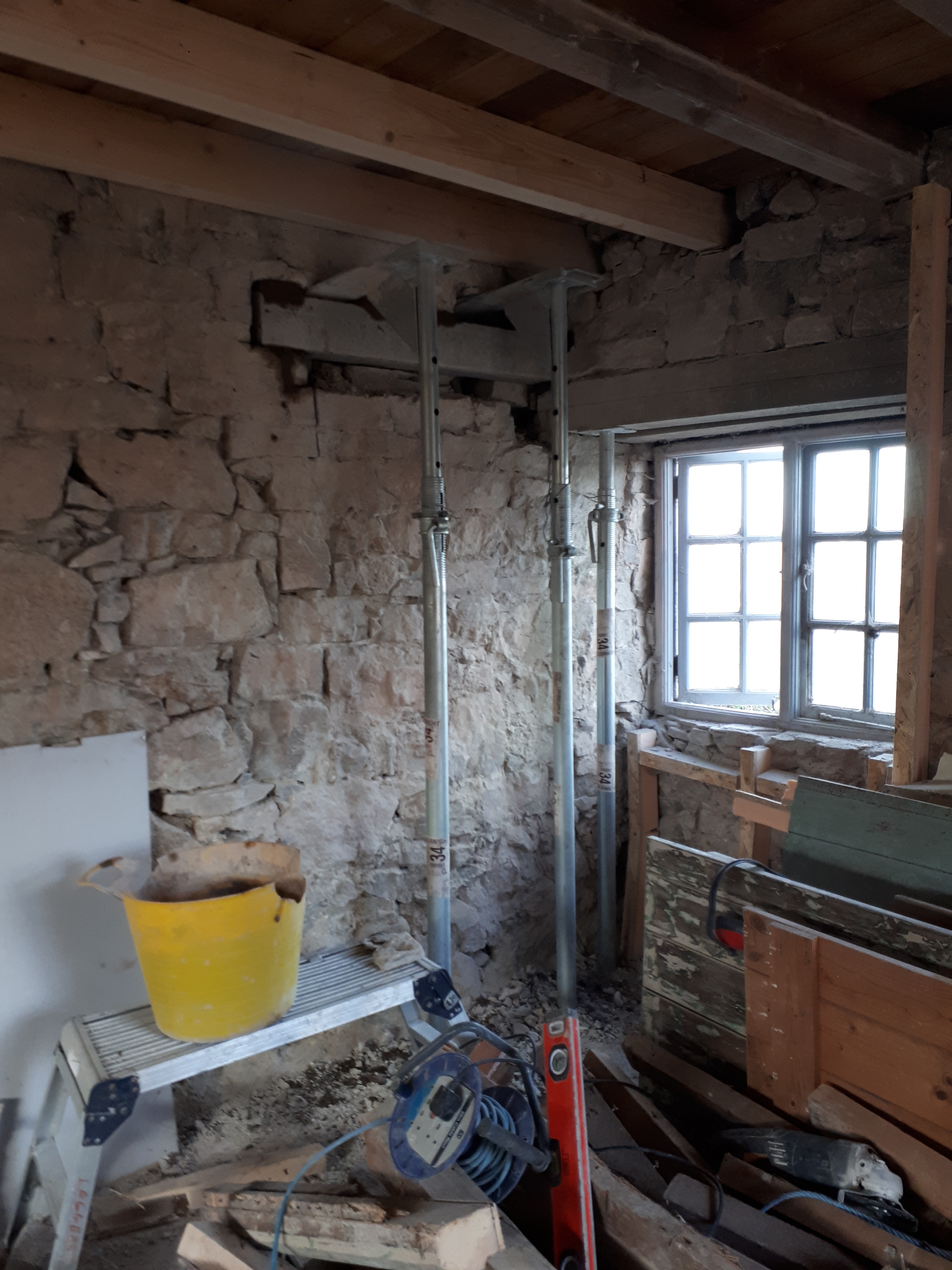
With the steel work completed we moved on to another new structure of the kitchen/diner; a new doorway connecting the lounge and dining room. With the thick wall between, what was once two houses, it won’t be an easy task, involving the installation on three lintels. For now the mortar needs to set around the first lintel, before we can risk removing more stones.
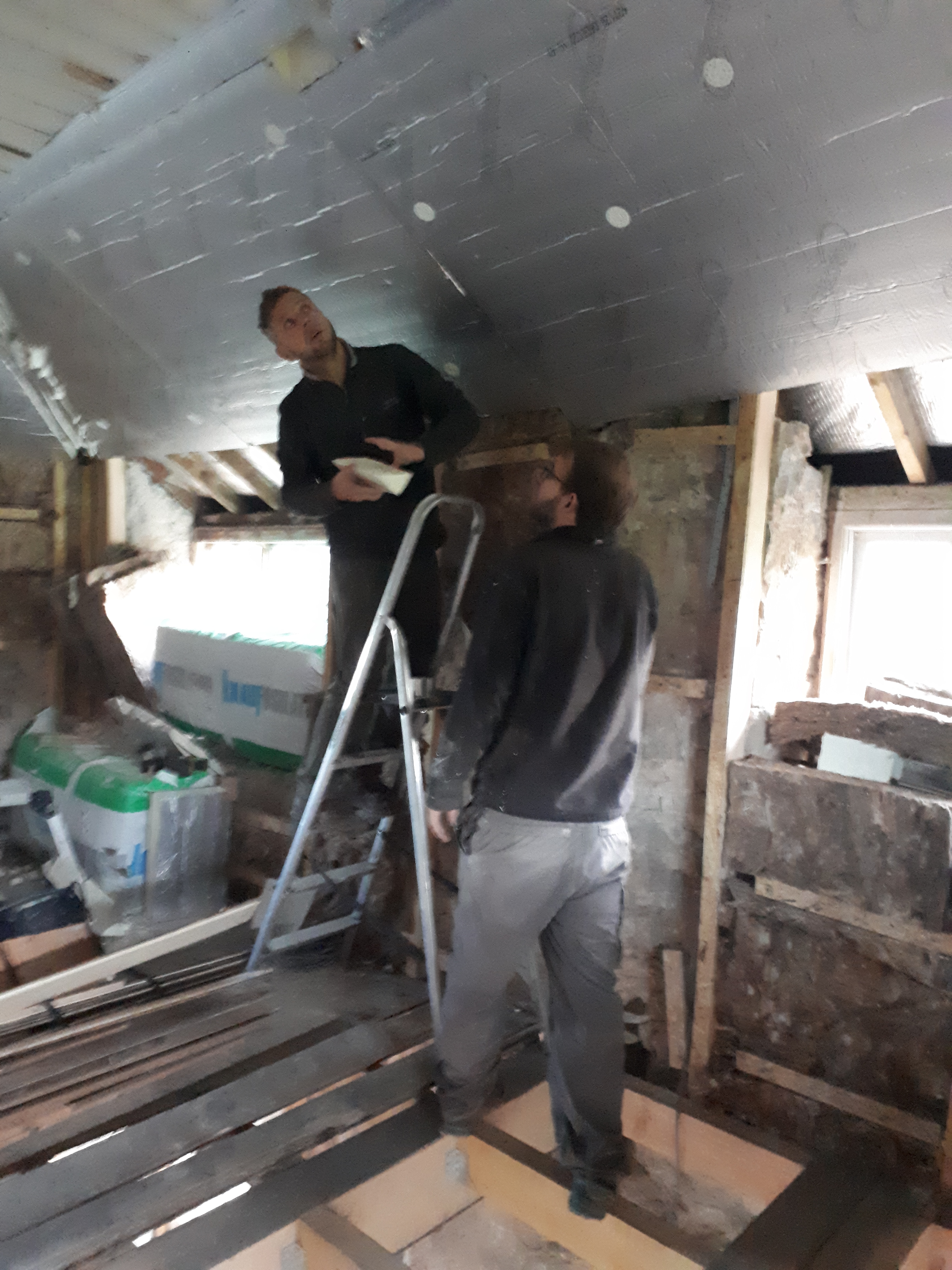
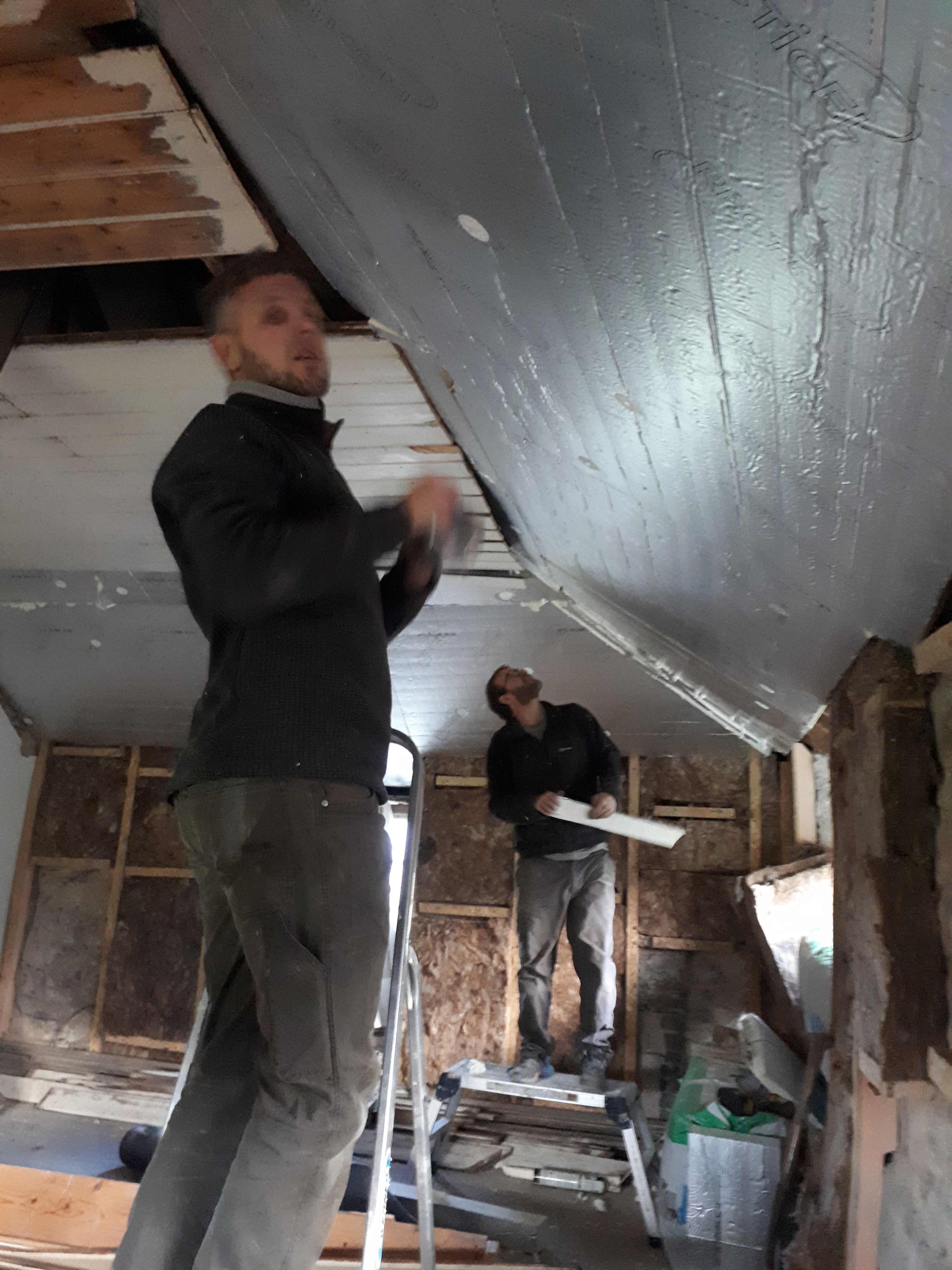
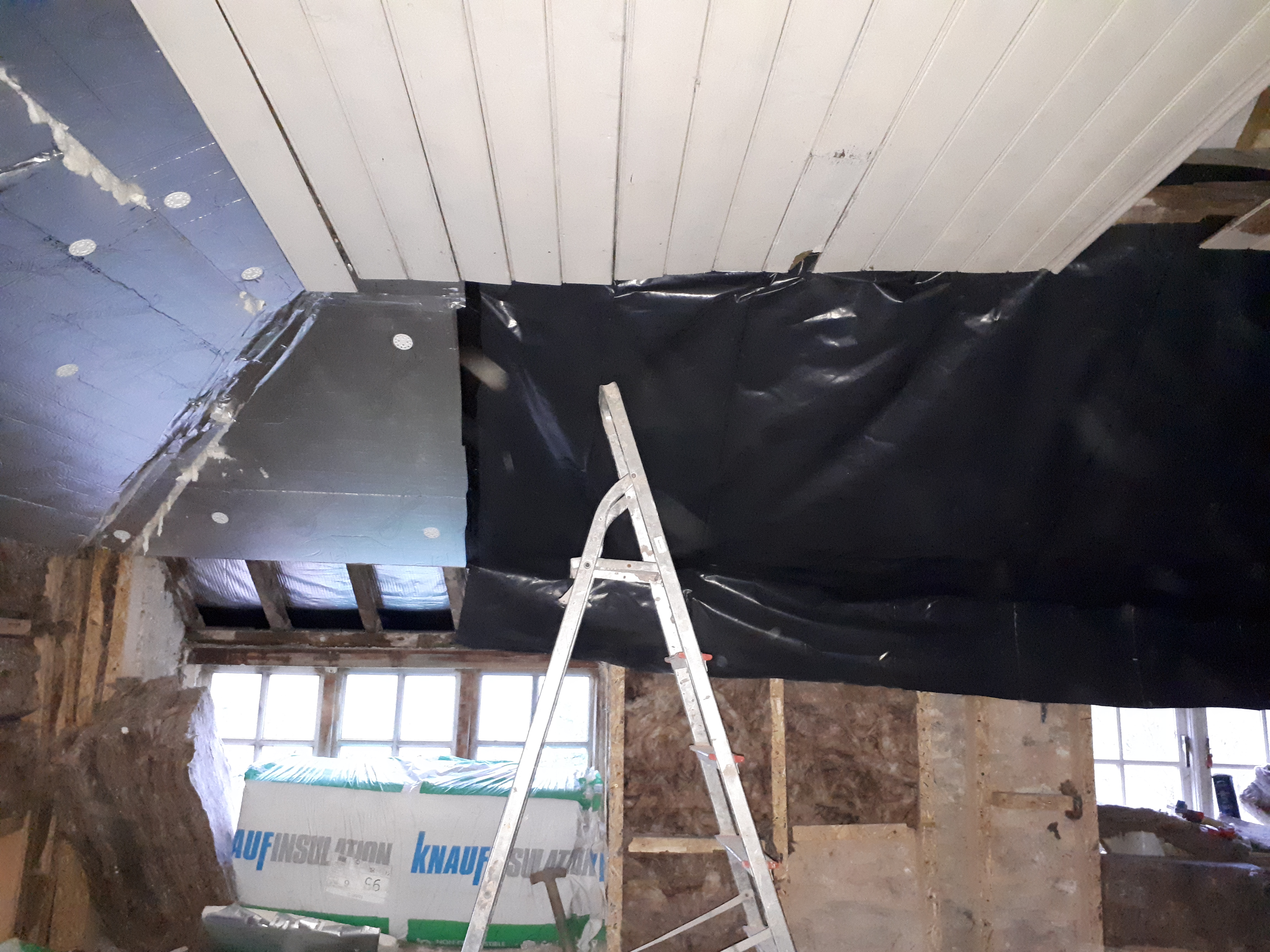
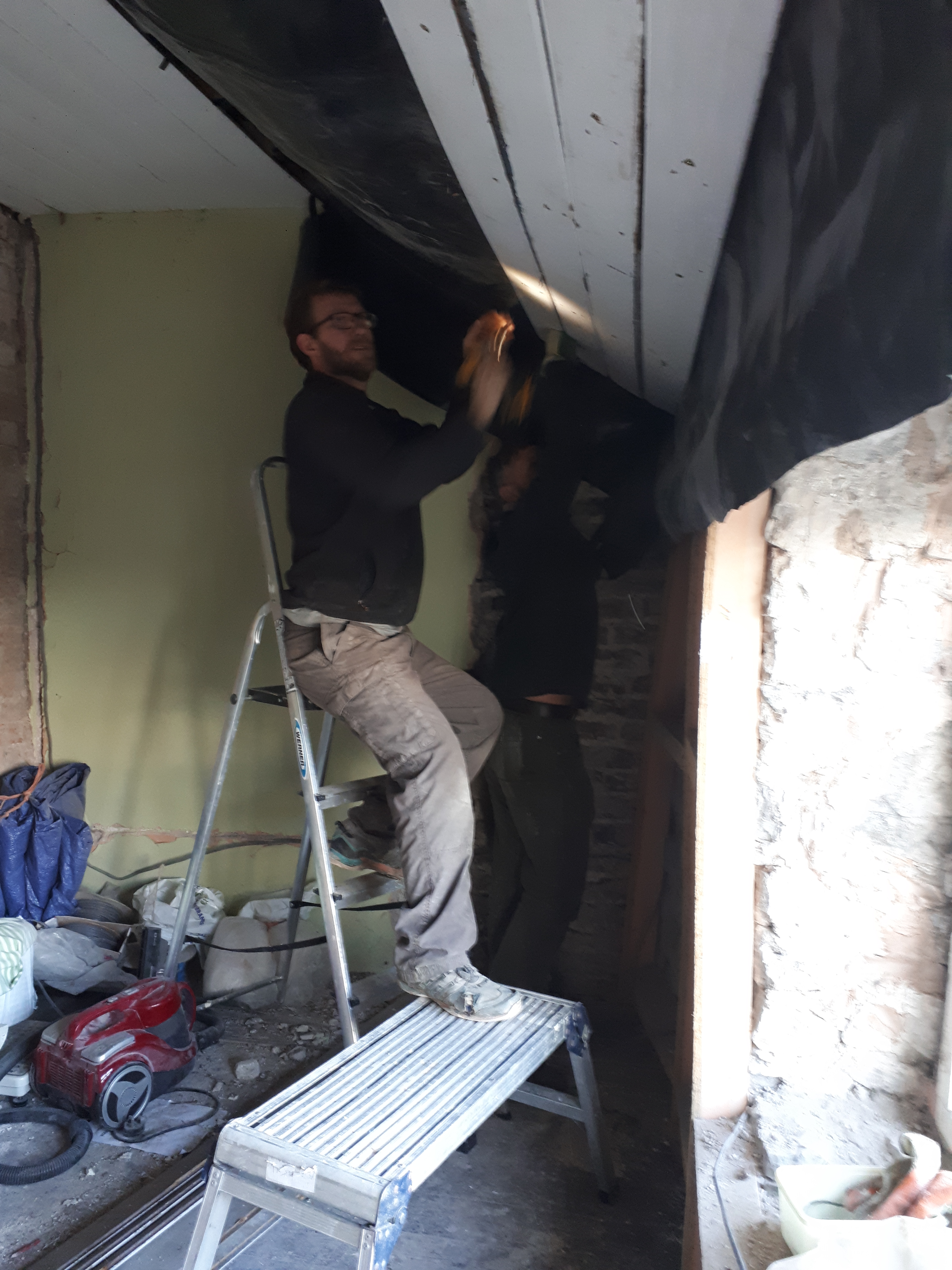
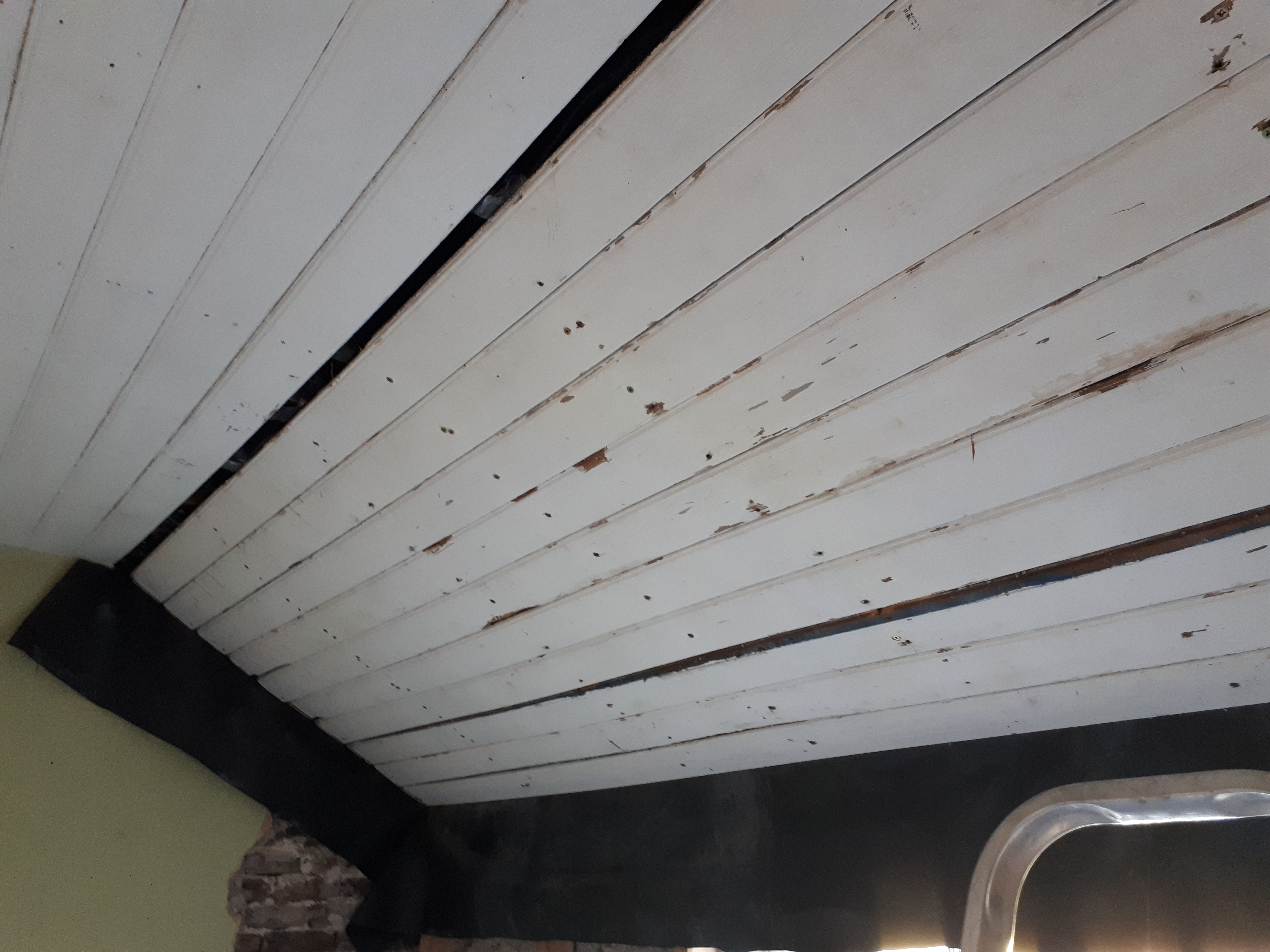
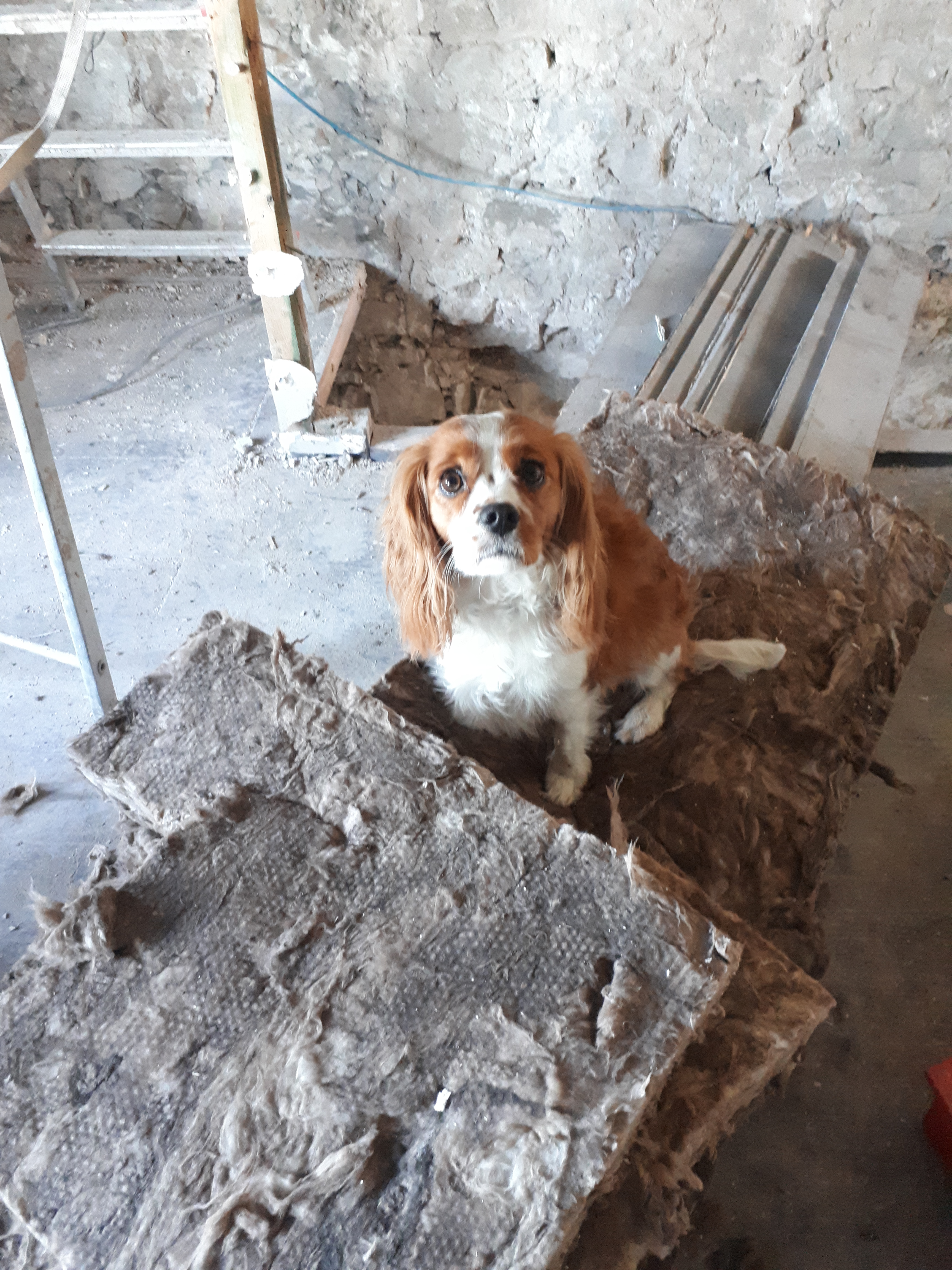
On our final day we started a completely new task, for good measure, starting to replace the wooden ceiling slats. To do this we needed to first cover the insulation with a vapour membrane. This was an awkward job, involving at least three pairs of hands, luckily Chris’s friend Jay (and his dog Rosie) joined us, making an impossible task much easier. Once the joins in the insulation were sealed with aluminium tape, and the vapour membrane semi-attached, we began to attach the old ceiling boards. Having spent time marking where the rafters were onto the insulation boards, we then realised we couldn’t see the markings with the black plastic in the way. A little guesswork was therefore required to place the screws. I was quite pleased with the finished result. There’s definitely lots of filling and sanding on the horizon, but considering how old and brittle they are they went back up really nicely. With one room done, and two ready for boards to go up, it was a good end to our time off.
Our final bit of good fortune on our time off was to sell the majority of our scaffolding, keeping just one bay for ourselves. Having sold it for the same price we brought it for, we saved all the costs of renting scaffolding over the many months it stood around the house. Our old stairs also went to a new home, though we offered these for free. These are going to replace a broken set in a house currently being renovated.
So that’s it for a while, back to evenings and weekends. I would prefer to be able to give up work and just do the renovation project full time, but unfortunately no one has offered to pay me to renovate my own house. No idea why not.
-
Stepping down
After a disappointing and frustrating day together, both myself and Chris headed back separately to do a little more work. Chris had to take a day off work for the delivery of the steel, while I took a separate day off as I had holiday to use up before the end of the year.
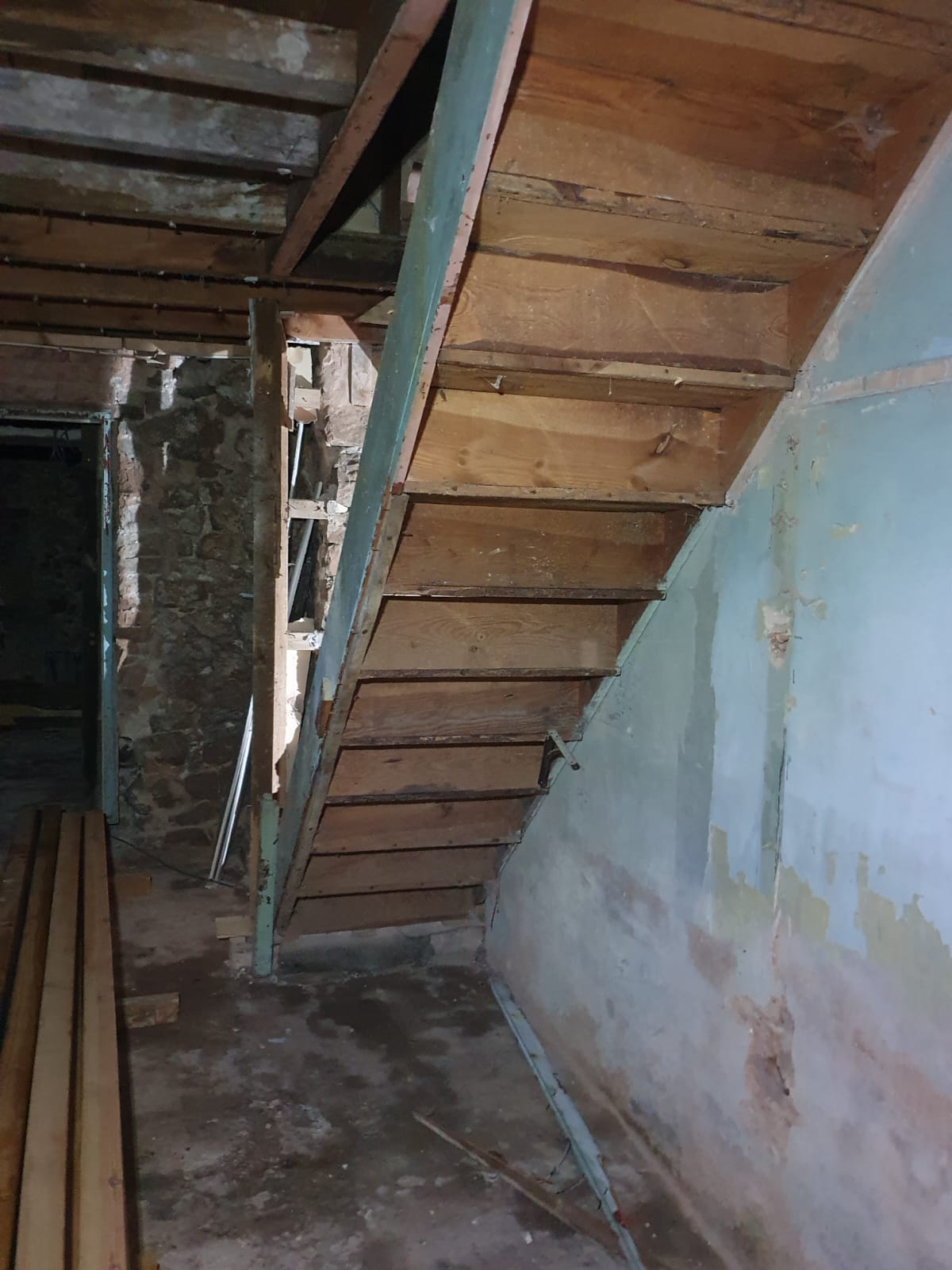
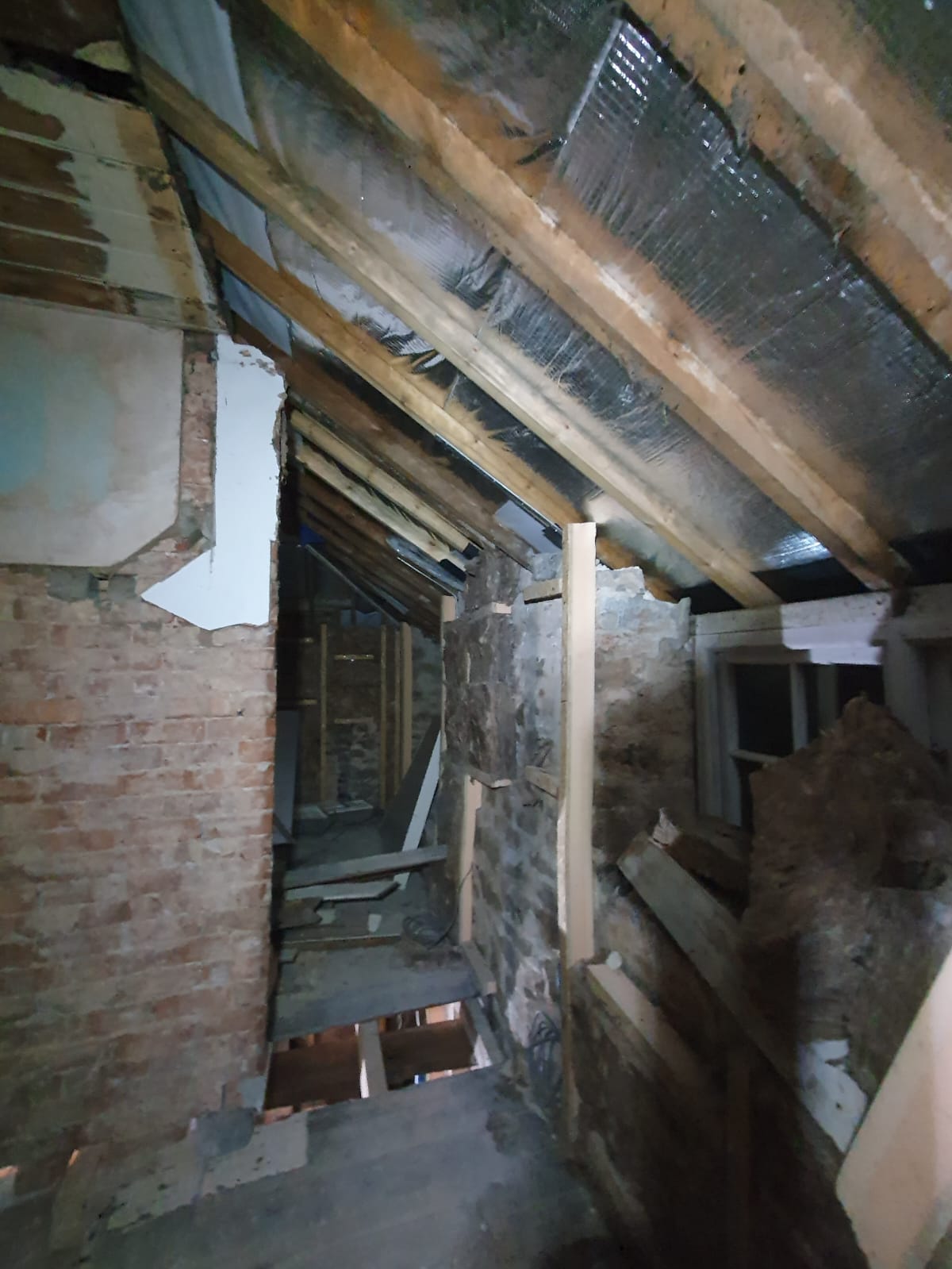
Chris’s day at the house was amazingly productive. As well as a bit of tidying he managed to get the stairs prepped for removal by taking away all the supporting wood. He also took out the rest of the doorway I had started to disassemble. He considered removing the stairs alone, but realised that it would be easier with two people. And, of course, he’d never hear the end of it if I wasn’t there to see the stairs finally come down.
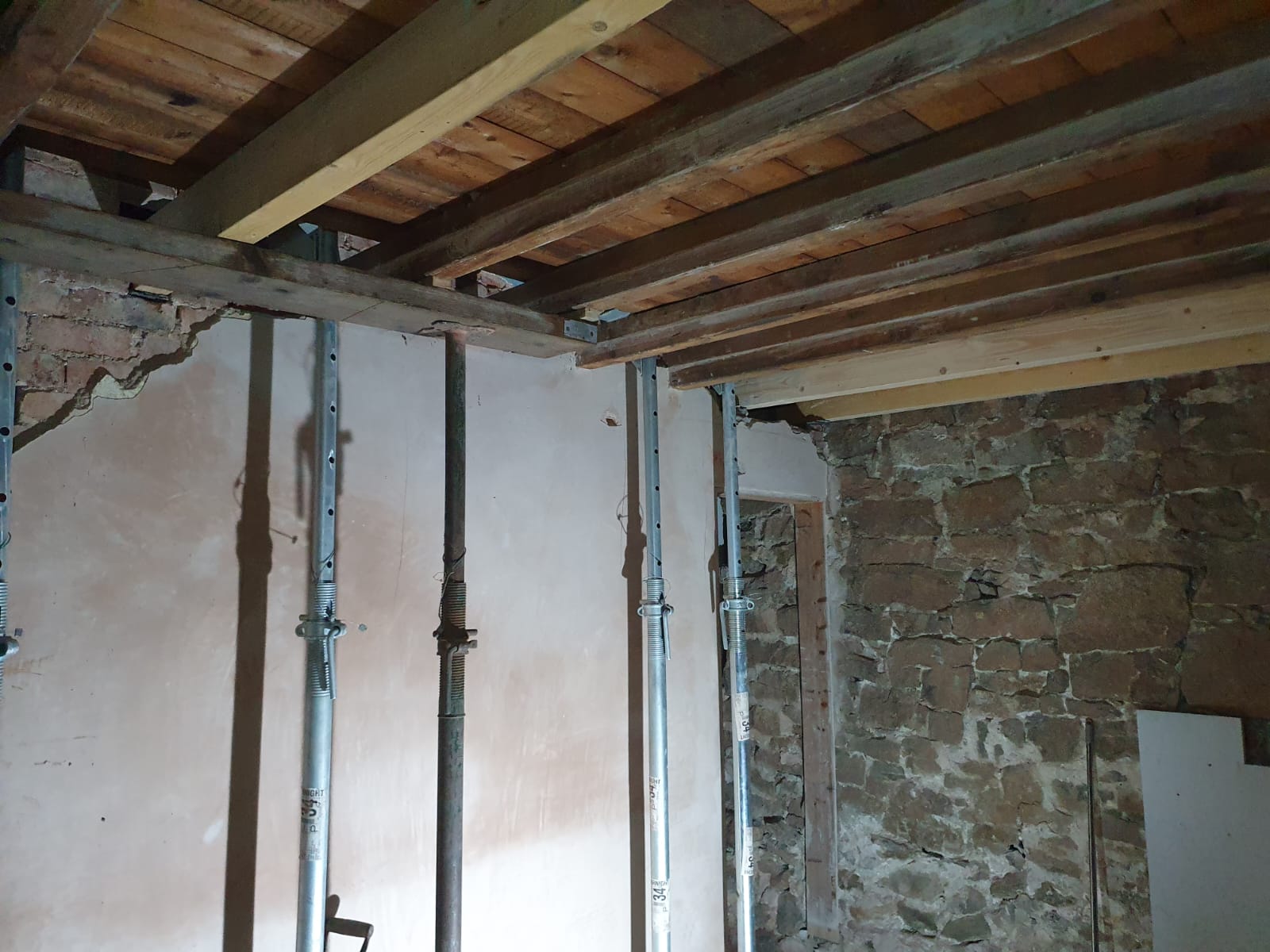
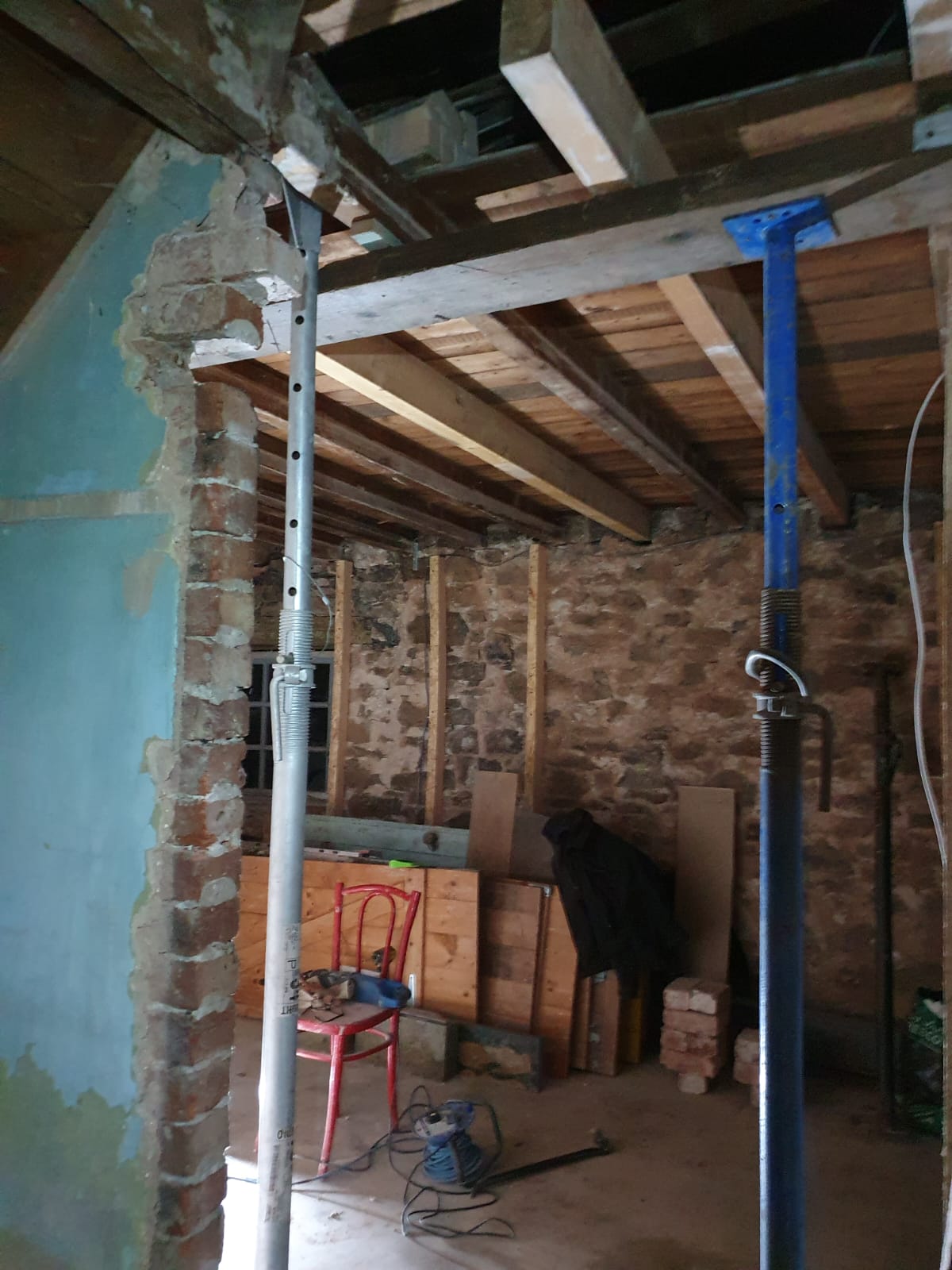
Downstairs he then prepped the wall for demolition, taking out one doorway and inserting the acro props where required.
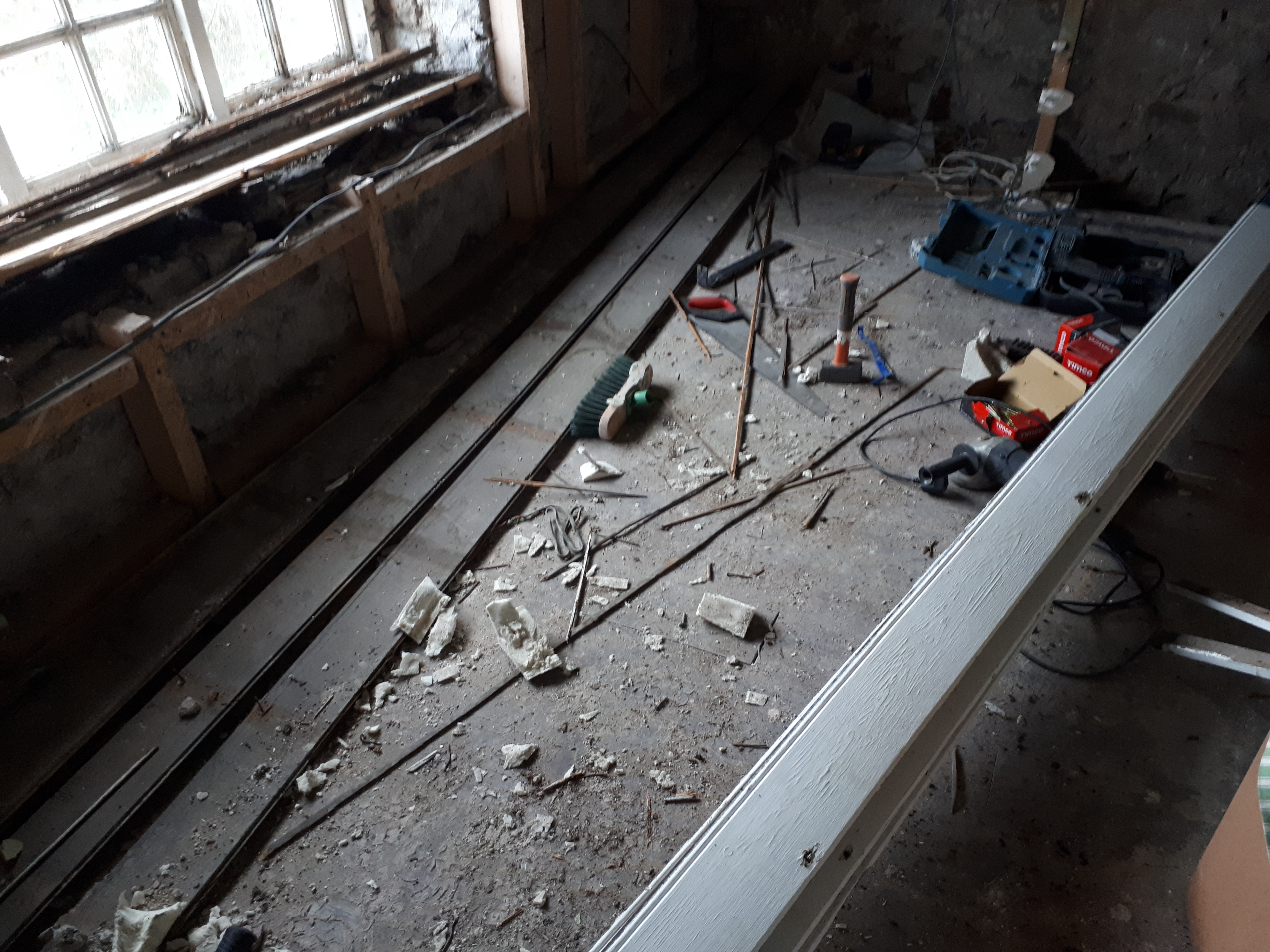
My day alone was more fiddly, and less physical. All the boards we’d removed from the ceiling needed prepping to go back up. This meant removing all nails and any loose bits of wood.
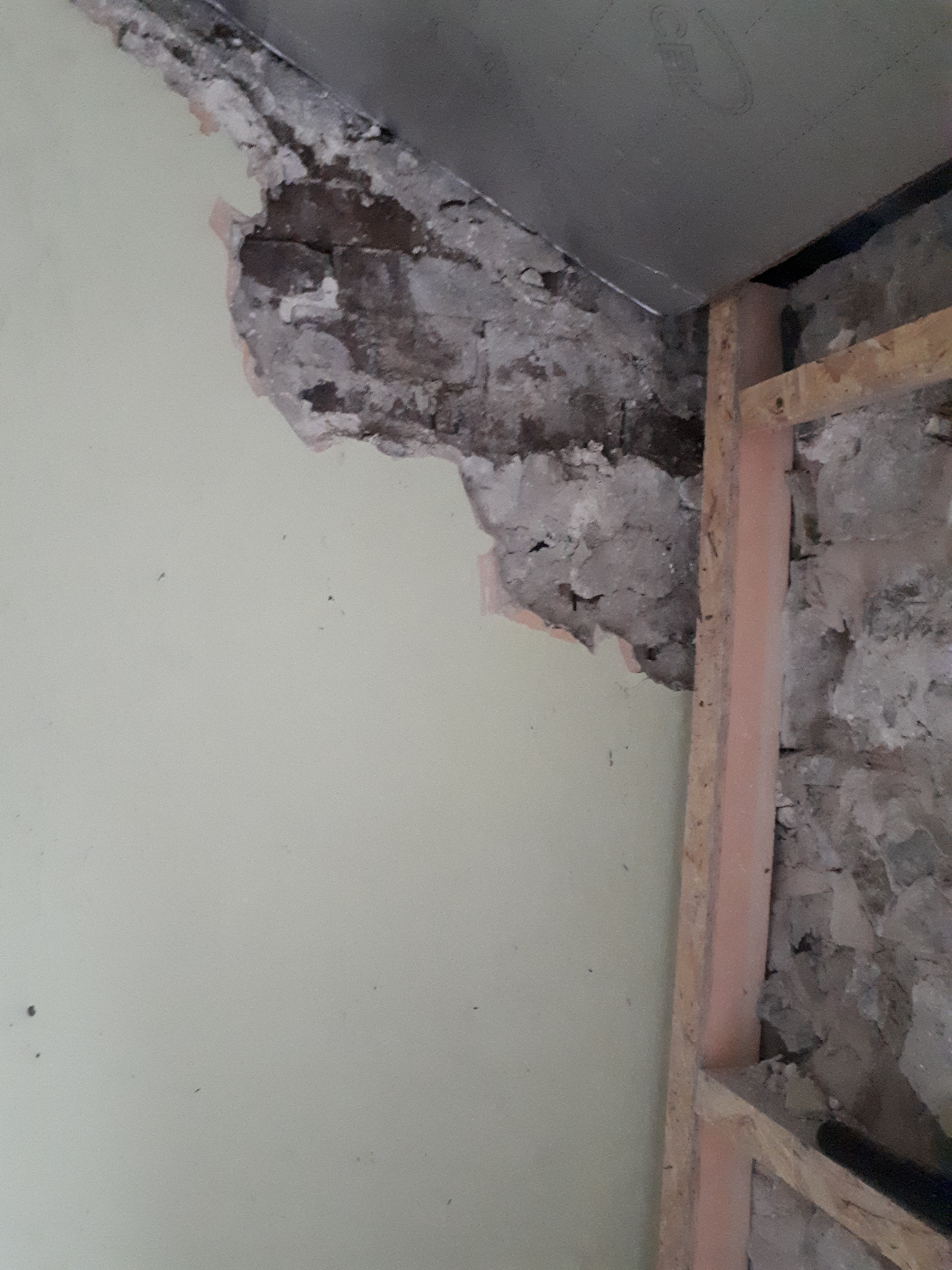
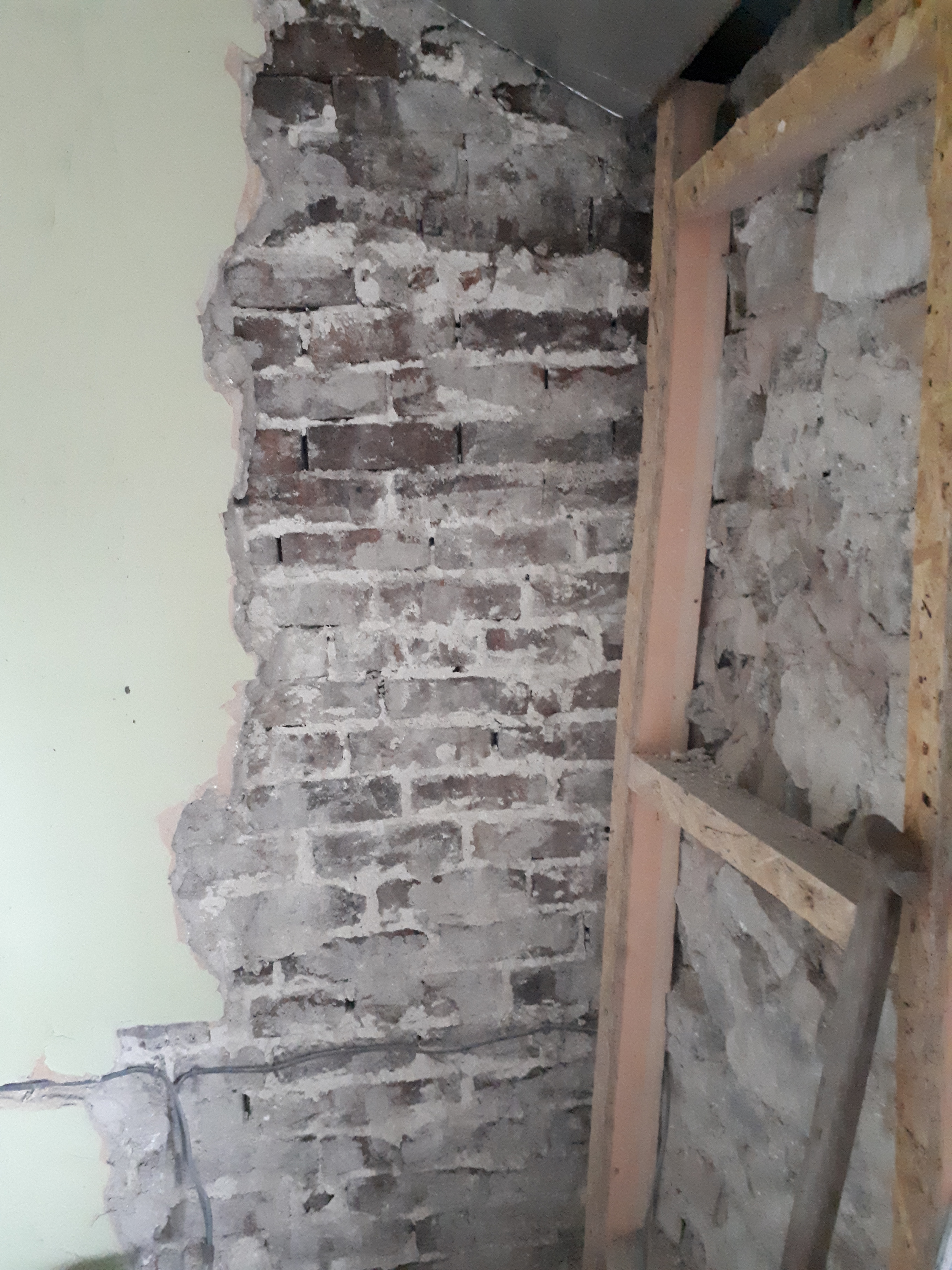
There are very few walls left with plaster on them, but Chris pointed out the otherw day that any internal walls would need stripping up to a meter from the edge, as the external insulation will be added to the first section of internal wall to reduce heat loss.
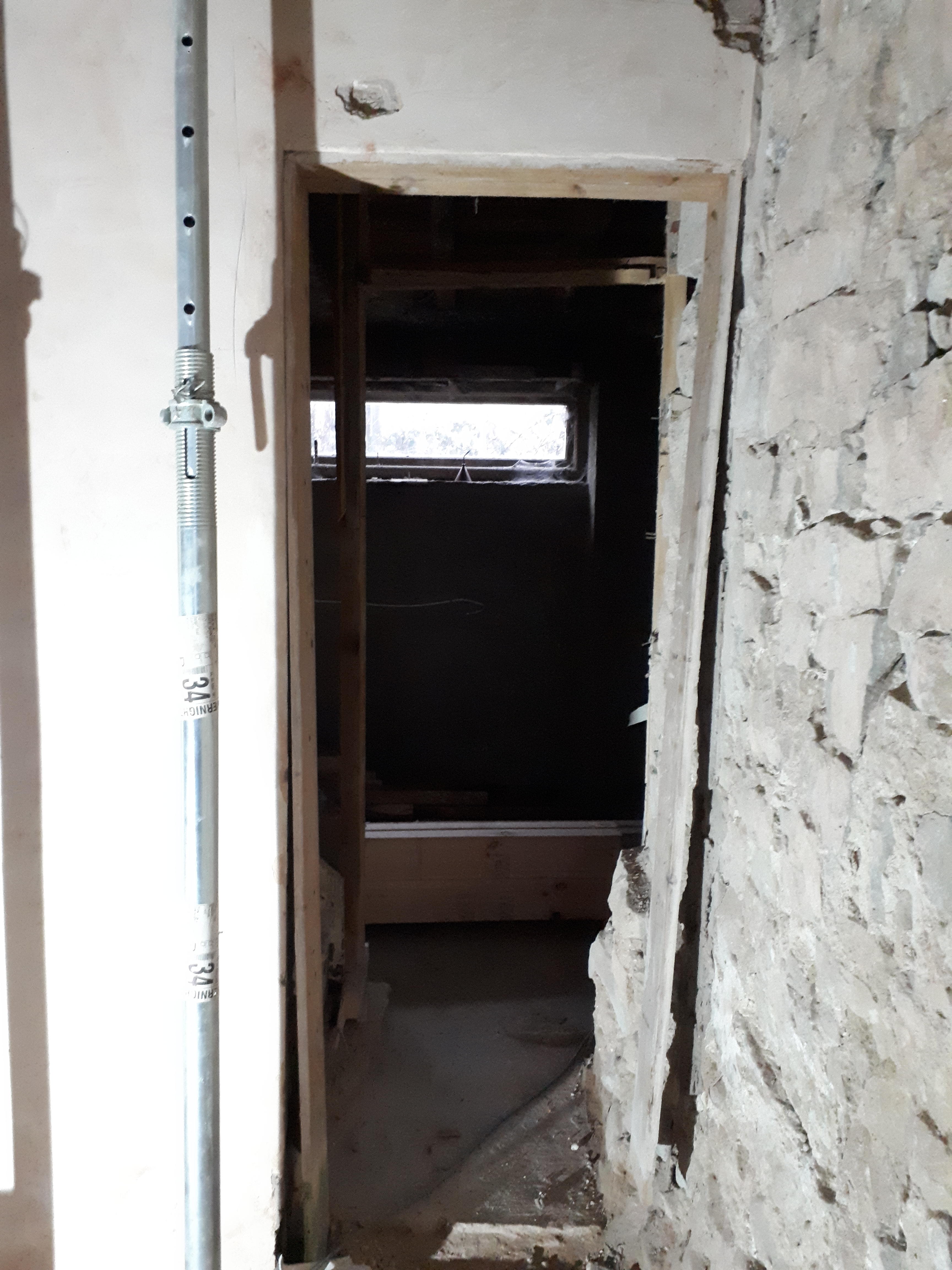
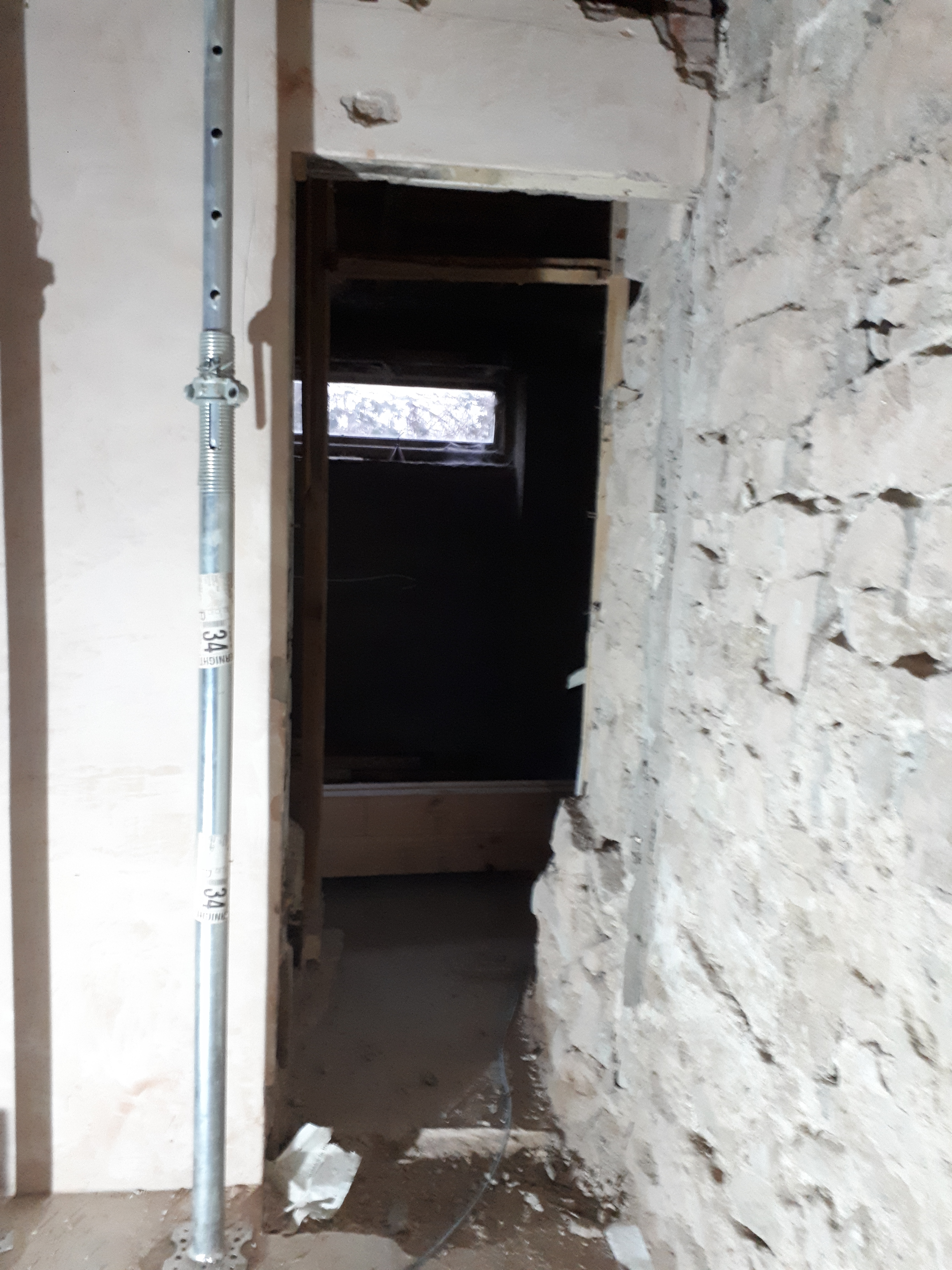
A final small job was removing the other doorway from the wall that was going to come down.
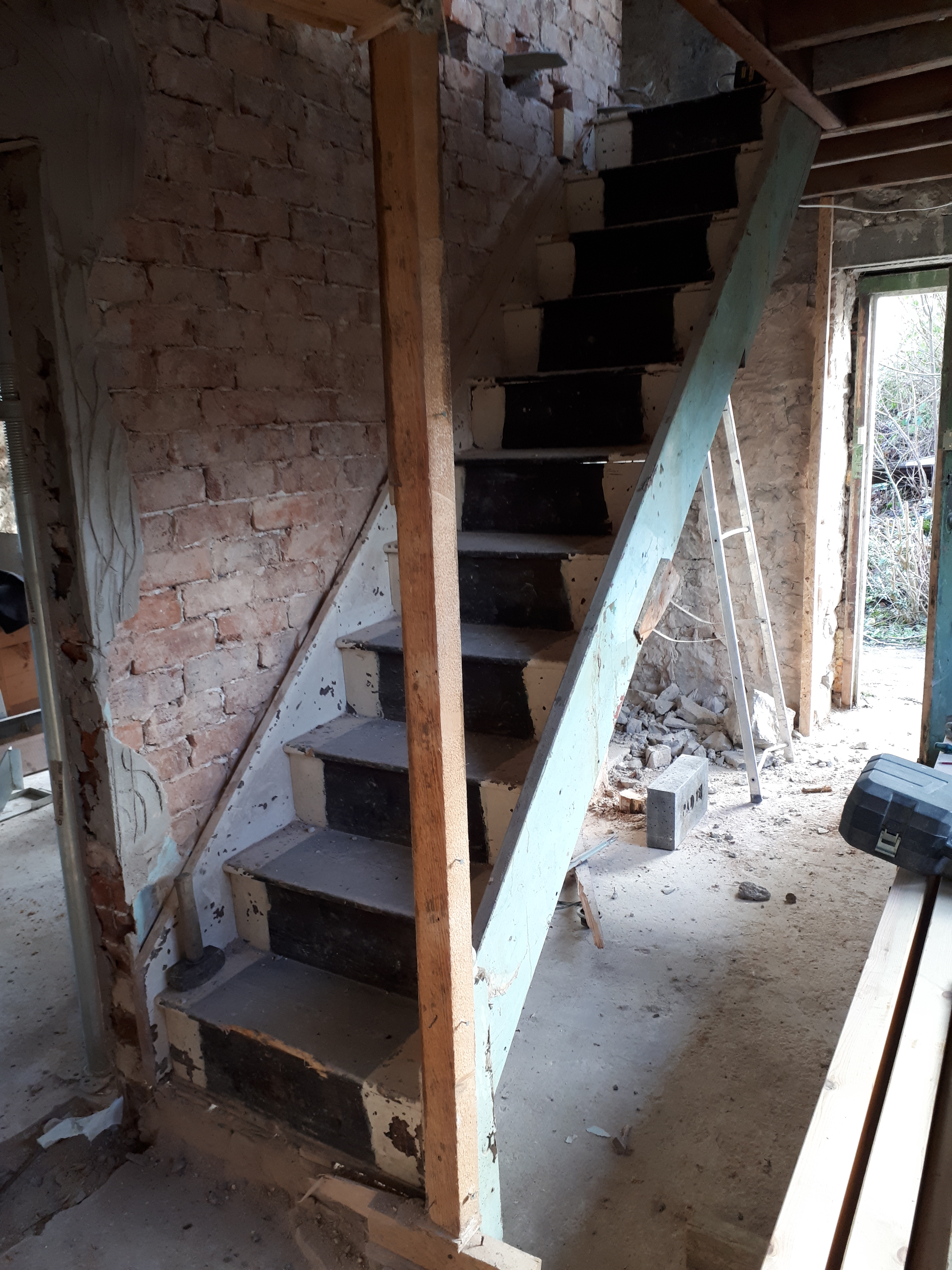
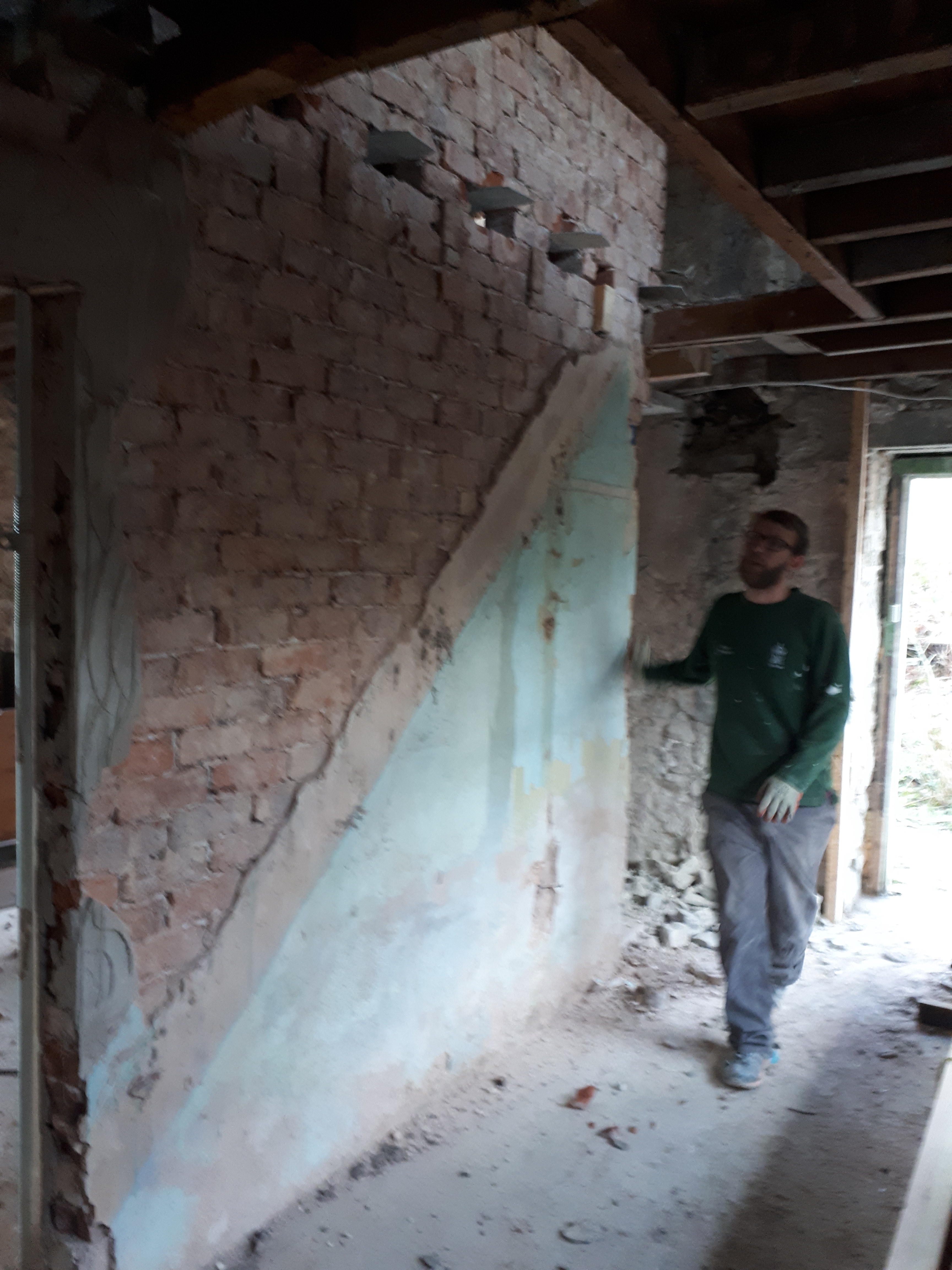
Having accomplished so much separately we were in a good place when we returned to the house on Christmas Eve. Our first job was to remove the old stairs. Despite Chris’s insistence they would just slide out, we did have to cut through a fair bit of wood to get them loose. As with all wooden structures in our new house, the previous workmen/women had insisted on sticking six inch nails through everything they could. Alarmingly we could see the brickwall above wobble as we tried to loosen the stairs from their nails, meaning we resorted to cutting them out, for fear of toppling the wall we were trying to save.
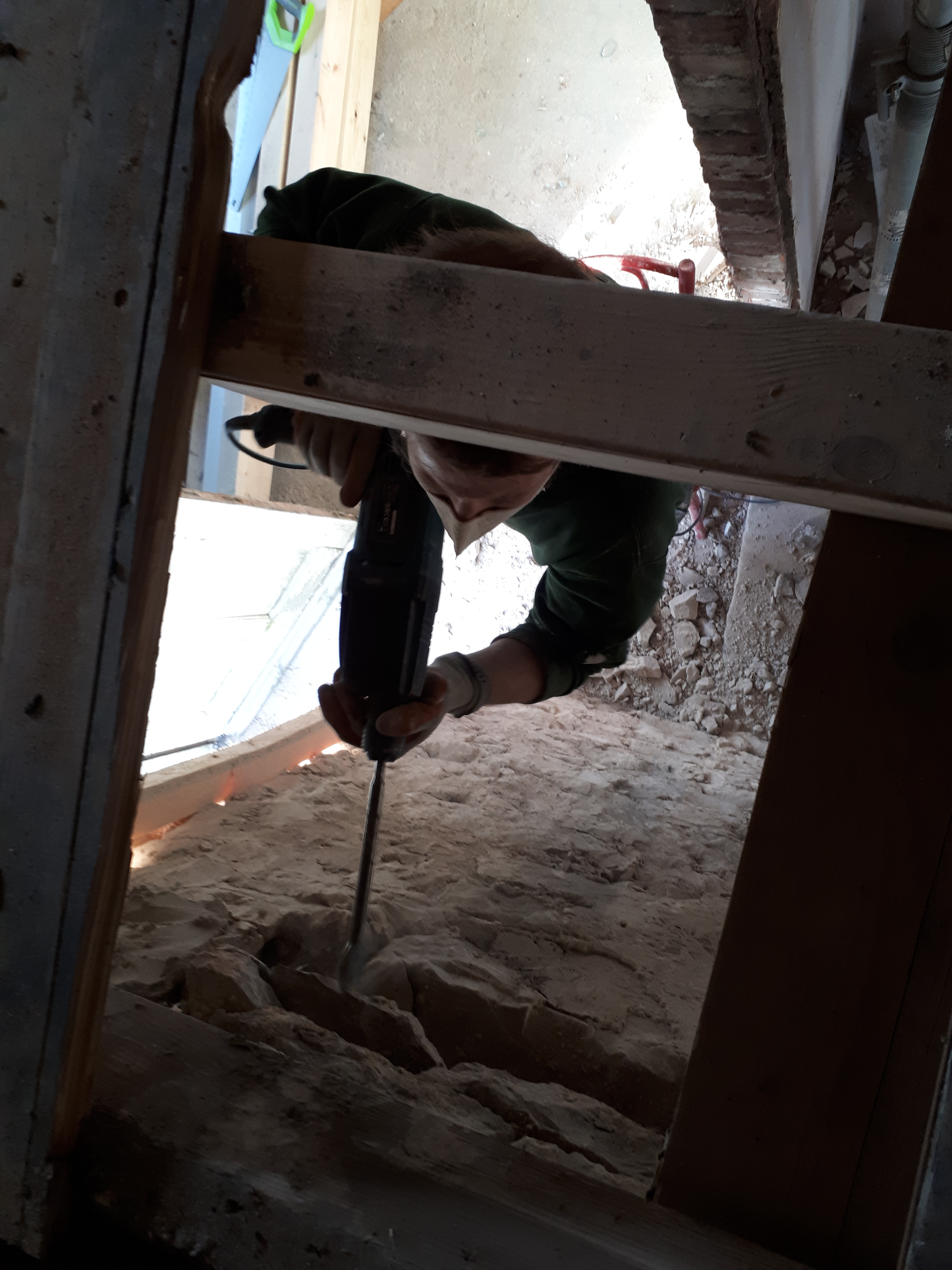
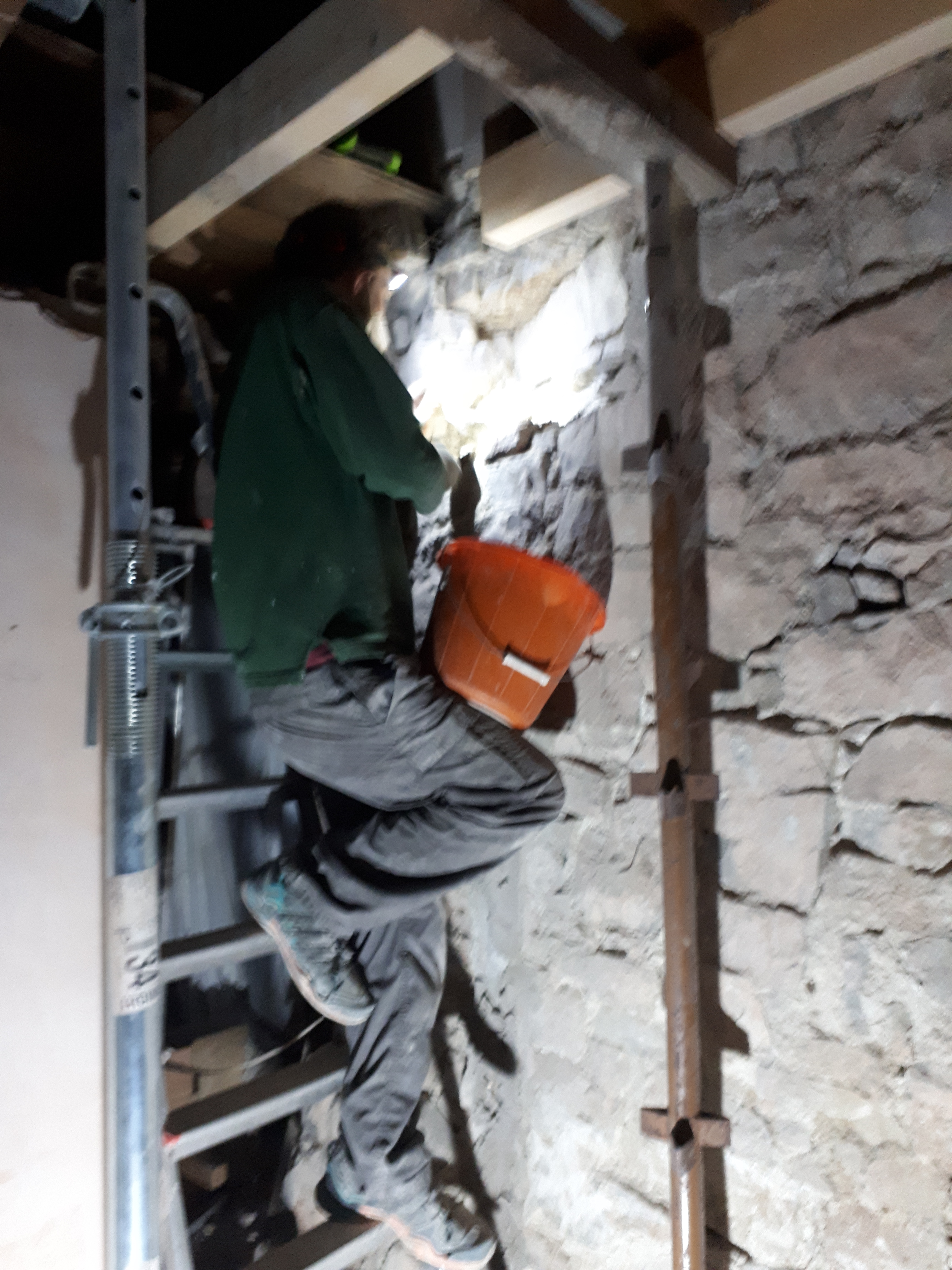
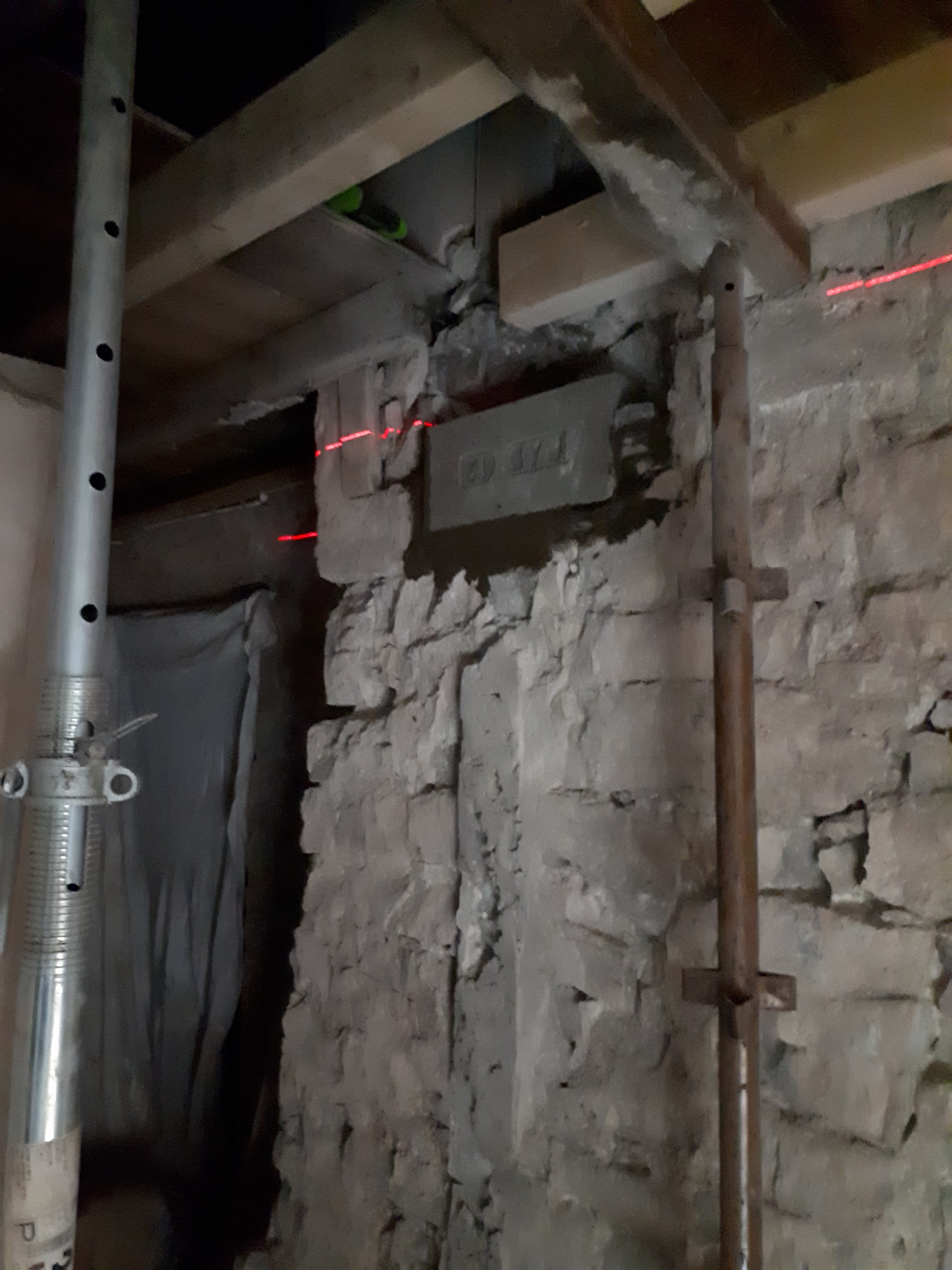
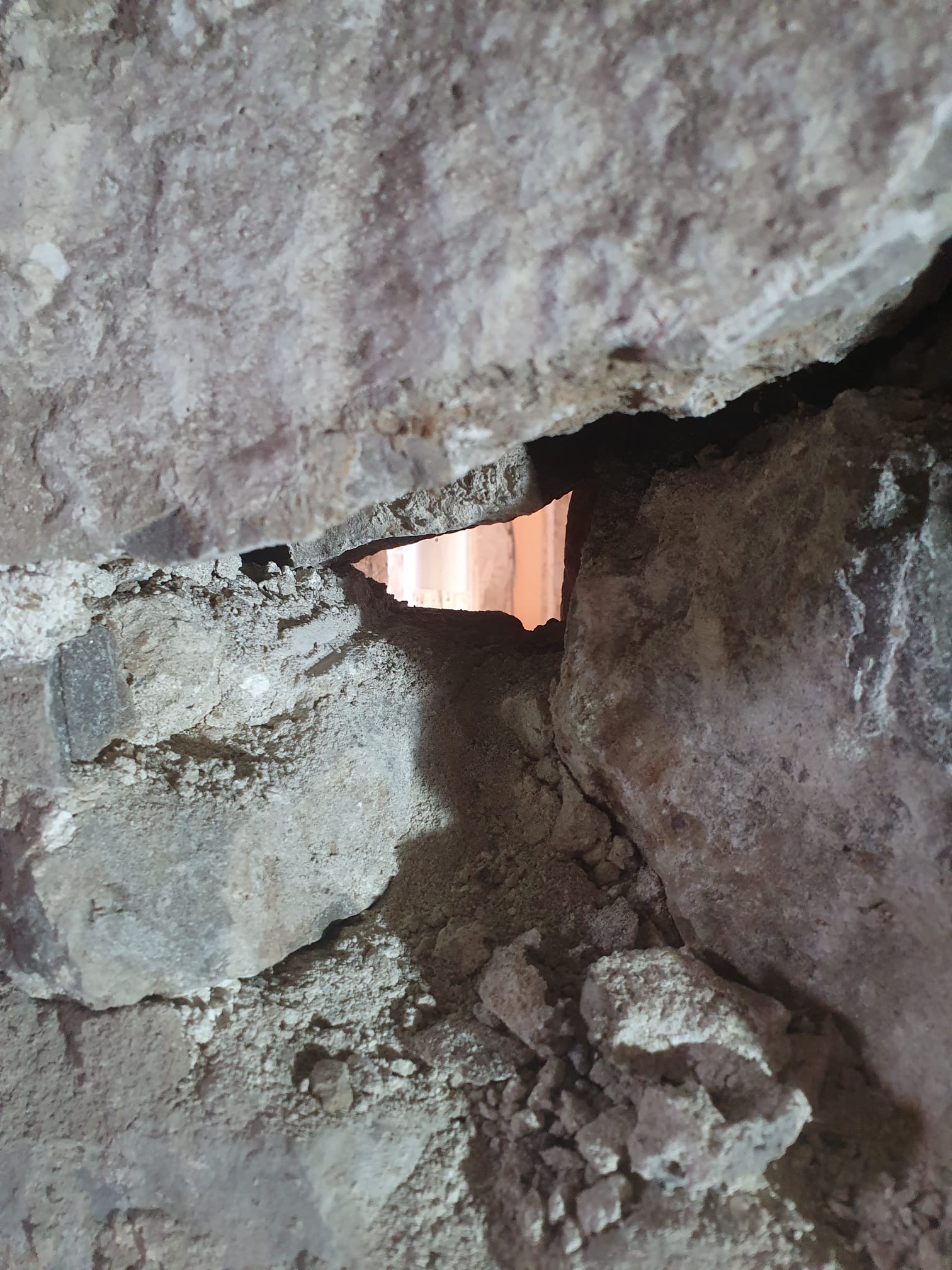
Our final job was to install two pad stones, for the big steel to sit on. While the pad stones in the attic had been fairly straight forward, building them into the thick walls downstairs was time-consuming, particularly as it involved breaking up very large stones to open up holes in the right places. Still, with the pad stones in and the concrete around them given a few days to set, we should be ready to take down the wall and install the steel next time we come to the house. It all sounds so simple when you put it like that….
-
Bah-humbug!
There are days when everything just seems to go wrong. After having a day off DIY for Chris to give his uncle a hand with turkey plucking, we were hopeful of a productive Sunday. Having had a massive stack of insulation delivered, which is now filling up most of our lounge, we began by trying to get it cut to size ready to screw into place.
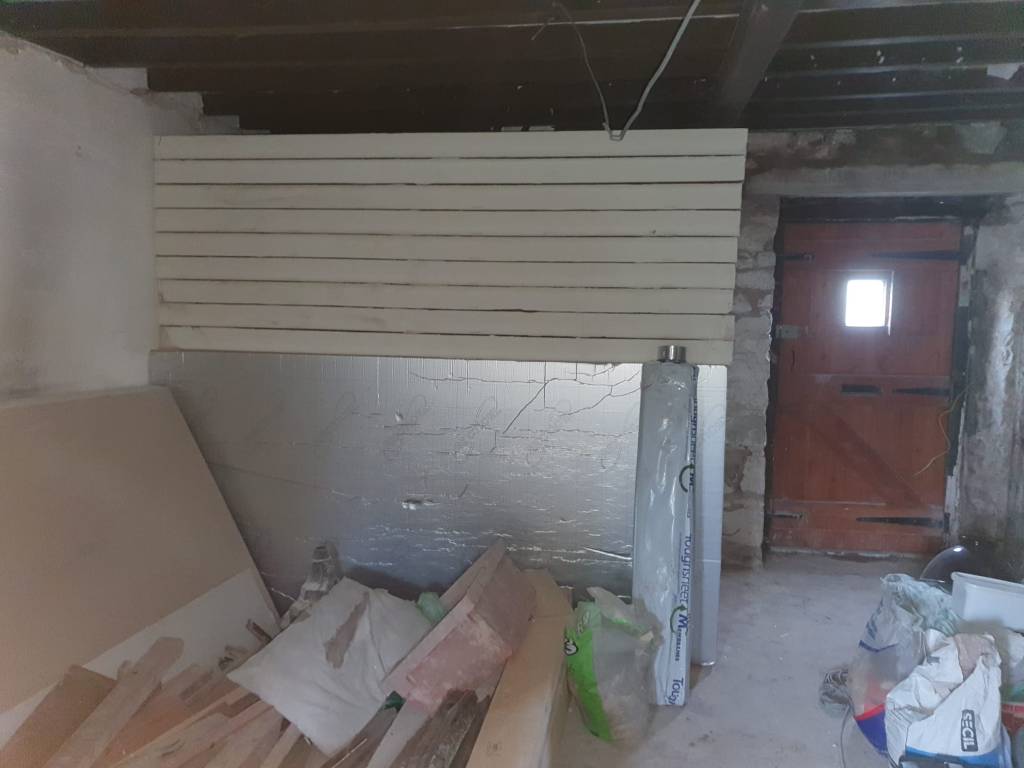
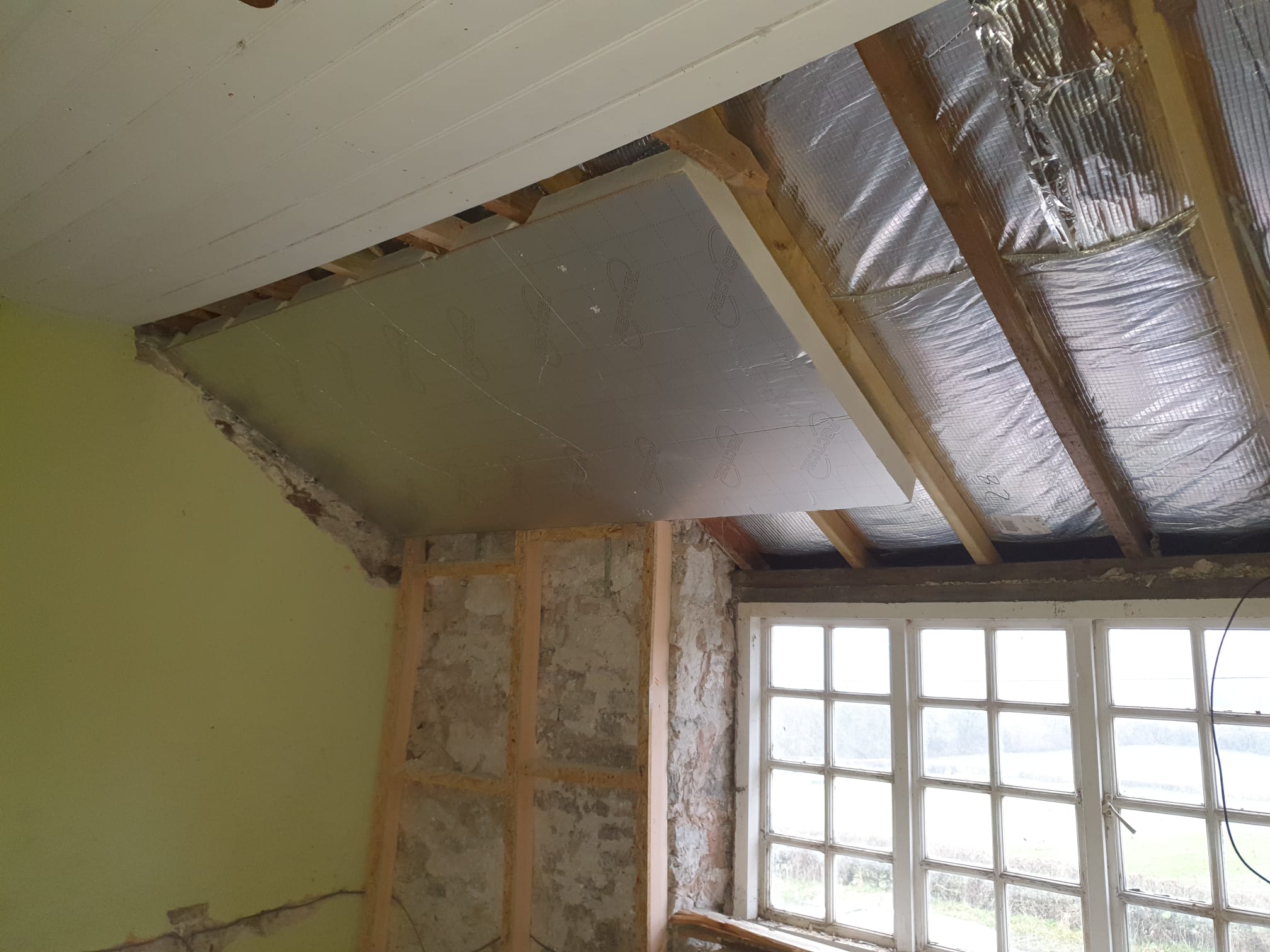
Although light, the large insulating boards were awkward to work with, and all the bits underfoot from removing the wooden ceiling, made it difficult to manoeuvre. In order to fit the insulation in as close to the roof insulation as possible, we had to remove a few more boards, and then mark and cut out recesses for the ceiling hangers. Fiddling around with such tight margins was in itself frustratingly slow, but add to this the fact our walls and roof are impossibly wobbly and the boards fairly stiff, it seemed a little bit of an impossible task.
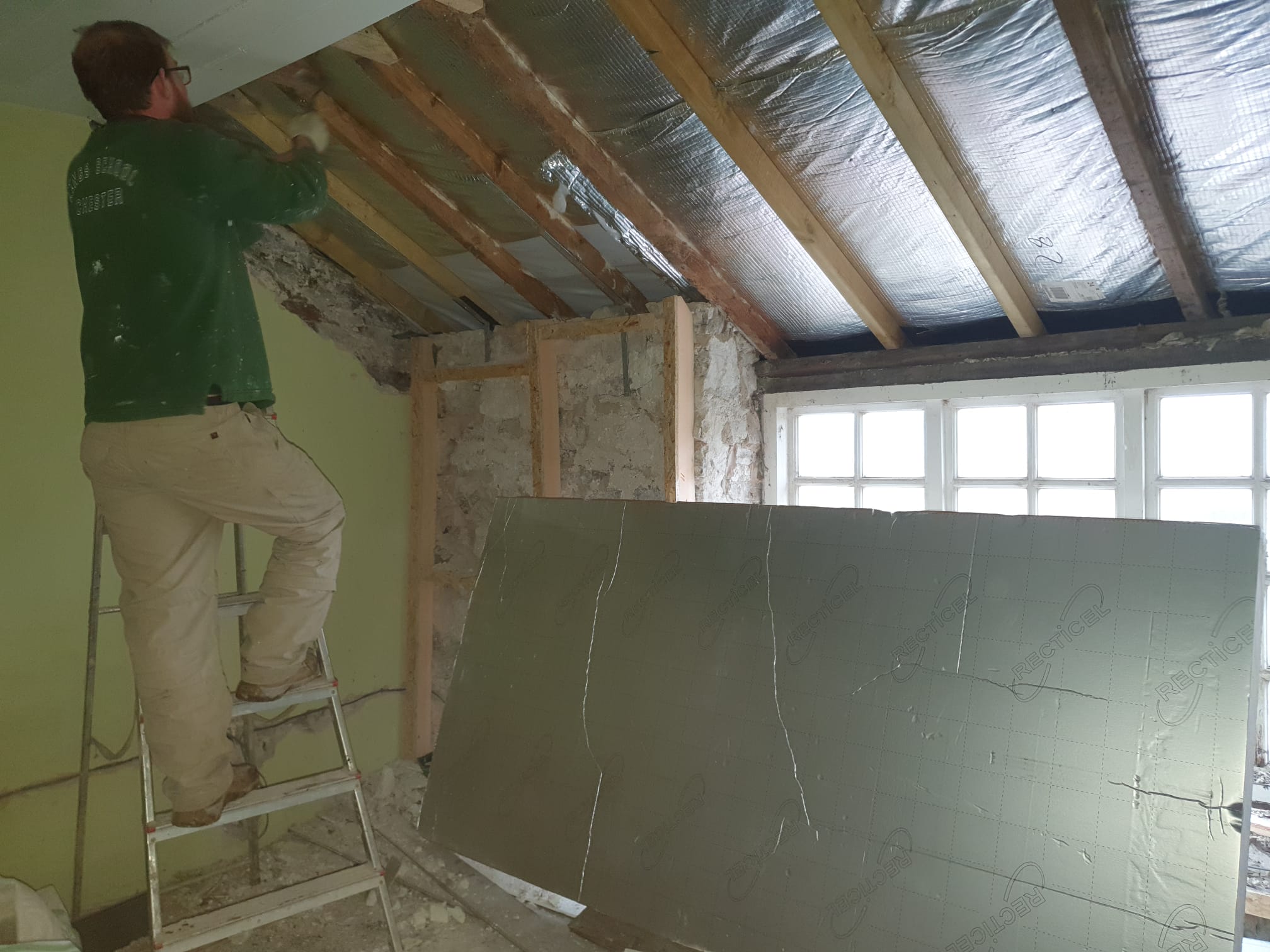
The final, and literal blow, came when I managed to drop a crowbar on my face (surprisingly little damage, but still painful). Chris didn’t escape the curse of the day, however, slipping on ice and landing on his back on our dog walk.
With all that we decided to call it a day. Four bits of insulation done out of ten, so not a complete waste, but still a less than perfect day.

-
Holding things together
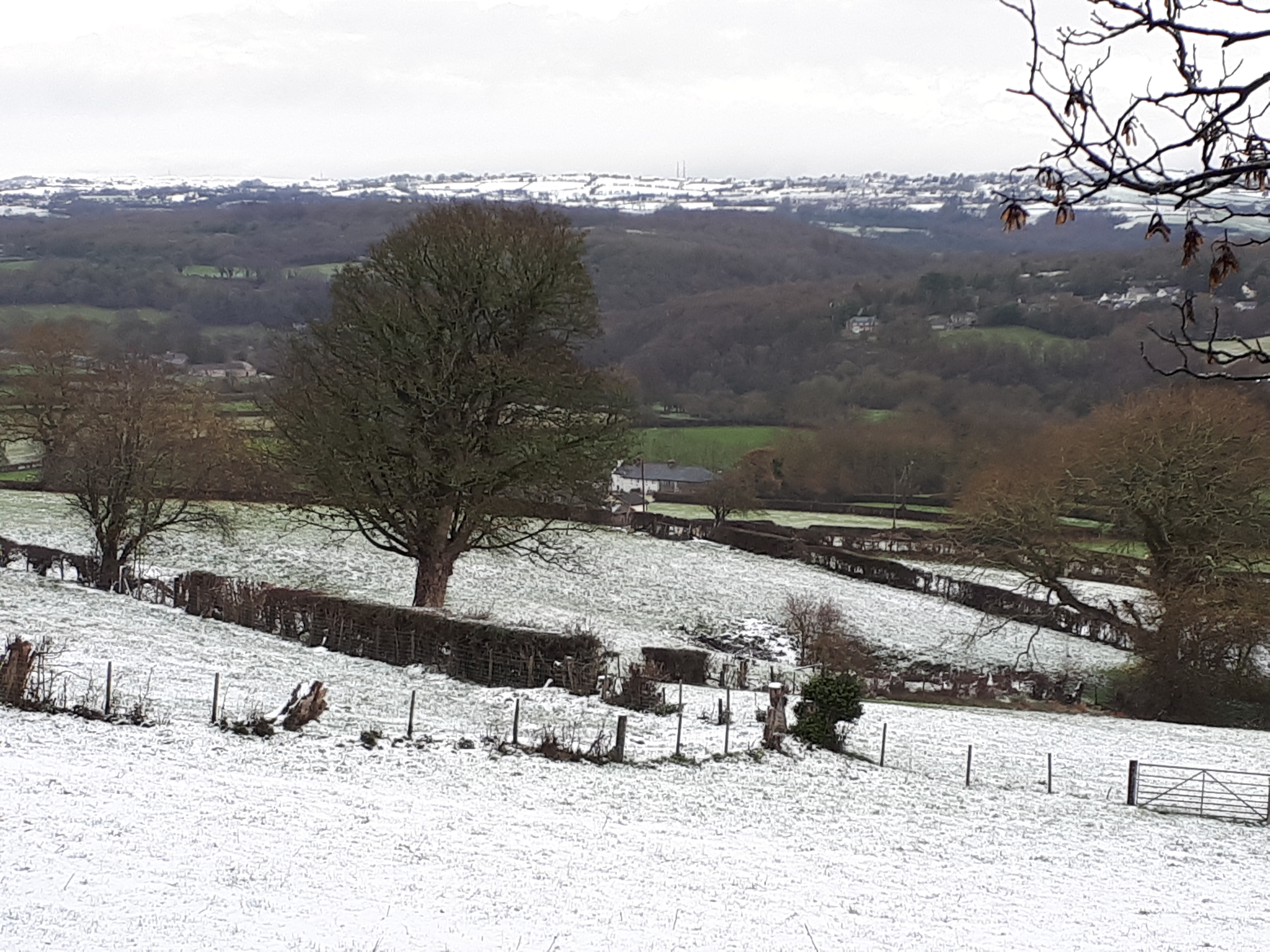
We arrived at the house this weekend to see a world of white. Being higher up than our current house, we drove from frost into flurries of snow. The highest hills were completely white, with the valleys still largely green.

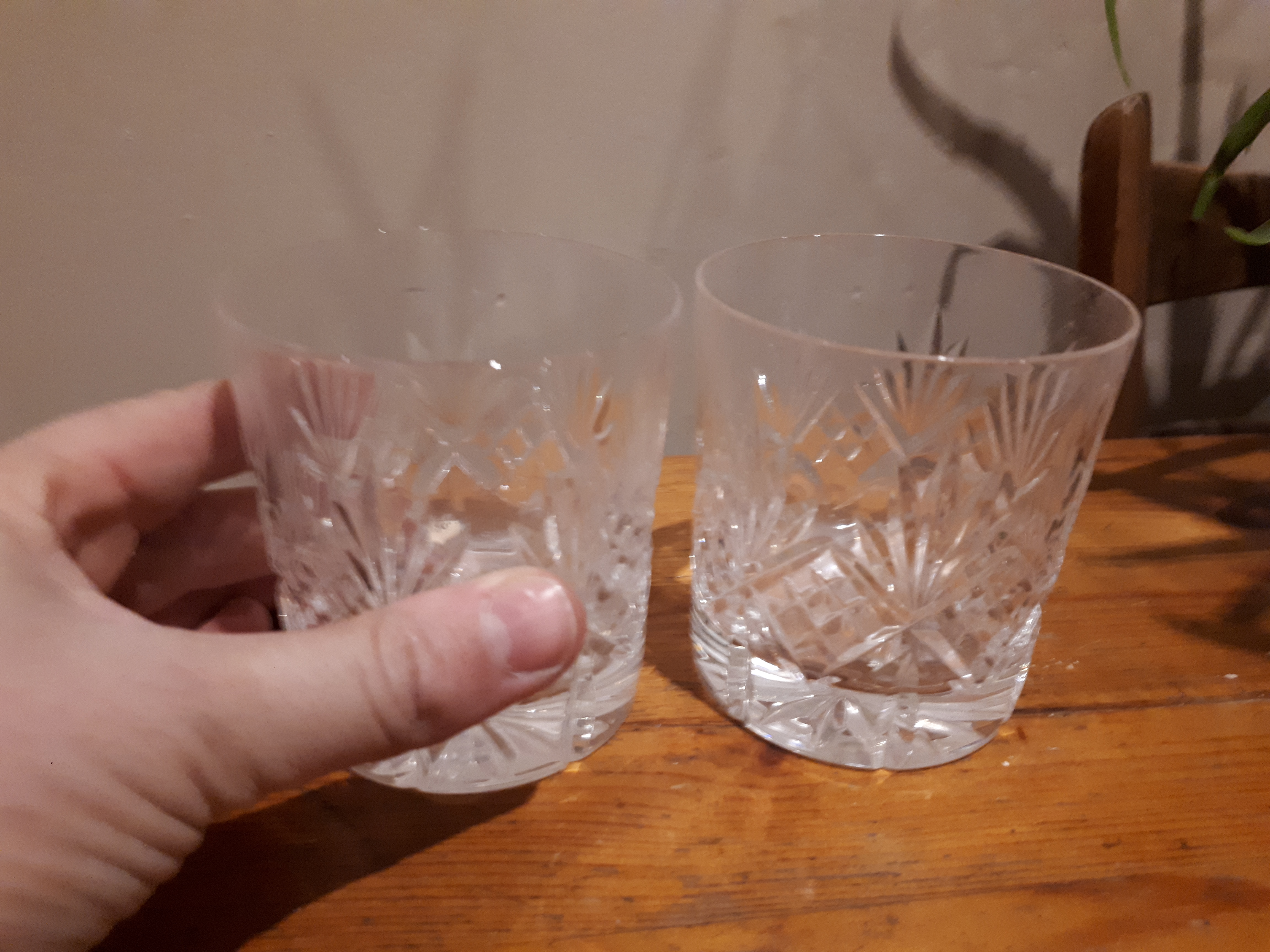



We started out by clearing out some of the last few bits and pieces left to us as part of the sale of the house. Within the recently sold Welsh dresser we had a large number of glasses. Sorting through what we wanted to keep, the rest went online for sale.
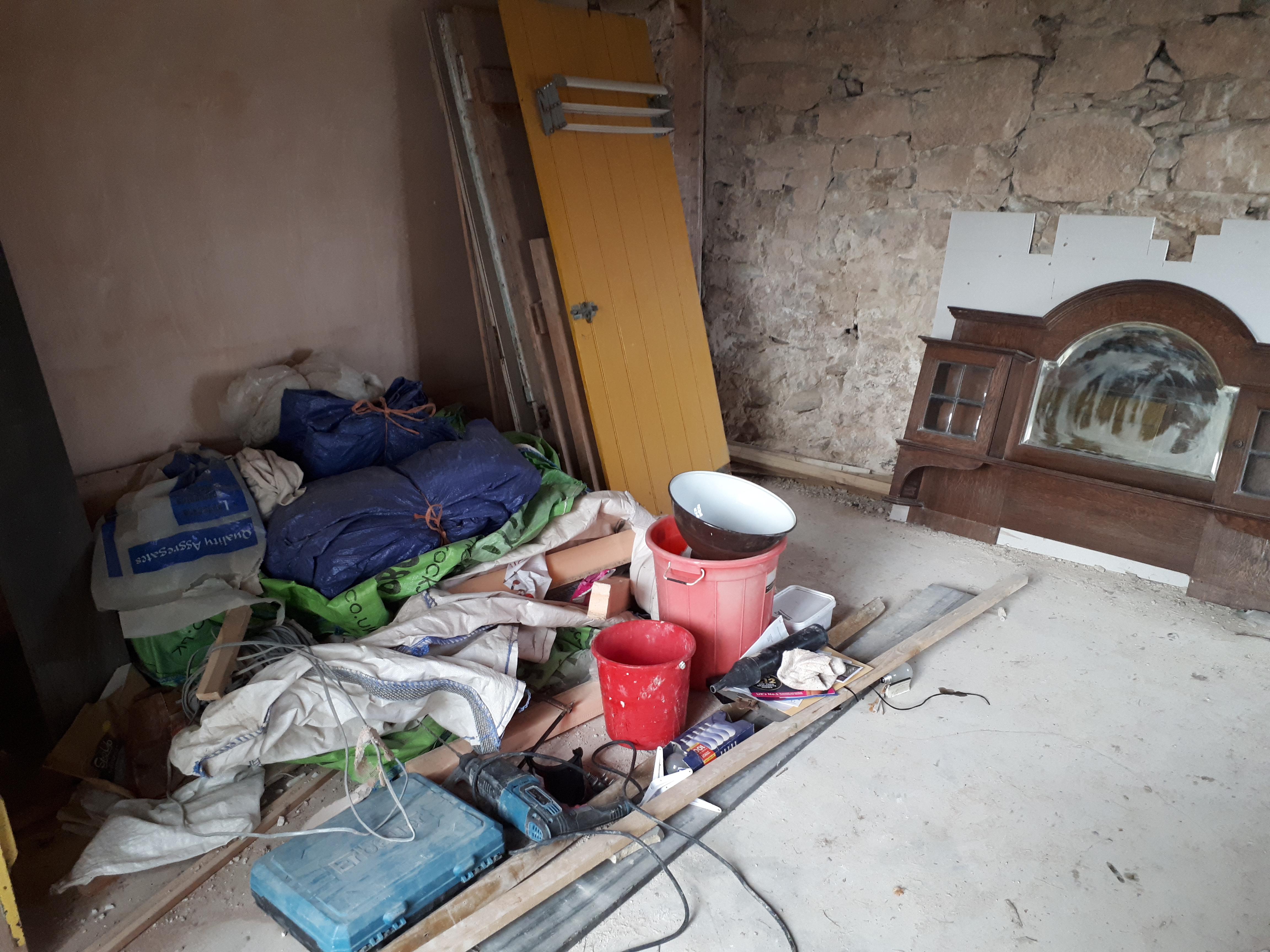
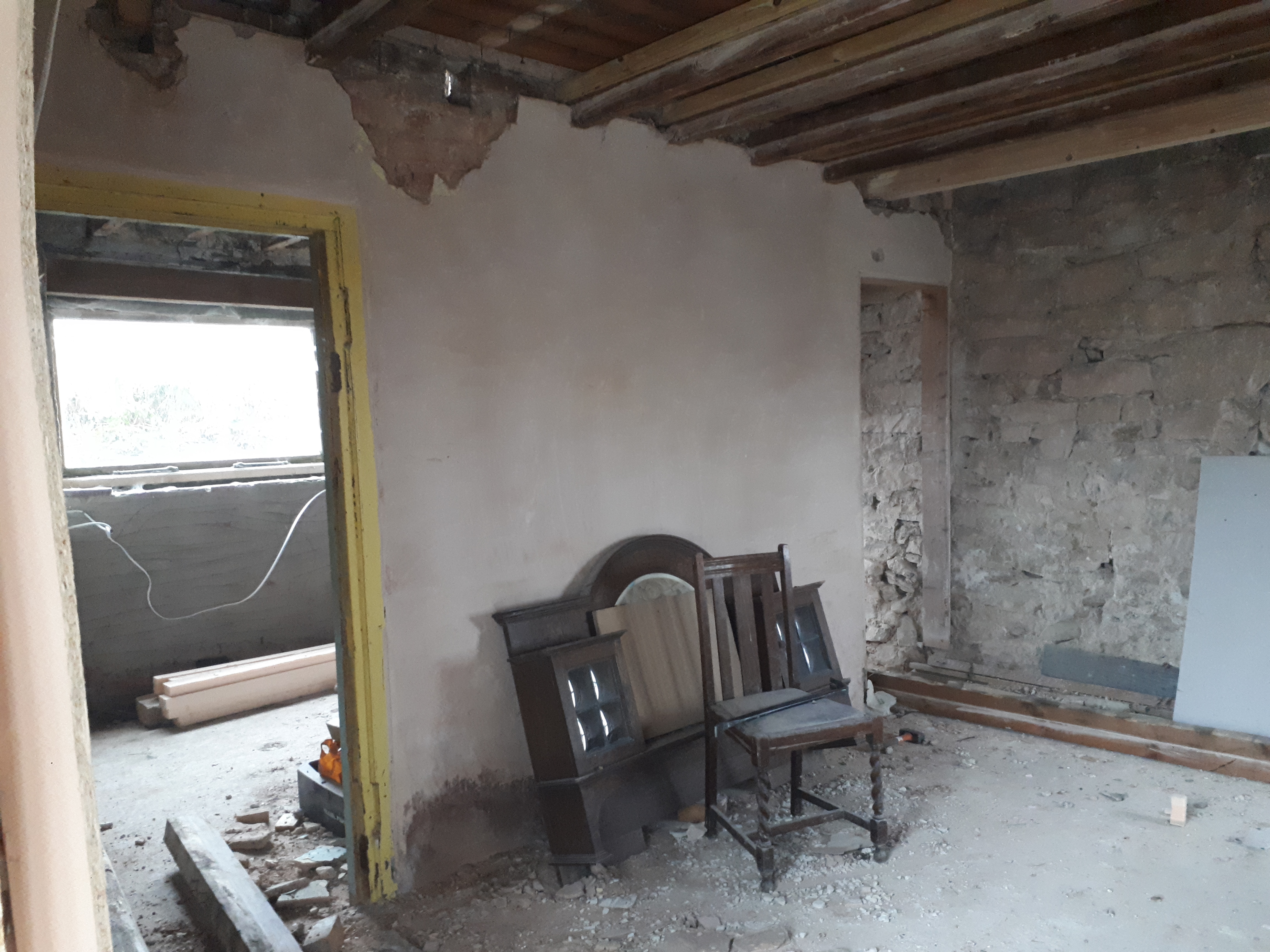
With the breakables removed we cleared out the rest of the items that had accumulated in the dining room and kitchen, ready to take down the wall.
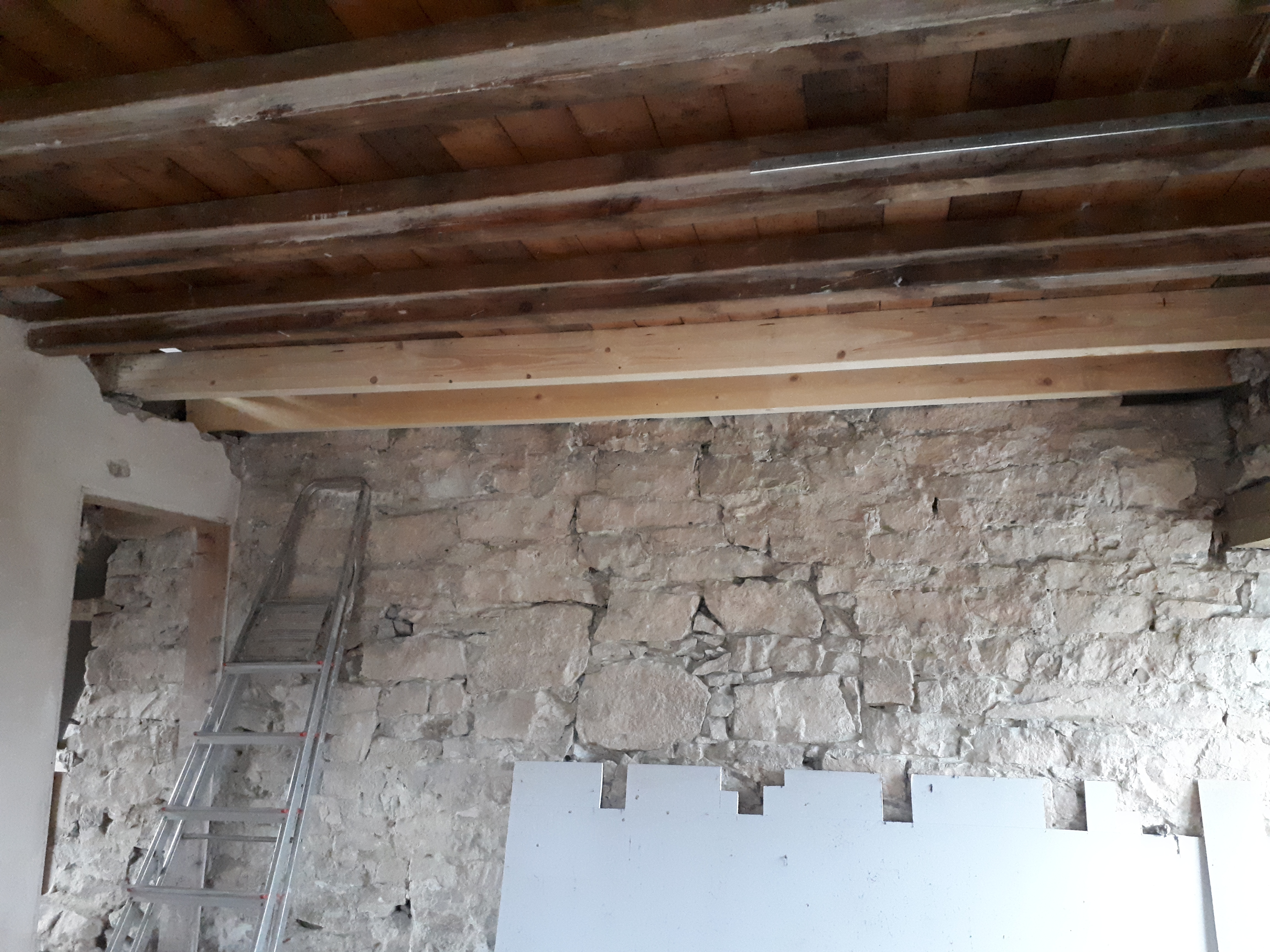
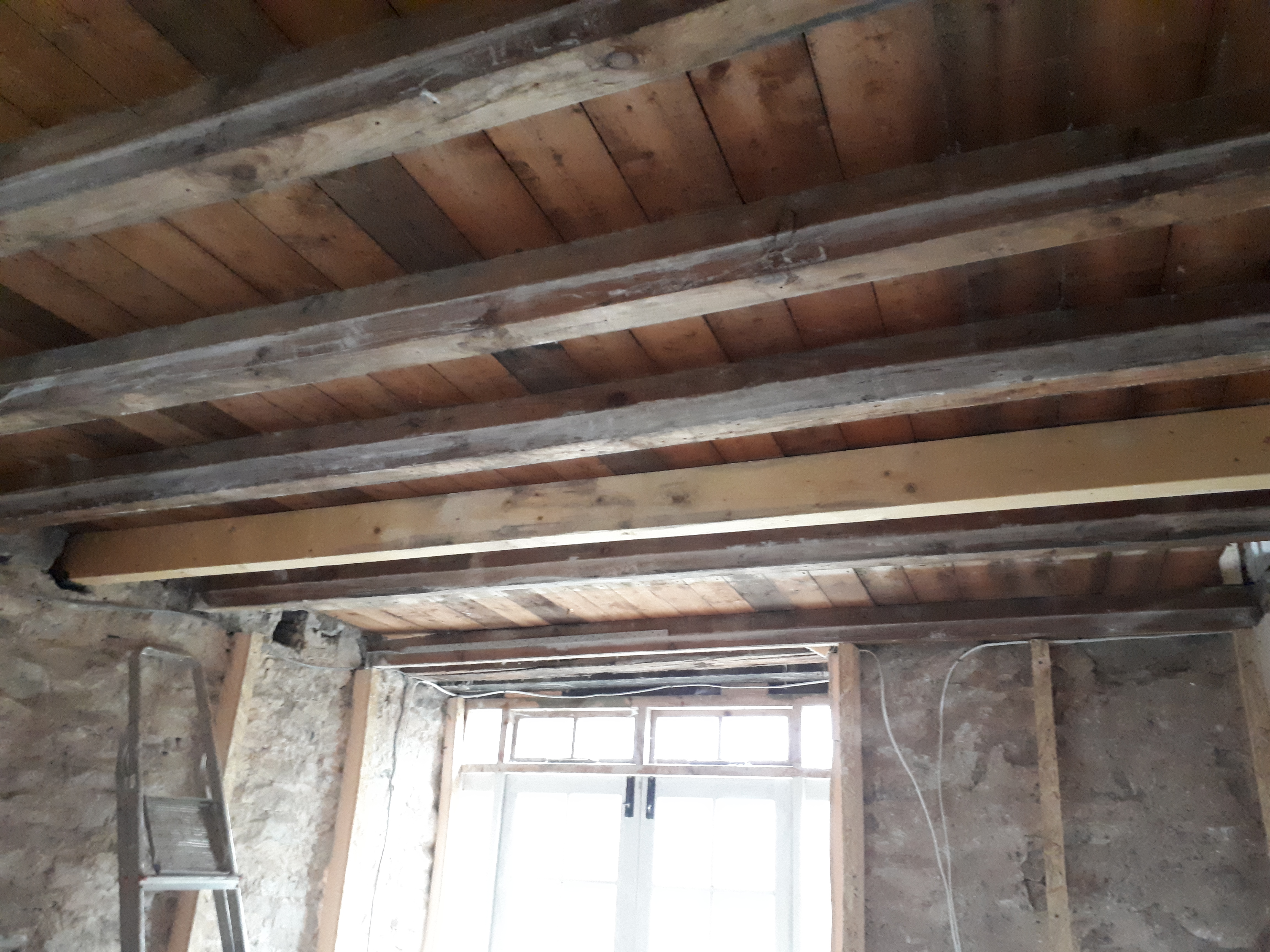
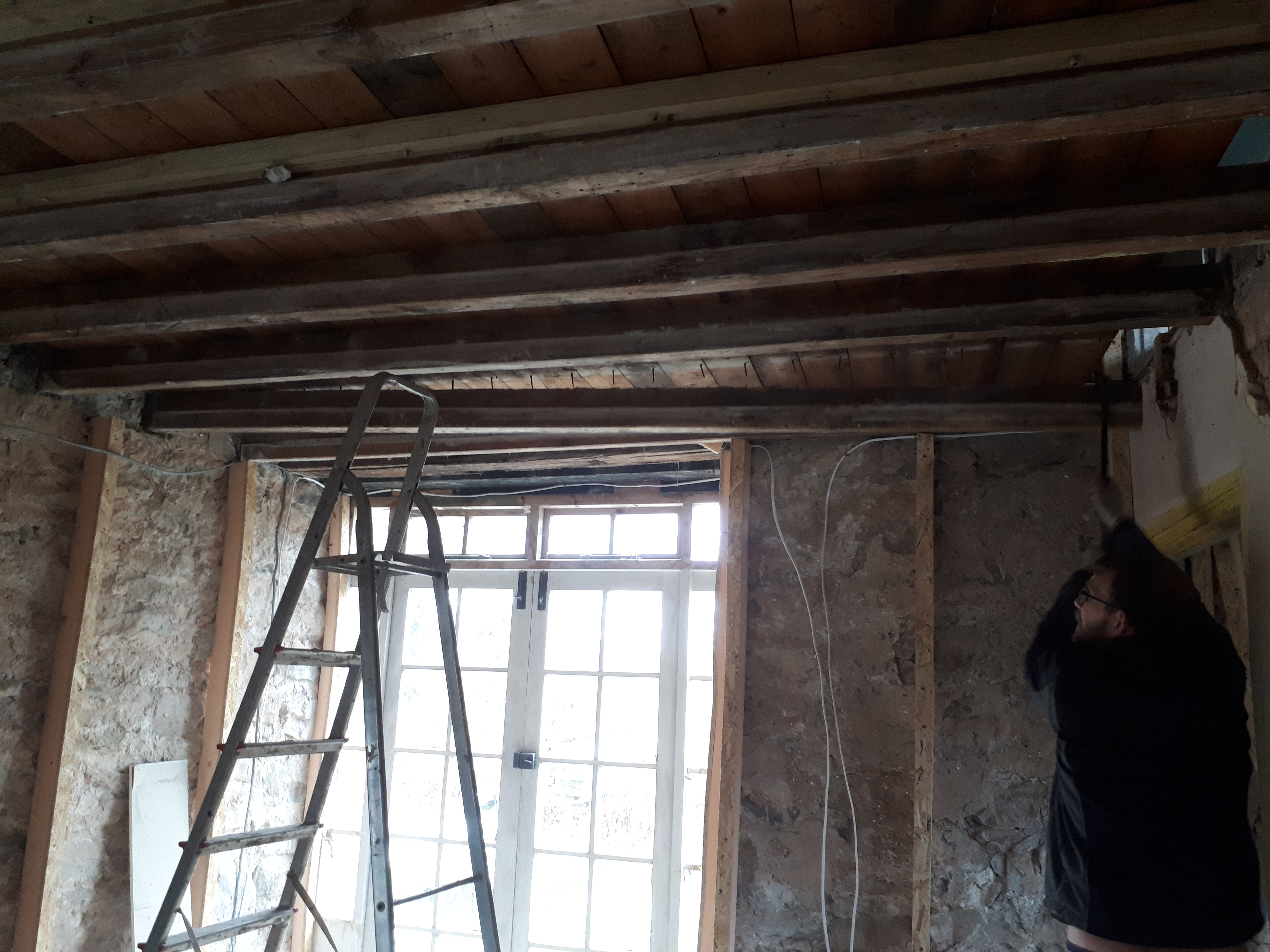
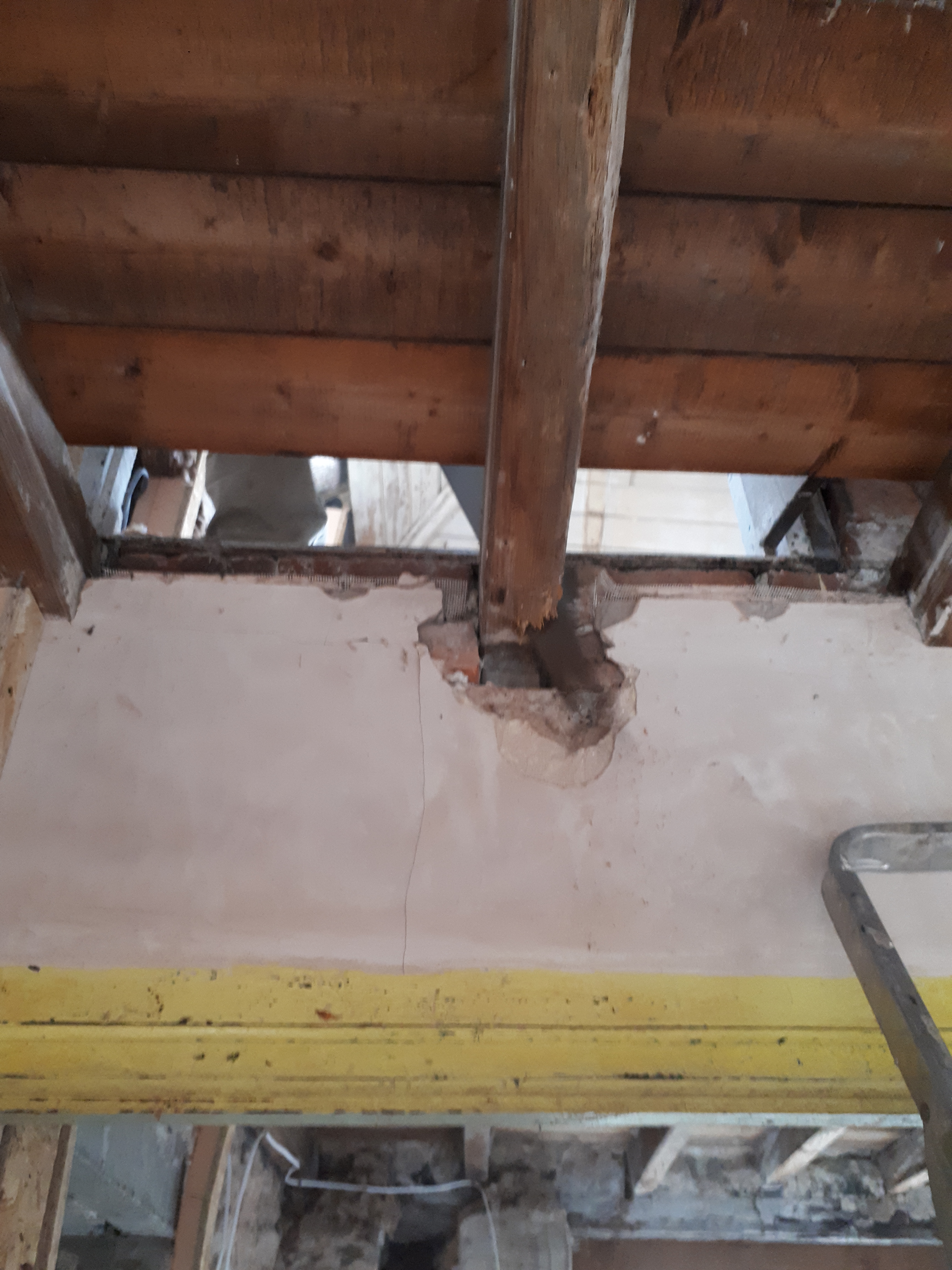
Our next job was to replace the remaining rotten beams in the dining room. Luckily we only had three to replace, as getting the beams out and back in is a fiddly job, involving a great deal of work with a crowbar.
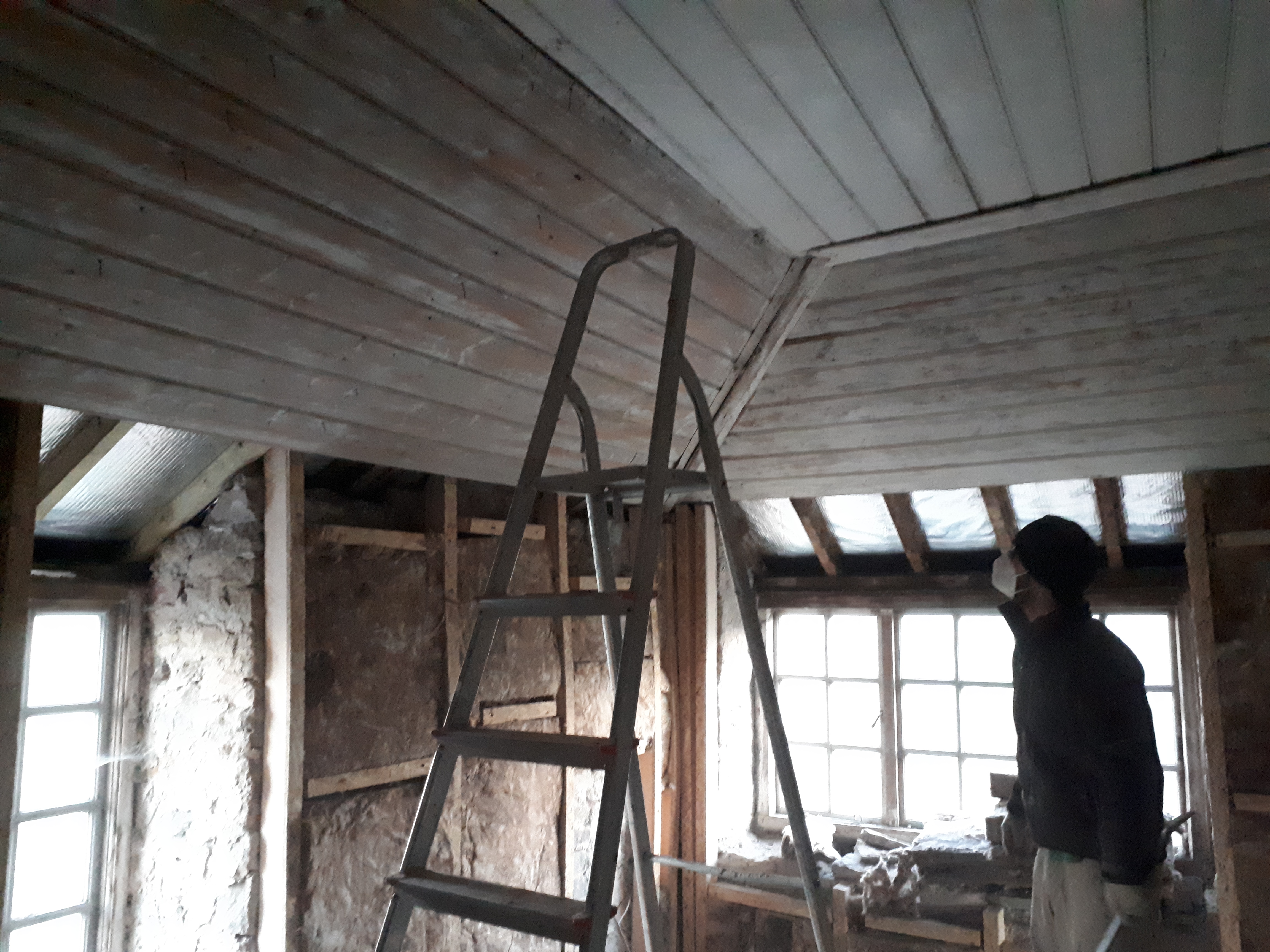

We had been debating for a while whether we could get away with not removing the wood panelling on the eaves. The argument for removing it is so we can put in a thicker layer of insulating material. The concern was that removing the very old, slightly woodworm eaten wood would cause it to break. The wood panelling on the ceilings seems to have been there for a long-time, and is part of the character of the house. In the end we agreed to try and remove the panels as carefully as possible. Luckily most seem to have come off well, though we may need to change the ceiling in one room to something plainer, to reuse panelling in the other rooms.

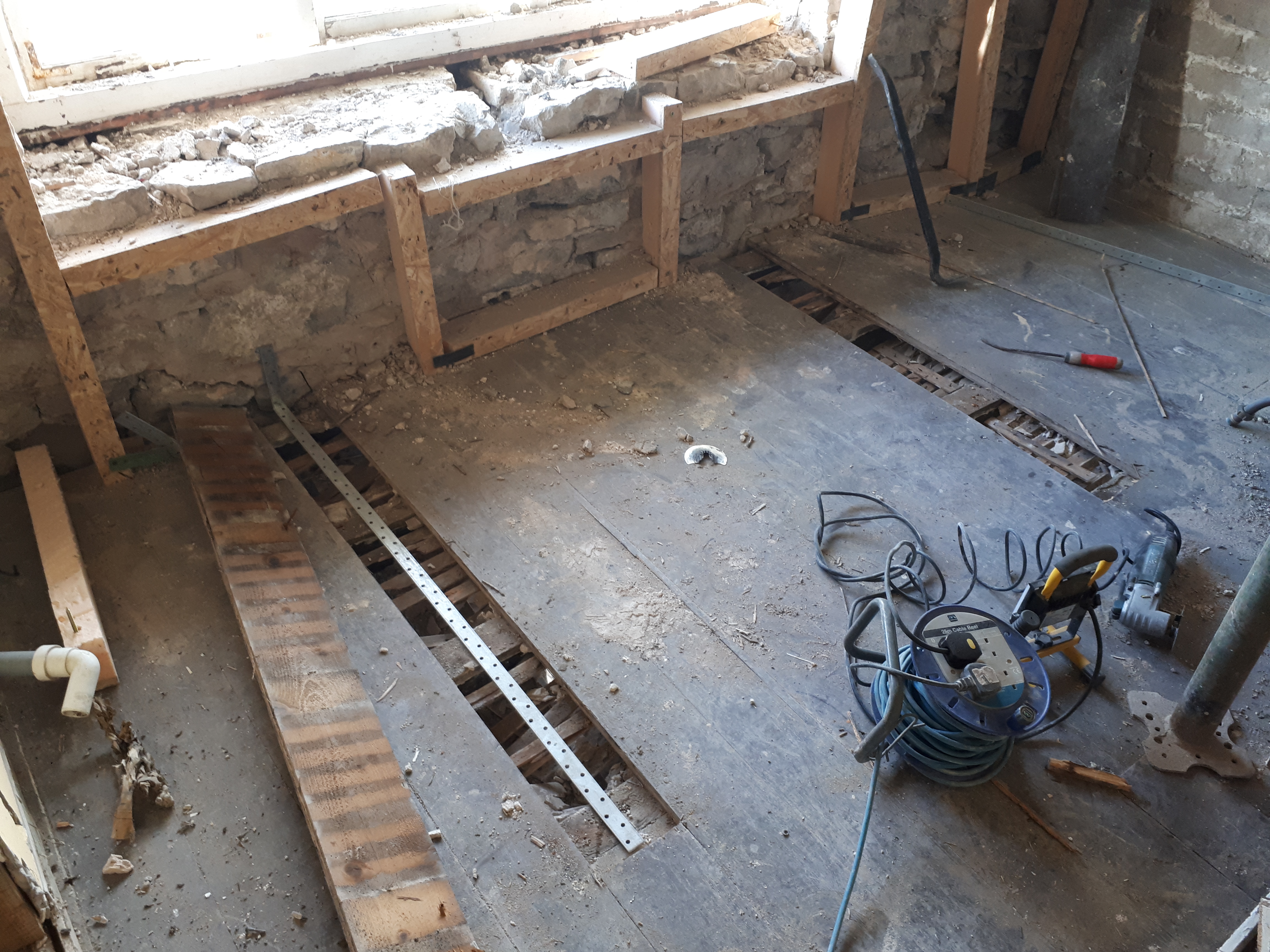
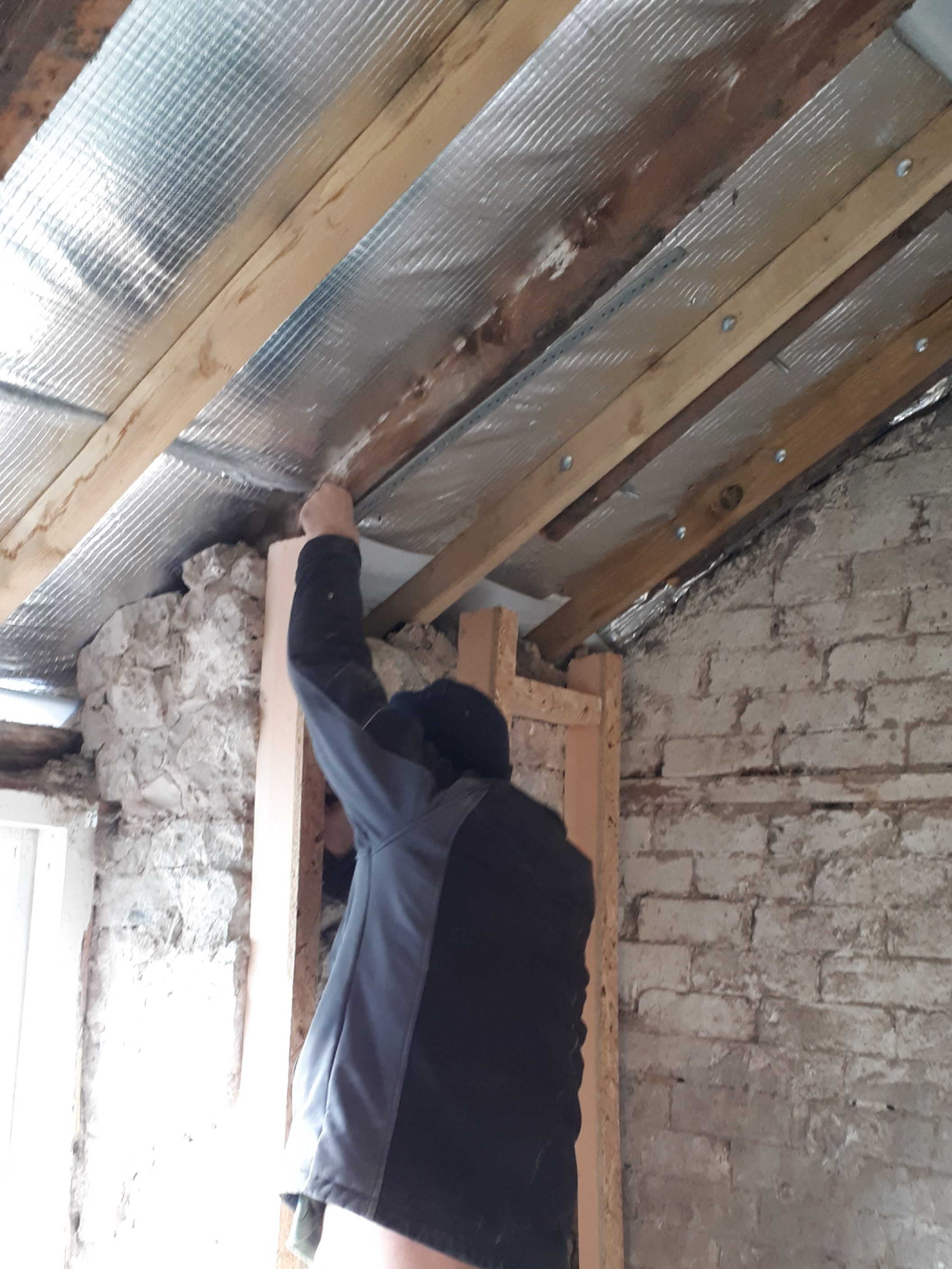
Our final job for the weekend was installing more metal straps, going from the rafters to the walls or the walls to the floors. The aim is to drill into a big stone for the screws, however we have struggled either to line up the straps with large enough stones, or prevent the stones from splitting. In the end Chris had to cut the bent ends off the straps so we could rebend them to suit individual sections of wall. Hopefully these little bits of metal will stop our walls from slowly moving out and away from the rest of the house.
It’s lovely to be back inside working on the interior of the house. Jobs feel so much smaller and quicker than the never-ending roof. Of course the list is still somewhat endless, but ticking off items just seems to be more achievable. And even though it’s pretty freezing in the house at the moment, it’ good to have a little shelter, afterall, the weather outside is frightful.

-
Goodbye Scaffolding
Right back at the start of our renovation, one of our first jobs had been to collect a van-full of secondhand scaffolding. From unloading the van, to putting it up, to taking it down, moving it and putting it up again, assembling and disassembling the scaffolding has been one of the most exhausting parts of the renovation. Not only that but it was the activity I was most convinced would lead to broken bones. After all clinging to a rusty pole with one hand while hitting another rusty pole with a lump hammer in the other hand, all while several meters off the ground, just seems like it should end in disaster. Yet here we are, the scaffolding coming down for the last time, and no broken bones. There were, all told, quite a lot of scaffolding related bruises, and one or two near misses, but all bones thankfully intact.
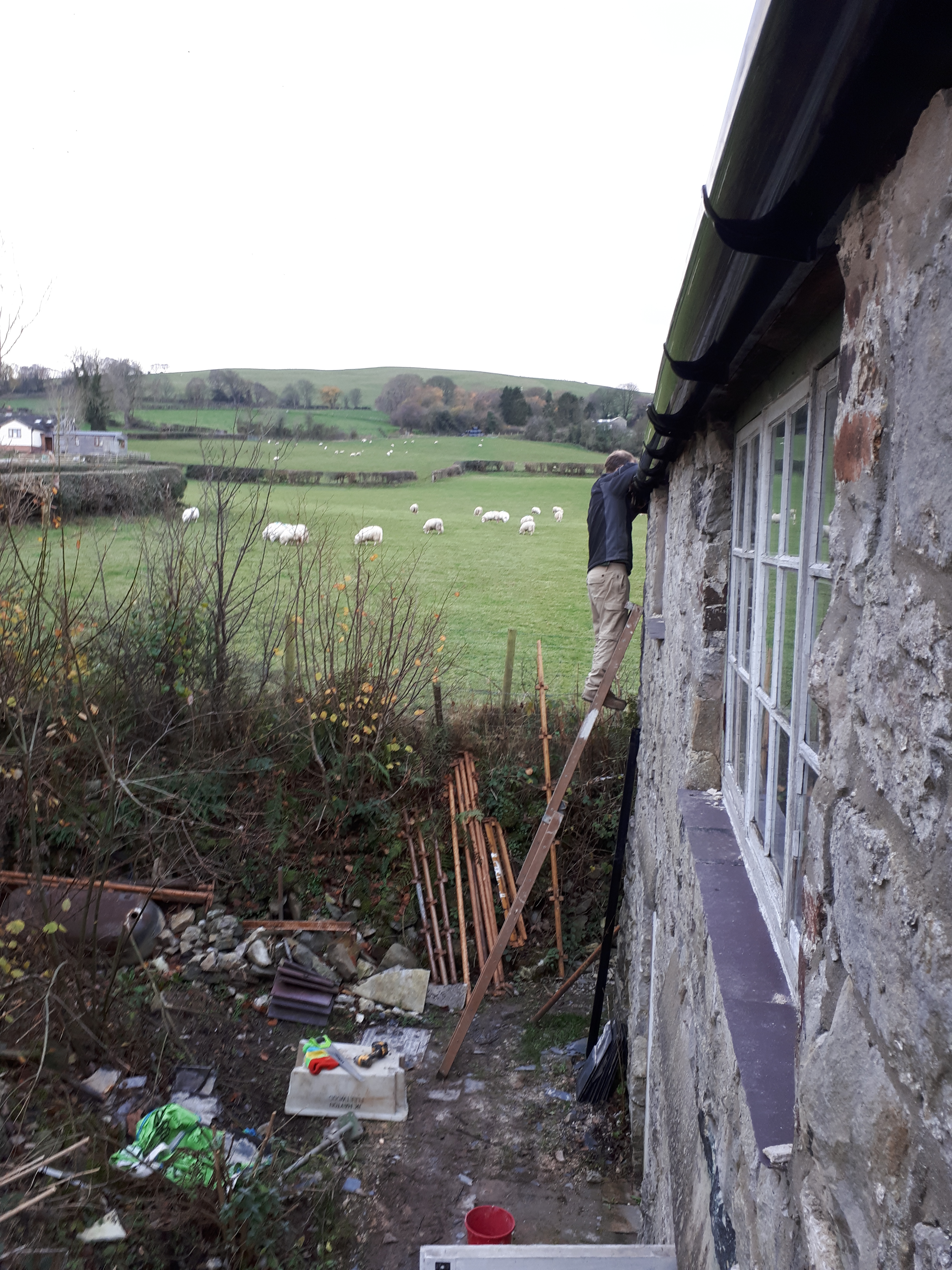
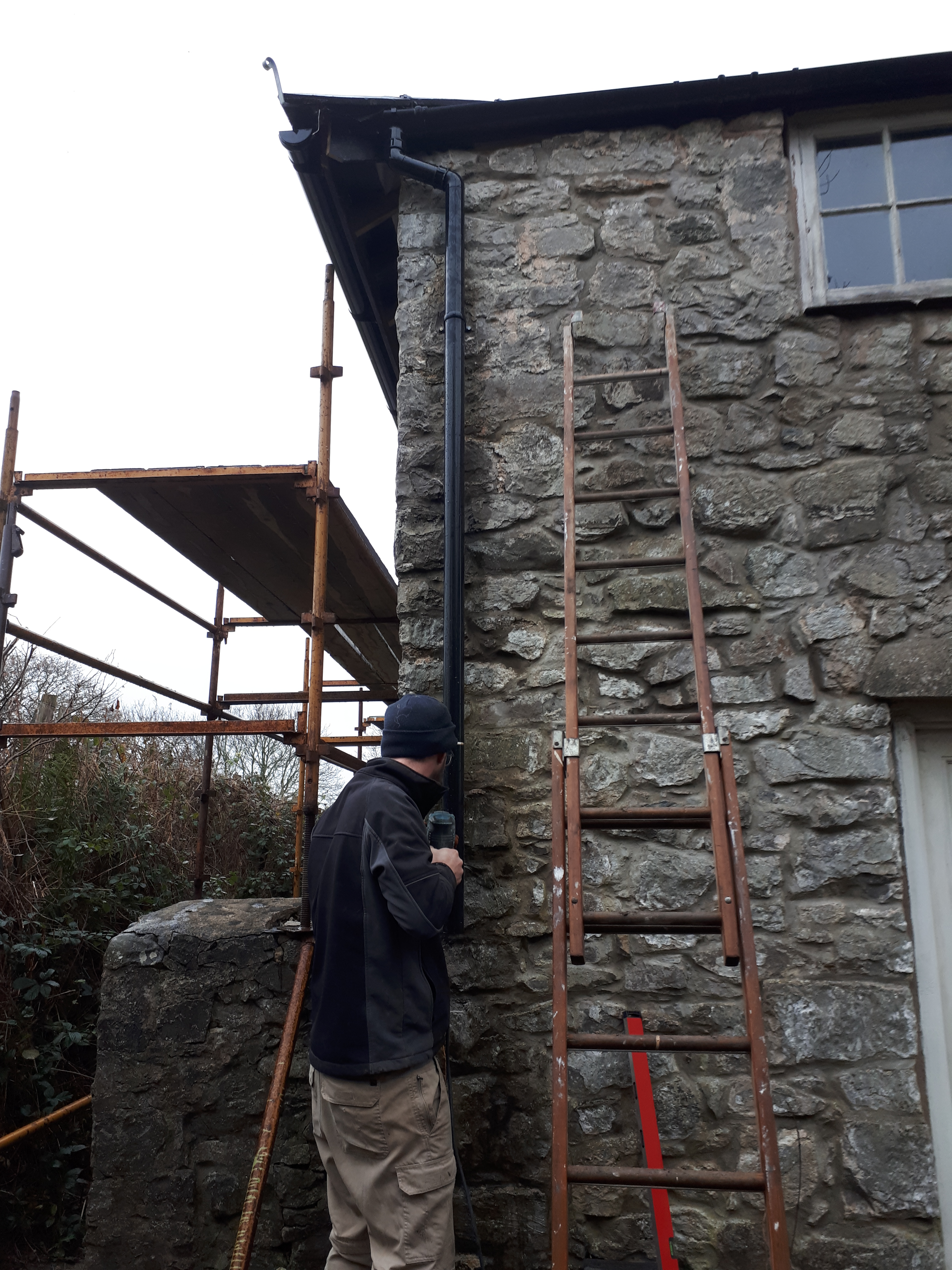
Our final task before taking down the scaffolding was to finish the last of the guttering. Rather than move the scaffolding yet again, we opted for installation via ladder on the side of the house. This was the straightest and best bit of guttering we installed, either showing we had significantly improved our skill level, or because this side of the house is the least wobbly (I think the latter).
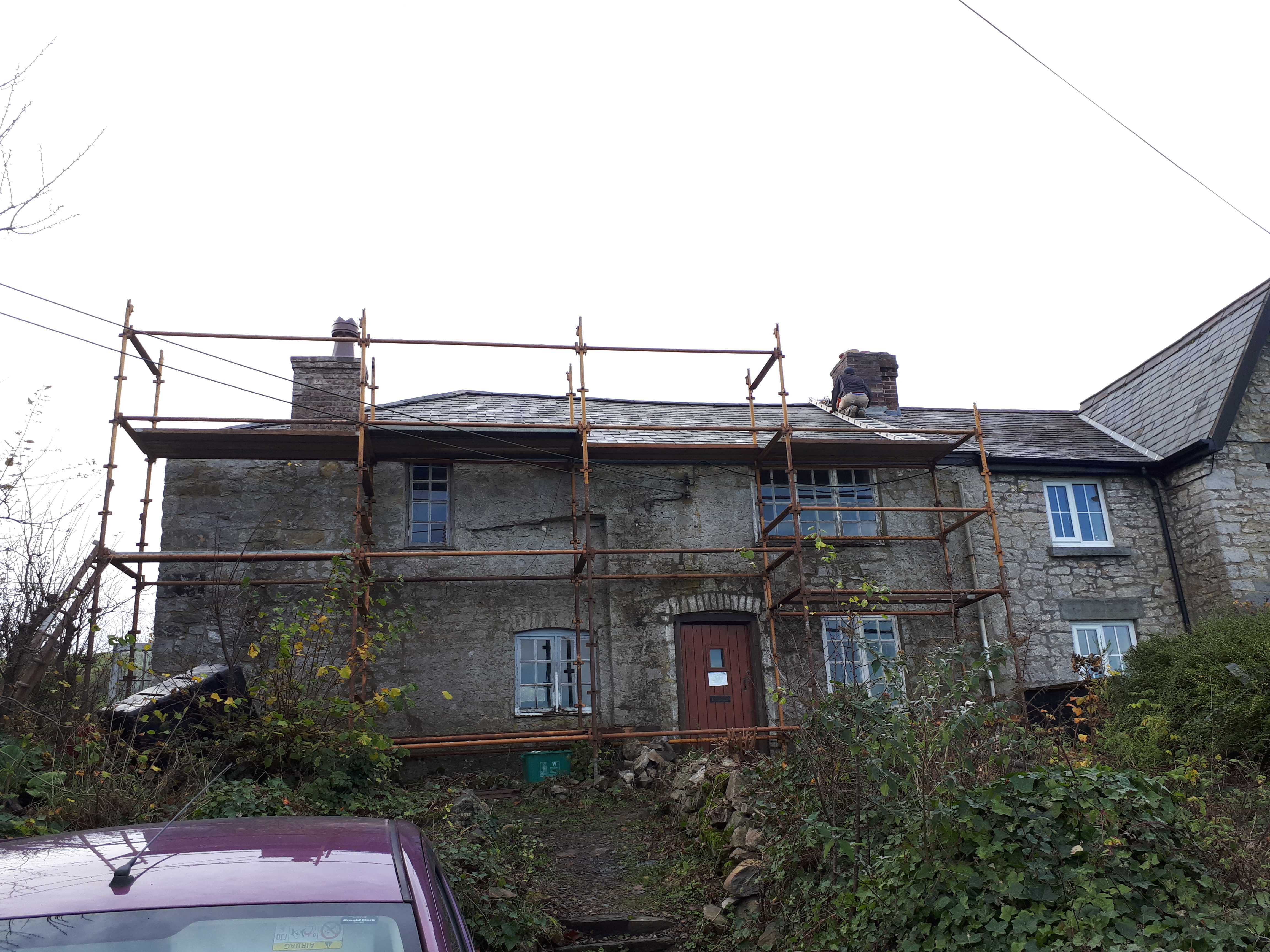
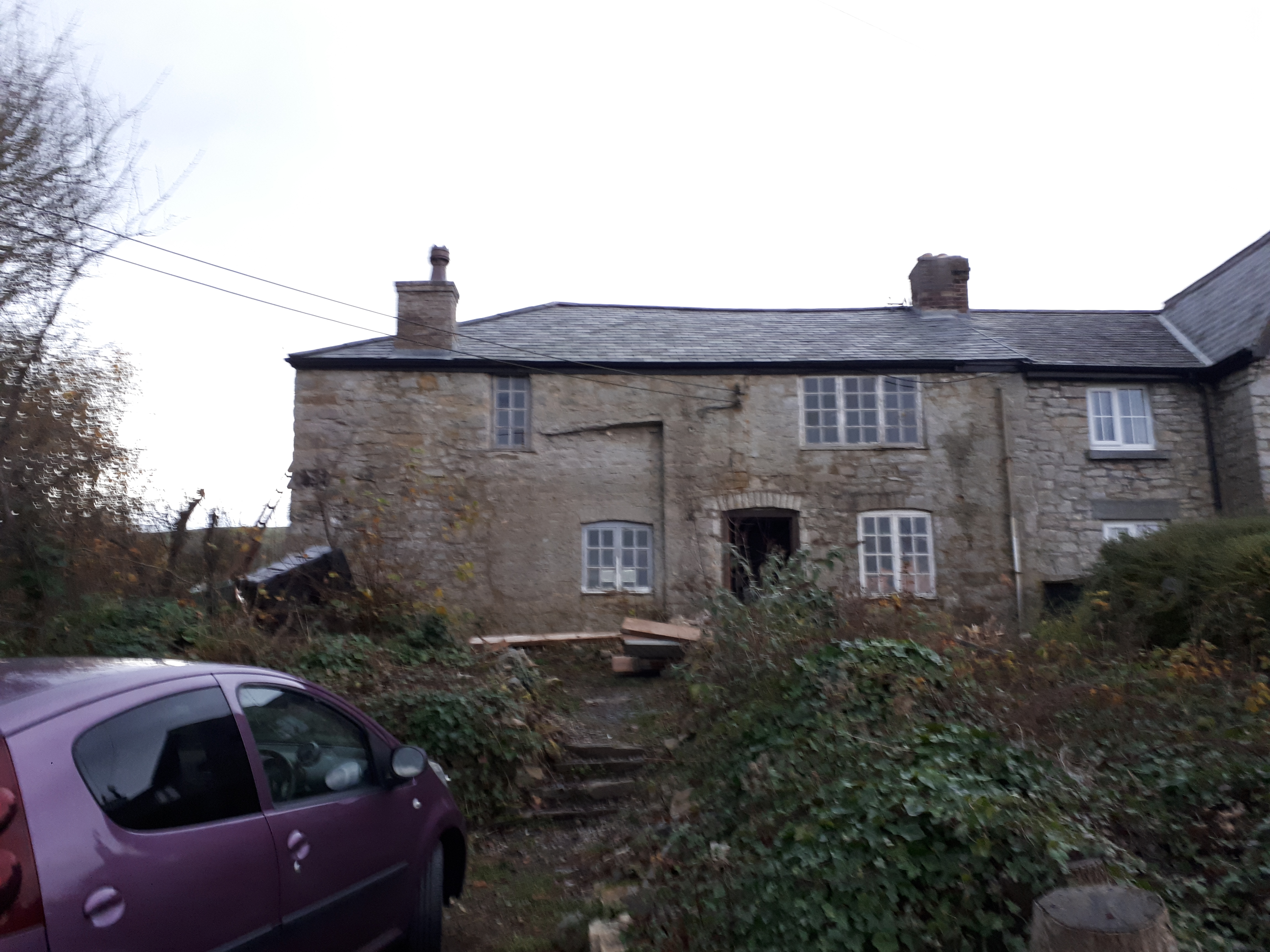
In order to install the downpipes at the front and back we needed to take down the scaffolding. As we no longer need it we will sell the majority, hopeful earning back what it cost us to buy. With the price of renting scaffolding being several hundreds a week, buying it and reselling it once we’re done will have been a significant saving.
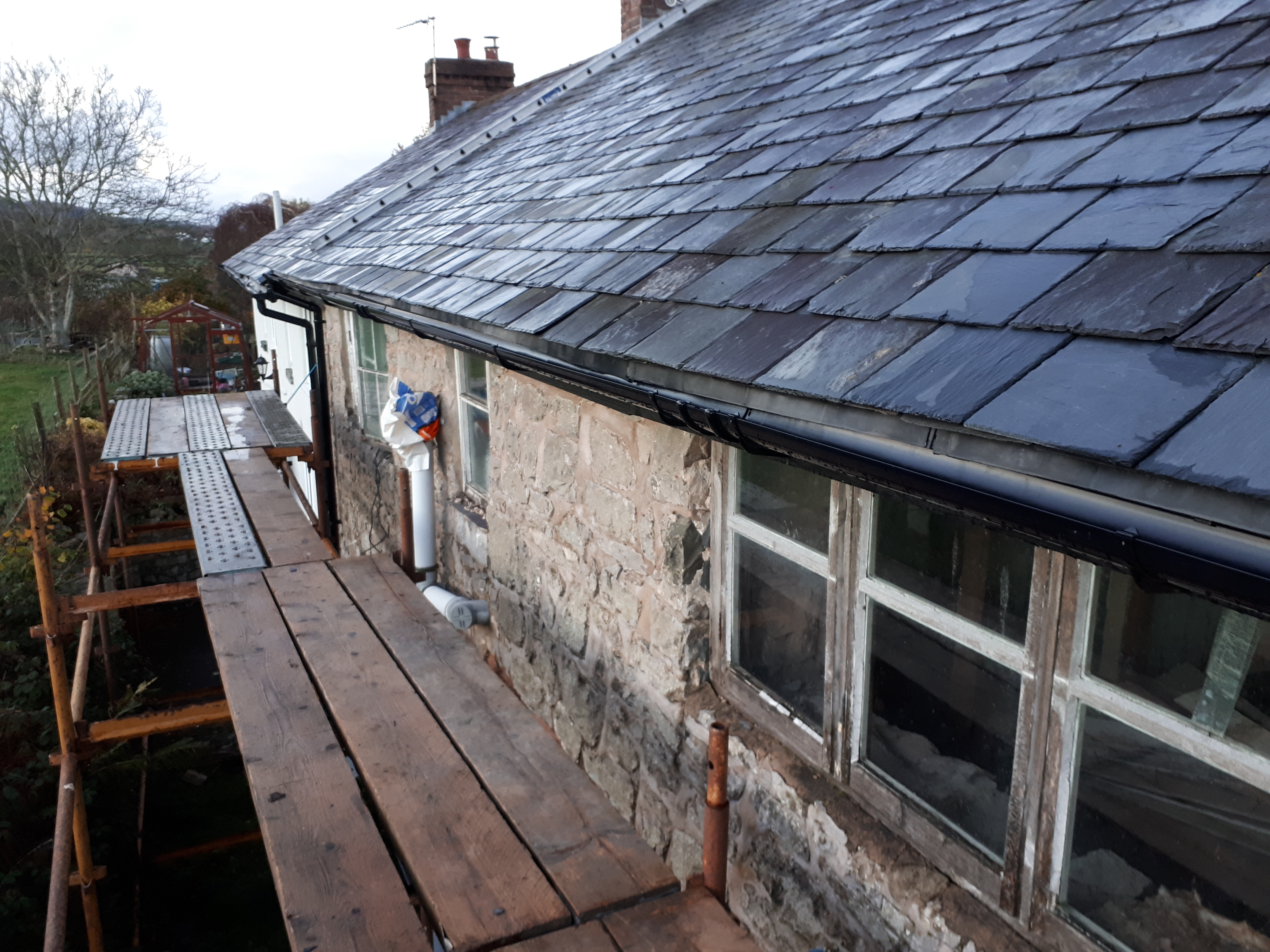

At the front we first had to reattach the mains cabel to our neighbours house before we could install the last bit of guttering. This huge wire always freaked me out, making me think of health and safety videos with people getting dramatically fried when they accidentally cut through a mains cabel. Chris was more relaxed about hammering in nails right next to this deadly wire.


Putting on the downpipe didn’t take too long, however we left the final section, as the plan is to dig a soakaway for the rainwater, so it can seep into the front garden. This will save digging drainage in front of the house. While the downpipe at the back of the house runs into an existing drain, we will need to dig a drain for the one at the side of the house. This will be part of our work with a mini digger to establish the rainwater drains at the back and side of the house. Currently, the existing pipe is crushed, and during heavy rains the water backs up and floods our neighbours kitchen. So top priority before winter truly sets in.
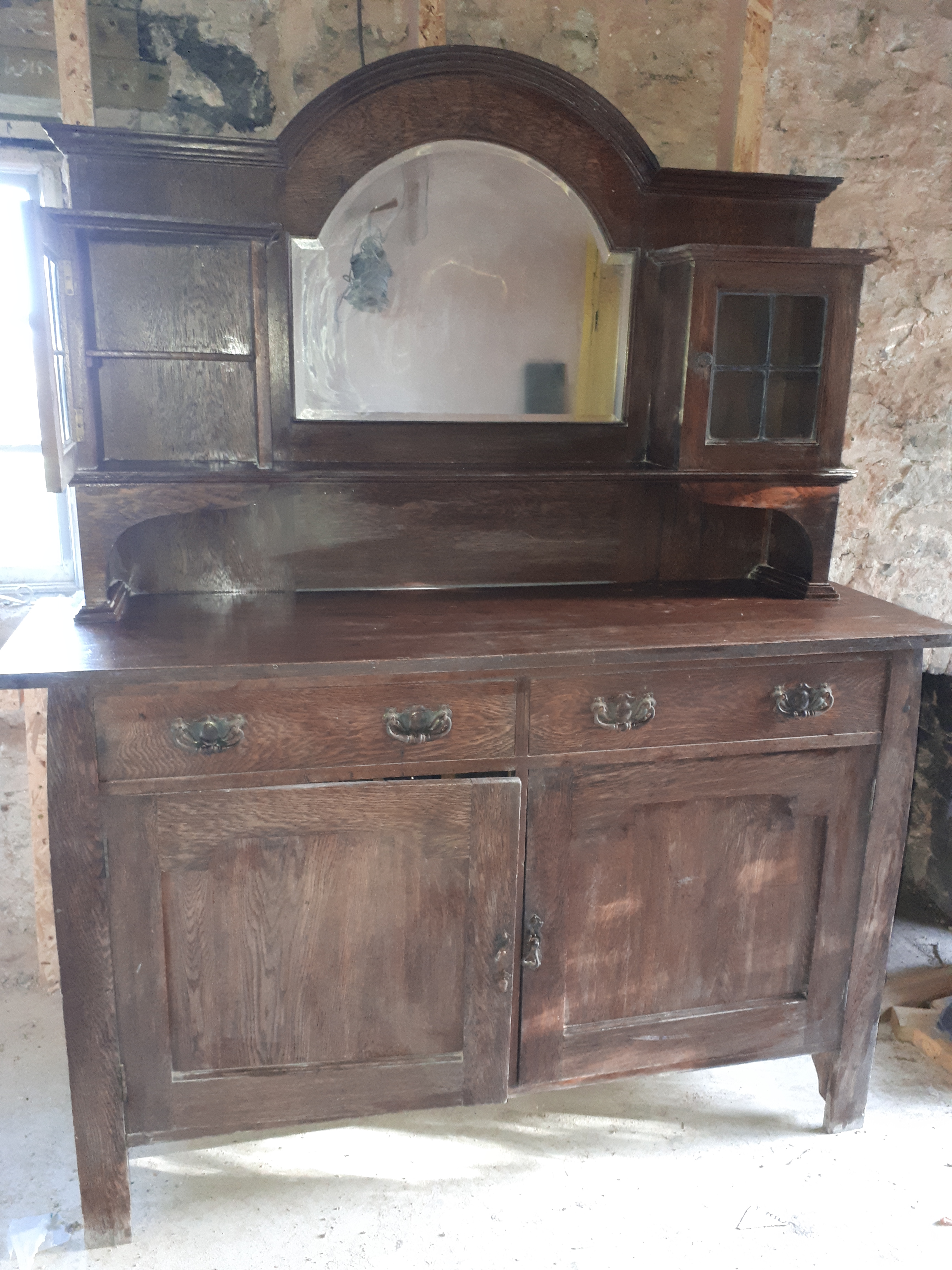
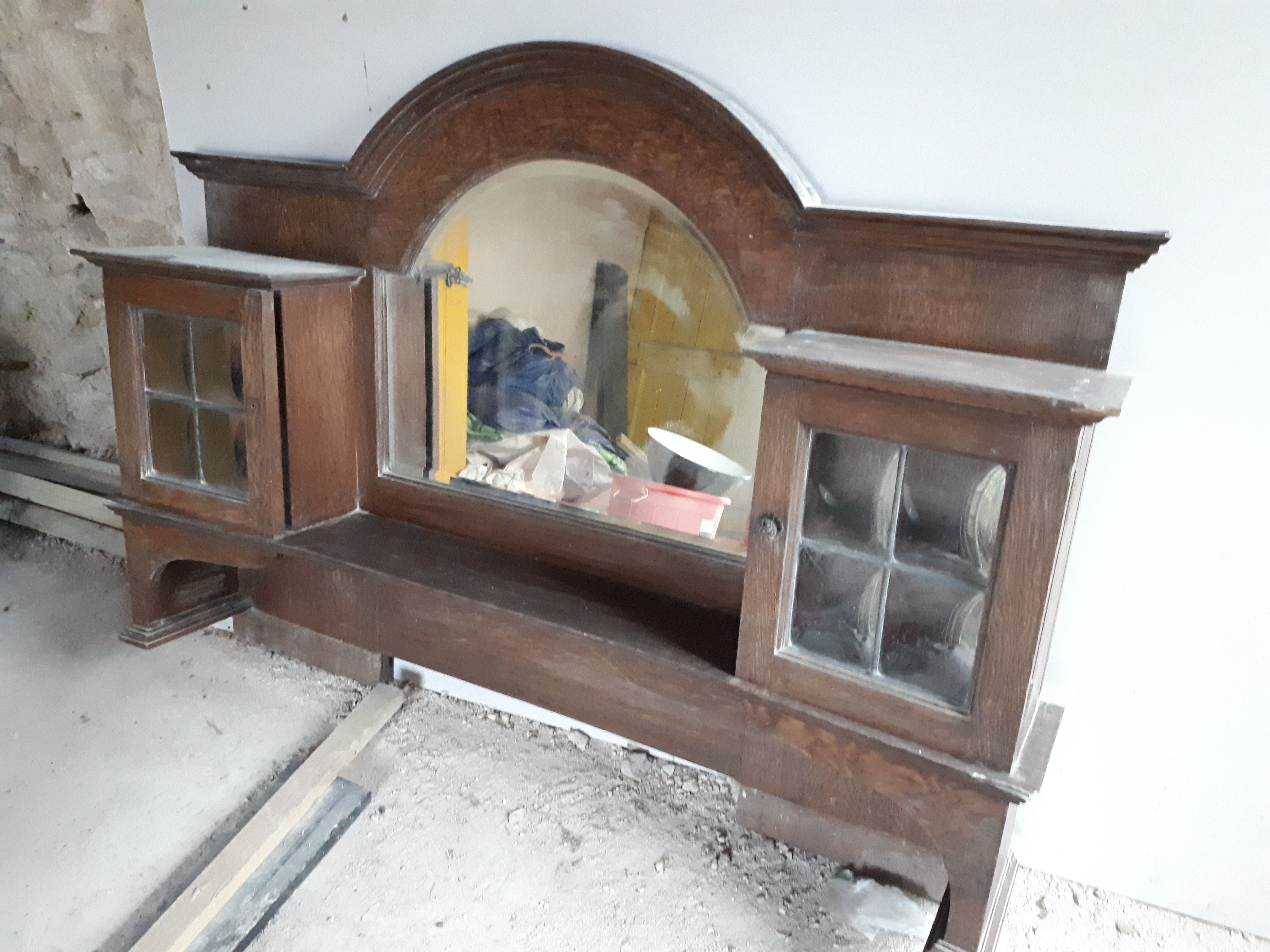
Having decided we didn’t want the old oak welsh dresser that came with the house, we managed to sell this to a couple on marketplace. However, when they arrived it turned out they didn’t want the top of the dresser, so this remains to be sold to someone else. Though I’m generally good at directing people to the house to pick up sold items I did confuse them by telling them to look for the house with the scaffolding, only to take it down before they arrived.
So now the roof is done, and the scaffolding down, we can start to work inside the house again. At the end of the day we measured up the windows ready to put an order in to replace the rotten single-pane frames. As everything has gone up in price we will be forced to install PVC windows at the back of the house, paying the extra for wooden ones at the front and the sides. Because of the design of the house, with the roof overhanging more at the back as this is where the more extreme weather comes from, currently windows cannot be opened fully at the back, as they hit the rafters. We’re therefore opting for top opening windows at the back of the house, with more traditional windows on the other sides. I’m looking forward to getting the windows in, especially now the winter is coming and the house is full of icy drafts. One more step towards a warm and comfy home.
-
Over Our Heads
Since we brought the house in May, we have been the ultimate in party poopers. I’ve said no to birthday parties, family gatherings and even just countryside walks. Unfortunately, with only weekends to get the house done, it’s a necessary sacrifice, thankfully only for this short period of our lives.
Yet, there have been things that we just couldn’t bow out of, and since October we just seem to have had one thing after another which have collectively eaten up our time, from a sick dog to volunteer days to rugby tickets which had been reassigned after covid cancellations.
With only the odd weekend day, and a few evenings, progress has been frustratingly slow. All these unavoidable delays make this, our first full weekend in four weeks, feel like the unblocking of a stubborn drain.
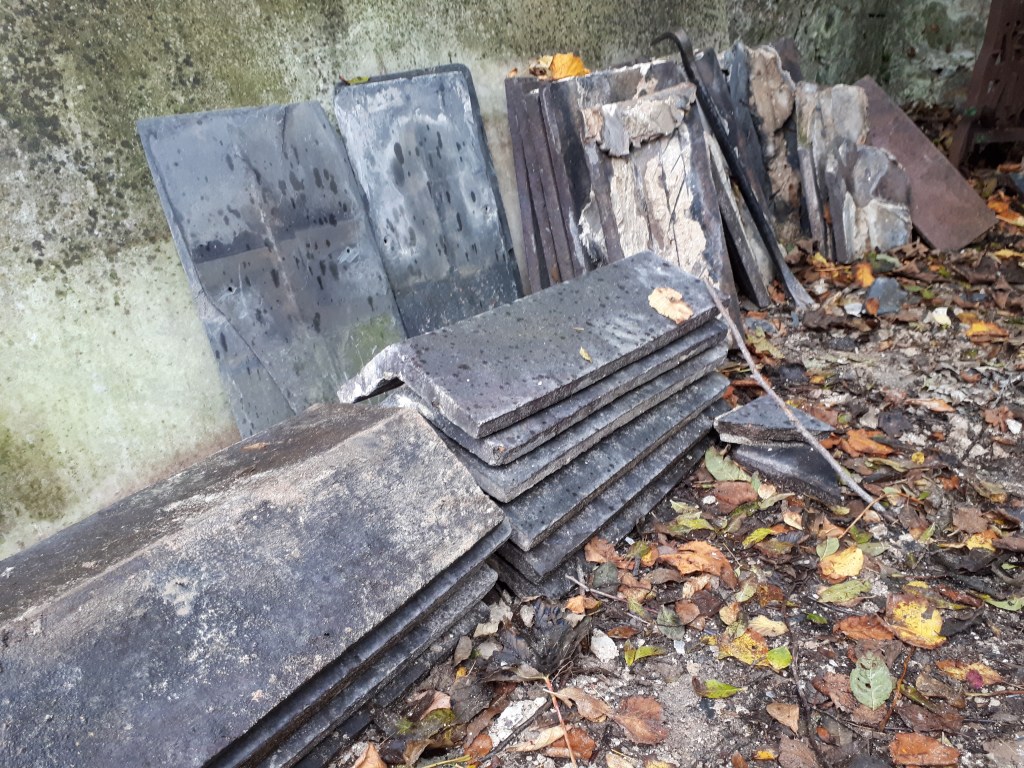
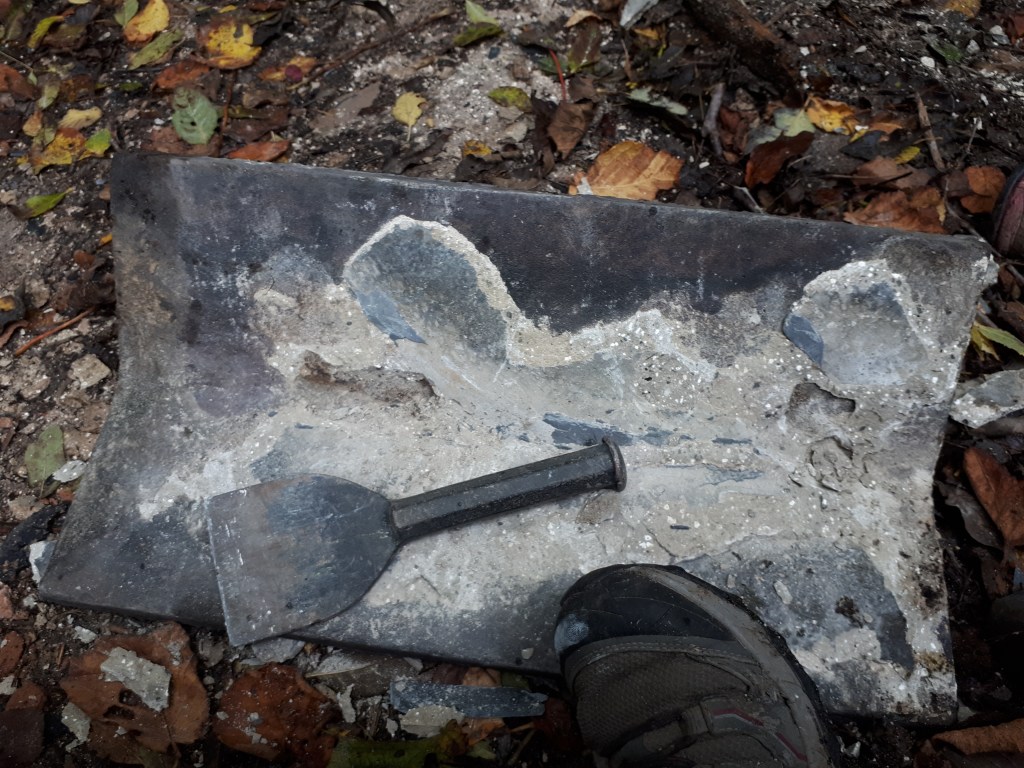
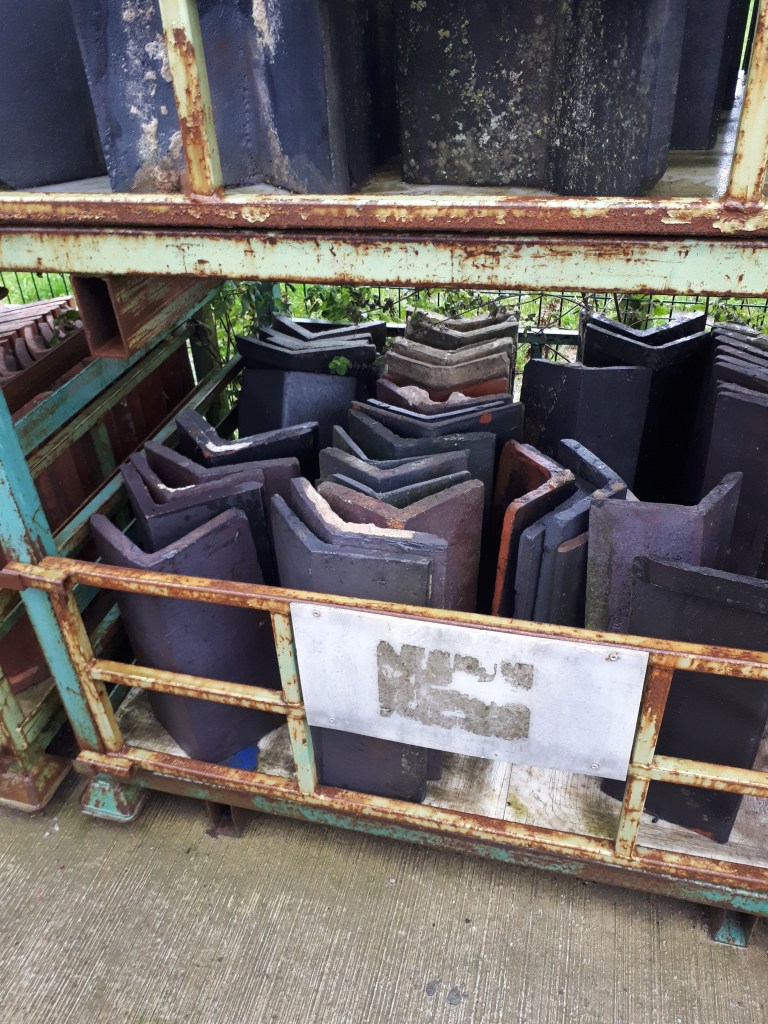
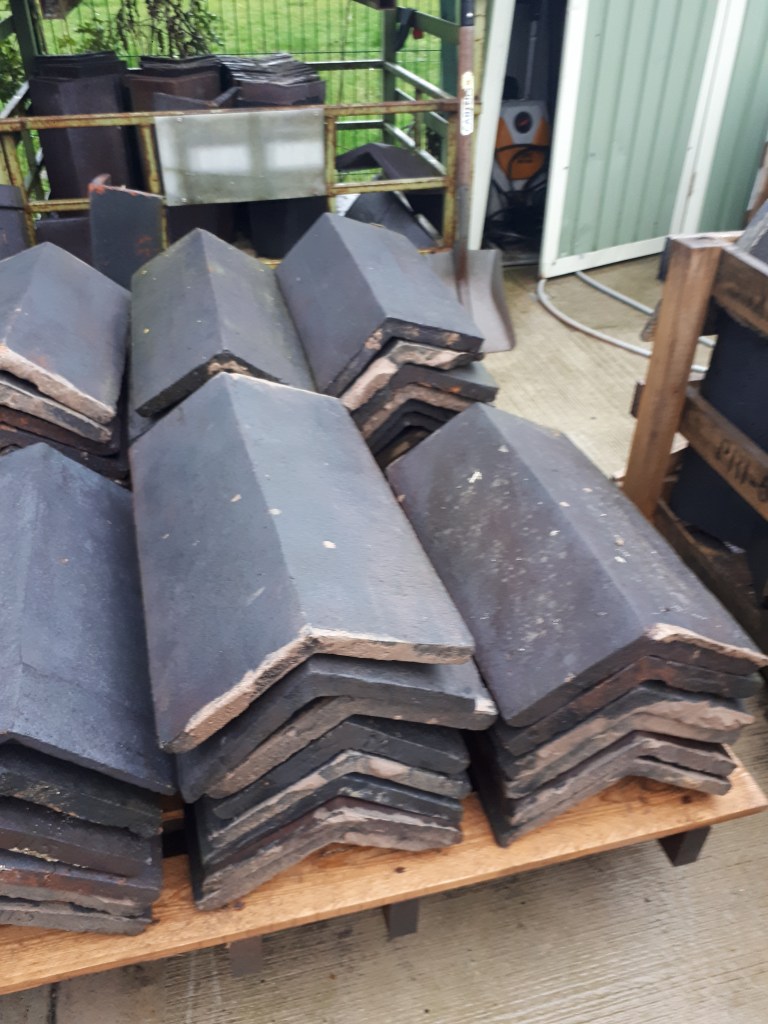
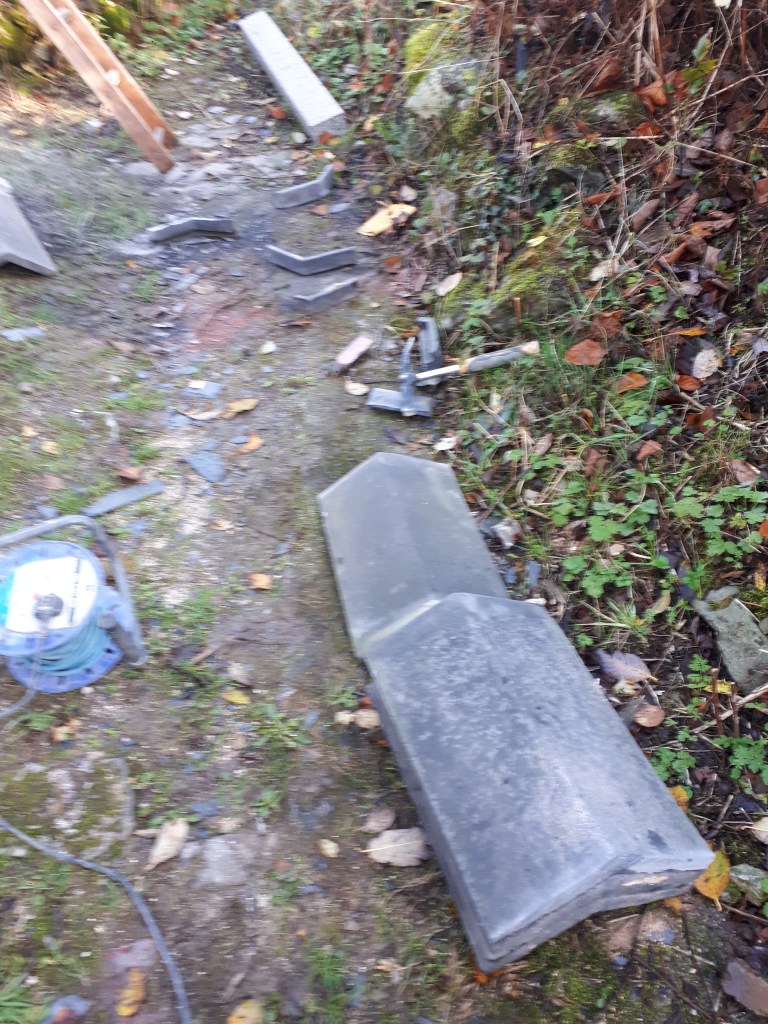
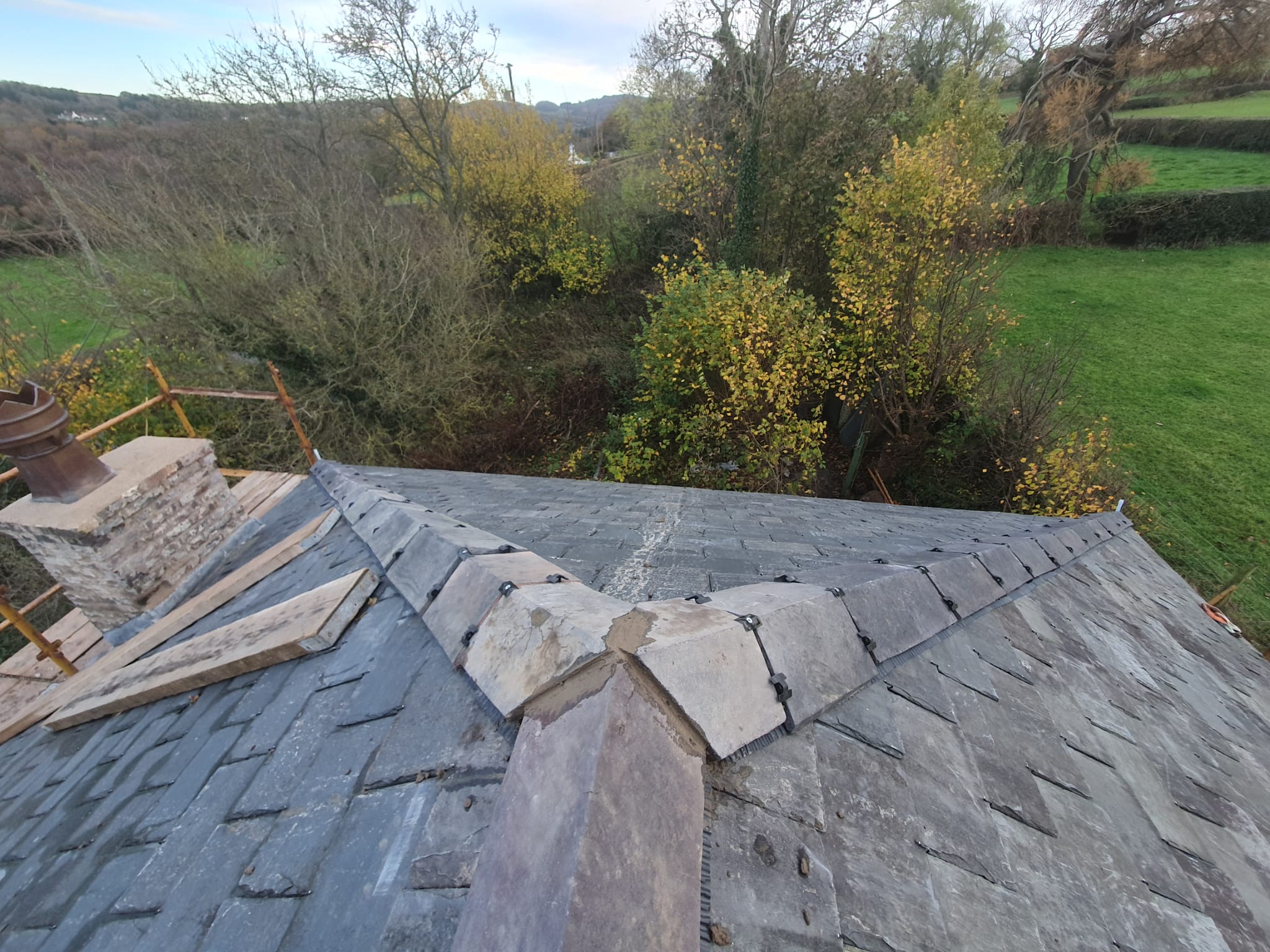
Our first job was to finish installing our run of ridge tiles. The ridge tiles that we took down when disassembling the roof had been caked in cement, which needed to be chipped off before we could reinstall them. Getting the cement off was slow and back-breaking work, and unfortunately not all of the tiles survived the process. These broken tiles, plus those that broke when we took them off the roof, were surprisingly difficult to replace. Having searched through all the usual channels, we ended up at a roofing reclaimation yard. Even then the closest we could find was a similar shape and colour, but with a raised edge at one end, where it was supposed to overlap the next tile. Our only solution was to use an angle grinder to cut off this offending edge, making the tiles just similar enough to fit in with the remaining ones we had.
Fixing the ridge tiles in place was fairly simple. We stuck a breathable membrane along the edge of the ridge, which would allow moisture to escape from the attic. Chris had opted for a dry-fix system for attaching the ridge tiles. This involved securing them into place with a series of plastic clips, not overly difficult except for scrambling up and down scaffold boards to get the tiles in place.
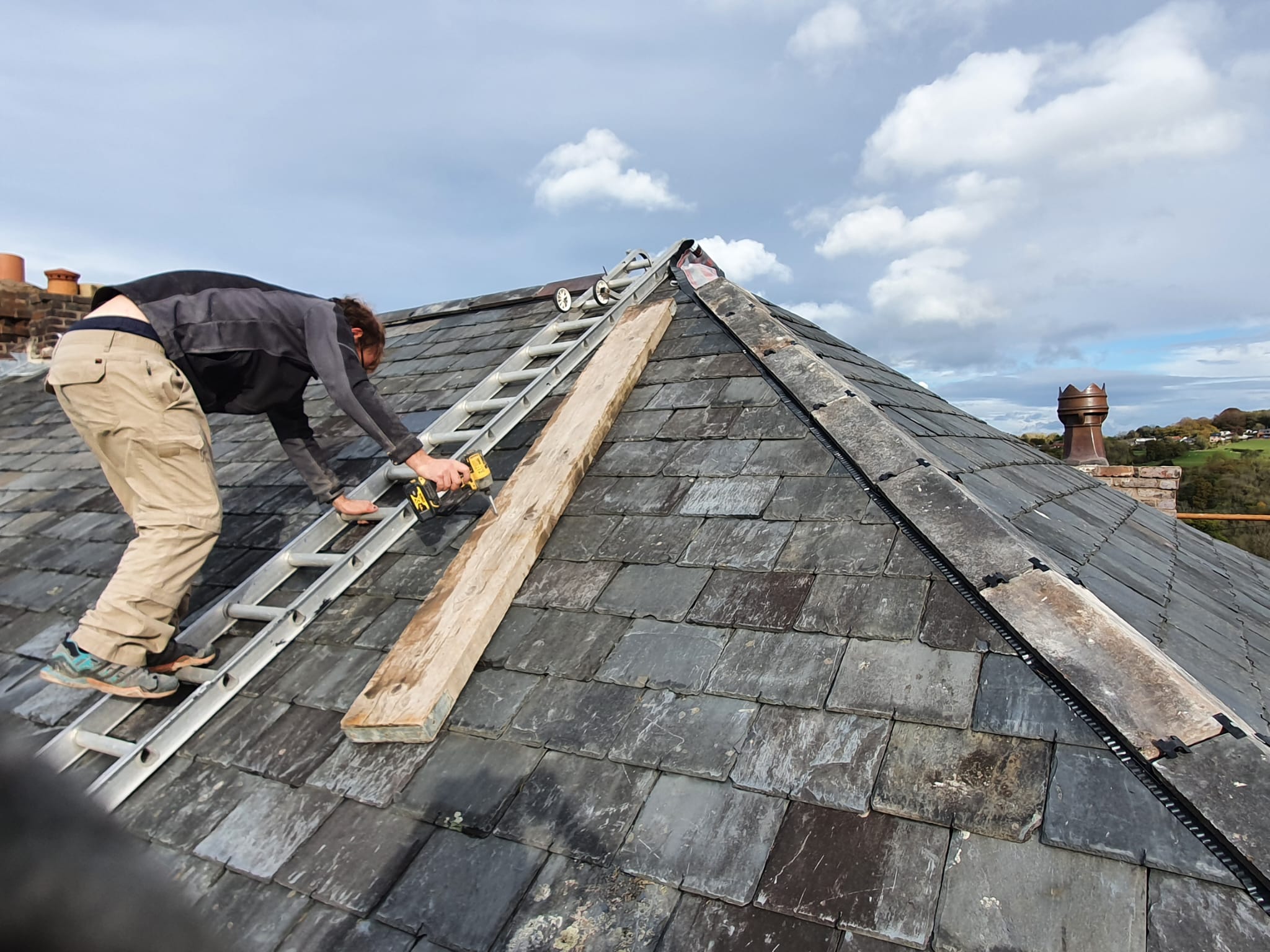
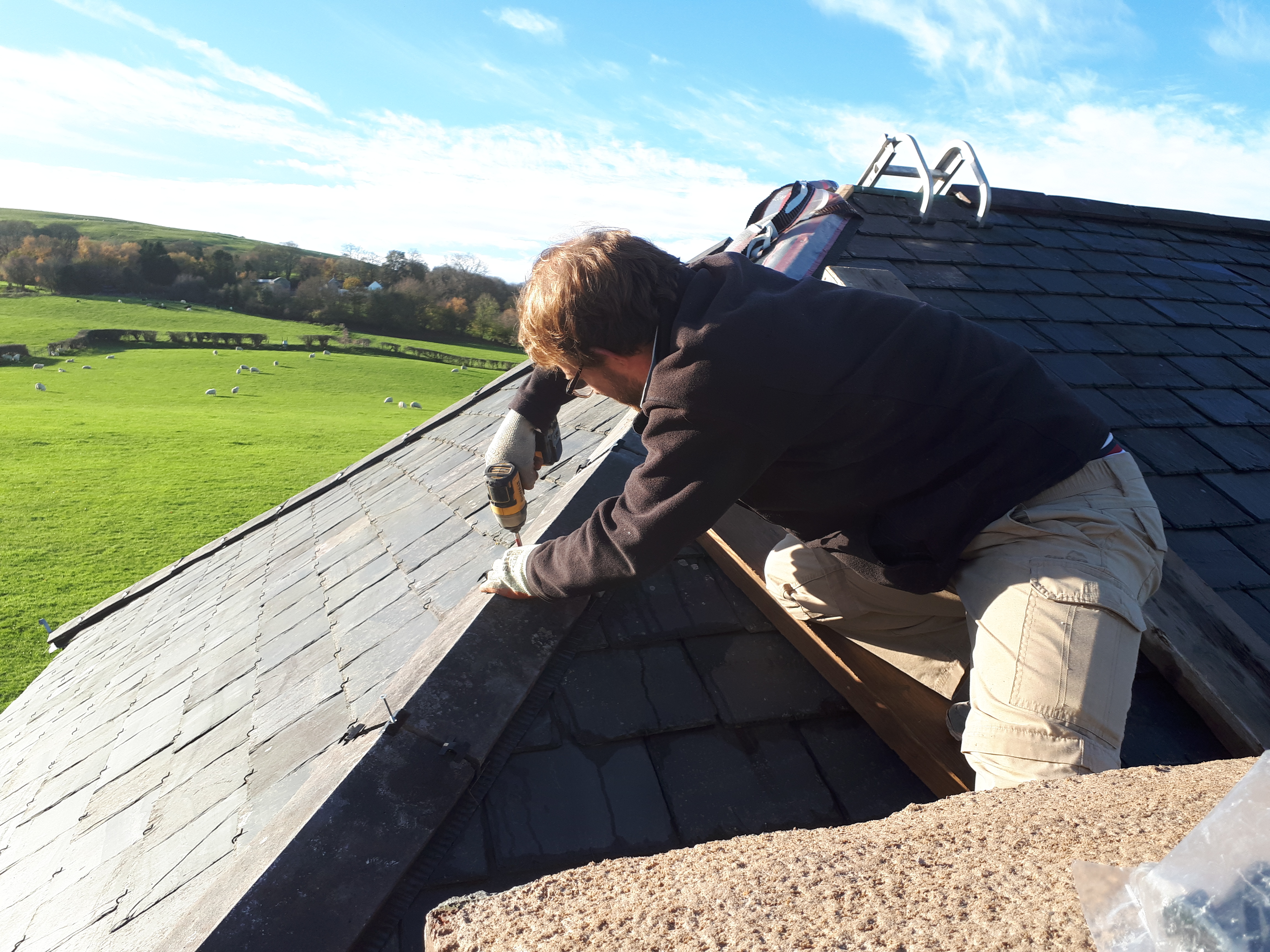

The only complicated part was where the three ridges met, with the tiles needing to be cut so they fitted together as neatly as possible.

Having finished the ridge tiles, our next job was to install the guttering. At the back of the house there hadn’t been any guttering for a long time, and this had caused some serious issues with a iron support in the back wall, causing it to rust and swell. This, we believe, is the cause of many of the cracks we’ve found in the back wall.
One of the reasons we think no guttering was put in place is because, with guttering installed, the windows can’t open outwards fully. Our plans long-term are to install windows that open inwards, so we can have guttering but still enjoy some fresh air.
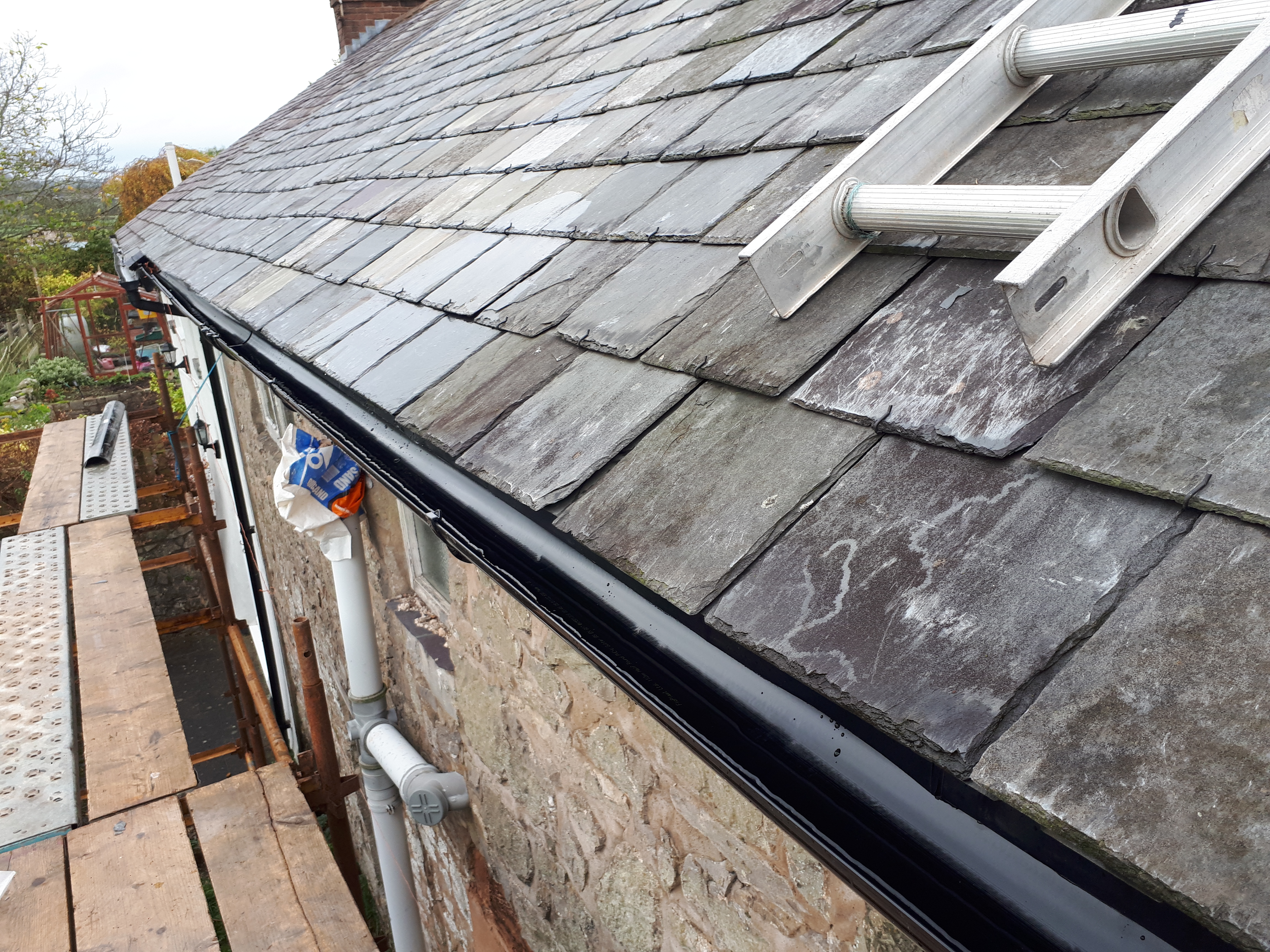
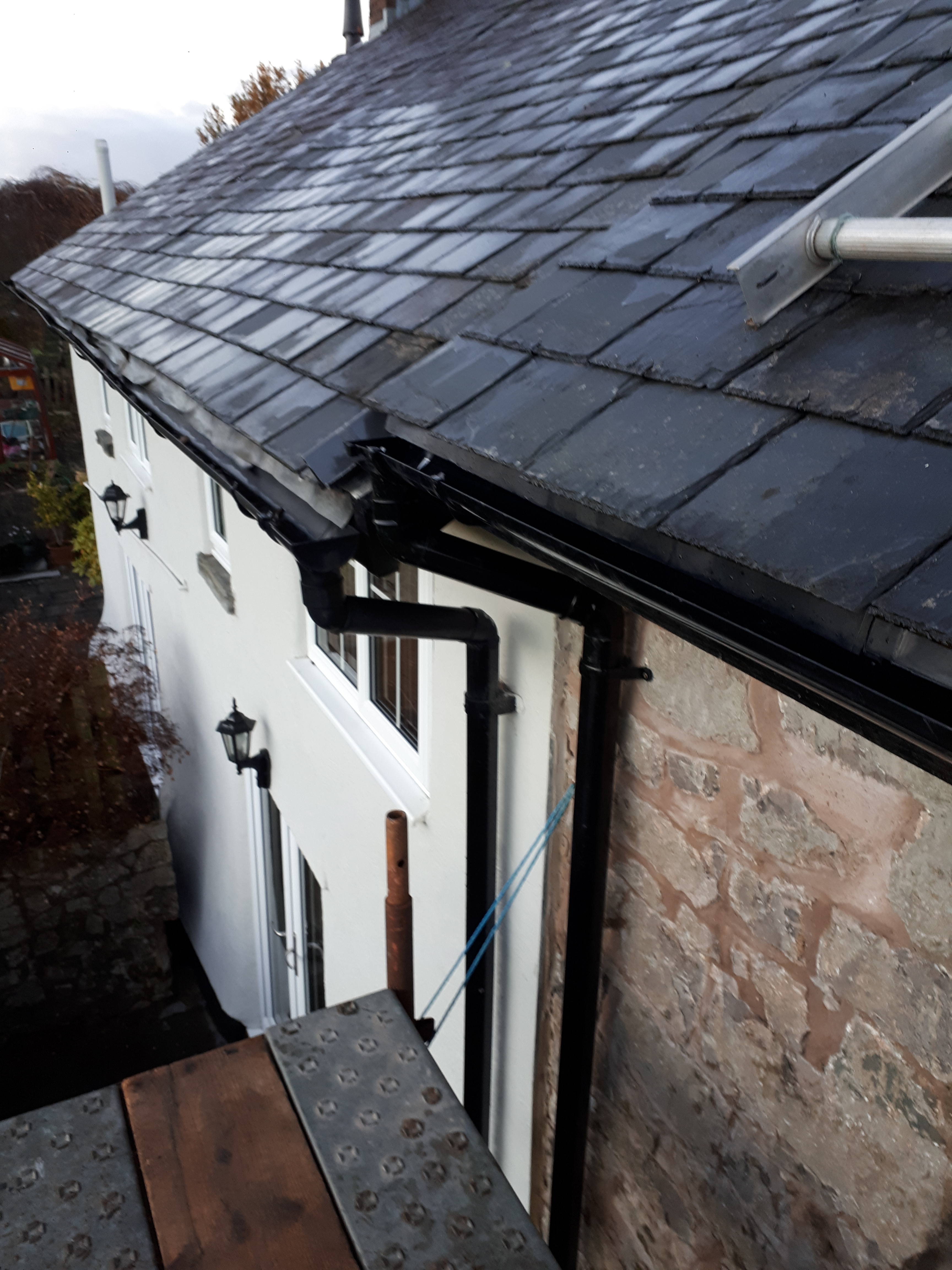
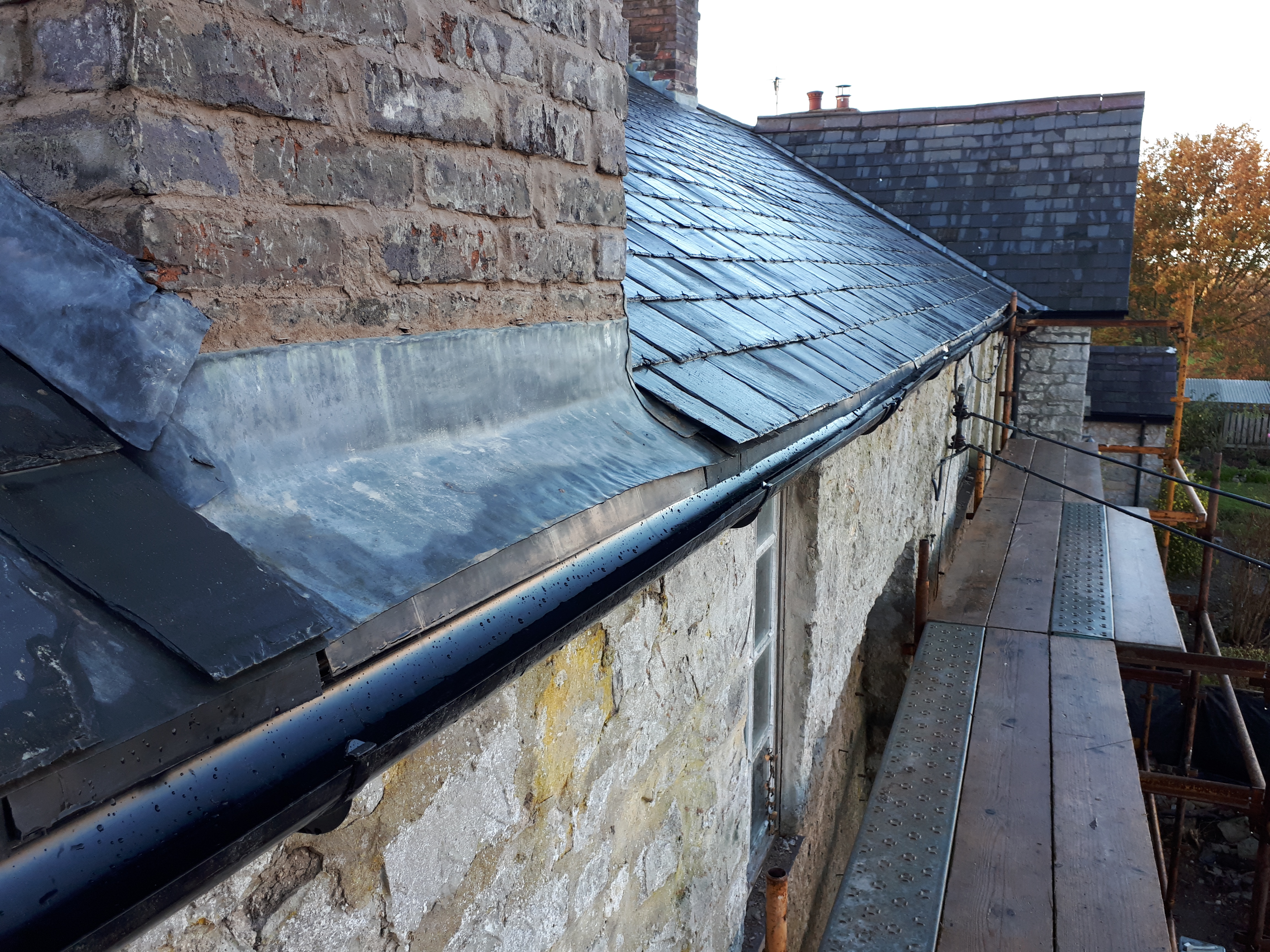
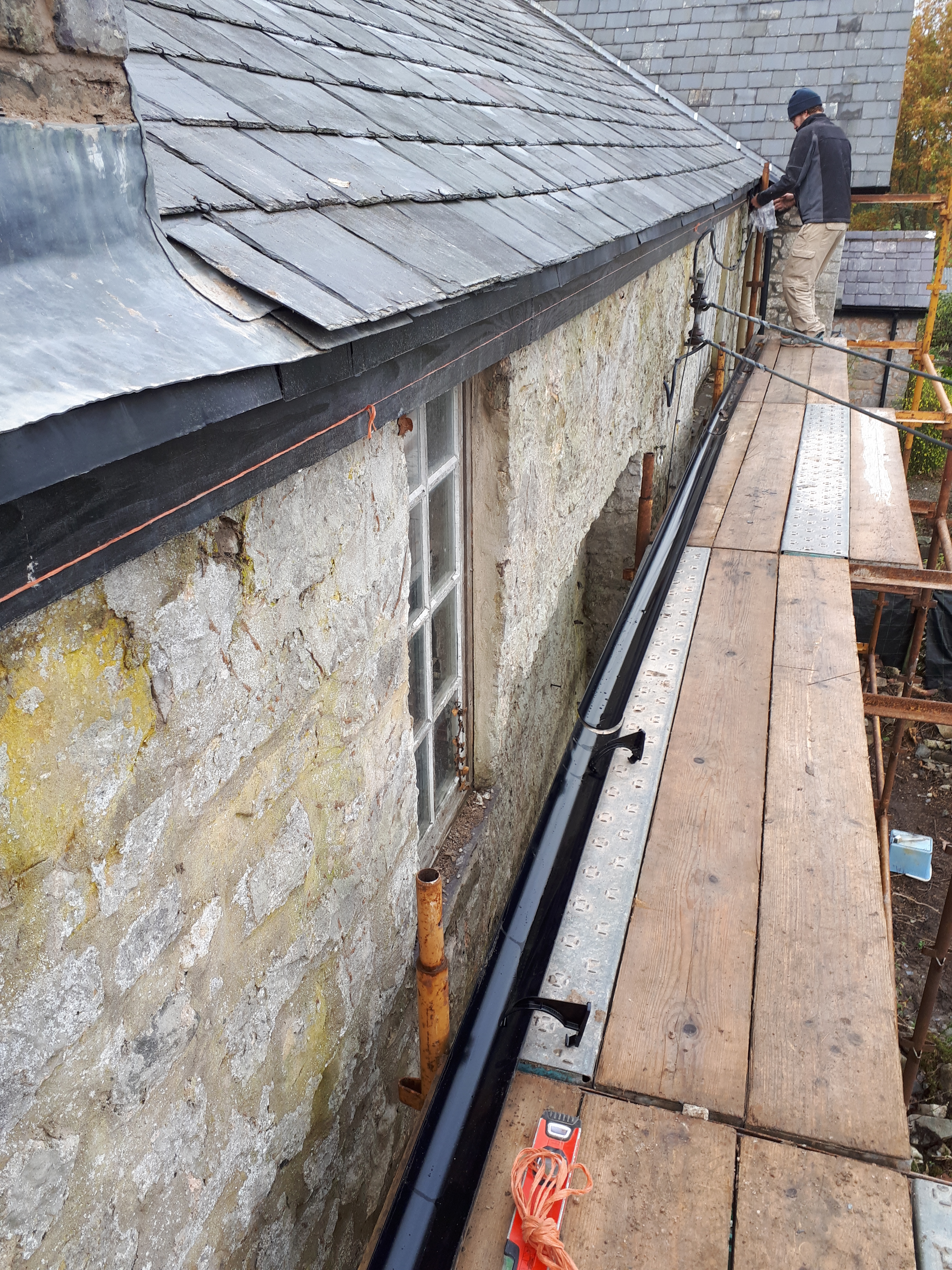
Technically, installing the guttering should have been fairly easy. We ran a string from one end of the roof to the other, using a level to check it was straight. With this as a guide we screwed the brackets in to place, slowly lowering them towards the end we wanted the water to run towards. Having painstakingly completed this task we clipped in the guttering and poured a bucket of water off the roof to check it ran the right way. The whole bucket emptied itself out in the opposite direction. Gravity it seemed disagreed with us. Luckily there were drains at either end of the roof, and it was agreed not to fight with nature, but let it run the way it wanted to. At the front of the house we had a little more luck, sending the water in equal parts left and right. Half will go into a new drain we will have to dig, and half into the garden.
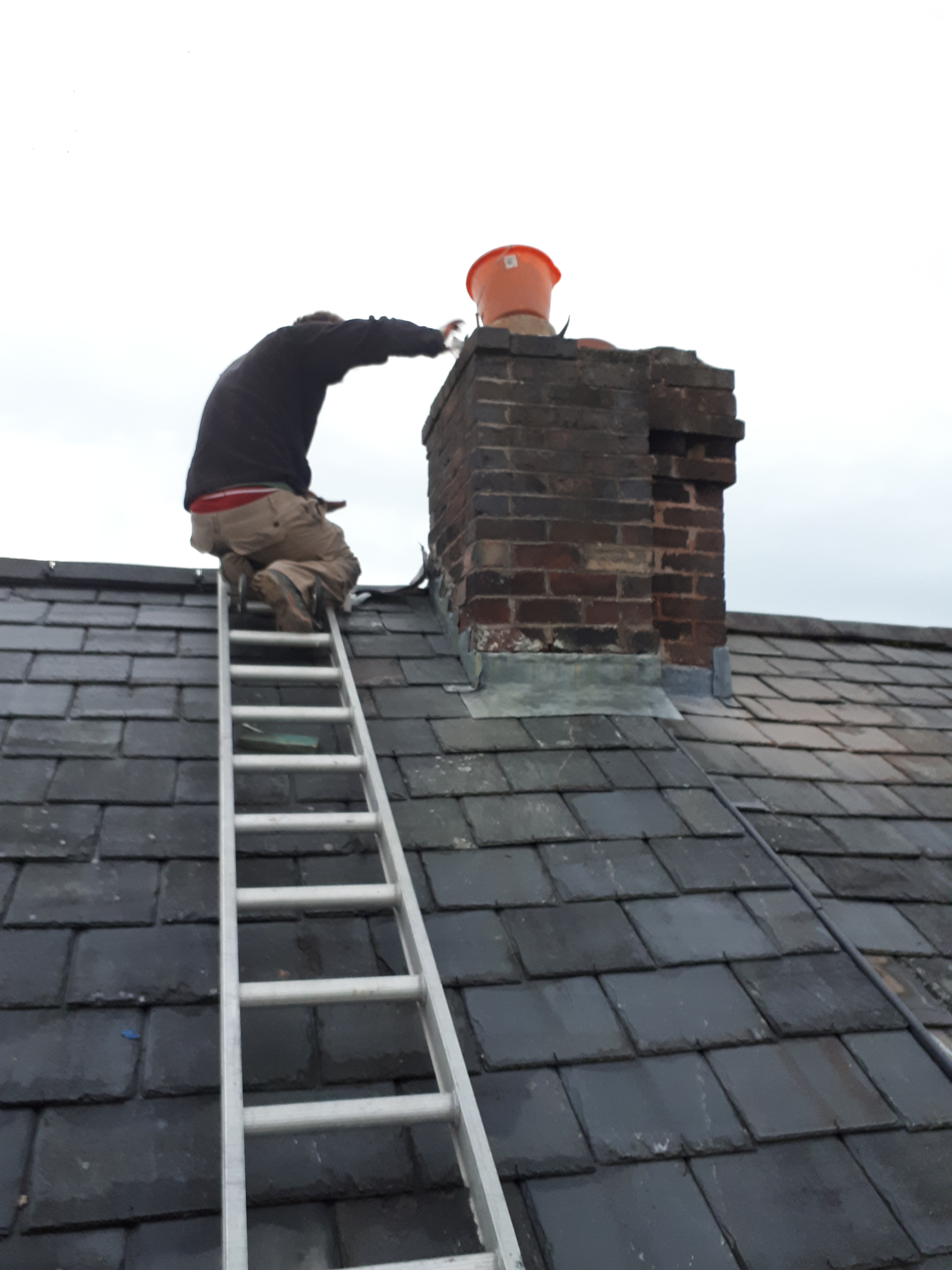
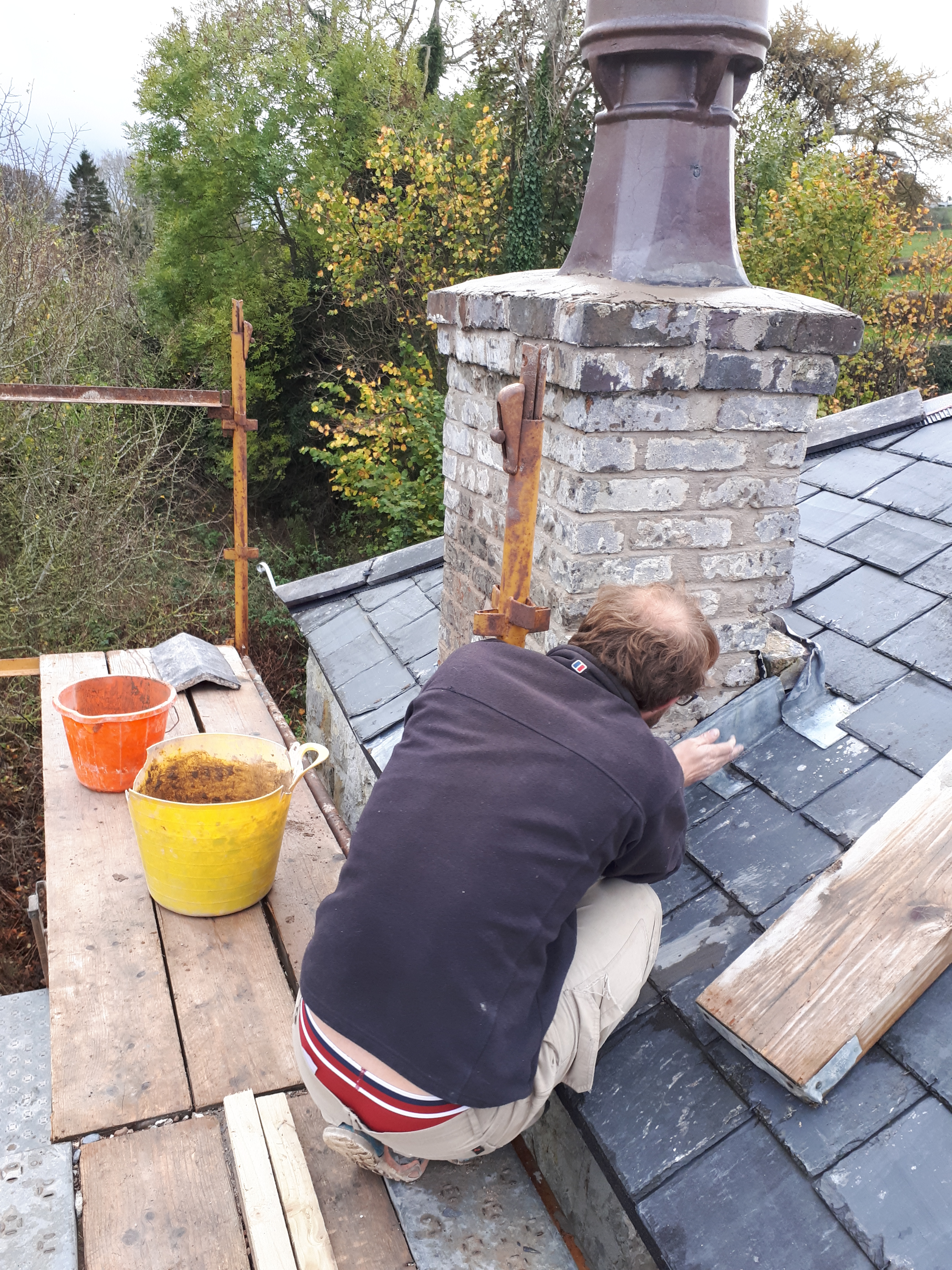
Our final task on the roof was finishing the lead, and adding fresh mortar around the chimney pots. Having run out of ingredients for the mortar, I stopped by our neighbours to borrow a cup of… cement. Luckily for us she too is in the middle of a spot of DIY and had enough to share.
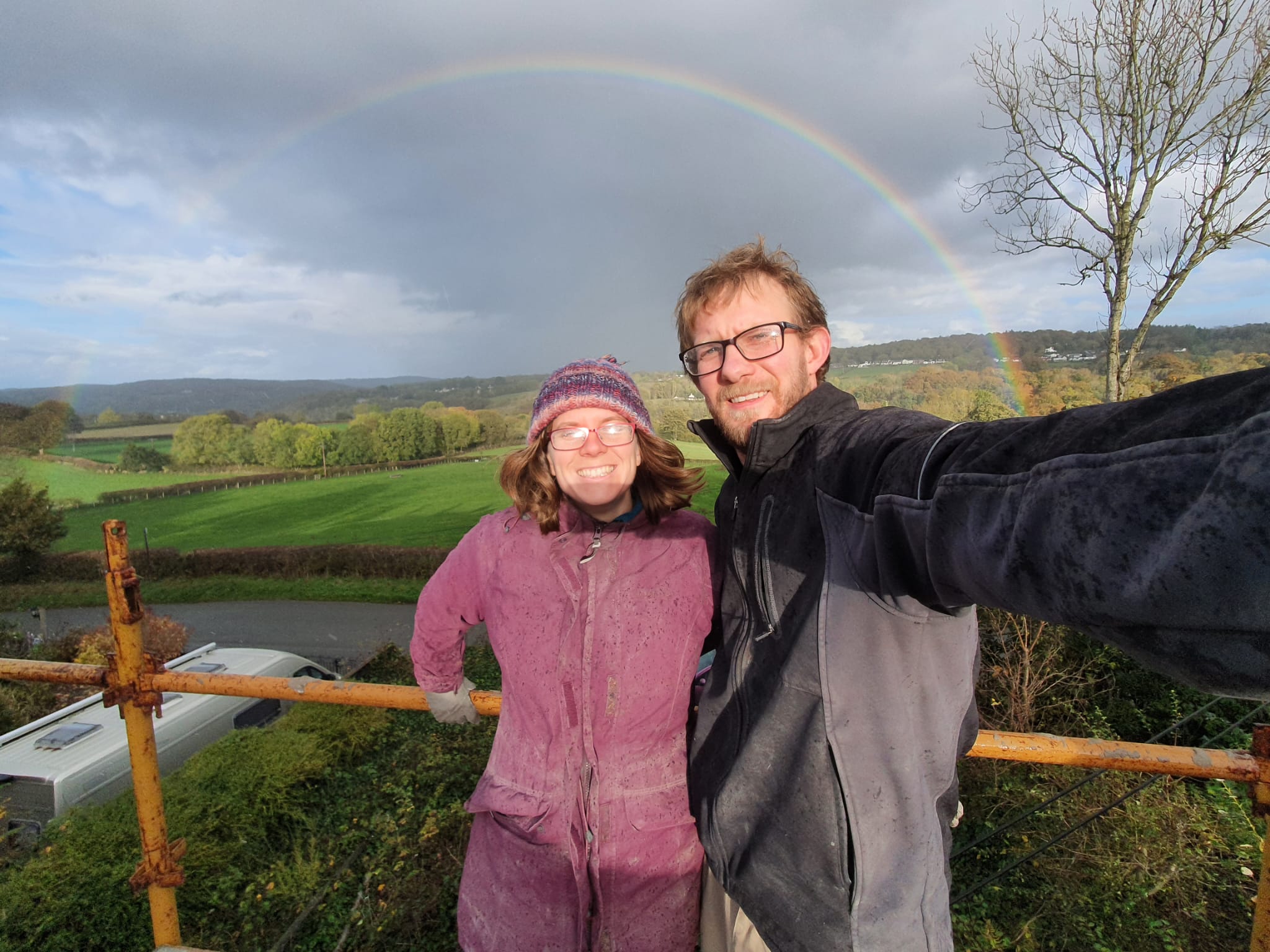
And that, amazingly, is that. We started the roof 4 months ago, in the blistering sun, and end it in the cold and rain. It has certainly been the toughest and most technical part of our restoration. I can’t say I’m sad to be moving on to something new, but it certainly has been an amazing experience to repair our own roof. Now we can move back inside, ready to take down walls, swap out stairs, and maybe even get some electricity back into the rest of the building.
-
Katie’s big week off
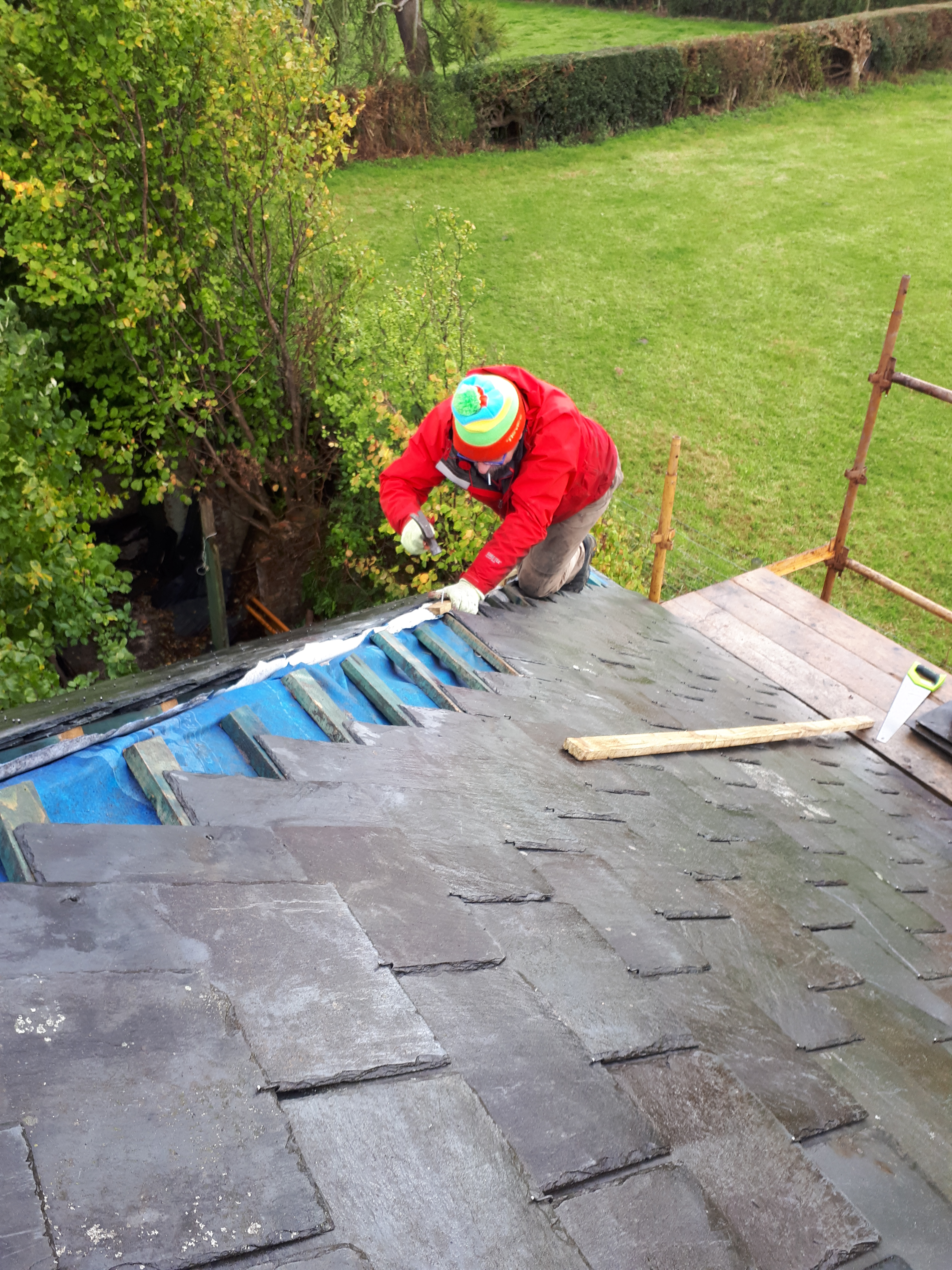
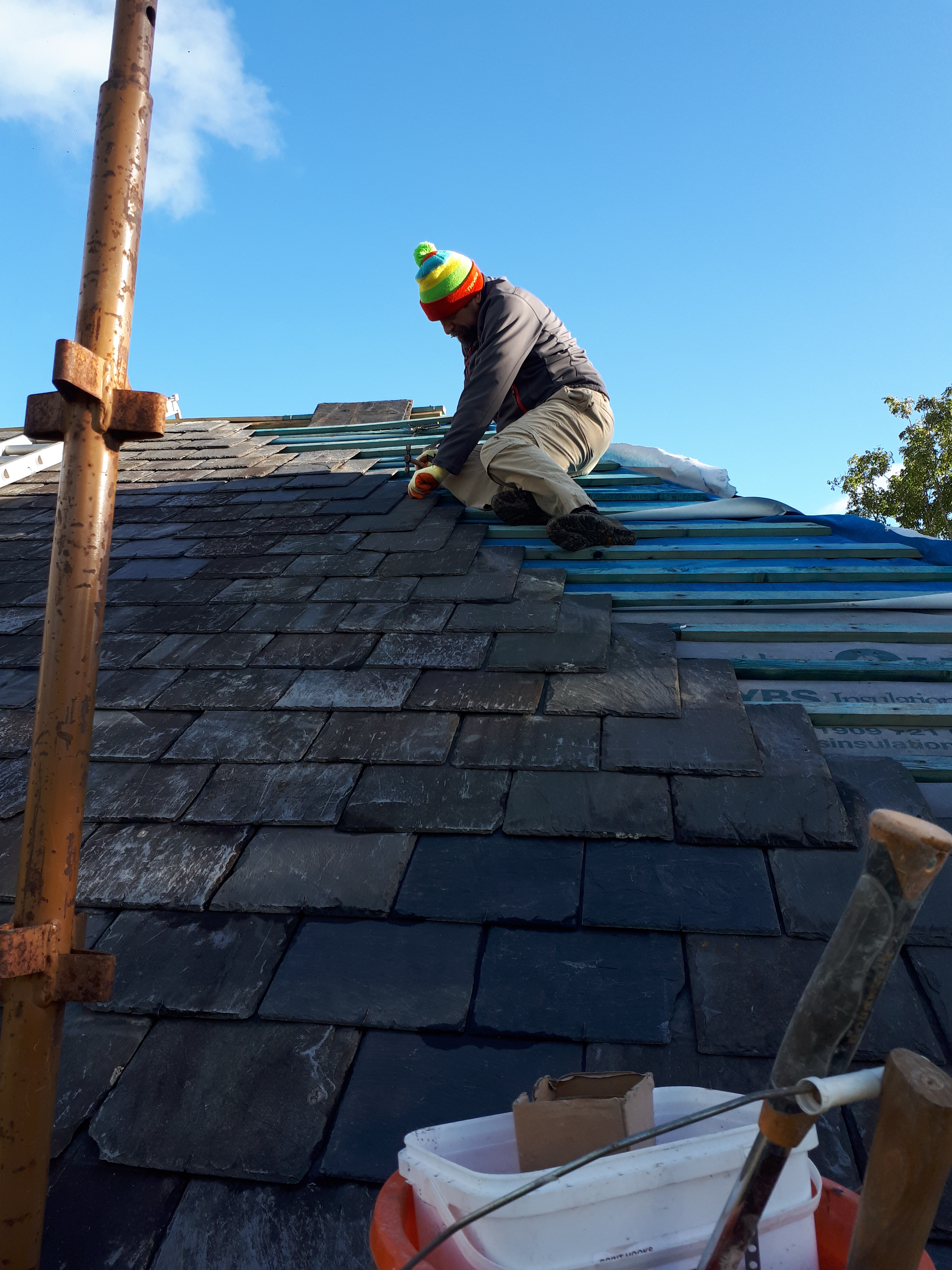
Having landed a new job, and handed in my resignation, I decided to take a week off between roles to get some more work done on the house. The week started with all hands on deck, my parents having travelled up and Chris being free for the weekend. With the additional help, my dad and I continued getting slates on the roof. Working along the final edge, it was slow going, as the gap to get up and down got smaller and smaller with each new slate added.
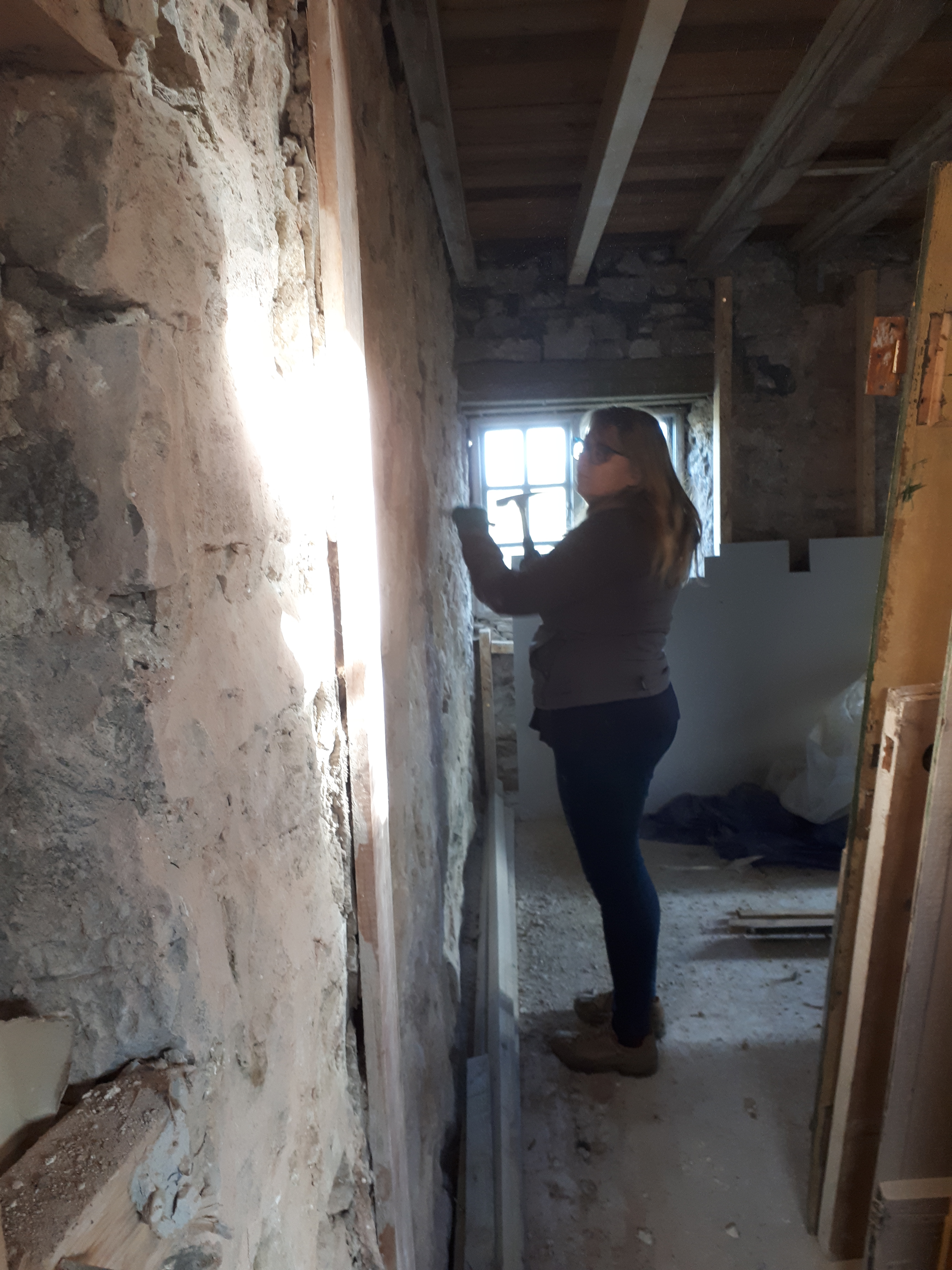
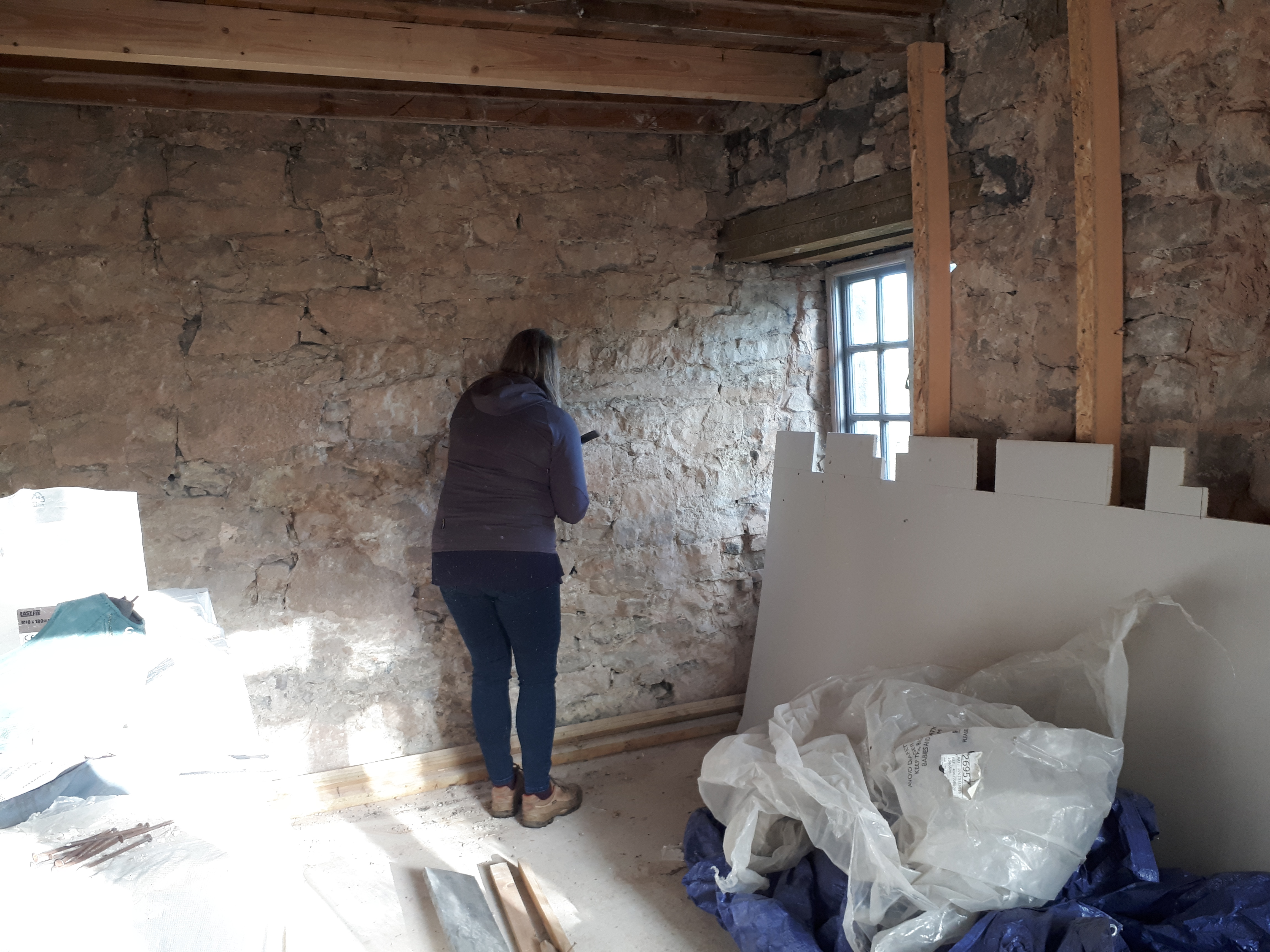
Inside, mum got on with the wrist breaking task of chisling out the old render from our central wall. With this wall planned to remain as exposed stone, the new mortar here needed to be particularly neat. Unfortunately, the old mortar seemed surprisingly tough and difficult to remove, compared to the rest of the house.
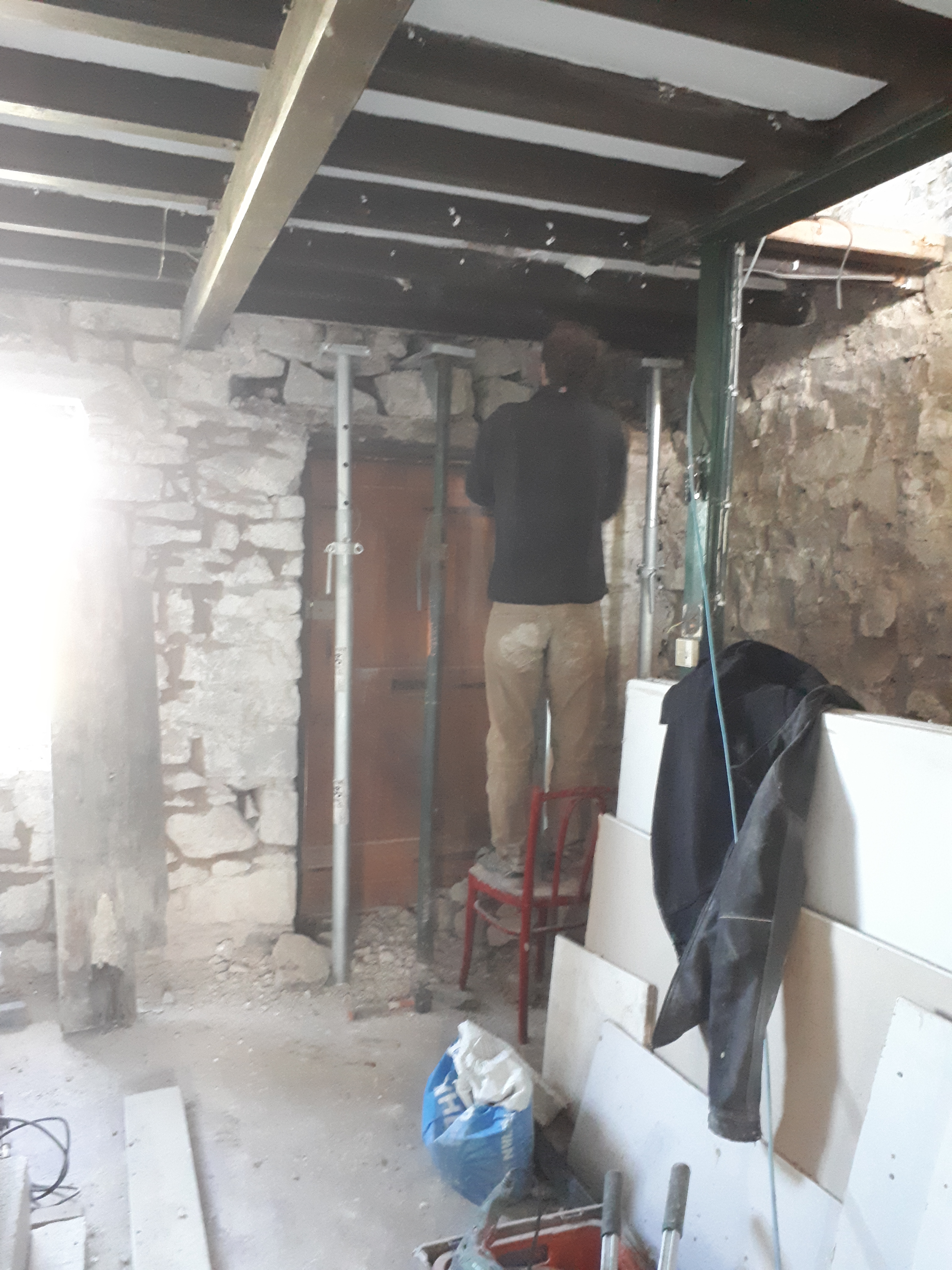
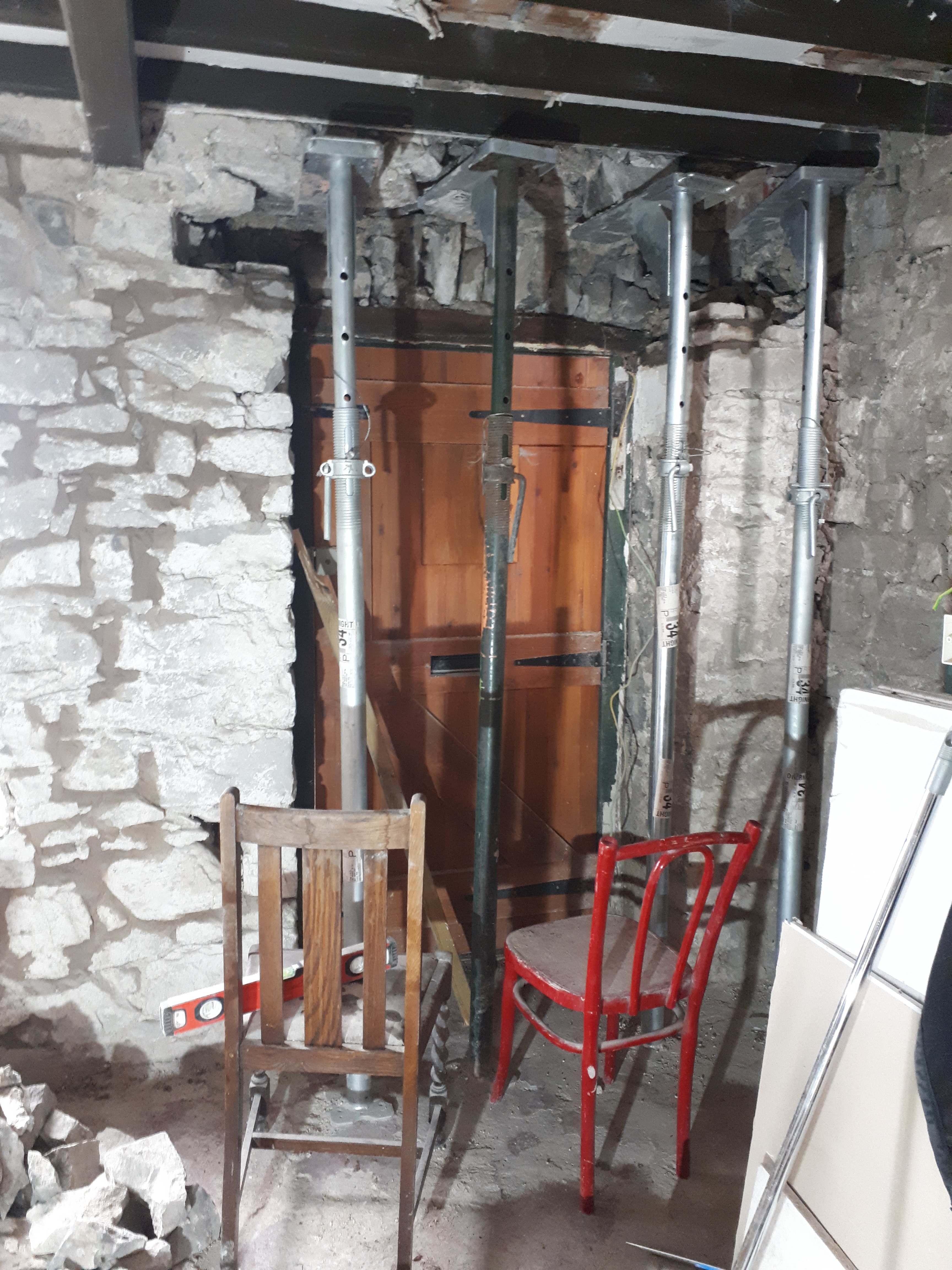
Freed up from roofing work, Chris started on the final lintel in need of replacing. Looking at the thin and rotten wood that had been take out, it was surprising the wall hadn’t collapsed years ago. With dad to lend a hand, the three of us lifted the first of the new concrete lintels in place, only to see the second lintels wouldn’t quite fit in. In order to squeeze it in, a corner would need to be cut off first, requiring the loan of a tool off Chris’s brother.
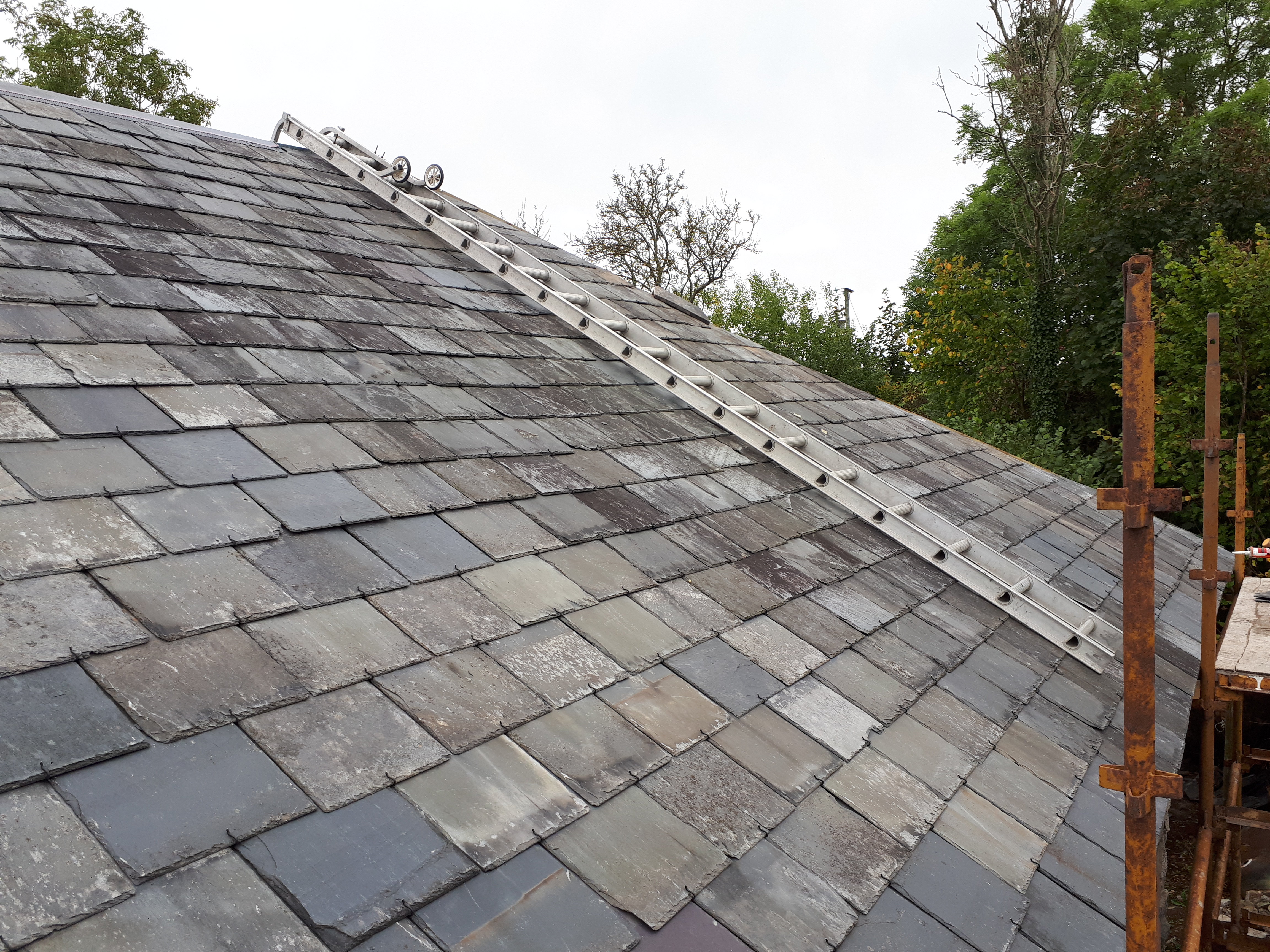
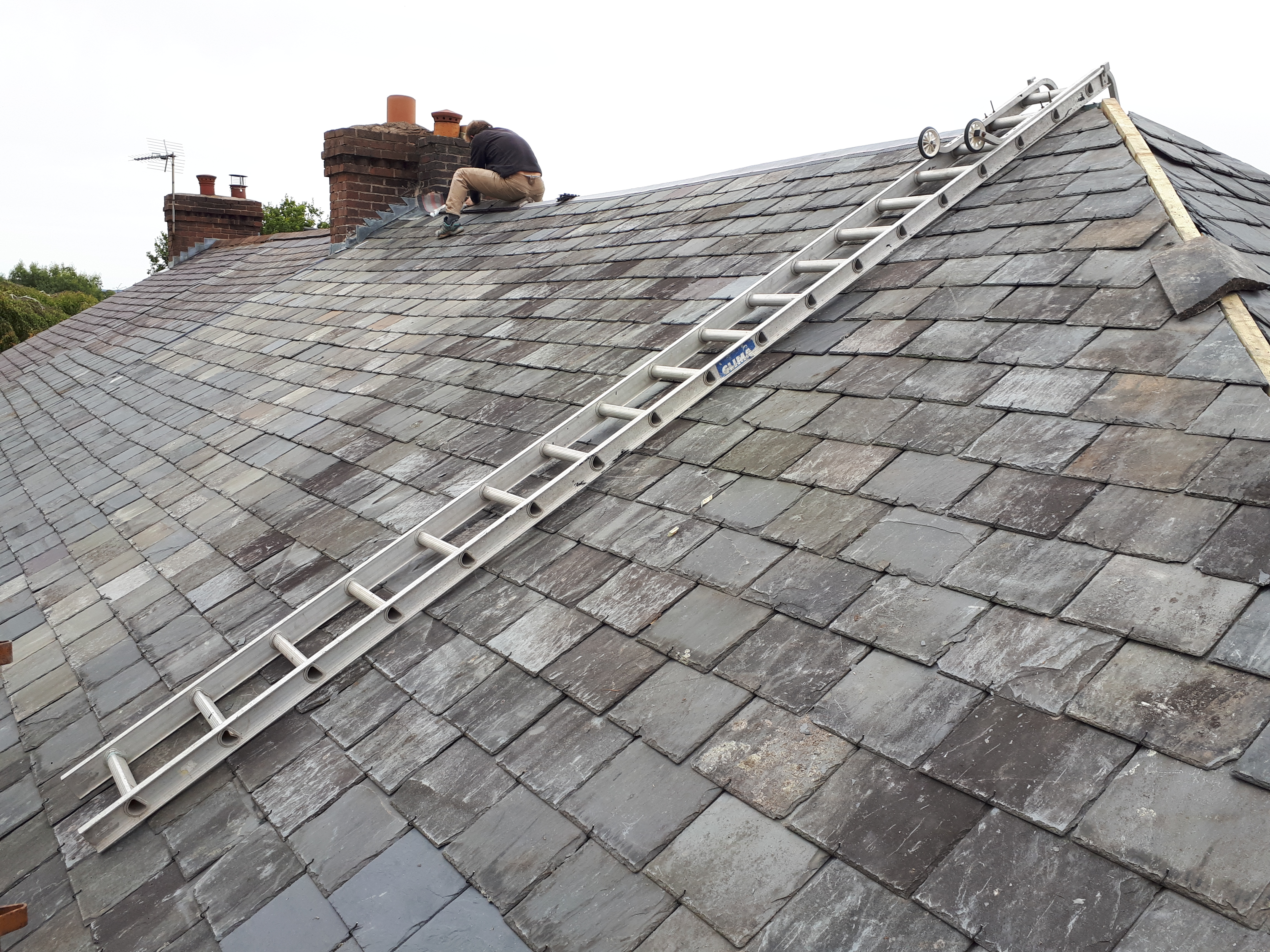
With mum and dad off to the aquarium with the grandkids on the Sunday, Chris and I continued plugging away at the roof. I finished off the last few slates, while Chris started on the ridge tiles. And then, suddenly, the last slate was in! Who would have thought we’d ever see the day when there would be no more slates to add to the roof. And with a little more work on the roof tiles and guttering, the roof will soon be done.
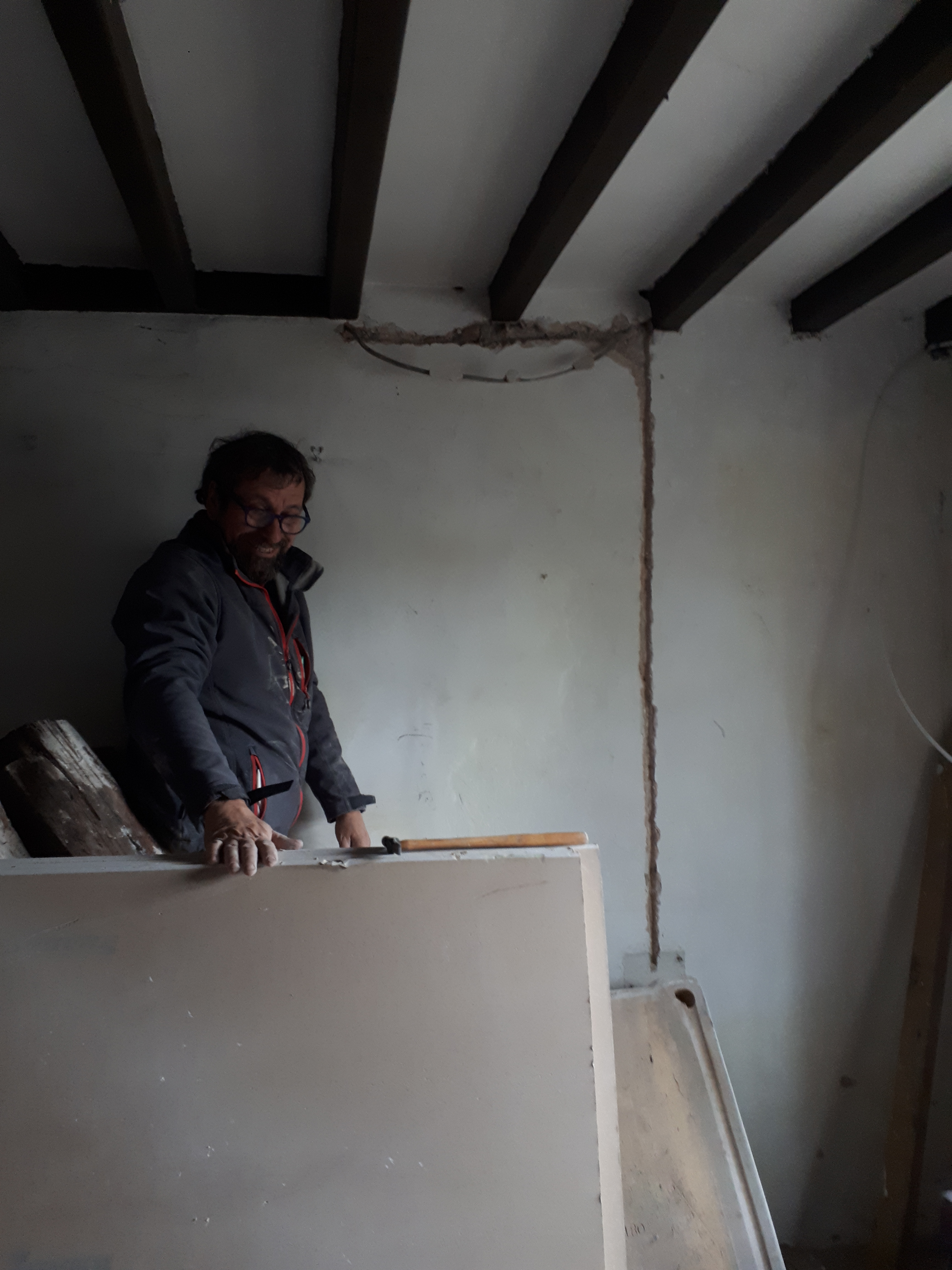
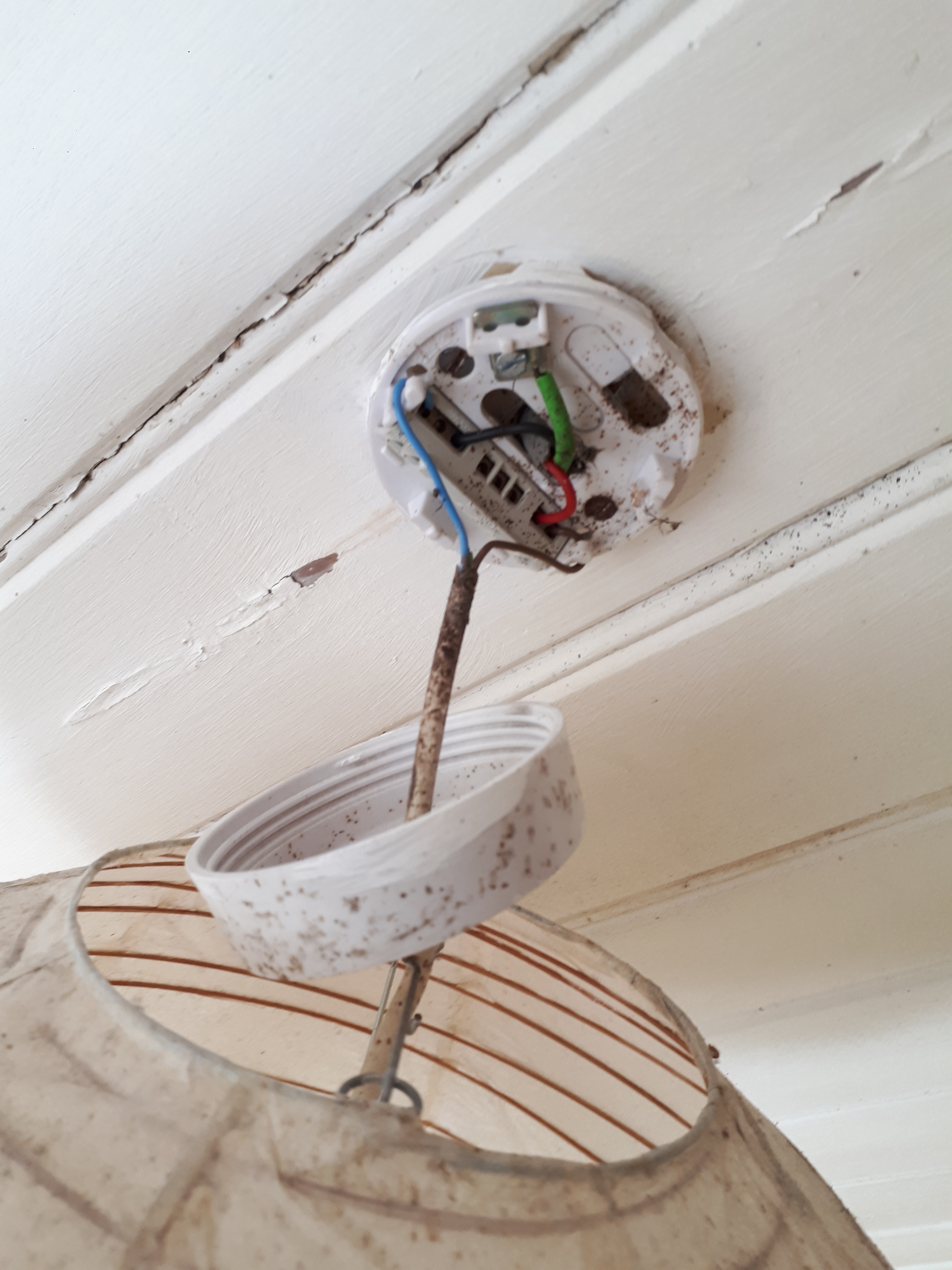
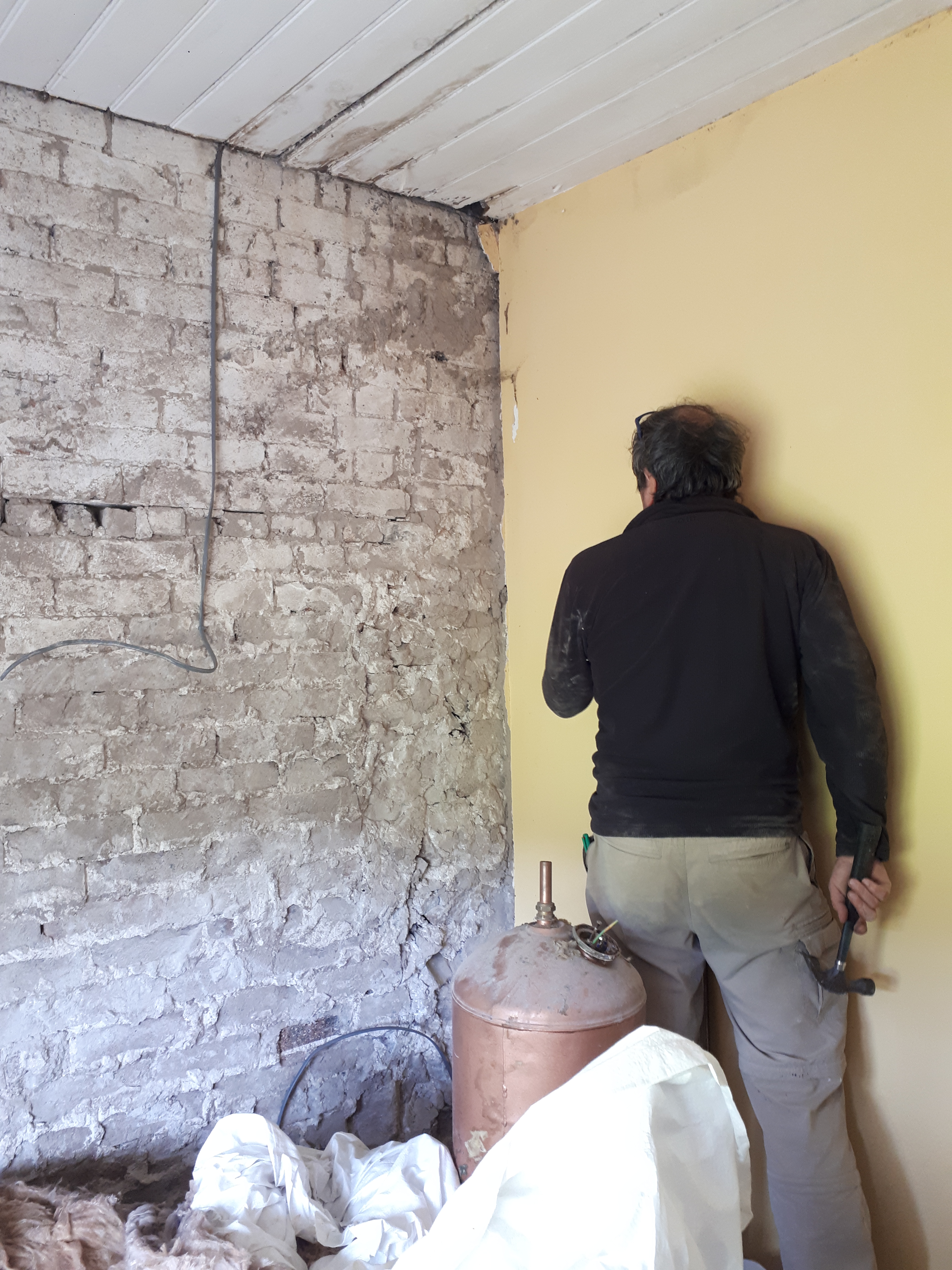

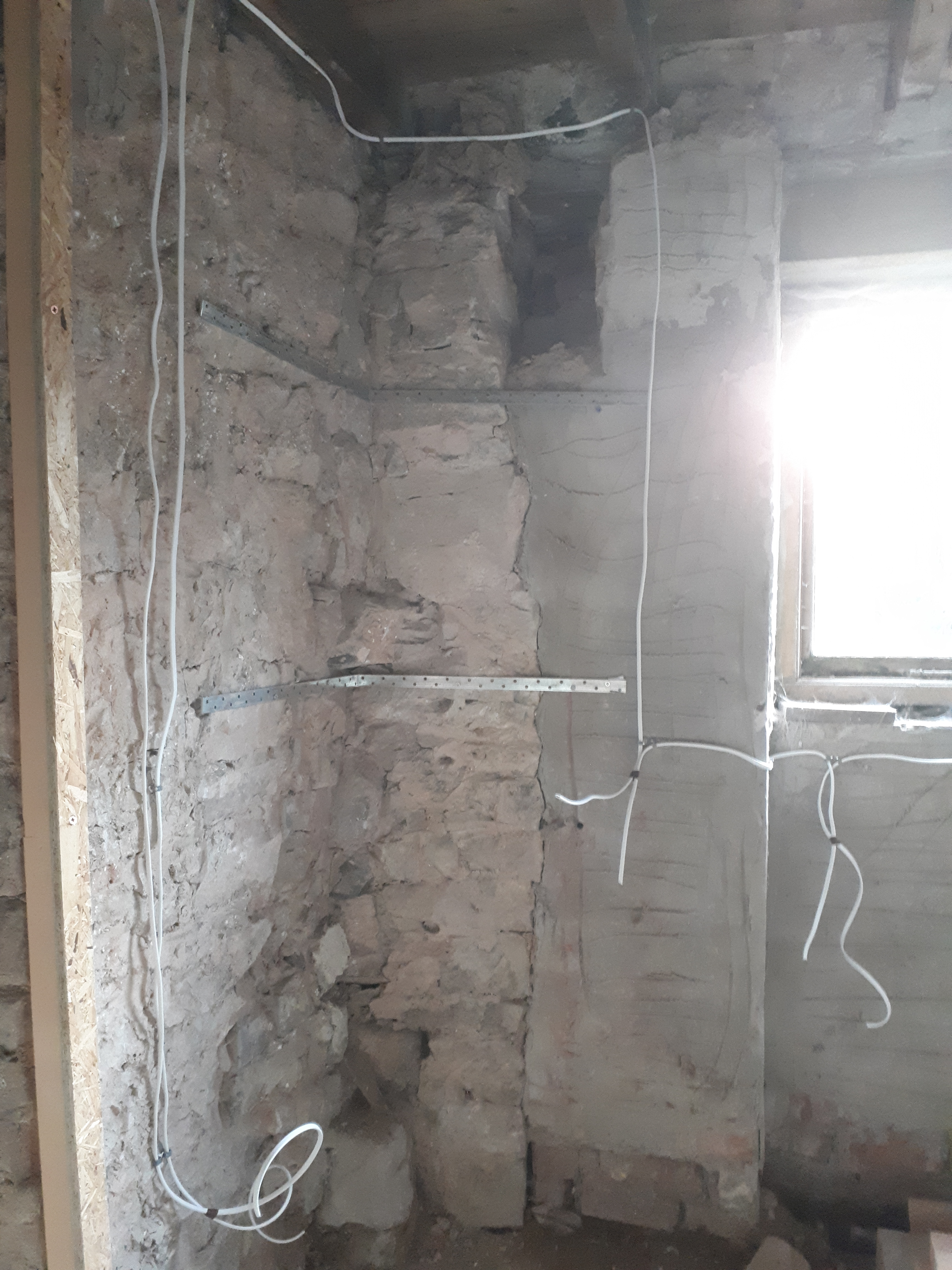
On the Monday, Chris headed back to work and dad returned from his jolly staring at fishes. In his wisdom, Chris left us in charge of installing the electrics for the sockets throughout the house. Having never worked on electrics I wasn’t sure that was such a good idea, but luckily my dad has some experience, and Chris drew us a handy little map.
Due to the nature of the house, with no gap between the ceiling and the floor above, and thick internal walls, installing the electrics involved a great deal of thought, and plenty of scrambling in and out of the attic. Luckily we were able to reuse some holes left by previous electrics, rather than spend hours drilling new ones. Still, one way or another, we got the majority of the socket electrics in place before dad was heading home.
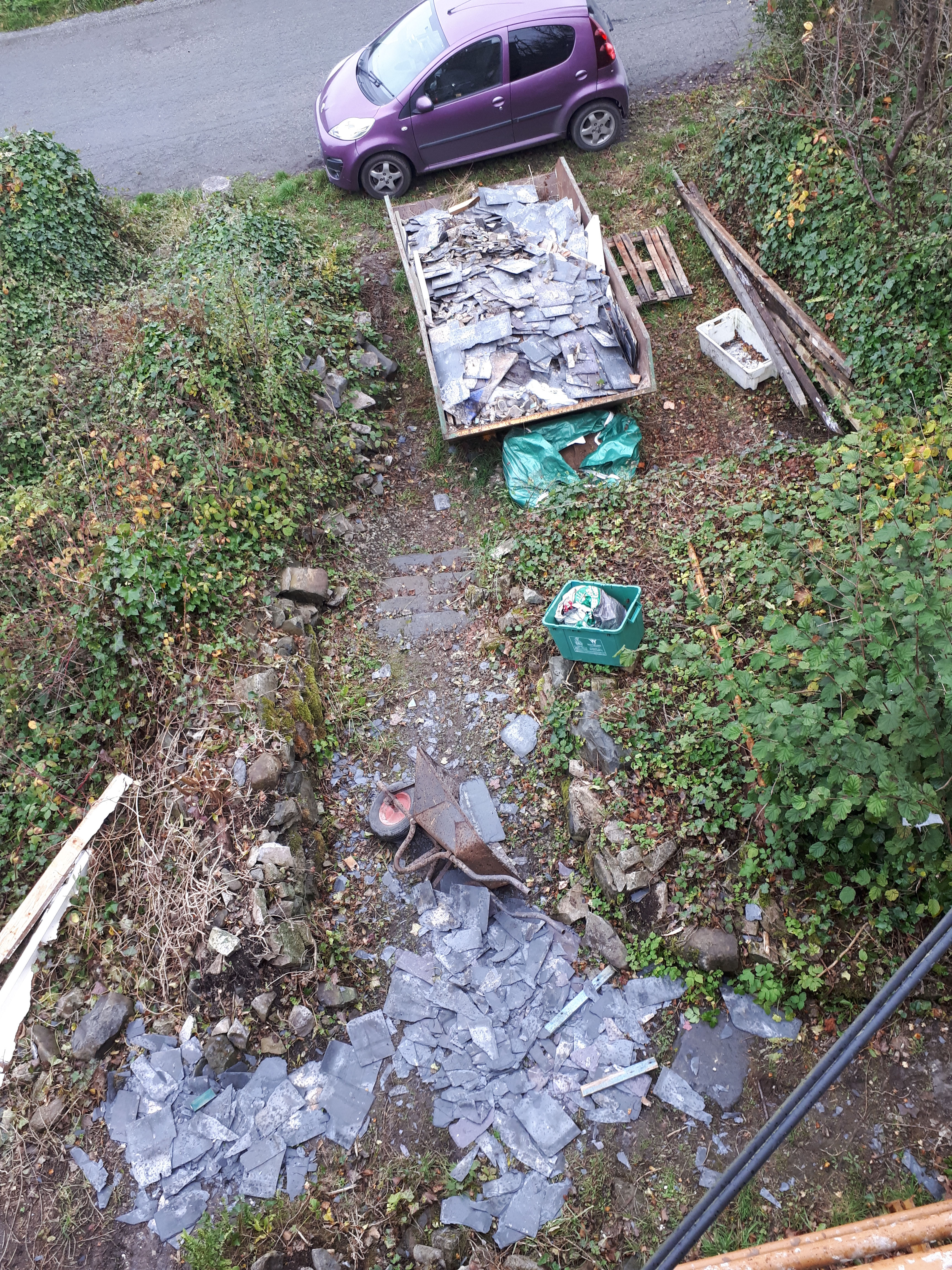
Left to my own devices, and having run out of the correct cable for the last little section of sockets, I began purging the house of broken slates and other miscellaneous waste, filling our third skip of the renovation.
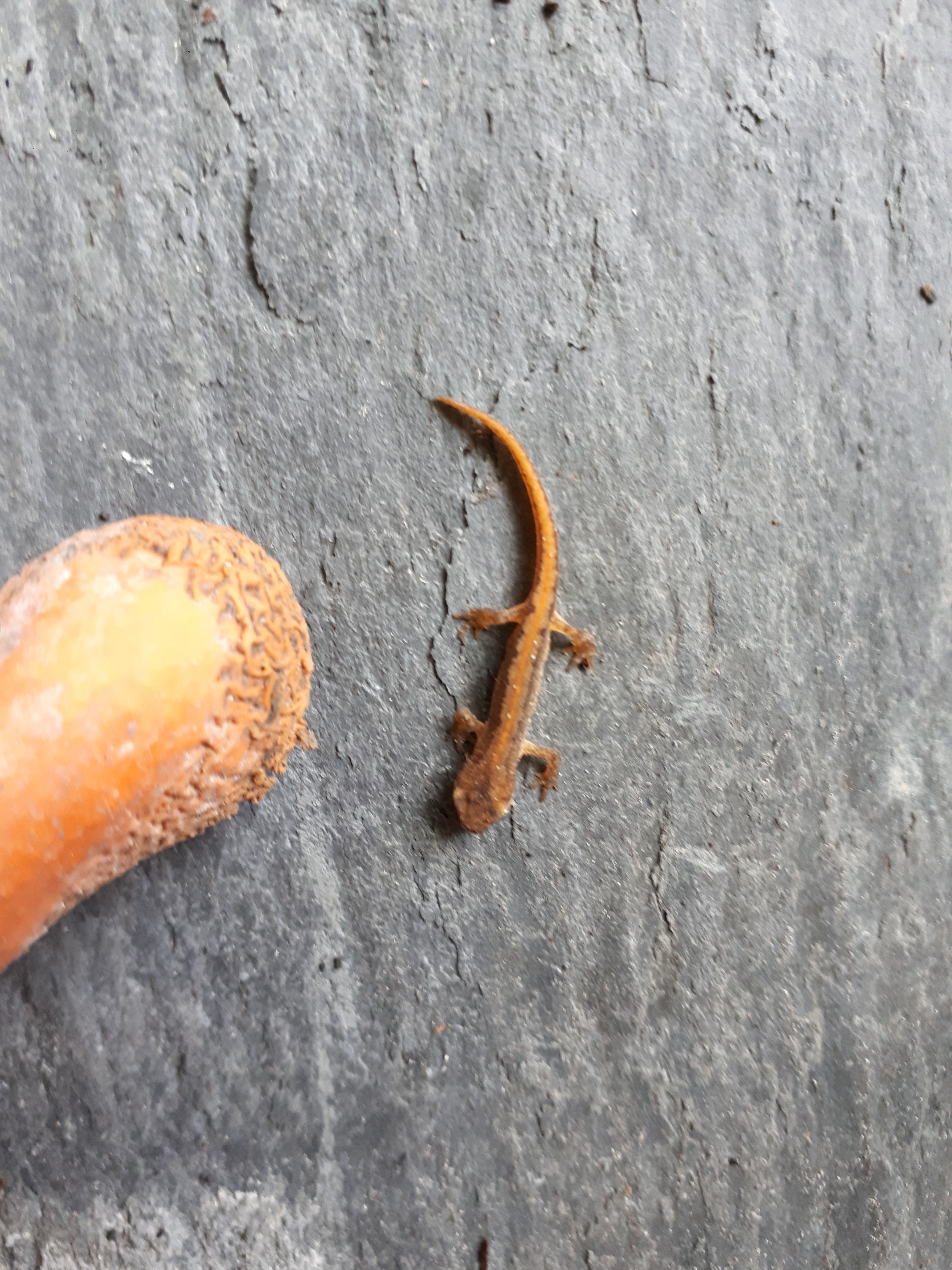
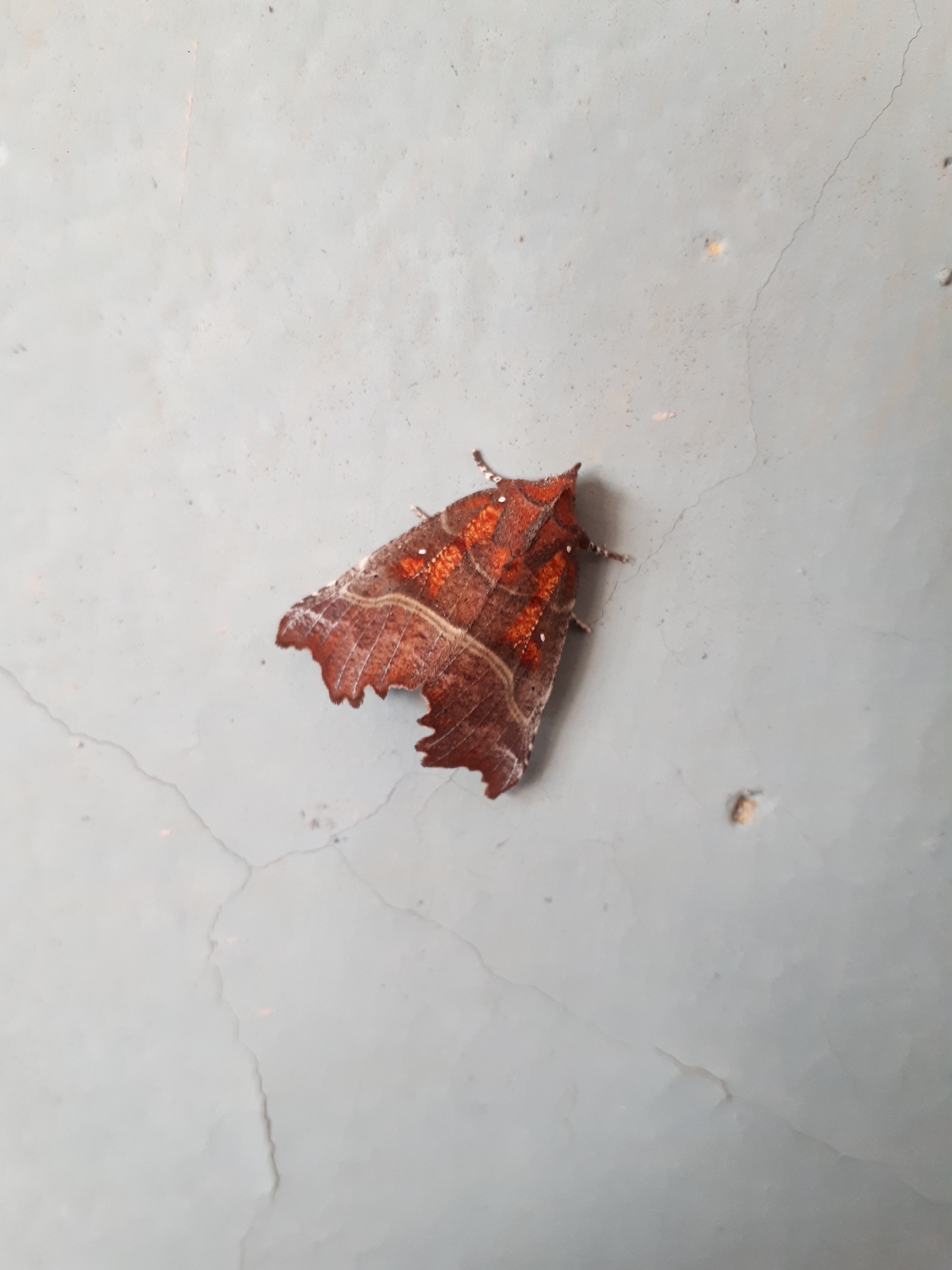
Although I had run out of human companions, I found a few woodland critters hanging around the house to keep me company, including a young smooth newt and a beautiful Herald moth. Although Disney might have taught me otherwise, they refused to do any work.


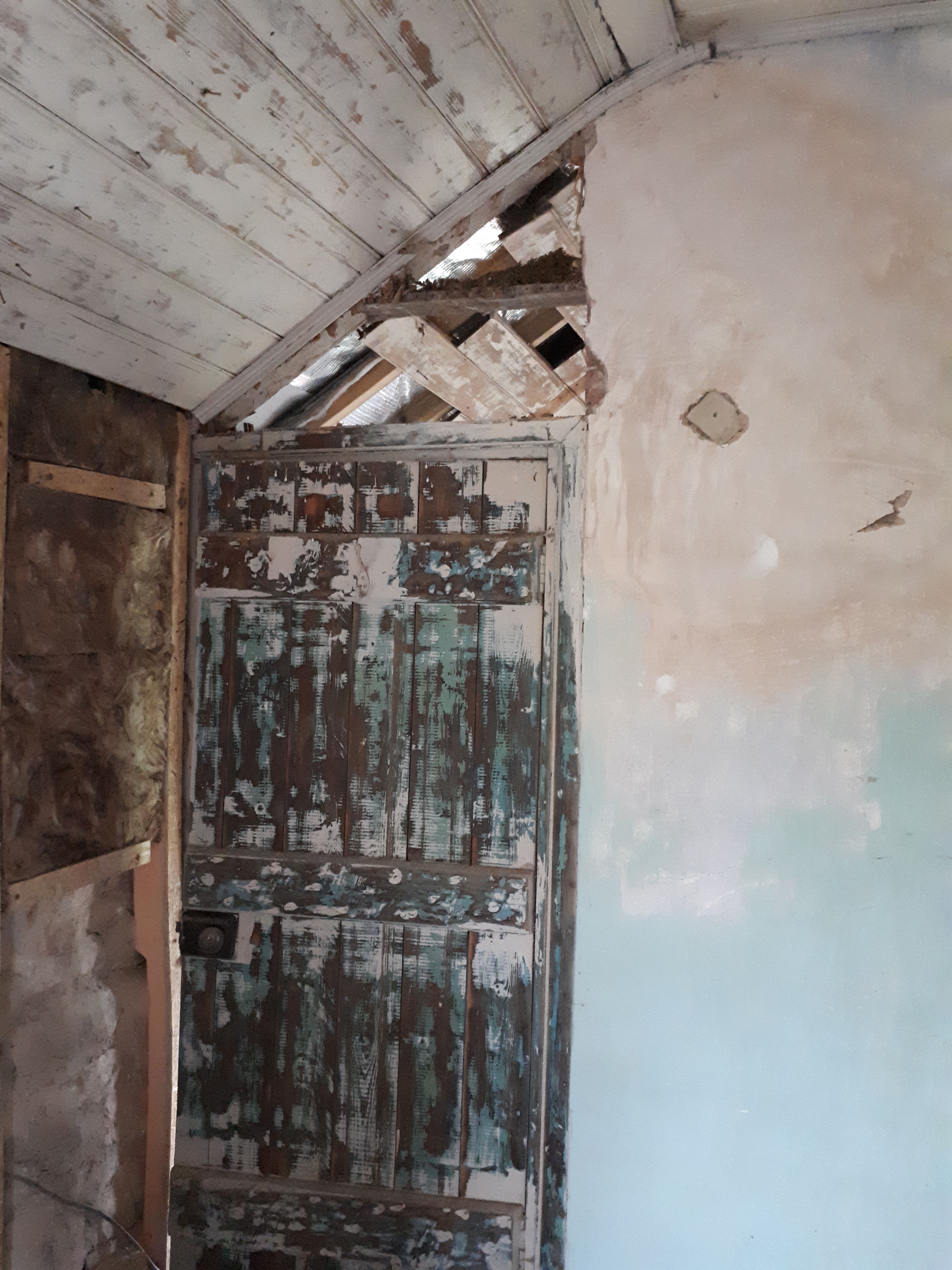
My next job was to smash up the false wall over a doorway that was going to be removed and bricked up. Inside I found a stash of old moss, suggesting a mouse might once have had a cosy little home above the entrance.

And my final job, before taking a rest day, was to pull up a floorboard next to the wall we would soon be removing, ready to install a steel beam above. Though it may not look like much, this well-nailed floorboards did not want to move, and took significant persuasion with a crowbar to prise it out.
And just like that, another week gone. Still, at least we get to work inside the house now it’s getting colder. And who knows, soon we might even have some light, and maybe one day, even heat. We can but dream.
-
Chipping away
In a day and age where you can order almost any variety hot food to arrive at your door within the hour, or get next day delivery on anything from socks to craft scissors, it’s frustrating that building materials can take days or weeks to appear. Despite only having a small area of the roof left to slate, the delivery company weren’t able to get slate hooks to us in time for the weekend. So as annoying as it is, we started on a few other jobs.
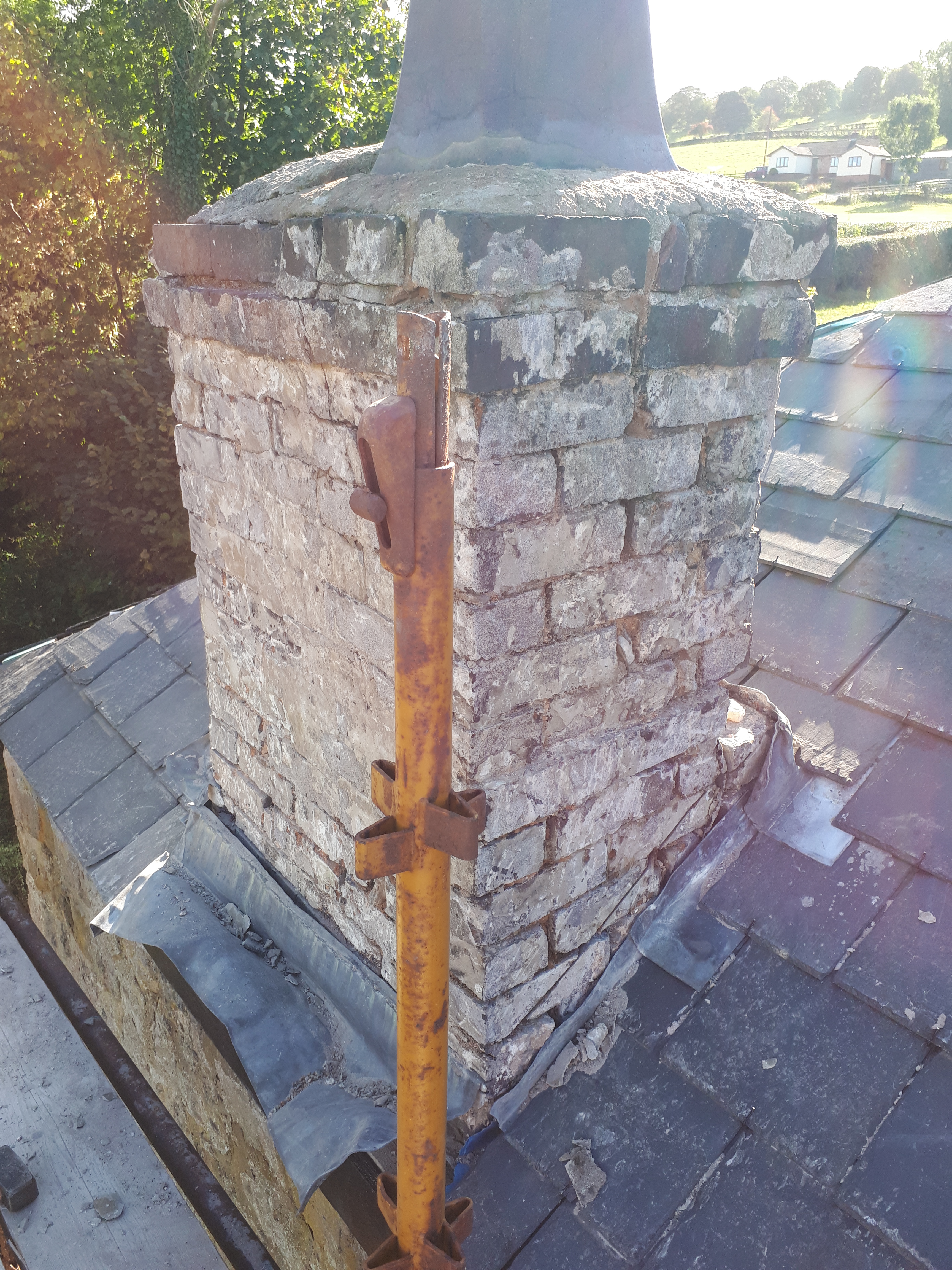
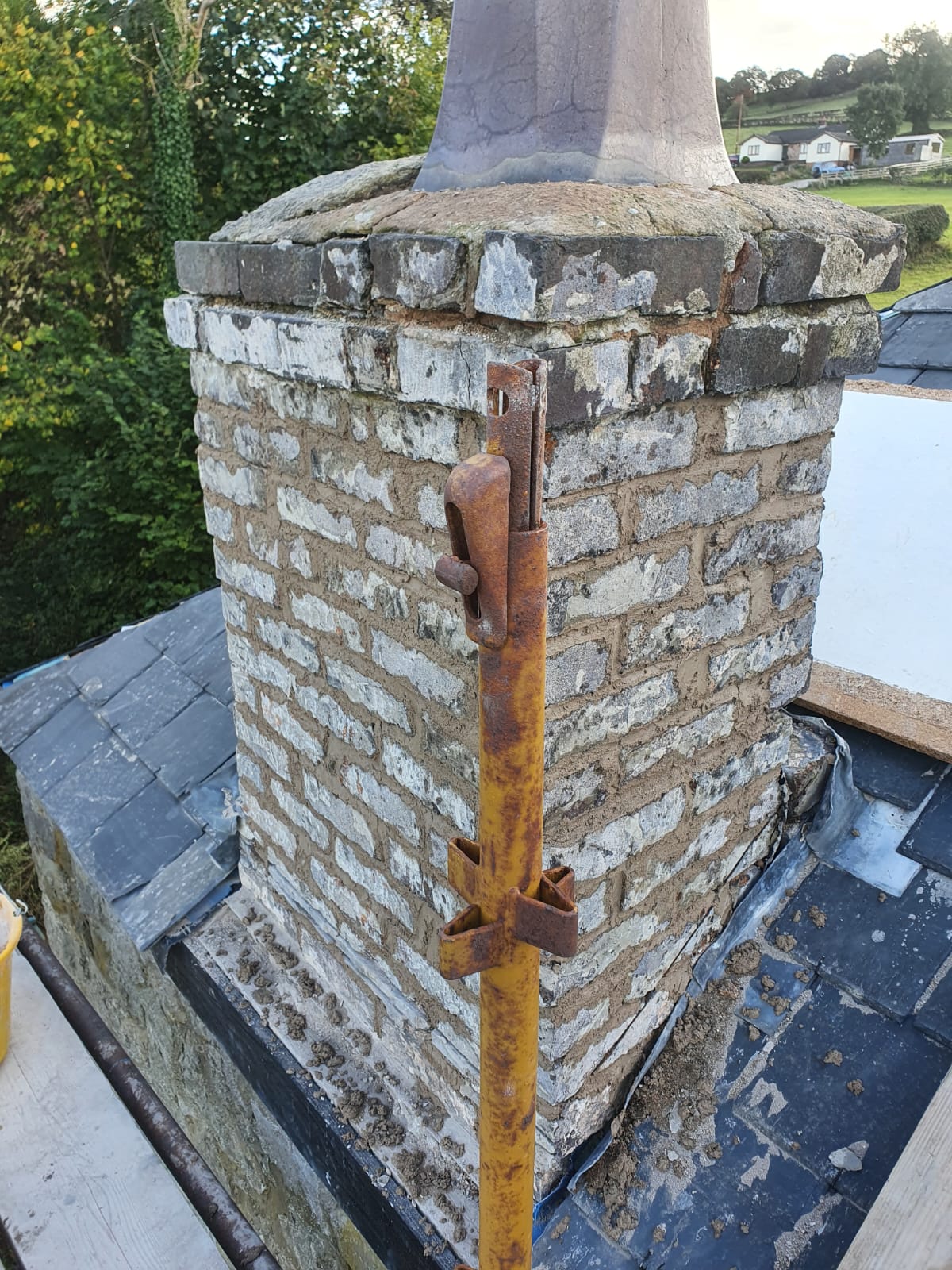
For me, I spent the whole weekend focused on our foremost chimney. Having started taking the render off, I continued to chip away, clearing out the soft mortar. The bricks were in surprisingly good condition, and for the majority of the chimney repointing was enough to make it watertight again.
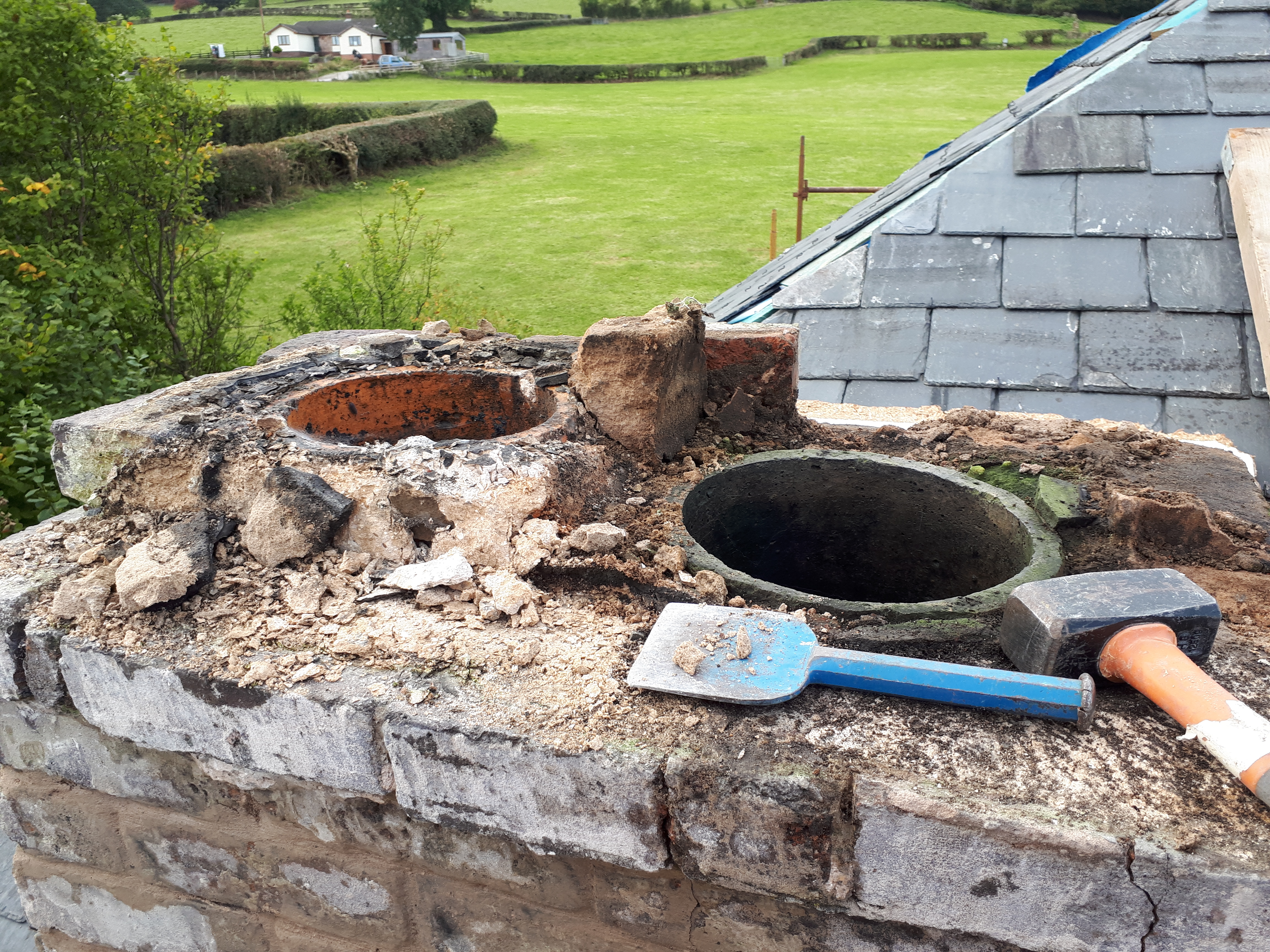
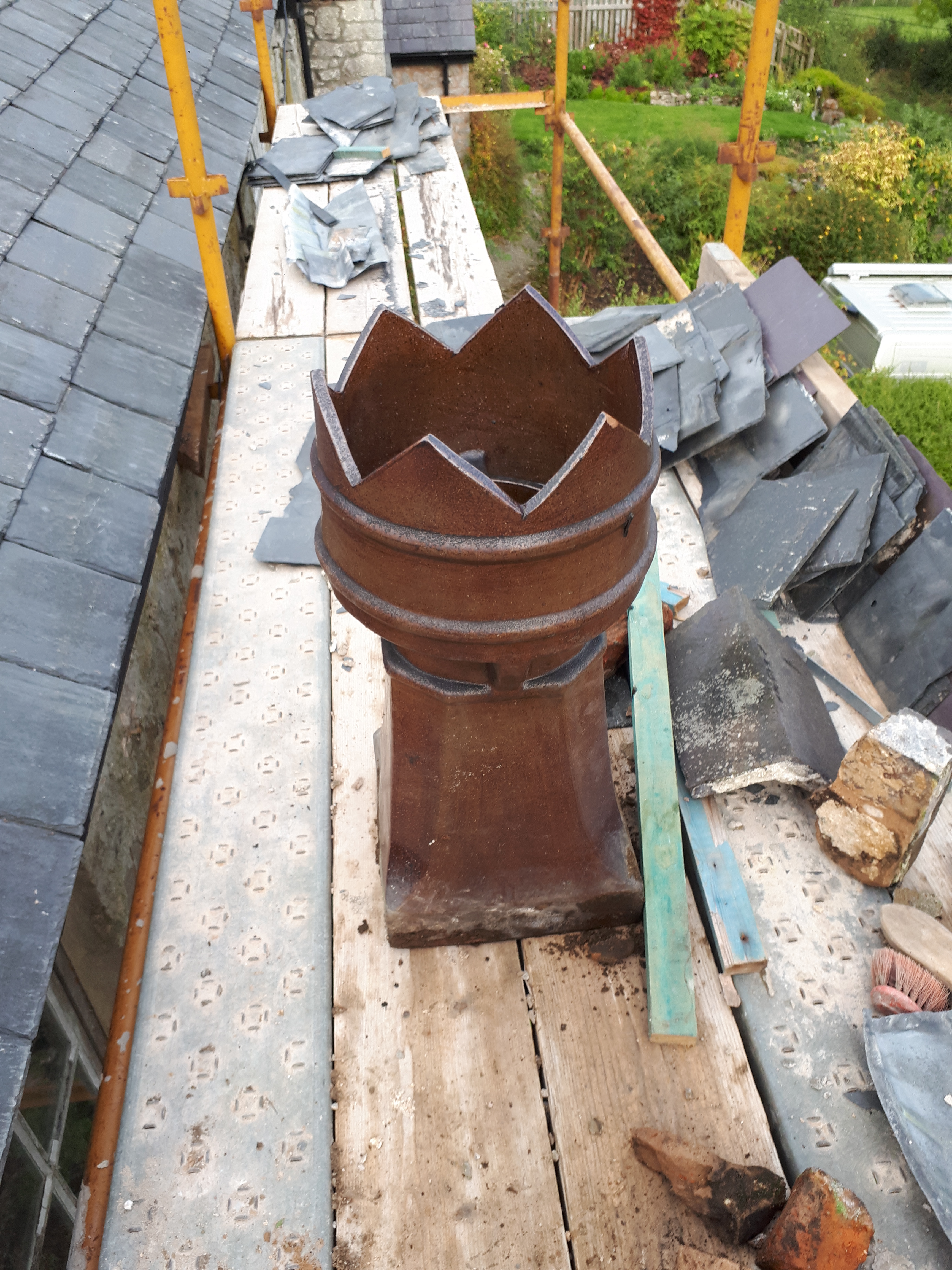
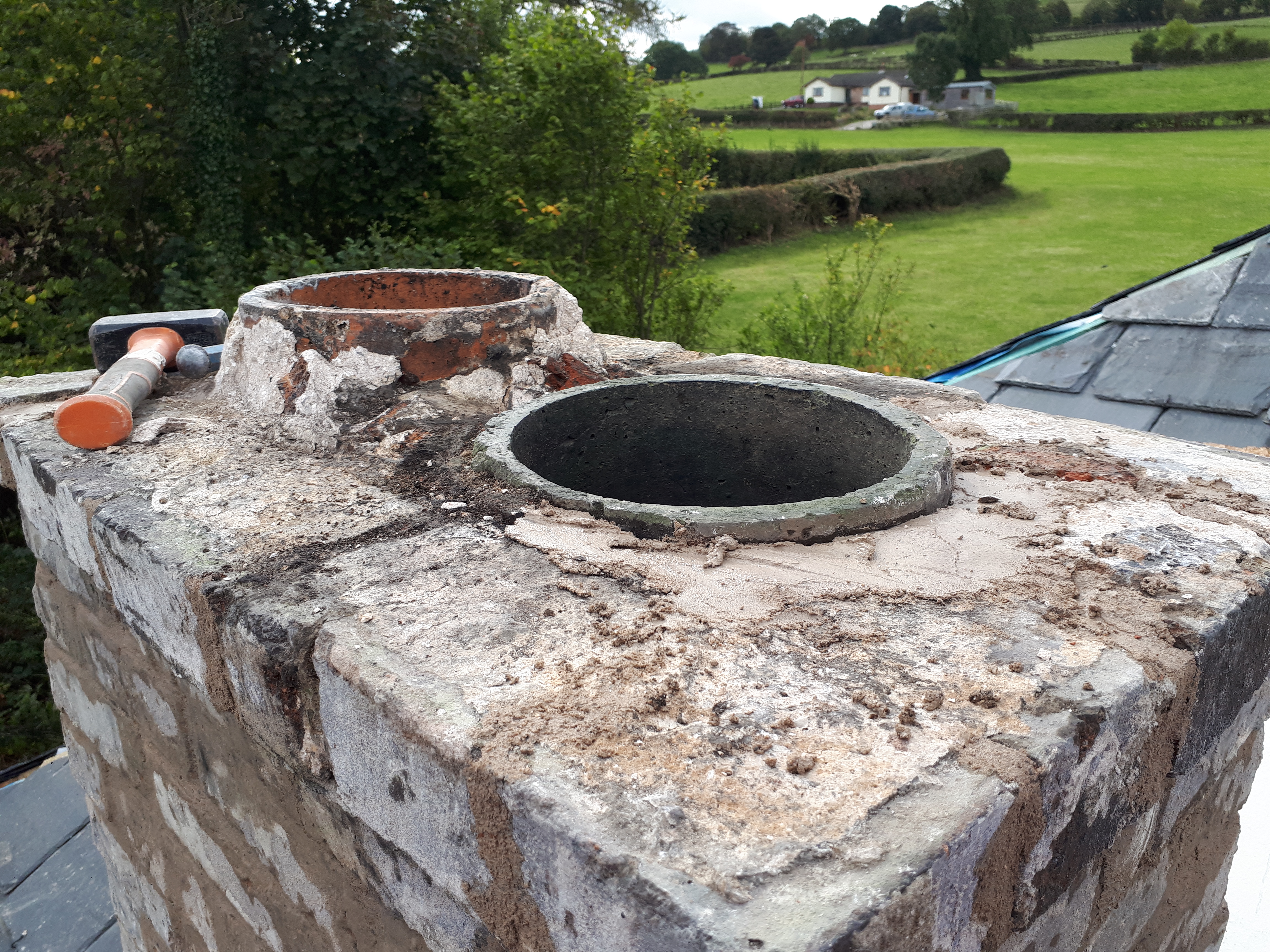
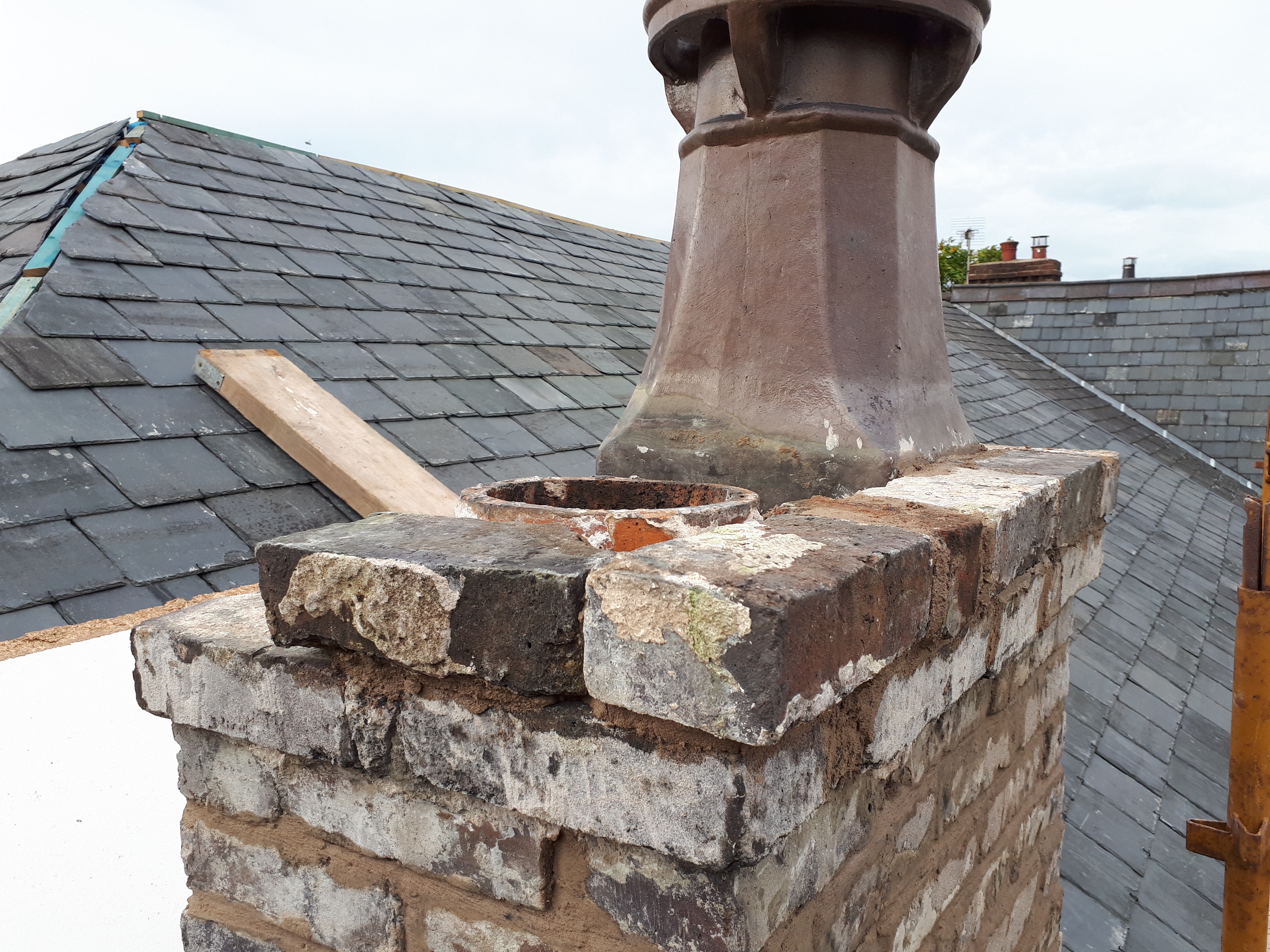
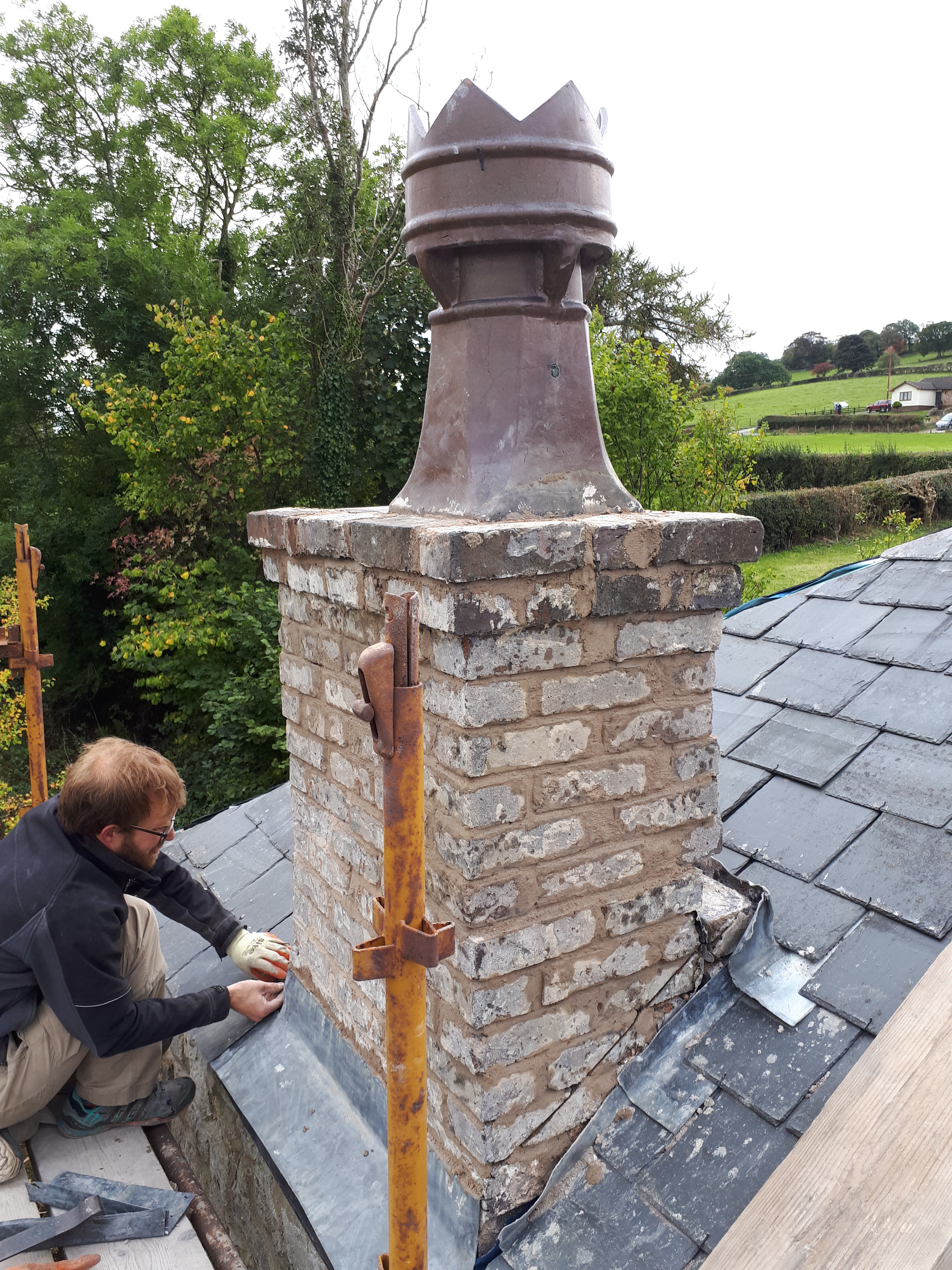
When it came to the top two rows, several of the bricks were loose, so I had to remove them in order to reset them in new mortar. However, having removed a few bricks, it became apparent the chimney pot itself wasn’t stood on anything other than old crumbling mortar. With Chris’s help to lift the pot down I could properly clear off all the old mortar before one again rebuilding everything.
Whilst I was busy with all this Chris used the camera we had brought to check the drainage, to inspect the chimney flue, finding it unsurprisingly full of old nesting materials, which he was luckily able to remove. He then spent a frustrating hour wrestling with the lead flashing. Unfortunately we had attached the slates before correctly installing the flashing, so he had to break several slates in order to get it in the right place.
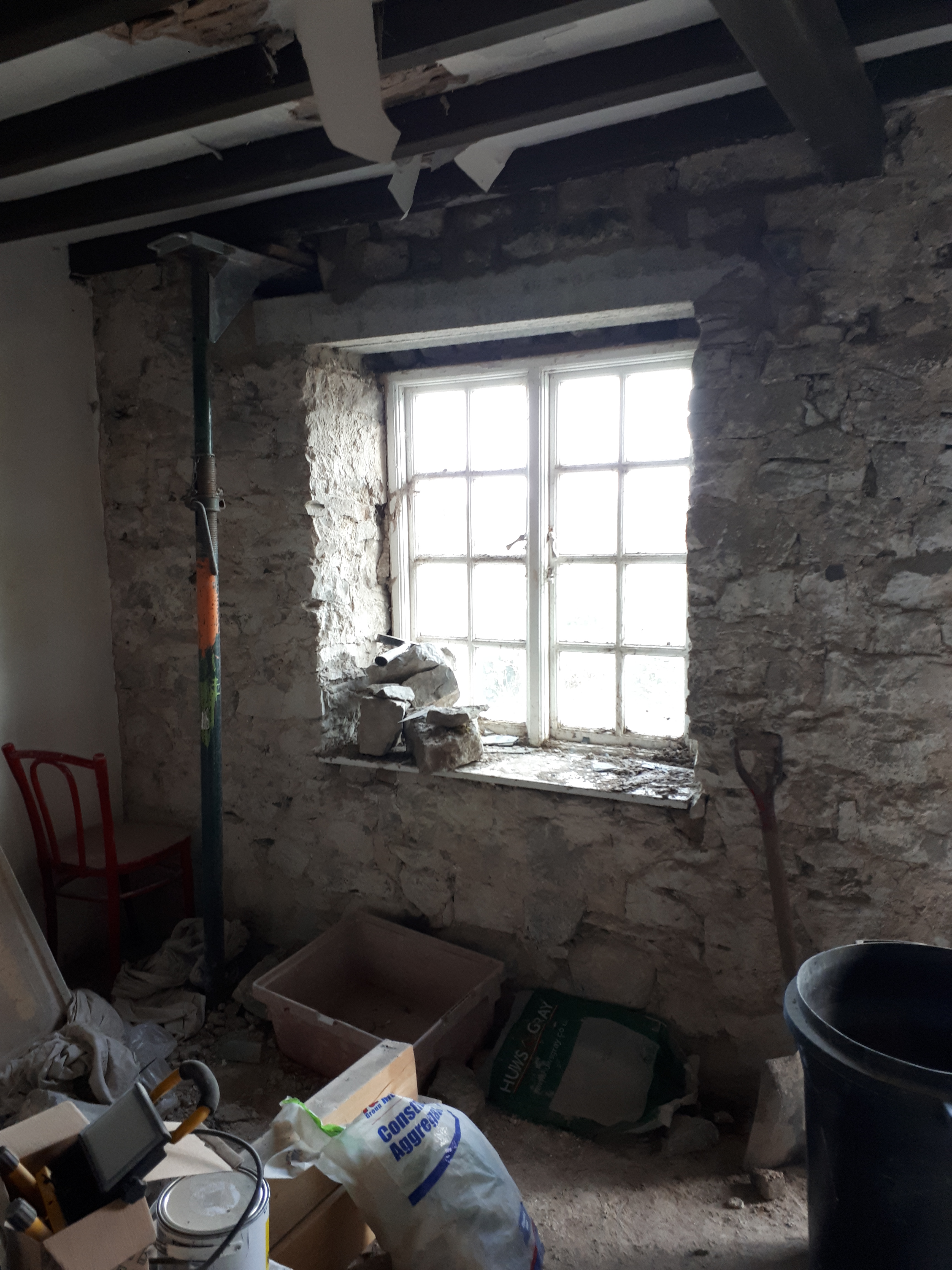

With the roof temporarily on pause Chris was also finally able to finish the third lintle, which has been half-done for a while. With newly purchased spotlights Chris even signed himself to an evening’s repointing around the freshly finished lintel. I must admit I spend the evening curled up on the sofa with the dog…
-
Subscribe
Subscribed
Already have a WordPress.com account? Log in now.
 Ruined