-
All hail the Recycling Centre
It’s been our first long weekend at the house. Normally long weekends are a relief, a chance to relax and unwind. But it’s a little different when you’re lugging bags of rubble down a narrow staircase.
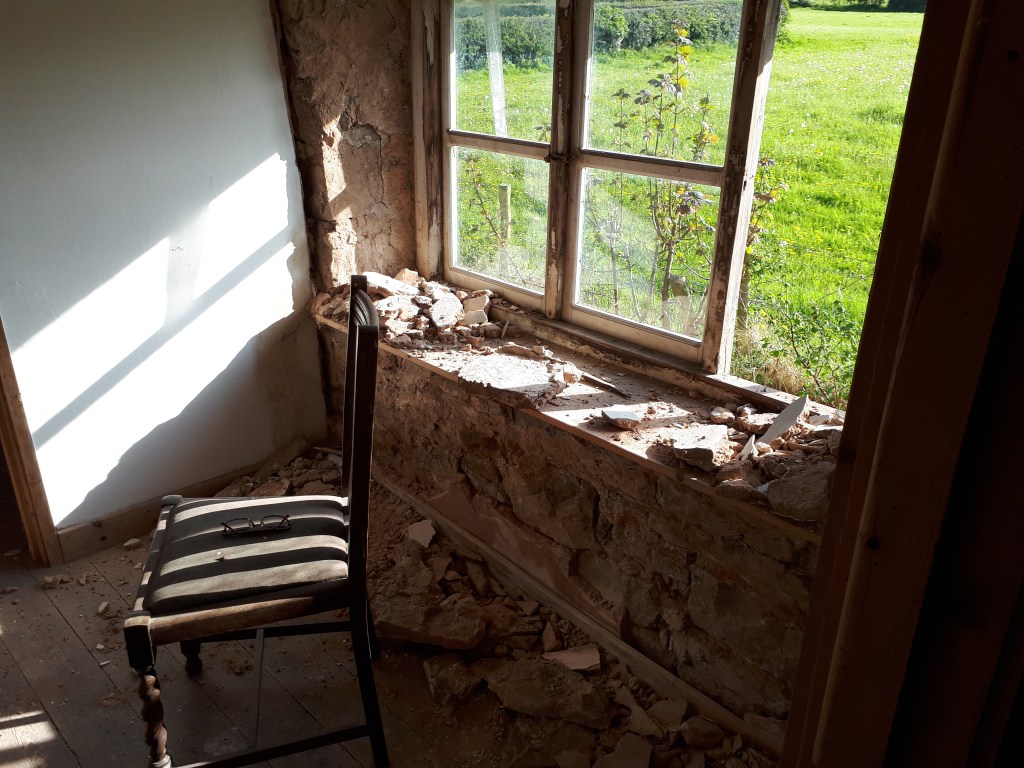
We had planned to hire a skip to remove the bulk of our DIY waste. However, due to the narrowness of the road and drive we were concerned it wouldn’t be possible to unload the skip. While we were pondering the rubble piles piled up and eventually we decided to start making runs to the recycling centre.
Moving rubble is one of those ‘little’ jobs that I’m convinced won’t take very long, until, that is, I start it.
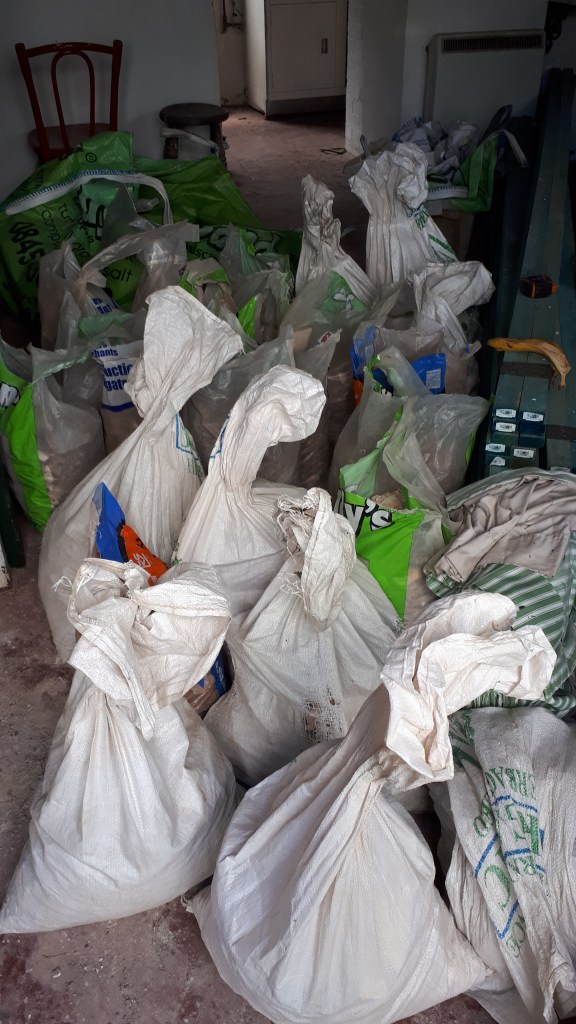
So far we have removed the plaster from the walls of five rooms, roughly half, in volume, of what needed doing. Starting in the first room we began shovelling, filling old sand and cement sacks. One sack, two sacks, three sacks, and we had barely moved a foot. In the end we filled 25 bags in one room, seeming only to inch along with each bag.
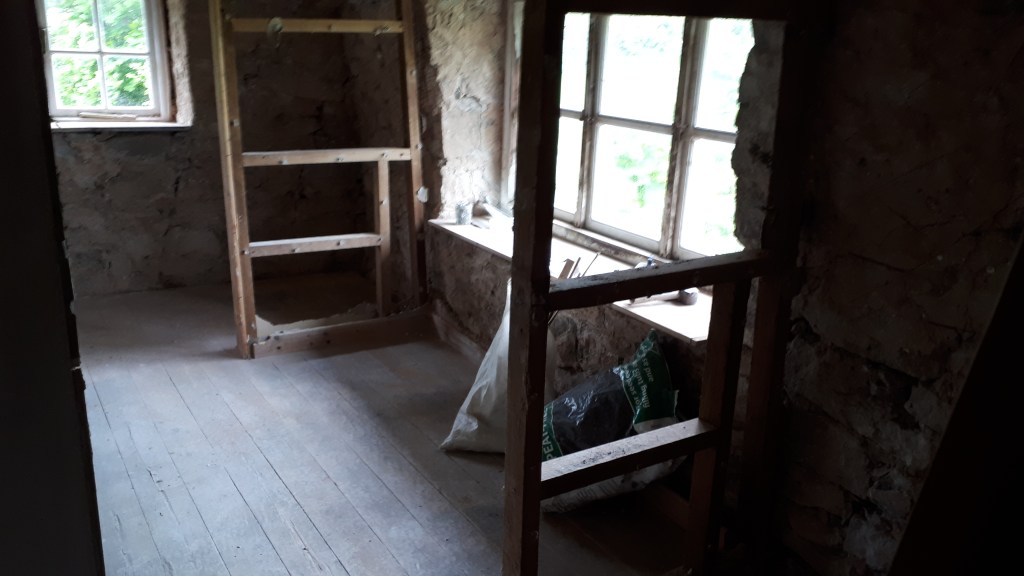
Although this was tiring enough, next came the tricky bit, carrying the bags out of the room, down the narrow stairs, through the house, along the uneven garden path, down the garden steps and into the boot of the car. As someone with very little upper body strength this is work I find particularly exhausting.
Car filled, sweaty and dusty, off when went to the recycling centre.
I love recycling centres. They fill a basic desire in me to save and reuse as much as I possibly can. I find satisfaction in seeing all the neat piles of things going off to a brand new life. When the time comes to drop off all the batteries, light bulbs and tetrapacks that I’ve been saving up for months, I feel elated knowing I’ve done my best not to be wasteful.
Before 
After Our old plaster, broken and ruined as it is will now go on to a new life, largely heading back into the construction industry, reincarnated into new buildings, roads or other projects. All 60 bags of it.
Yet after four car loads, with Chris’s suspension depressed to it’s lowest limits, we decided a skip might afterall be our best option, and the remaining rubble sits stacked up in bags waiting for it’s saviour to arrive.
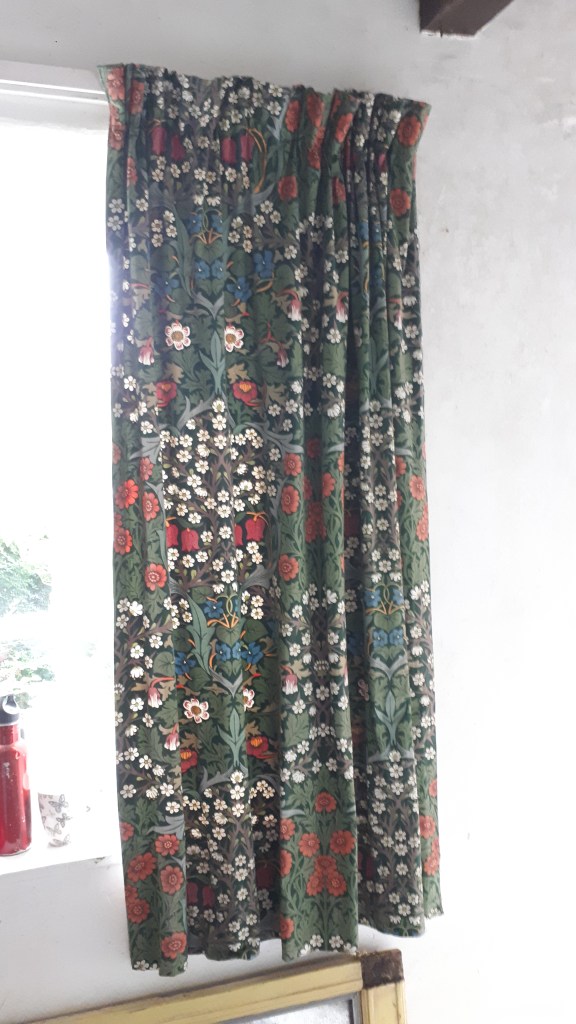
Following the recycling theme, more of the previous owner’s possession have been rehomed. The 80s washing machine, oven and fridge all went to someone who repairs and resells old electronics, while some vintage floral curtains that Chris wanted to use as dust sheets sold for £20, to someone with a discerning eye and a love of sewing.
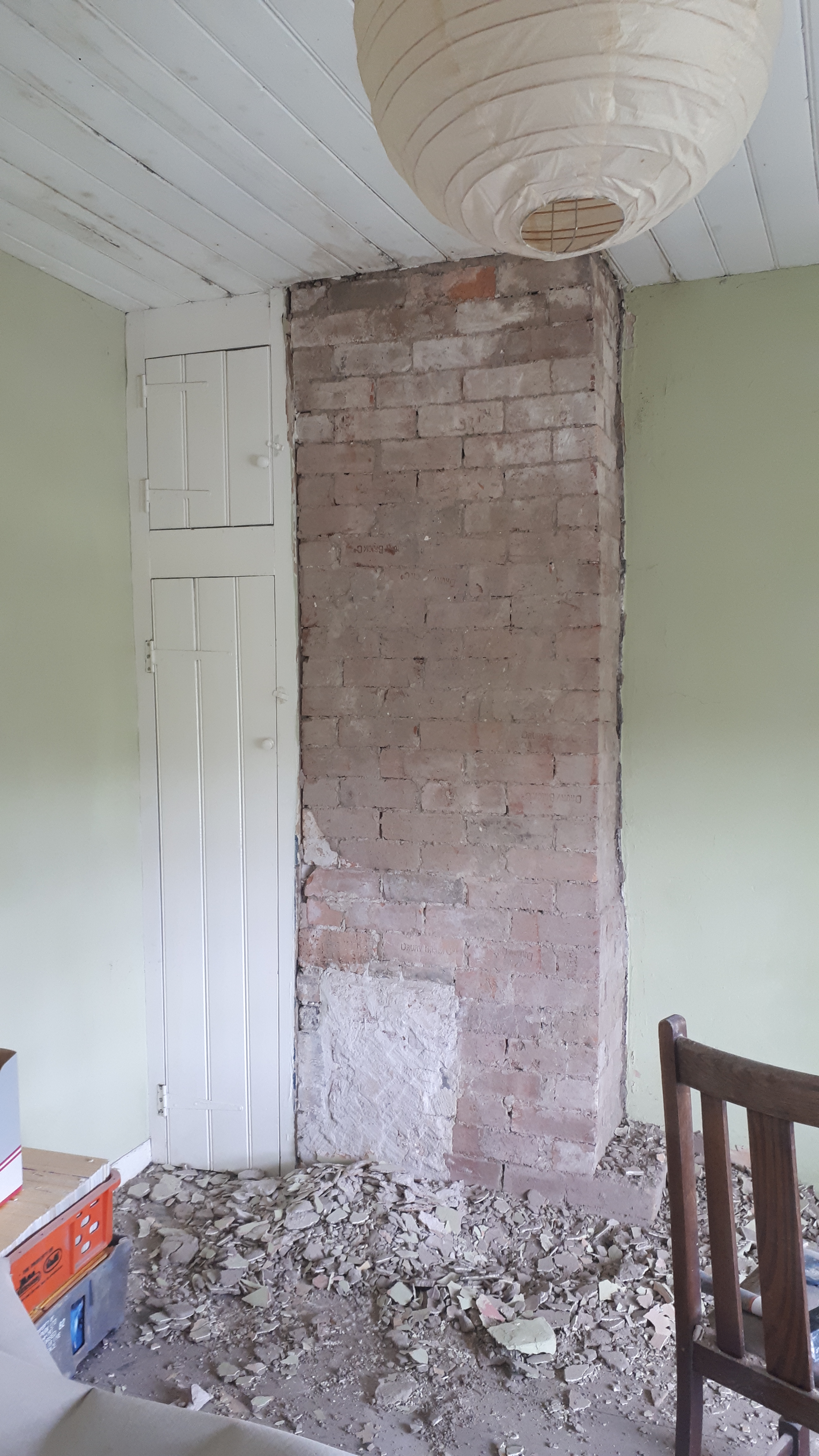
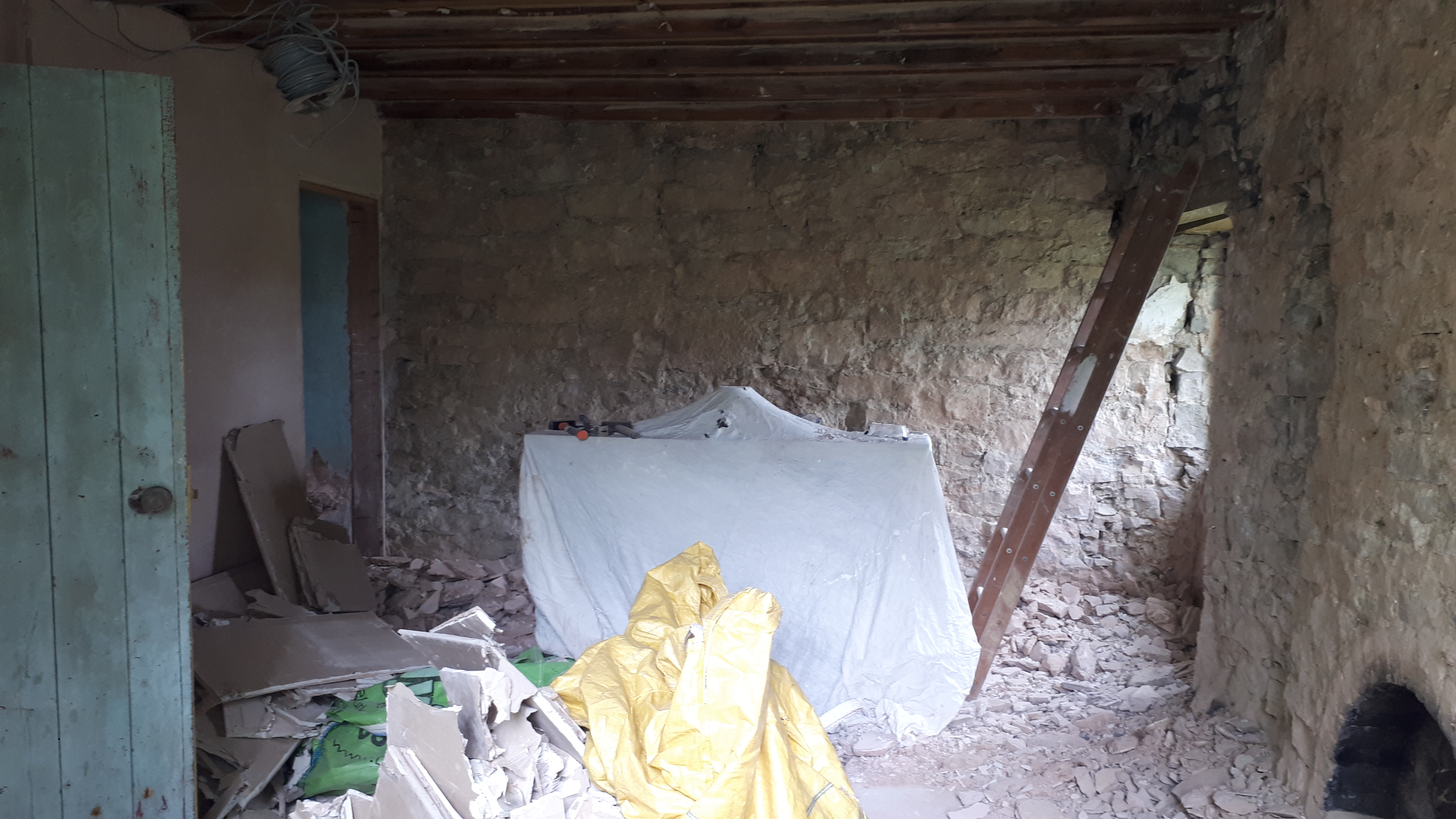
Although not necessary as part of our replastering works we also cleared the plaster off an old brick fireplace in one bedroom, and an internal wall in the dining room. While exposed stone on external walls could reduce the effectiveness of our insulation, this isn’t such a big issue for internal walls. Therefore, we are leaving a few key features exposed to add to the texture and character of the house.
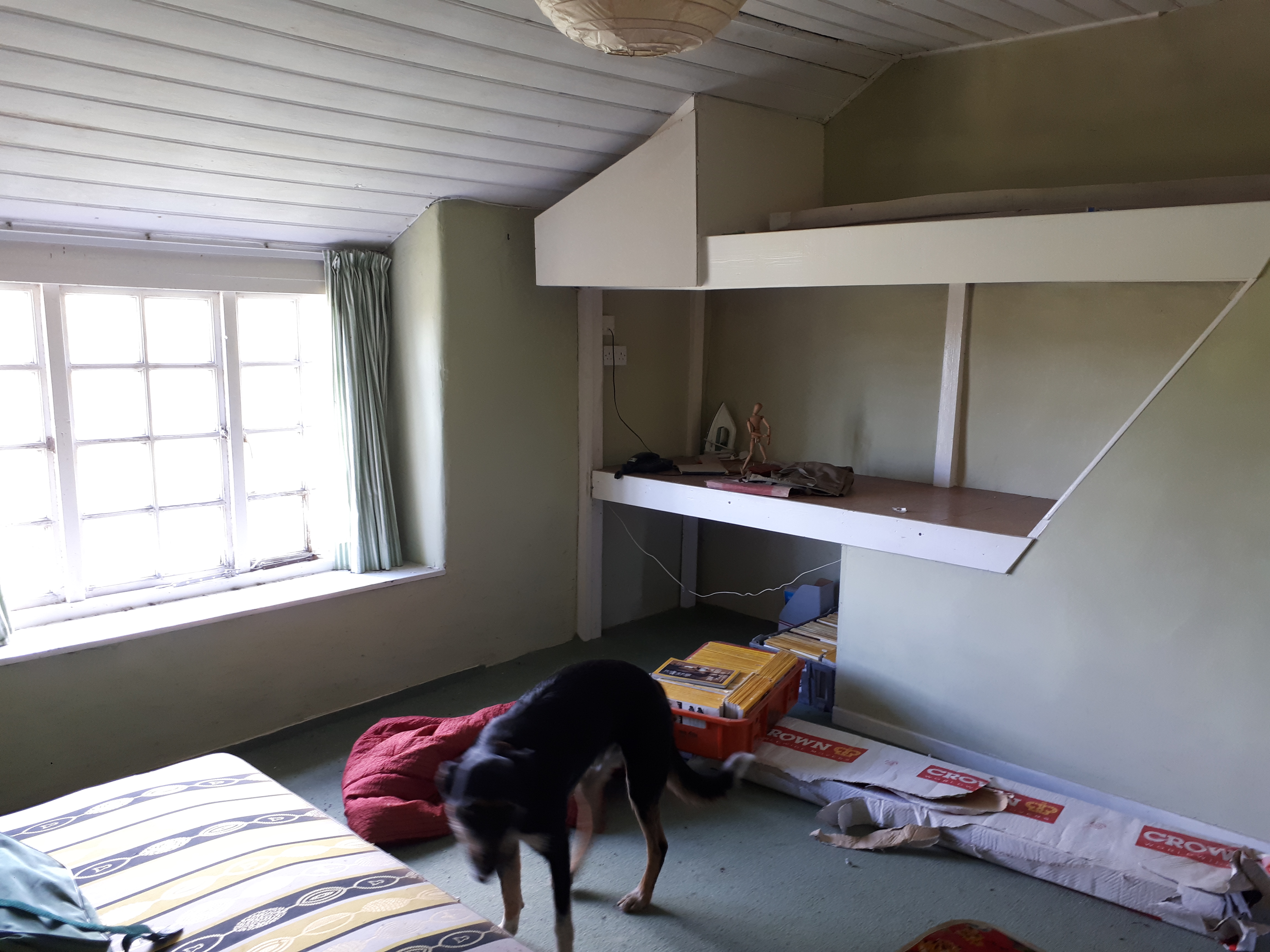
Along with the creational and removal or rubble, Chris, cursing the excessive use of glue and nail, began dismantling the storage above the stairs. Currently, the stairs are dark and cramped. To mitigate this we plan to widen them and open up the area above them. The remaining space in the bedroom will be turned into a much more practical built in wardrobe.

And finally, we had our first guests, showing them around the destruction and chaos we’d created. But as the old saying goes, you can’t make an omelette without breaking some eggs.
-
Opening up
One of my favourite things about old houses is the history they come with. Marbel staircases worn with the passing of feet, brass door handles polished by many hands, layers of paint and paper exposed by rips and chips.
Yet, while the past can be picturesque, it doesn’t always meet modern needs. When updating an older building it’s a fine balance between losing all the pre-existing character and making the space usable.


Our house was once two smaller houses. Although they appear to have been joined for a while, interestingly the owners never removed one of the two sets of staircases. The second staircase, while a part of the history of the house, divides one space into a small room and two space wasting corridors. Therefore, in order to create a more useful space, we began taking down some partition wall and the outside of the staircase.


Chris has put his bid in for the new room to be the master bedroom, though I prefer the room next door. We’ll see who wins in the end.
While removing walls is always fun, the drudgery of clearing old plaster continues. Luckily, most is so rotted that it falls away in big chunks. In some places the plaster removal reveals awkward surprises, like old repairs or large cracks. More pleasant surprises include an old fireplace.

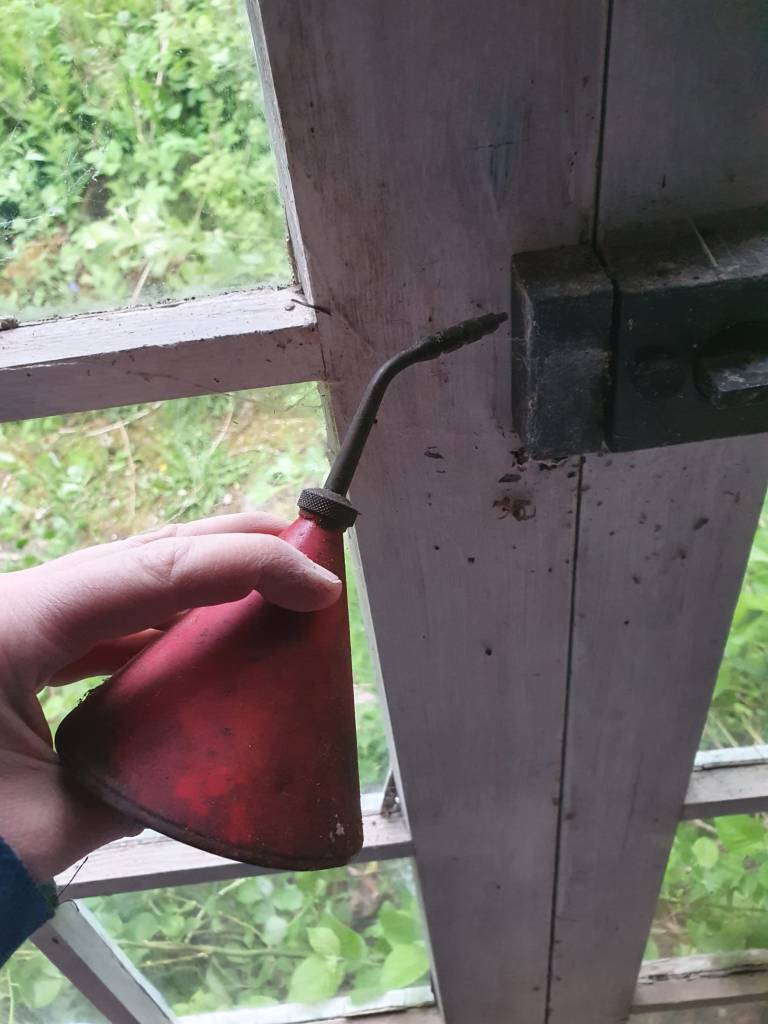
Rehoming the old items from the house continues with the old bed finding a home in someone garage (we decided not to ask why), while the ancient oven was taken to help cure motorbike parts. My new favourite item is an old oil applicator can. Chris can’t understand my fascination, but this small object takes me back to Sunday morning cartoons with hero desperately trying to fix his plane, car or train. Perhaps the magic oil can will help fix up our ruined home?
-
Up, up and away
When it comes to DIY planning, Chris is the expert in our little team. I am an over-optimistic DIYer. I look at jobs that take weeks and think; ‘oh yeah, that’ll be done in a few hours’. One of the reasons for this is that I forget that jobs are like Russian dolls. Open up one job and there’s another looking up at you from inside, and so on and so on.
Today’s job within a job involved 5 hours of driving in a rental van to collect a load of scaffolding and roof batons.

Chris being a serious white-van man. The scaffolding is going to be a key part of replacing the roof, and will also help us during window installation. You can rent scaffolding but we decided to buy it instead. We were lucky to find a set going for £750, around a third less than new, on Facebook Marketplace. While the £750 outlay for the scaffolding might seem expensive, renting scaffolding can cost £500 a week, and we knew we needed it for longer. The hope is that once we are done, we can sell it on for a similar price as it cost, saving us wasted money.
While the scaffold collection was the original reason for the van hire, we looked down our DIY list to see what else we needed to buy that would be difficult to pick up in our cars. Roofing batons are too long for easy transportation, so we decided to collect those at the same time.
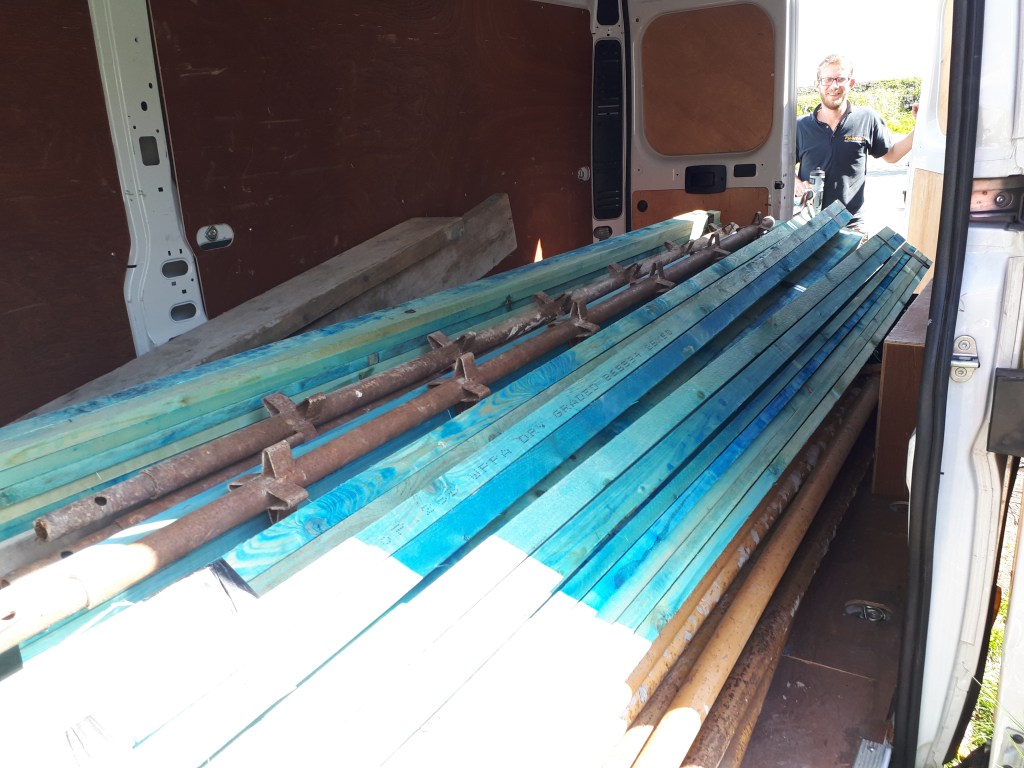
Again a saving could be made by buying from a small two-man company that buys split packs of wood in big mixed pallets and separates out and repackages them to sell on. At £210 for seventy batons, these were around half the usual price.
So while it might have been an expensive day we knew we were saving ourselves a good amount in the long run.
We were lucky that the two sellers were happy to give us a hand loading up the van on collection, which always makes things a little easier. Unloading at the house was a different matter. Scaffolding is heavy and awkward at the best of times, but more so when struggling up in evening steps, through overgrown vegetation, in the surprising heat of an early May day.
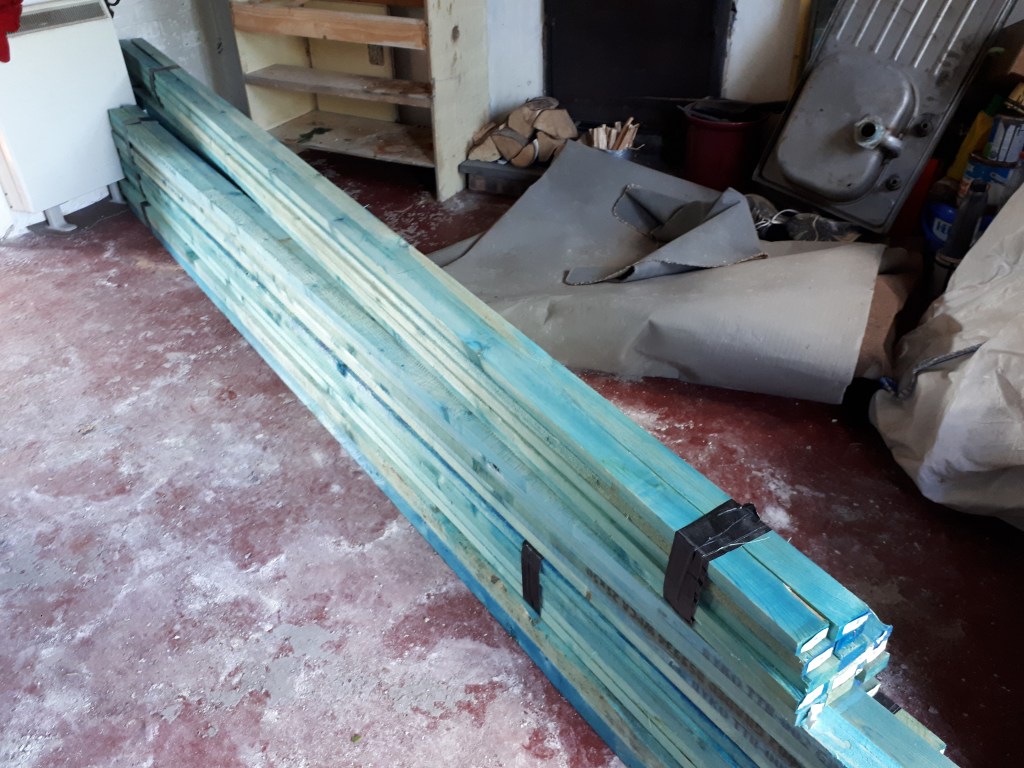
Dumped, ready for another day. I am not an unfit person, and I feel pretty physically competent when needing to carry out manual labour, but one of my weak points is my arm strength. By the end of it my arm muscles had turned to jelly, while Chris was sweating buckets. Physiologically, the worst thing is that we know we’re just going to have to move it all again when it goes up. Still, at least it was cheap – after all, blood, sweat and tears are free.
-
Constructive destruction
I don’t know how it is for everyone else, but I often find the anticipation of work much more tiring than the actual work itself.
After months of waiting and thinking, it was a relief to pull on our ever attractive PPE and start making a mess.
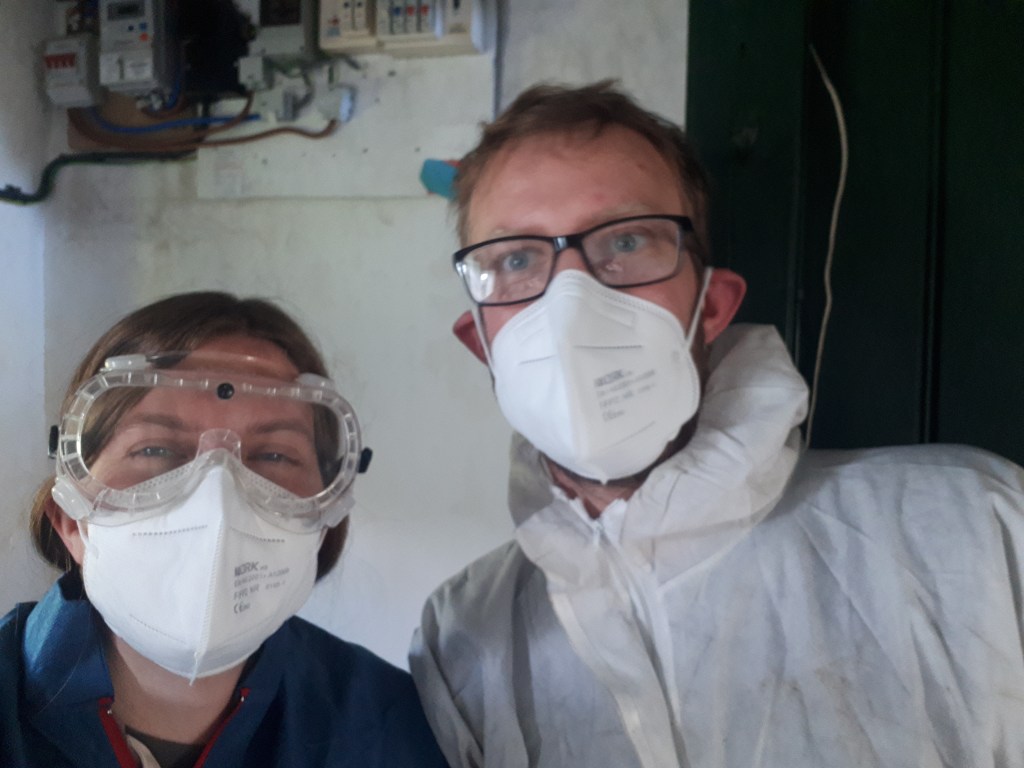
Our first job, as marked out in Chris’s highly detailed house renovation Gantt chart, was to remove the old plaster from the solid walls. There are two reasons for doing this 1) because some of it is so crumbly it’s ready to fall off by itself and 2) because old houses need to breathe.
People who live in old houses will often find themselves battling with damp. The reason for this is that old houses were designed to breathe. Moisture wasn’t banished but controlled, being allowed to move through the walls and out to the exterior. Today, many old houses have been covered in cement render and plaster. These impermeable materials trap the damp within the walls and create all kinds of long-term problems.
While our house thankfully does not have an exterior render, it does have a thick coating of cement plaster on the inside, as well as cement render. Once removed, we are going to replace this with lime mortar and plaster, which is permeable and will allow the moisture to move through the wall.
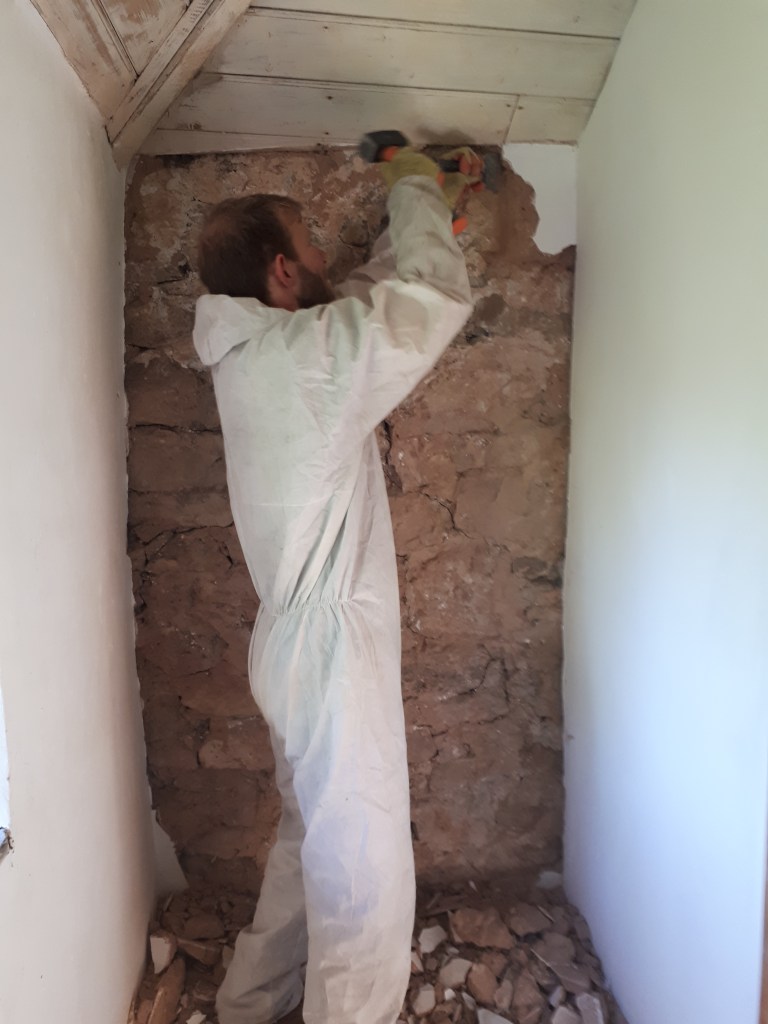
Chris finishing off the top corners I couldn’t reach. So our first job was to take a lump hammer and chisel to the walls.
The good news was that much of the plaster was already so ruined that it fell off in big, satisfying chunks. In certain places, a simple kick with a boot brought chunks raining down.
Seeing what was behind the plaster was always interesting. Holes plugged with newspaper, the odd old preserved leaf or twig. Most disconcerting was the live woodlouse that appeared under one section.
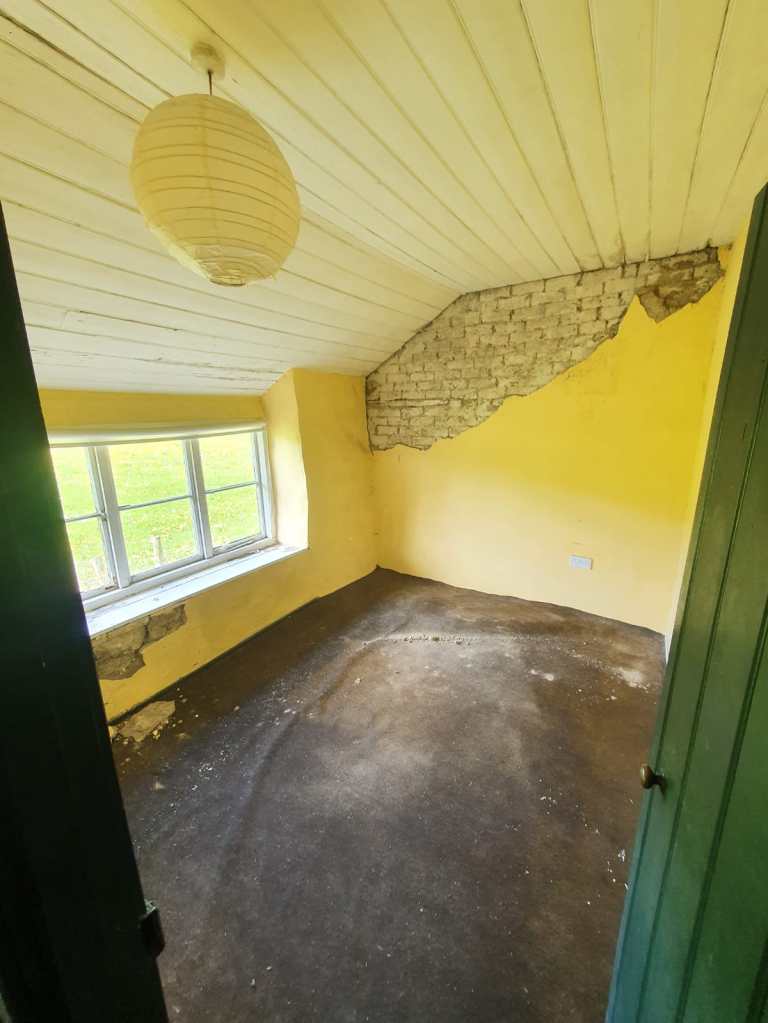
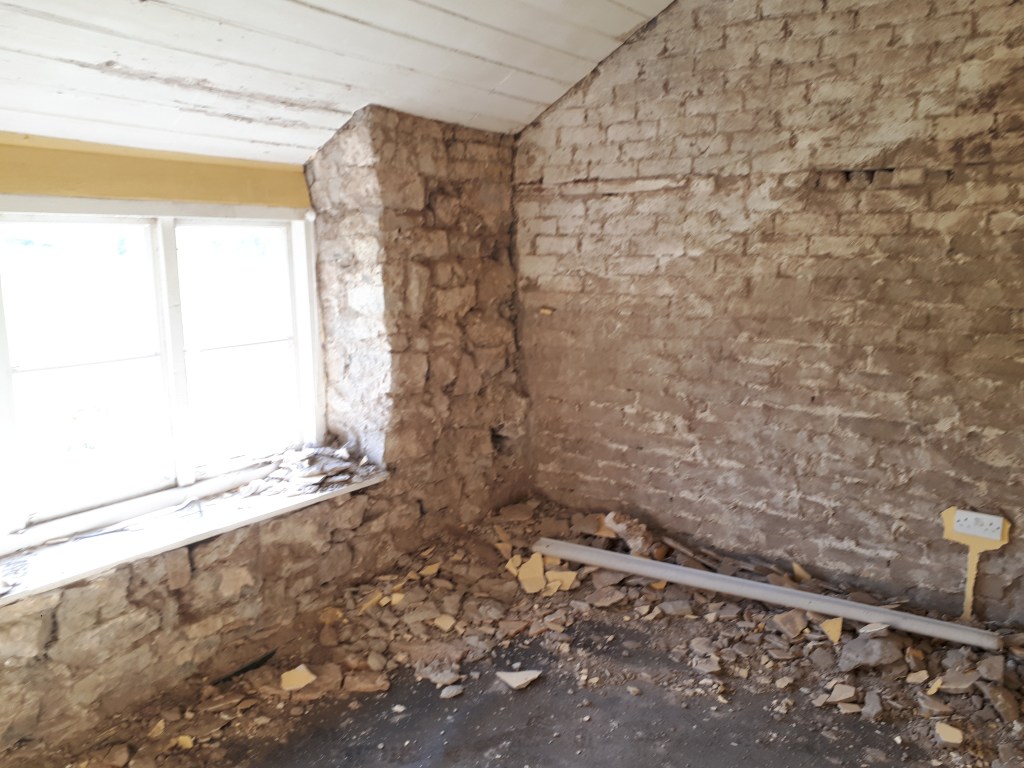
Before plaster removal. While I started on the plaster removal Chris began dismantling the floor and walls in the utility room. Someone prior to us had started renovations on this house some time ago, and clearly lost interest. One of their projects had been to divide a room in half and put a raised floor in. As we planned to knock all three adjoining rooms into one big kitchen/diner, their DIY efforts were sadly wasted.
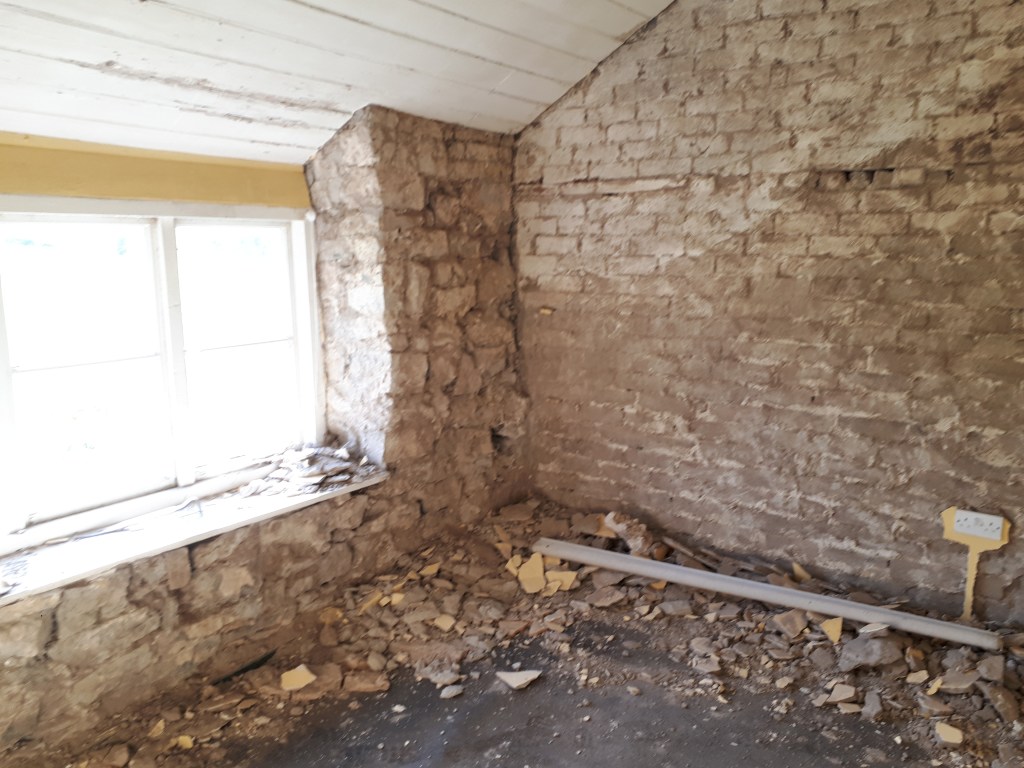
Despite the dust, and the aching limbs at the end of the day, I quite like the destructive part of DIY. It’s simple and straightforward. It also tends to go quicker than the fiddly finishing touches that come along at the end. Four years into living in our current home, we still haven’t gotten around to installing one particular entrance strip. It’s behind a curtain, so you don’t see it. Perhaps we’ll leave it for the next people who move into our house.
-
A hill of beans
Today we got the keys to our new house. Walking through the doors, I think we both felt a mixture of relief, excitement, and absolute terror. Looking at the task ahead of us, it was difficult to build up the courage to start. So we started small.
Much of the build-up to getting the keys has been spent thinking, researching, and planning. The good thing about starting with a house from the bottom up is that you can do very nearly whatever you want. The difficulty was to decide what we might want, what we could afford, and how best to go about it.
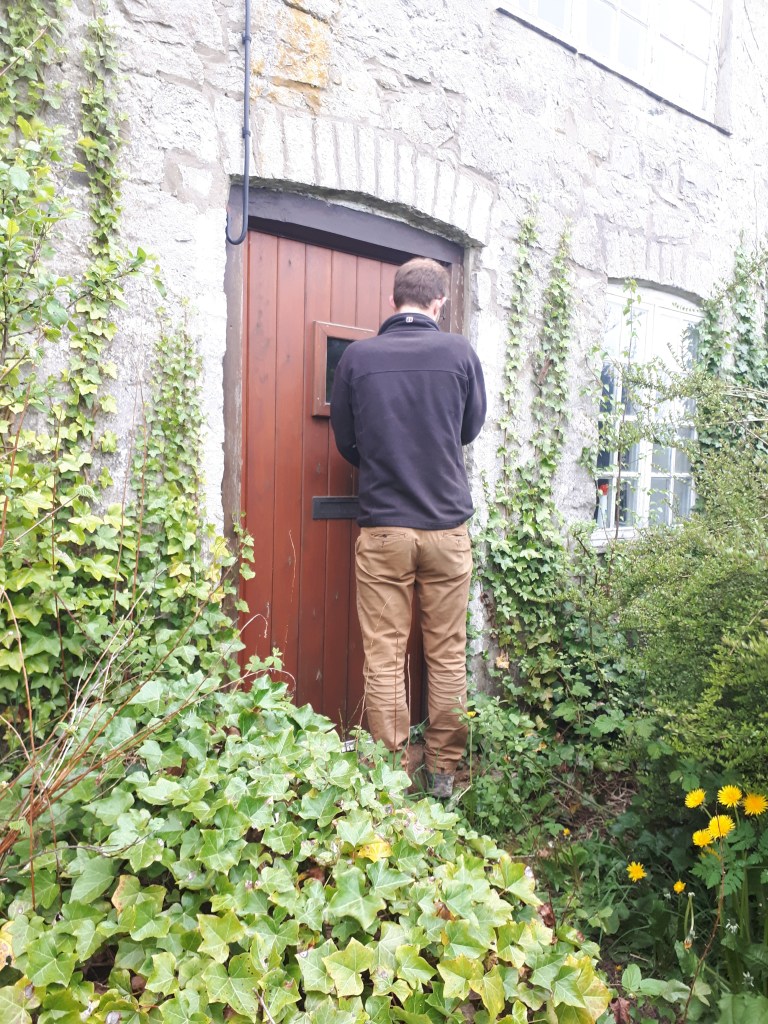
Our first task was therefore to take stock. This involved getting into the attic to check joists, working out what sized staircase we could put in, and poking room beams to ascertain where there might be rot.
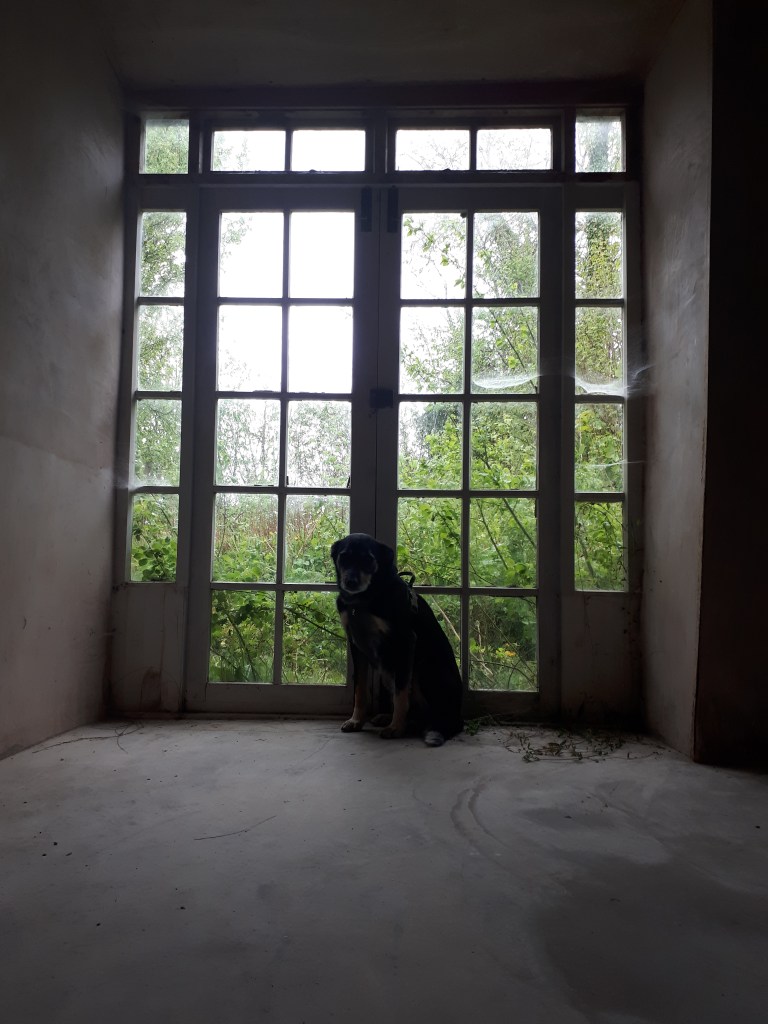
Another job was to work out what the old owners had left behind. The house had been barely occupied for the last forty years, used only as a holiday home, and a student digs at one point. However, we brought the house with the understanding any contents left would become ours.
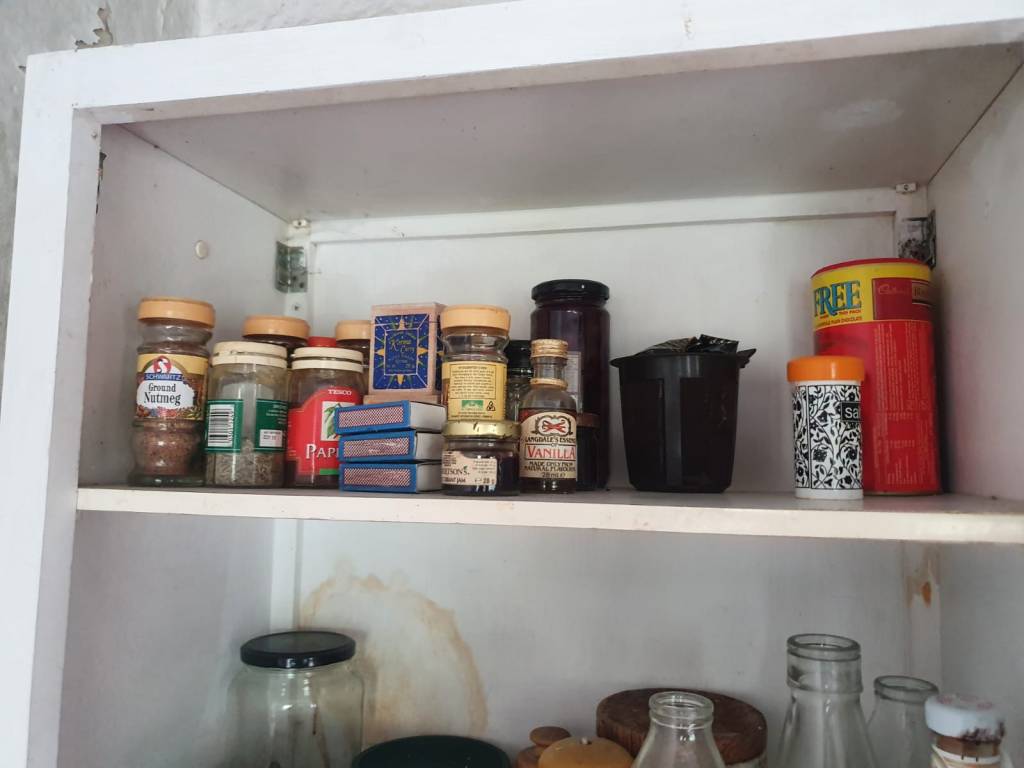
This means we are now the proud owners of a 1980s washing machine, around 50 copies of National Geographic, and a cupboard full of baked beans, spices, and a mysteriously labelled ‘love potion’ the majority of which have best before dates from the 90s.
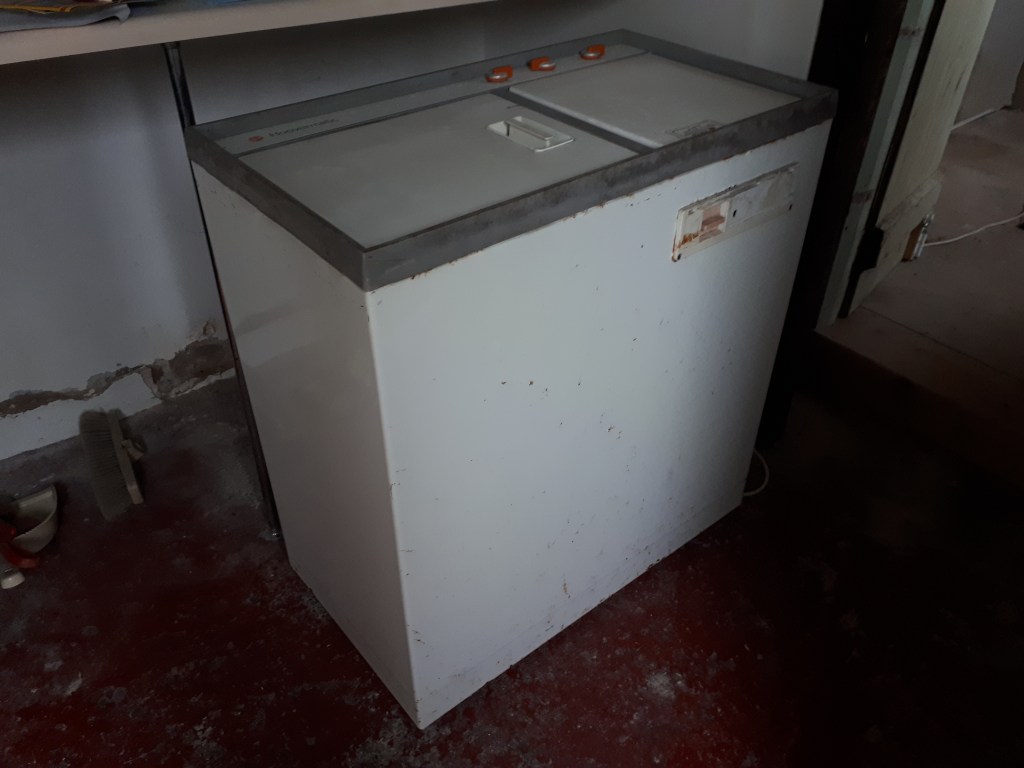
So, while tomorrow the real work begins, tonight I’m trying to find a collector of retro washing machines. We ate the beans, who pays attention to best before dates anymore?
-
Falling in love with a ruin
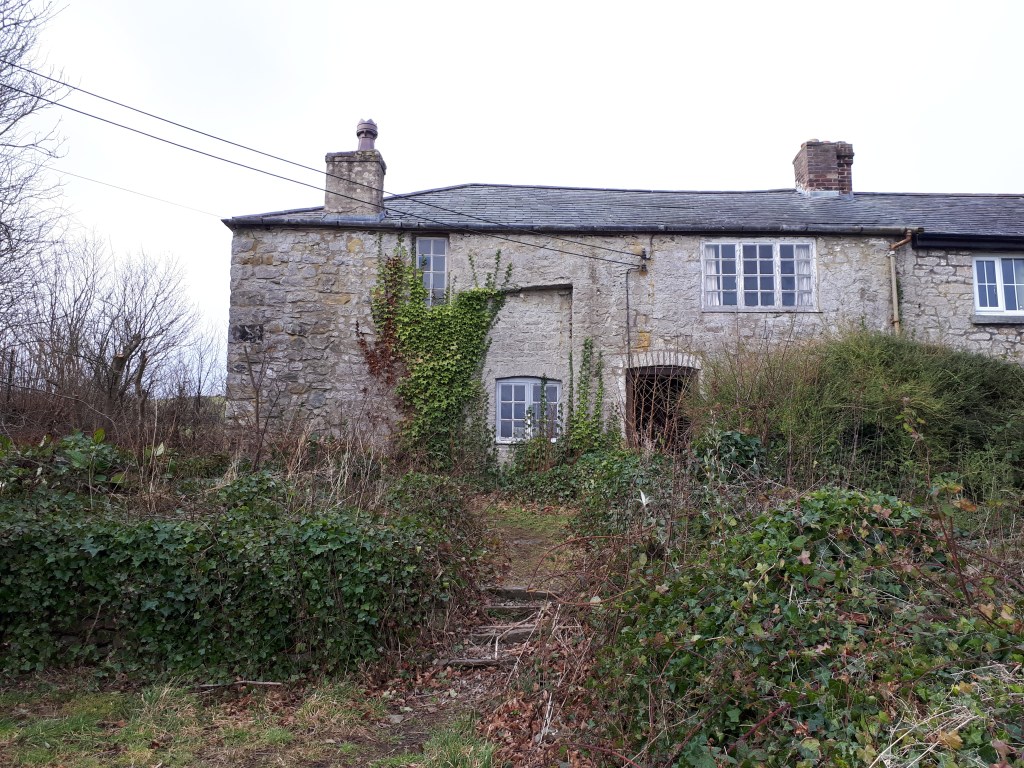
There is something about a ruin that is more exciting than the comfort and convenience of a sleek and modern house. Depending on your viewpoint, they are full of flaws, or simply blessed with many quirks. Personally, I enjoy the unexpected nature of older houses. Tiny doorways may not be practical, and rusty ironworks always safe, but these little surprises are still more engaging than the uniformity of the modern house.
Life often turns on little things. Years ago, I filled out an application for a job the day before it closed. I hadn’t been inclined to apply, as I thought the job advert was confusing and unclear. Yet if I hadn’t answered that job advert I never would have met my boyfriend, and the last seven years would have been completely different.
A similar accident of fate occurred with our ruin. When I originally applied to view it, the agent told us it had sold. Later, an email arrived stating that it was back on the market, and we could view it, but only on a certain date. Unfortunately, we were busy that day, so we decided to pass. However, last minute, we booked in for an early viewing.
On reviewing the address, it turned out I’d muddled up my houses. Once we realised our mistake, we regretted it, as it added significantly more driving to our day. If we had known what house it was, we never would have gone.
This house looked bad on paper. It has no central heating, crumbling plasters, rotting window frames, needs a new roof, cracked walls, has Japanese knotweed in the garden, a surface drainage flooding issue and has the smallest kitchen and bathroom imaginable. Beyond this, it was at the very top of our price range. It had very little to recommend, and we were talking ourselves out of it before we’d even walked in the door.
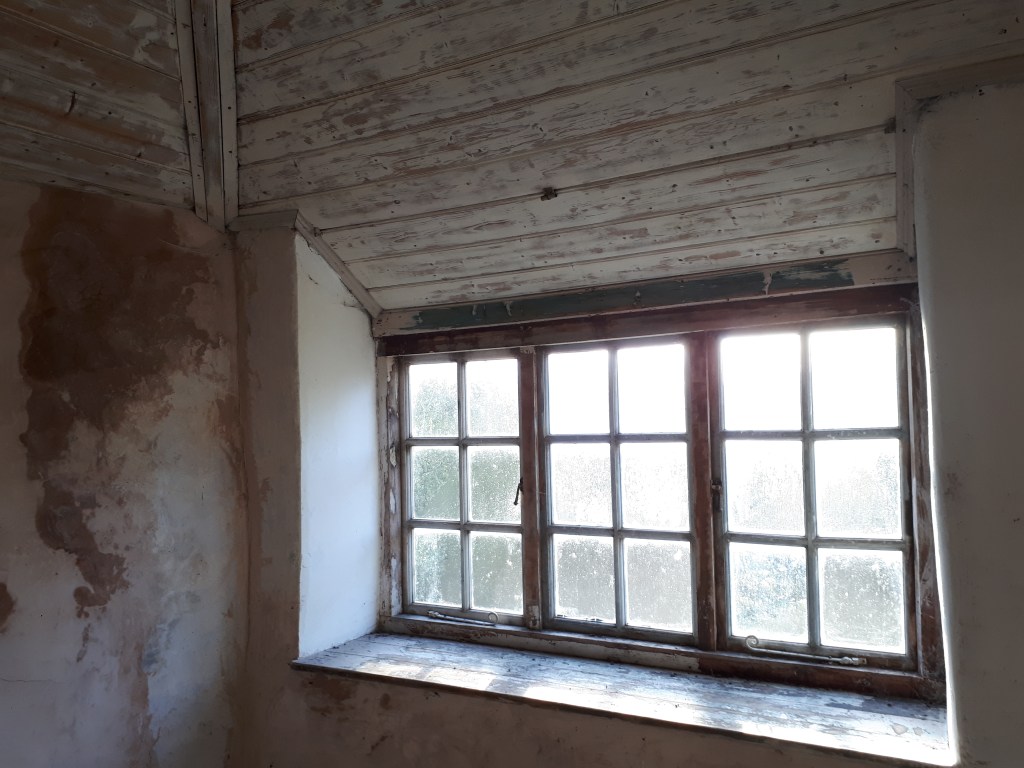
What immediately attracted me to the house was the light. Four years ago, we brought a small cottage in a Welsh village. The house is half 18th century cottage and half 80s extension. It was rundown and uncared for, with a leaking roof, urine stained carpet in the bathroom and a shower that was so badly rotted that the wood supporting it disintegrated when touched.
Having worked hard to renovate our little cottage I was too attached to want to leave it without some kind of fight, however, the one thing I still dislike is how dark the rooms are.
Therefore, what attracted me to the new house was the light. Large, mismatched windows bring light streaming in from all angles, casting shadows on exposed brick and flaking paint. My sister tells me she thinks it looks haunted, yet it makes me think of a long-forgotten artist’s loft, where dried up paint and dusty canvases hint at a more active past.
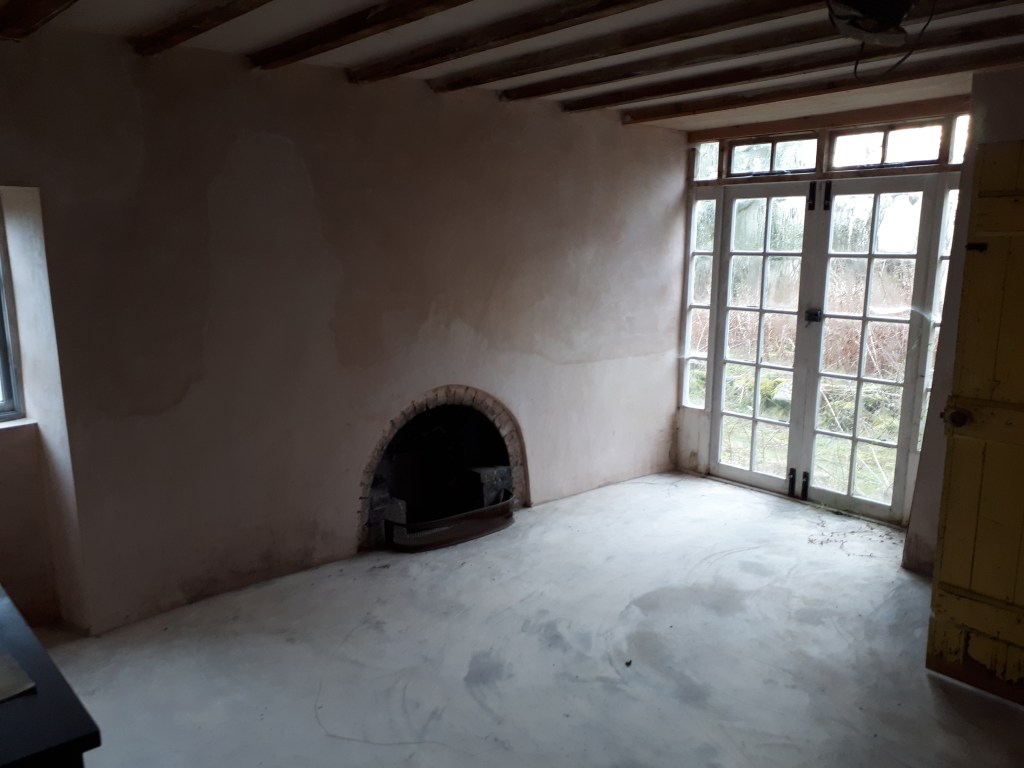
Being able to buy the house wasn’t as simple as it might first appear. While the increase in the value of our first house, after the extensive renovations, meant we could easily have afforded a mortgage on the new house, it, unfortunately, wasn’t considered to be in a mortgageable state. We also doubted it would be feasible to live there while, for example, we replaced the roof. Luckily, generous family members were able to give us a short-term loan. That, along with most of our savings and a remortgage on our current property, gave us just enough to buy the house with £35,000 spare to do it up.
All of this means we now have around a year and £35K to turn a ruin into our home, before we need to sell our current house and repay everyone. Sound a little crazy? It probably is, but I really liked the light.
-
Subscribe
Subscribed
Already have a WordPress.com account? Log in now.
 Ruined