So far, in our renovation journey, we have only been able to take two weeks off, the rest being weekends and bank holidays. Those two weeks were both devoted to the roof. Now, with the new holiday year dawning, we were finally able to take another week off for inside work. That along with our Christmas holidays, meant we had nearly two full weeks to get on with some big jobs.
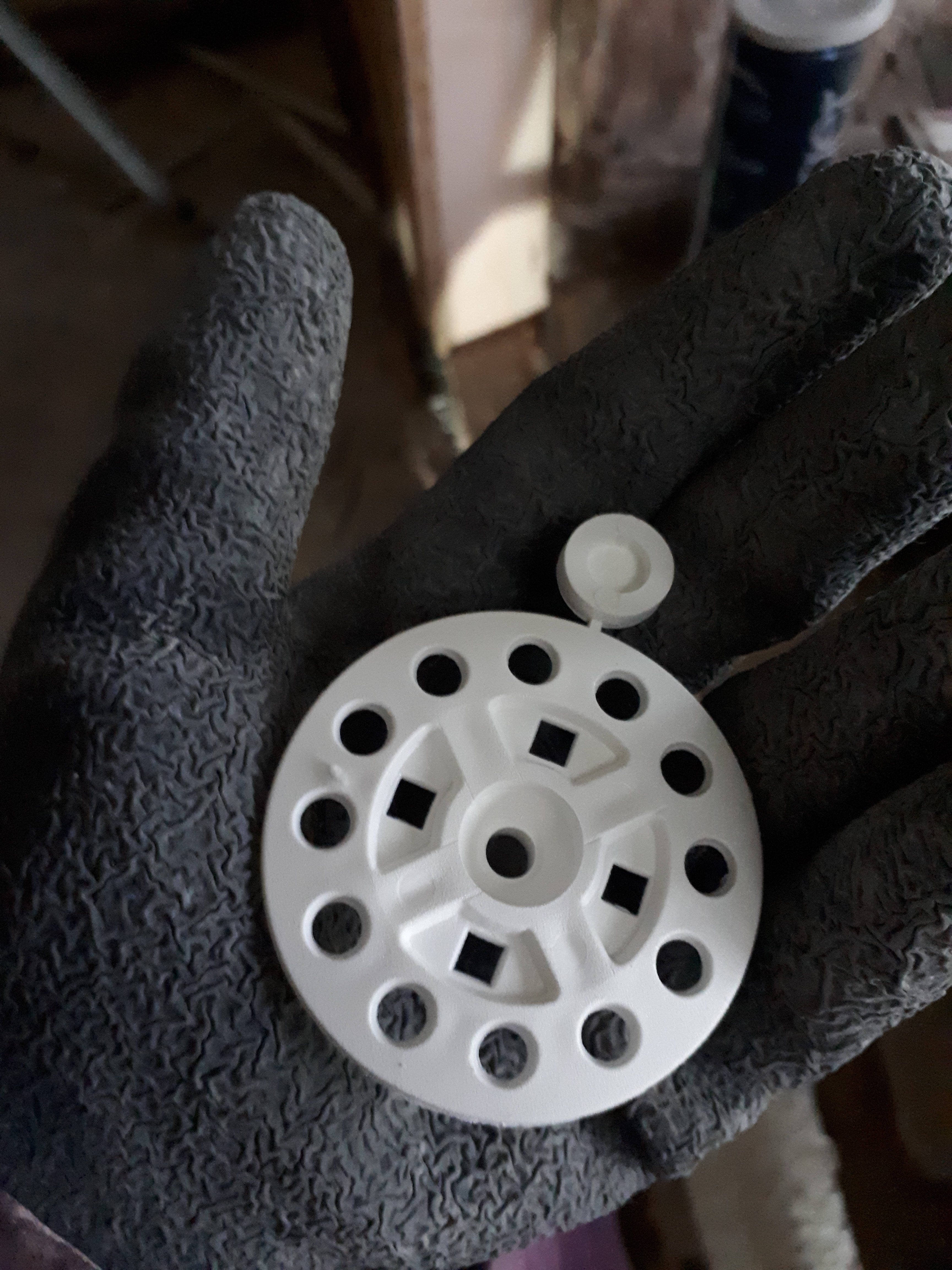
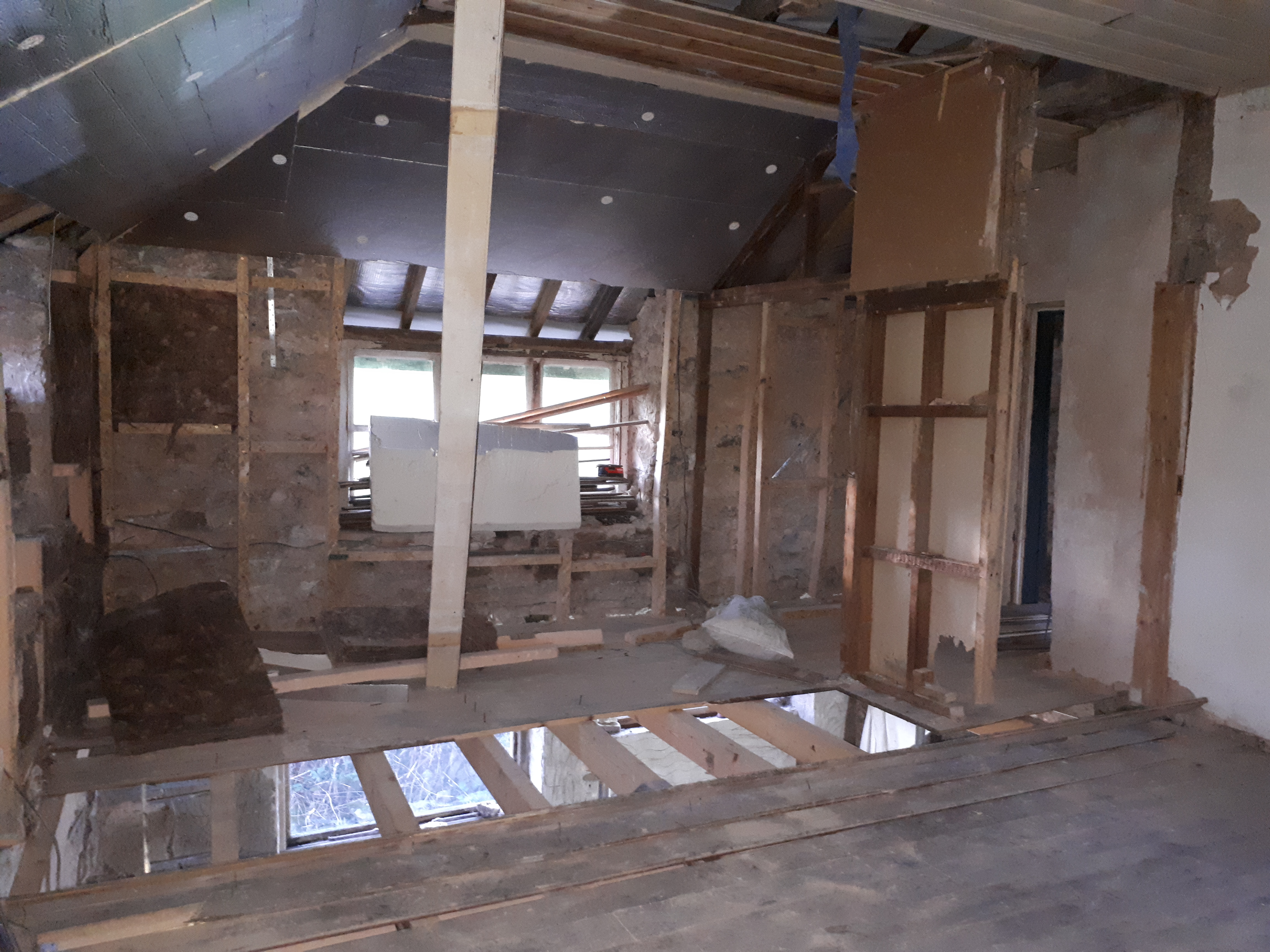
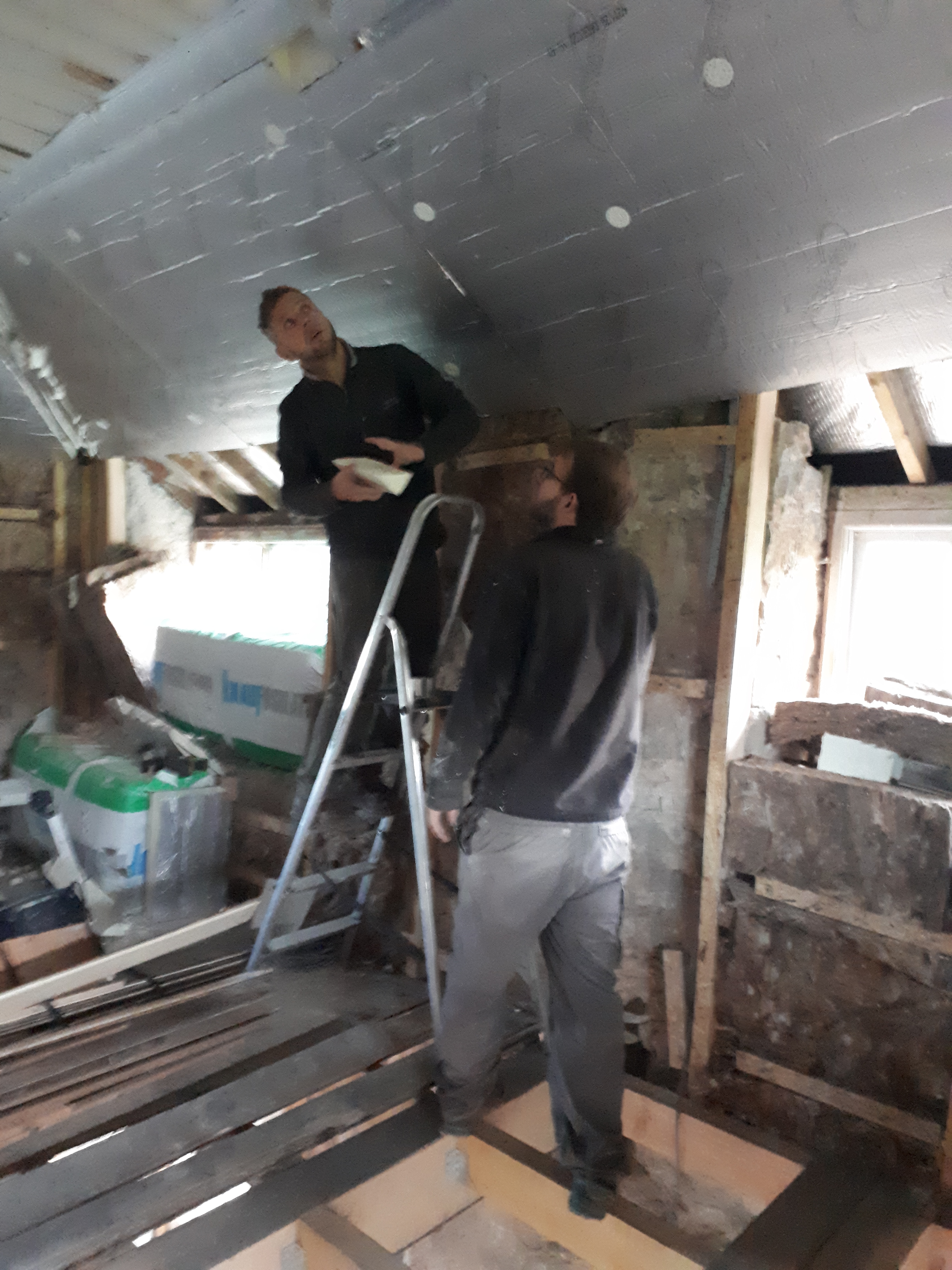
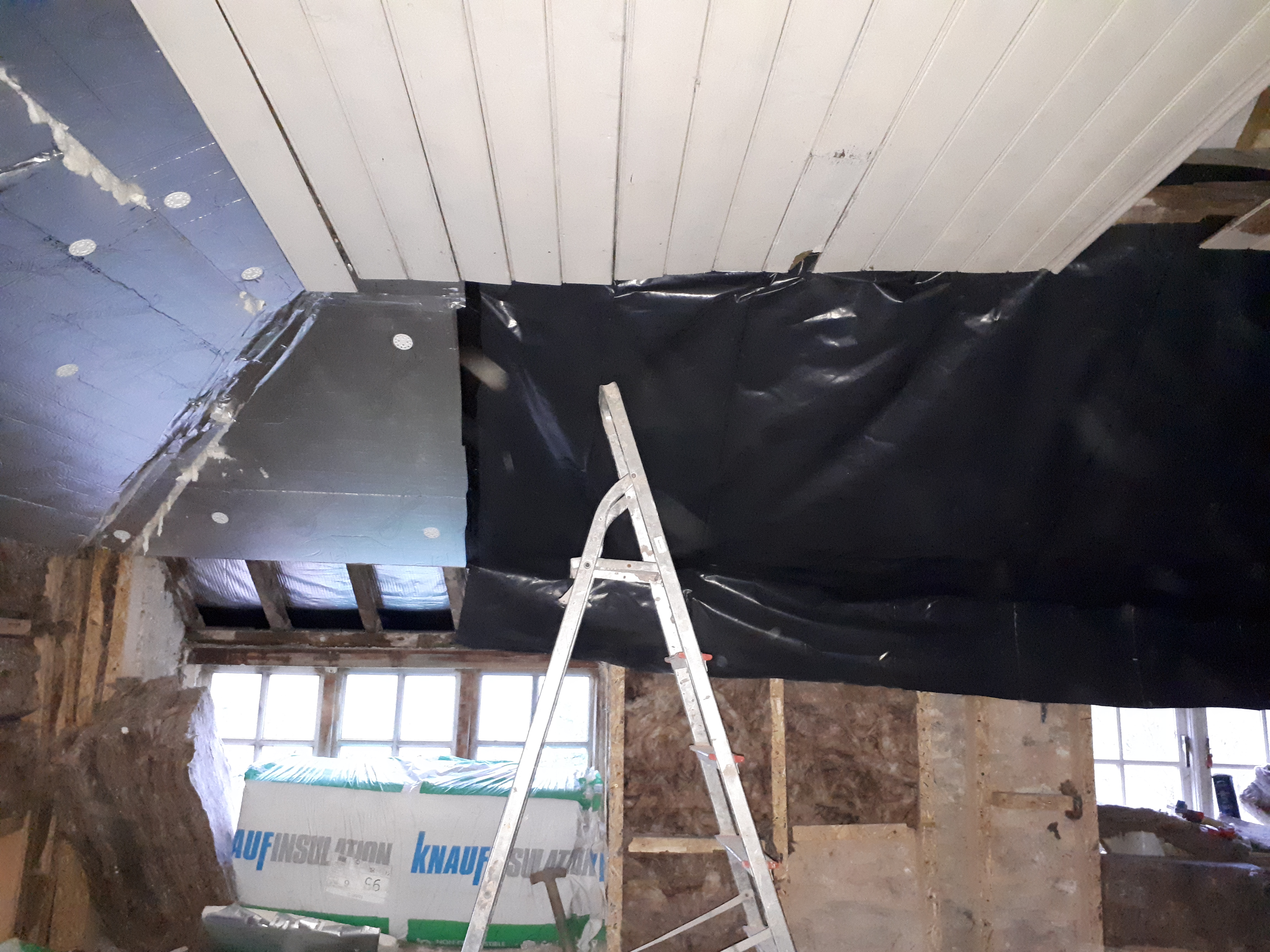
We started our time off with a job that had previously frustrated us; the insulation. Luckily the curse seemed to have been lifted, and we managed to get all the boards up on the various eaves in a day.
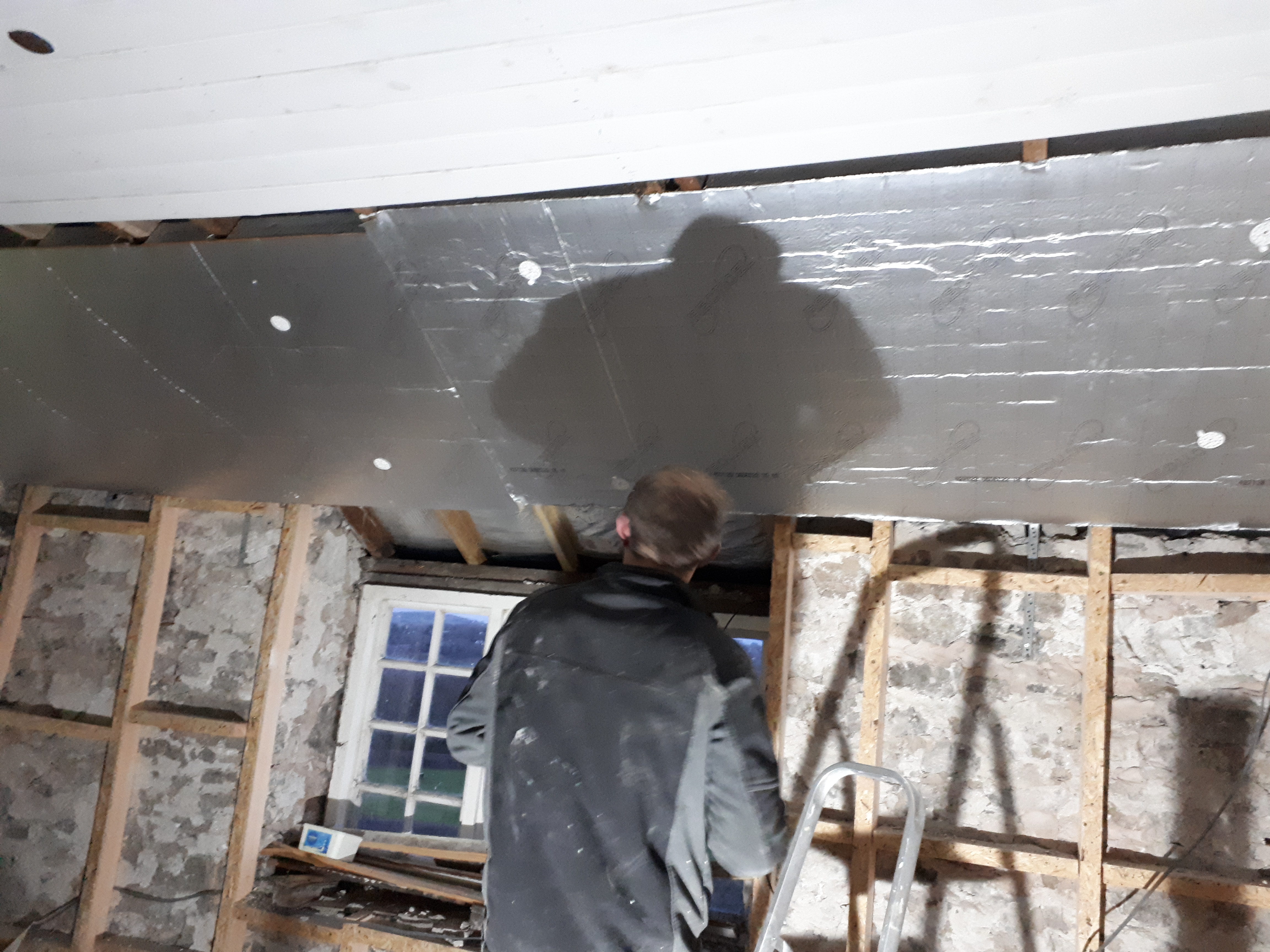
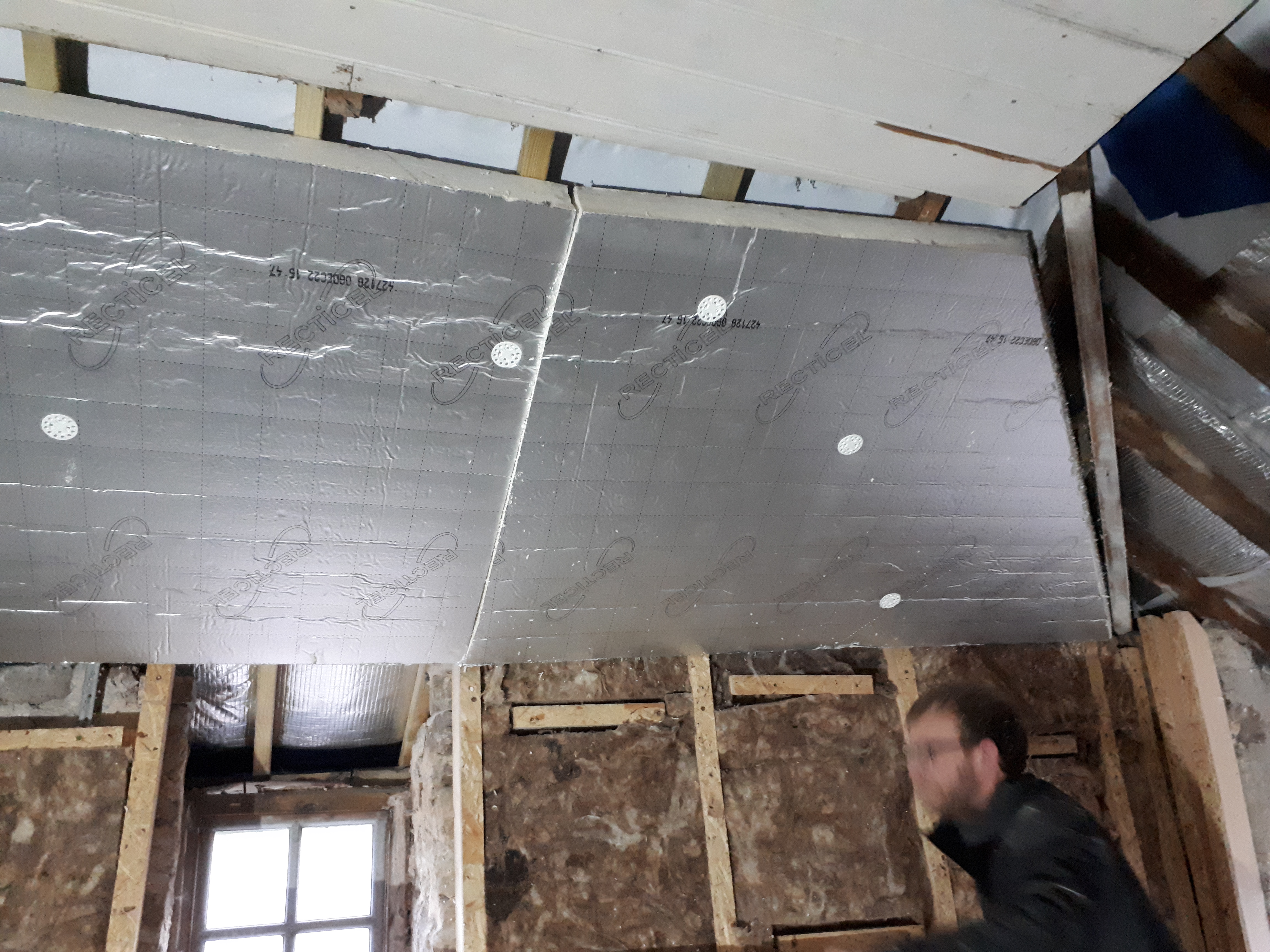
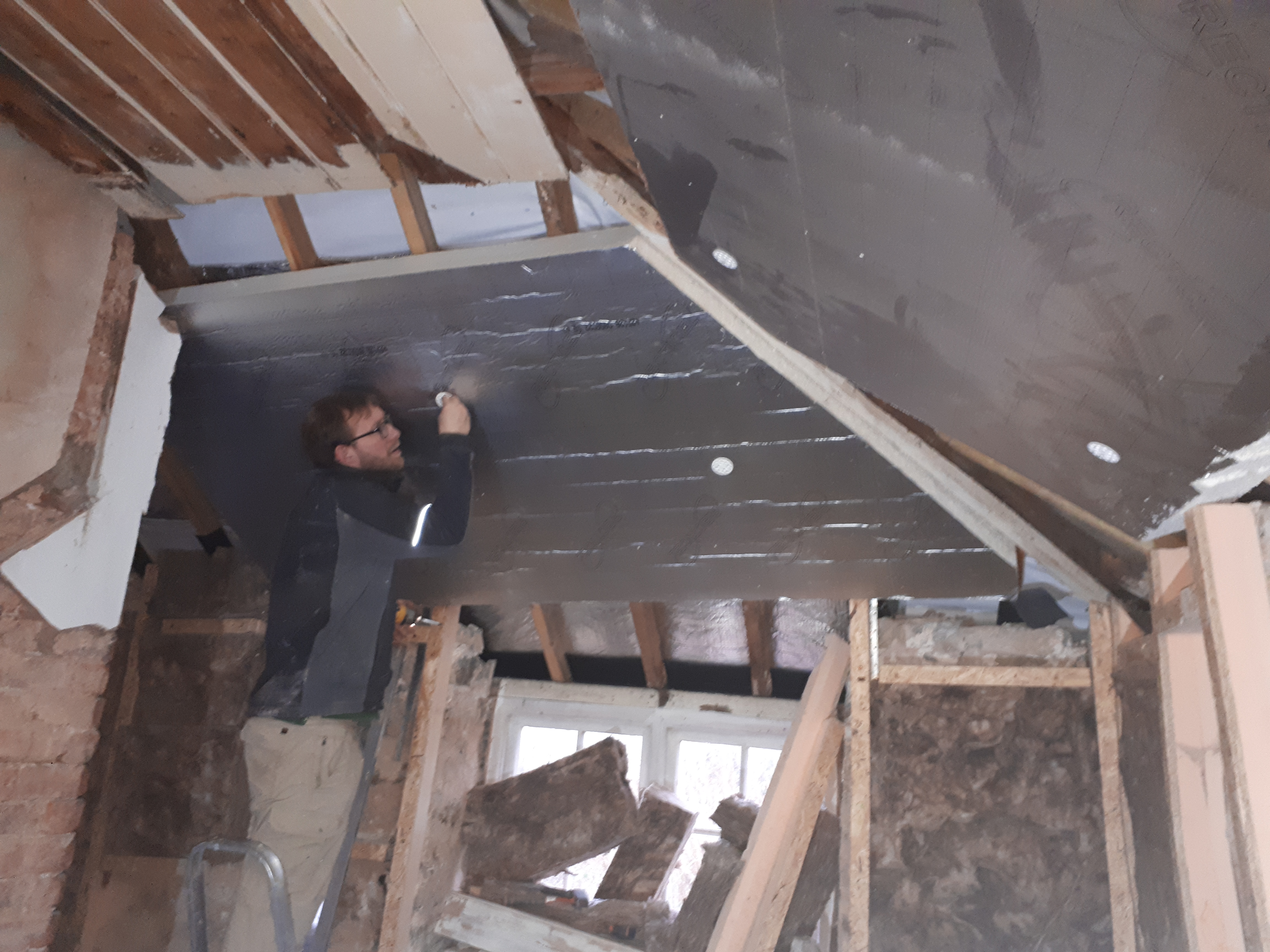
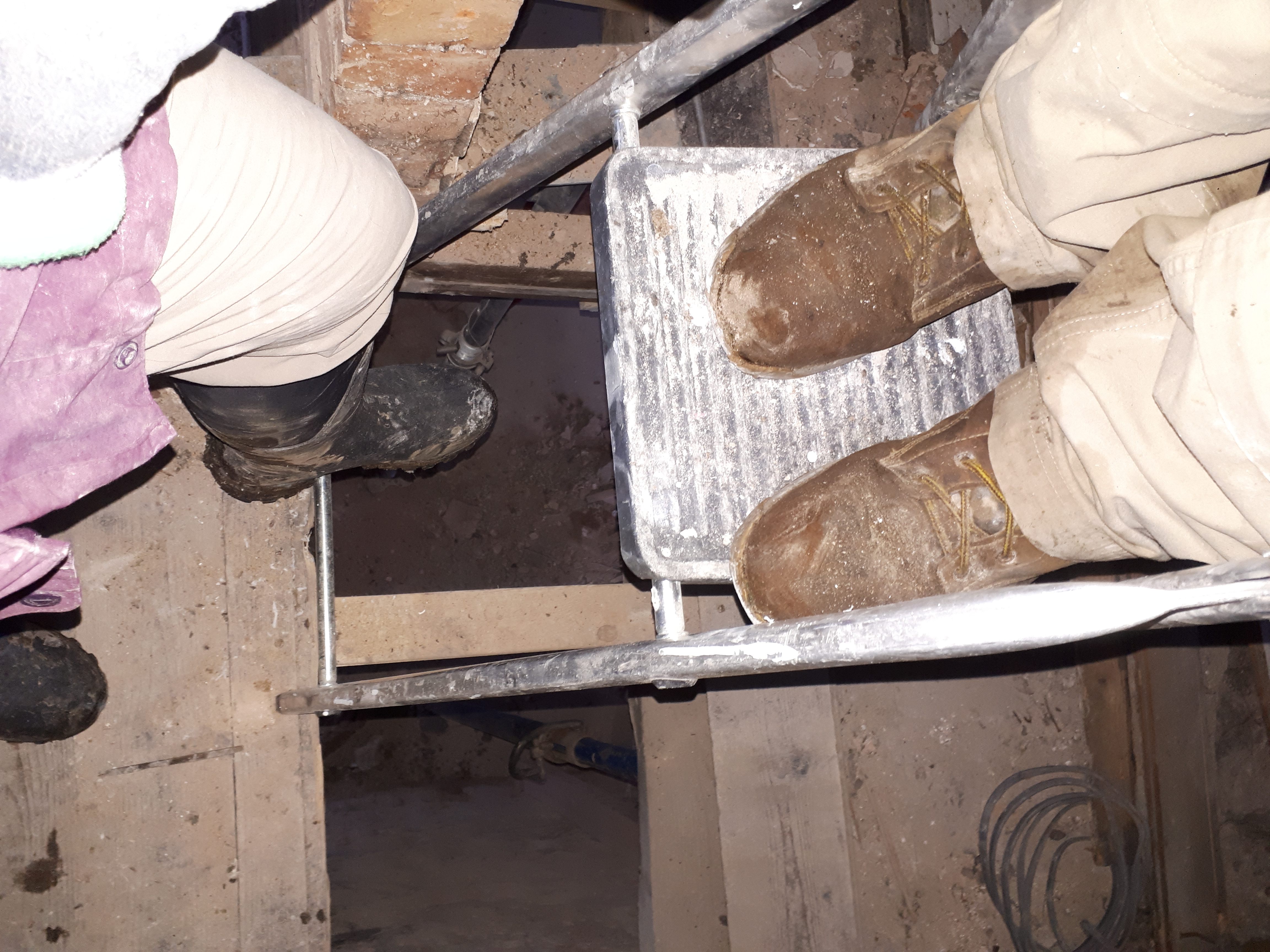
The only slight worry was Chris’s insistence that his ladder positioning, over a gap in the boards, was perfectly safe.
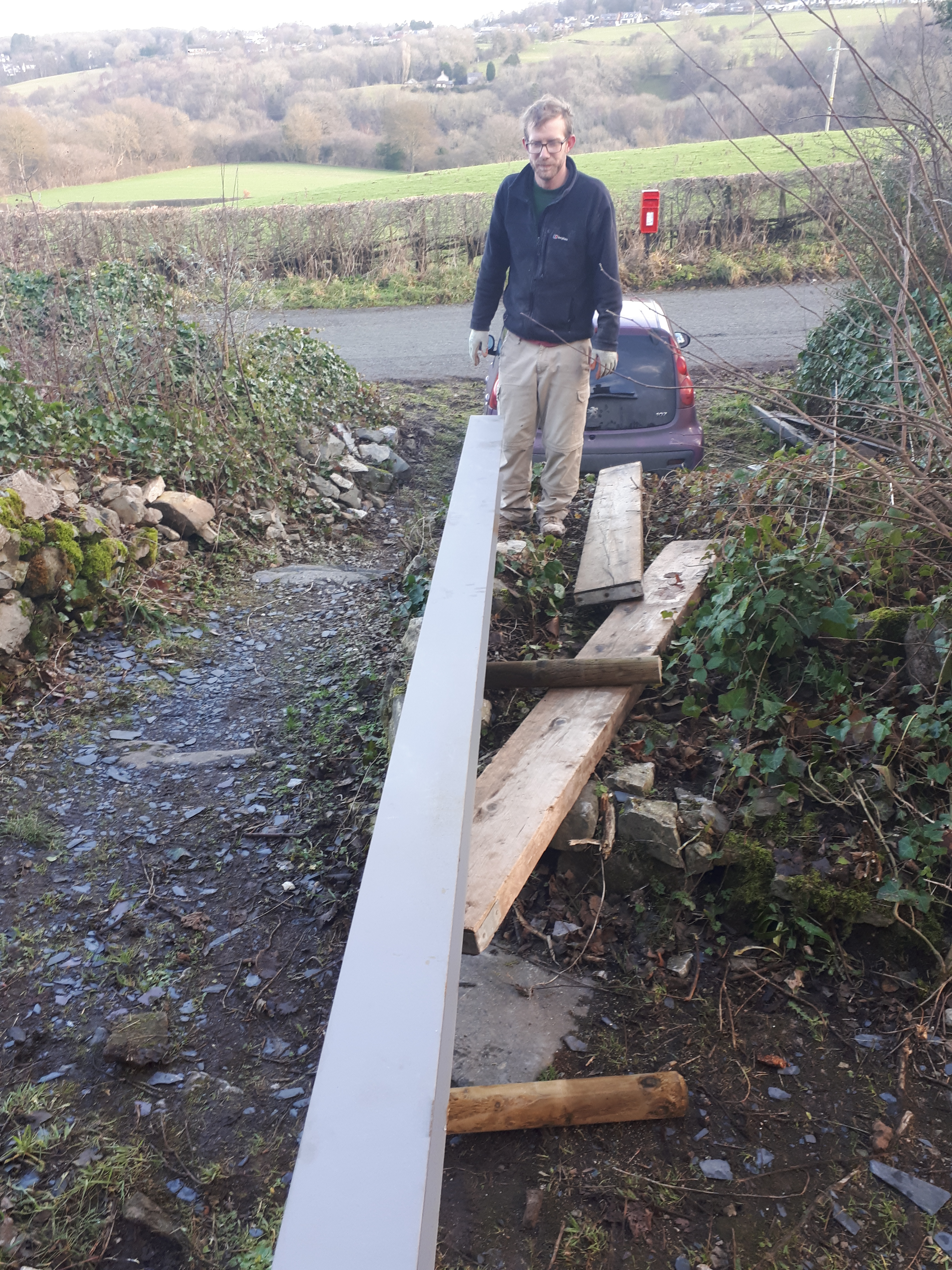
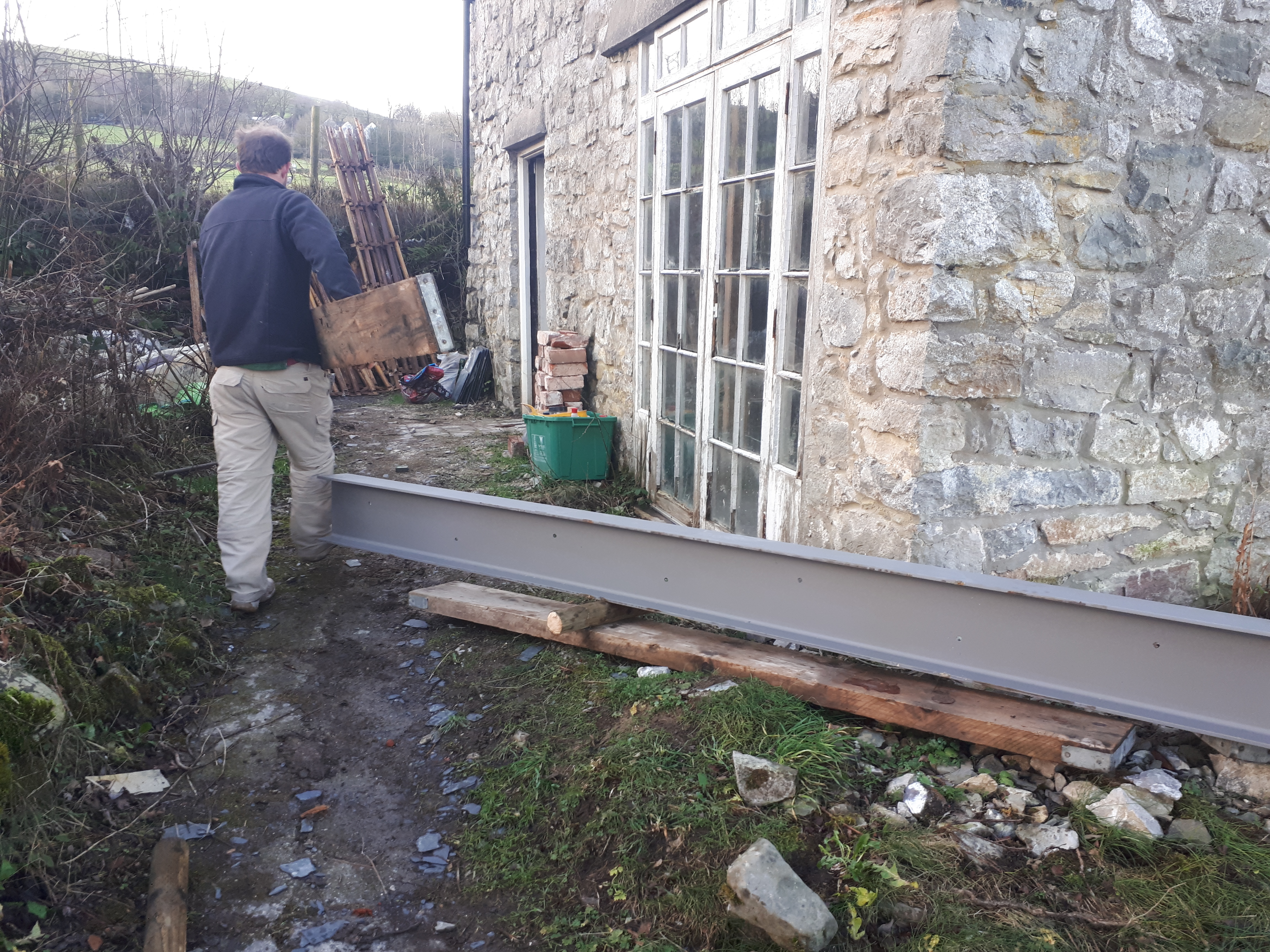
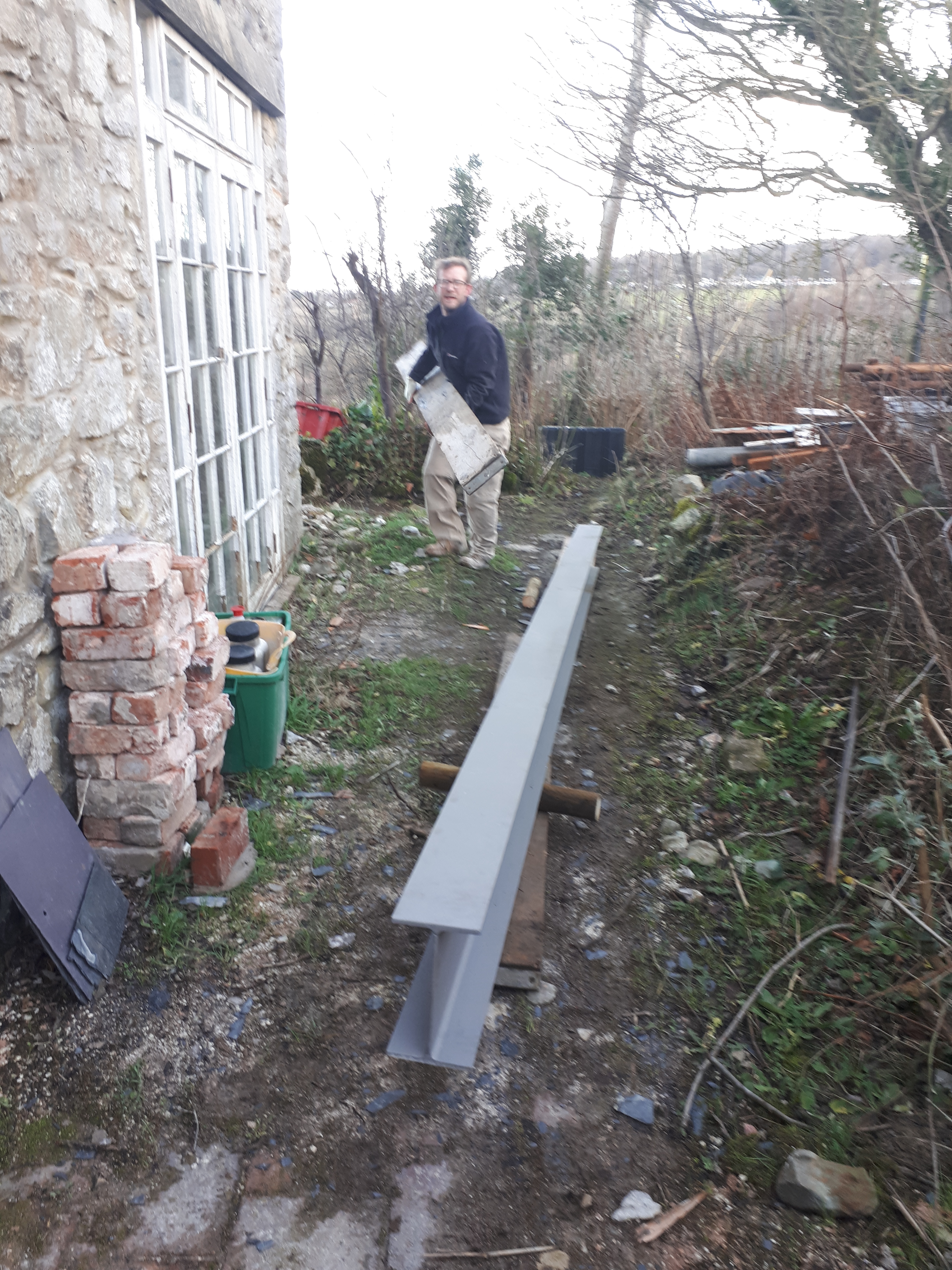
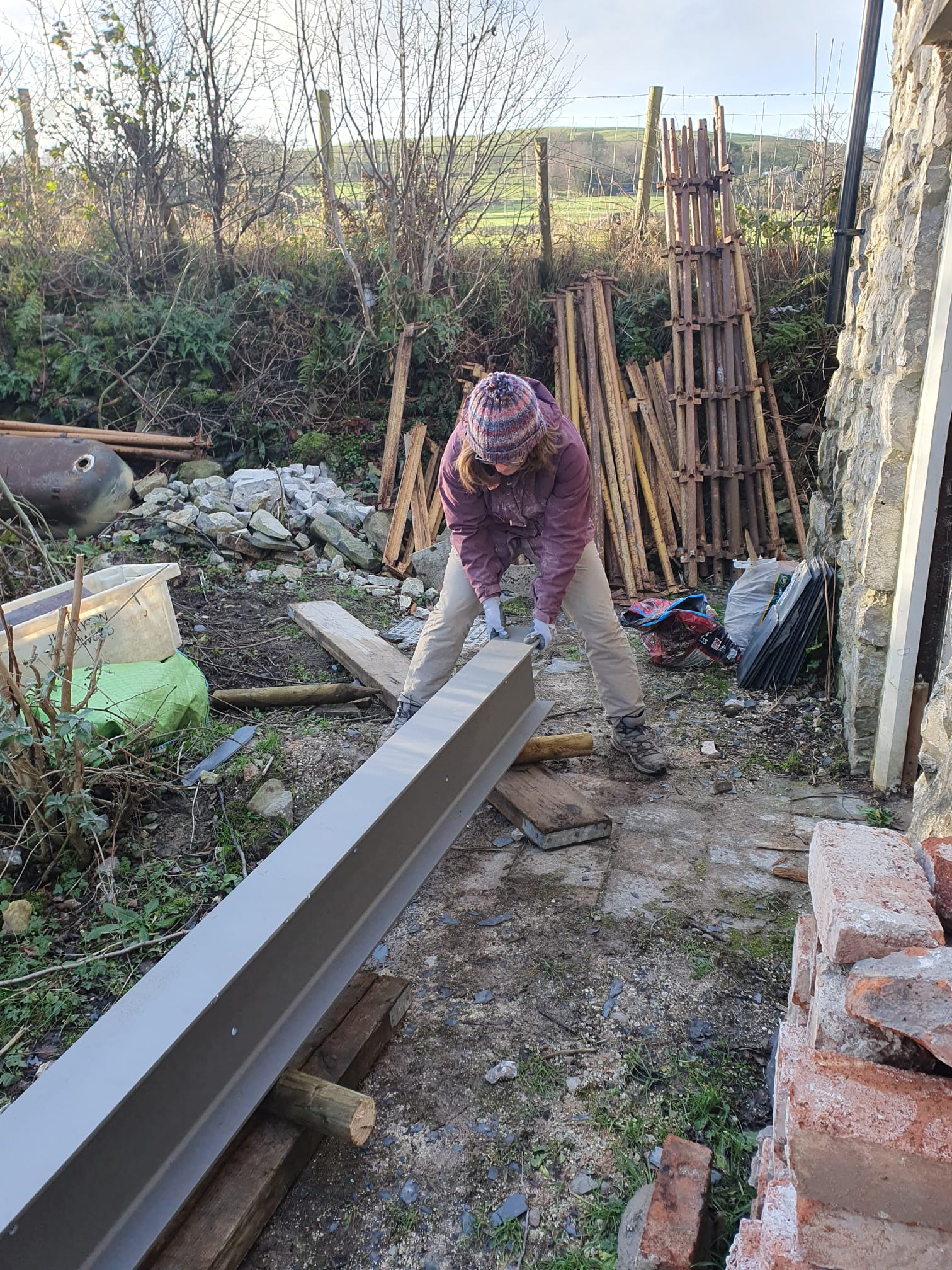
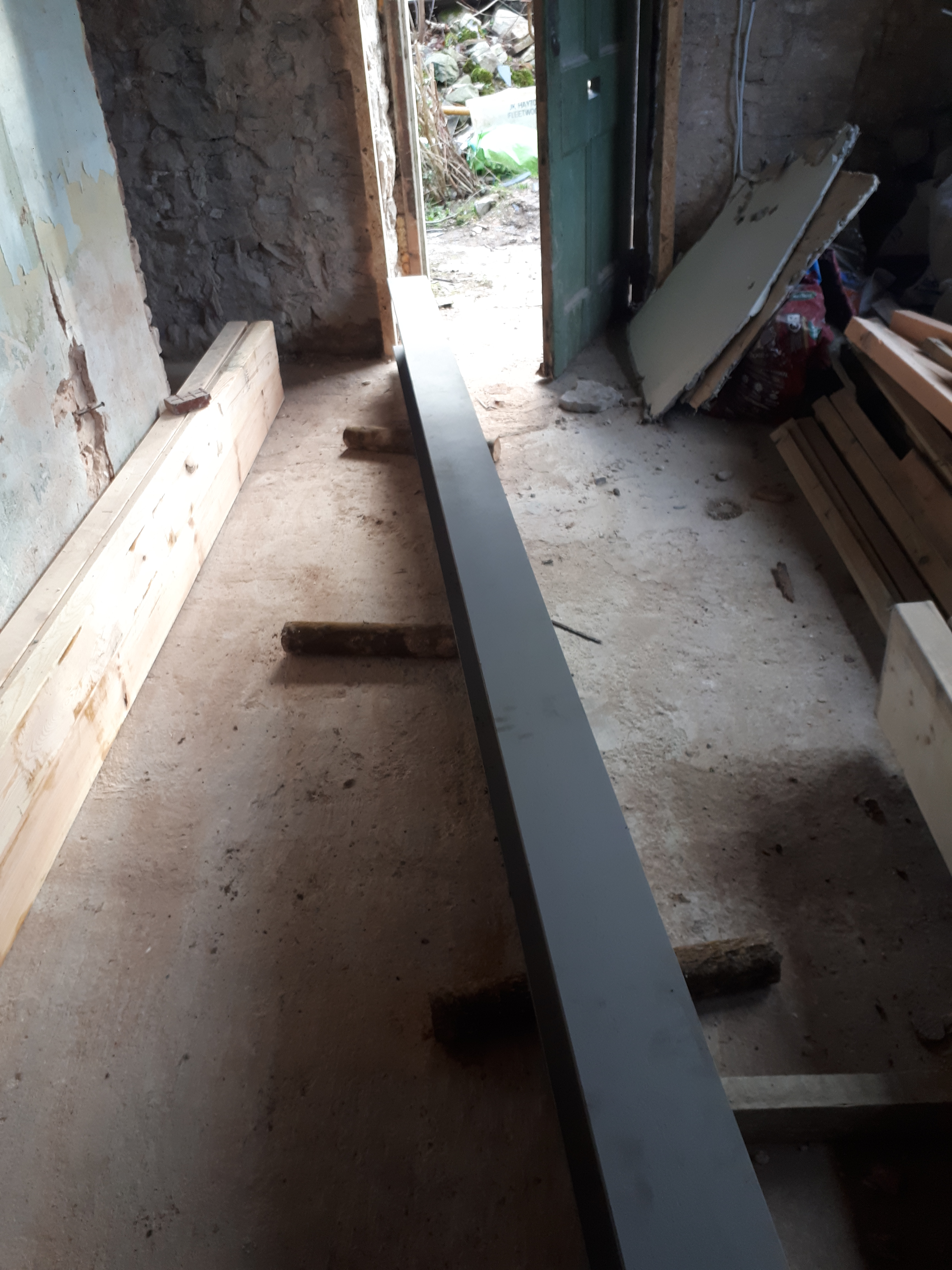
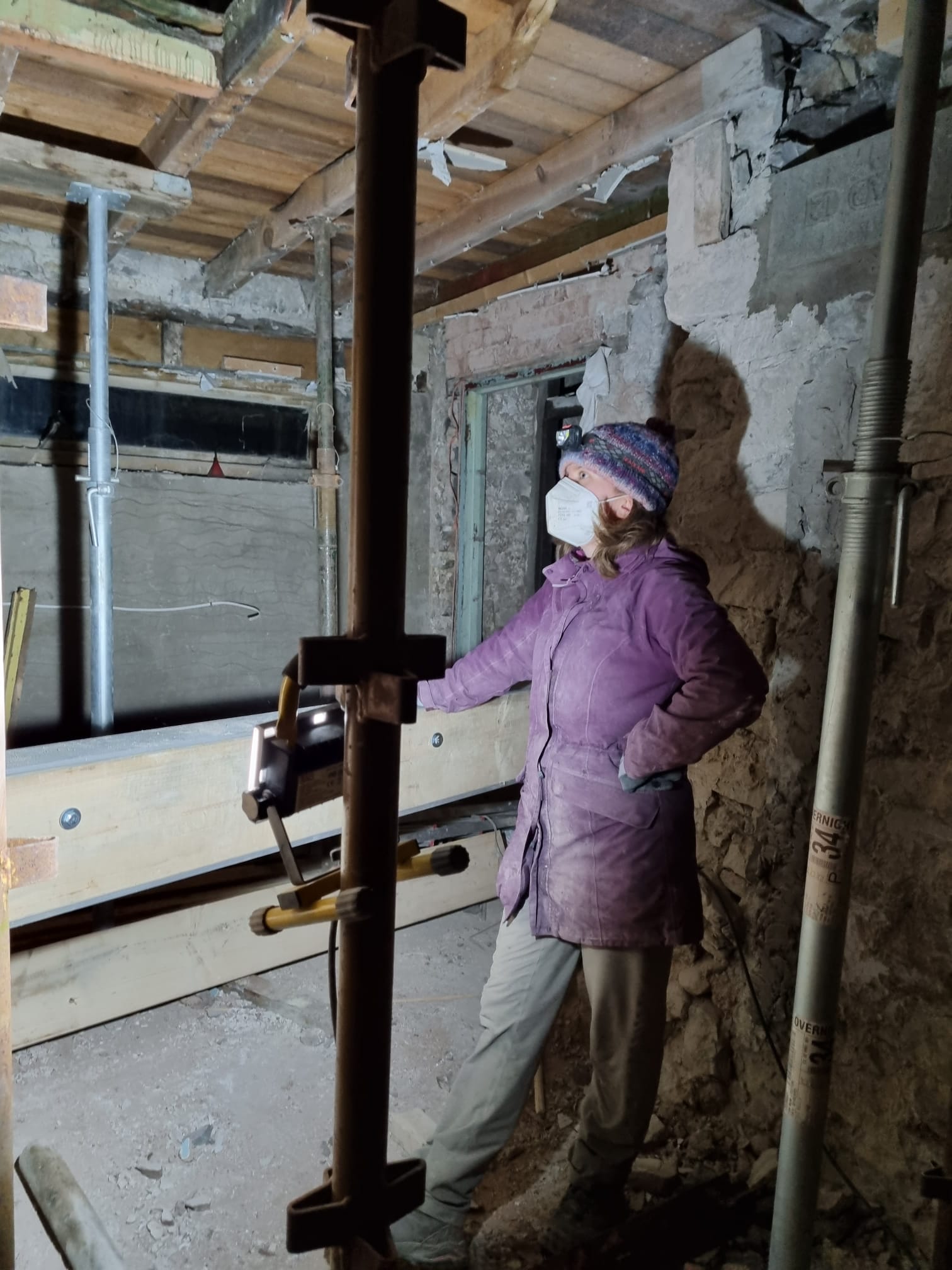
The large steel, that had been delivered a few weeks earlier, needed to be moved into the house in order to fit in the timbers that would slot into either side. We used fence posts to roll and swivel the heavy beam, as we weren’t able to lift it between us.
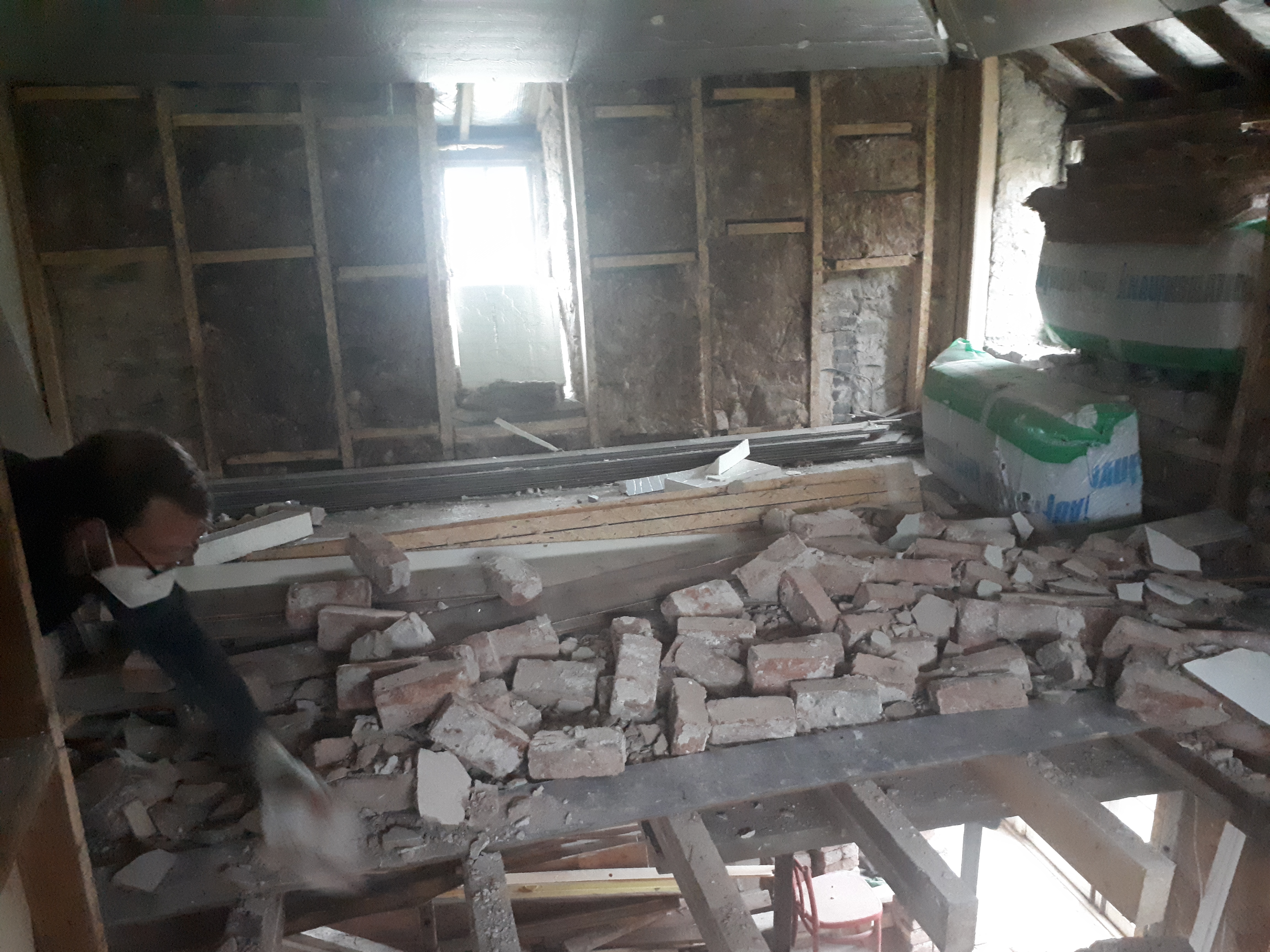
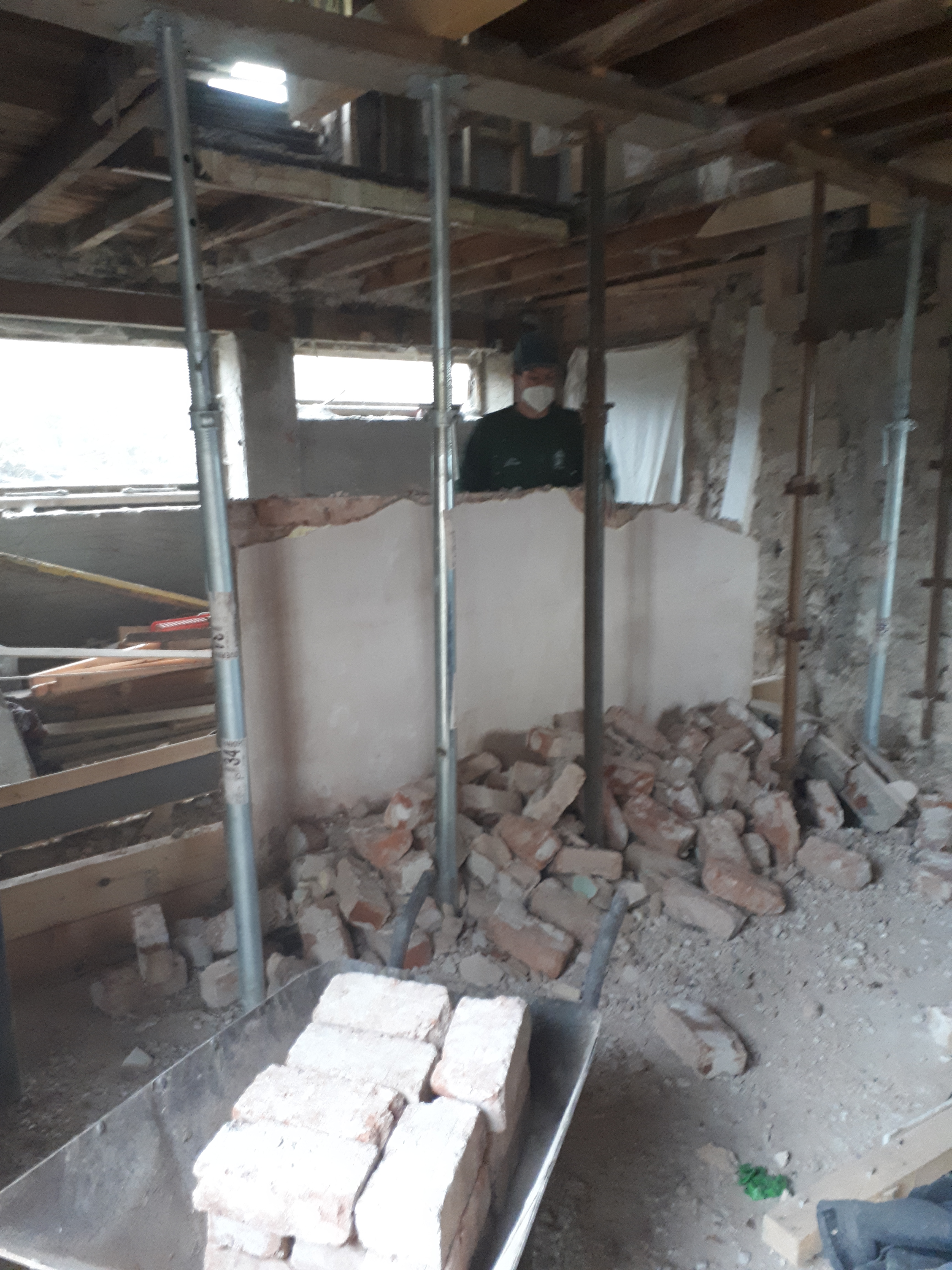
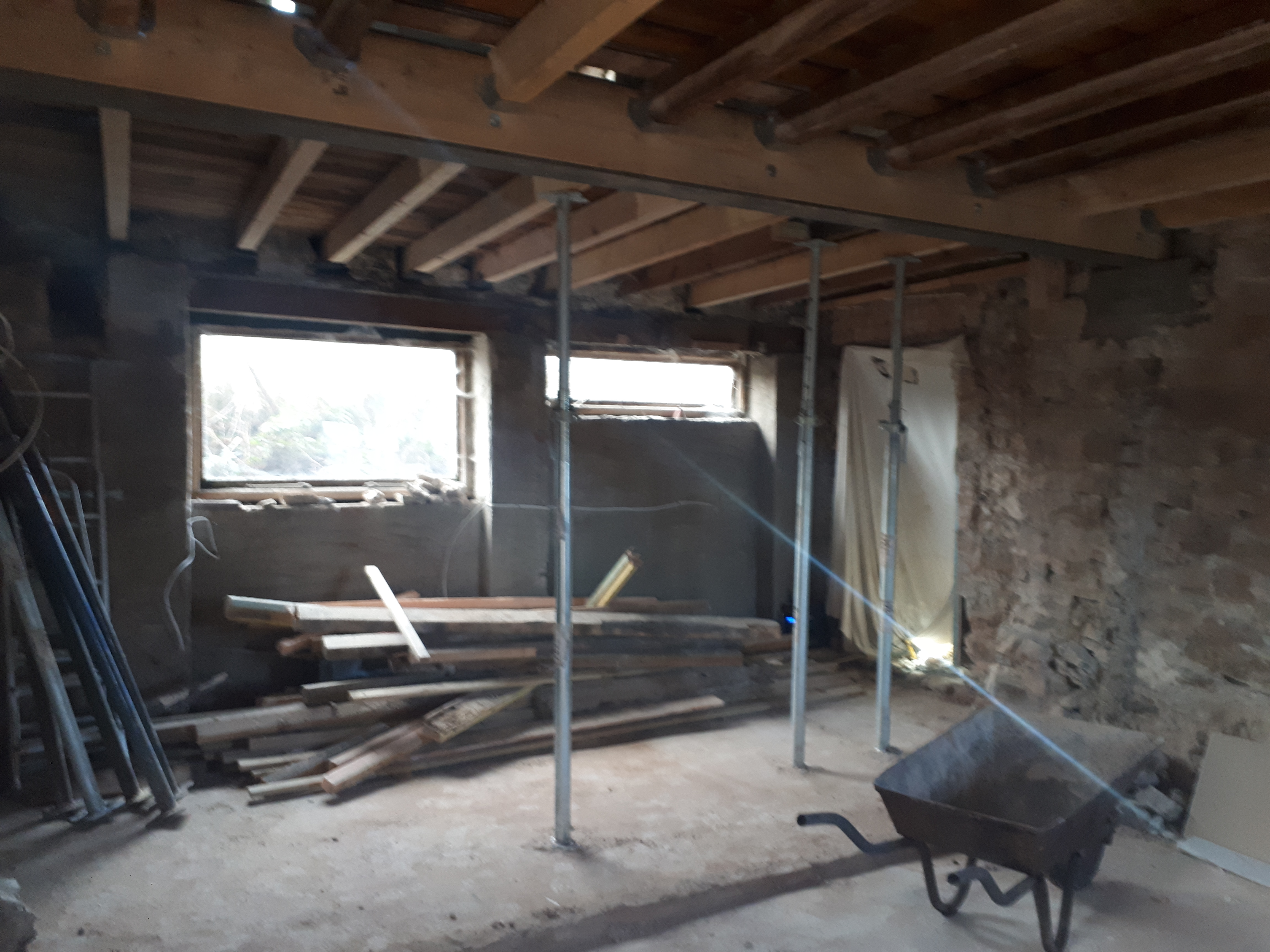
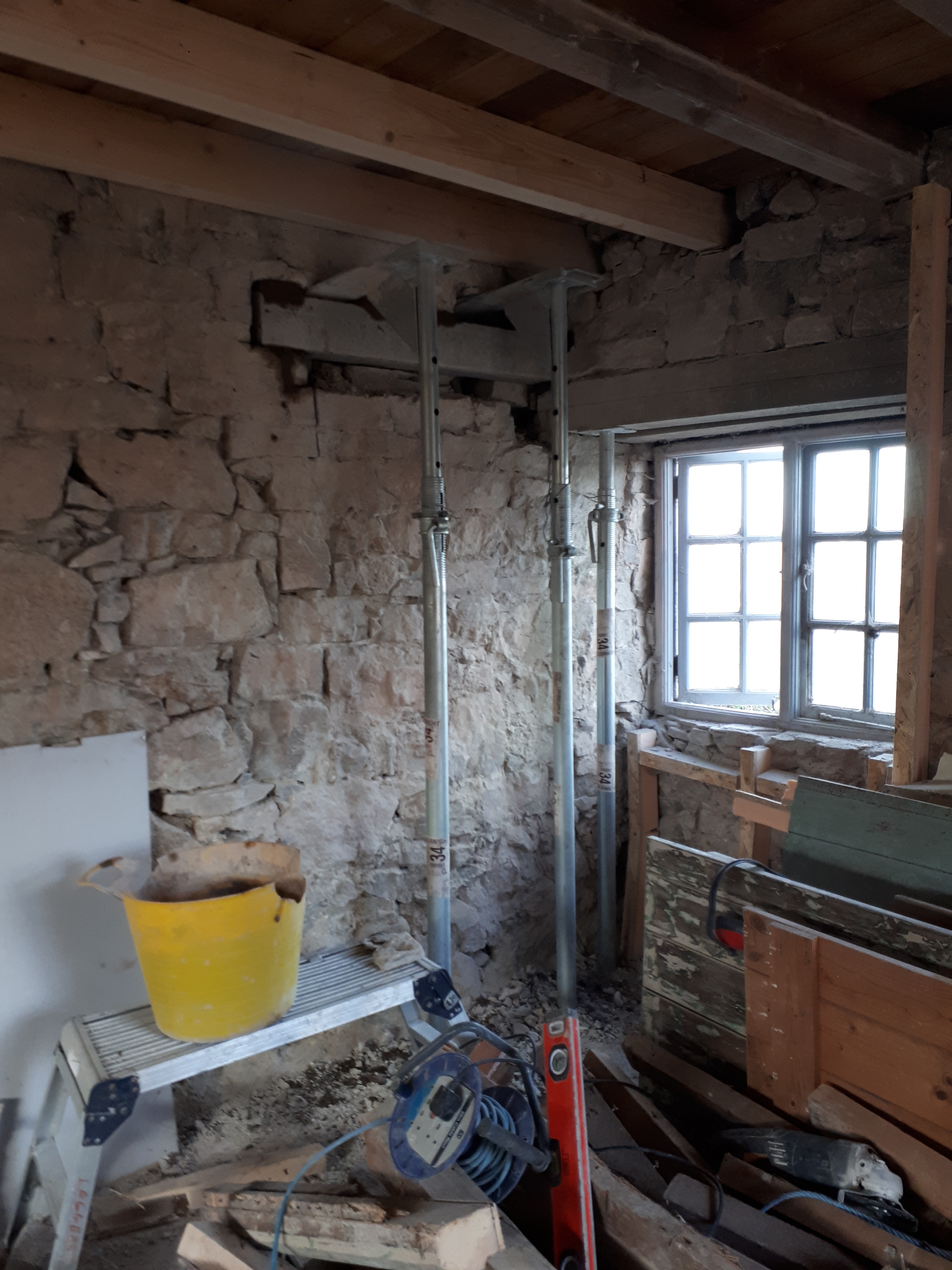
Our next big job was to remove the brick wall that divided the kitchen and dining areas. In order to do this, we had removed bricks and installed acro props and strongboys, to hold up the brick wall on the first floor, while we installed the steel to support it.
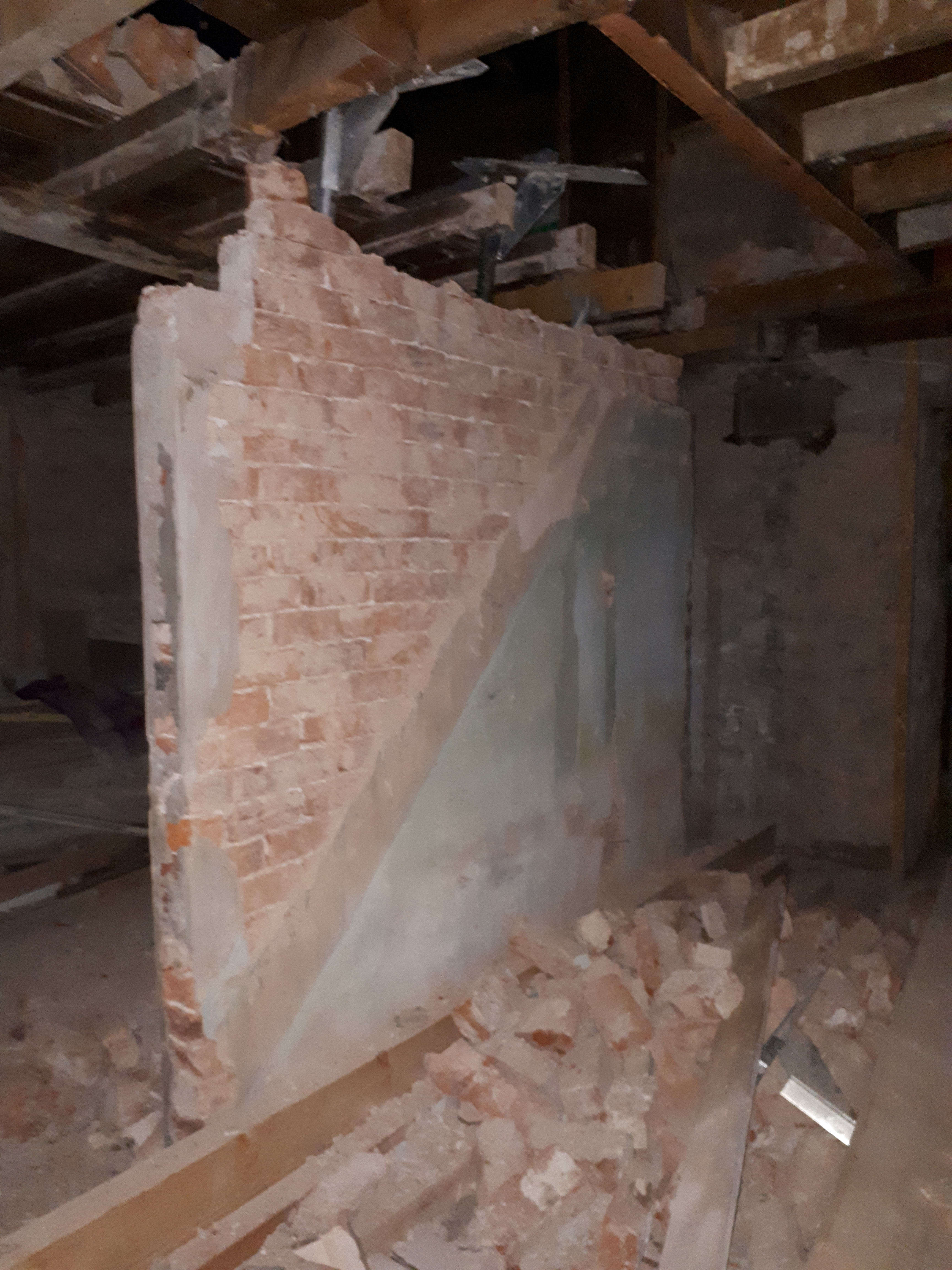
While Chris busied himself trimming down the large timbers to fit in the side of the steel, I began taking out the bricks below the acro props. I took the first brick out gingerly, worried more would instantly fall from above. Yet the wall remained strong. With each brick I removed I felt more and more confident the plan was going to work. Yet… as I made to remove the last brick I looked up to notice a bulge in the wall. The wall was faltering, unable to support itself.
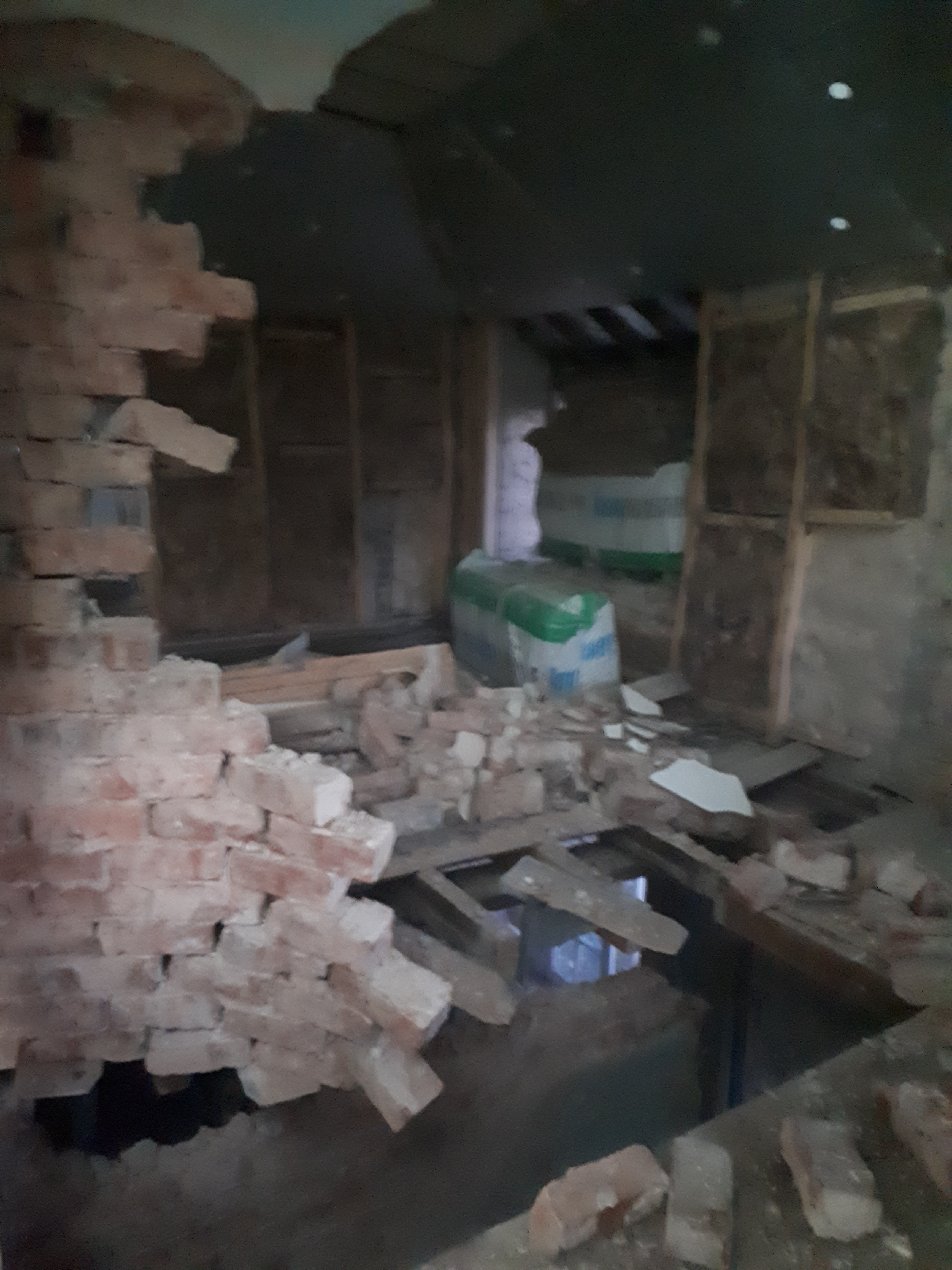
Chris climbed into the attic and began passing down bricks, in an attempt to deconstruct the wall safely. However, with every brick he removed the wall became more unstable. Eventually we decided to tie a rope around one of the acro props and step outside the house, pulling it out from under the wall at a safe distance. A big crash and a cloud of dust followed.
Chris had been worried about the potential damage from the falling bricks, but luckily most had fallen through the gap where the stairs had been. Amazingly the whole disaster smashed one floorboards and put a few dents in our timbers, but not much more.
With the top part of the wall collapsed, we thought some of the lower wall, which had to be dismantled, might have come down too. But no such luck. We took apart the wall and piled the bricks outside, cleaning them ready for resale. Unfortunately, the fallen wall will now mean putting in a new stud wall on the first floor, however I was quite glad the brick wall fell when it did as it was clearly too unstable to not pose a risk during the rest of our works.
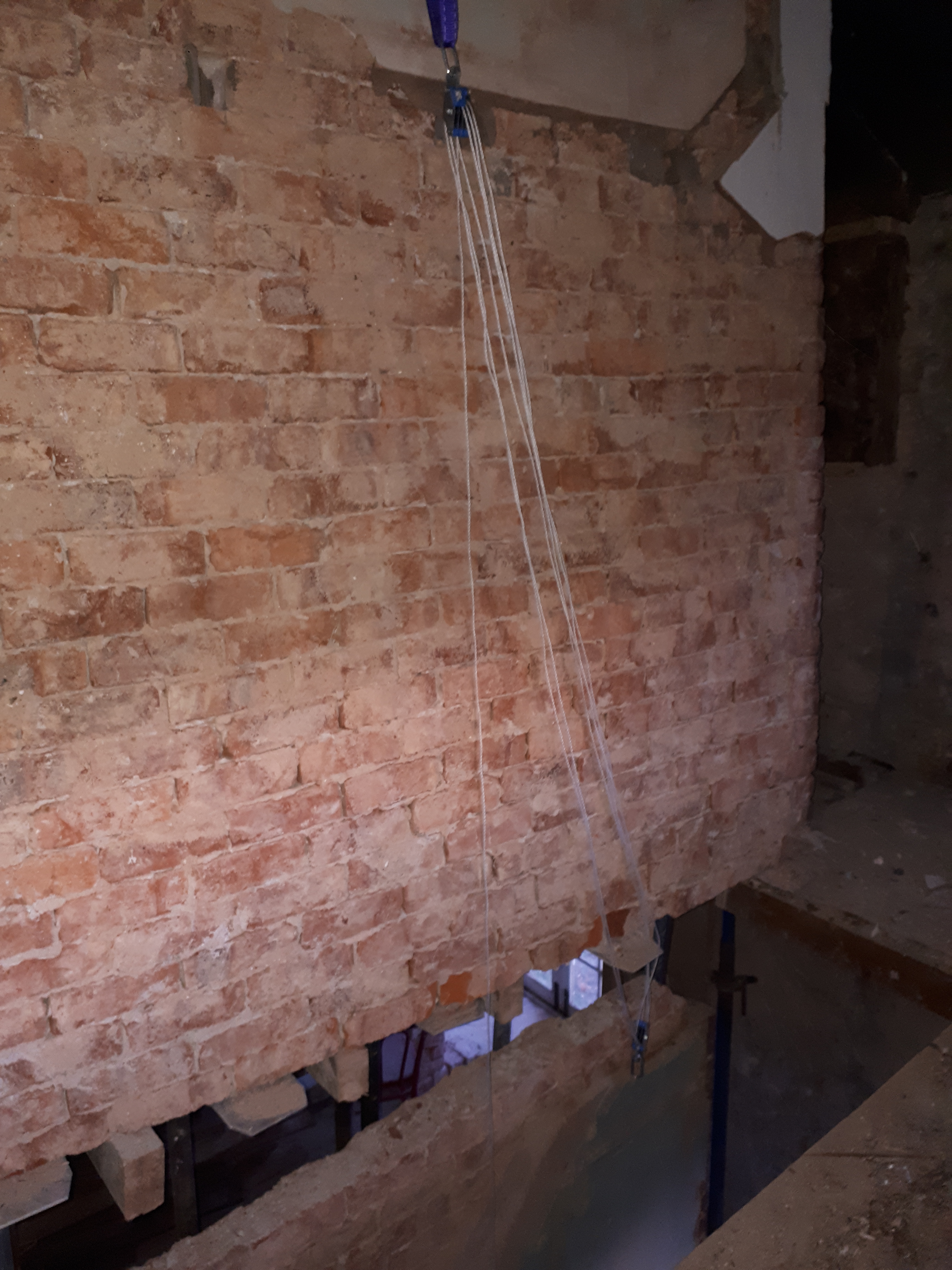
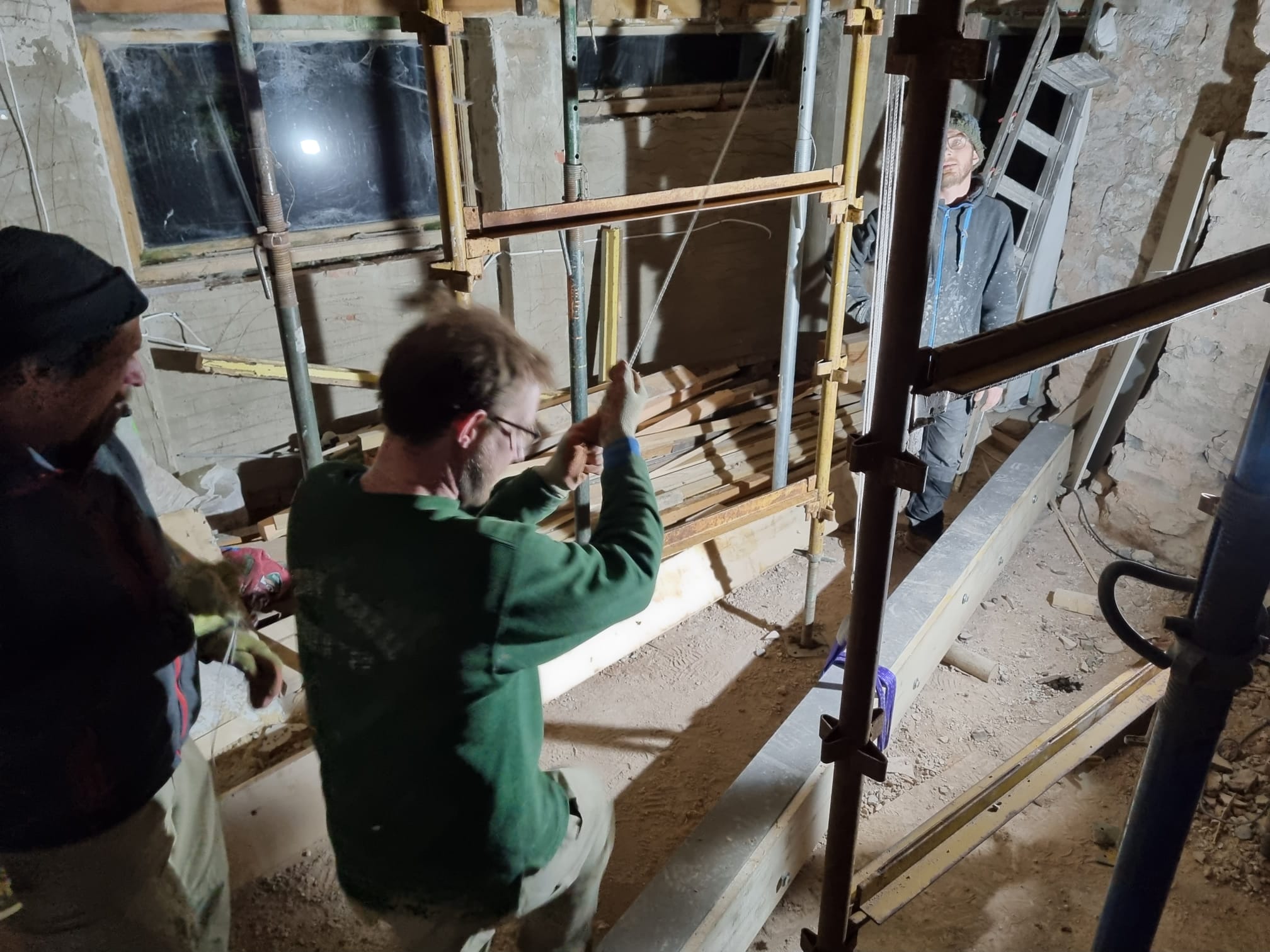
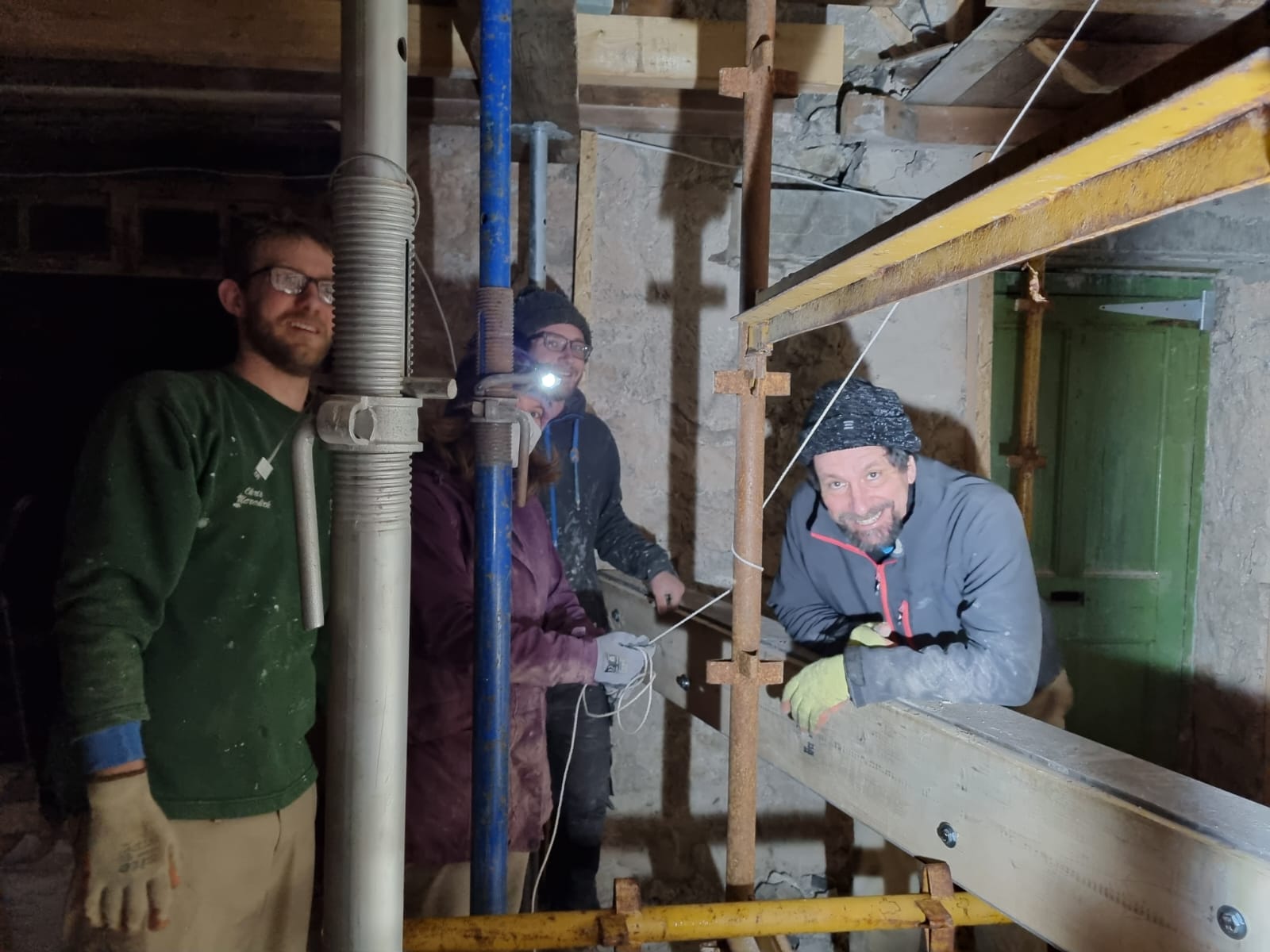
Raising the steel was without a doubt the most nerve-wracking part of our restoration works so far. It involved constructing a scaffold tower inside the house and setting up a pulley system. The pulley was designed for 180 kilos, with the steel being 160 plus the addition of the timbers. However, made of a thin white string, no thicker than a shoelace, it in not way looked up to the job. Not only this but the pulley wasn’t designed to hold the weight of the item once you had pulled it up, relying entirely on human input to stop the steel from crashing to the ground.
We were lucky to have several extra pairs of hands for the job, with Chris’s brother Rich, and my mum and dad, kindly coming to lend a bit of elbow-grease. Although the pulley did a great job, we simply couldn’t have lifted it without some brute force at the same time. We lifted it a bit at a time, building up the scaffolding underneath it for it to rest on.
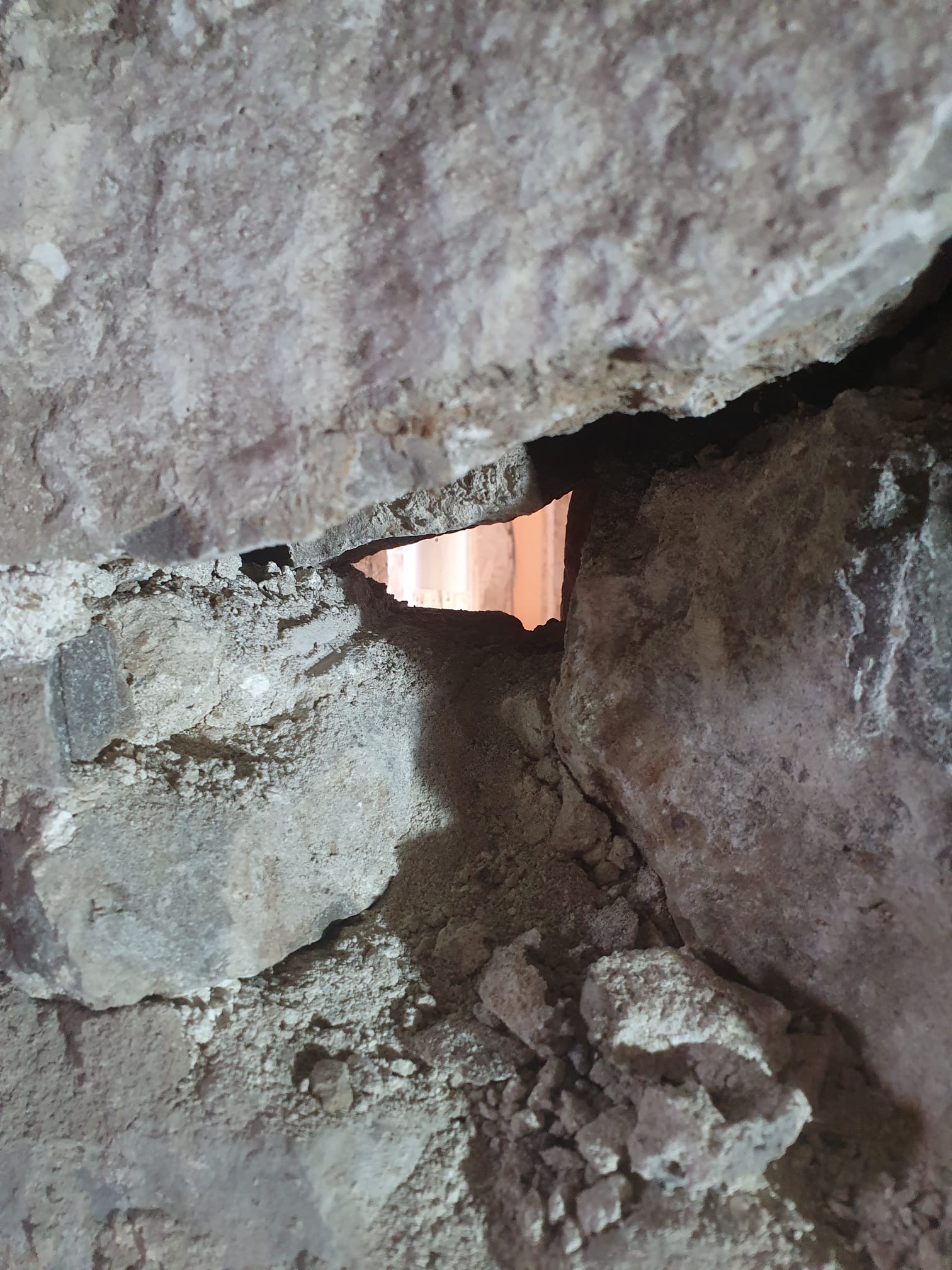
The main difficulty was the length of the steel, being necessarily longer that the room was wide. We managed to get one end into the opening on one wall, but struggled to lift the other end into place, the steel becoming wedged against the wall. We had to deepen the hole and shave away at the stones on the walls. Eventually, after much heaving and hoing, the steel slotted into place, to everyone’s relief.



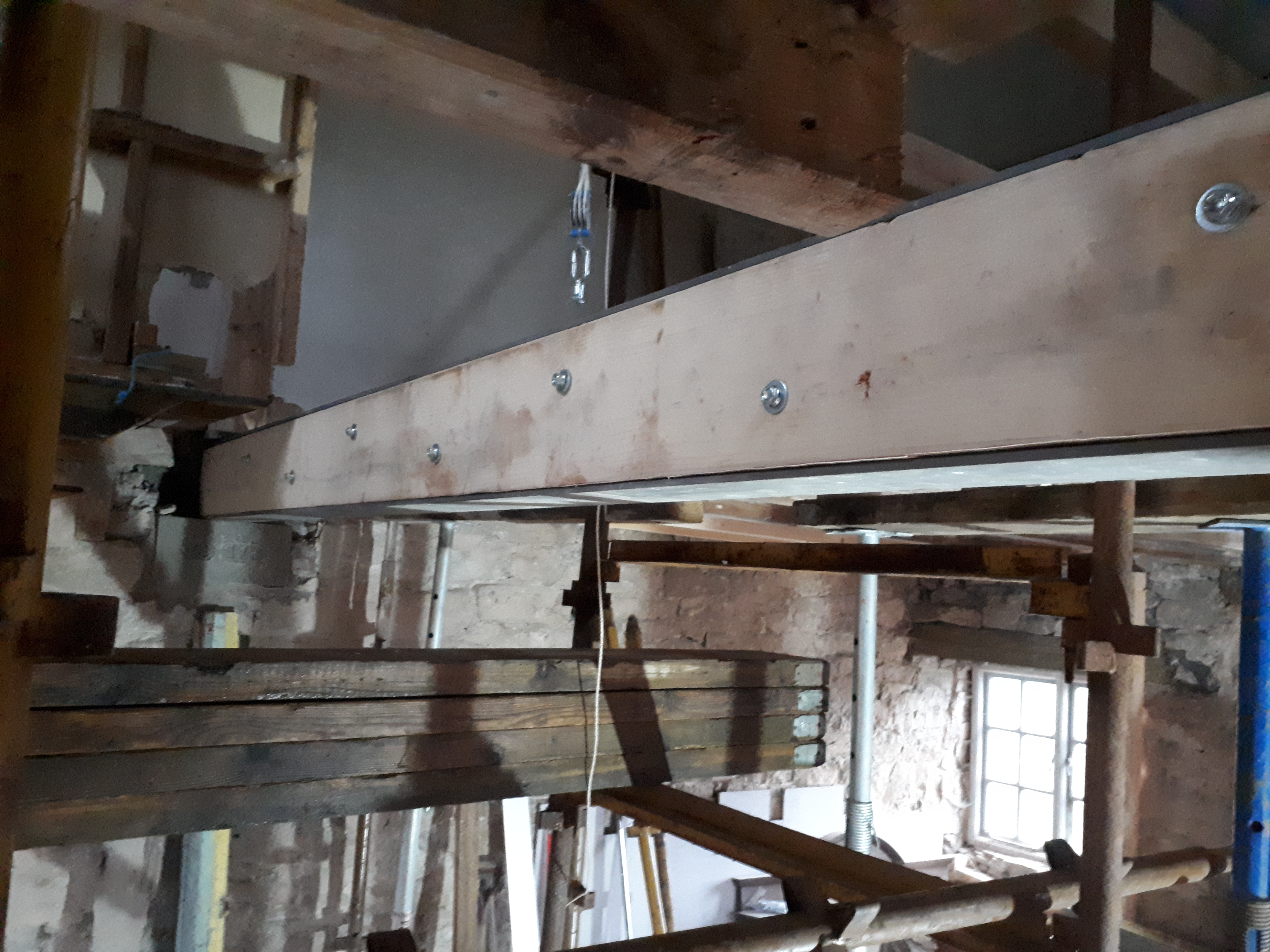
With the steel in place it was time to attach the beams. The beams on one side of the room had carefully been cut to the right size to butt up to the steel, and only needed brackets attaching to secure them in place. On the other side of the room we had the opening where there staircase once was. The other beams had been cut to allow the steel through. We therefore needed to remove and replace all the beams.

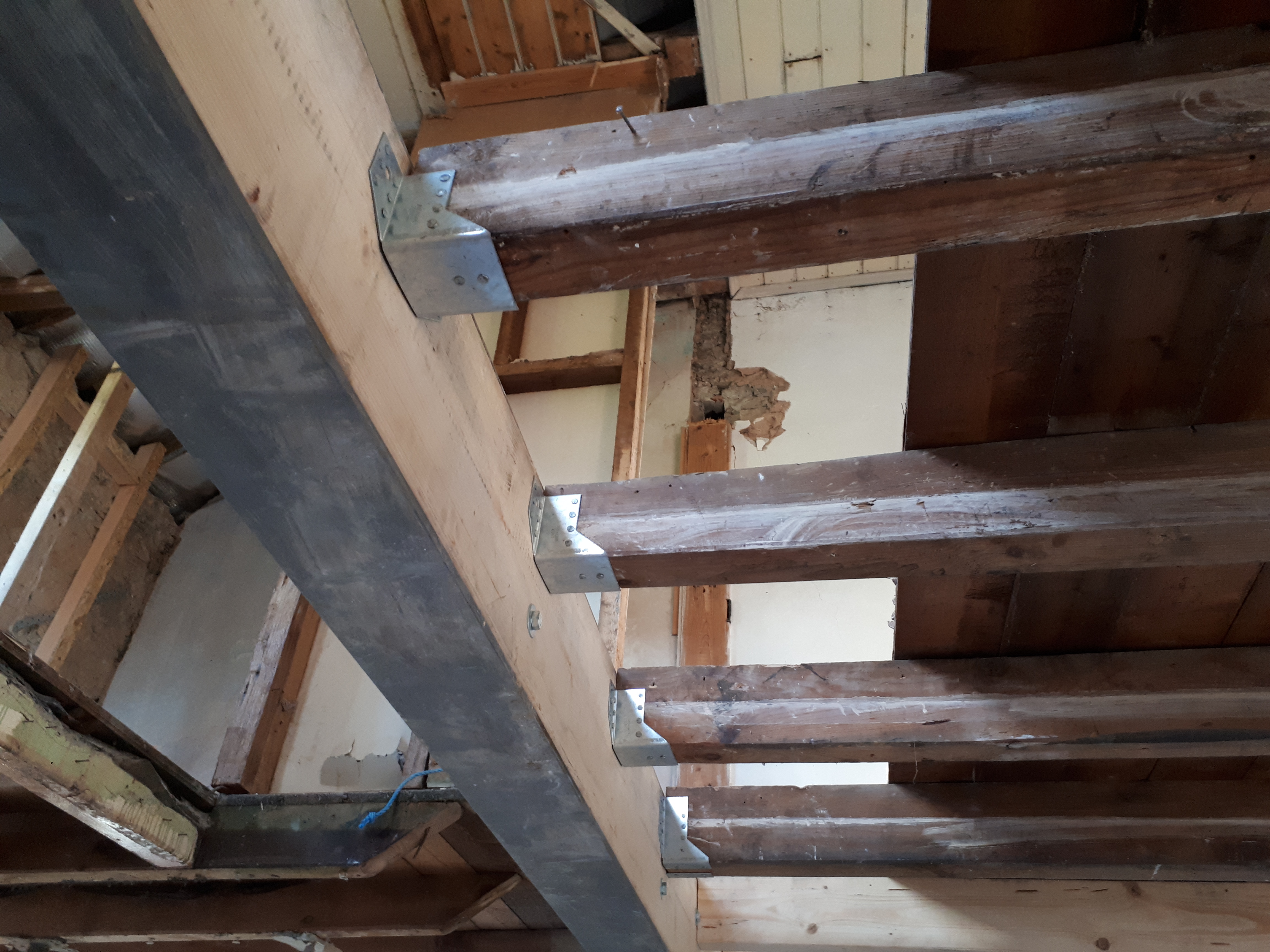
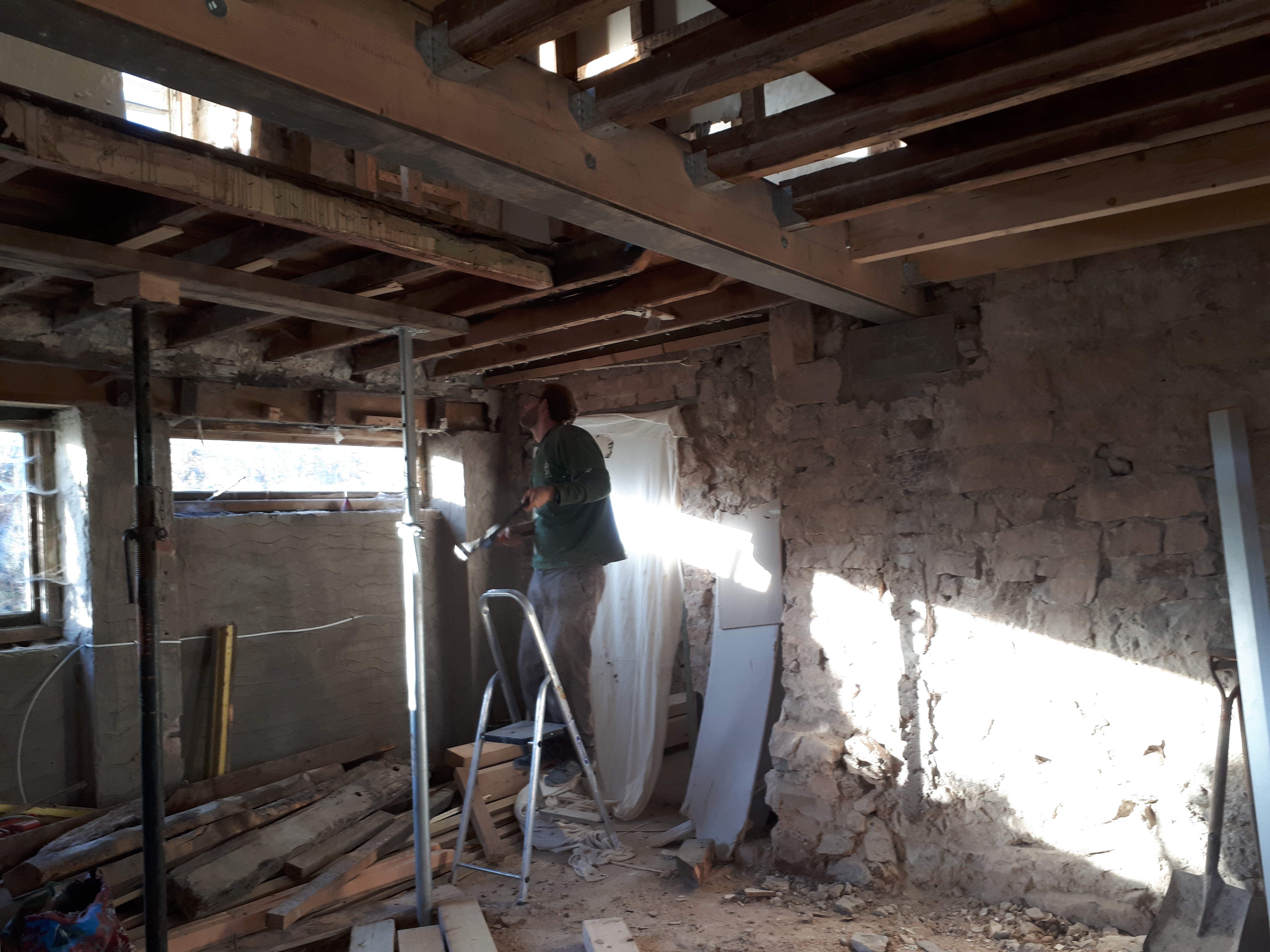
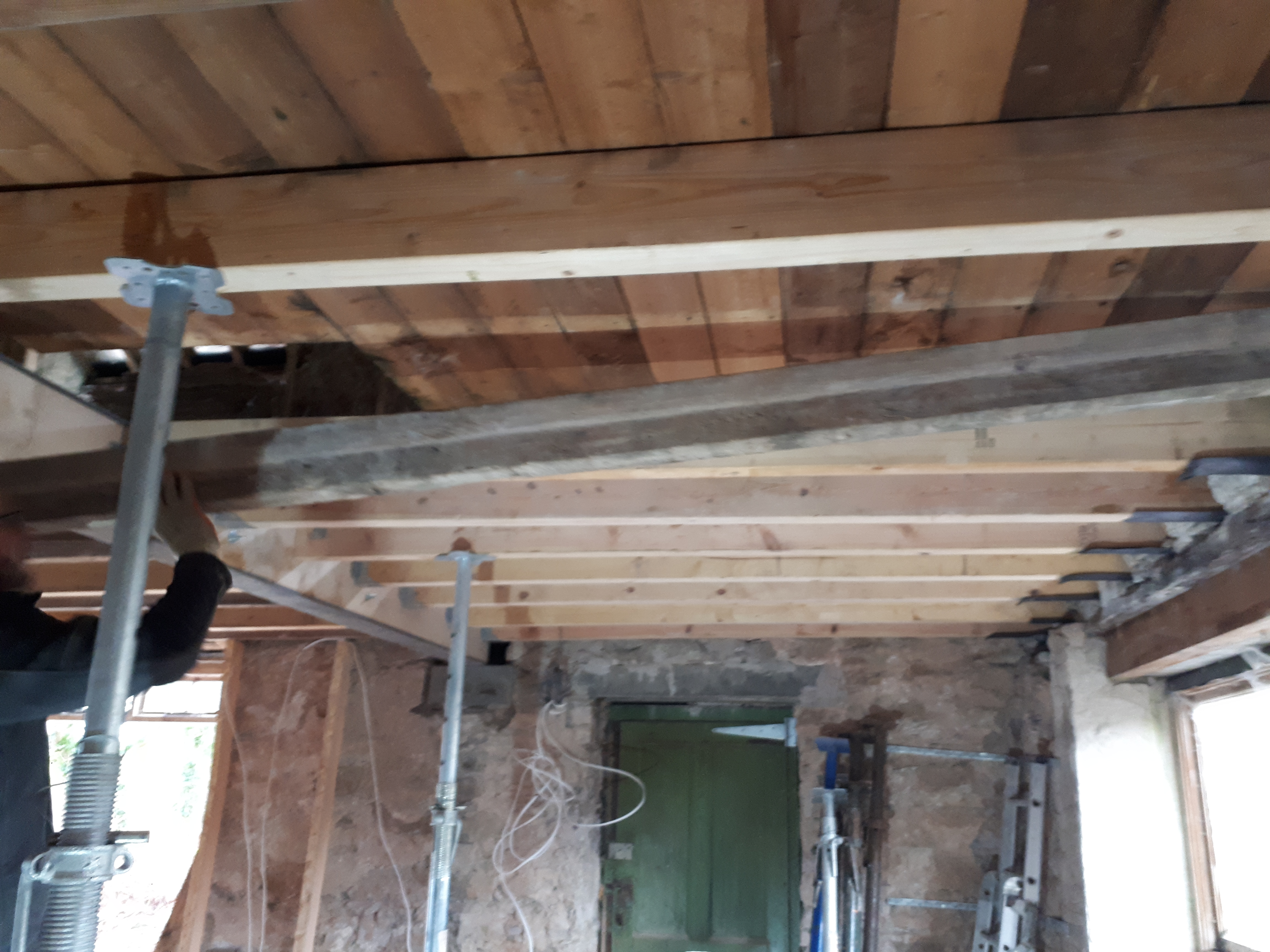
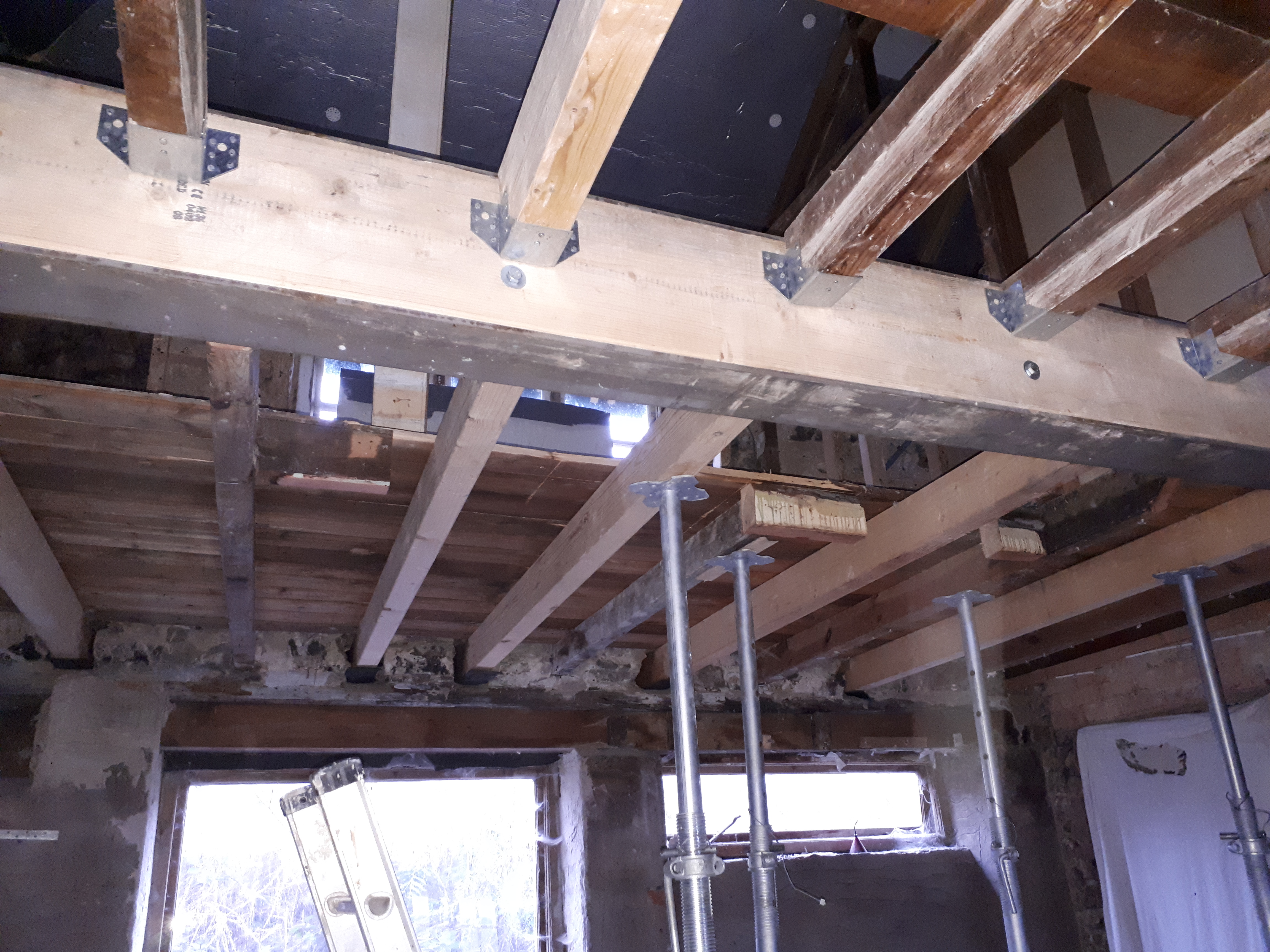
With all this done we had a somewhat more open plan space than originally intended, but still a big step forward and the last big structural job completed.
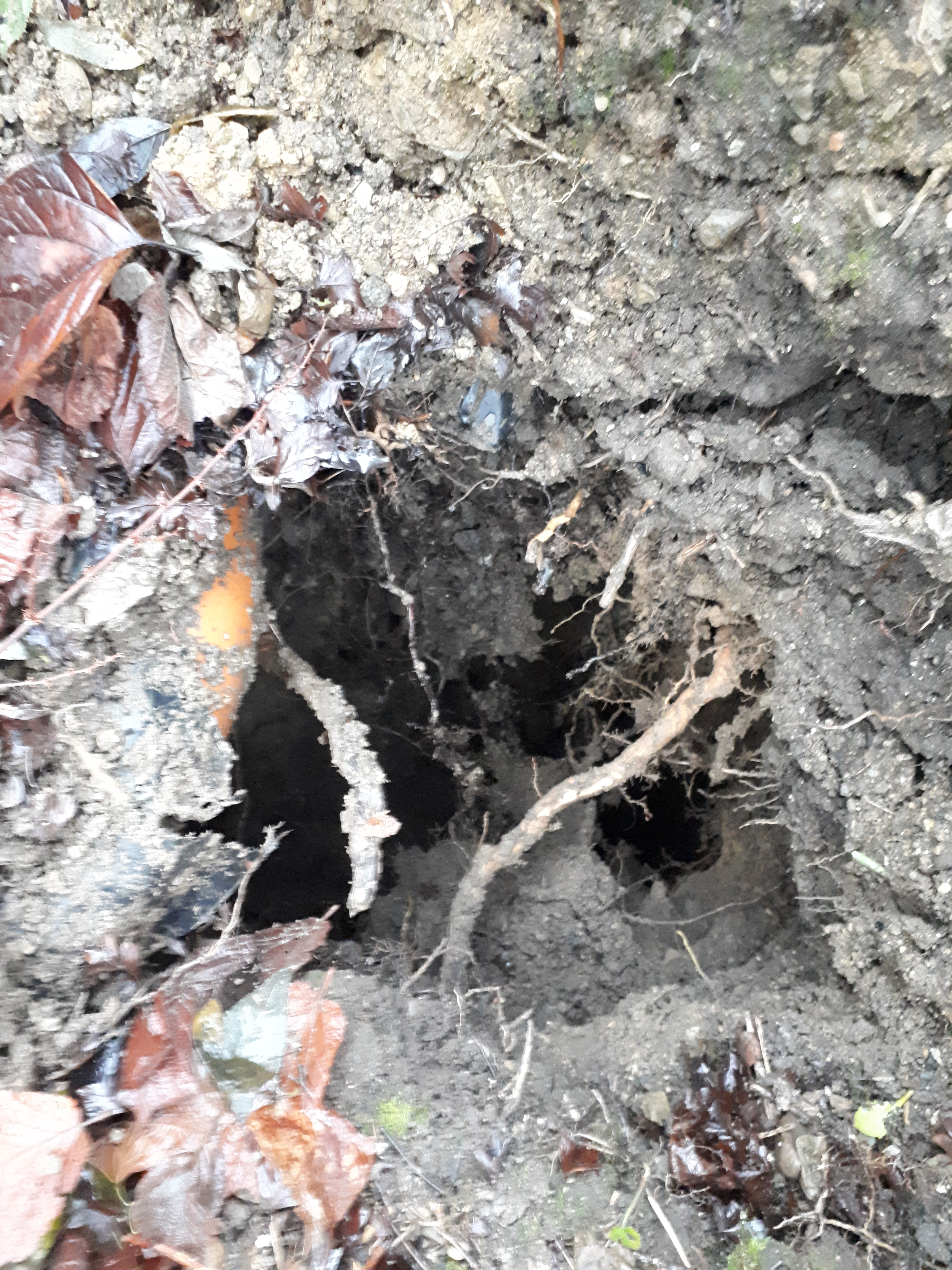
During one of the days where I had been working on something inside on my own, Chris began digging around in the garden to try and work out the drainage. There was a strange area within the garden, close to a telegraph pole, where the ground seemed to bounce beneath our feet. Having spent a bit of time digging in this spot, while looking for the outflow of our drainage, Chris was amazed to see a hole open up beneath him. Sticking a rod down to assess the depth, he found it went down some 2m. The bouncing ground was where the tree roots were suspended over empty space.
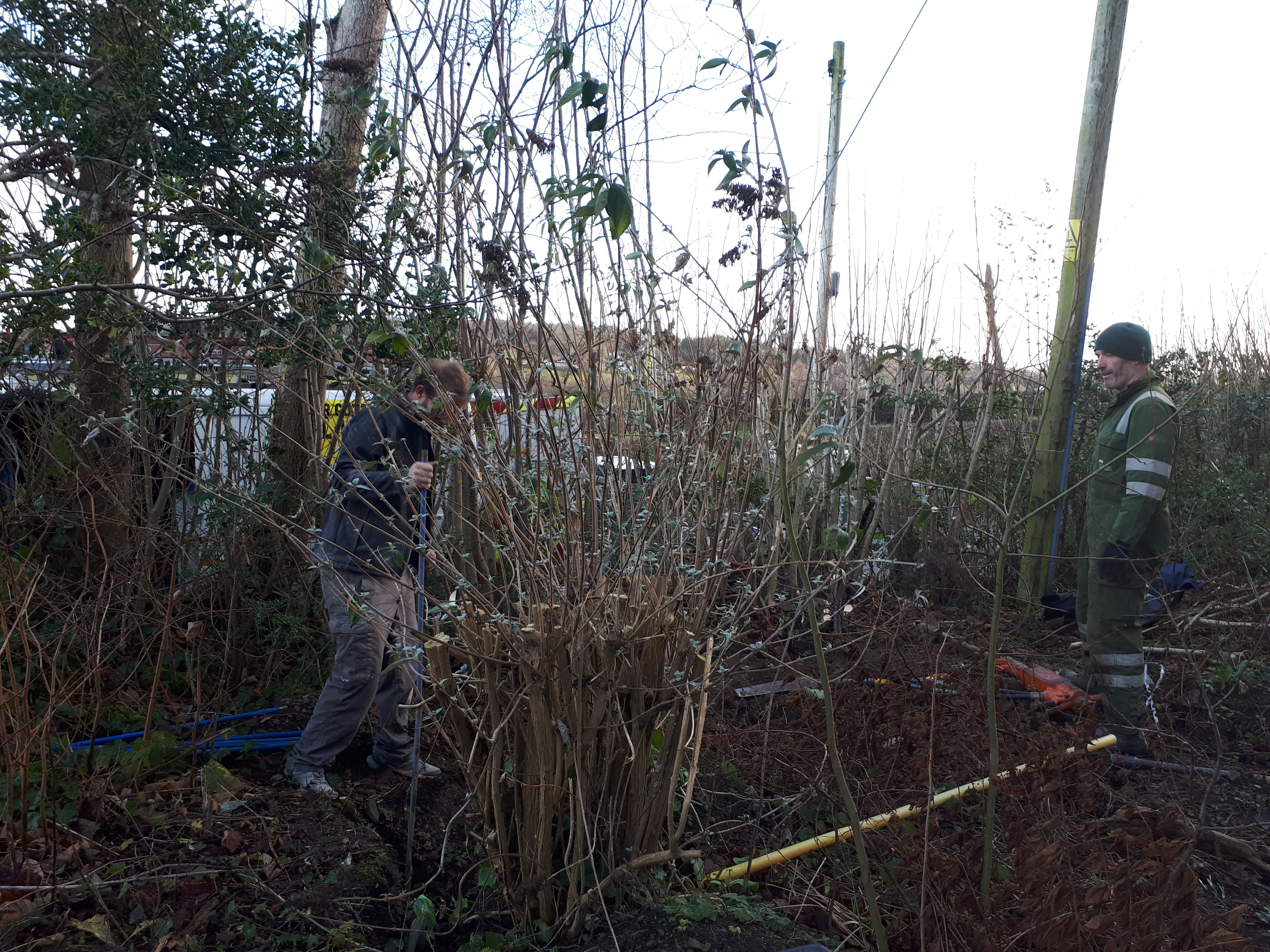
As the hole was so close to the telegraph pole we called Scottish power to assess the situation. They agreed they would need to move the cable supporting the pole. Having dug a hole to see if the ground would be suitable, they found the hole went further than expected. Eventually, they managed to find a suitable spot, and we now know of a massive hole at the bottom of our garden. It is likely to have been caused by our broken drainage, washing away the soil beneath our trees. Due to the lack of soil the Scottish power team decided an ash tree next to the power line was too unstable to leave standing. As our plan is eventually to lay the hedge beside the road, we requested the ash tree be coppiced so we could lay any new growth into the hedge.
While a big hole in your garden is by no means ideal, we’re hoping we might be able to repurpose it into a soakaway. Currently it seems that any drainage from our house most likely ends up on the road. However, with no road drainage close this isn’t ideal in winter, potentially creating icy patches. A soakaway might be the best solution. First, however, we need to get through to the local council, as some of the sink hole appears to have encroached on the edge of the road…

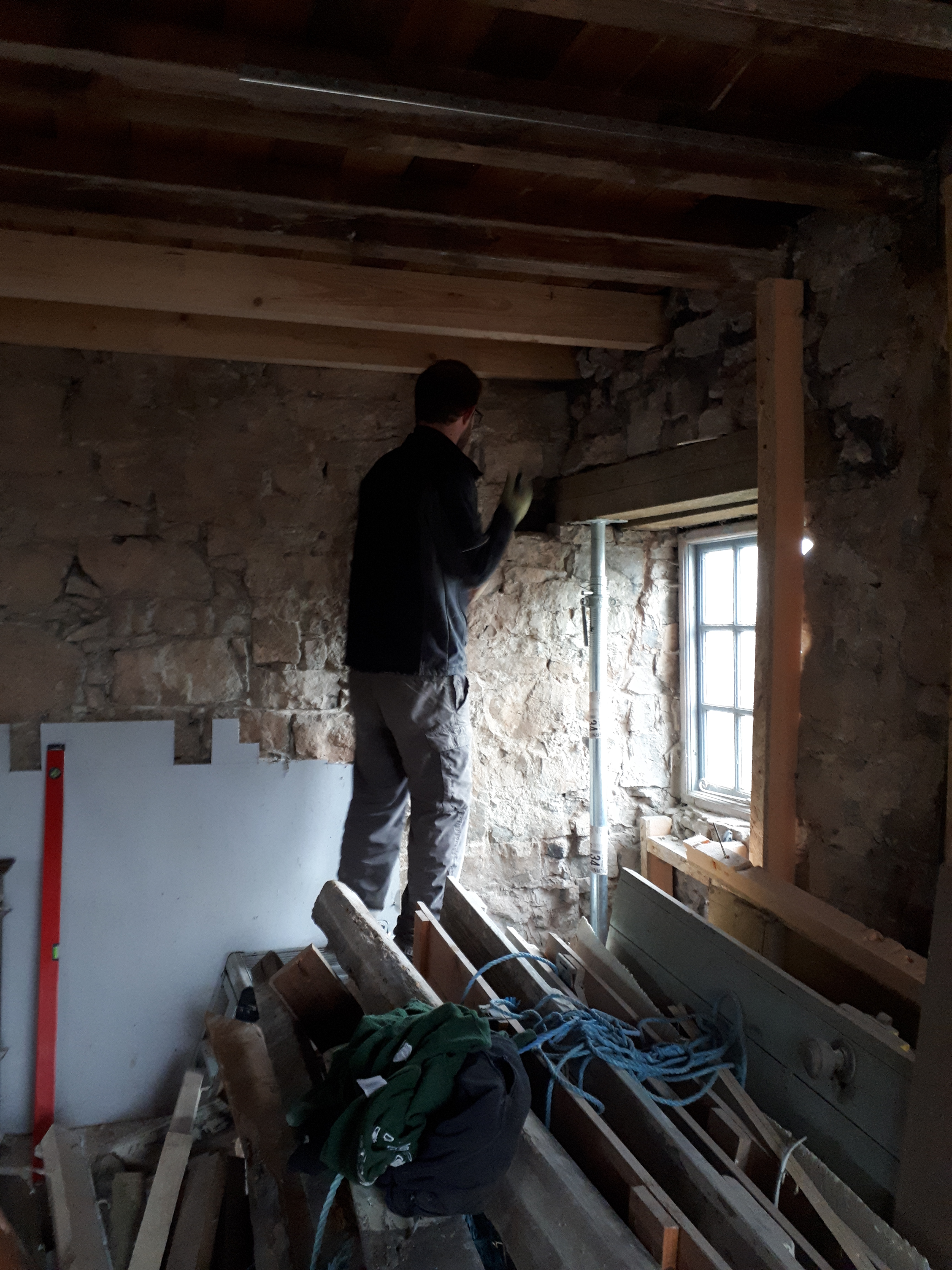
With the steel work completed we moved on to another new structure of the kitchen/diner; a new doorway connecting the lounge and dining room. With the thick wall between, what was once two houses, it won’t be an easy task, involving the installation on three lintels. For now the mortar needs to set around the first lintel, before we can risk removing more stones.
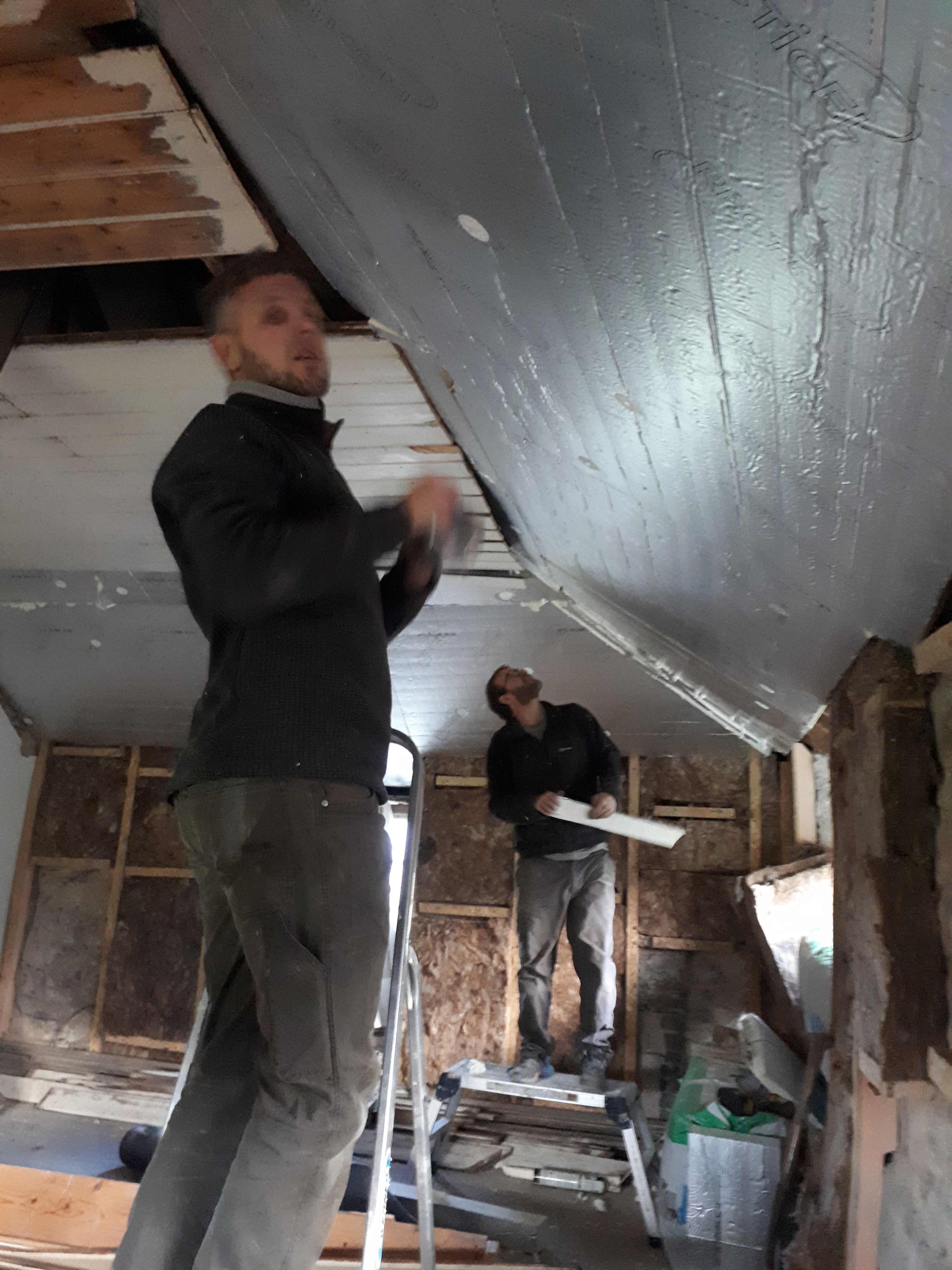
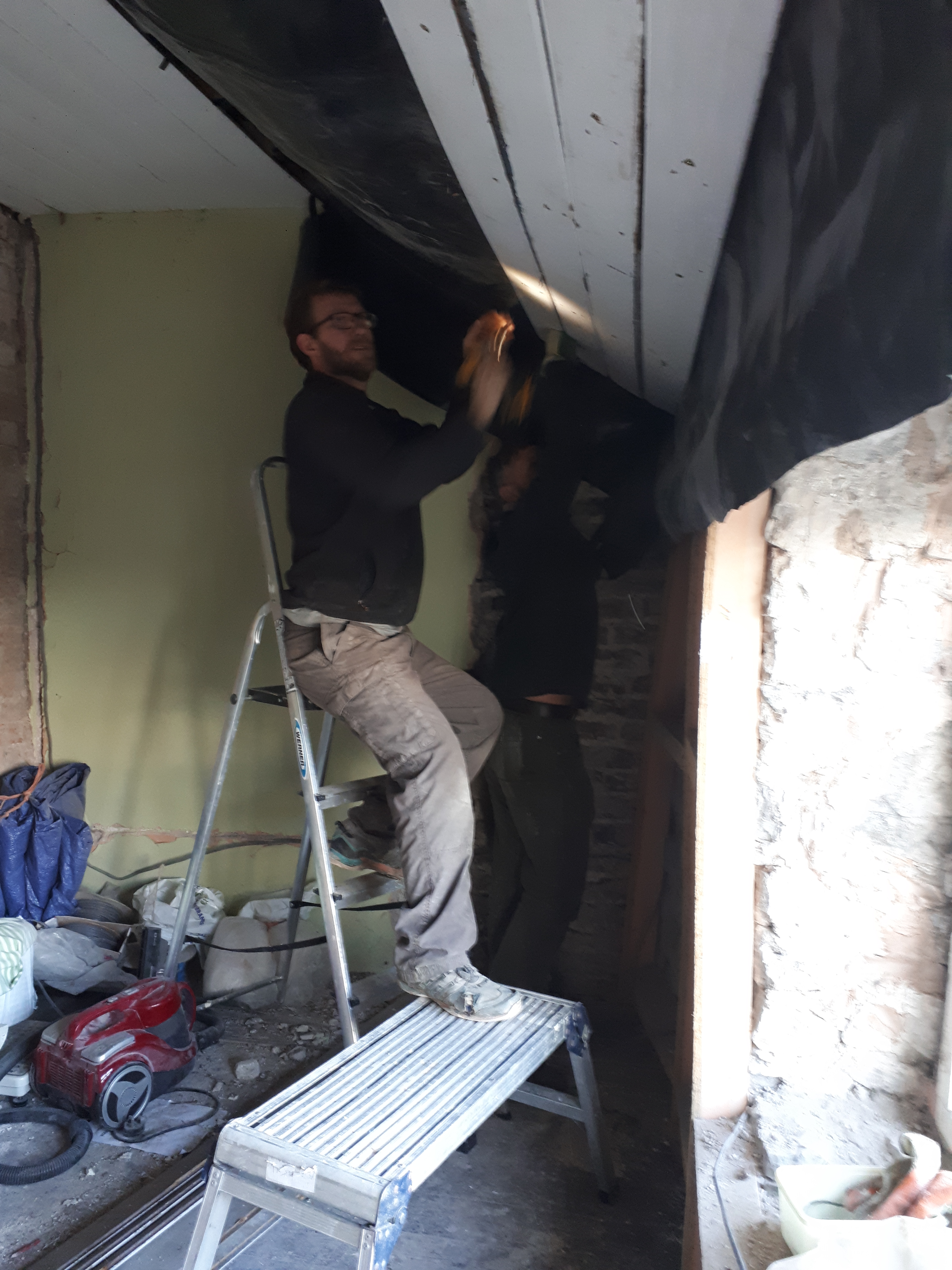
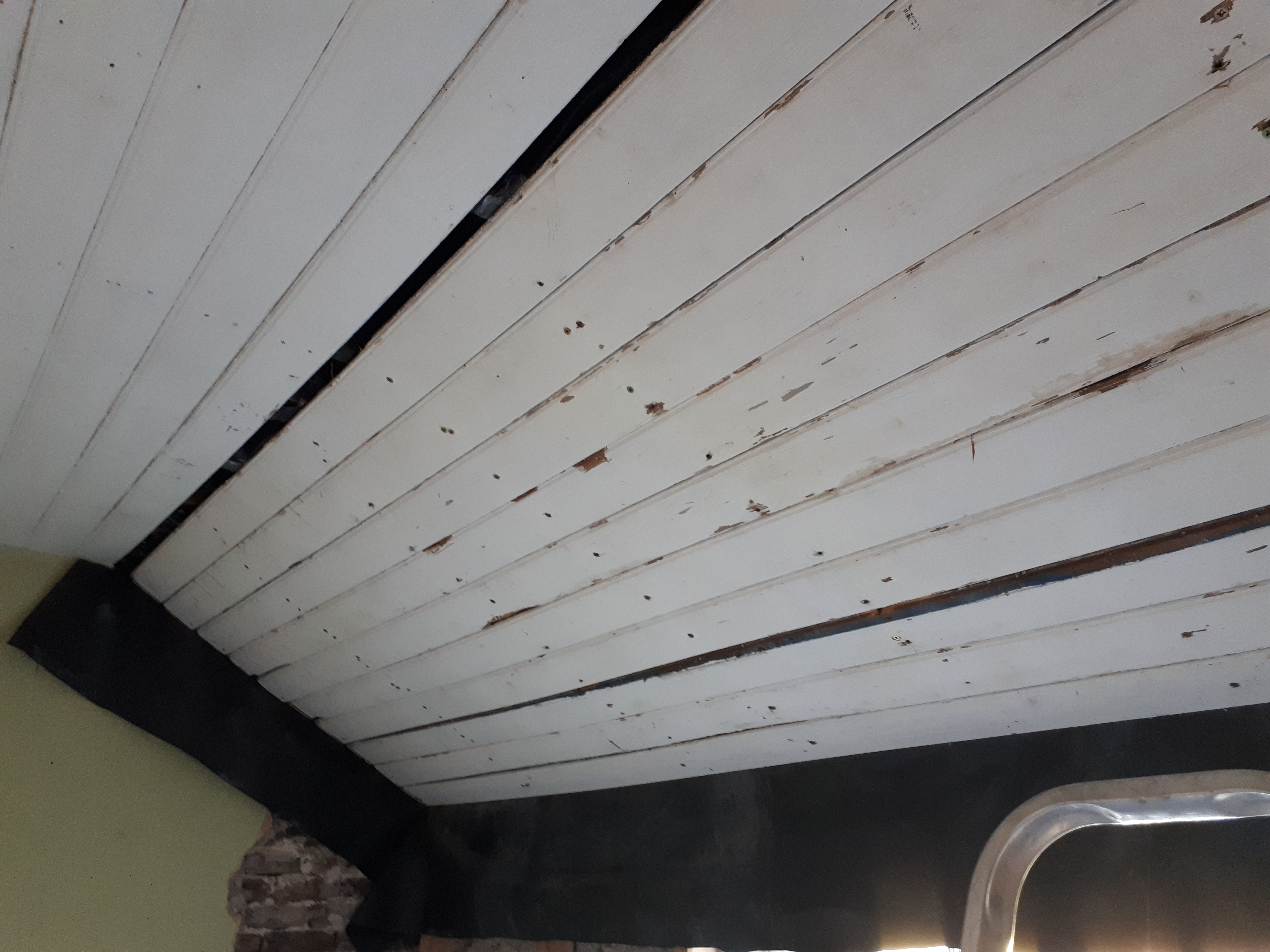
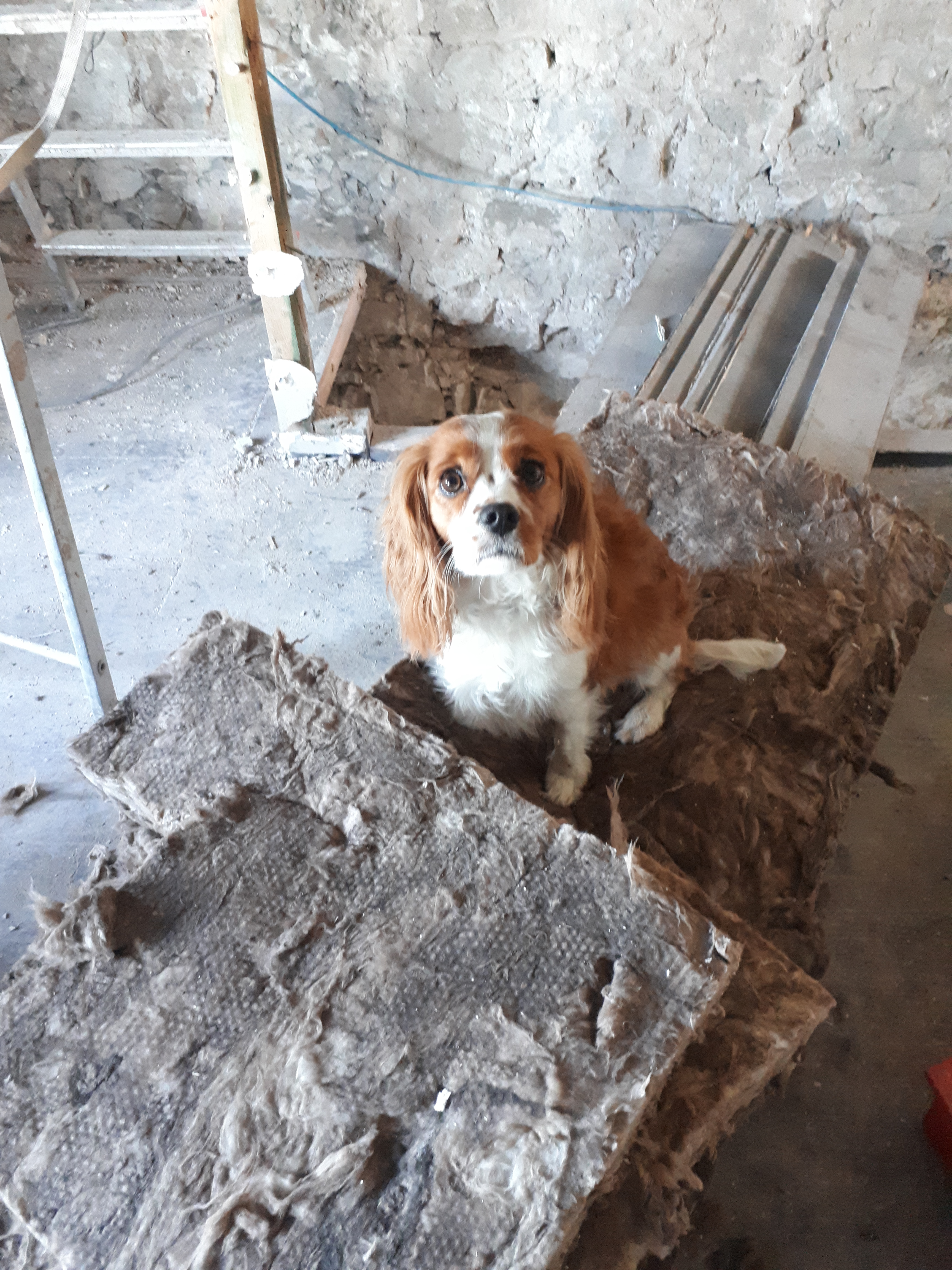
On our final day we started a completely new task, for good measure, starting to replace the wooden ceiling slats. To do this we needed to first cover the insulation with a vapour membrane. This was an awkward job, involving at least three pairs of hands, luckily Chris’s friend Jay (and his dog Rosie) joined us, making an impossible task much easier. Once the joins in the insulation were sealed with aluminium tape, and the vapour membrane semi-attached, we began to attach the old ceiling boards. Having spent time marking where the rafters were onto the insulation boards, we then realised we couldn’t see the markings with the black plastic in the way. A little guesswork was therefore required to place the screws. I was quite pleased with the finished result. There’s definitely lots of filling and sanding on the horizon, but considering how old and brittle they are they went back up really nicely. With one room done, and two ready for boards to go up, it was a good end to our time off.
Our final bit of good fortune on our time off was to sell the majority of our scaffolding, keeping just one bay for ourselves. Having sold it for the same price we brought it for, we saved all the costs of renting scaffolding over the many months it stood around the house. Our old stairs also went to a new home, though we offered these for free. These are going to replace a broken set in a house currently being renovated.
So that’s it for a while, back to evenings and weekends. I would prefer to be able to give up work and just do the renovation project full time, but unfortunately no one has offered to pay me to renovate my own house. No idea why not.
 Ruined
Leave a comment