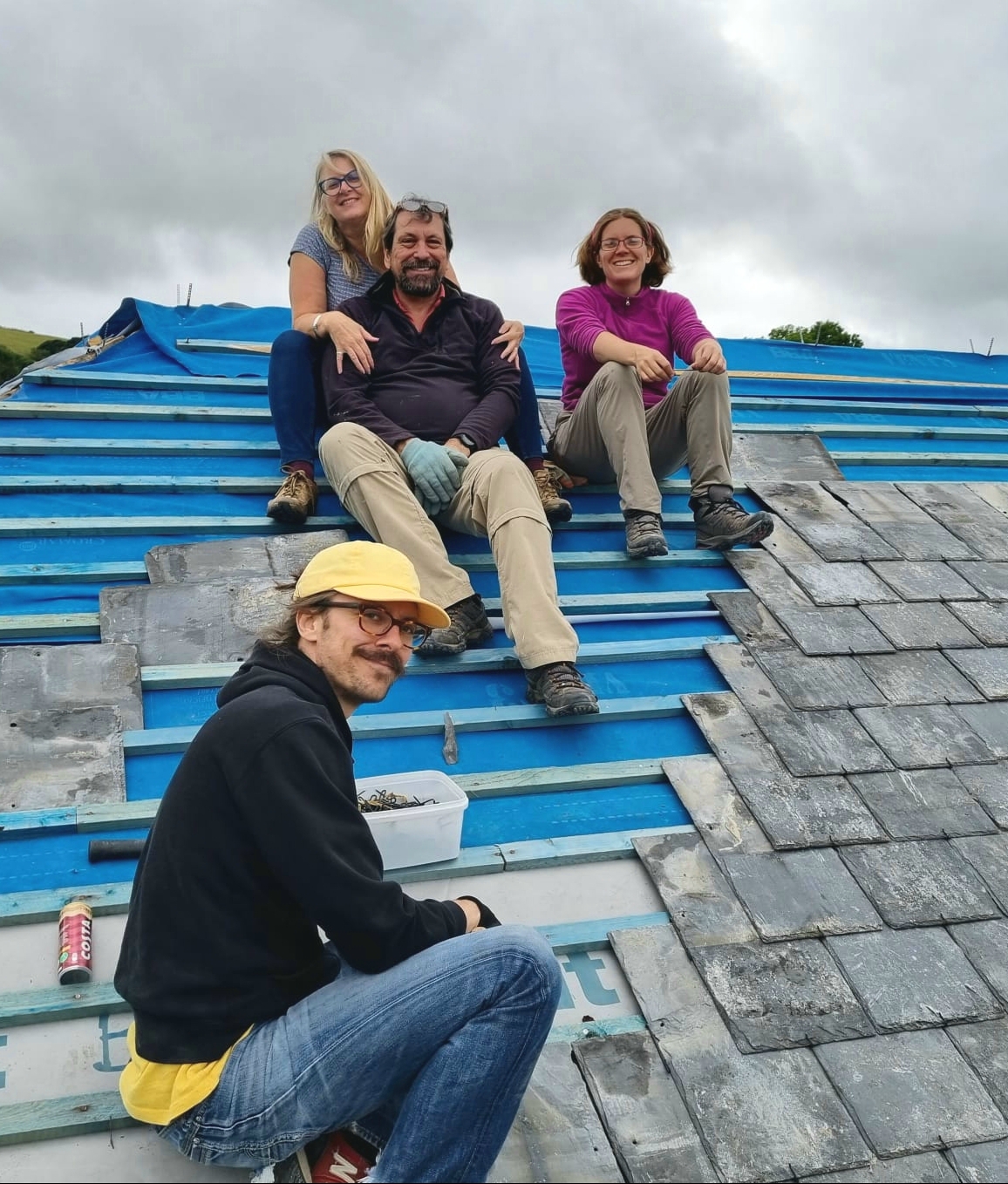
With the structure of the roof repaired, we were now ready to begin rebuilding what we had so laboriously taken apart. So, booking another week off work, we set about a 9-day marathon of roofing. With the slates cleaned and sorted into three piles, depending on their condition, we started our work on the hip of the roof, the smallest section, but also the most complex due to the amount of edge compared to area.
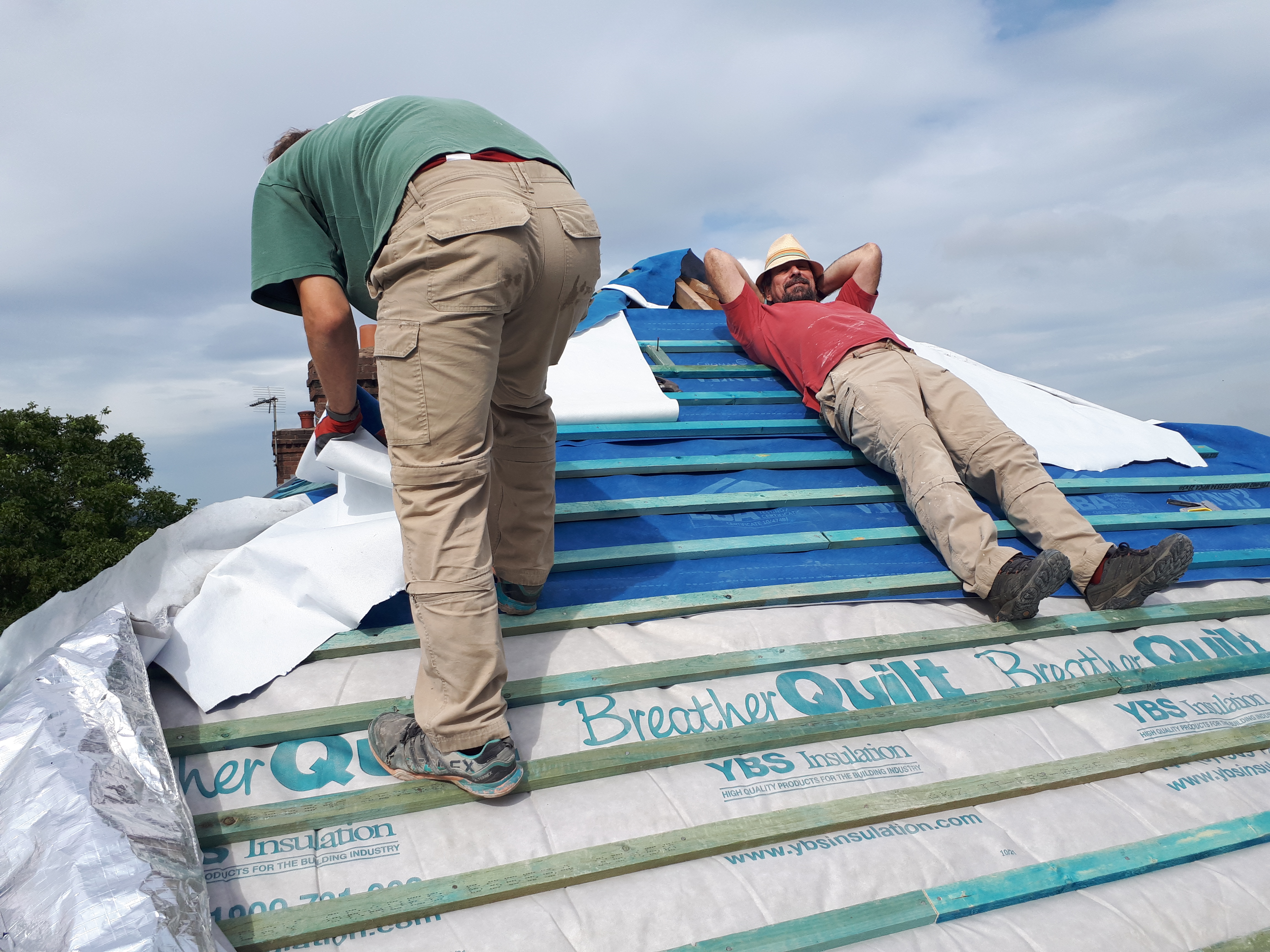
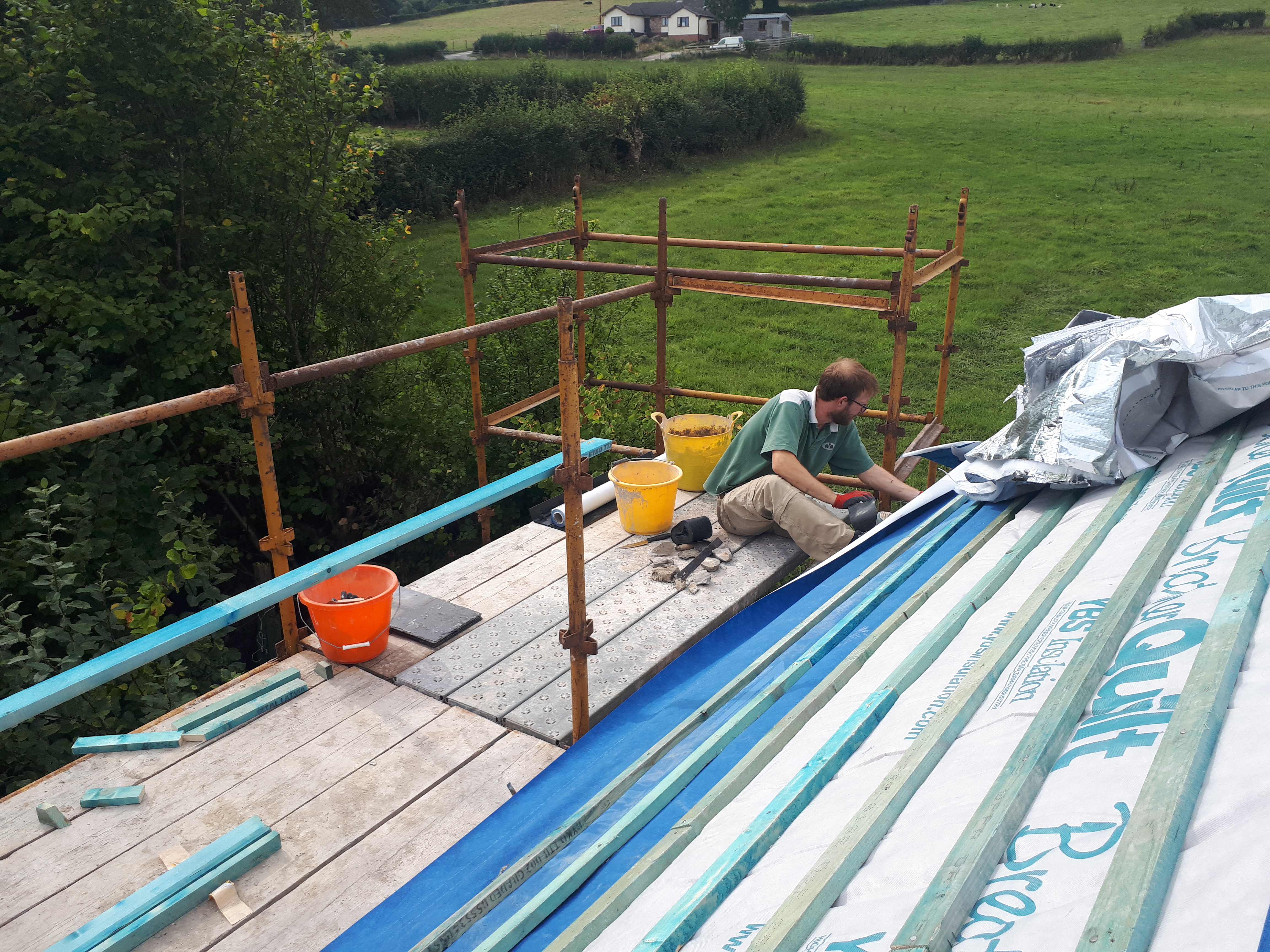
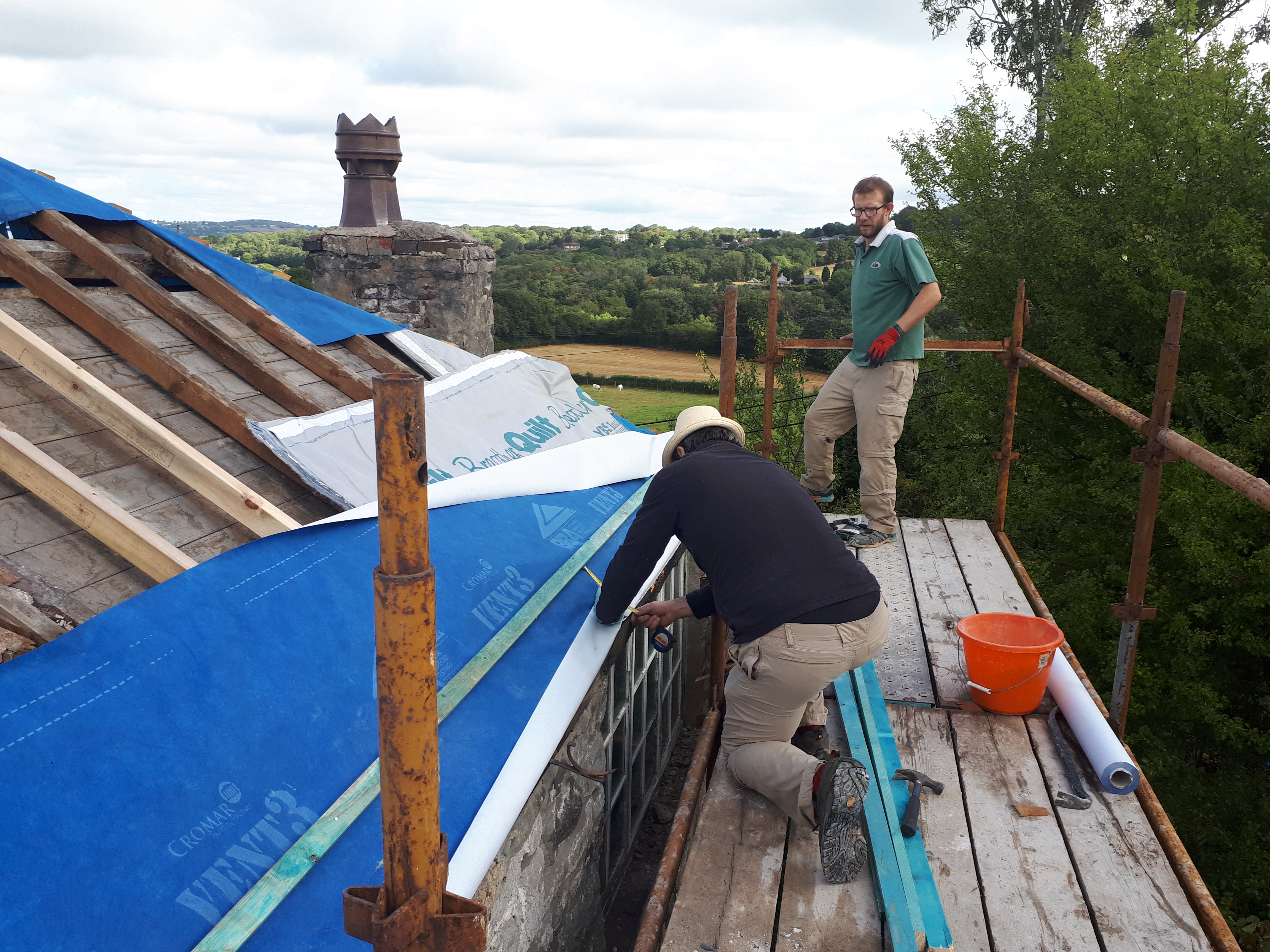
We were lucky enough to have a good deal of help on our week off, with my dad travelling up to lend a hand, and my mum and brother joining towards the end of the week. Our first job was to finish the last bit of membrane and batoning, now that the purlins were safely within the roof.
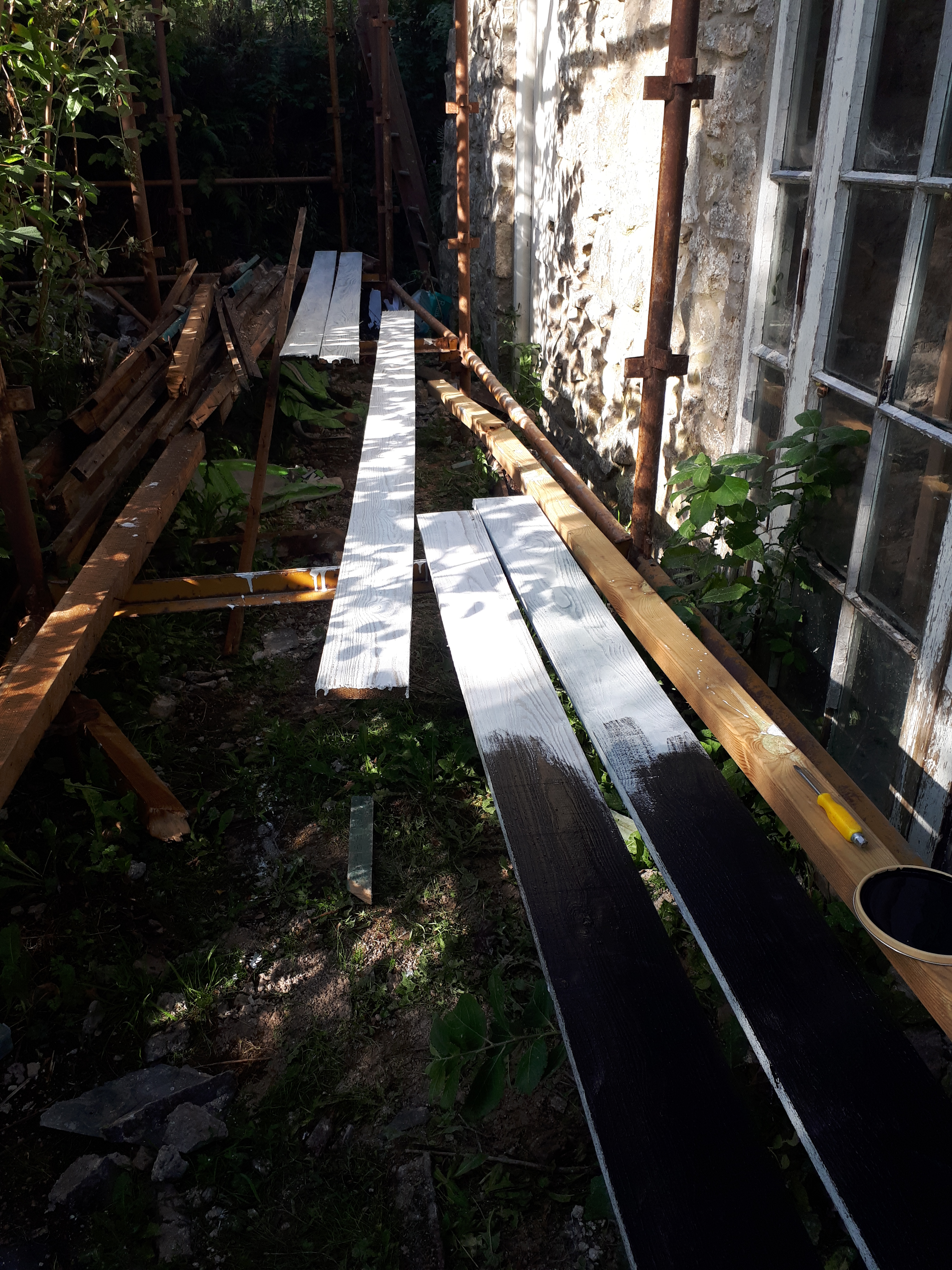
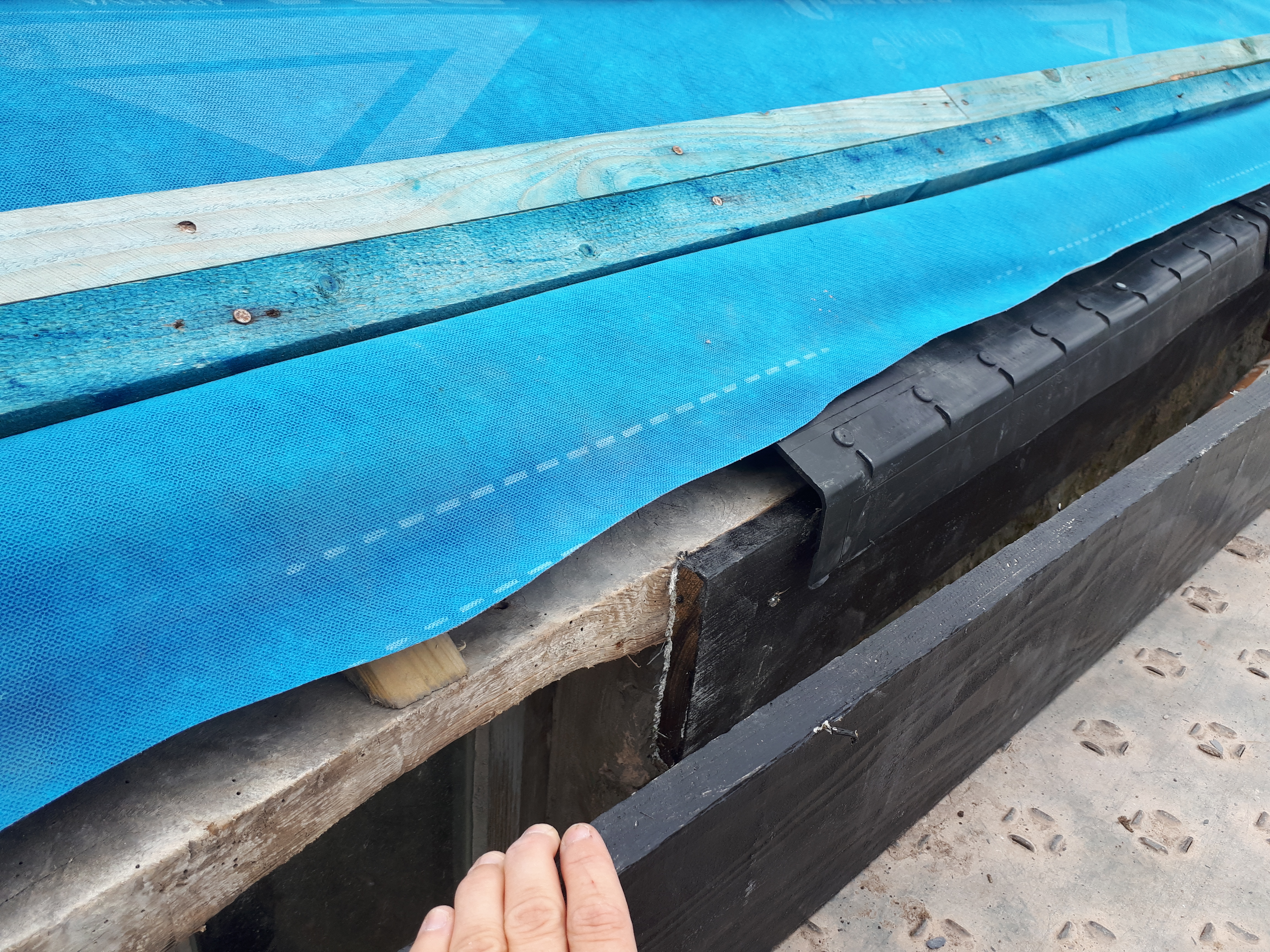
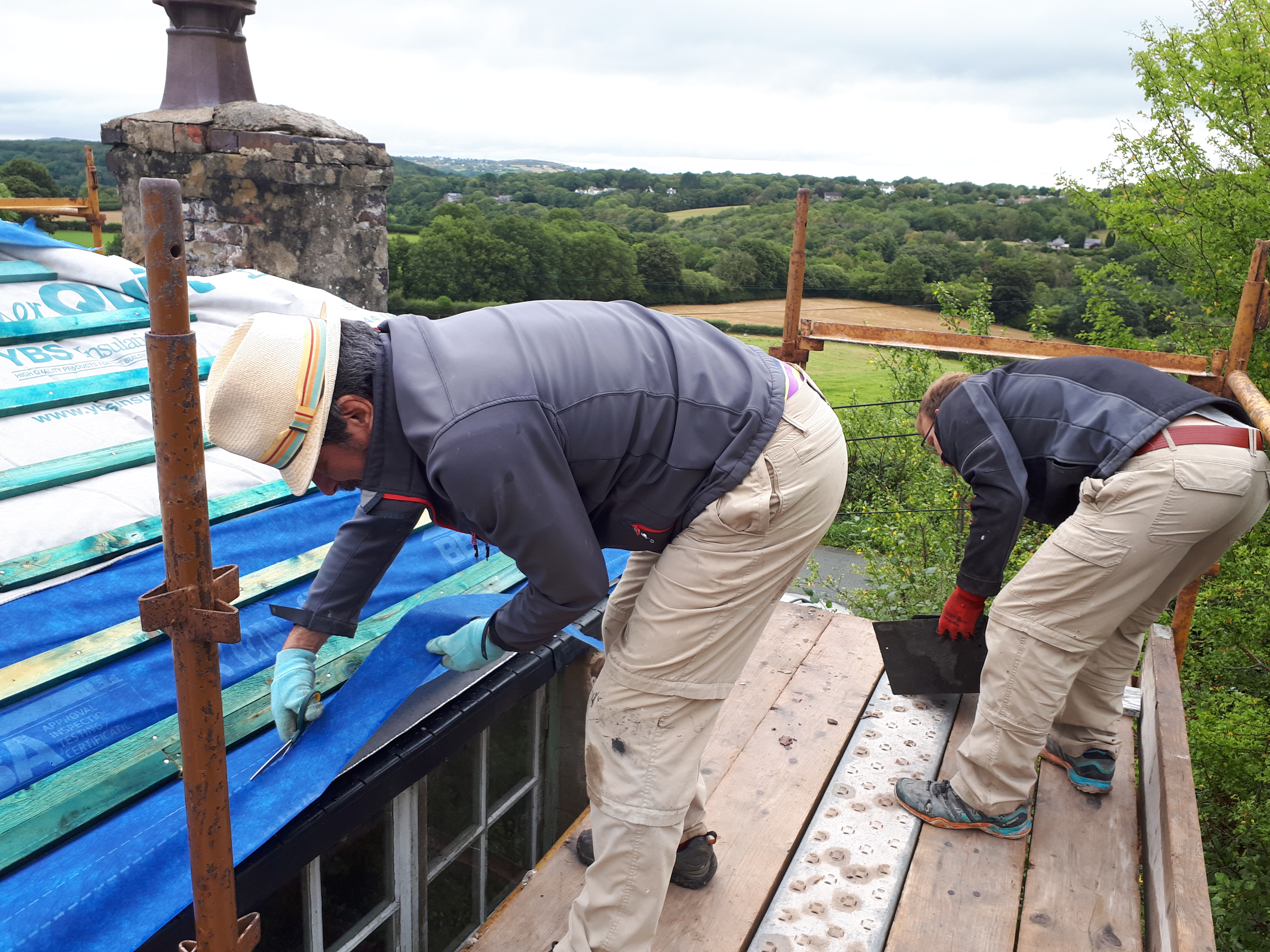
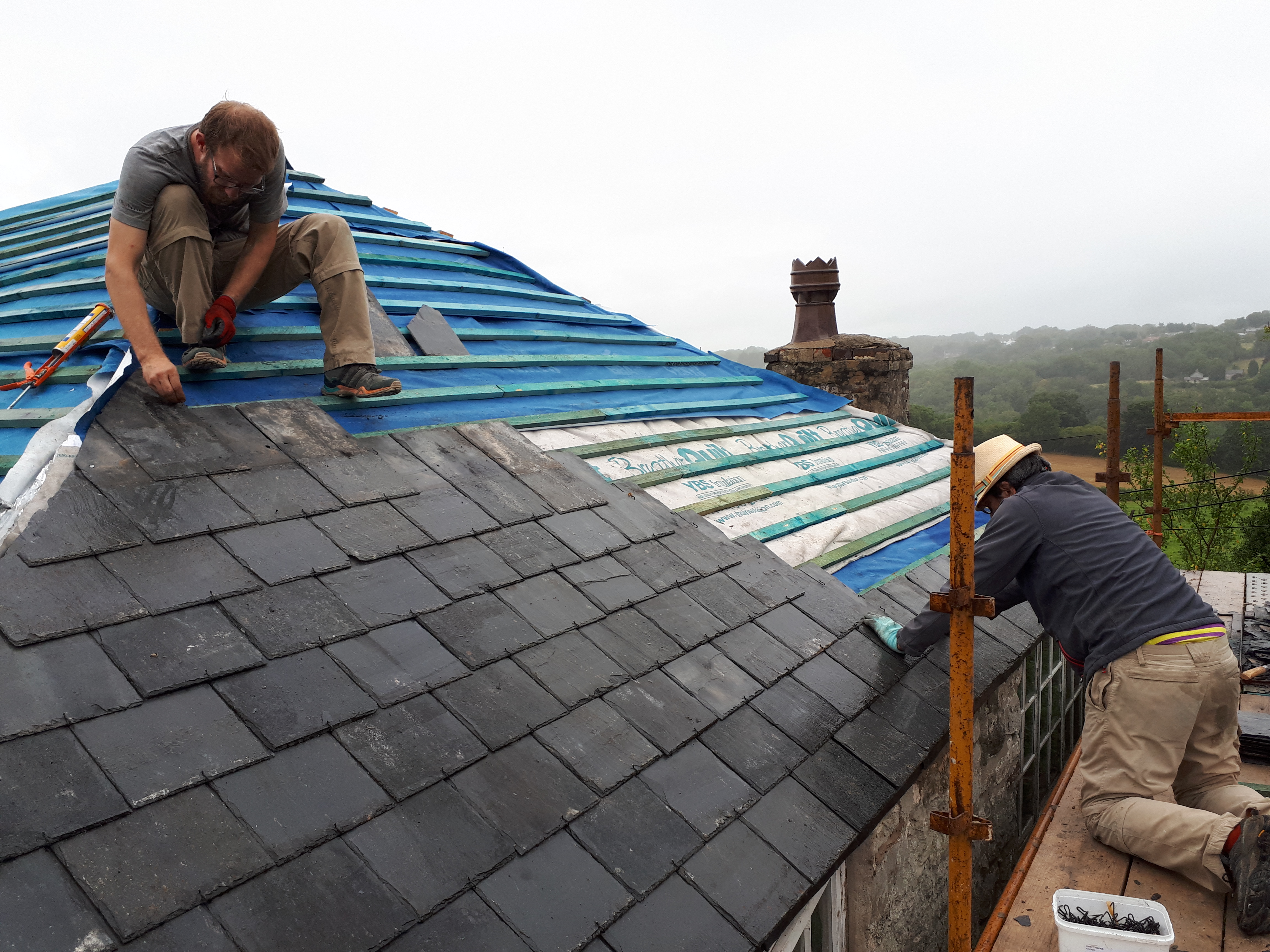
Once the batons were in place, adding the first slates had to wait till we had repaired the stonework beneath the edge of the roof, some of which was crumbling away, and painted and installed the fascia boards. We had opted for wooden fascias, which needed painting with a white undercoat and a black gloss. The fascia boards were then screwed directly onto the wooden beams, beneath the roof. Over the top of this then went a felt tray, a piece of plastic, which covers and protects the wall from water running off the slates into the guttering.
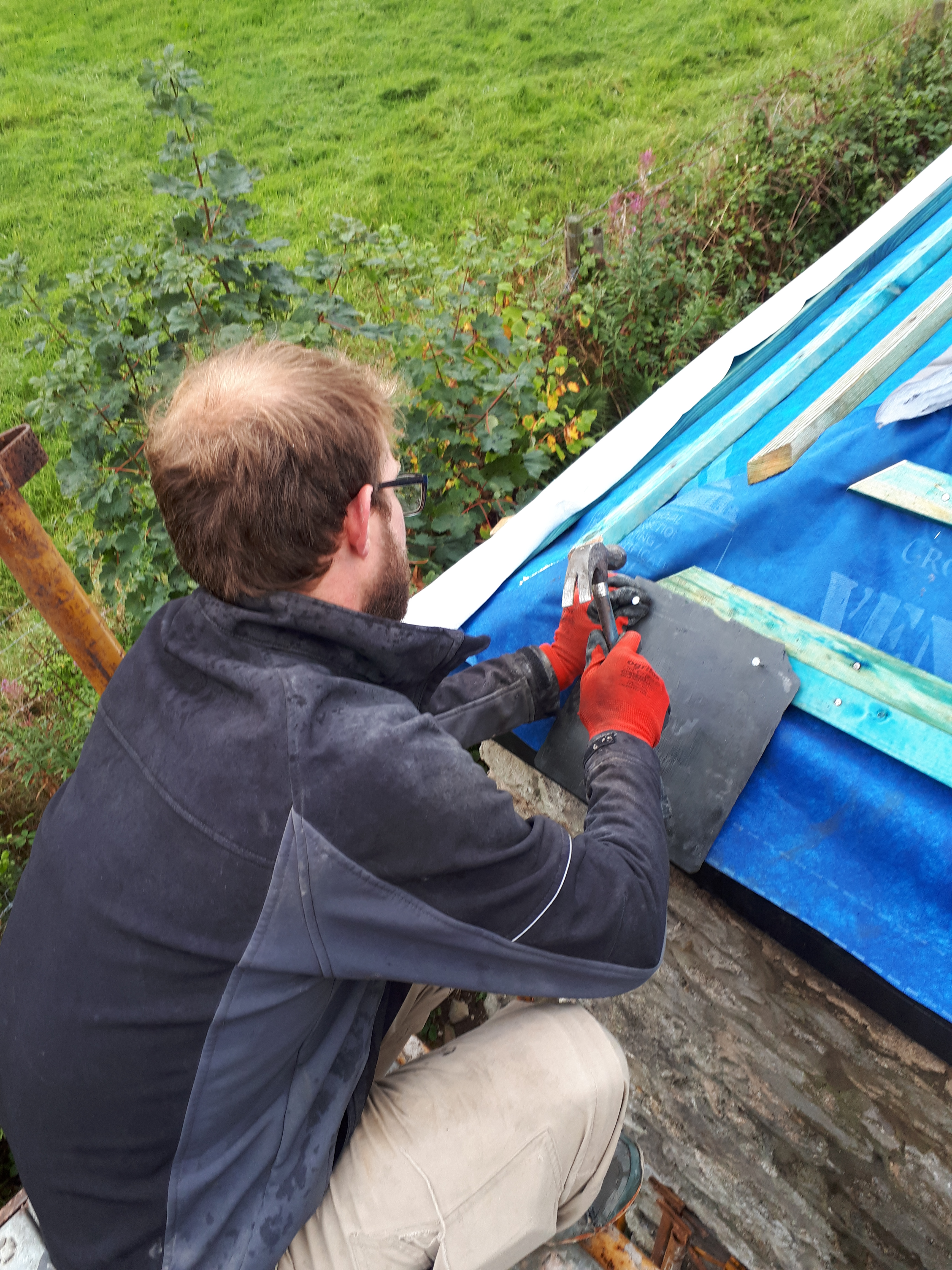
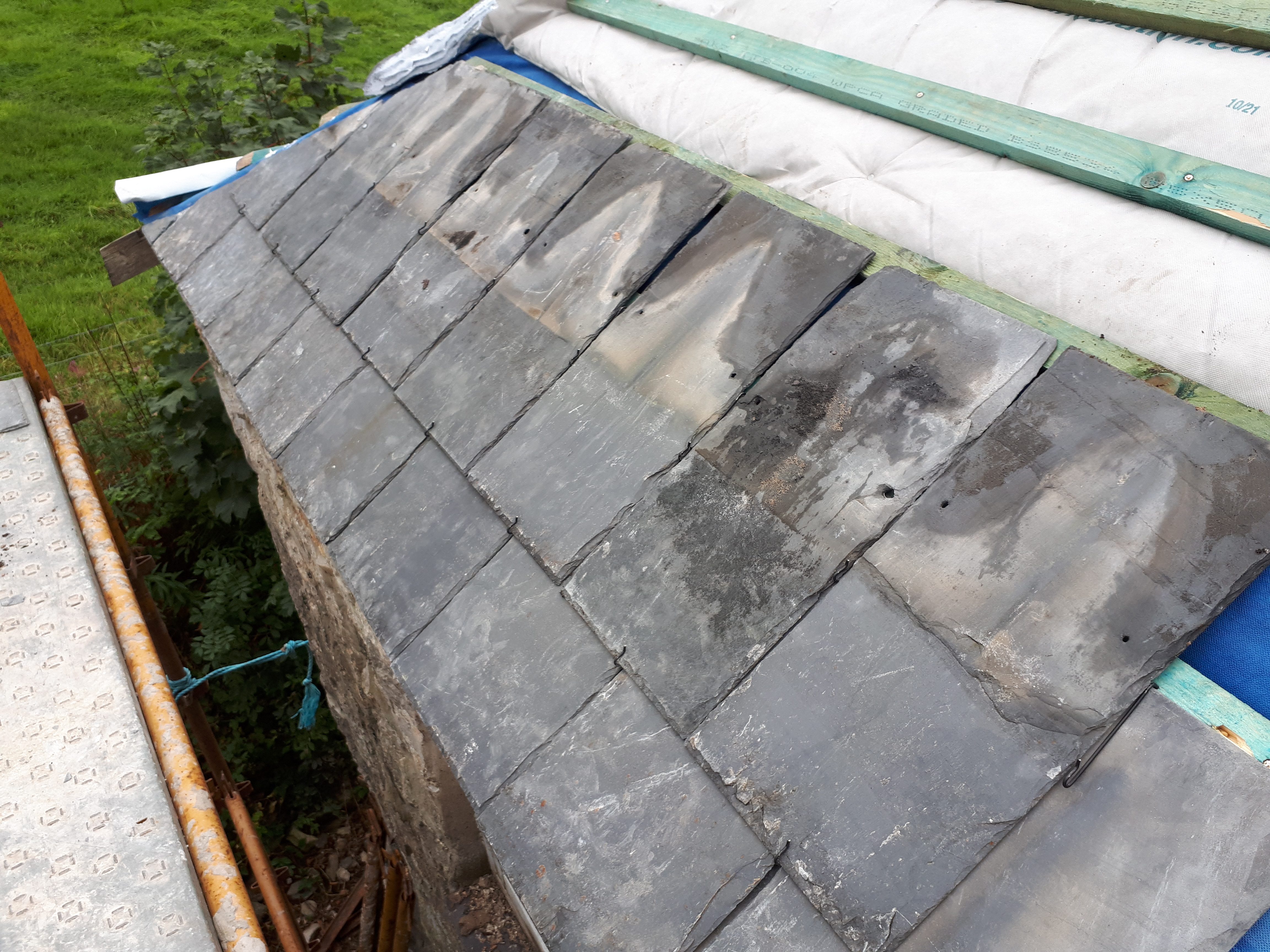
Finally, all that in place, the first slate went on. We had opted to use hooks when putting our slate back on. These hooks are nailed in beside each slate, and would then hold the slate above in place from it’s base. The advantage of hooks is that individual slates can easily be removed when they need replacing. It also means that we could reuse more of the broken slates, as we didn’t have to get nails through them. As long as any broken sections were covered by the slate above, they would be watertight.
In the interest of additional safety, however, the first two slates on the edge needed to be fixed in place with nails, as did any that were on edges elsewhere. The first slate put on is a half slate, which overlaps the edge enough to allow any water to run off into the guttering. Over the top of this, a full slate is nailed. We did have some half slates from those we had removed previously, but many of our half slates had broken, meaning we had to cut more from broken whole slates. For cutting slates we used the edge of a section of scaffolding, and the back of a billhook. Placing the slate on the edge of the scaffolding, along the line we wanted to break, we carefully hit along that line with the back of the billhook. This was time-consuming and slightly back-breaking work, which often ended in a broken slates that could no longer be used, but it was necessary to make the best use of the slates we had.
The same technique had to be used to break slates for the edges of the roof, where the slope meant we had to break each slate individually to get the right shape to fill the gap. It was this that made the first side slow work, as there were relatively high amounts of slates that needed shaping.
Halfway through our second-day rain set in. While working high up on scaffolding in the rain isn’t entirely comfortable, it was incredibly rewarding to watch the rain pearl off the slate and run down from one to the other, until eventually, it dropped away into the void where the guttering would one day sit.
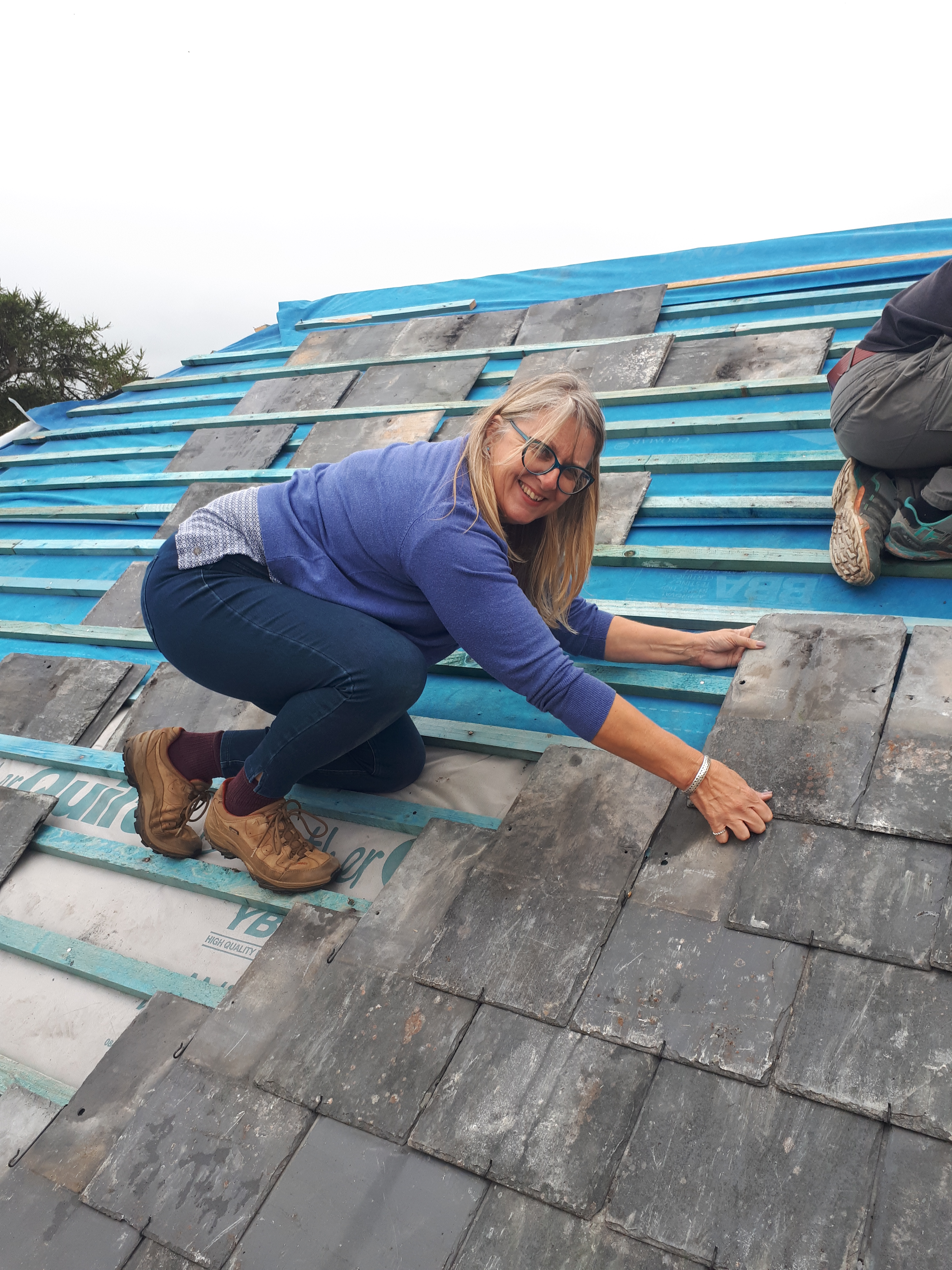
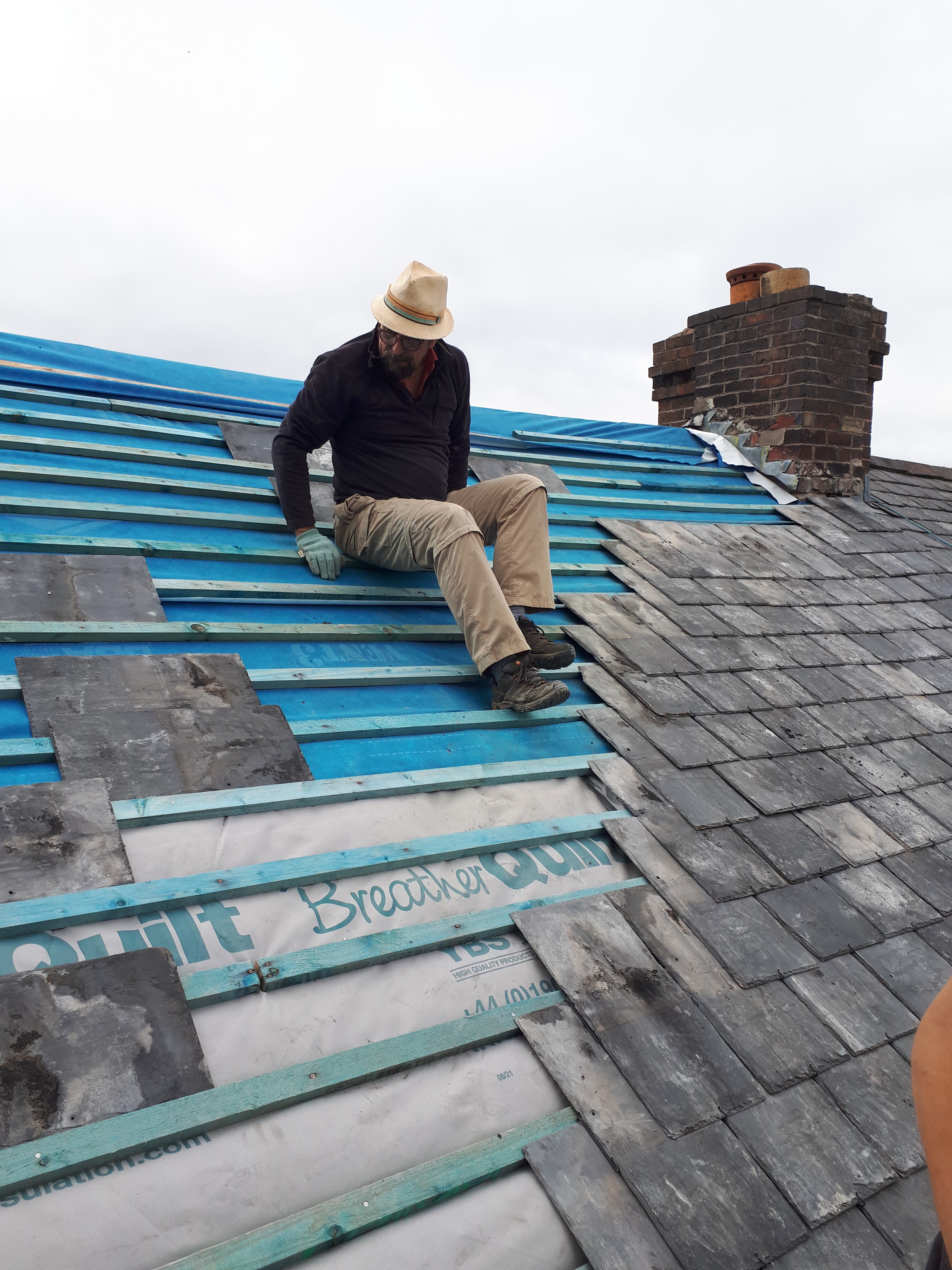

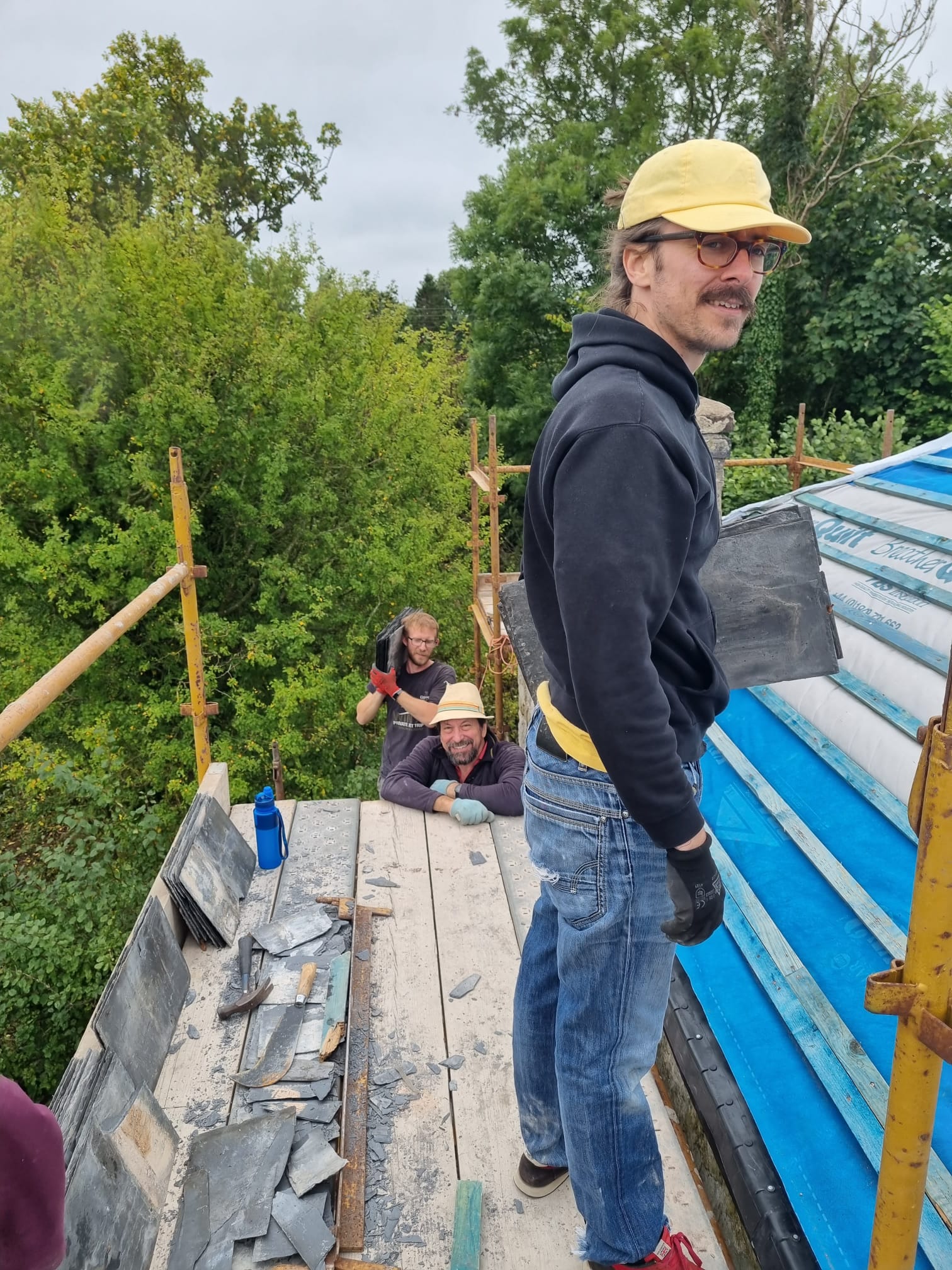
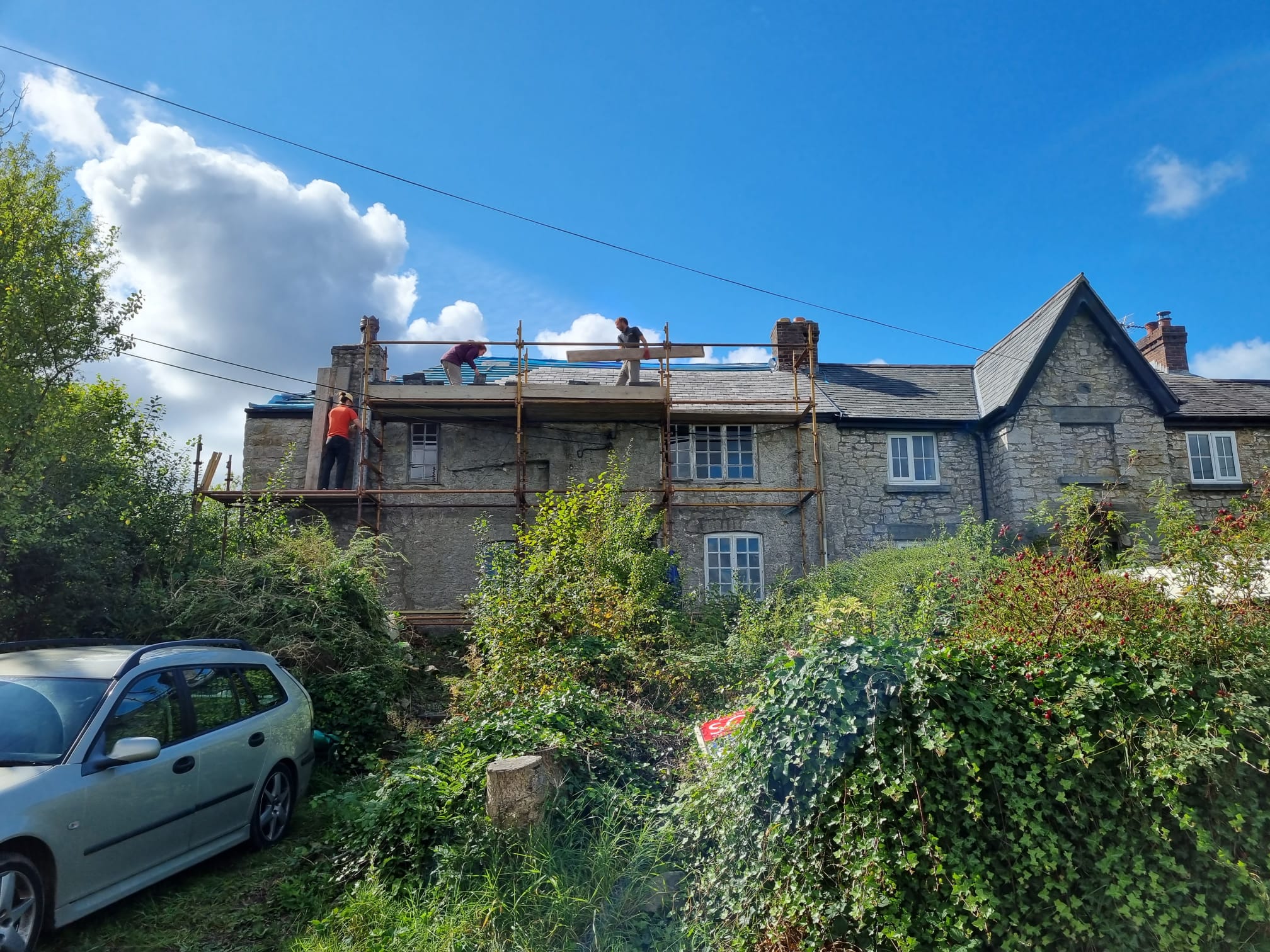
It was part way through the second side, at the front of the house, that the cavalry arrived. By now we felt like roofing experts, with each new section simply being a repeat of the last. The front of the house had the additional benefit of having large sections where no cutting was required. We utilised the extra energy to carry slates up from below, and place them on the roof, ready to go on, significantly speeding things up.
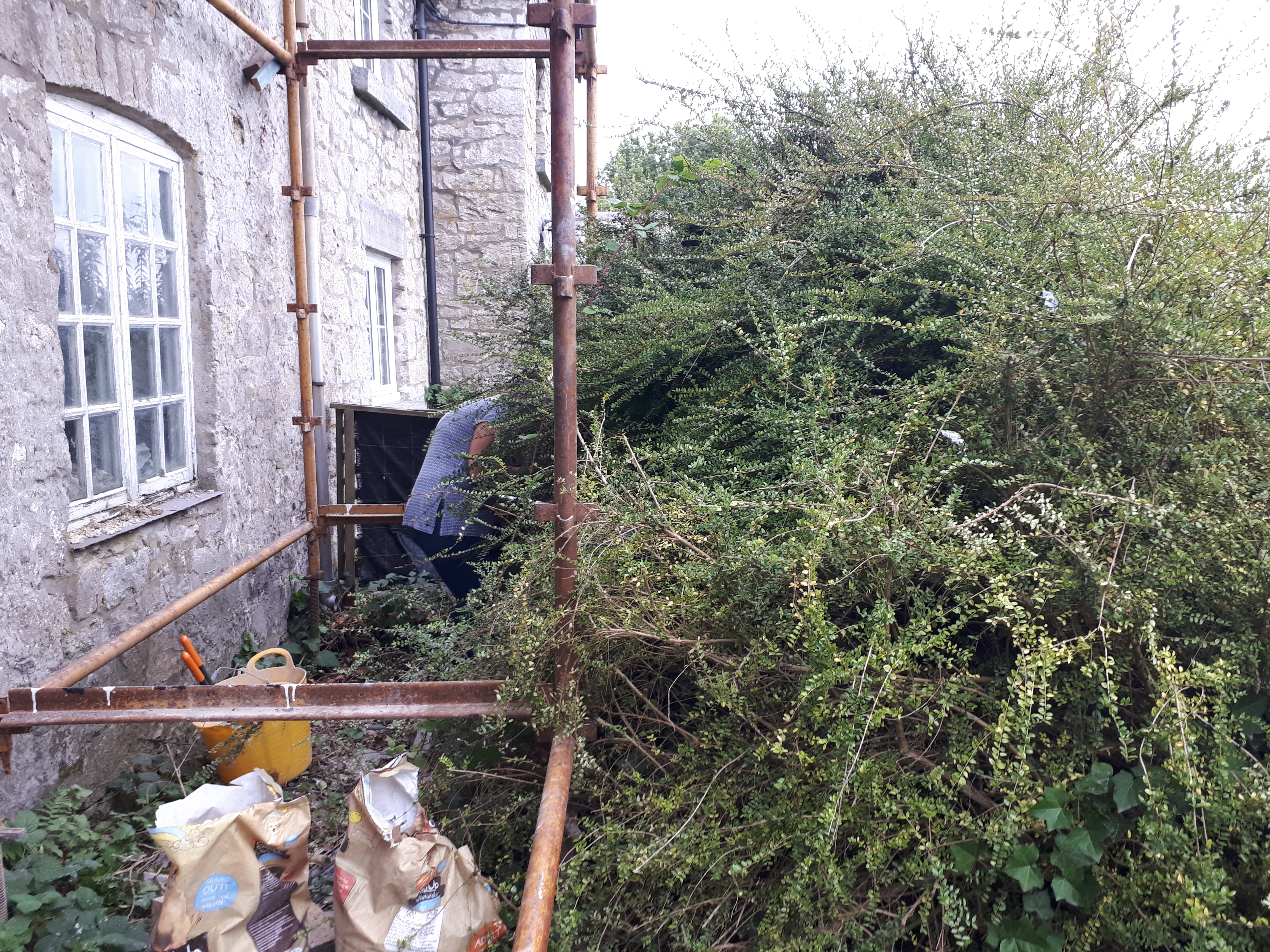
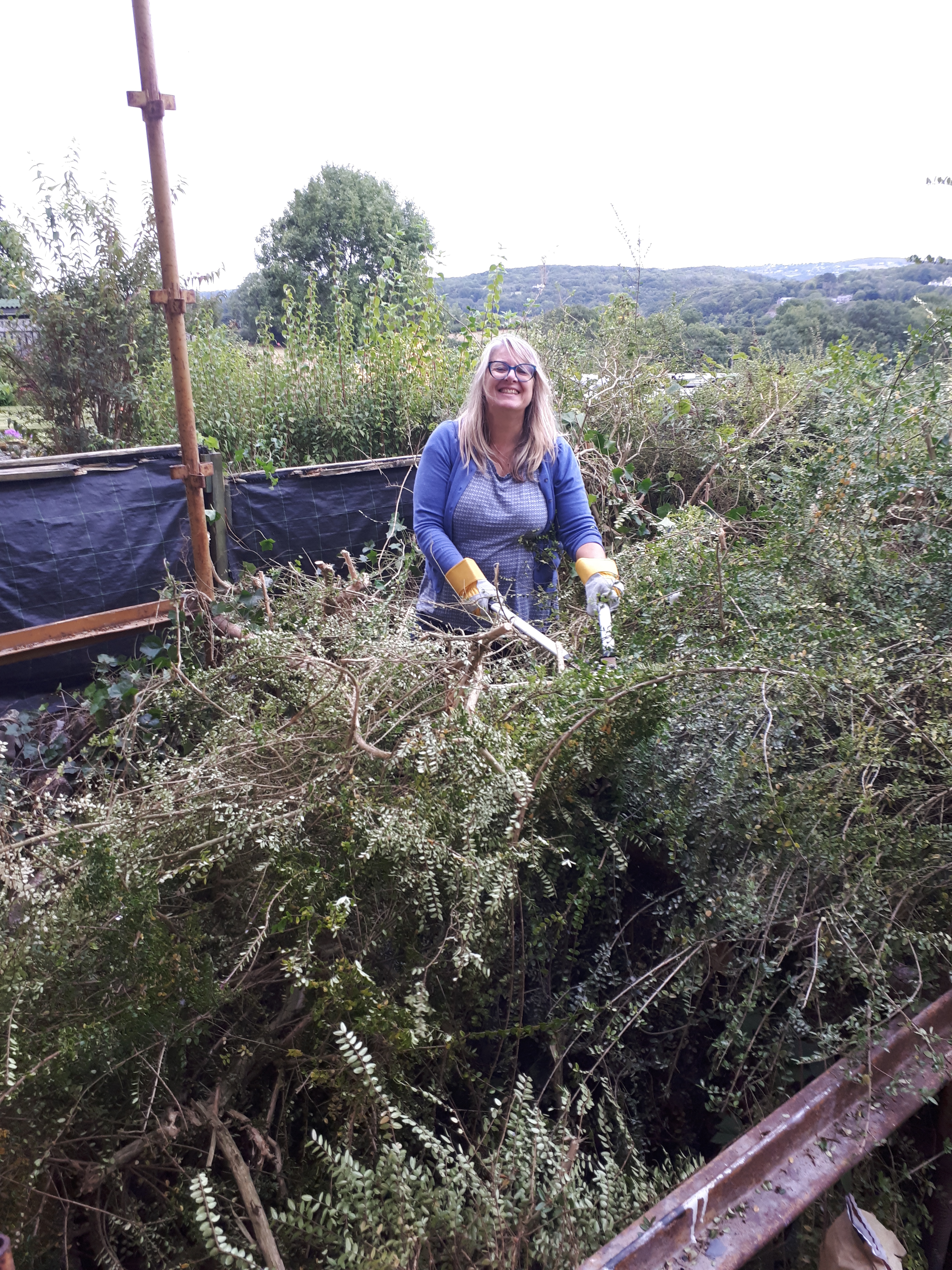
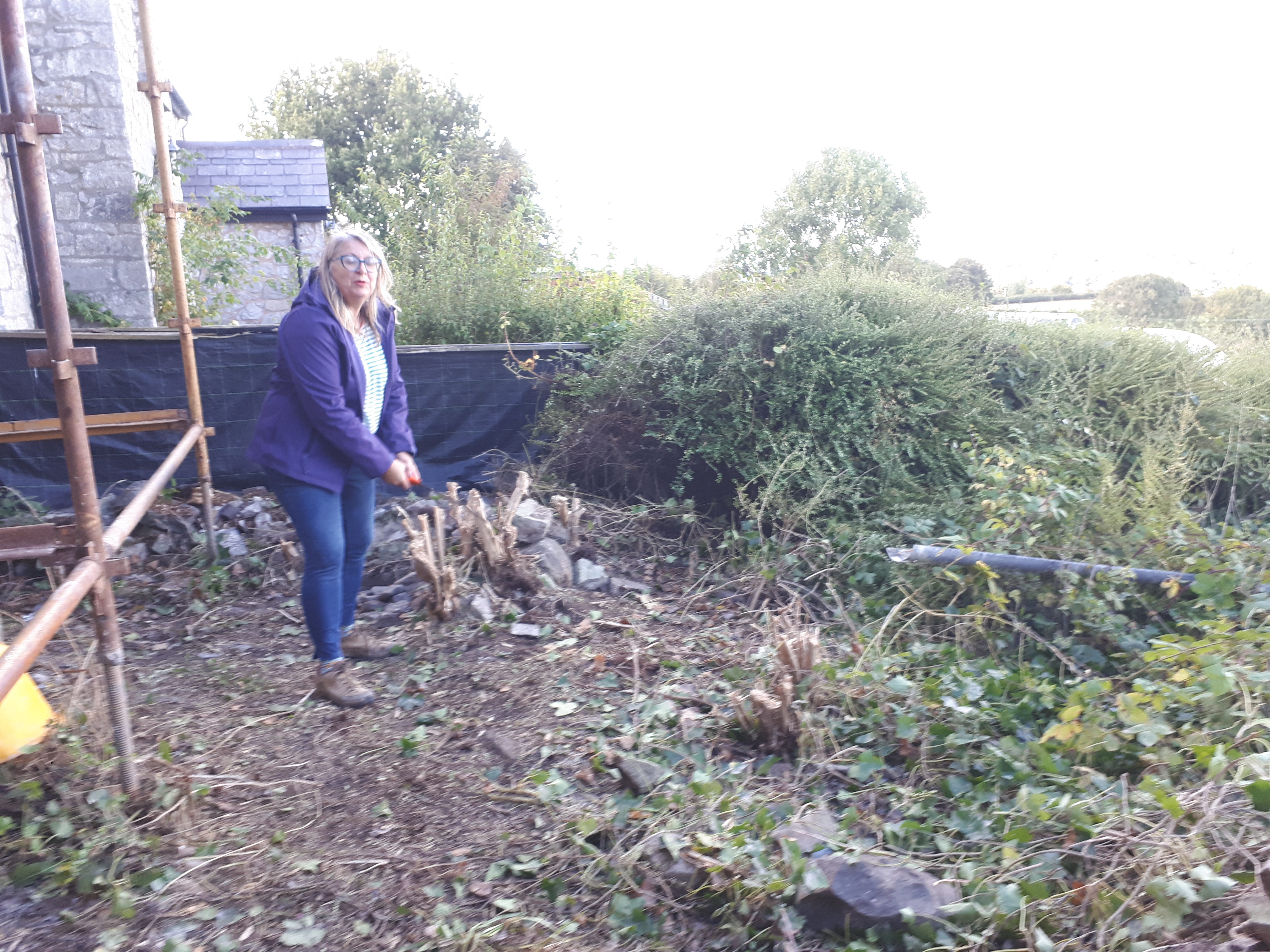
While myself, Chris, my brother Tom and my dad, carried on the work on the roof, my mum set to work on a very large and overgrown box that was blocking out the light from the lounge window. Once, this box was apparently part of a manicured hedge, but having been left to grow wild, it had become rather a beast. The dense and tangled bush didn’t give up easy, and it took mum several days to get right through and clear away enough that, for the first time since we brought the house, we could see a view from our lounge window.
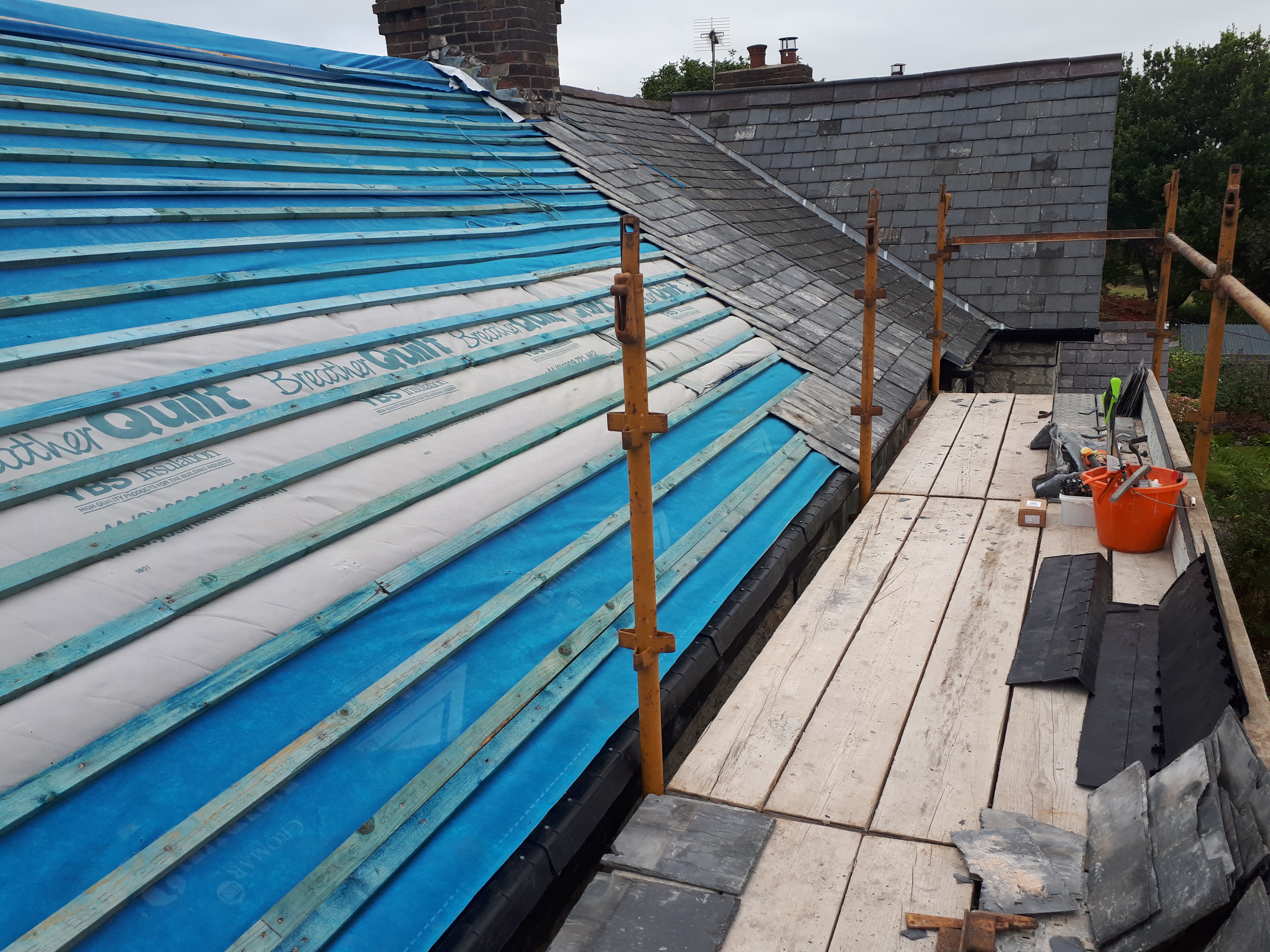
Up on the roof life continued, one slate at a time. Having finished around half the front we began to start preparations on the back, Chris being concerned that we shouldn’t overload one side with slates while the other way bare. In order to set up enough scaffolding at the back we had to take down and move the scaffolding at the side of the house, as well as some at the front.
To rid us of yet another load of rubble, garden waste and broken slate, we ordered another skip. With this ready to be filled my mum and brother set about trying to tidy up the inside of the house as best they could, once more full of rubble and dust.

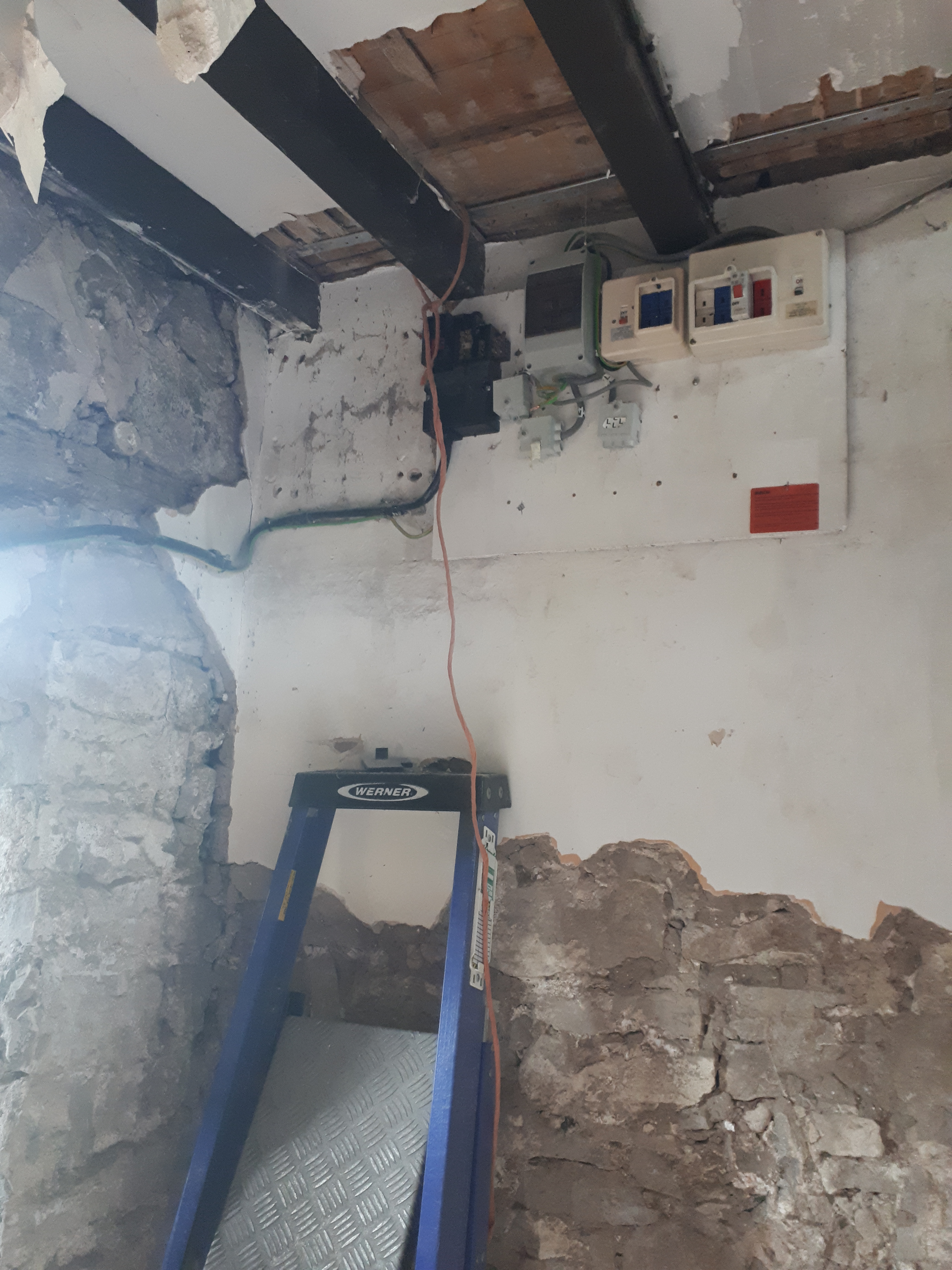
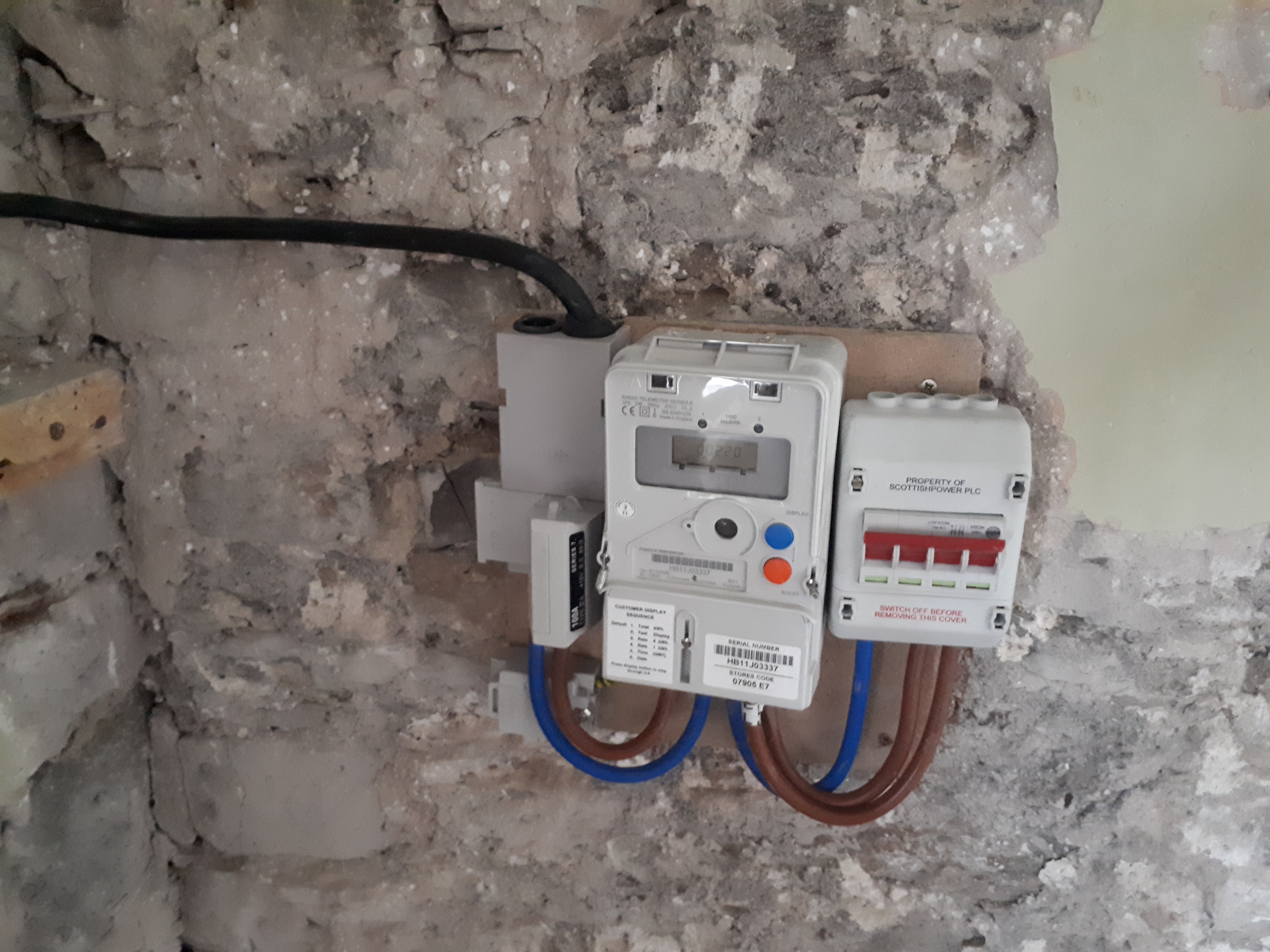
While all this was happening we had a visit from ScottishPower. When we moved in we had gotten in contact with ScottishPower as the mains electricity cable was brought in to the house through the door frame. While this used to be standard practice, today it is considered unsafe, and we had been told electricity companies will move this for free. Having been in touch with ScottishPower three times, being told the first few times they would not do it and we should pay a private electrician (for which we were quoted around £1K), finally our third attempt reached someone who better understood the companies obligations. Already working within the area, the engineers decided to drop in to redirect the cable through our walls. In order to tidy things up Chris also requested that the unit be moved upstairs, where it would be hidden at the back of a future built-in wardrobe, something they were happy to do.
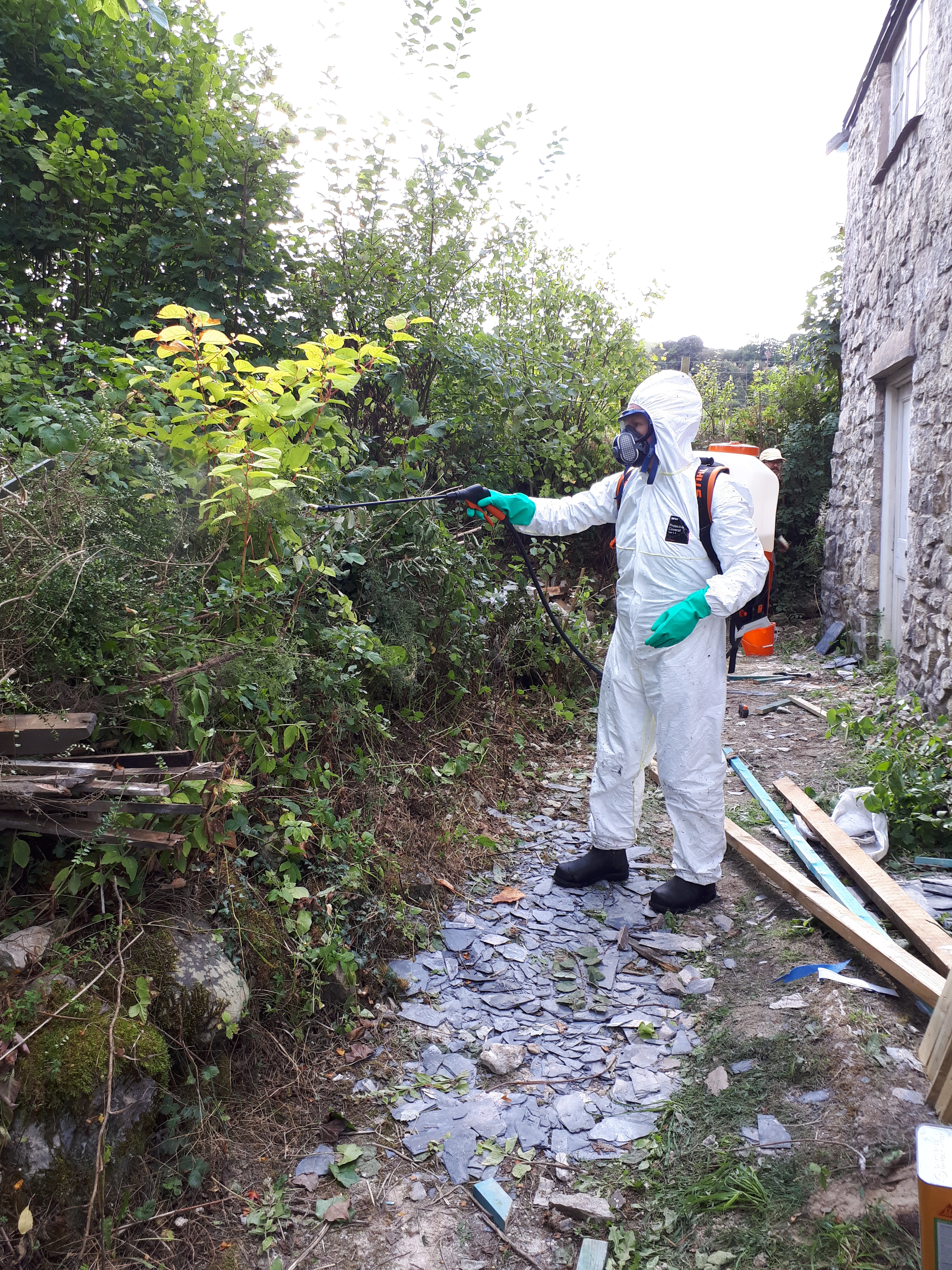
Another handy visit came from the North Wales Wildlife Trust. Having previously worked with this local conservation charity, we were aware they had a project to tackle invasive species in our area. Getting in contact, we asked if they would come and treat the Japanese knotweed in our garden, which they agreed to do. While both myself and Chris have the licenses to treat this invasive plant, we didn’t have the equipment, and didn’t think it made sense to buy a whole bottle of herbicide when we only needed to treat five small plants. As a thank you, we donated some money to the charity, who will return next year for a second treatment.

With mum and Tom gone, myself, dad and Chris continued with the roof. Although tricky corners and odd angles around chimneys, made some sections more difficult than others, it was pretty much more of the same. By the end of the week we had two sides completely done (aside from a few slate down one edge) and the back half covered. However, sadly we had run out of slates. This was to be expected given the number that had broken when removing them, and the many more we had broken when putting them back on. Having collected 200 more off a home renovator on marketplace, we quickly realised we would probably need another 400 to finished.
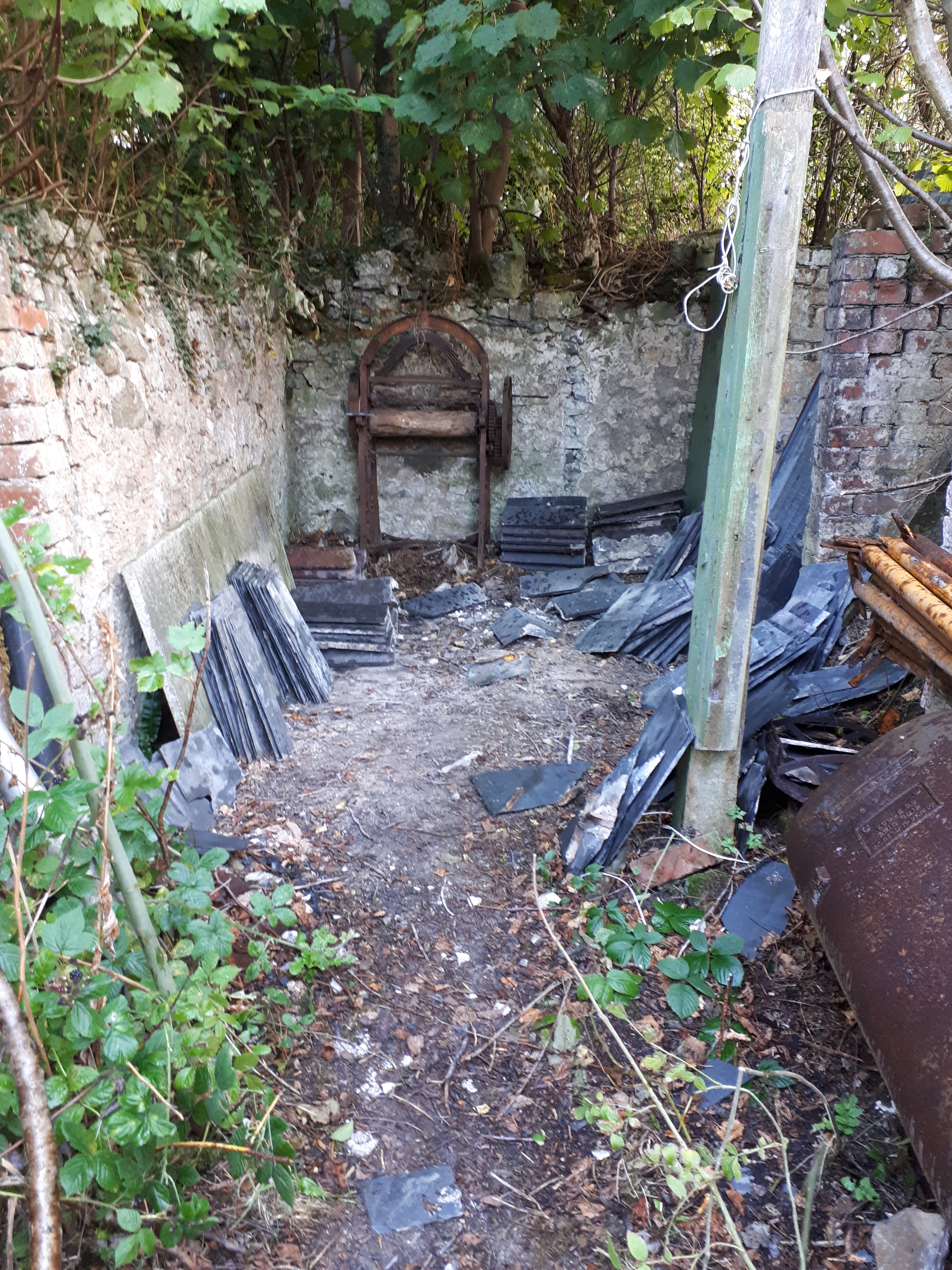
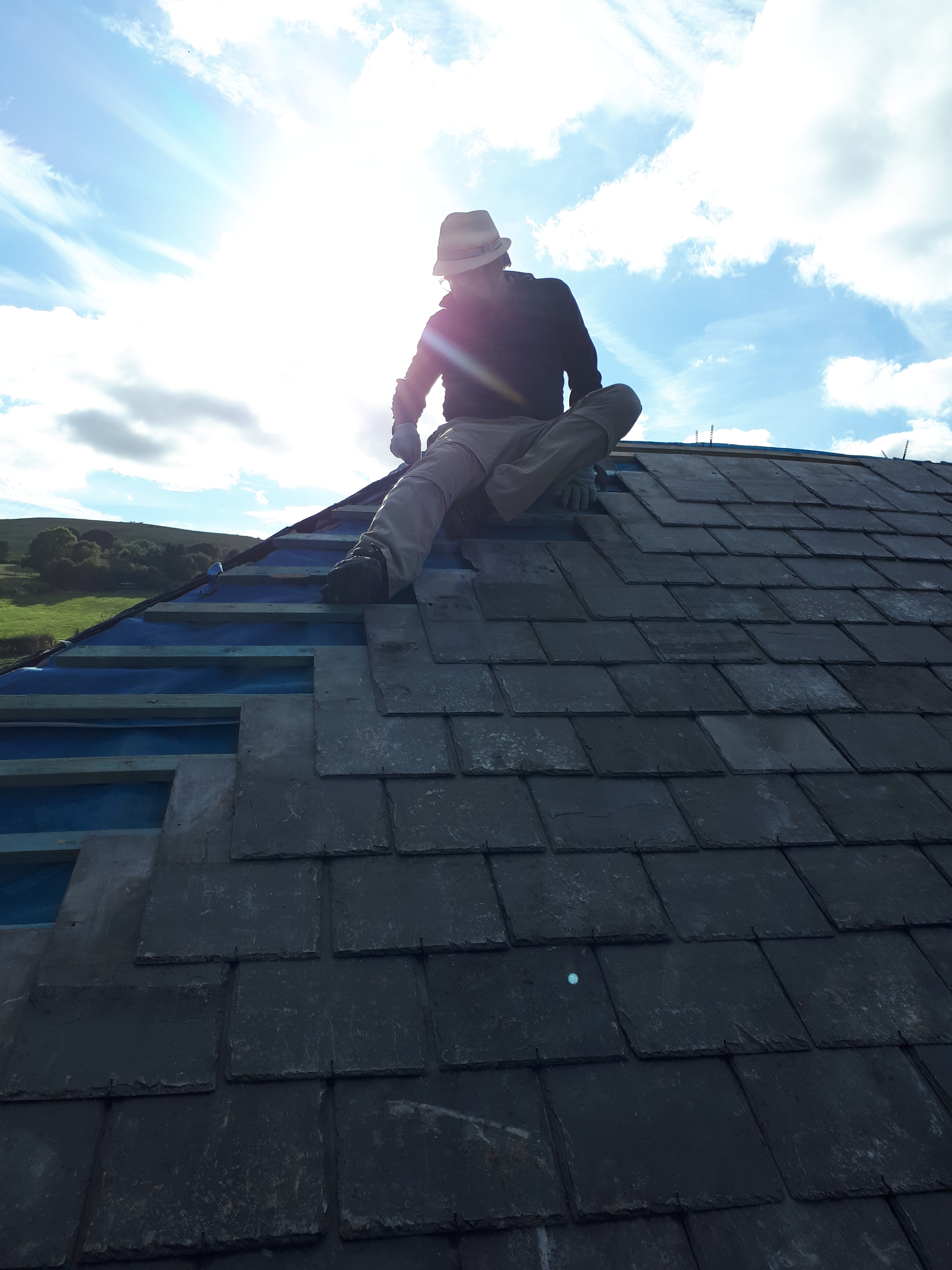
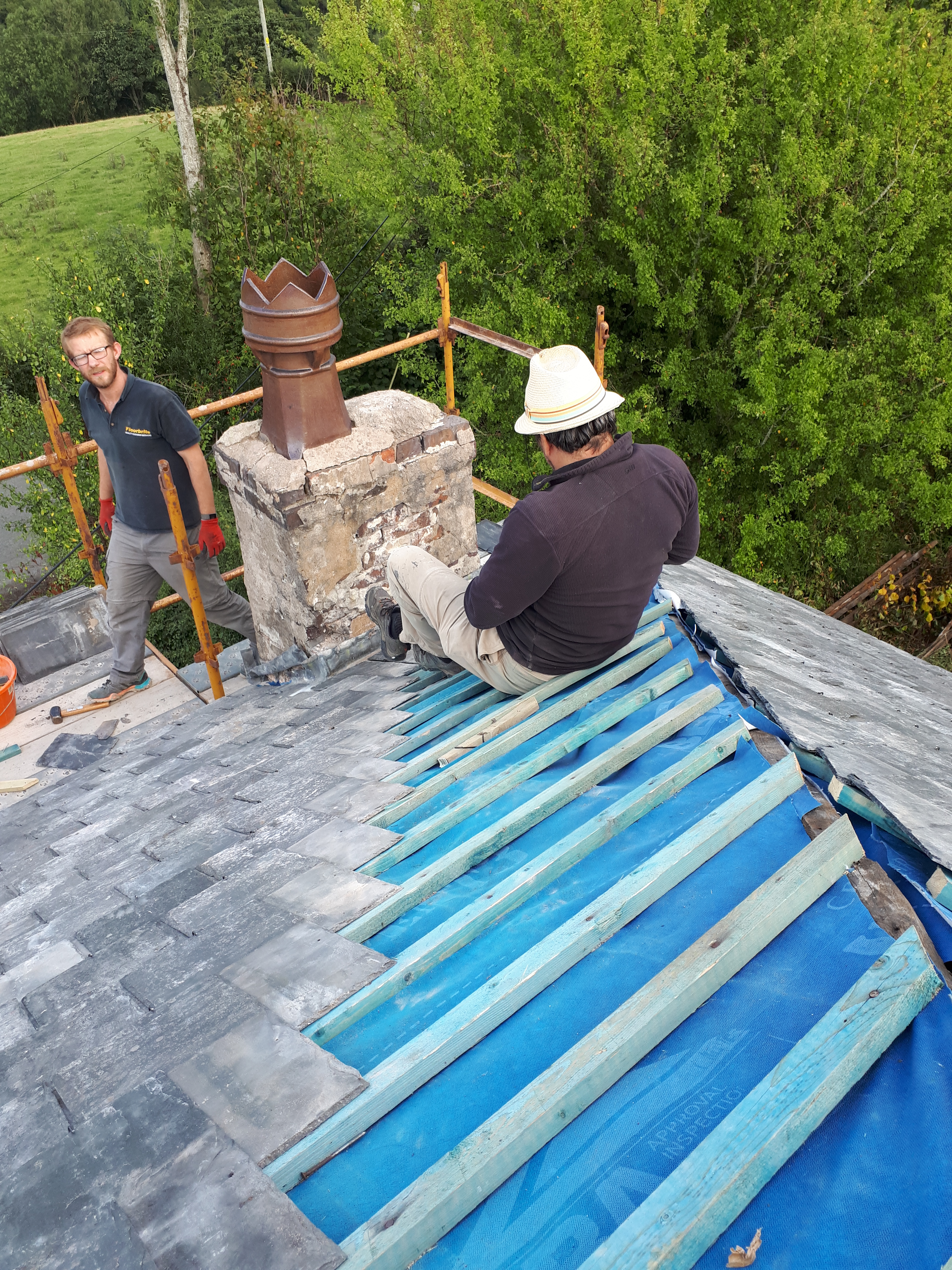
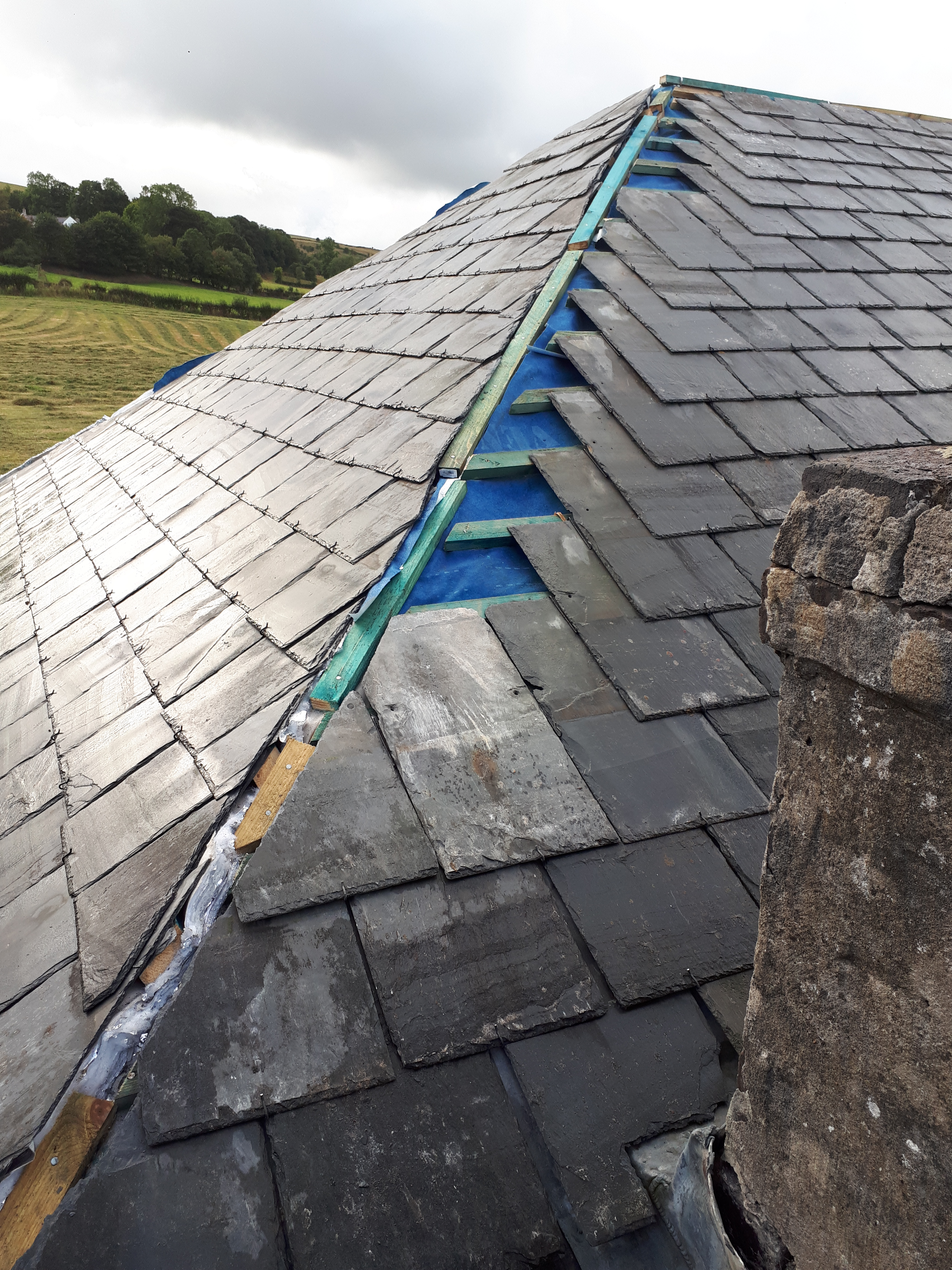
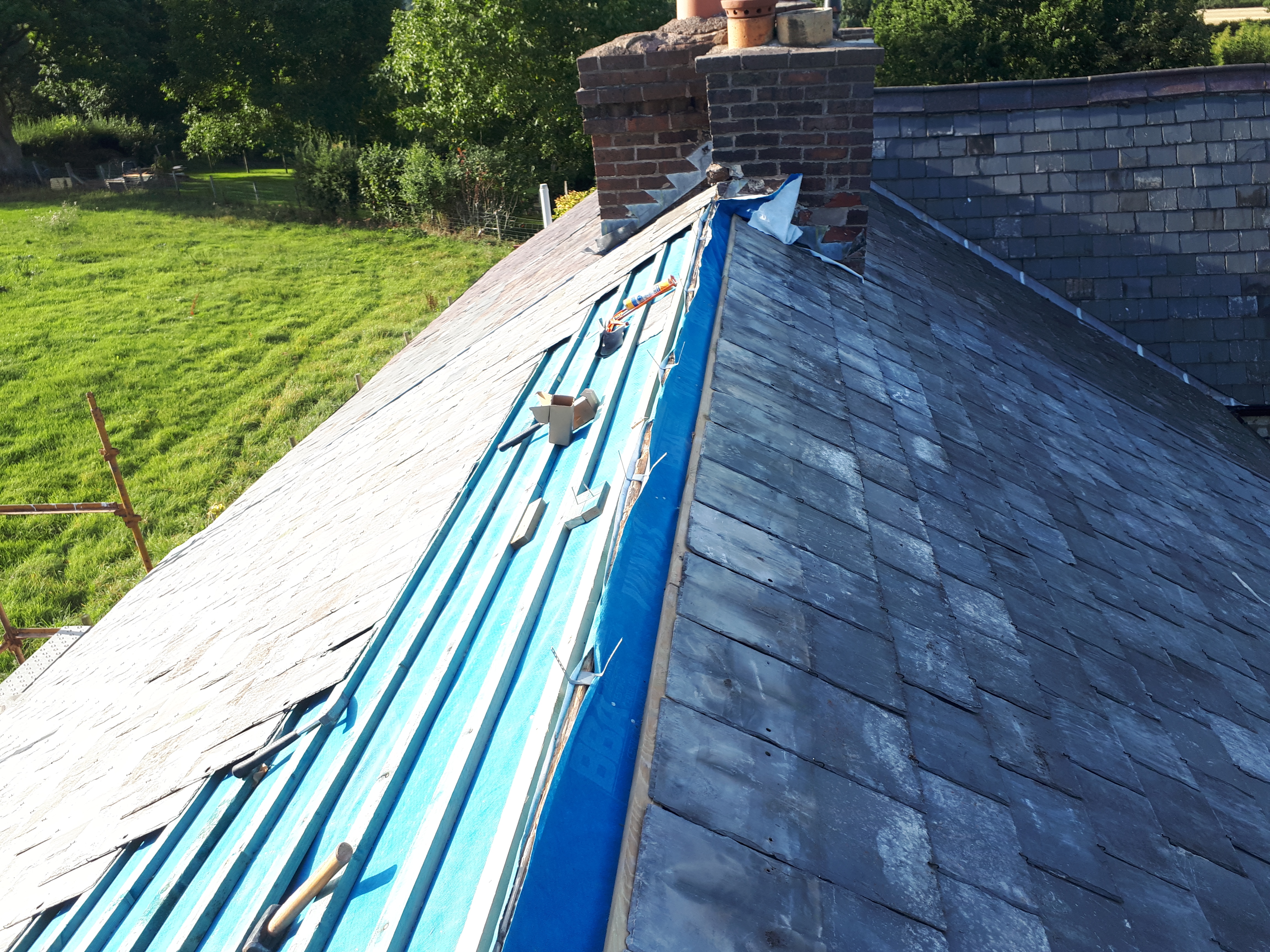
So now, with our 9 days done, we are a great deal closer to having a roof, and a much straighter roof at that, but we, unfortunately, aren’t finished yet. Our next job will be to find someone locally selling second-hand slates, the same size and colour as our roof, and then on our next weekend, it’s back to roofing. But it’s certainly true we never would have managed all we did this week without the kind help of my family, so a big thank you to my mum and dad and my brother Tom.
 Ruined
Leave a comment