It’s roof week! During our initial estimates of how much work the house might require, Chris felt replacing the roof might well be an unavoidable job. Yet, it wasn’t until we had had a better poke around and gotten the advice of a structural engineer that we knew that the slight dip in the roof was due to a cracked purlin (the wooden beams that hold up the rafters). With this news, the optional roofing job became a necessity.
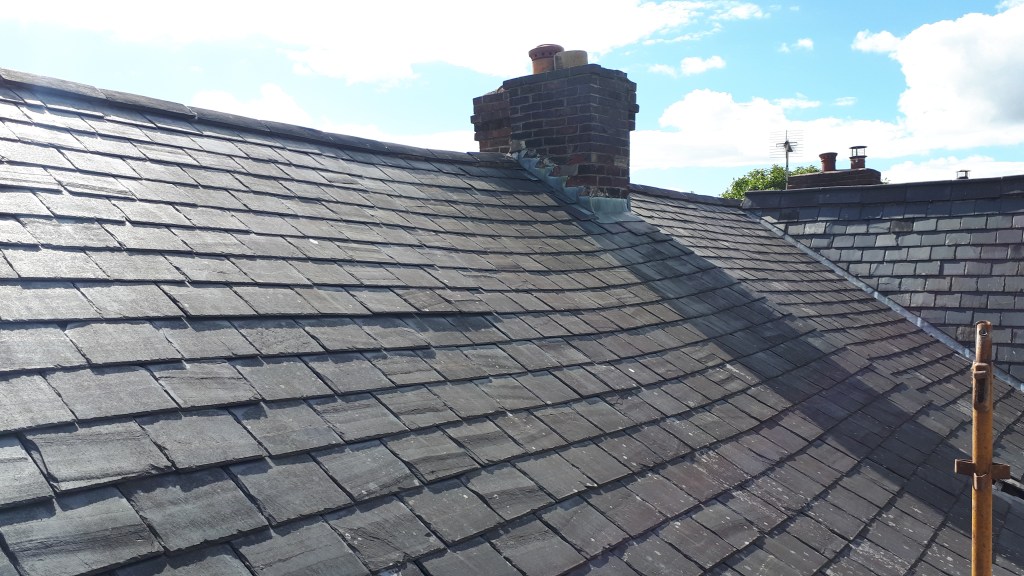
Replacing a purlin isn’t an easy job, meaning striping the entire roof, in order to remove the weight pressing down on it. Having poked around in the loft, Chris also felt we needed to replace a fair few of the rafters while we were there. All this added to one big job. So, we booked a week off work, hoping we could at a good chunk of the work done in our nine-day break.
Yet, after weeks of planning, it has to be said, our roof week did not start well. Various family members and friends had offered a helping hand throughout the week, much appreciated on such a big job, to the point where we were expecting five people some days. However, as the first day loomed we had two down with covid, and two taken away by other commitments. And, as if to continue the theme, the structural engineer we hired to tell us the size of purlin required also got covid….
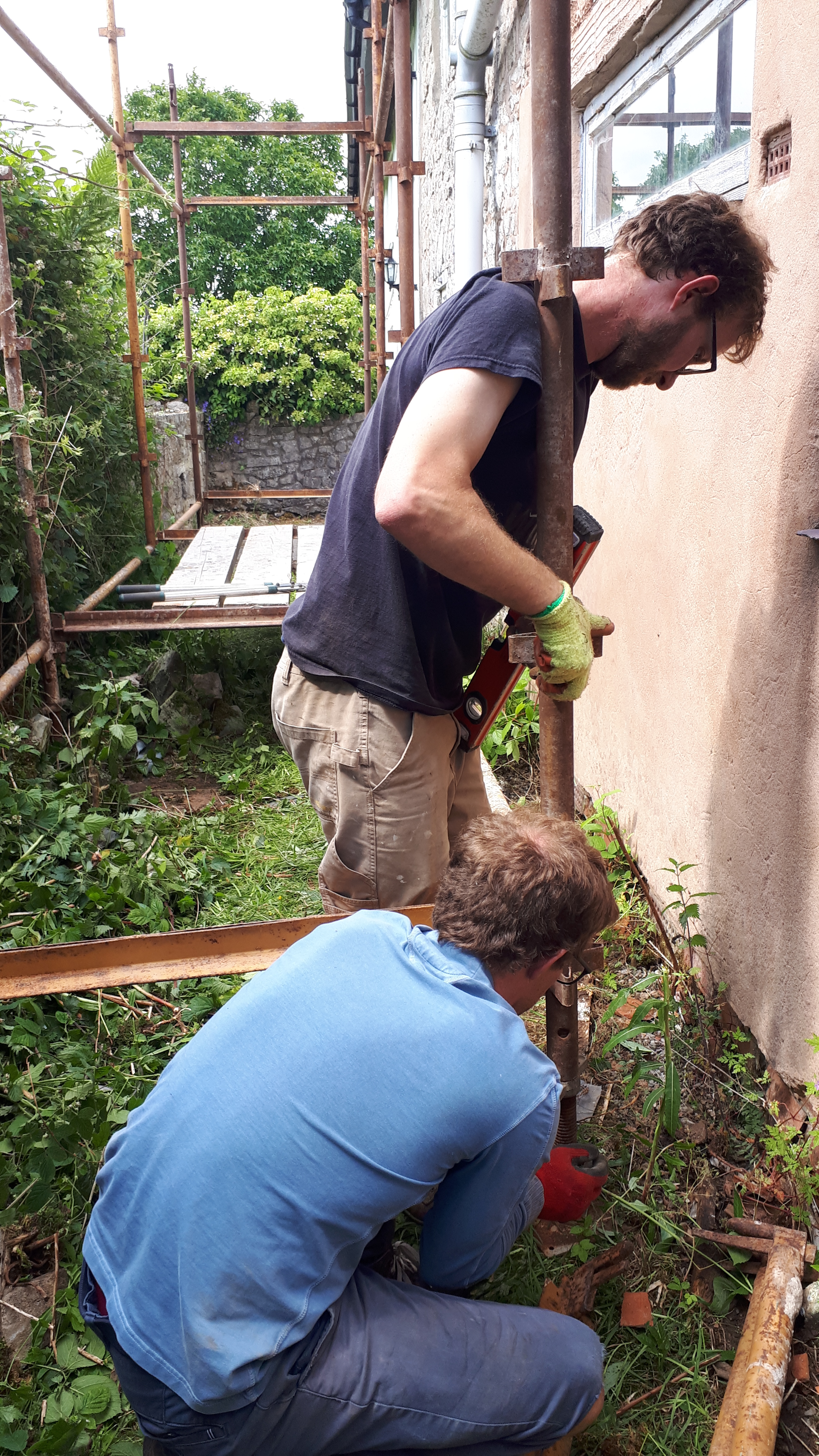
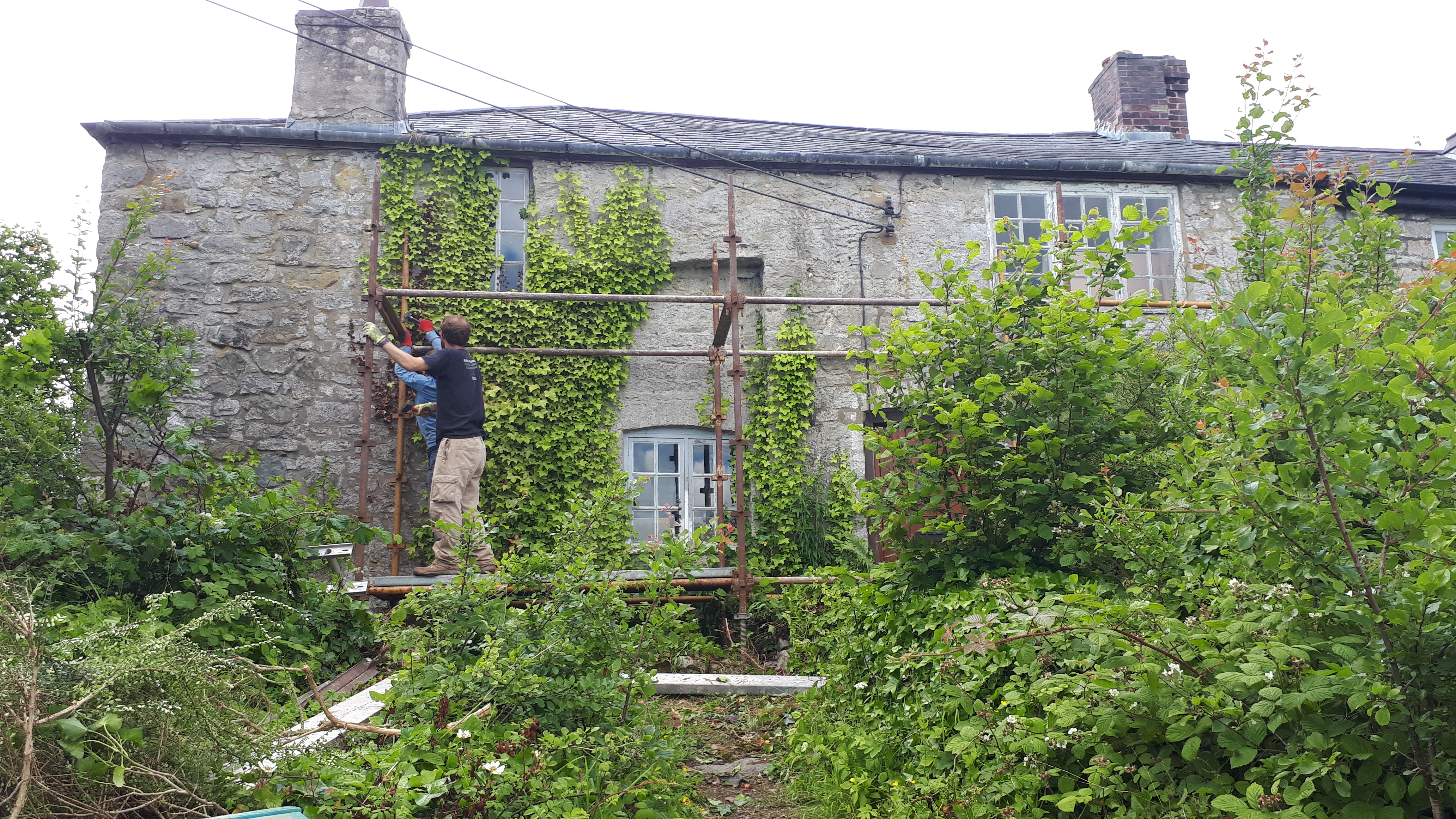
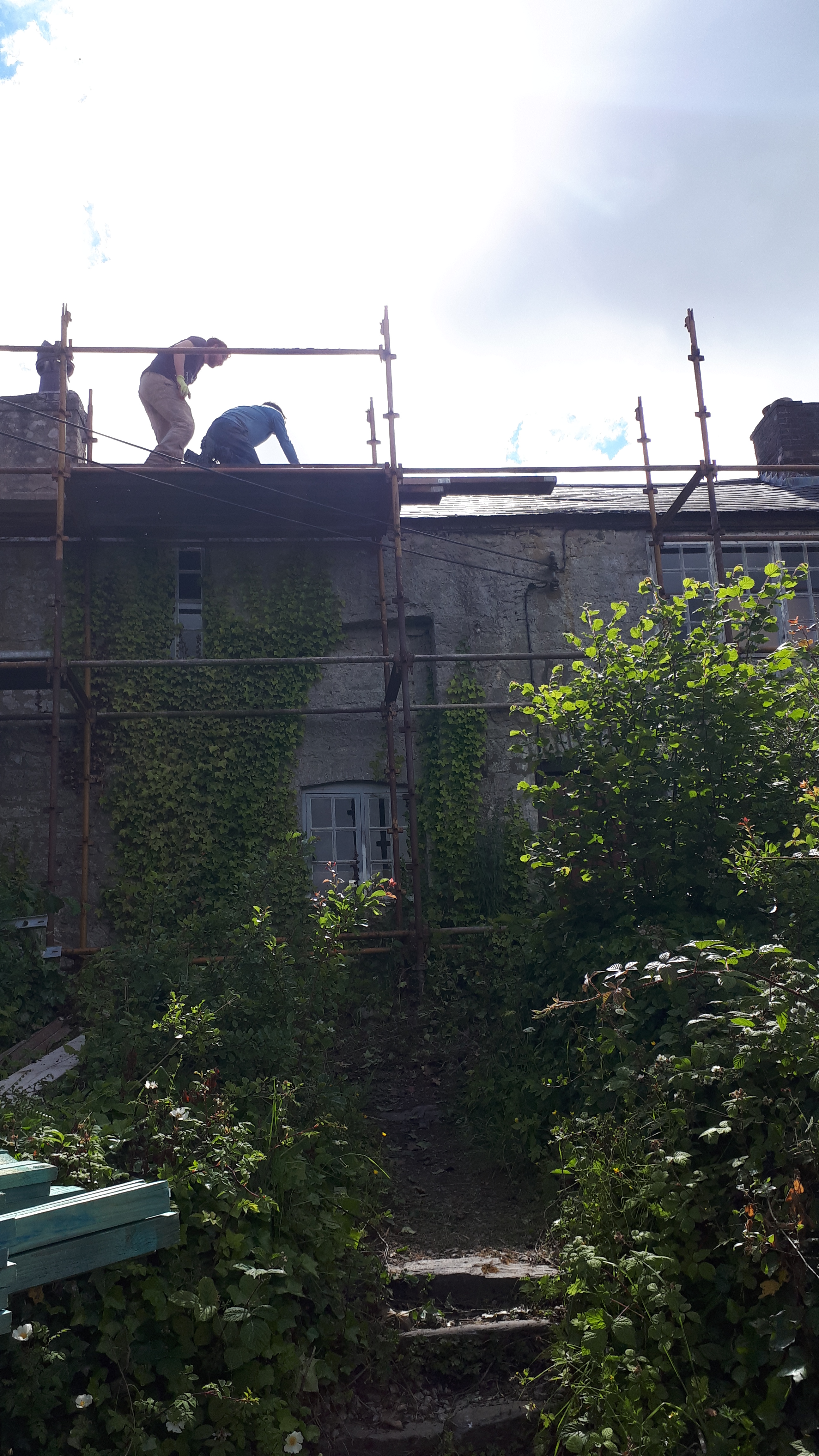
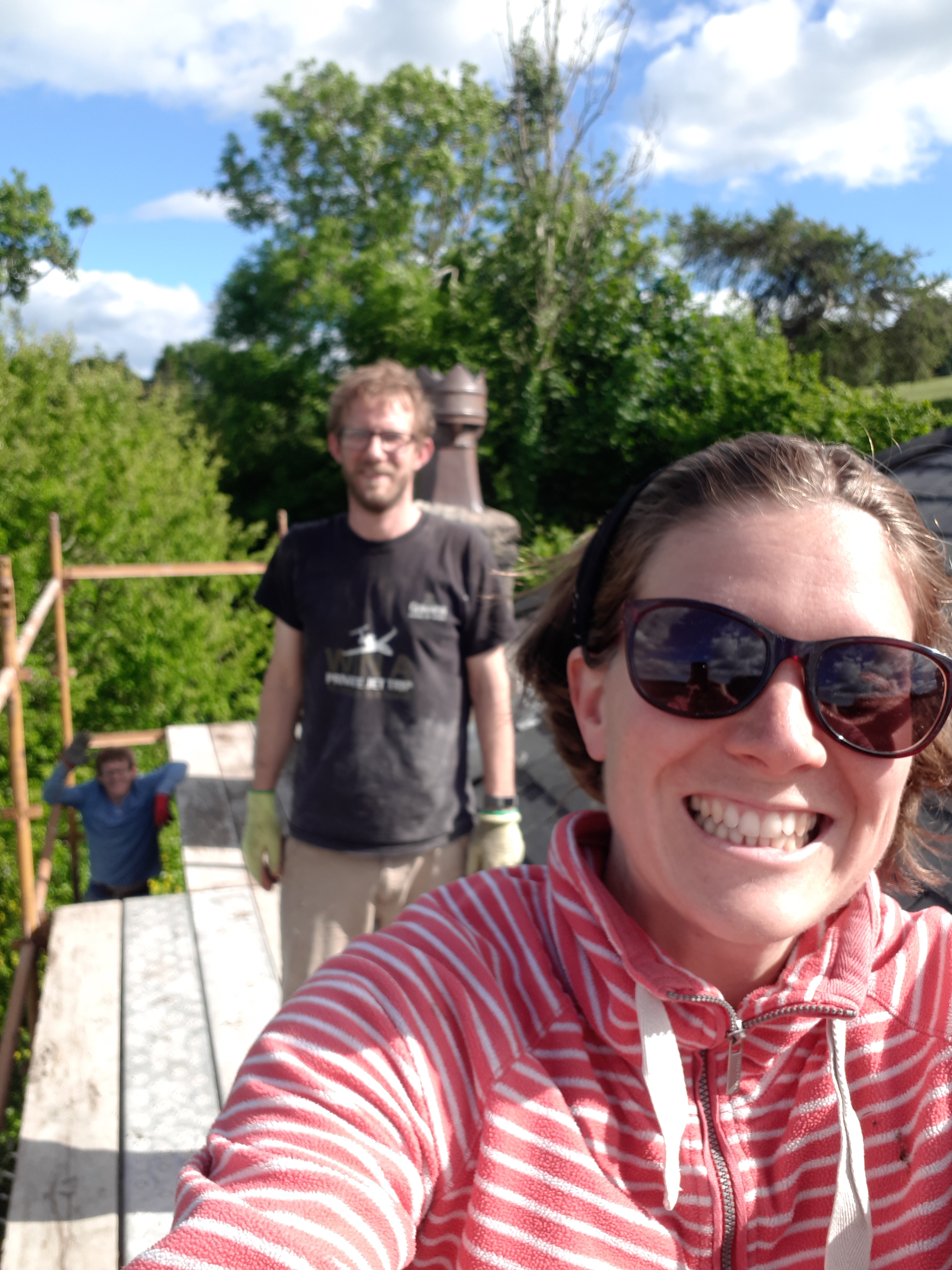
Still, with a much-reduced workforce, we soldiered on. Chris’s brother Phil was able to join us for the first two days, which got us off to a good start.
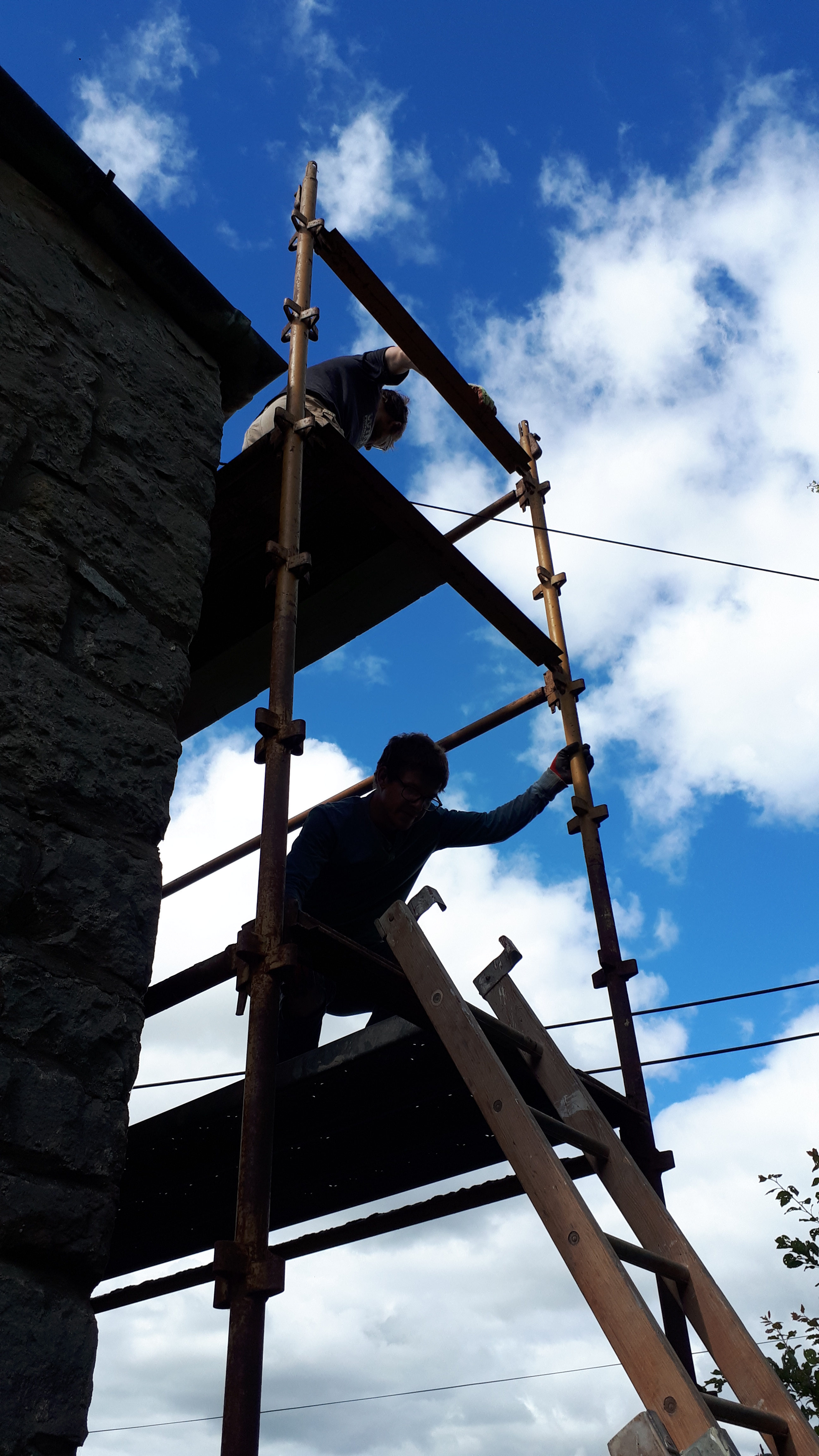
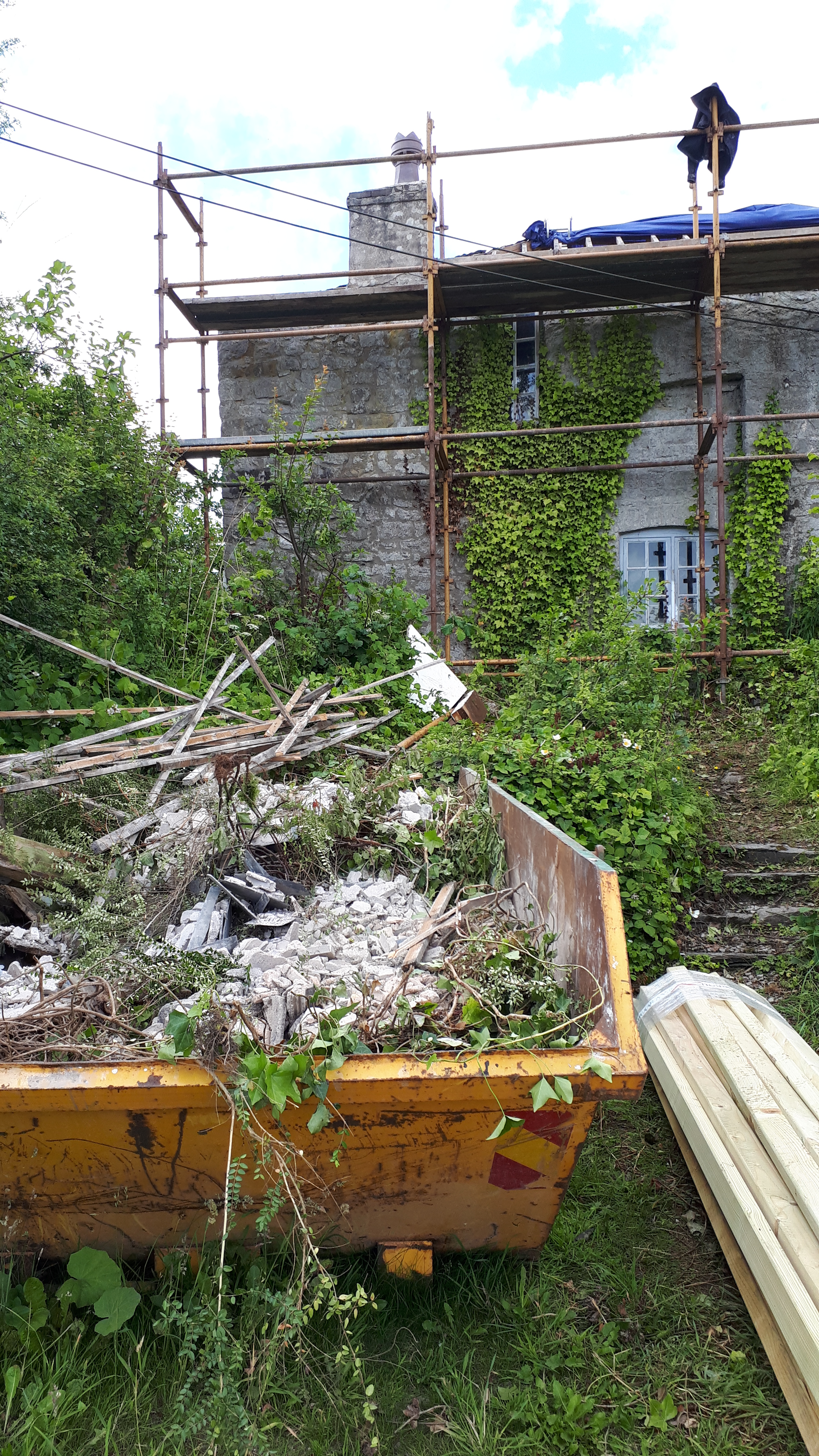
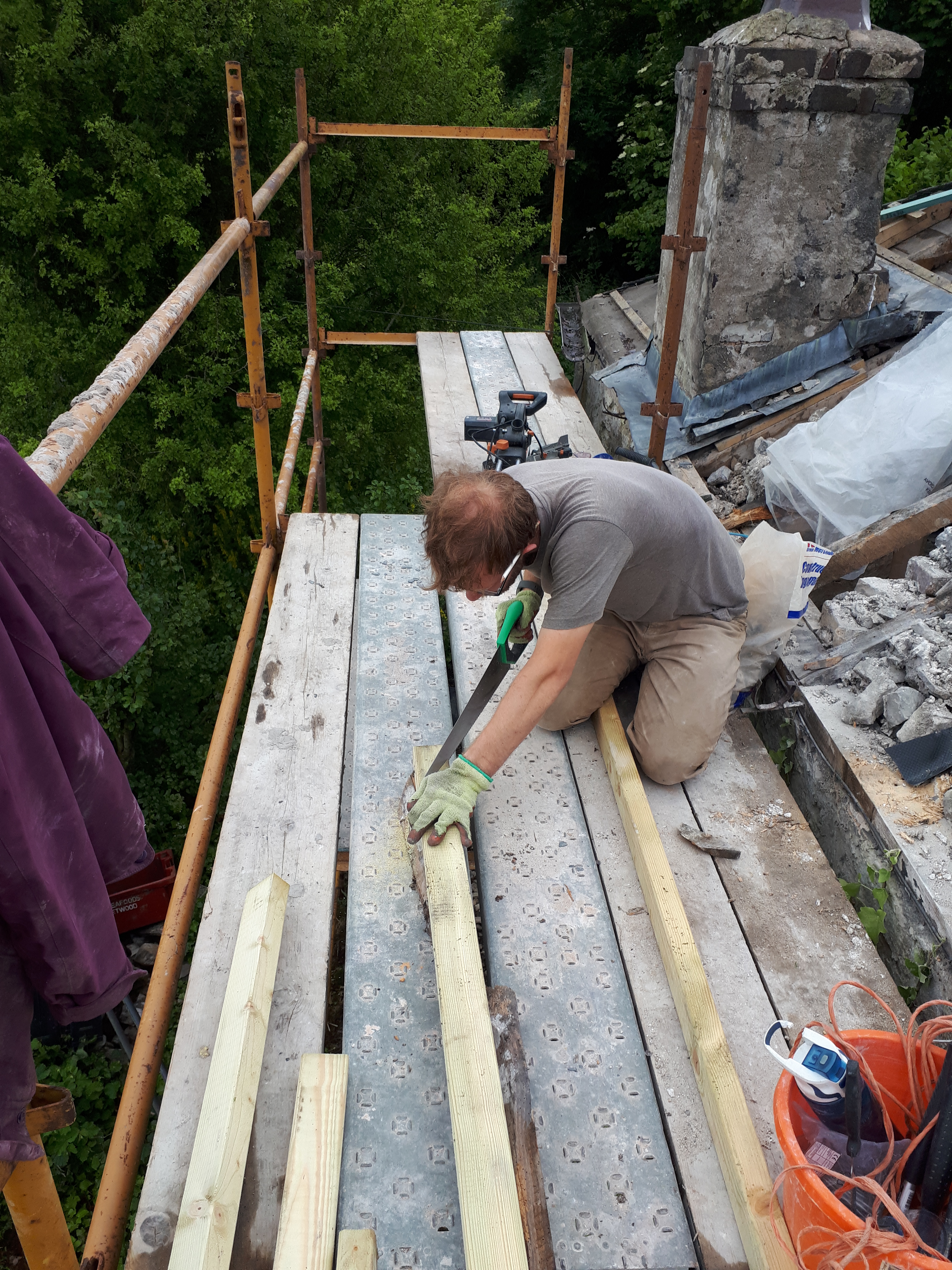
Our first day was entirely taken up with assembling the scaffolding, a job that needs at least three people in order to prevent tumbling ironwork and sore heads. We have just enough to cover all of the front and two-thirds of the back, while tackling the side (hip) will mean completely dismantling one set and reassembling it in its new location. However, as we can’t start the hip until we have the new purlin, and we can’t order the purlin without the engineer’s spec… and the engineer has covid… this job will have to wait anyway.
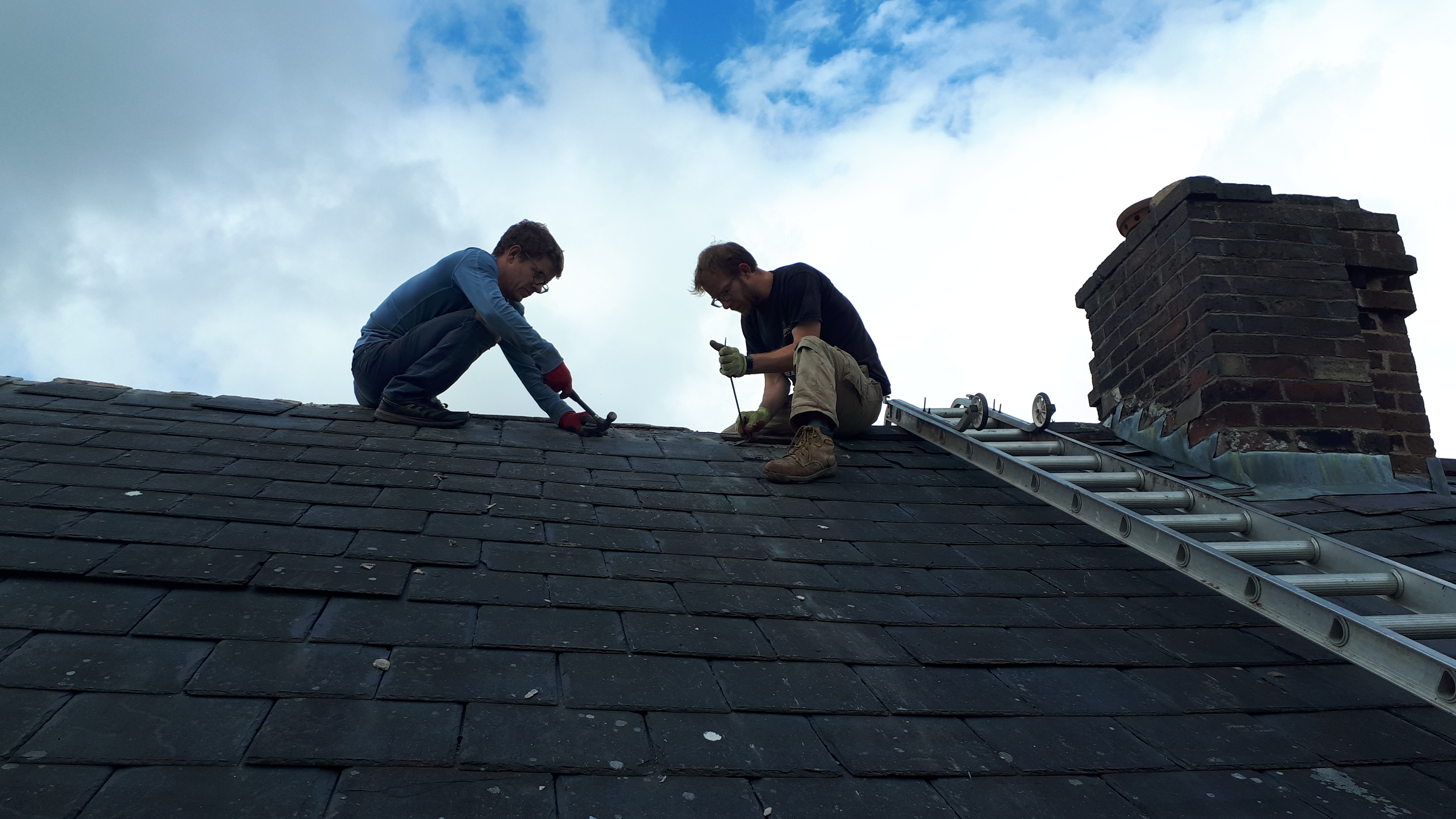
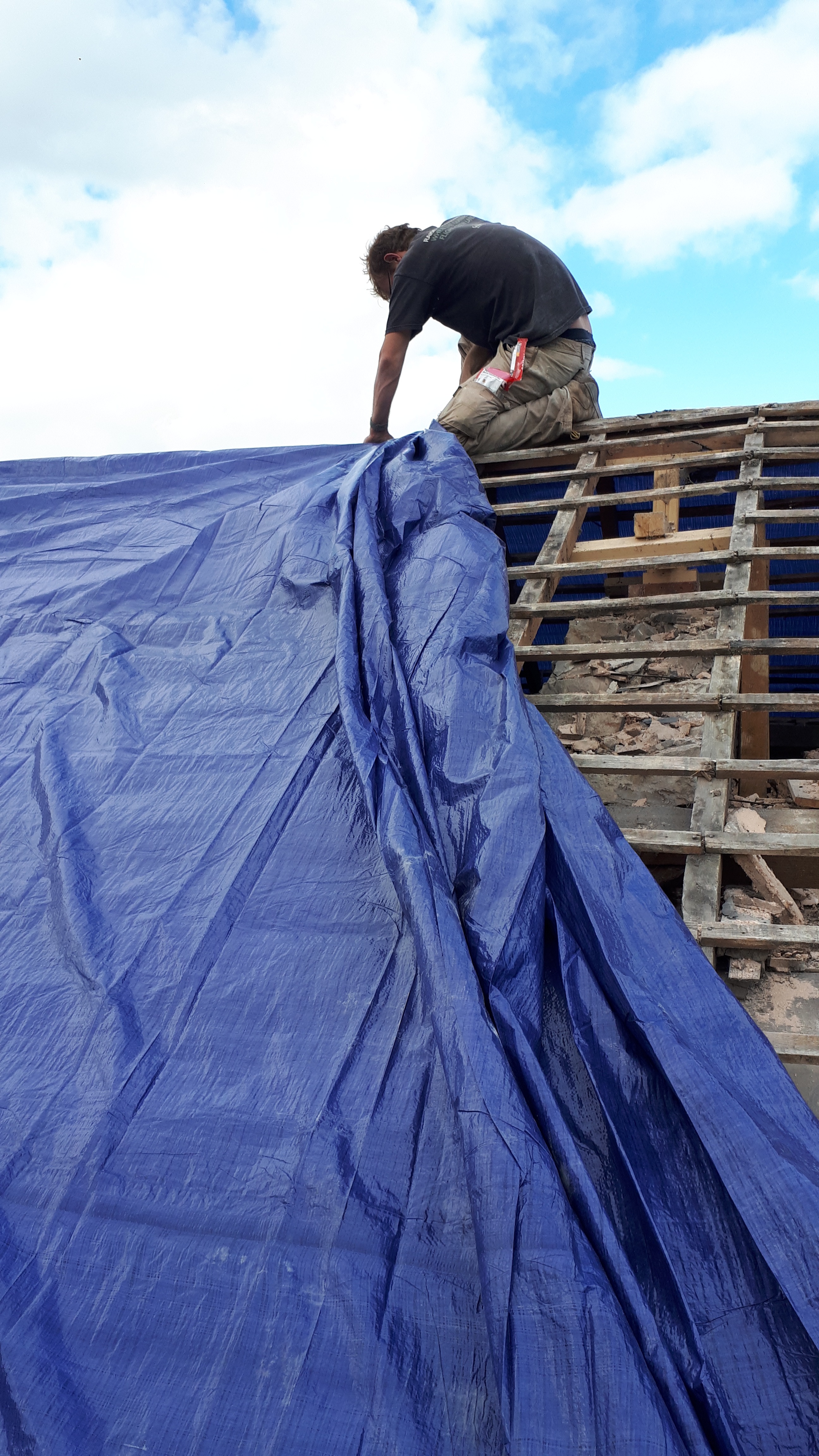
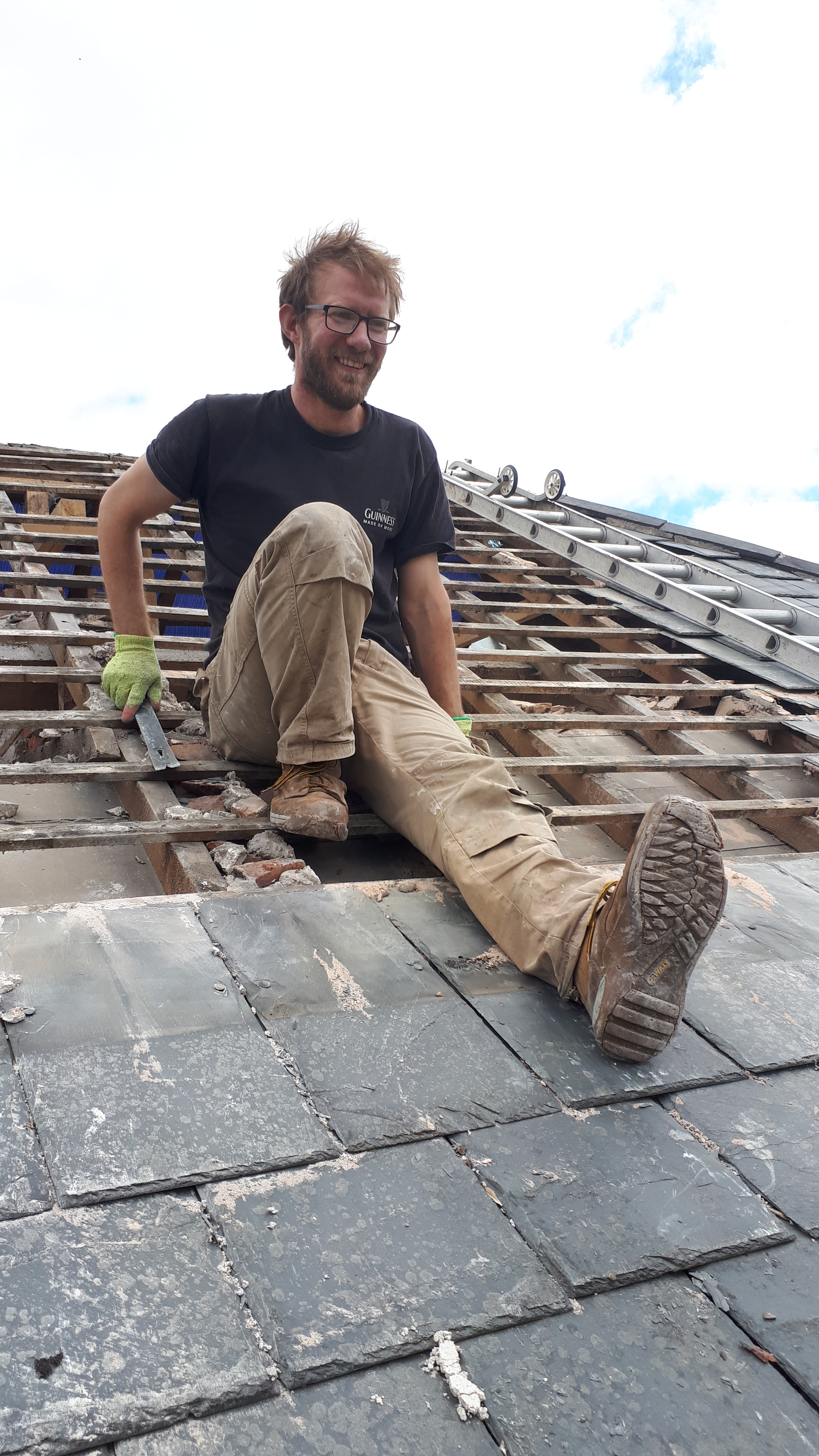
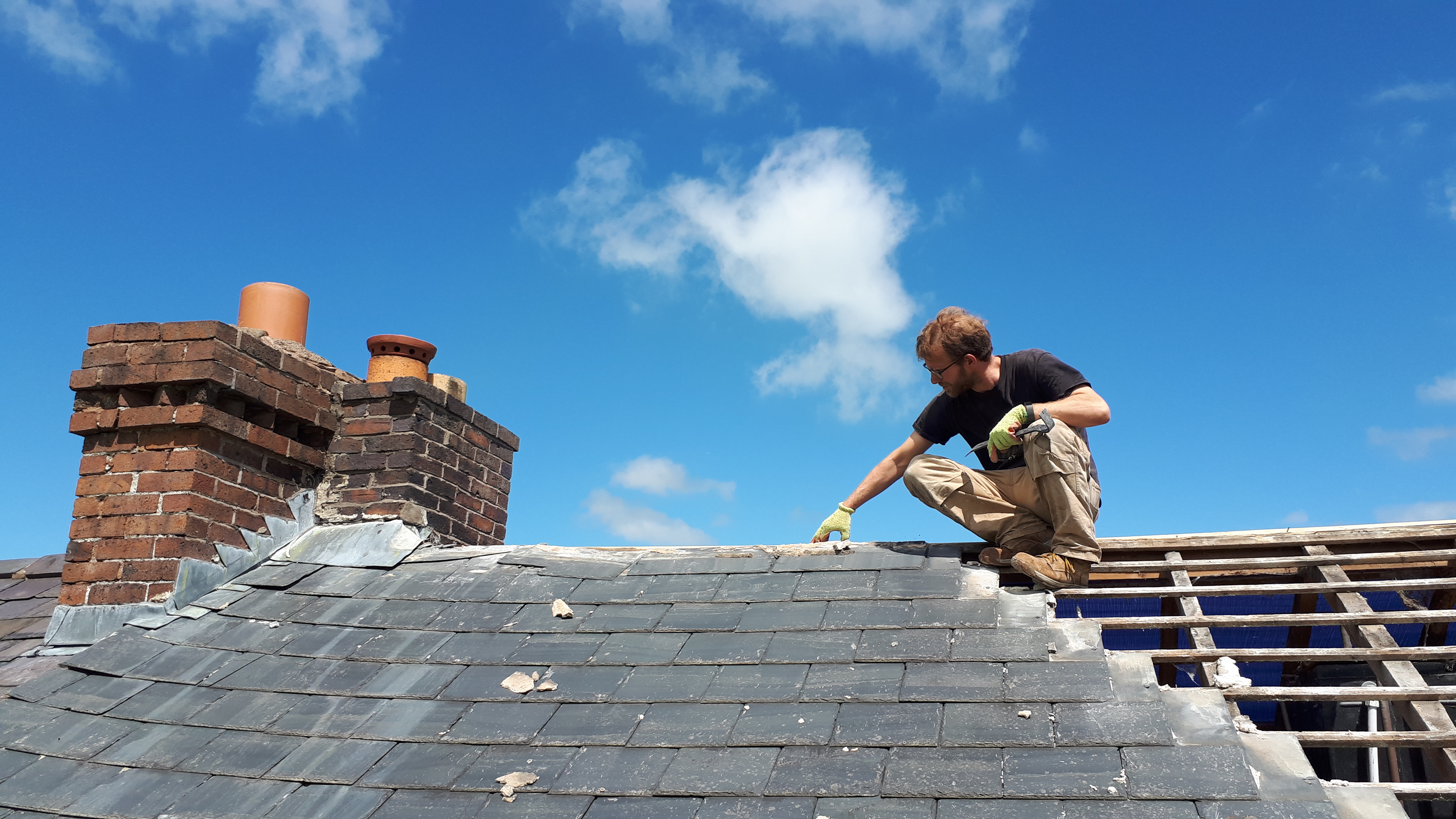
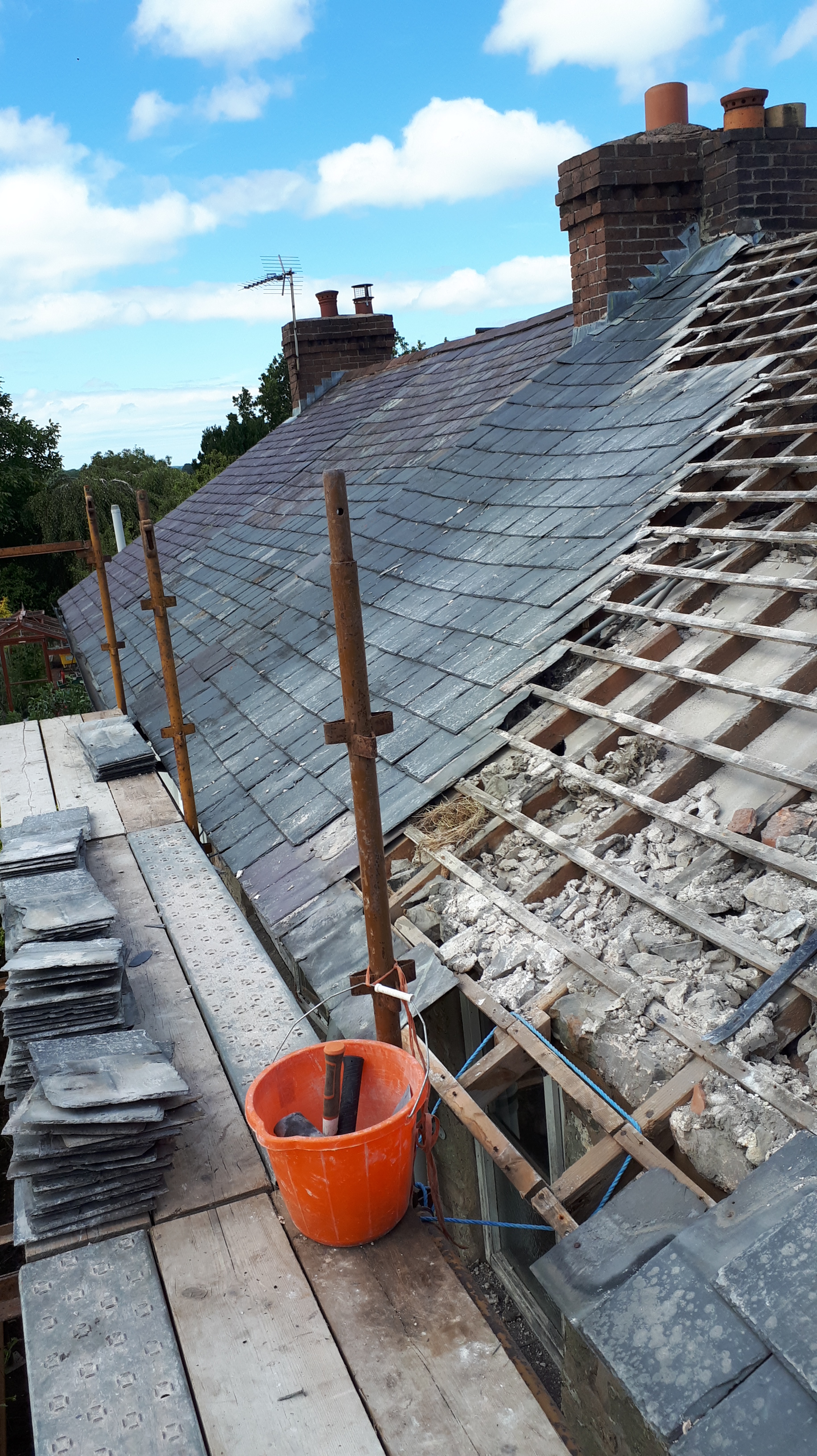
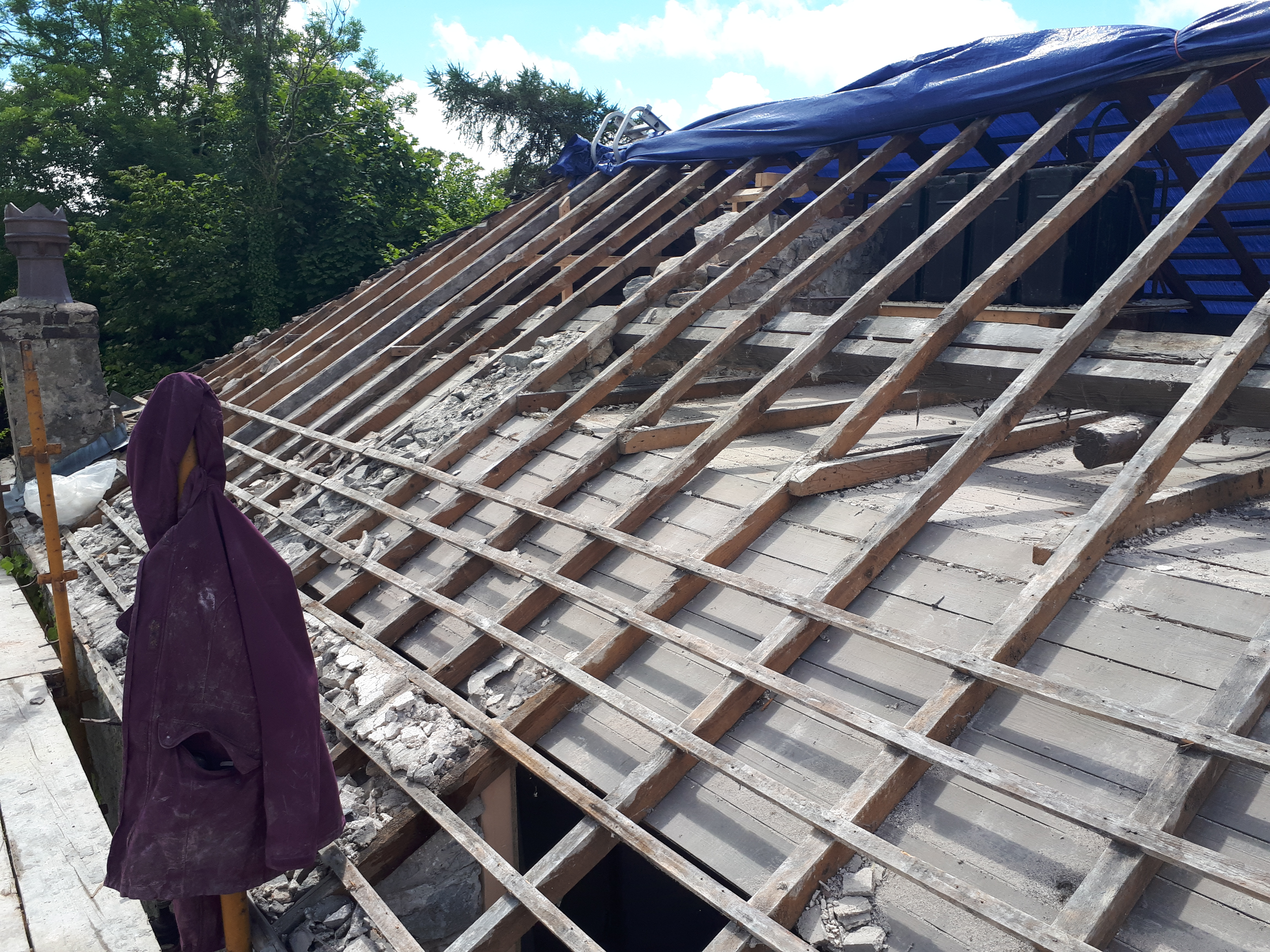
It took two whole days to remove the slates from the front and back of the roof, in between showers of rain and removing and reinstalling the tarpaulins. For one day we had the extra help provided by Phil, and on the other we just had ourselves for the labour. While removing them wasn’t too labour-intensive, just awkward and uncomfortable, carrying stack after stake down to ground level was exhausting. With around 1,000 in all, thick heavy Welsh slates, Chris’s Fitbit claimed we climbed 61 staircases in one day.
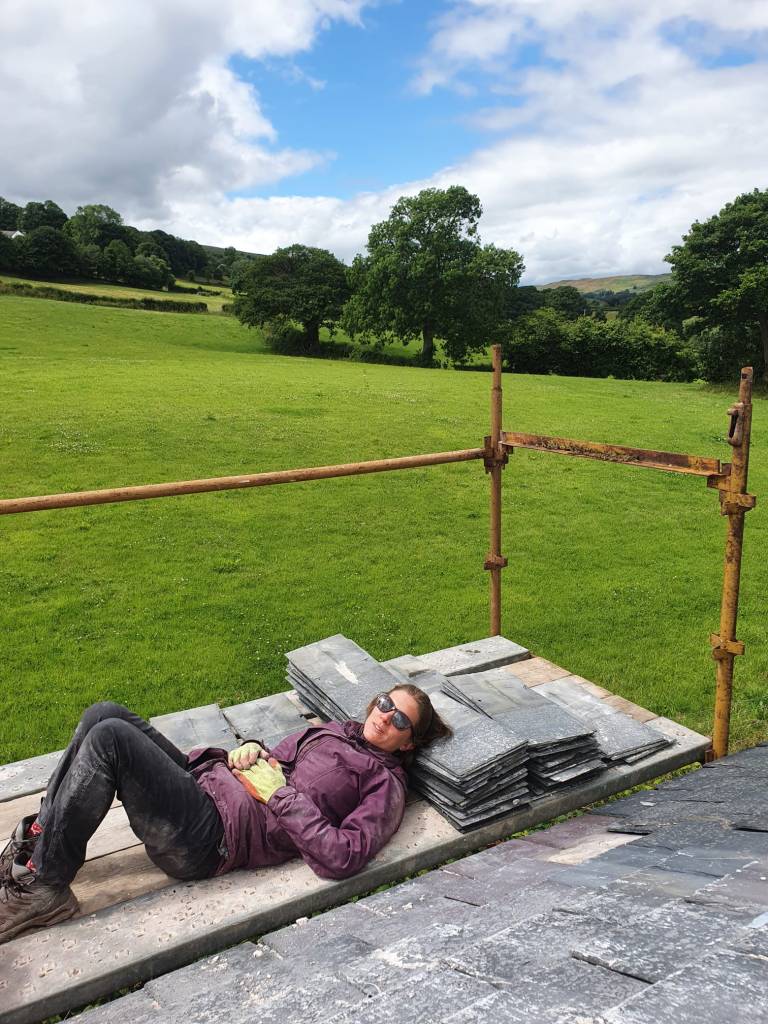
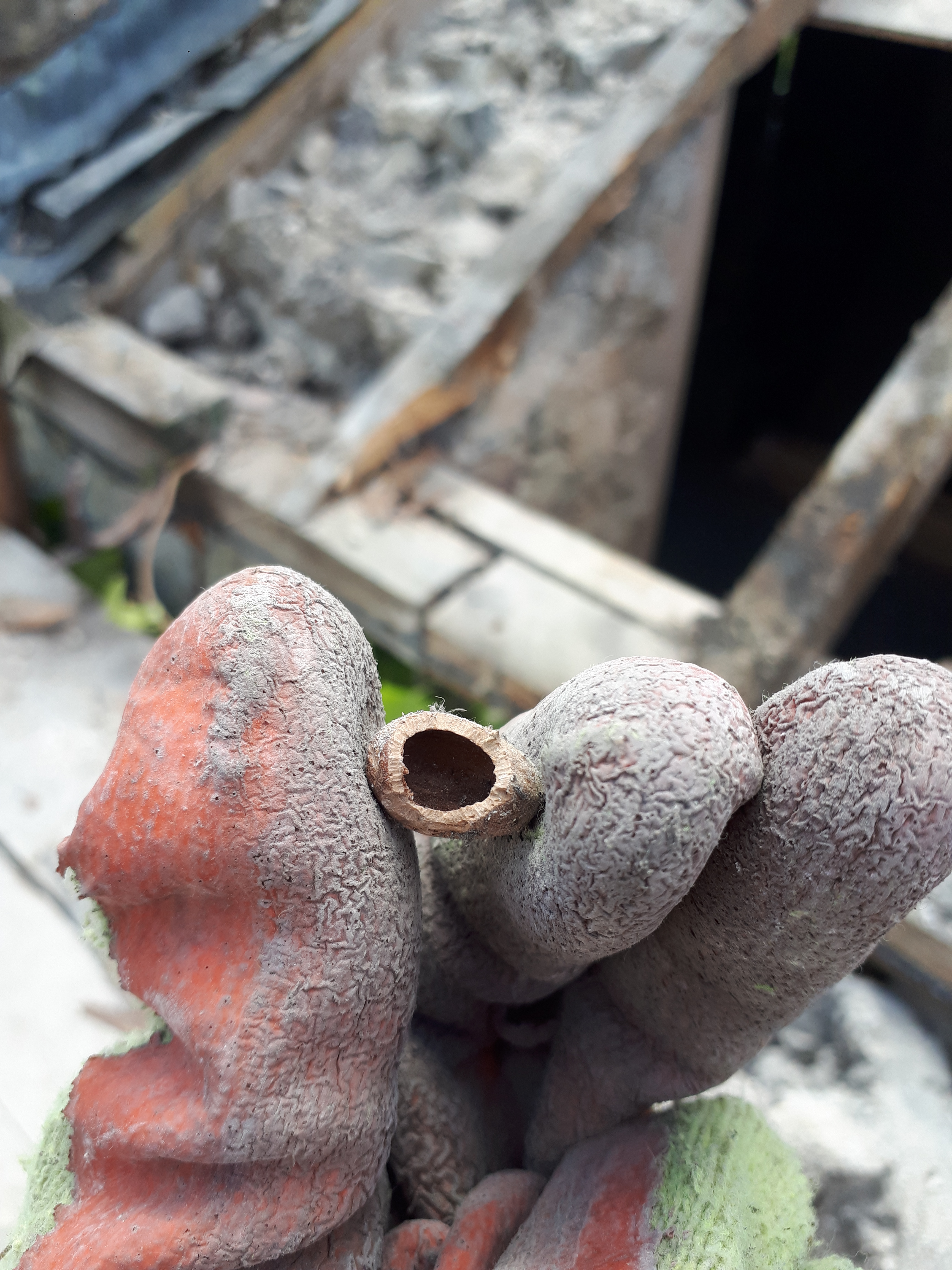
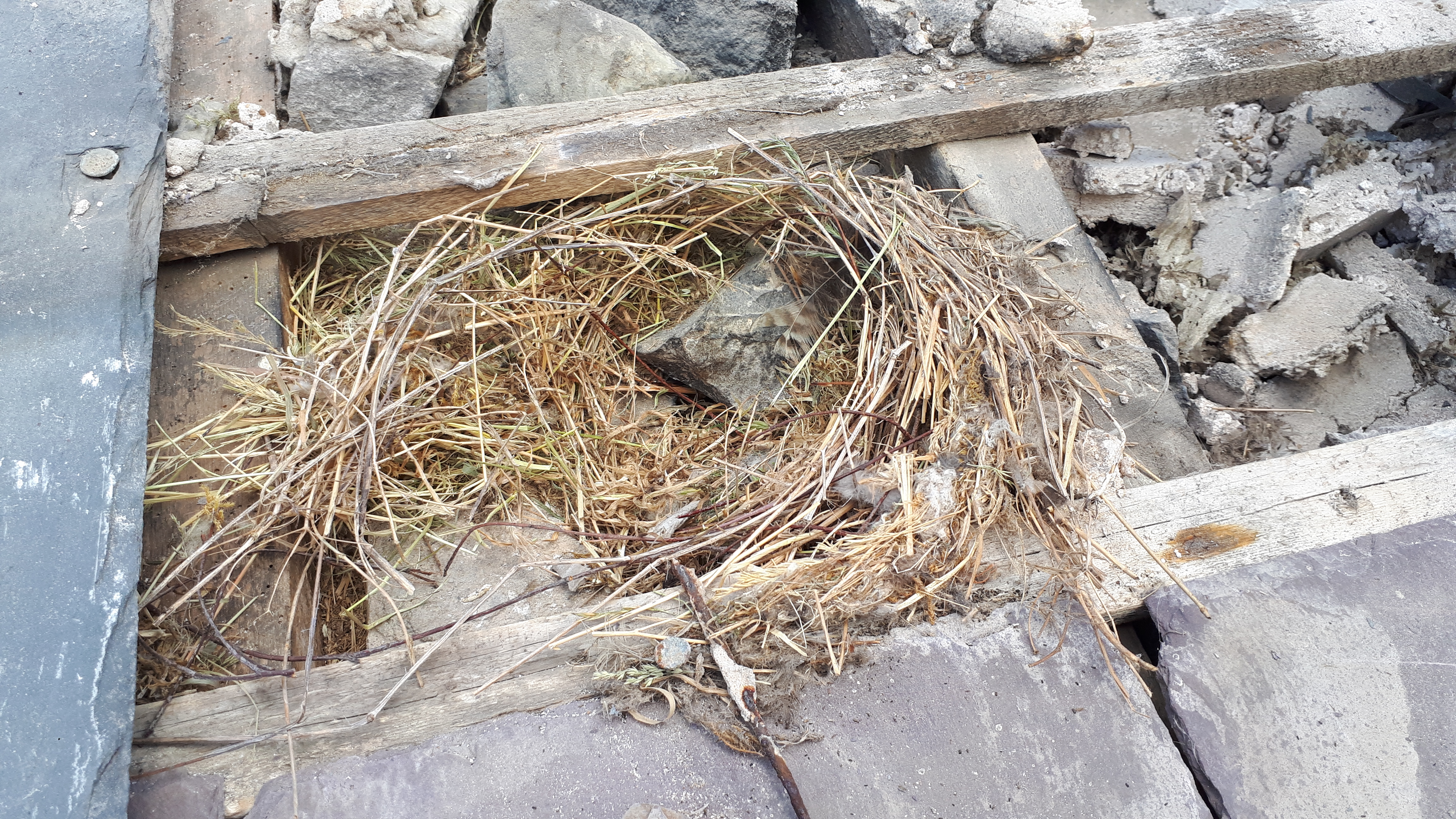
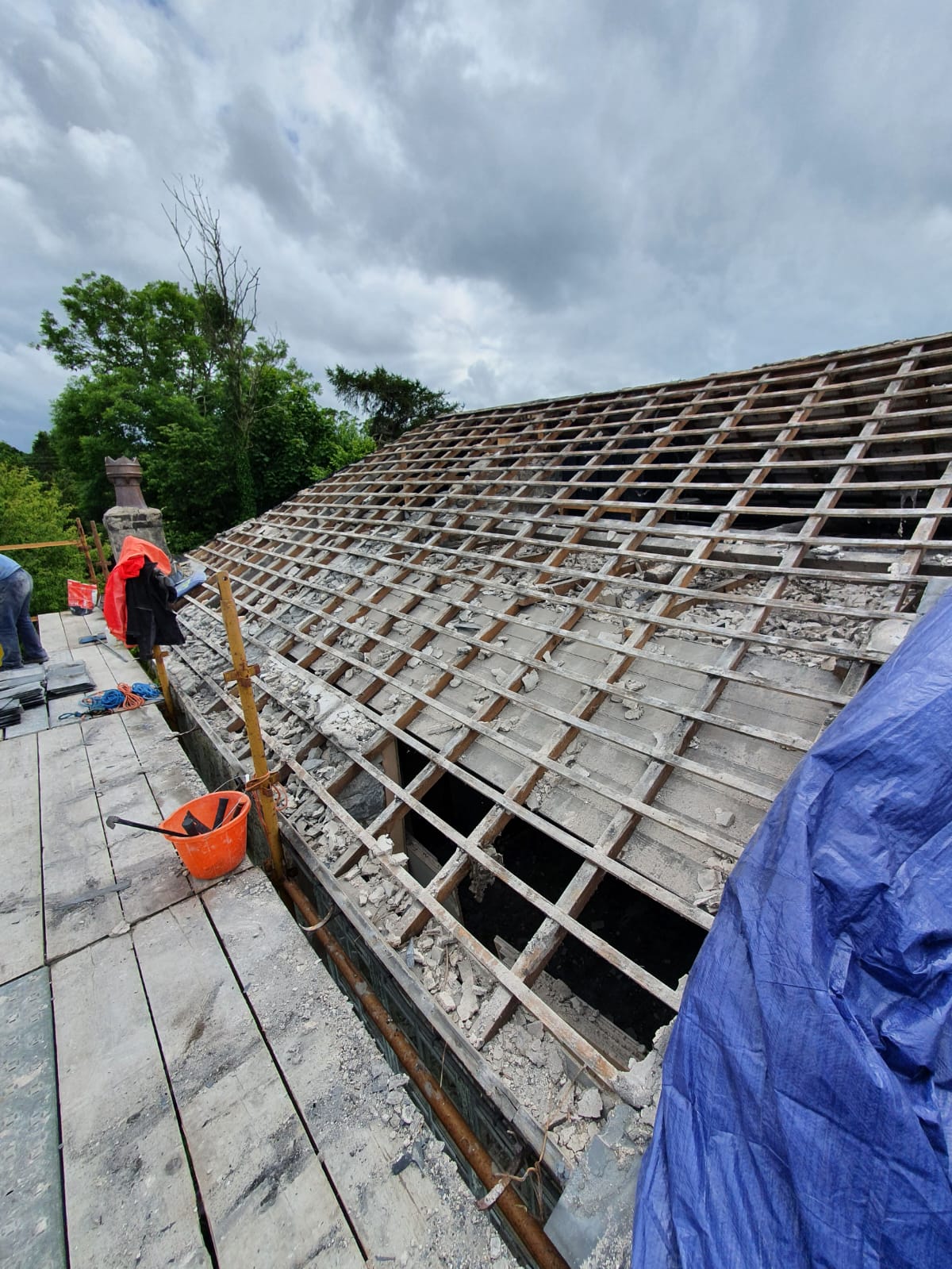
Slates finally down, we could move on to pulling off the old batons. While not all of them were in a poor state, removing them without breakages was nearly impossible. As we cleared out the old wood, as well as bag after bag of rubble created by the disassembly of the roof, we discovered signs of past residents, from old bird’s nests to stores of hazelnuts and ash keys, stashed away by mice.
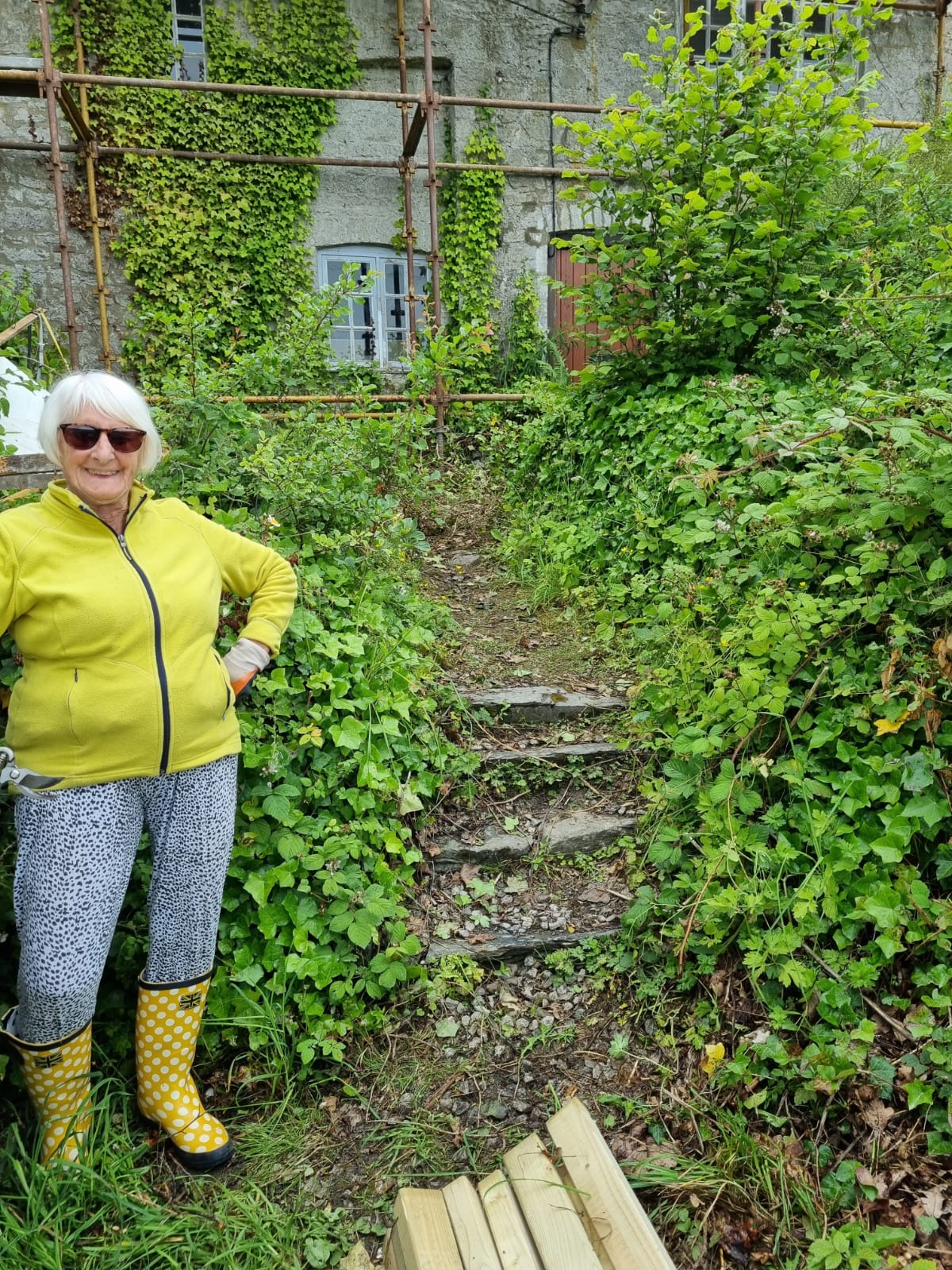
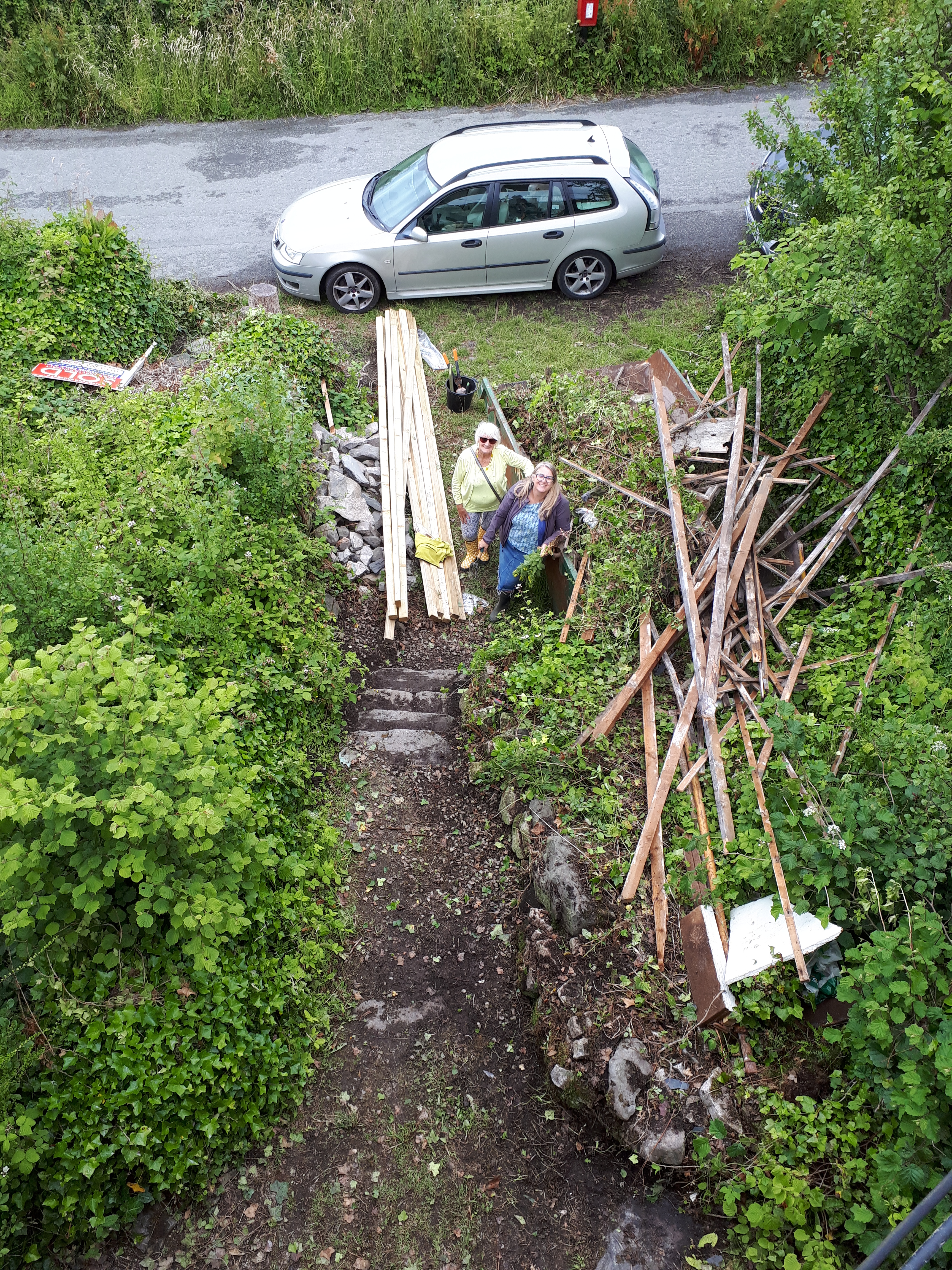
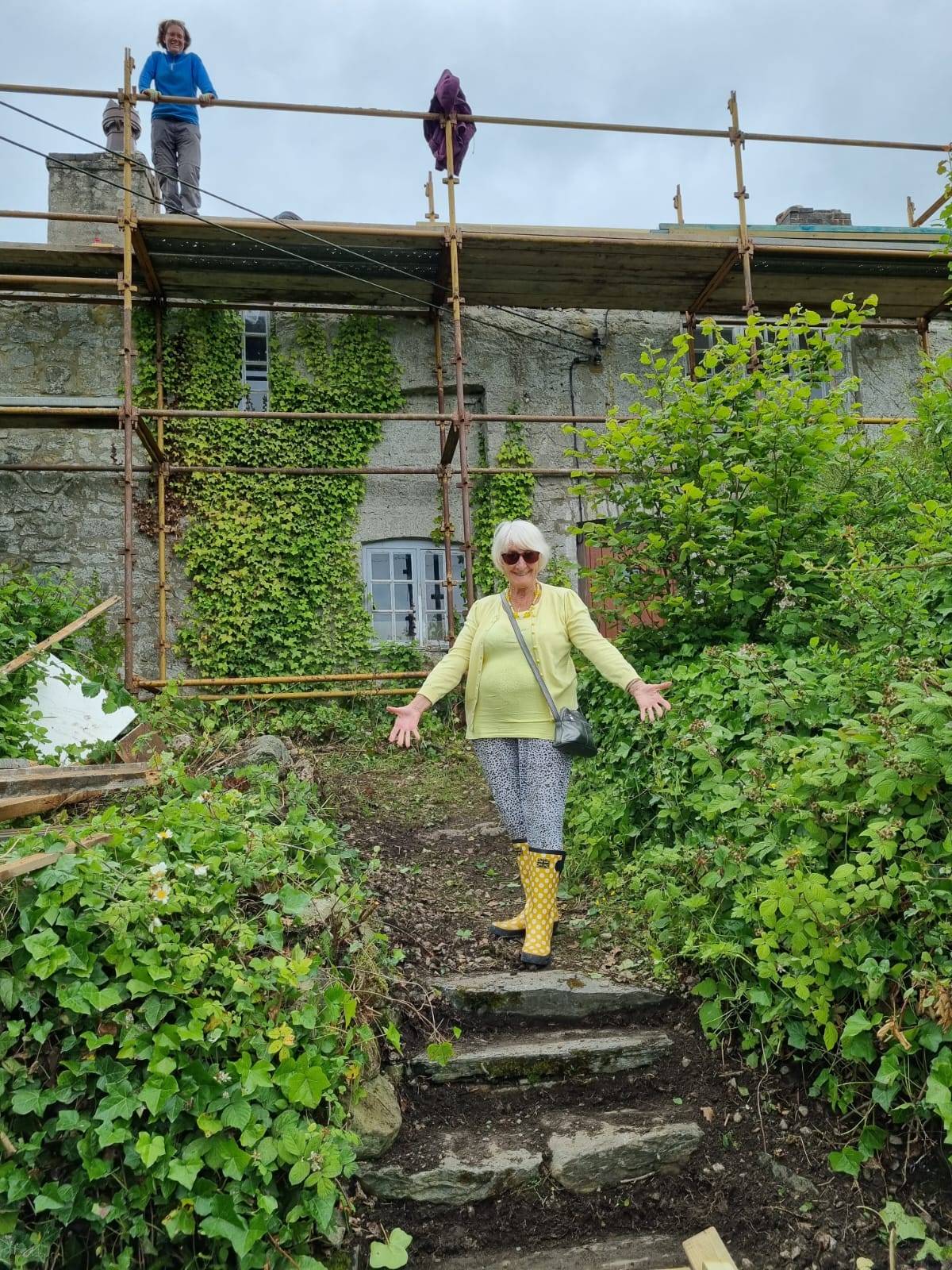
By Wednesday, our activities began to attract a whole new kind of wildlife. My mum and nan had made the pilgrimage to visit our new house. While helping tear apart the roof wasn’t quite their speed, they set to work uncovering the path and steps at the front of the house.
Although they were both impressed by the beauty of the location, and the character of the building, it was also clear they were slightly shocked and horrified at how much work the house required. I guess that means that no matter how bad my photos and writing make the house appear, just remember that in person it’s much, much worse.
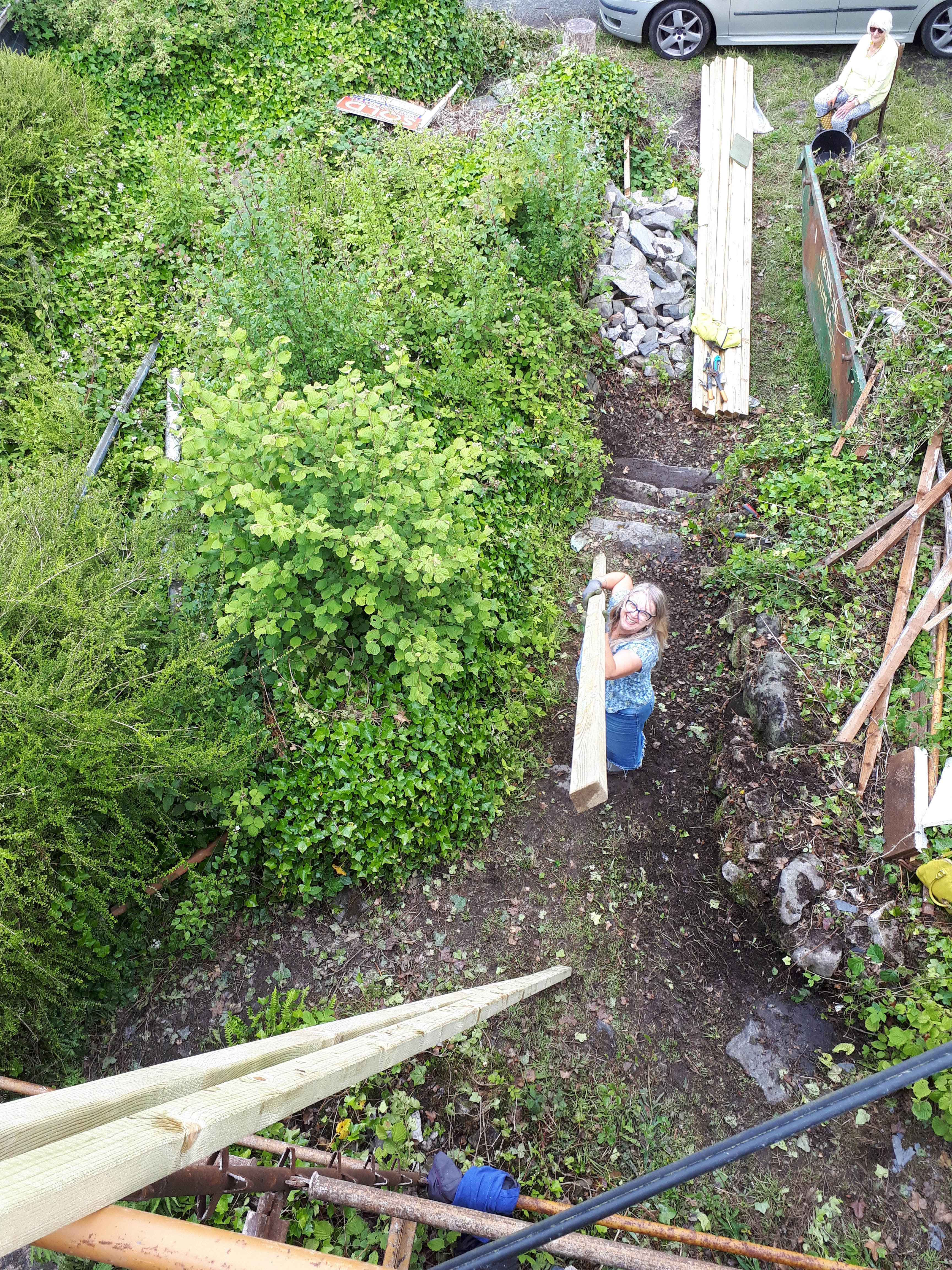
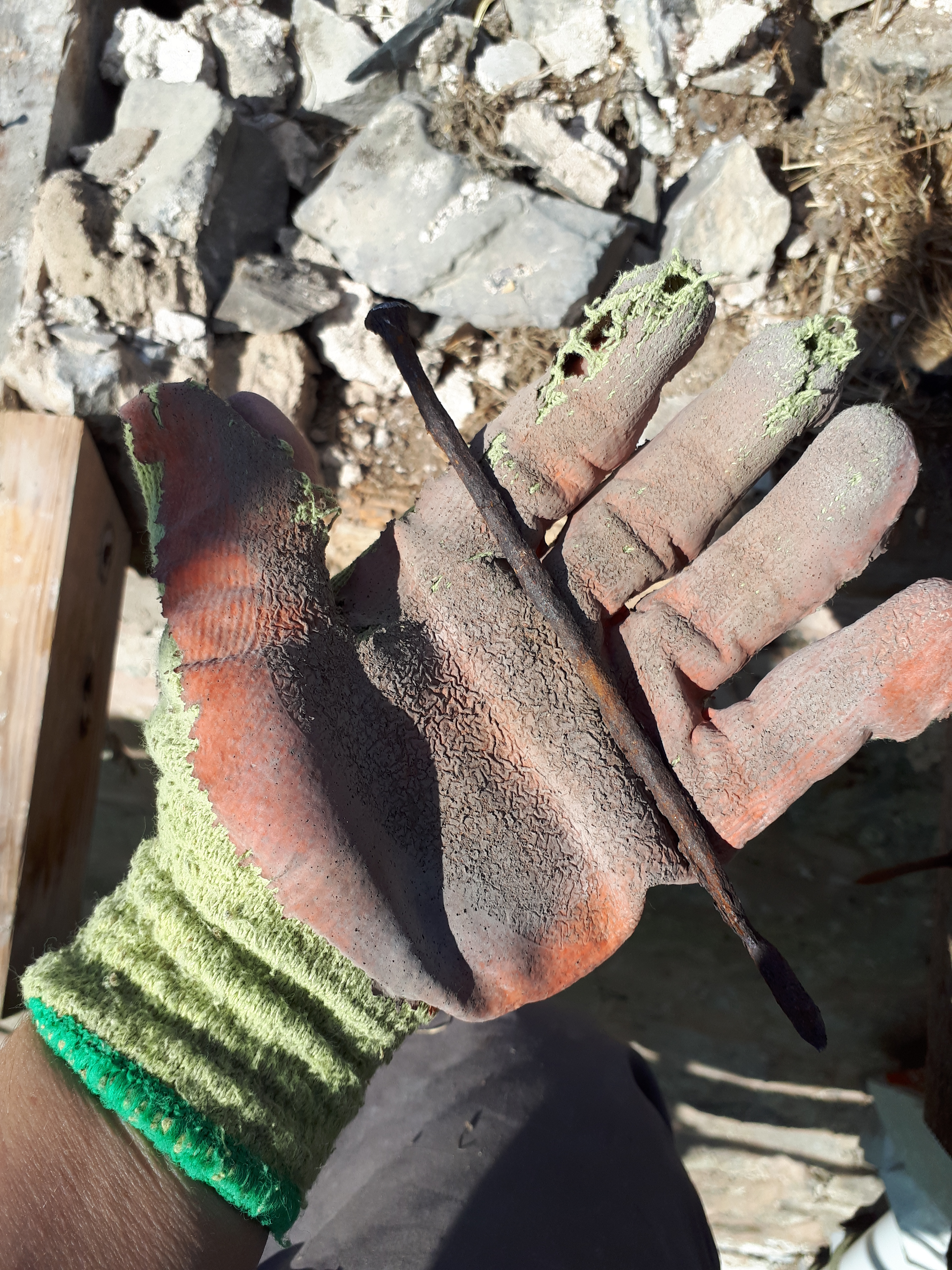
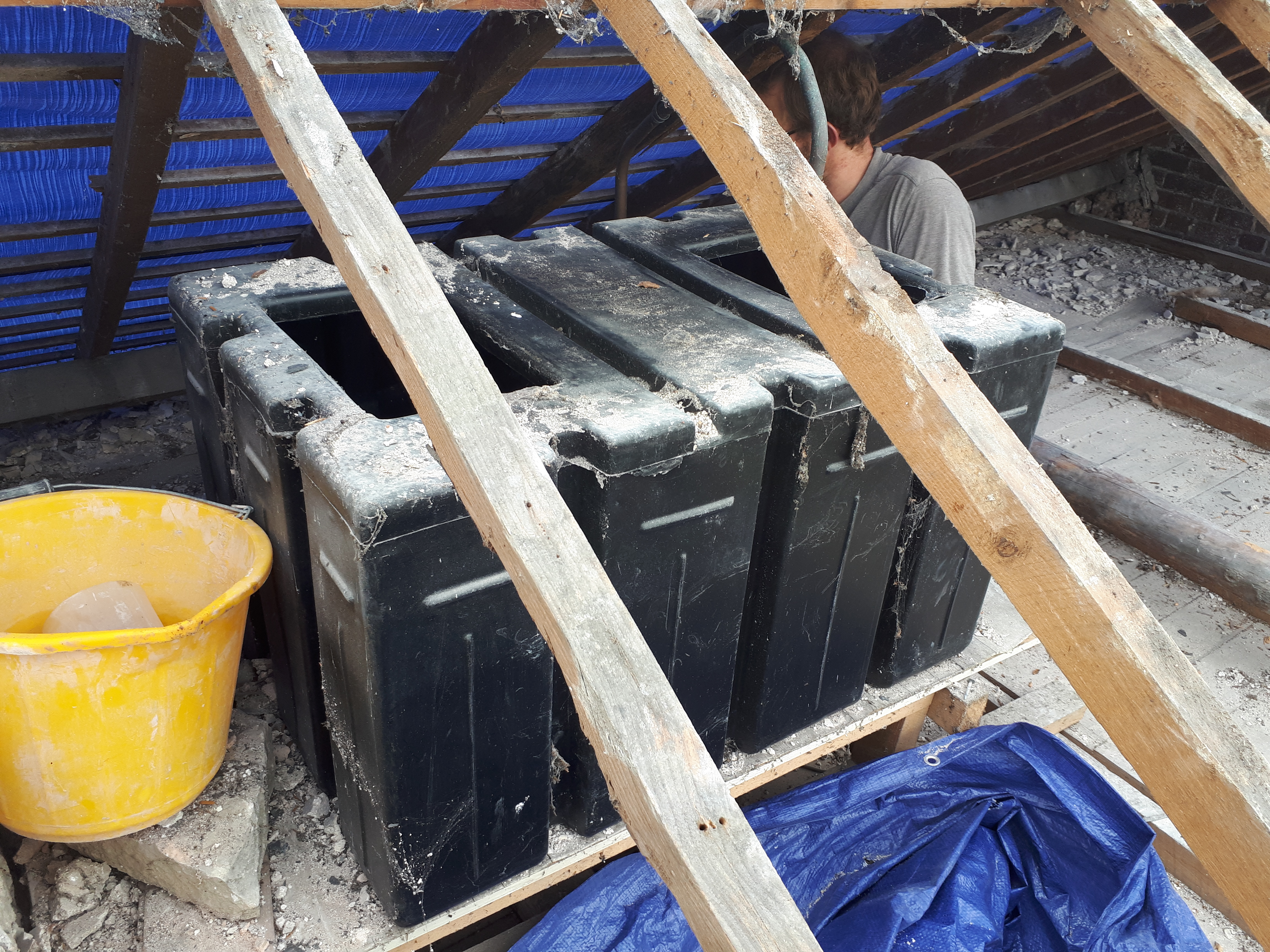
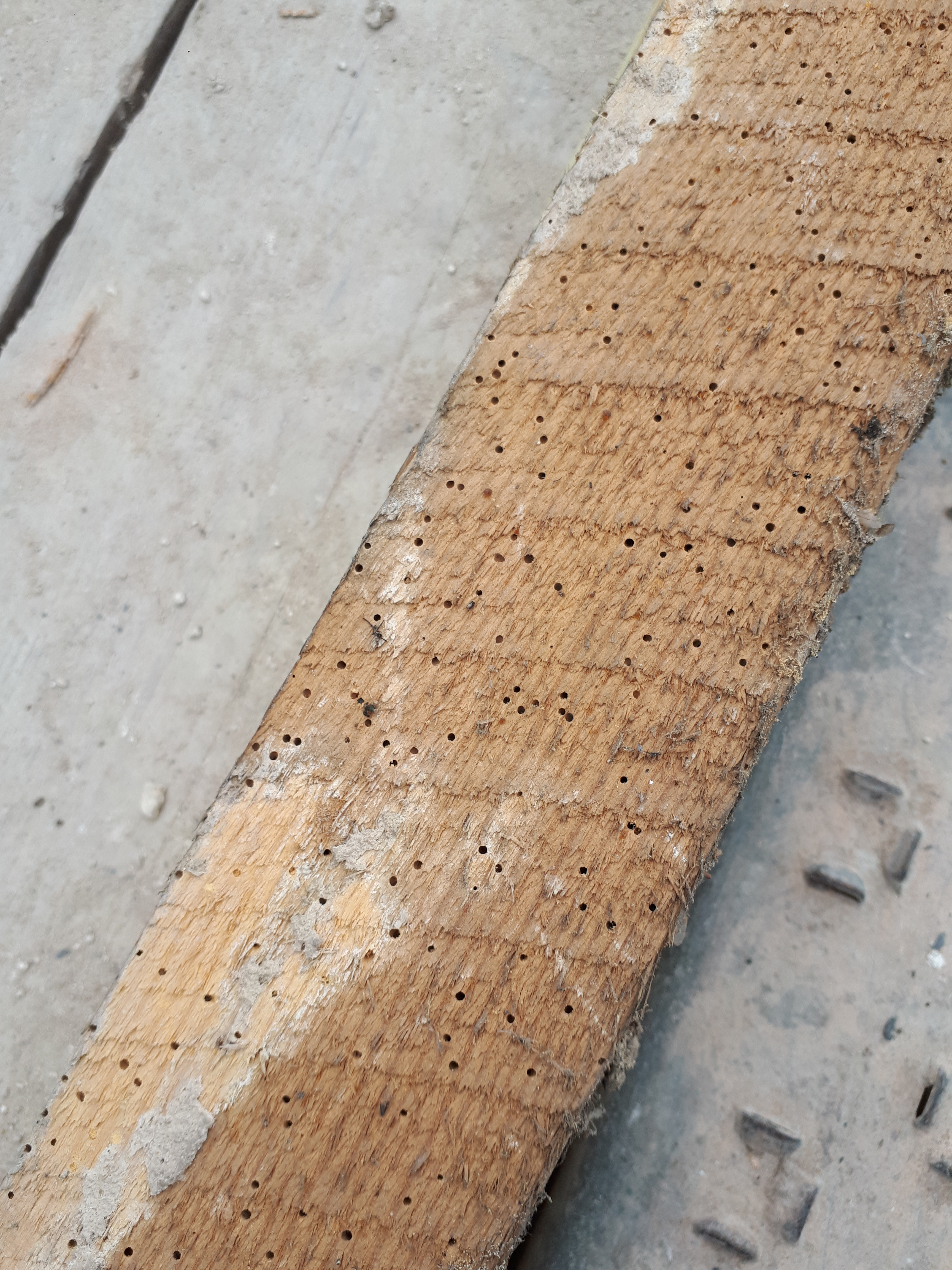
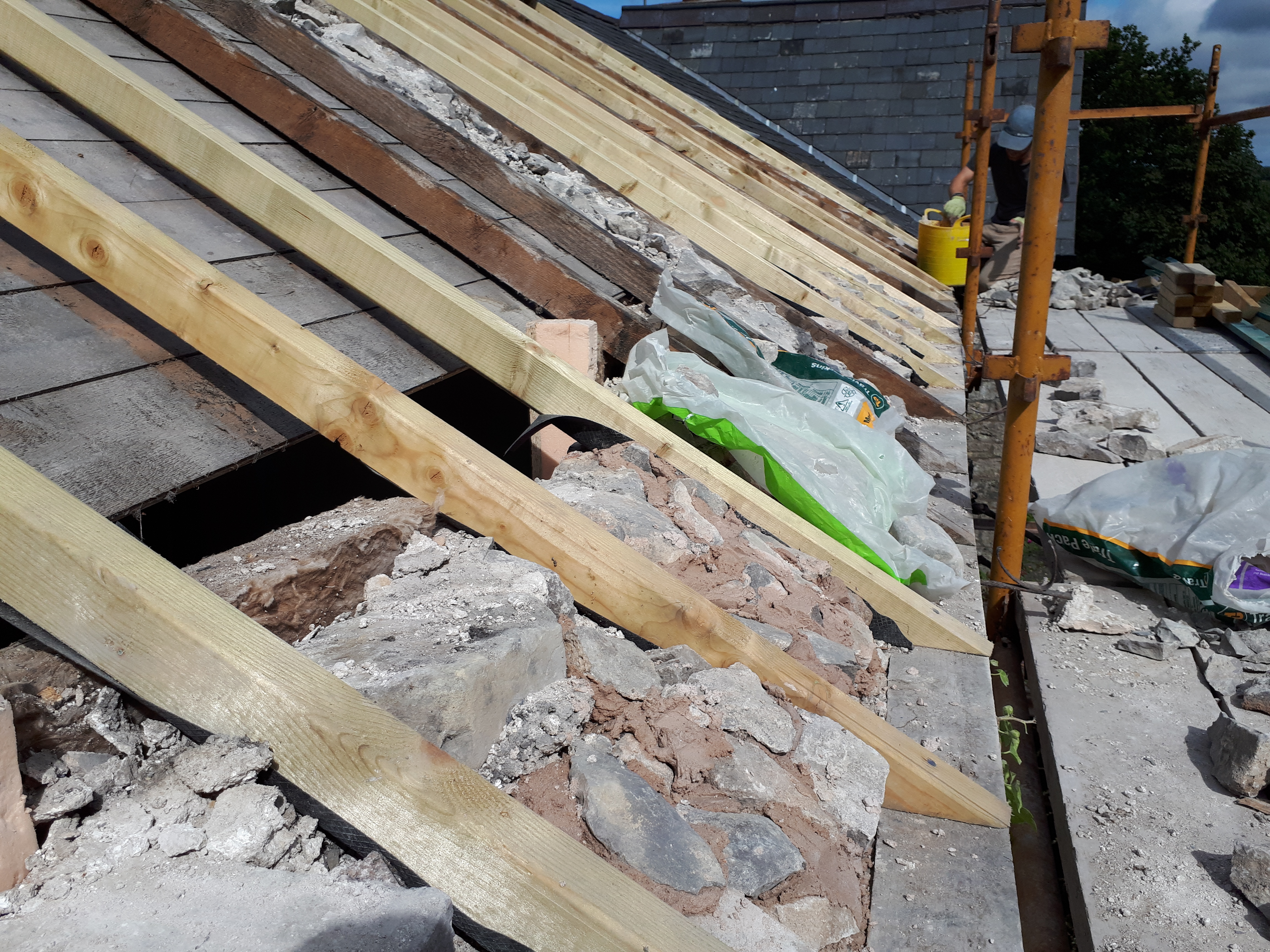
With the batons off, the next stop was to replace any rotten rafters. Between dry rot and the copious holes of tiny boring woodworms, there were few that survived the cull. While the rafters were fairly easy compared to the heavy lifting of the slates, one challenge was removing the 6 to 8 inch nails, holding everything in place. Out too went the old water tank, no longer needed, and much easier to remove via the open roof than through the tiny loft hatch.

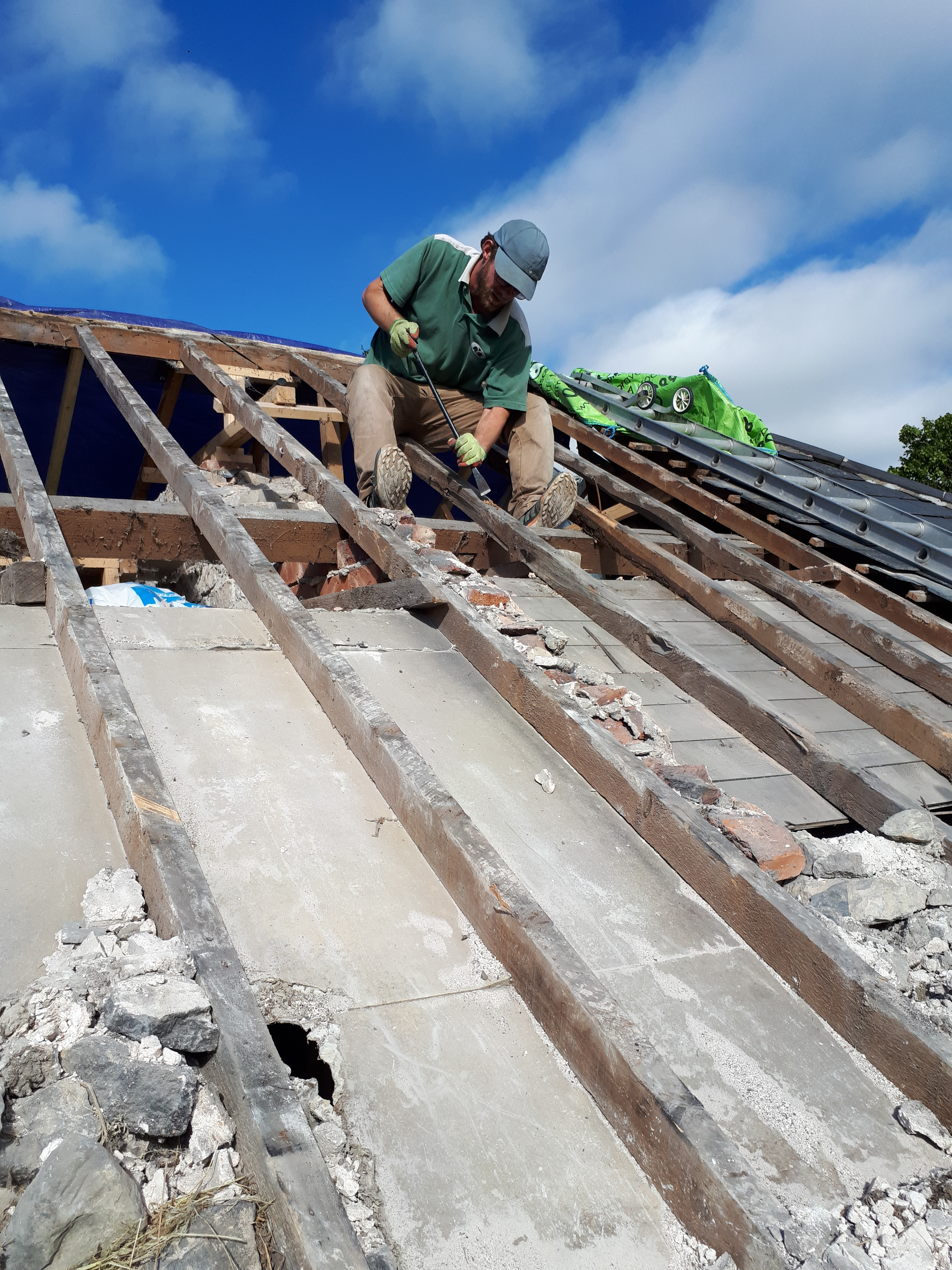
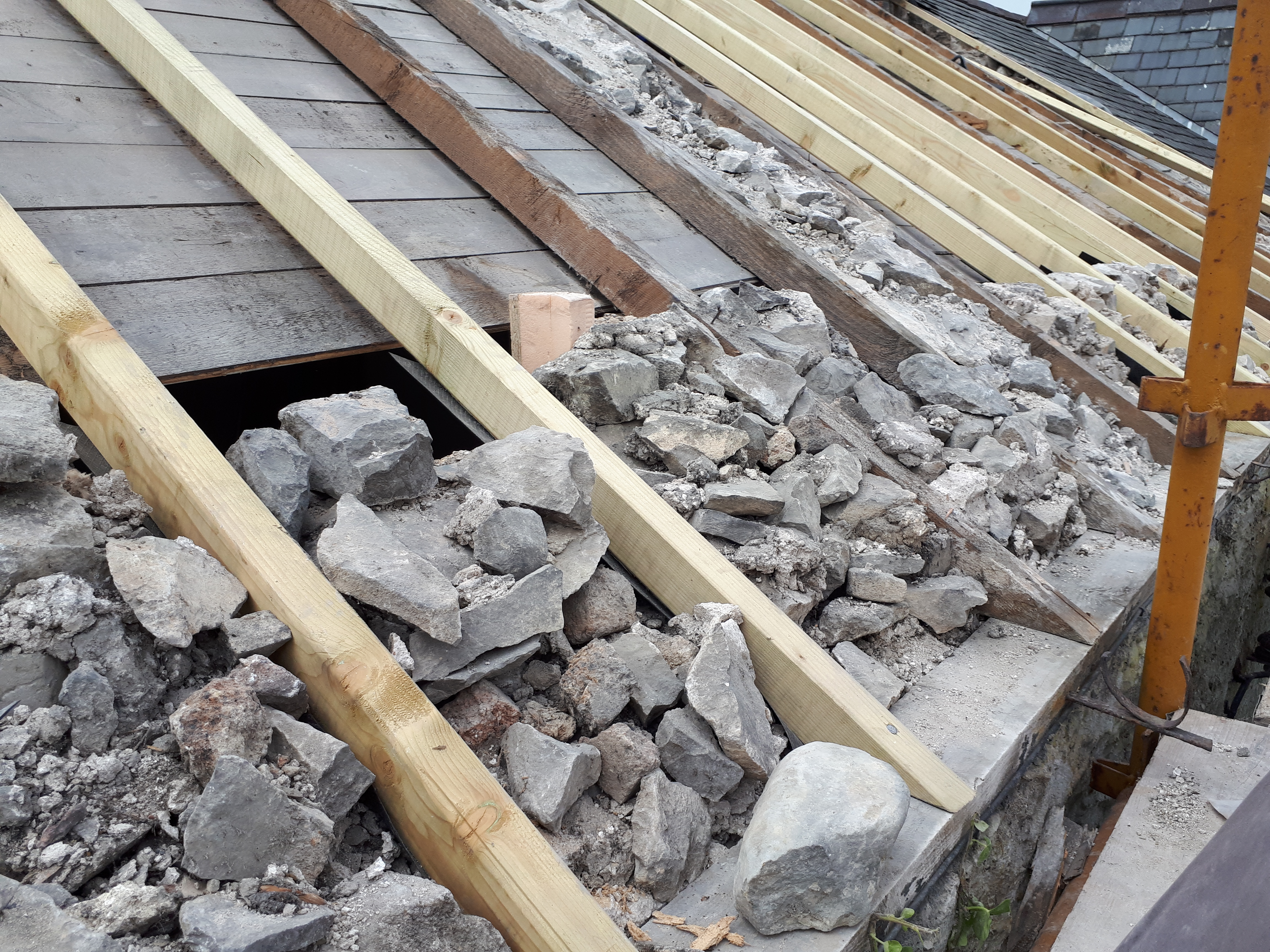
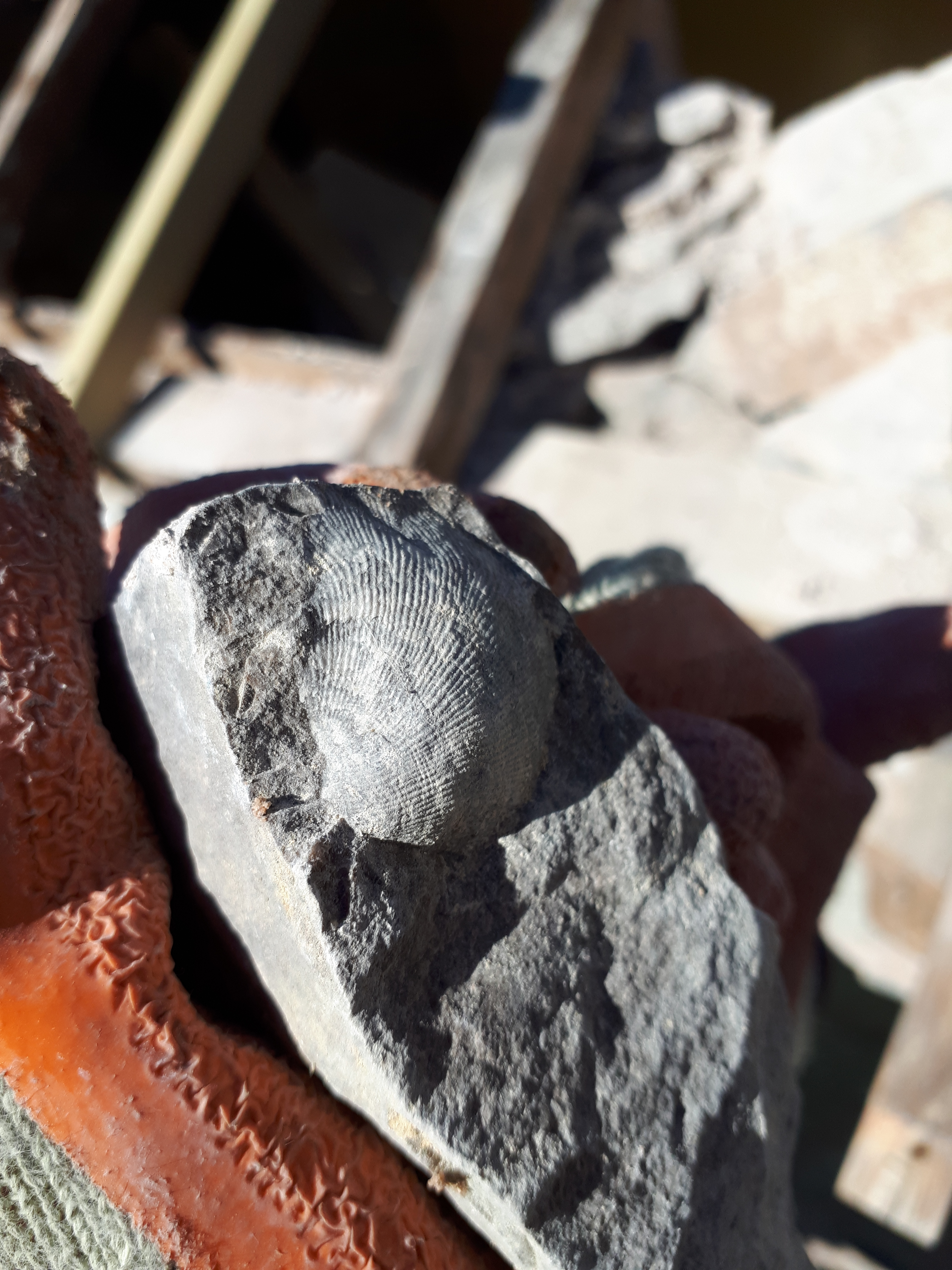
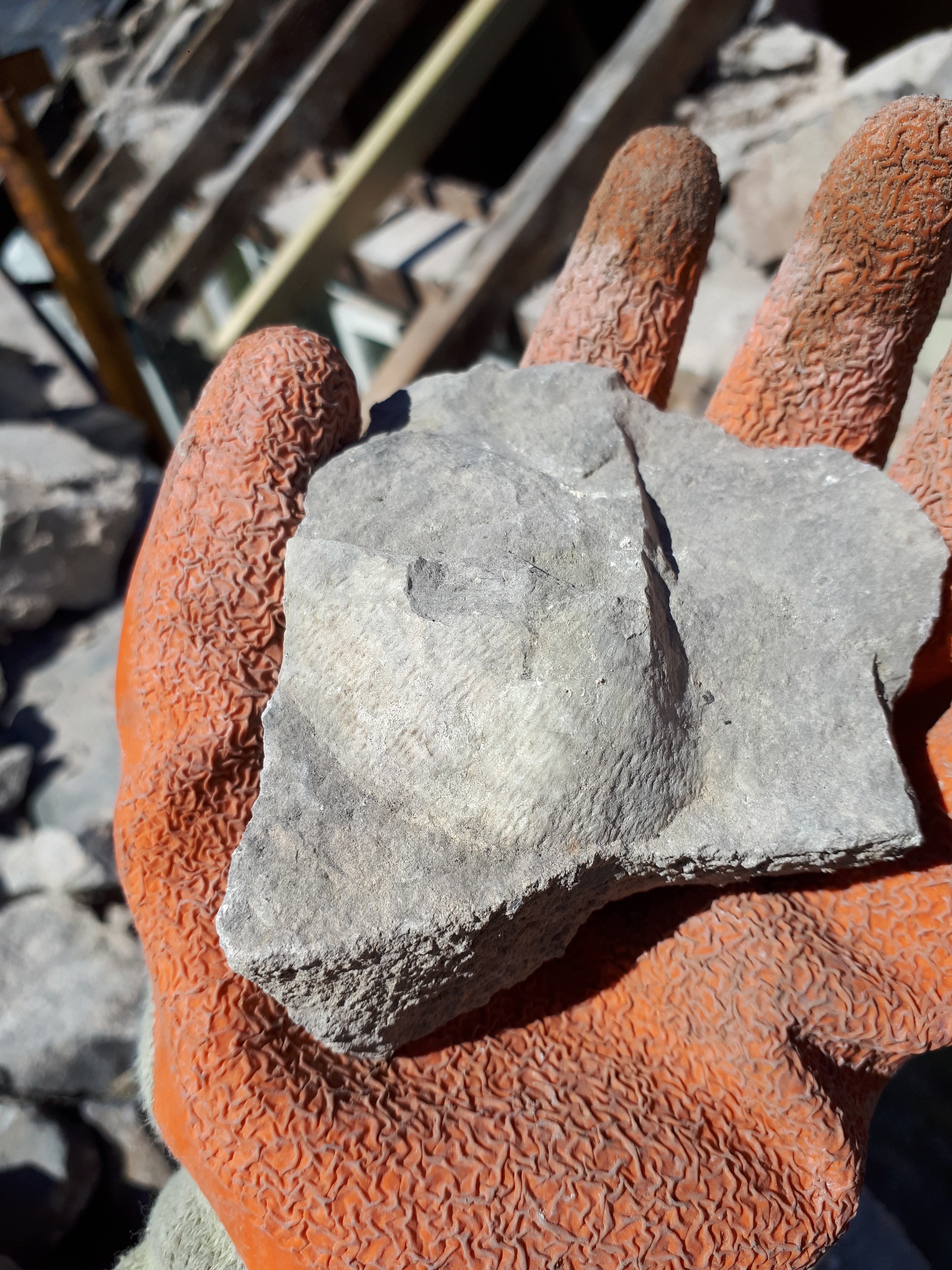
An unexpected, and time-consuming job, was rebuilding the tops of the walls, which seemed to have fallen apart at some point in the past. I quite enjoy rebuilding stone masonry, being rather like a 3D jigsaw. Because much of the stone is limestone, there were also plenty of fossils to discover.
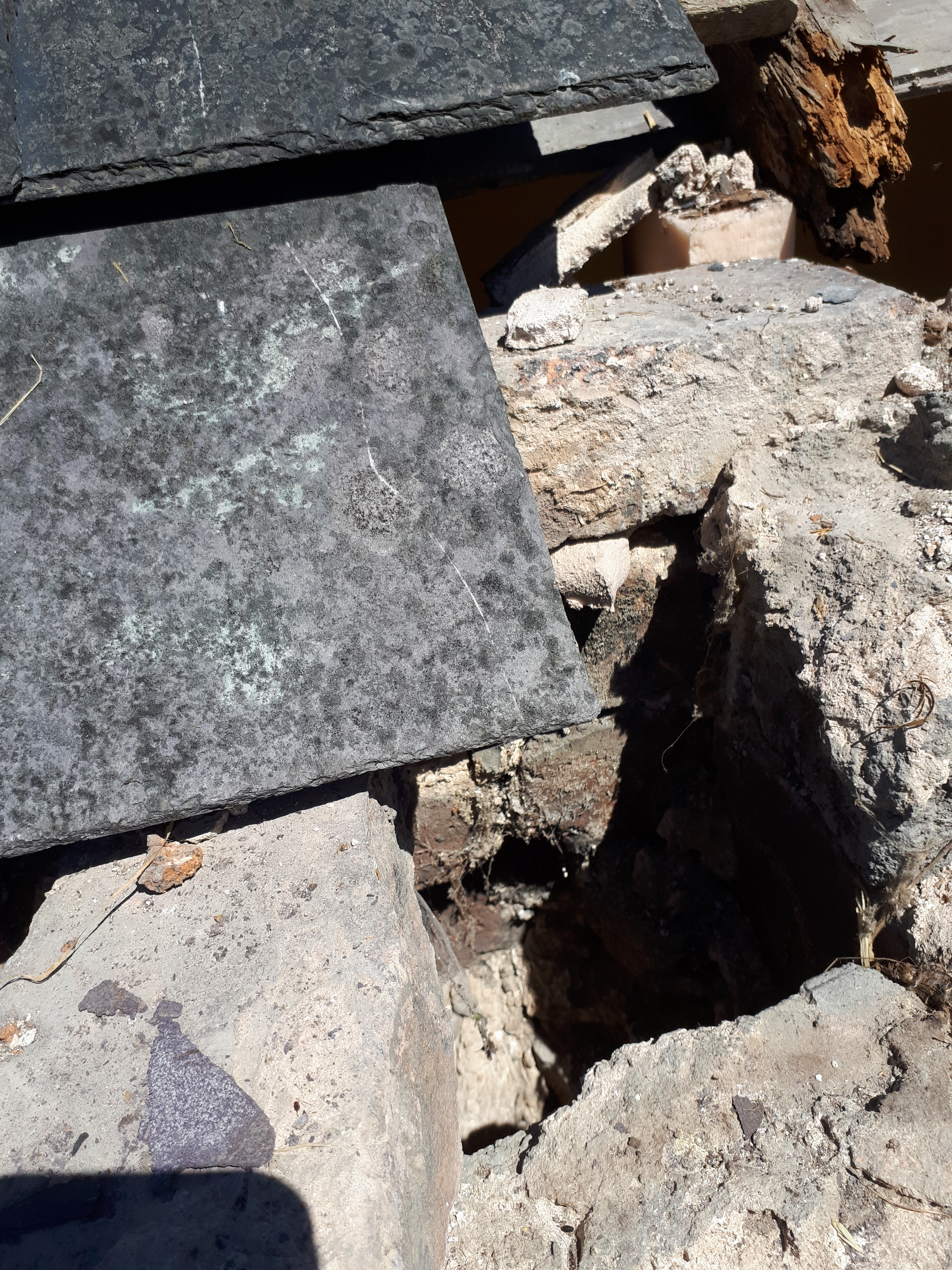
Another interesting find was an old chimney. This we think connects to a small hole in the corner of the kitchen, where we are told these houses had large copper boilers.

The hardest day for both of us was the Friday, when it seemed most likely one of us might accidentally wander off the scaffolding. In my head, as each day we got up already exhausted, and hauled ourselves to the building site, our future home, I compared the work to running a marathon. During my one and only marathon I felt so tired halfway through that it seemed like every step was a fight against gravity. Yet, during the race, you know the only way to end the pain is to keep on to the end. The same is true in the renovation. While we may be dog-tired and covered in bruises, the only way to end it is to keep going. So we did.
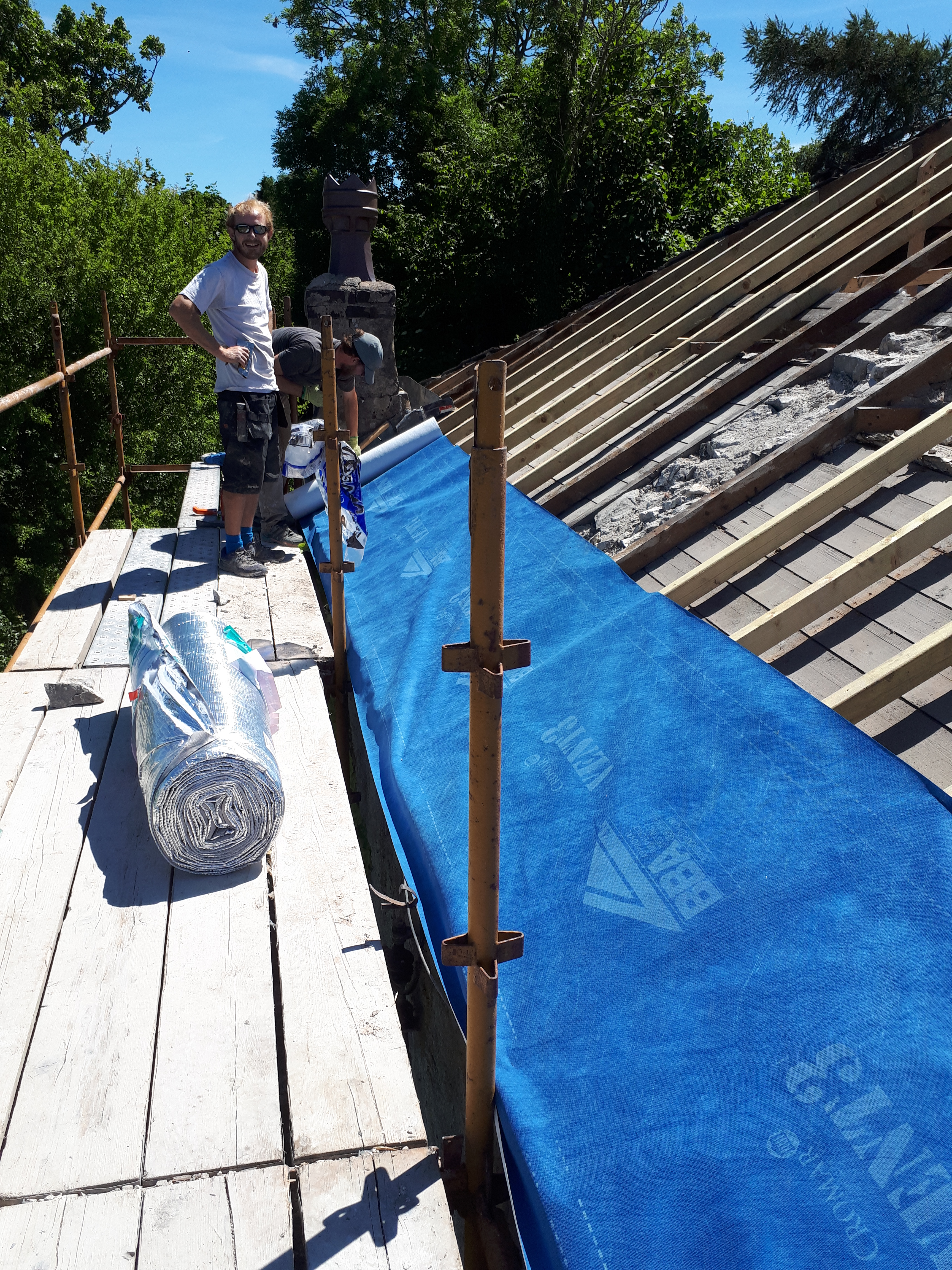
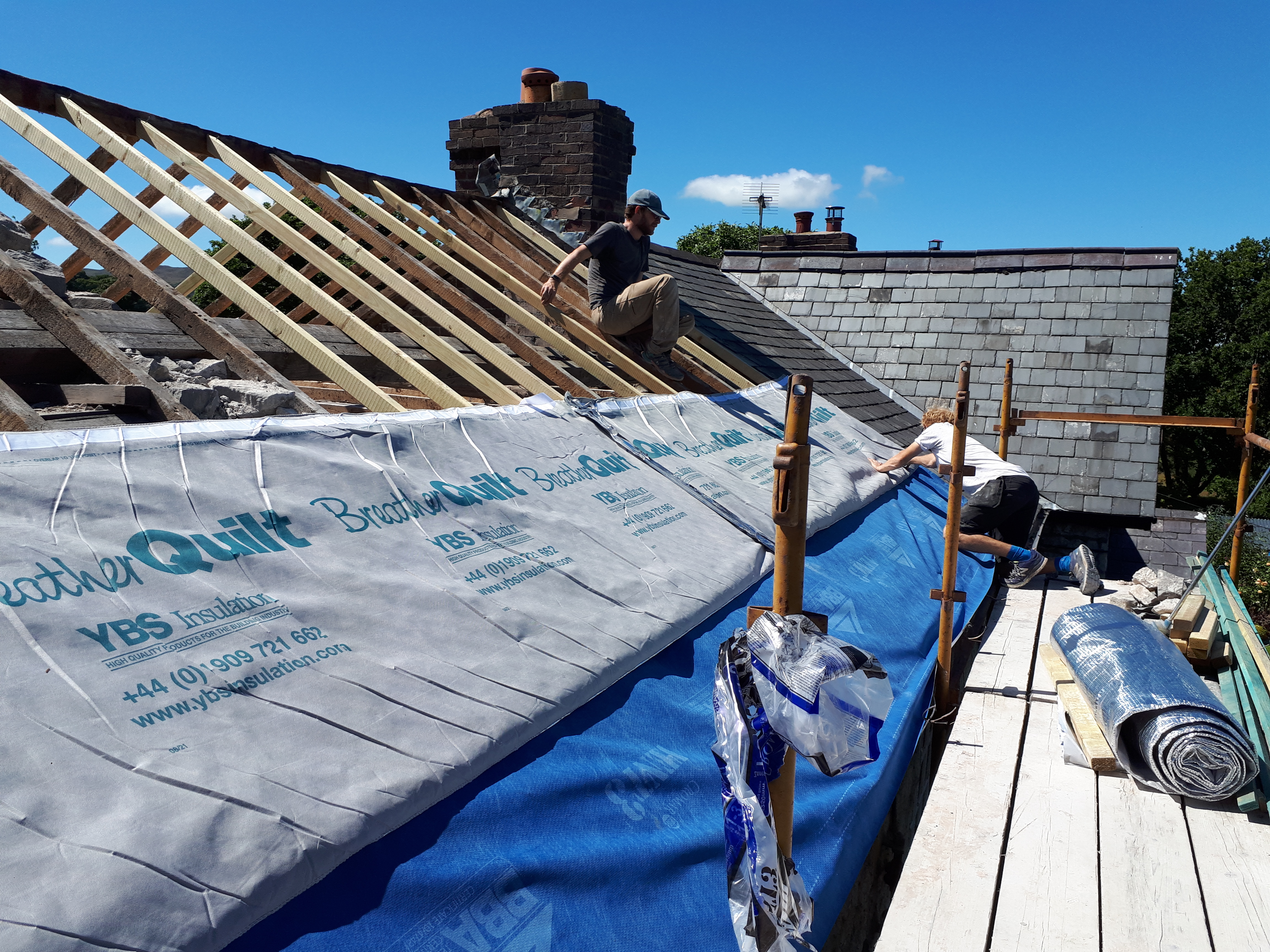
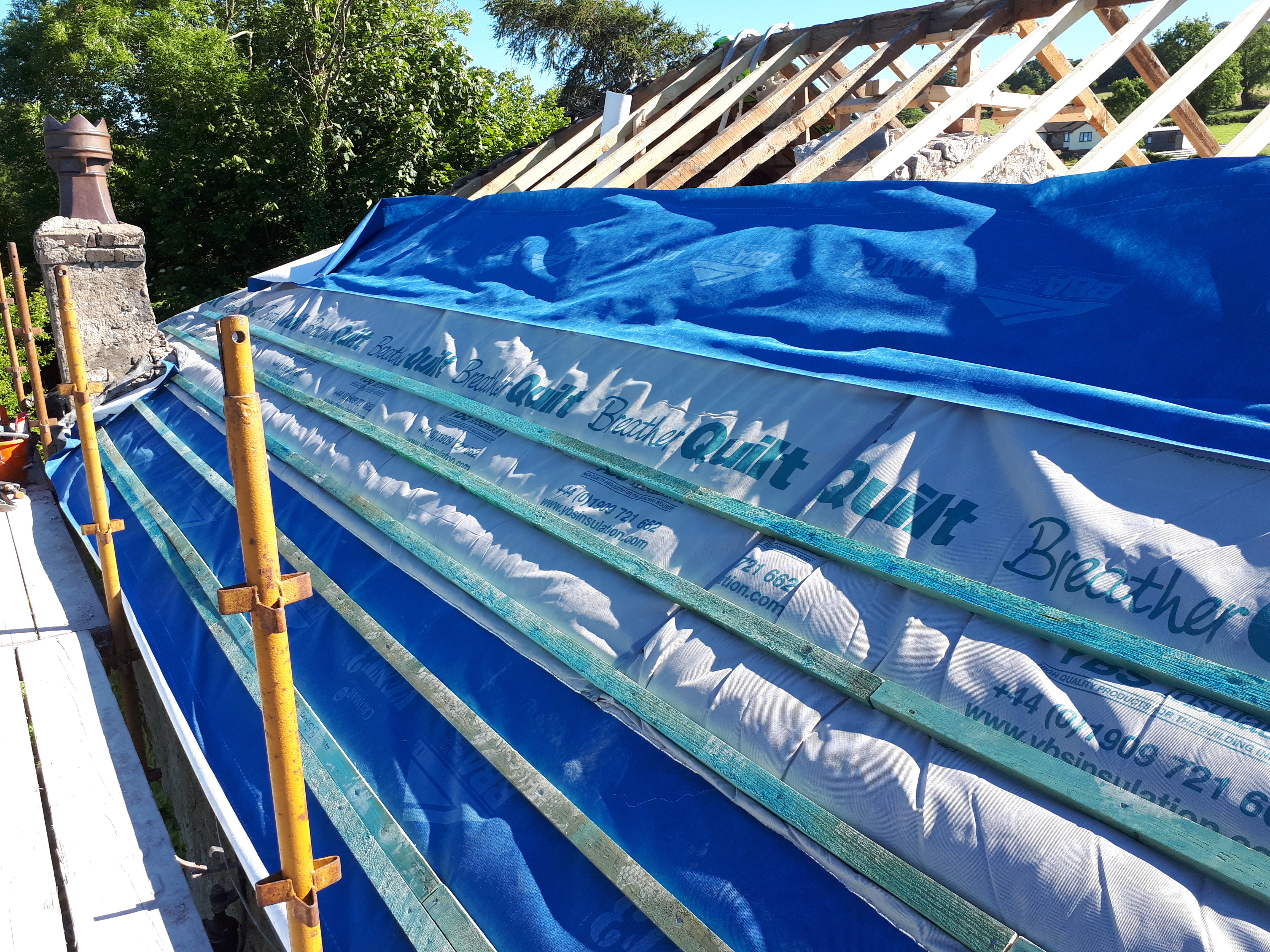
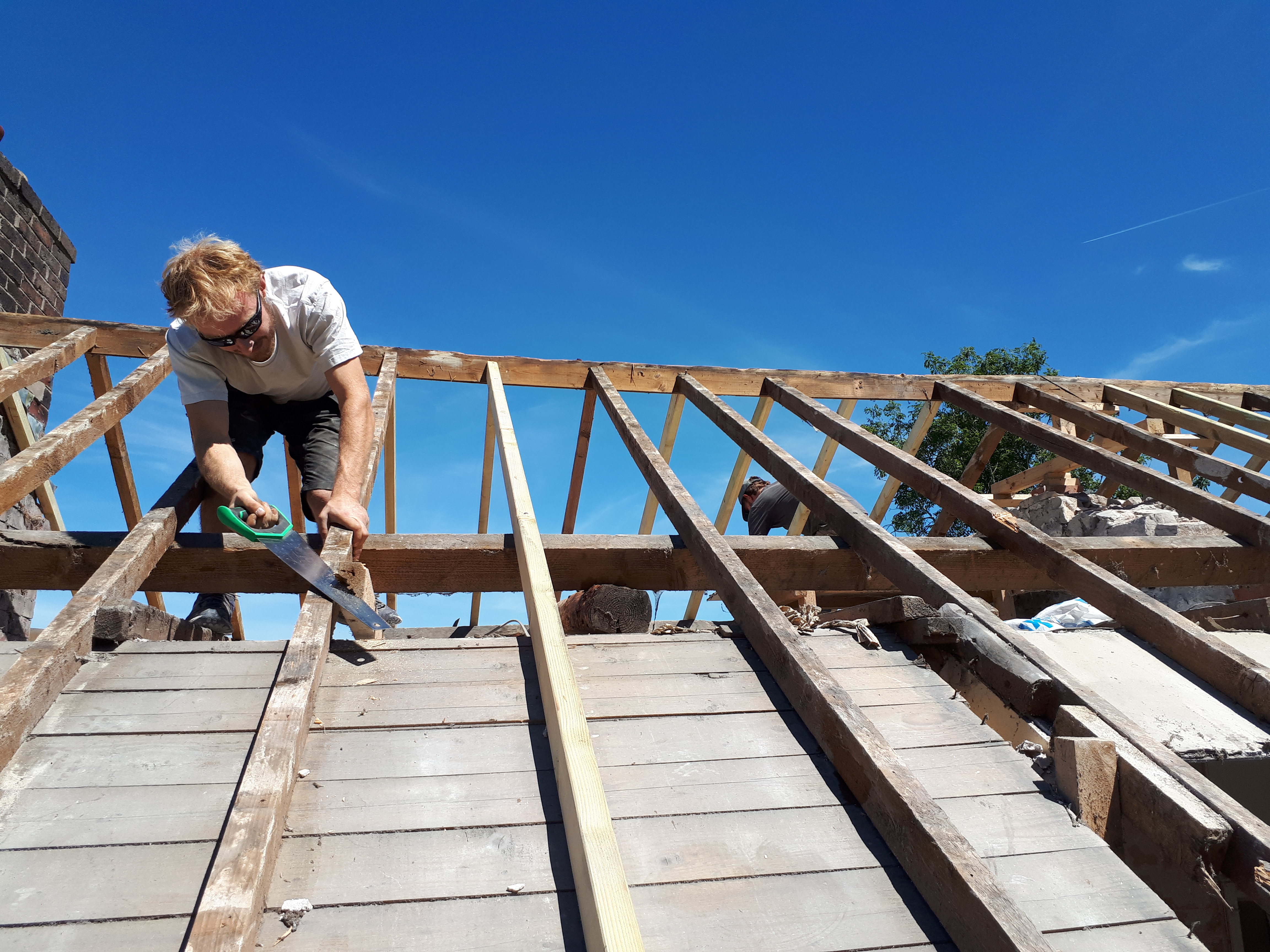
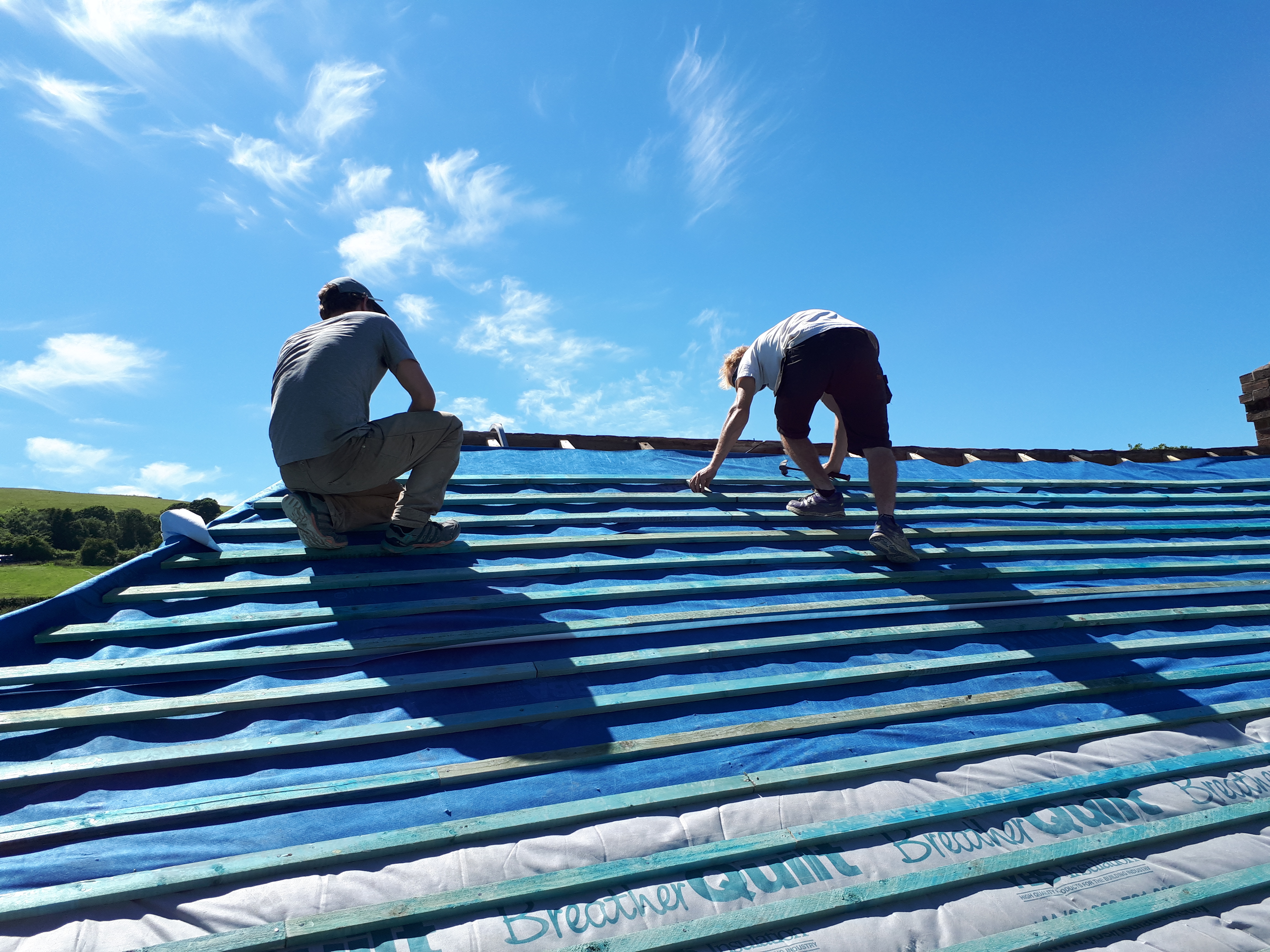
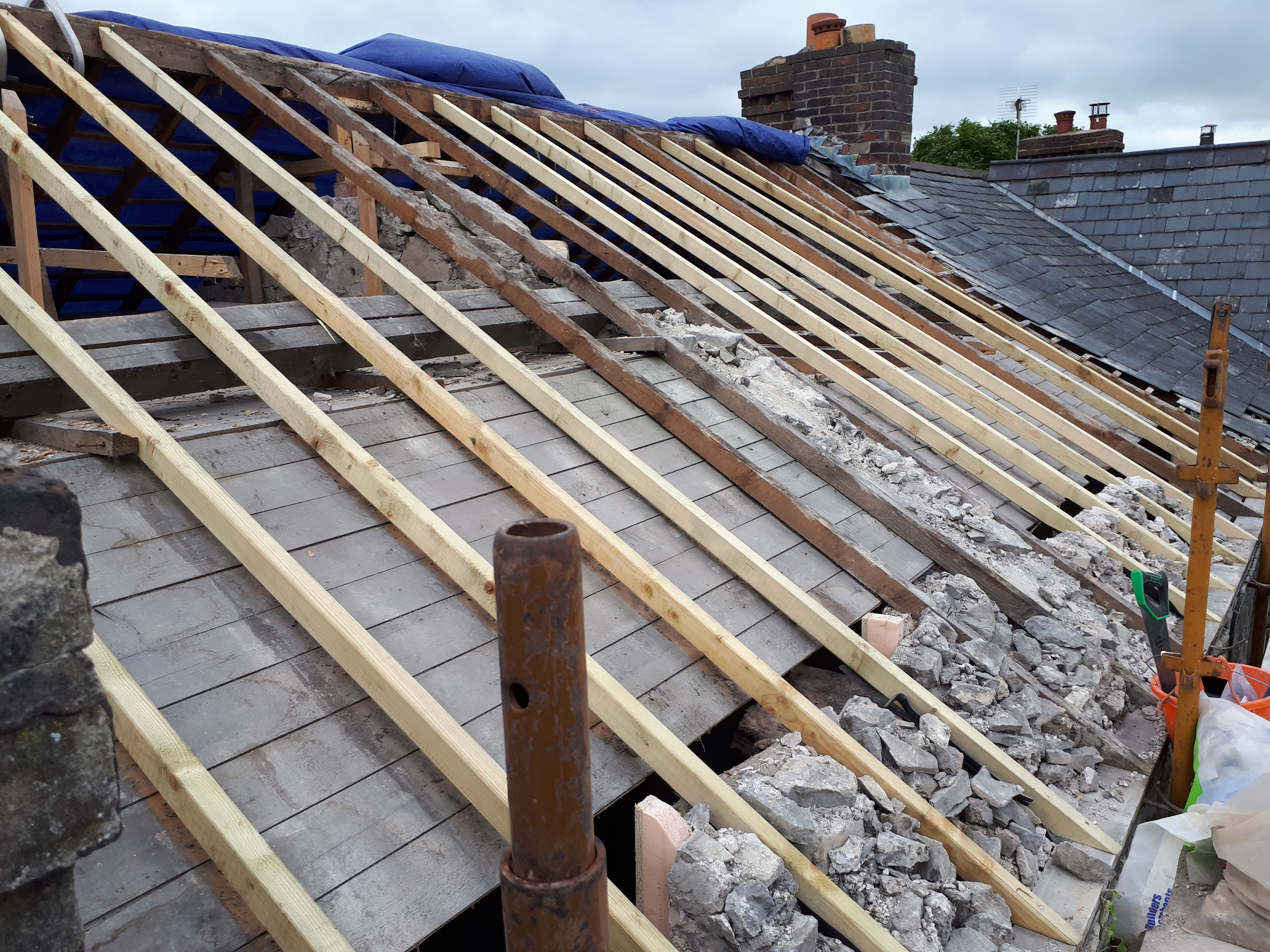
Reinforcements came at the weekend in the form of Chris’s other brother, Rich, finally over his bout of covid. More wall repairs, treating the old timber with woodworm treatment and wood hardened, finally paved the way to getting new batons on with a breathable membrane and line of insulation for the eves underneath.
We have spent a long time thinking about how we would welcome wildlife into our house. There are no signs of bats using the roof, though there are plenty of old wasp, bird and mouse nests. Having consulted an ecologist friend, we decided the best option was to attach boxes to the outside of the house. Once the roof is complete, we hope to have lines of bat and bird boxes open for visitors, without the risk of bats becoming entangle in the membrane within the roof space itself.
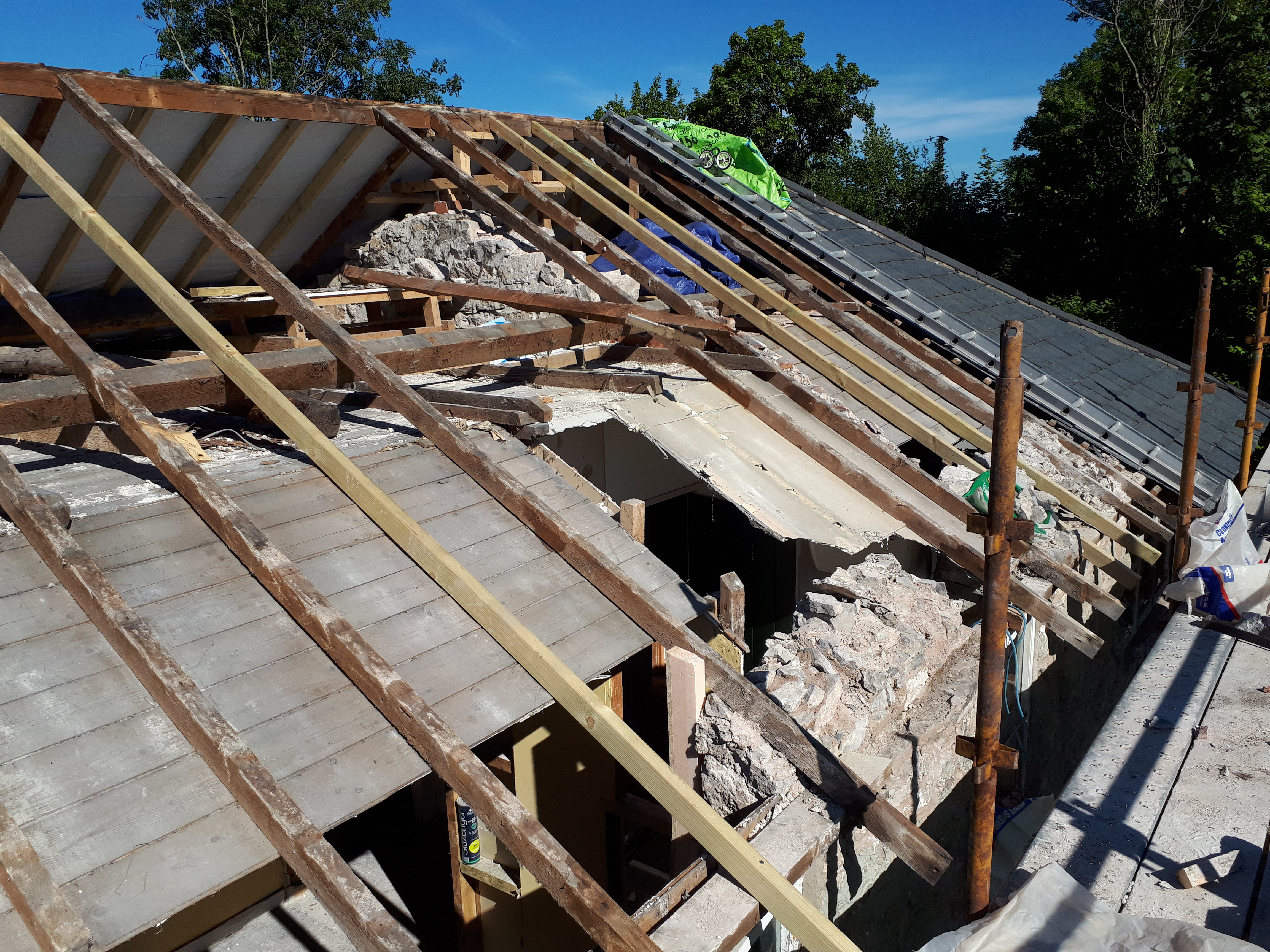
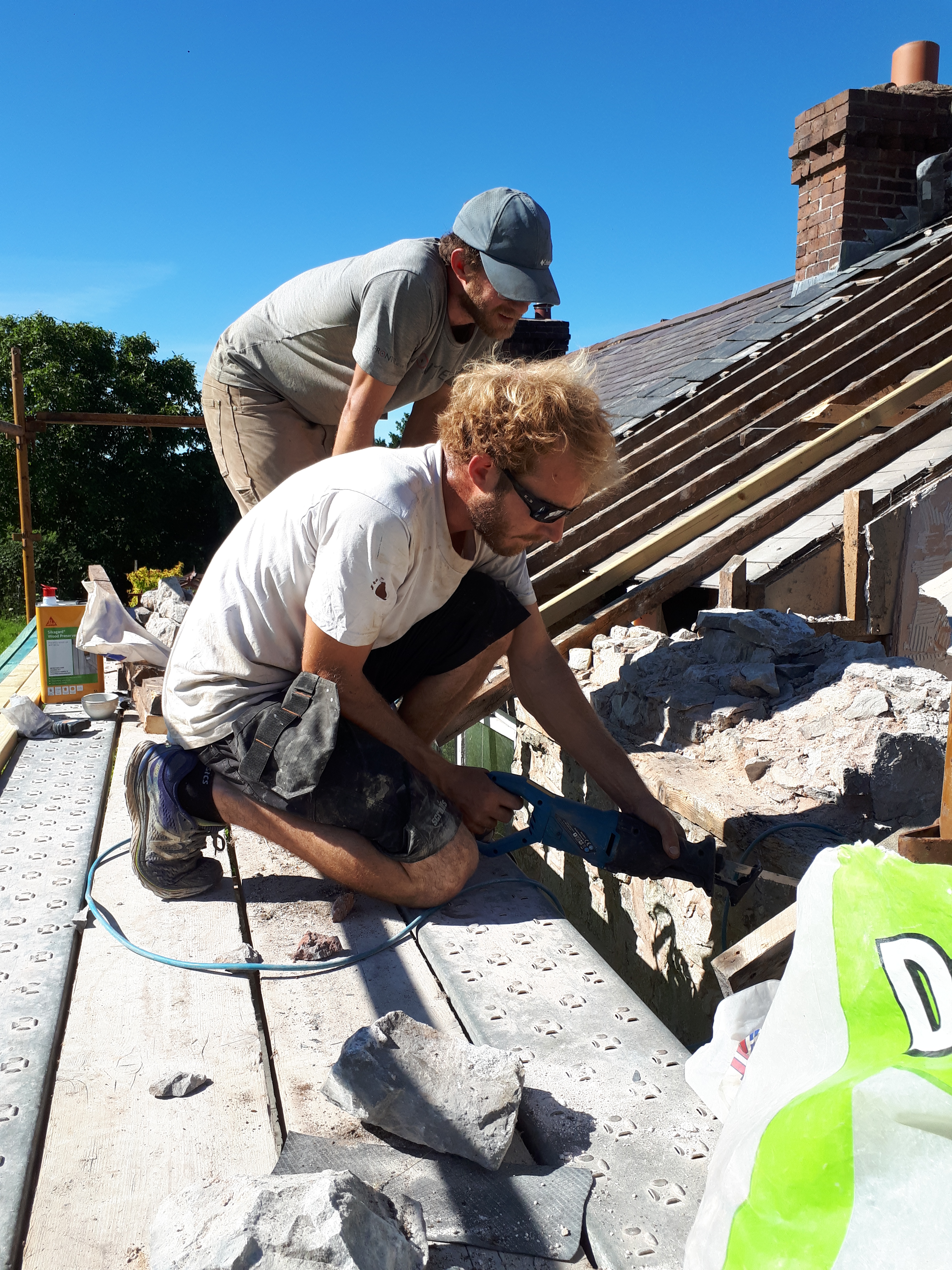
As well as the unexpected extra work of wall repair, we soon realised the wall plate (a piece of wood at the top of the walls that the rafters sit on) at the back of the house was completely rotten. This meant sourcing and sizing a piece of wood, delaying the replacement of the rafters at the back, which in turn delayed the application of the membrane and the batons.
So with our roofing holiday at an end, we have one side of the building still open to the elements, however, a few late evenings and a weekend’s grafting should get it to the same place as the front of the house. Then there’s just the hip to tackle, the purlin to replace, and 1,000 slates to carry back up the rickety scaffolding and reattach to the roof……
As Chris’s brother pointed out ‘I can see why they normally bring it a whole team to do a roof’. Because apparently two enthusiastic amateurs, and a host of helpful family, just can’t replace a whole roof in a week. Shame, but at least there’s a heatwave coming, so at least the mess inside the house won’t become a sloppy mess in the meantime.

 Ruined
Leave a comment