I don’t know how it is for everyone else, but I often find the anticipation of work much more tiring than the actual work itself.
After months of waiting and thinking, it was a relief to pull on our ever attractive PPE and start making a mess.
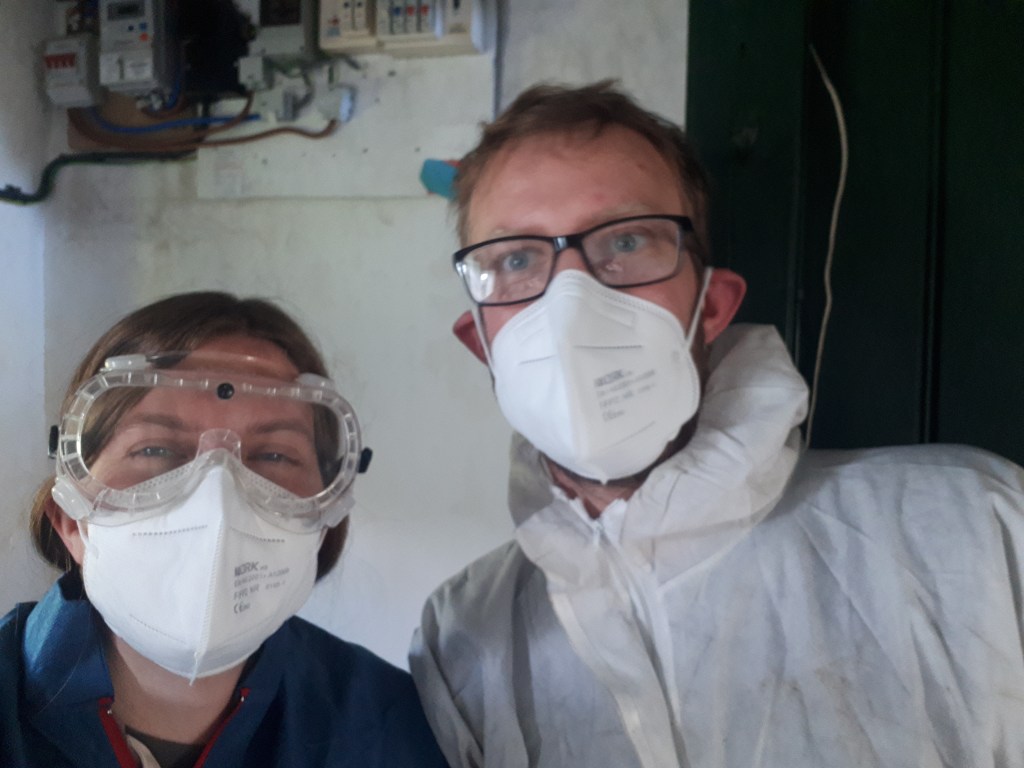
Our first job, as marked out in Chris’s highly detailed house renovation Gantt chart, was to remove the old plaster from the solid walls. There are two reasons for doing this 1) because some of it is so crumbly it’s ready to fall off by itself and 2) because old houses need to breathe.
People who live in old houses will often find themselves battling with damp. The reason for this is that old houses were designed to breathe. Moisture wasn’t banished but controlled, being allowed to move through the walls and out to the exterior. Today, many old houses have been covered in cement render and plaster. These impermeable materials trap the damp within the walls and create all kinds of long-term problems.
While our house thankfully does not have an exterior render, it does have a thick coating of cement plaster on the inside, as well as cement render. Once removed, we are going to replace this with lime mortar and plaster, which is permeable and will allow the moisture to move through the wall.
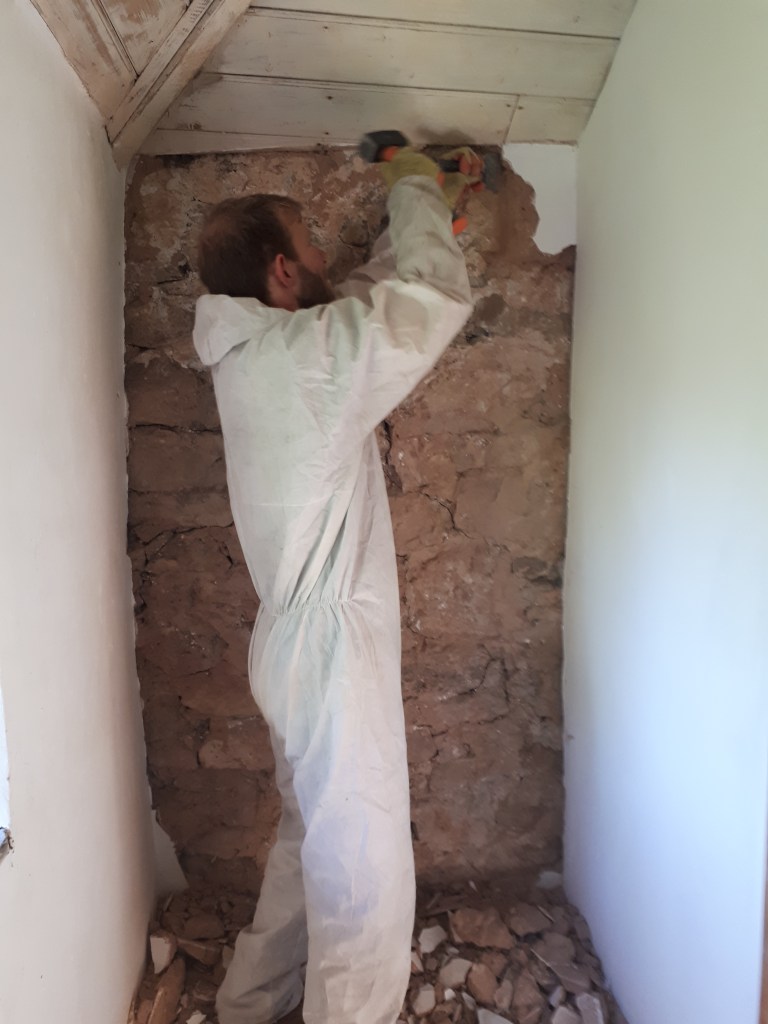
So our first job was to take a lump hammer and chisel to the walls.
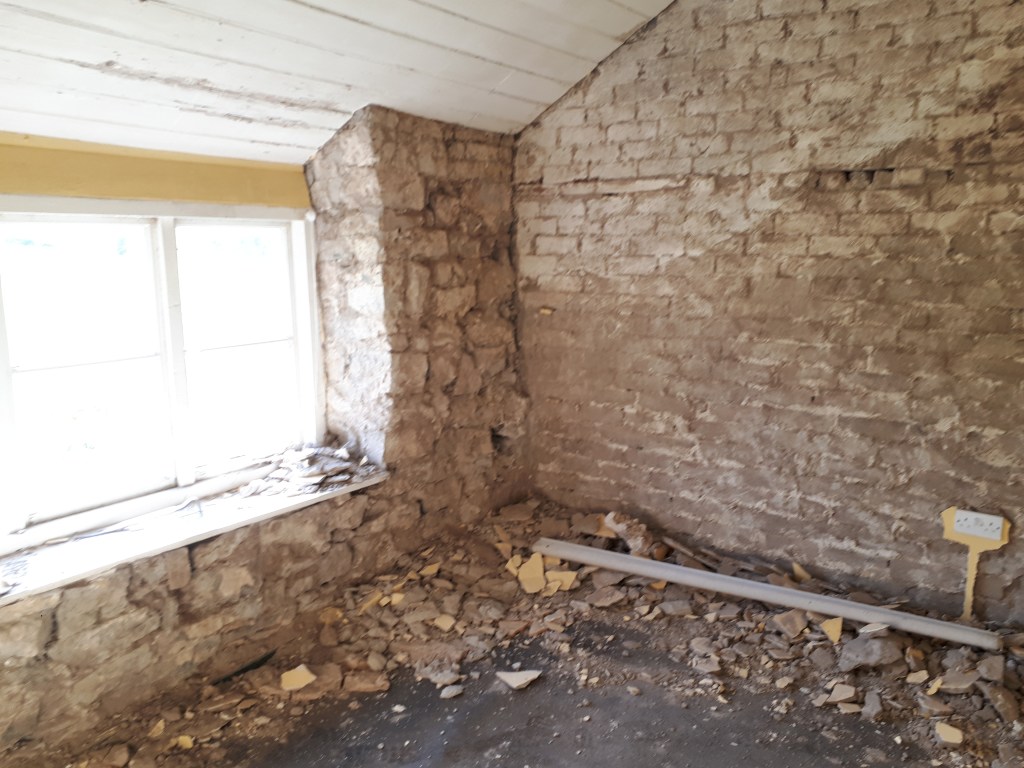
The good news was that much of the plaster was already so ruined that it fell off in big, satisfying chunks. In certain places, a simple kick with a boot brought chunks raining down.
Seeing what was behind the plaster was always interesting. Holes plugged with newspaper, the odd old preserved leaf or twig. Most disconcerting was the live woodlouse that appeared under one section.
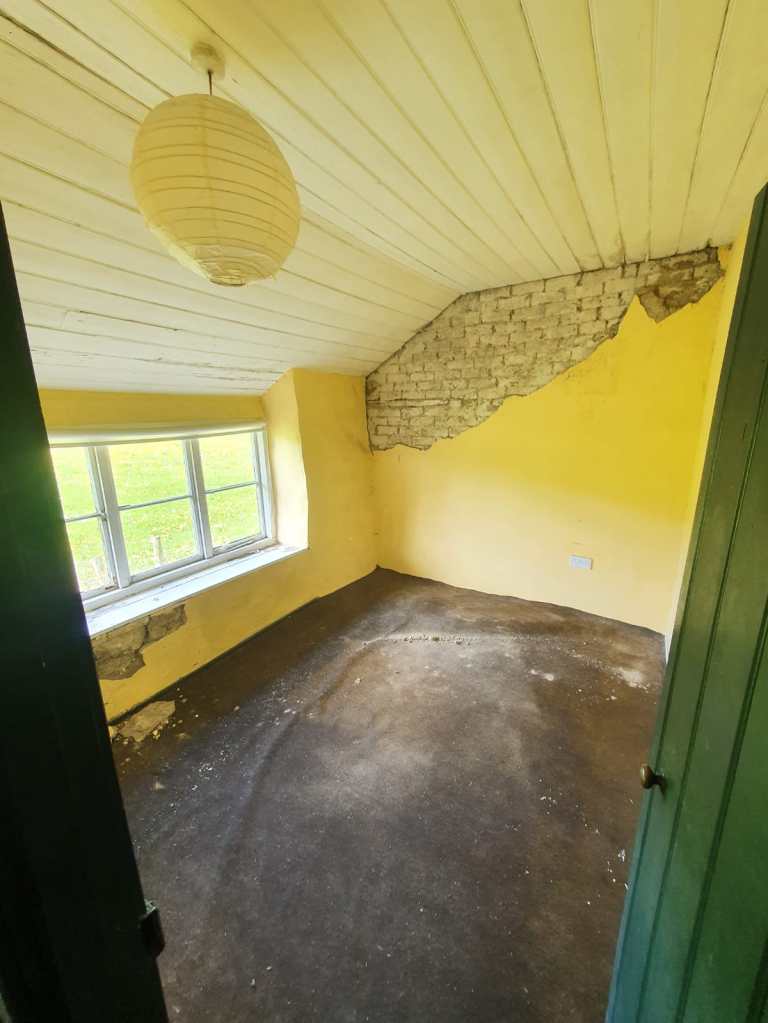
While I started on the plaster removal Chris began dismantling the floor and walls in the utility room. Someone prior to us had started renovations on this house some time ago, and clearly lost interest. One of their projects had been to divide a room in half and put a raised floor in. As we planned to knock all three adjoining rooms into one big kitchen/diner, their DIY efforts were sadly wasted.
Despite the dust, and the aching limbs at the end of the day, I quite like the destructive part of DIY. It’s simple and straightforward. It also tends to go quicker than the fiddly finishing touches that come along at the end. Four years into living in our current home, we still haven’t gotten around to installing one particular entrance strip. It’s behind a curtain, so you don’t see it. Perhaps we’ll leave it for the next people who move into our house.
 Ruined
Leave a comment