There is something about a ruin that is more exciting than the comfort and convenience of a sleek and modern house. Depending on your viewpoint, they are full of flaws, or simply blessed with many quirks. Personally, I enjoy the unexpected nature of older houses. Tiny doorways may not be practical, and rusty ironworks always safe, but these little surprises are still more engaging than the uniformity of the modern house.
Life often turns on little things. Years ago, I filled out an application for a job the day before it closed. I hadn’t been inclined to apply, as I thought the job advert was confusing and unclear. Yet if I hadn’t answered that job advert I never would have met my boyfriend, and the last seven years would have been completely different.
A similar accident of fate occurred with our ruin. When I originally applied to view it, the agent told us it had sold. Later, an email arrived stating that it was back on the market, and we could view it, but only on a certain date. Unfortunately, we were busy that day, so we decided to pass. However, last minute, we booked in for an early viewing.
On reviewing the address, it turned out I’d muddled up my houses. Once we realised our mistake, we regretted it, as it added significantly more driving to our day. If we had known what house it was, we never would have gone.
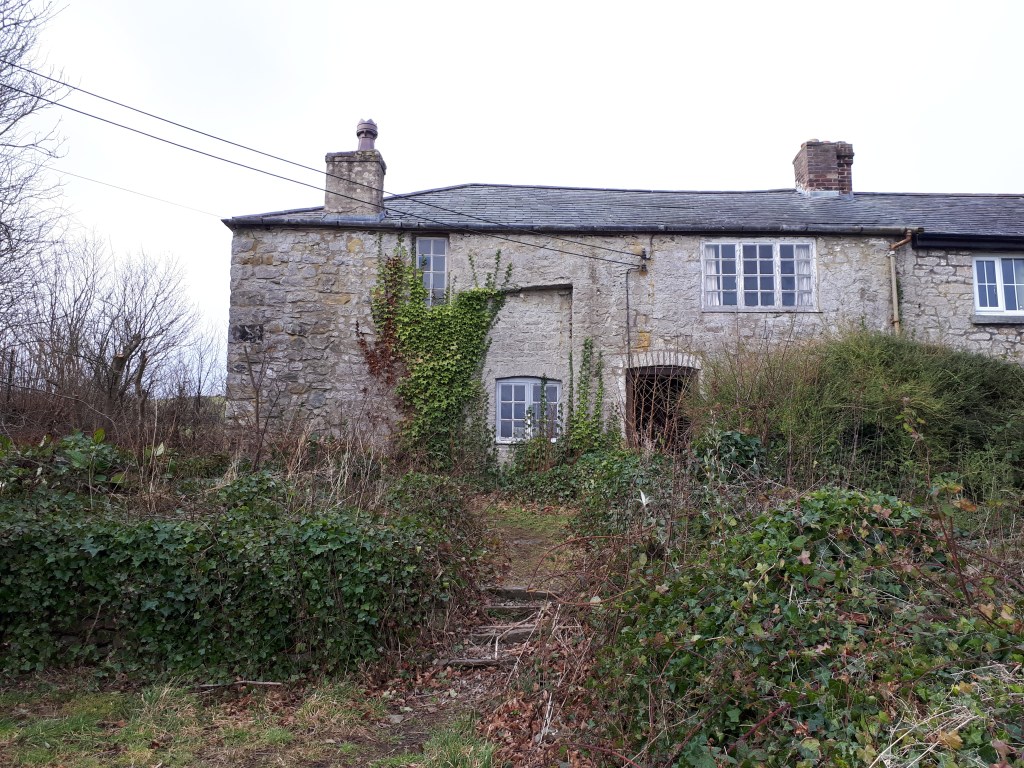
This house looked bad on paper. It has no central heating, crumbling plasters, rotting window frames, needs a new roof, cracked walls, has Japanese knotweed in the garden, a surface drainage flooding issue and has the smallest kitchen and bathroom imaginable. Beyond this, it was at the very top of our price range. It had very little to recommend, and we were talking ourselves out of it before we’d even walked in the door.
What immediately attracted me to the house was the light. Four years ago, we brought a small cottage in a Welsh village. The house is half 18th century cottage and half 80s extension. It was rundown and uncared for, with a leaking roof, urine stained carpet in the bathroom and a shower that was so badly rotted that the wood supporting it disintegrated when touched.
Having worked hard to renovate our little cottage I was too attached to want to leave it without some kind of fight, however, the one thing I still dislike is how dark the rooms are.
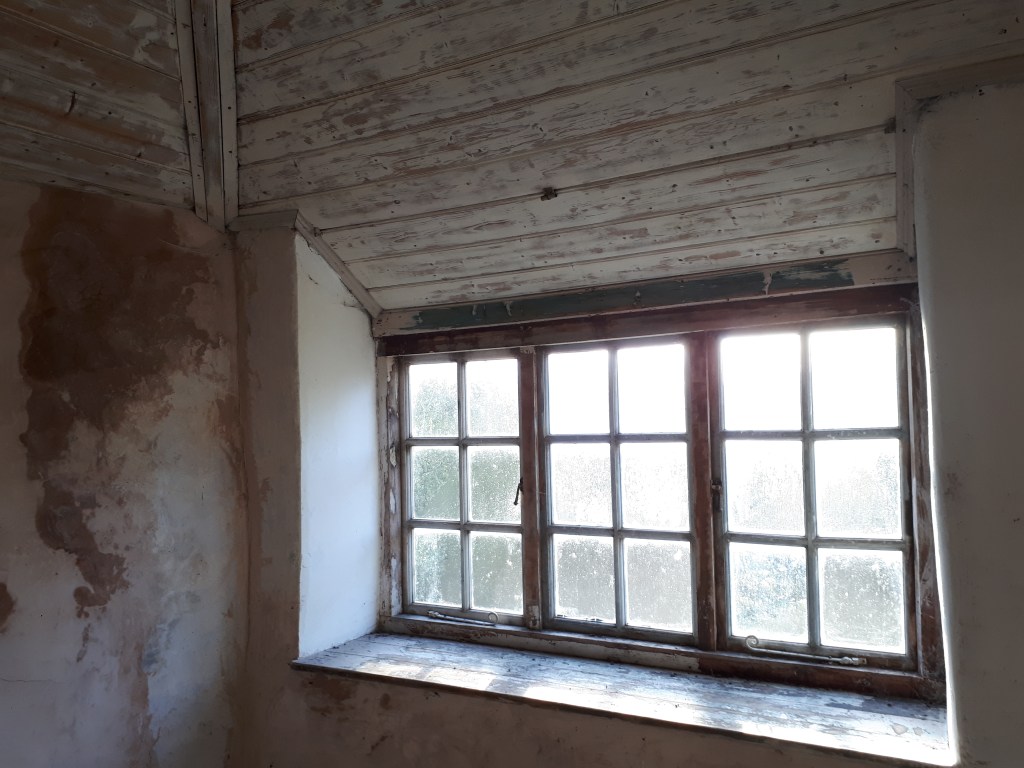
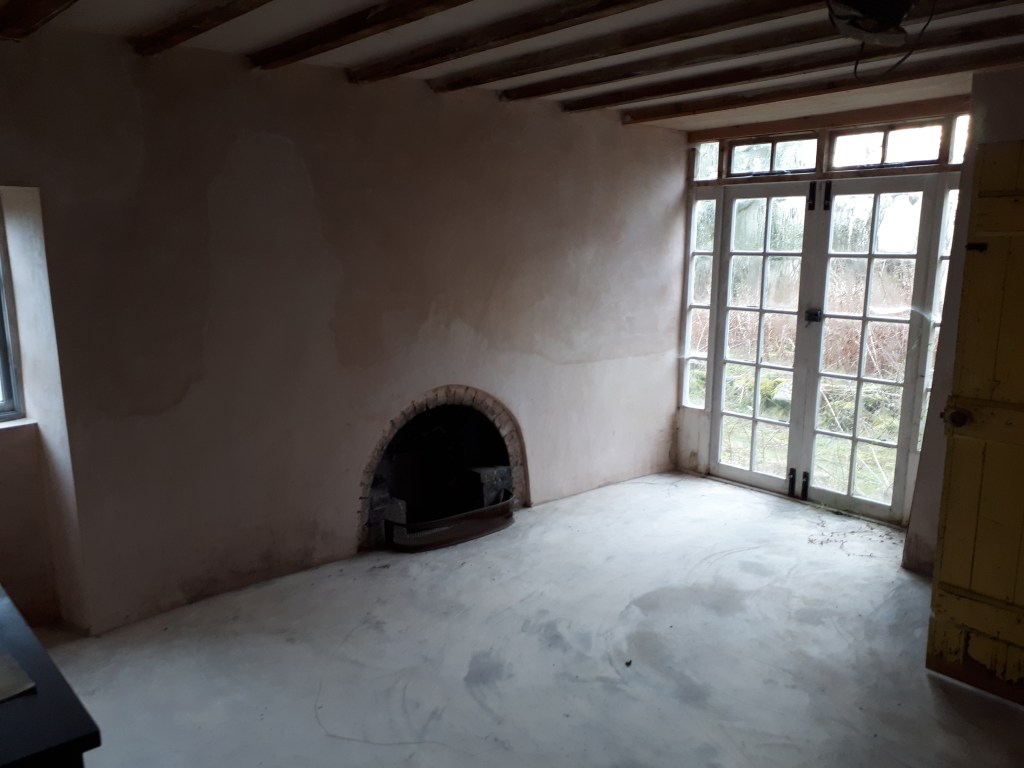
Therefore, what attracted me to the new house was the light. Large, mismatched windows bring light streaming in from all angles, casting shadows on exposed brick and flaking paint. My sister tells me she thinks it looks haunted, yet it makes me think of a long-forgotten artist’s loft, where dried up paint and dusty canvases hint at a more active past.
Being able to buy the house wasn’t as simple as it might first appear. While the increase in the value of our first house, after the extensive renovations, meant we could easily have afforded a mortgage on the new house, it, unfortunately, wasn’t considered to be in a mortgageable state. We also doubted it would be feasible to live there while, for example, we replaced the roof. Luckily, generous family members were able to give us a short-term loan. That, along with most of our savings and a remortgage on our current property, gave us just enough to buy the house with £35,000 spare to do it up.
All of this means we now have around a year and £35K to turn a ruin into our home, before we need to sell our current house and repay everyone. Sound a little crazy? It probably is, but I really liked the light.
 Ruined
Leave a comment